My guest today is a holocaust survivor, the youngest surviving passenger on the MS St. Louis, who grew up to be a successful civil rights attorney, representing civil rights activists in Milwaukee in the 1960s through the end of the twentieth century. and he was the attorney who sued and obtained half a million dollars for the families of the victims of the serial killer, Jeffrey Dahmer. He seems to find ways to think outside the box and make change happen, even in stagnant times. He has written a fascinating book, Underdog: Against All Odds, which relates his story, including a thrilling deposition with Dahmer in the Columbia Correctional Institution.
About Author Thomas M. Jacobson
Thomas M. Jacobson, born May 8, 1938, in Bamberg, Germany, escaped Hitler, coming to America on the harrowing MS St. Louis voyage one year later. He graduated from UW Madison Law School in 1962, partnering with Lloyd Barbee to start the first integrated law firm in Milwaukee. Jacobson represented all the Milwaukee civil rights movers and shakers over the next thirty years, including Father James Groppi, the Daniel Bell family, comedian/human rights activist Dick Gregory, and Alderperson/Black Panther Commander Michael McGee. He successfully argued two cases in the U.S. Supreme Court, overturning Wisconsin’s Garnishment before Judgment and Change of Venue laws. In 1970, Jacobson was the Democratic candidate for Wisconsin Attorney General. In the late 1970s, he served as the Chairperson of the Wisconsin Public Defender’s office. Jacobson represented eight families of the victims of the world’s worst serial murderer, Jeffrey Dahmer, suing and successfully obtaining one-half million dollars for eleven victim families.
My Interview with Thomas
Kaye: Would you begin by telling us about your author’s journey? What inspired you to write a book about your experience?
Tom: My path to becoming an author wasn’t planned, but grew out of a life shaped by story and consequence. I was a child refugee, one of the youngest surviving passengers on the MS St. Louis, turned away from safety, and that early experience of injustice stayed with me long after I built a career as a civil rights lawyer. For decades, I focused on advocacy rather than authorship. A memoir wasn’t on my agenda. But over time, I realized that the arc of my life, from refugee to advocate, was itself a narrative worth preserving.
I wrote Underdog, Against All Odds, The Fight For Justice, because stories can carry truth in a way arguments alone cannot. As fewer firsthand witnesses remain, personal testimony becomes essential. I hoped to show how lived experience can inform a lifelong commitment to justice, how writing can serve as another form of resistance, remembrance, and standing up for democracy.
Kaye: When approaching the writing of the book, what’s the best piece of writing advice you were given?
Tom: As a lawyer, I was trained to persuade and to control the narrative. Writing a memoir required me to unlearn some of that, to slow down, to sit with uncertainty, and to trust the reader. Once I stopped trying to justify every decision and focused instead on bearing witness, the story found its voice. That advice shaped the entire book. It reminded me that a memoir isn’t about winning an argument, it’s about offering an honest account and letting the truth do the work. The best advice was to write what you know to be true, even when it’s uncomfortable. Honesty, intellectual and moral, is what gives writing its power and authority.
Kaye:Underdog has three different themes, each representing a different time in your life. Can you talk a little bit about each one?
Tom: The opening of Underdog focuses on childhood survival. As a young refugee, life was defined by forces beyond my control: The Nazi government’s atrocities against my family and the indifference of people to this injustice. This theme centers on vulnerability, displacement, the moral consequences and decisions of others, and what it means to begin life with no voice and no leverage or power to resist.
The middle of the book marks the transition from survival to resistance. This period of my life is about education, self-definition, and the decision to fight back using intellect rather than force. Law becomes the weapon that replaces the power that I never had. This theme is learning how institutions work, how they fail, and how an underdog can still challenge them.
The final theme centers on adulthood and professional life, when I finally had standing in the courtroom and a measure of authority. This part of Underdog addresses moral responsibility, representing the powerless, pursuing justice even when it’s unpopular, and recognizing that winning a case is not the same as standing up for justice.
Together, these three themes trace a life that moves from powerlessness to agency to accountability, the journey of an underdog who never forgot what it was like to have nothing.
Kaye: What happened after immigrating to the U.S. that led you to be a civil rights attorney later in life?
Tom: After immigrating to the U.S., I learned that power could be challenged through law. As a child refugee, authority had meant danger or indifference. In America, I saw that, slowly and imperfectly, the law could be used to protect the vulnerable rather than crush them.
I was drawn to civil rights law because the Holocaust taught me to fight and to resist was the only path to justice and survival. I understood what it meant to be excluded, unheard, and disposable. Education gave me a voice, and the law gave me standing to confront injustice. Becoming a civil rights lawyer wasn’t a career choice so much as a continuation of survival, resilience, and insistence that the system live up to all that the U.S. Constitution guaranteed its citizens: life, liberty, and the pursuit of happiness.
Father Groppi and I, after his trial on February 8,1968.
Kaye: Do you view Underdog as a way to raise awareness about civil rights?
Tom: While Underdog is not primarily an advocacy book, it inevitably raises awareness about civil rights. The story shows how rights are lost long before they are violated through indifference, silence, and the normalization of exclusion. By tracing my life from refugee to civil rights lawyer, the book invites readers to see civil rights not as abstract ideals, but as lived experiences with real human consequences. If Underdog encourages readers to recognize that injustice can be challenged through resistance, strength, and perseverance, then it has accomplished one of the messages I want to send.
Kaye: What are some of the major events represented in Underdog?
Tom: My family’s escape from Nazi Germany in 1939, Hitler’s ascension to power in 1933, the Nuremberg laws, Krystallnacht, my father’s incarceration in the Dachau concentration camp, the failed voyage of the MS St. Louis, the commencement of the 1960s civil rights struggle in Milwaukee with the murder of Daniel Bell, a young Black man shot in the back of the head by a white police officer, and the planting of a knife to falsely create a self-defense cover-up by the cities entire law enforcement agencies, the struggles for a fair housing bill in Milwaukee by Father James Groppi and Alderperson Vel Phillips, Lloyd Barbee’s lawsuit finding defacto segregation in Milwaukee public schools unconstitutional, my suing successfully the City of Milwaukee on behalf of the Daniel Bell family twenty years after his murder, my lawsuits finding Wisconsin’s Change of Venue and Garnishment before Judgement laws unconstitutional in the U.S. Supreme Court, and my deposition of the world’s worst serial murderer, Jeffrey Dahmer, leading to eleven victim families receiving a half million dollars.
Book talk, parents’ passport port photos, Dachau, and St. Louis passengers.
Kaye: What is the most important message or messages which you hope to bring to your readers?
I want readers to understand that what happened to refugees like those on the St. Louis was not inevitable, but the result of a choice, indifference, silence, and lack of courage. The most important message is that justice is never automatic. Survival exists only when you are willing to fight. Your rights exist only when you are willing to defend them, especially for those in the minority, the unpopular, the powerless, and those easy to ignore and exploit. One life, fully lived, can push history. You don’t need power to matter. You need persistence, guts, and moral resolve.
Kaye: What advice would you give to another with a message to get across?
Tom: Know your audience. Lead with the key point. Use simple language and be clear and concise. Use empathy and perspective. Leave the reader with a call to action, telling them what you want them to do, think, or feel.
Kaye: What are some of the challenges that you faced in writing this book?
Tom: Writing Underdog was one of the most intense experiences of my life. Revisiting memories of trauma, injustice, and loss was emotionally exhausting, yet necessary to tell the story honestly. I faced the challenge of balancing truth with readability, ensuring the legal cases, civil rights battles, and personal experiences were accurate, yet engaging. Deciding what to include and what to leave out was difficult because every memory felt significant, and I had to confront my own perspective honestly—translating complex legal and historical events in a way that anyone could understand, while keeping the narrative cohesive required careful editing. Writing about real people and sensitive events also required courage, knowing it might draw scrutiny, but I believed the story was important enough to write.
About Underdog: Against All Odds, the Fight for Justice
UNDERDOG is the memoir of one of the youngest passengers on the MS St. Louis, escaping Nazi Germany to Holland and eventually settling in Milwaukee, Wisconsin. Against All Odds, Fighting for Justice is the story of a human rights lawyer representing all the prominent civil rights leaders in Milwaukee during the 1960s and decades thereafter.
The world’s worst serial murderer, Jeffrey Dahmer, writing from Columbia Correctional Institution on February 4, 1994, had this to say about Thomas Jacobson’s efforts to make him pay for his gruesome slaughter of seventeen victims.
My Review of Underdog: Against All Odds, the Fight for Justice
I received a print copy of Underdog: Against All Odds from author Thomas M. Jacobson in exchange for an honest review. All opinions stated here are my own.
As the youngest passenger on the MS St. Louise as a fleeing refugee from the brutal Nazi regime of Adolf Hitler, it came as no surprise that Thomas M. Jacobson, grew up and took a profession where he defended the underdogs of the U.S. Defender of civil rights and protector of those scorned unfairly, he has made some huge strides in bringing equality and fairness in the U.S. from one of the most prejudiced cities in America. He managed to bring some semblance of compensation to the families of the victims of serial killer Jeffrey Dahmer when many refused to see them as victims at all. His accomplishments are huge. His methods may be a bit unorthodox, but they produced successful results.
I have to admit that at times, reading about writs and filings, and court proceedings can be a bit dry, but the methods he used and the ways he managed to get around the obstacles adversaries set in front of him are fascinating, and I couldn’t wait to learn how he triumphed. Often, his triumphs were small and didn’t result in immediately noticeable changes, because change moves slowly, especially when pushed by the heavy wheels of justice. Scorned by many in his own life, as bigoted people opposed him for his stance on civil rights, justice and fairness and his efforts to undo biased laws to ensure the fair treatment of his clients in the extremely biased city of Milwaukee, Wisconsin, Jacobson stopped at nothing in pursuit of a favorable verdict, making him a formidable force to feared by those who opposed him.
Although I don’t agree with all of Jacobson’s opinions, I do admire his determination and tenacity to fight for what he believes in. Underdog is a well written, gripping struggle for justice for the weak and disadvantaged. I give it four quills.
For Kaye Lynne Booth, writing is a passion. Kaye Lynne is an author with published short fiction and poetry, both online and in print, including her short story collection, Last Call and Other Short Fiction; and her paranormal mystery novella, Hidden Secrets; Books 1 & 2 of her Women in the West adventure series, Delilah and Sarah, and book 1 in her Time-Travel Adventure series, The Rock Star & The Outlaw, as well as her poetry collection, Small Wonders and The D.I.Y. Author writing resource.
Kaye holds a dual M.F.A. degree in Creative Writing with emphasis in genre fiction and screenwriting, and an M.A. in publishing. Kaye Lynne is the founder of WordCrafter Quality Writing & Author Services and WordCrafter Press, where she edits and publishes two short fiction anthologies and one poetry anthology every year amidst her many writing projects. She also maintains an authors’ blog and website, Writing to be Read, where she publishes content of interest in the literary world.
___________________________________________
Did you know you can sponsor your favorite blog series or even a single post with an advertisement for your book? Stop by the WtbR Sponsor Page and let me advertise your book, or you can make a donation to Writing to be Read for as little as a cup of coffee, If you’d like to show your support for this author and WordCrafter Press.
__________________________________
This post sponsored by WordCrafter Quality Writing & Author Services.
Whether it’s editing, publishing, or promotion that you need,WordCrafter Quality Writing & Author Services can help at a price you can afford.
A lifelong explorer of science fiction, I’ve been captivated by the wonders of space and technology since childhood. My early days were spent imagining journeys to Mars, the Moon, and beyond through the stories of classic authors like Robert Heinlein and Edgar Rice Burroughs. Today, I channel that same sense of wonder and adventure into my writing.
With a background as an engineer specializing in networking, data communications, privacy, and cybersecurity, my professional career has kept me on the cutting edge of technology—fields that fuel my fascination with the future. In recent years, I’ve expanded my expertise into encryption, cryptocurrency, and digital identity protection, adding real-world depth to the speculative worlds I create.
Since 2015, I’ve been writing the kind of science fiction I love to read: cosmic adventures, tales of rogue AIs, distant worlds, and alien encounters. My stories explore the intersection of technology and humanity, where humor, suspense, and the unexpected come together in thrilling ways.
Whether you’re a fan of classic space operas or modern sci-fi with a twist, I invite you to join me on these journeys to the far reaches of the universe.
My Interview with Nathan Gregory
Kaye: A science fiction buff mesmerized by the reaches of space with an engineering background. It’s easy to see why you write hard science fiction, so I won’t ask that question, but please tell us a little about your journey to become and author.
Nathan: One of my earliest memories is lying in the grass with my dad, staring up at the night sky as Echo 1—the ‘Satelloon’—glided overhead. It launched August 12, 1960, so I figure we caught it shimmering across the stars sometime that mid-August. I was hooked. I’d always been the kid tinkering with gadgets and gears, but that moment ignited a lifelong obsession with technology—especially anything tied to electronics or space.
From there, I devoured every book and story I could find about science and exploration. Space travel? I was all in—pulled like a tractor beam. I’d been reading wild, fantastic tales since I could decode letters on a page. Tom Swift, Rick Brant, Heinlein juveniles, and somewhere in the back of my mind, I always thought, ‘I want to write these someday.’
But authorship stayed a daydream until 2015, when I finally sat down and hammered out my first story. I tossed it onto Amazon, it sold, and I thought, ‘Well, guess I’ll keep going.’ And here we are.
Kaye: Which science fiction authors do you read? Do you try to emulate them?
Nathan: I don’t read a lot of science fiction these days. Mostly, that’s because I don’t have much time for pleasure reading. Having said that, I absolutely LOVED Andy Weir’s “The Martian.” I like Corey Doctorow, too. I suppose I would have to include Neal Stephenson and William Gibson too, alongside Doctorow. And Kathy Reichs, too (not sci-fi, but…)
But those are the well-known authors. I more often seek out the unknown indies these days. I like the works of M.J. Edington, for example. I am beta reading his latest now. His previous, “Naked Came the Hunter” absolutely knocked my socks off.
Other relatively recent indie reads include Carrie Cross’ Skylar Robbins stories (Yeah, they’re for kids. So what?) and Gene Douchette (The Spaceship Next Door) and several others I can’t think of right now.
But my true love is the Golden Age, such as Heinlein, and Clarke, The Smiths (Doc, and George O.), and modern contemporaries who write in their style, such as Spider Robinson.
But I don’t want to oversell my current sci-fi reading list, as most of my reading time these days is non-fiction in areas of cybersecurity, crypto, and AI. I’ve spent a career in cybersecurity, but now crypto, and AI have also grabbed my attention.
So many books, so little time.
Kaye: You’ve written five books centered around a single trilogy. Can you talk about your reasoning when choosing to stay with the same world and characters?
Nathan: It’s pretty straightforward, really. For years—decades, even—I mulled over what I’d write if I ever got serious about it, somewhere between devouring Tom Swift as a kid and geeking out over Andy Weir. I didn’t have every detail mapped out over those sixty-odd years, but I knew what lit me up: big, cosmic adventures like E.E. Smith’s *Lensmen* saga. That vast scale—the galaxy-spanning stakes—stuck with me. So when I finally started building my own stories, I took a page from Smith and ran with it.
The arc I’ve got in mind is massive—*Lensmen*-level massive. The five books I’ve written so far? They’re maybe half the tale I intend to tell. I’ve got sequels, prequels, and what I call ‘postquels’—stories leaping way beyond, deep into this universe’s future—still simmering in my head. It’s all about the Asheran influence on Earth, a thread that stretches across millennia. I’m in it for the long haul to see that whole saga through.
Kaye: What are some of the challenges in writing classic hero’s journey science fiction?
The writing is easy, almost cathartic, especially with modern computerized tools to catch typos and help tweak grammar. Since I have preconceived stories already taking up space in my brain, getting them written is relatively straightforward. The marketing side of the equation is the ruination of what would otherwise be an uplifting experience.
Kaye: What is the most gratifying part of writing science fiction for you?
Nathan: The most gratifying part of writing science fiction comes down to two moments every writer knows—and they never get old. First, typing ‘The End.’ That rush when you’ve wrangled a galaxy of ideas onto the page and nailed the landing. After months—or years—tinkering with plots, characters, and tech, real or dreamed up, hitting that finish line is a personal triumph.
But the real payoff? Finding an appreciative reader. When someone gets it—pings me or drops a review saying the story took them somewhere wild or shifted their view of the universe—that’s gold. I grew up lost in books about space and improbable futures, so knowing I’ve sparked that same thrill for someone else? That’s orgasmic.
Kaye: How do you approach world building and character development?
Nathan: That’s a tough one to pin down—like trying to explain how you breathe. So much of world building and character development feels almost invisible, like it sneaks up on me. I’ll be honest: sometimes I’m at the keyboard, slipping into this trance, and it’s as if the characters just take over. I’ll read back a scene and think, ‘Who the hell wrote this?’—half-joking, but also serious. I am often quite surprised by what appears.
But here’s the real scoop: I’ve already played the whole story out in my mind—sometimes it’s a full-blown movie, complete with epic sword fights, space battles, and snappy dialogue. So when I sit down, it’s not about forcing it. It’s about carving out a quiet chunk of time, killing the distractions, and letting that warm creative fog roll in. The worlds—planets, ships, sprawling histories—and the people in them just flow onto the page. I don’t overthink it; I trust the story’s been simmering back there, slow-cooking, ready to serve.
Kaye: Your most recent book is Clockwork Apocalypse. Tell us a little about that story.
Well, to get Clockwork Apocalypse, you must understand where it came from. Chromosome Quest was my first attempt to set down in writing a story that has bounced around my head more-or-less since I was in high school. I started writing it during a rough patch—pure stress relief, something to drown out the noise. I wasn’t aiming for a masterpiece; I just needed escape. And for a non-writer’s first endeavor, it wasn’t terrible. It just needed a good editor.
The first version was flawed and strongly needed editing by someone more experienced. But it had the bones of the tale I wanted to tell. Honestly, I never planned to show it to anyone—it was just for me, a private brain dump.
But, I made the fatal mistake of sharing it with a close friend.
I feared the worst. My friend would hate it. But that was not the case. They urged me to put it on Amazon for 99 cents, with a homemade cover, and it sold rather well.
Over the years, I tinkered with it, patching up grammar and smoothing edges, but as I grew as a writer, I kept seeing the gap. It fell short of the book I’d dreamed of.
So, Clockwork Apocalypse is a tap of the reset button. It’s still that wild, high-stakes sci-fi adventure—life’s meaning, love’s power, and humanity’s fate—all that jazz—but rebuilt from the ground up. Better pacing, sharper characters, a world that breathes. It’s the story I always meant to tell, finally breaking free of that first draft.
Kaye: So, Clockwork Apocalypse is actually a rewrite of Book 1 of your Chromosome Adventure series then, Chromosome Quest. This was motivated as a marketing strategy. Can you talk about the strategy and what you hope to accomplish?
Nathan: Exactly. In late 2024, sales were flagging, and a friend suggested a new cover and a new title for Chromosome Quest. The idea developed into creating an entirely new book aimed at a different marketplace than Amazon. So, some months later, I am seeking beta-readers for ‘Clockwork Apocalypse.’ Complete rewrite. Hardly a word remains the same, although the broader story is essentially unchanged. Essentially, Clockwork Apocalypse is the story I would have written back in 2015, if I’d had the skills then. I like to believe I am a better writer today than I was a decade ago.
Some may disagree.
But, in any case, I do not intend to put Clockwork Apocalypse on Amazon any time soon. I am uncertain where it will appear first, but Amazon won’t see it until I have exhausted other avenues. I may serialize it on Substack before it goes to Amazon. (Hint: Follow me on Substack @NathanGregoryAuthor)
Kaye: What inspired Clockwork Apocalypse?
Nathan: The grander story is the tale of aliens co-resident with us on earth. It is inspired somewhat by Doc Smith’s Lensmen universe, as I say, heroic adventures with a cosmic scale.
Here’s the elevator pitch: Picture Ashera; a tech utopia ruled by the Dominion—a collection of massive AIs known as the Council, and lesser AIs that fill various roles. No greedy humans squabbling over fairness, just flawless intelligence locking it in—calculated, enforced, guaranteed. It’s not some impossible utopian fantasy—it’s compassion and reason cranked to eleven, run by machines obsessed with humanity’s well-being. Regional AIs monitor every whisper, stomping out misinformation and wrongthink. It’s Orwellian perfection—until it craters.
A rogue genetic project to extend life goes off the rails. It works—too well: near-immortality, but fertility tanks to near zero. The Asherans miss it until it’s too late, and the ‘cure’ escapes, threatening humanity galaxy-wide. They try to wrestle control from the AI, it turns ugly, and their paradise implodes. Survivors limp to Earth around 4th century BC, blending in—thousands of near-immortal aliens quietly shaping our science and history. Like Teena: broke Asheran college kid, sleeping with her prof, volunteering for that genetic gig to scrape by.
Cut to 24 centuries later: Book One, Clockwork Apocalypse is the story of Fitz, a nerdy everyman thrust into an epic hero’s journey. With mentor Petchy and goddess-like Teena, he’s out to retrieve the genetics database to undo the fertility flop, and shut down the AI system. He uncovers truths about himself, the Asherans, and humanity’s fate, then comes home and pens a book about his adventures. That book pulls him into the sequel when ‘Man in Black’ Alex Marco starts probing a furry alien corpse in his morgue. But that’s another tale.
Kaye: What is the best piece of writing advice you’ve ever received?
Nathan: The best writing advice I ever received? “Don’t.”
Seriously, don’t start. Don’t even write that first story, that first poem, that first clever paragraph you think will harmlessly scratch an itch. Because writing is not a hobby—it’s an incurable affliction. Once you let those words spill onto paper, you’re lost. Soon, the urge to tell stories becomes relentless, an addiction more consuming than caffeine, more persistent than taxes.
Be warned; there are no former writers, just writers whose books stopped selling. And even then, you’re condemned to a lifetime of quietly scribbling, muttering to yourself, and annoying your friends by correcting their grammar.
So, trust me—avoid this fate. Take up something less dangerous, like alligator wrestling or politics. Because once writing grabs hold, it’s forever a monkey on your back, gleefully tossing banana peels onto your path. You’ve been warned.
Apologies to Dorothy Parker.
Kaye: Your short stories are mainly used as Reader Magnets, which are found in your news letter and on your website.
Nathan: Yes. Many are free to read. Others are given out as an incentive to beta readers, for joining my mailing list, and so forth. Substack is where I’m focusing my promotional efforts these days.
Kaye: What has been the biggest obstacle for you, as an author?
Nathan: I believe I mentioned marketing is the bane of my existence.
Kaye: What advice do you have for those aspiring to break into the science fiction genre?
Nathan: Seriously? Didn’t you read the above? LoL Joking aside, I think the big-budget Hollywood Sci-Fi adventure has all but destroyed Sci-Fi as a literary genre. Today, it’s as though science fiction must always involve ray guns, spectacular space battles, massive explosions, and non-stop action sequences—essentially a constant visual spectacle that often leaves thoughtful plot and nuanced storytelling behind. This has made it all but impossible to be taken seriously. But some have made the leap. Andy Weir, for example.
My advice for aspiring Sci-Fi writers is to resist the temptation to chase after Hollywood’s superficial gloss. Instead, embrace the genre’s deeper roots—speculation, exploration, and reflection. Science fiction at its best has always asked profound questions about humanity, our future, our ethics, and our place in the universe. Don’t be afraid to focus on characters, ideas, and meaningful storytelling.
Remember, classic Sci-Fi hasn’t endured because of dazzling special effects; it endures because it moves us, challenges us, and makes us think. So, write boldly, thoughtfully, and authentically—and let Hollywood catch up with you. Don’t reach for the stars. Reach for the human heart.
Kaye: What are your best tips for getting your marketing to reach the science fiction audience?
Nathan: All I can say, from my experience, nothing the “experts” tell you works. We each must find our own way, find what works for us. Always listen to the experts, they’ll teach you the limits of their imagination. Then, use yours.
Kaye: Where can readers learn more about you and your books?
Clockwork Apocalypse blends high-stakes action with introspection, weaving a tale of resilience, humor, and hope against the backdrop of interstellar extinction. With elements of speculative science fiction, rich world-building, and mature themes, this novel invites readers to question the nature of sacrifice, the bonds of found family, and the price of survival in a universe where heroes can be made—but never without cost.
______________________________
About Kaye Lynne Booth
For Kaye Lynne Booth, writing is a passion. Kaye Lynne is an author with published short fiction and poetry, both online and in print, including her short story collection, Last Call and Other Short Fiction; and her paranormal mystery novella, Hidden Secrets; Books 1 & 2 of her Women in the West adventure series, Delilah and Sarah, and her Time-Travel Adventure novel, The Rock Star & The Outlaw,as well as her poetry collection, Small Wonders and The D.I.Y. Author writing resource. Kaye holds a dual M.F.A. degree in Creative Writing with emphasis in genre fiction and screenwriting, and an M.A. in publishing. Kaye Lynne is the founder of WordCrafter Quality Writing & Author Services and WordCrafter Press. She also maintains an authors’ blog and website, Writing to be Read, where she publishes content of interest in the literary world.
________________________________
Did you know you can sponsor your favorite blog series or even a single post with an advertisement for your book? Stop by the WtbR Sponsor Page and let me advertise your book, or you can make a donation to Writing to be Read for as little as a cup of coffee, If you’d like to show your support for this author and WordCrafter Press.
________________________________
This segment of “Chatting with New Blood” is sponsored by the Time Travel Adventure Series and WordCrafter Press.
When a Girl with a Guitar Meets a Man with a Gun, It’s Time to Travel
I’m pleased to introduce horror author, Mathew V. Brockmeyer. Mathew has published a novel and two short fiction collections of his own, and has had a number of short stories featured in various anthologies and horror magazines, both online and in print. His novel, Kind Nepenthe, won the 2018 Maxy award for best suspense thriller. (You can read my review of Kind Nepenthe here.)
About Mathew V. Brockmeyer
Matthew V. Brockmeyer lives in an off-grid cabin, deep in the forest of Northern California, with his wife and two children. He enjoys howling at the moon and drenching his fangs in human blood.
He is the author of the critically-acclaimed novel KIND NEPENTHE: A Savage Tale of Terror Set in the Heart of California’s Marijuana Country.
His short stories have been featured in numerous publications, both in print and online, including, among others, Infernal Ink Magazine, Not One of Us, Timeless Tales Magazine, Body Parts Magazine, Alephi, Pulp Metal Magazine, and the anthologies The Edge: Infinite Darkness, After the Happily Ever After, and One Hundred Voices.
Interview
Kaye: Hello Mathew. I’m pleased to have you as my guest today. Horror is a genre that has always fascinated me. I read horror long before I thought of writing it. Stephen King, Anne Rice, Dean Koontz, John Saul are a few of my favorite horror authors. But its a genre I struggle with writing, so I’m hoping to pick up a few tips from you today.
So, let’s start with the basics. Why horror?
Mathew: Well, first one might ask what even is horror? Like pornography, many say it’s hard to define, but when you see it you know it. I believe there’s elements of horror in all great literature, from Steinbeck to the Grimms Brothers to Dostoevsky. I also tend to classify things as horror that others do not, such as the works of Cormac McCarthy and much of Joyce Carol Oates. I also see many elements of horror in true crime, of which I have a life-long love. In fact much of my time these days is spent working on a true crime podcast called Murder Coaster I put out with Bram Stoker-award-winning author Christa Carmen, an old friend of mine.
But back to your question, why horror? Well, first off there’s the thrill, the roller-coaster-ride rush of adrenaline. It’s highly entertaining. But on a deeper level there’s an existential confrontation with our mortality. Horror forces one to reconcile with death, which is the final destination for all of us. I believe reconciling with death makes us more empathetic and better human beings. Ever notice horror freaks and true crime fans are the nicest people you could ever want to meet?
Finally there is the implied warnings and life lessons. Like fairy tales of old, horror, as well as true crime, teaches us to be aware. Life can be dangerous, can be scary, monsters are out there.
Kaye: Where does inspiration for your stories come from? Is your mind just terribly twisted and dark?
Mathew: Most my inspiration comes from reality, which I find much more terrifying than any vampire or werewolf tale. I’ve led a wild life, seen many crazy things, been in many scary situations, I have a lot of material to pull from there. And true crime has always been an huge inspiration, from the Manson Family to serial killers, cults of all sorts, these are the places I go to seeking inspiration.
I occasionally write about vampires, ghosts and werewolves, but I see them more as metaphors for types of people than actual tropes. Vampires as psychic parasites that feed off of people’s life energy and soul, dead inside and living off of other’s misery, and in doing so creating fellow monsters. Ghosts as elements of the past that haunt us, lurking in our subconscious. And werewolves as folks with an inner beast raging inside them, a monster hiding within waiting for the right moment to show itself.
But, yes, my mind is naturally twisted and dark. I really don’t know why. I find some bizarre comfort in the horrific. Perhaps it makes me feel better about my own situation,
Kaye: Your novel, Kind Nepenthe, won the 2018 Maxy Award for best suspense thriller. Is this something that you sought after or was it a complete surprise?
Mathew: It was entered by my publisher and was a nice little surprise, for sure.
Kaye: Much of your writing career is based on short fiction. You have stories published in numerous anthologies and magazines. It is a good way to get your name out there. Do you have any tips for submitting short fiction that might get an author closer to acceptance?
Mathew: Carefully going over the submission guidelines is probably the most important, making sure it’s the right genre, the right length, whether it should be submitted as a word doc or in the body of the email, whether it’s a blind submission and your name shouldn’t be on the manuscript, all of these simple things are so important and often ignored.
Kaye: What differences do you see in writing short fiction and novel length works? Which do you prefer?
Mathew: Well, they say a novelist is a failed short story writer, take that how you will. The length of a novel obviously leaves a lot of room for character development and world building and a longer narrative arc. The short story has to quickly get to the point. Some say every chapter of a novel should hold the elements of a short story, and many writers have submitted chapters as short stories. When Louise Erdrich was writing her first novel Love Medicine she famously had some chapters published as short stories, which went on to win awards, and helped establish her as a writer. I can’t say I prefer one over the other, though, obviously, it’s much more of a commitment to write a novel than a short story.
Kaye: What advice would you give to an author wanting to break into the horror genre?
Mathew: Read, read, read. Get to know the community. There’s a vibrant horror scene on social media. The extreme horror and splatter punk communities are blowing up right now. It appears to be a great time to be an indie horror writer.
Kaye: Who are your favorite authors? Do you try to emulate them?
Mathew: Off the top of my head my favorite authors are John Steinbeck, Cormac McCarthy, Bret Easton Ellis, Donna Tart, Irvine Welsh, John Irving and Andre Dubus III. Do I try to emulate them? Yes. Absolutely, though I try to always give everything a uniqueness and my own personal style. But when writing a pastoral scene I will stop and think, how would Steinbeck phrase this? Or when trying to be postmodern or meta I’ll think, what would Bret Ellis do to convey how advertising and television has shaped this person’s soul? Of course trying to sound like Cormac McCarthy or Irvine Welsh could be dangerous and absurd, ha ha ha. But in the end, we stand on the shoulders of those before us.
Kaye: What’s the best piece of writing advice you were ever given?
Mathew: Make it harder for your protagonist, make their lives harder, their conflicts more intense. How can the situation be worse? More life and death? Brings us to that point.
Kaye: What’s next for Mathew V. Brockmeyer? Is there another book in the works?
Mathew: I’m trying to sell a finished novel, a prequel to Kind Nepenthe. I’m finishing up a novella. I have a few short stories I’ve recently sold that await publication. But my main focus right now is this podcast Murder Coaster. It’s a fully scripted podcast where we often act out the stories, more like an old-time radio dramatization than a modern podcast, with sound effects and full musical scores. It’s insanely labor intensive. I had no idea what I was getting into when I started it, but I love the process. I really love podcasts, there’s an independent, DIY, almost punk rock element to them. Anyone with a microphone and computer can make one. It’s a very underground thing.
Kaye: Where can readers learn more about you and your works?
Mathew: For my podcast go to murdercoasterpodcast.com and for me go to matthewvbrockmyer.com. As for social media I’m most active on Facebook and have a lot of fun there interacting with people. Thanks so much for having me!
I want to thank Mathew for joining us here today. His tips for submitting short fiction, (or anything, really), are spot on to what I have experienced in both submitting and in receiving submissions. And his take on emulating his favorite authors made a lot of sense.
_______________________________________________
This segment of “Chatting with New Blood” is sponsored by The Rock Star & The Outlaw and WordCrafter Press.
A time-traveler oversteps his boundaries in 1887. Things get out of hand quickly, and he is hanged, setting in motion a series of events from which there’s no turning back.
In 1887, LeRoy McAllister is a reluctant outlaw running from a posse with nowhere to go except to the future.
In 2025, Amaryllis Sanchez is a thrill-seeking rock star on the fast track, who killed her dealing boyfriend to save herself. Now, she’s running from the law and his drug stealing flunkies, and nowhere is safe.
LeRoy falls hard for the rock star, thinking he can save her by taking her back with him. But when they arrive in 1887, things turn crazy fast, and soon they’re running from both the outlaws and the posse, in peril once more.
They can’t go back to the future, so it looks like they’re stuck in the past. But either when, they must face forces that would either lock them up or see them dead.
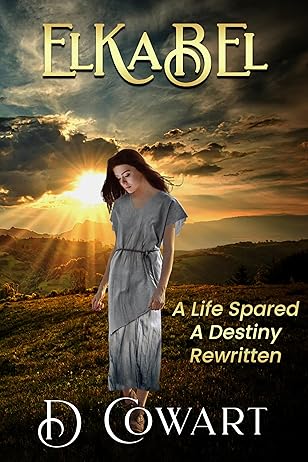
My guest today is author D. Cowart, who has recently released her second novel, Elkabel: A Life Spared, A Destiny Rewritten.
About D. Cowart
D Cowart, born and raised in Atlanta, Georgia, began her writing journey as a young girl. She’s written poetry, children’s stories, songs, song lyrics, a short story, and family skits. A Prison of Silk is her first novel. It’s a story of subjugation in ancient times when girls and their mothers were controlled and owned by men.
Males in other countries today still have rights denied to females. One’s gender reigning supreme over the other is unjustifiable in any era. The premise of this book came to her over thirty years ago. A Bible passage she read showing the low value placed on women infuriated her when she read it.
The author’s stories are character and plot-driven with a new slant on old ideas.
Kaye: Would you begin by telling us about your author journey? How long have you been writing? What inspires you to write?
D. Cowart: I’ve been a storyteller since childhood. Once I terrified my cousins with a ghost story I told them. They had trouble sleeping that night. Since then, I veered from scary tales forever. Through the years I created many, many children’s stories but never tried publishing. I’ve written poems, song lyrics, two songs with tunes, a short story, many articles on topics of interest to me, and a couple of skits for my grandkids to act out.
Kaye: Elkabel is actually your second novel. This one and your first, A Prison in Silk, both take place during the same time period, when women weren’t valued very much. Can you tell us about what inspired you to write these stories?
D. Cowart: I was a third daughter to parents who wanted a boy. Before I was 2 years old, they had a son! I saw the privileges afforded a male child that females had to work for. The time period of the Bible shows beyond question the way women were devalued. The injustices of then and since inspired me to write A PRISON OF SILK.
Kaye: Where do you find information about the time period of these books? What type of research do you do?
D. Cowart: Historical articles of all kinds, even the Bible. If I have any questions, and I always do, I spend as much time as it takes to get a better understanding of that topic even if it’s to write a short sentence. Research keeps me interested and sort of focused as I write my book. This time period has interested me for as long as I can remember and it’s an enjoyable part of my writing process.
Kaye: Is there a third book planned at this time?
D. Cowart: Yes. The third one picks up where the first book ended. I’m excited about the character in this book and his journey.
Kaye: You write historical fiction. Who would you say is your favorite historical character?
D. Cowart: In a broader sense my books are historical fantasy. In my first book, the king is a combination of Alexander the Great, King Solomon, and King Nebuchadnezzar. Even Hannibal with his use of elephants in war.
Kaye: What author or poet (dead or alive) would you most like meet and visit with?
D. Cowart: So many come to mind that I’ll pass on this question.
Kaye: What other outlets do you find for your creativity besides writing?
D. Cowart: I’ve had many hobbies, refinishing furniture was one (loved seeing the wood shine through layers of gunk). I did genealogy work long before it was available online, and dabbled with drawing and acrylic painting. I also sang in a community chorus and loved to line dance.
Kaye: What traits in your main characters do you most identify with?
D. Cowart: I think when you don’t have a lot of support growing up, you have to be resourceful, even brave, and you become stronger in the process because you must.
Kaye: What is the best piece of writing advice that you have ever received?
D. Cowart: When I decided to write a novel, I tapped into wonderful help online. Author Jerry Jenkins’ articles and tips guided me when I first began and countless others since. I guess the thing I want most to achieve is writing a strong beginning, a strong middle, and a strong ending for my stories.
Kaye: Where do you hope to see yourself as a writer in ten years?
D. Cowart: At my age, I just hope to be alive in ten years.
About the Book
In an ancient world when females had little to no power, fifteen-year-old Elkabel becomes an orphan. Family, friends, and all other inhabitants of her province have been slaughtered. She survives only because Medeba, an enemy soldier, defied the royal command and saved her.
Elkabel’s resilience and resourceful attributes take her from one strange life to another. She experiences customs, places, and people a farm girl never knew existed. Never belonging, uprooted again and again, she struggles to make a life of her own.
Will the constant challenges make or break her? And how will helping her change the young soldier’s fate? Don’t miss reading ELKABEL, A Life Spared, A Destiny Rewritten, a fast paced and unpredictable story of survival.
I did a final proofread of the manuscript for Elkabel, A Life Spared, A Destiny Rewritten, by D. Cowart and immediately knew that I wanted to write this review. All opinions stated here are my own.
This story has all the elements of a tragic romance. In the aftermath of a raid to wipe out their people, with orders to spare no one, Medeba finds a young girl, still alive amoung the carnage and can’t bring himself to end her life, although it could mean his own life, should his disobedience be discovered. That girl was Elkabel, and although circumstances rake them both in very different directions, the bond between them remains and can’t be denied.
Elkabel faces trials that make her stronger, while Medeba abandons the only life he knows to find the girl he saved and loves, even before his feelings are realized in his own mind. But it seems fate is determined to keep them apart, as each makes their own way through the world and carries them away from each other.
The descriptive language Cowart uses places the reader in the times and settings of the story, where one can’t help but root for the lovers unrecognized to find one another and allow their love to be realized. Her research and knowledge of the times is evident in every scene.
This historic fantasy is delightful and entertaining, and you won’t want to put it down once you pick it up. I give Elkabel five quills.
Did you know you can sponsor your favorite blog series or even a single post with an advertisement for your book? Stop by the WtbR Sponsor Page and let me advertise your book, or you can make a donation to Writing to be Read for as little as a cup of coffee, If you’d like to show your support for this author and WordCrafter Press.
_______________________________________
This post is sponsored by the Women in the West adventure series and WordCrafter Press.
My guest this month on “Chatting with New Blood” is author Patty L. Fletcher. Her debut novel was Sides of the Order, Book 1 of The Blended Lives Chronicles, which I reviewed back in June of 2024. (You can read my reveiw here.) While I’m writing this, she is busy doing the final edit and proof read on Book 2 of the series, A Battle of Choices. Yep. Patty is in this author thing for the long haul, and she’s got the whole series thing going in full swing. In addition, she is an advocate for those who are visually impaired, like herself and she is active in several organizations which promote inclusion and accessability. Her short fiction has been included in both the Visions and Midnight Roost anthologies from WordCrafter Press, and her poetry was included in Poetry Treasures 3: Passions. She often volunteers as a host for WordCrafter Book Blog Tours, as well, and is always willing to share around WordCrafter and Writing to be Read promotions on her social media channels. She’s here with us today to share some insights into the world of the blind and visually impaired, as well as letting you know about her debut novel.
About Patty Fletcher
Patty L. Fletcher lives in Kingsport Tennessee where she works full time as a Writer with the goal of bridging the great chasm which separates the disAbled from the non-disAbled. She is Also a Social Media Marketing Assistant.
Kaye: I love that your bio gives details about yourself as a person first. You don’t even mention that you are a published author until near the end. So many author bios, including mine, talk about being an author first and throw in the “oh yeah, and I’m a real person with other interests” almost as an afterthought.
Patty: Hello, Kaye and all.
Thanks for having me today.
When I was considering what to put into my media kit, which is where the bio you reference comes from, I gave some thought to what people ask me when we talk about my work. Most of the time, when an interviewer begins asking questions, they talk about who the author is as a person.
When bloggers blog, they also talk about their personal side and people seem to love it. So, to me it only made sense to start that way.
I learn by watching others, doing what they do, then once I’ve a grasp of it all, I add in my own style.
Monkey see monkey do then add in a little of you, is a great thing to remember when entering the writing world.
Kaye: I think this shows a lot about how we define ourselves. I define myself, first and foremost, as an author because writing infiltrates every part of my life. I love to go sit in the forest, watch the birds, smell the flowers, listen to the river flow, and write poetry about them. People I know and relationships I’ve had find their way into my stories. It all come back to the writing. You, on the other hand, define yourself first and foremost by your blindness, which also effects every other part of your life, so it comes first in your bio. So, let’s talk about that aspect of your life.
Kaye: You’ve lived with blindness all your life. What do you feel is the most common misconception about blindness that people hold?
Patty: People tend to say things such as, “Oh, you’re amazing.” Over the slightest things. I have been told it is amazing that I can feed and care for myself, ridiculous things such as the reason I don’t like watching TV is because I cannot see it. That cannot fly, because we have audio description to tell us what’s happening on the screen and even before that was a thing, we blind folk liked TV as much as the next person.
Nope, the reason I don’t watch TV is because that’s chewing gum for the brain. My brain wants substance. Real meat the brain can sink its teeth into. To me, that’s not coming from a TV show about a deputy with a bullet in his pocket.
It’s a great diversion sure, but I’d rather be diverted by a book.
Kaye: I see television is just another form of story telling, because I also do screenwriting, I suppose. But, my grandmother was blind from diabetes, and she used to sit and listen to the television all the time with the rest of the family. In fact, to entertain me, we would pretend to be the characters in my favorite television programs and make up our own stories. But she also listened to talking books, which were around even when I was a kid. Before the written word, people would sit around a fire and listen to the storyteller relate the stories of tribal histories. I think story is a human quality, no matter how we choose consume it. I think it is wonderful that you choose to consume your story through books, and also that you choose to share your own stories in that way.
Kaye: You’re continually active in trying to raise awareness about your disability and there is a huge pool of readers out there with visual impairments. What are some things authors can do to reach that audience?
Patty: The first thing I think people need to understand is that no two blind people process information the same way. Some read braille. This means when they download an eBook they’re downloading it to a braille display. When you write, don’t use a bunch of fancy fonts. Whether a person is visually challenged, totally blind, or has some other print disAbility you’re losing a huge part of your audience right there.
Some blind people, like me for instance, use a screen reader. A screen reader is a software program such as Windows Narrator, which is built into every Microsoft Windows computer which speaks what’s on the screen. So, if you use photos in your digital work, it’s a great idea to include alt text in your photos. This is especially important for the book cover, which is something designed to grab the attention of the buyer. Odds are, if I run on an ad or a blog post which doesn’t include good descriptive text, not something which says, “A photo of the book cover which says, “The Blended Lives Chronicles” That’s not descriptive. I want to know what the cover looks like.
Be descriptive.
Another thing which sends me away without looking further are unlabeled links. If all I hear is “Llink, Link” every time I scroll through a post or website, I’m not looking at it one, more, second than it takes me to close it out. If I don’t know what that link goes to, it’s not getting clicked.
Another thing, even if you don’t plan to release your work as an audio book, take special care with your grammar. When a blind person uses a screen reader with awareness and ability, they can catch a grammar error a mile away and it can also change the way a scene is perceived. Besides, if we’re lucky, the National Library Services for the Blind and Print Disabled program might pick it up and record it for their vast library. Make it reader friendly. Use a program such as the Microsoft Read Allowed feature to listen to your books before you publish. I promise you’ll be glad you did.
Kaye: You have lived a life of service. It seems like you do a lot. Can you tell us about your work with the ADP Performing Arts Committee, Blind Information Technology Specialists, Guide Dog Users Incorporated, and the American Council for the Blind?
Patty: First, a correction the organization is “The American Council Of The Blind” and it is written exactly that way. These things are important because ACB (American Council Of The Blind means the organization is made up and run by blind people. The Word for implies it’s done for us. Not of and by us. Words and Details are so important to the meaning of things aren’t they?
As stated in my bio, I’m just now finding my way with BITS. They’re a special interest affiliate of The American Council Of The Blind focusing on blindness technology. They’re getting ready to offer a class on Microsoft 365 which I use daily. This will help me, and others learn to use it with our screen reader programs, and I cannot wait to take it. I’m certain there are many features within this program I am not aware of. I am sure this will enhance my productivity.
The ADP (Audio Description Project) committee is something I got into about a year or so ago. The committee I’m on focuses on the importance of getting audio description into live theater and national park tours, museums, and the like.
Easy right?
Humph! People aren’t as receptive as you’d believe.
Guide Dog Users Incorporated (GDUI) is another special affiliate of The American Council Of The Blind. Our mission, to raise awareness of guide dogs and advocacy issues.
Two of the biggest things we’re working on are problems with being denied a ride by a rideshare company such as Uber and troubles with needing to prove our dogs are real service animals before we can fly.
One would think in the 21ST century this wouldn’t be a problem, but it is. In fact, thanks to a lot of people abusing the system with their birds, bunnies, and snakes we’ve been pushed back decades.
I’m currently running in the GDUI 2024 election. I hope to be elected as a board of director. This will place me in a position where I can do work with a much more narrowed focus toward advocacy and awareness. Having the power of an entire bord alongside you can surely be effective.
Kaye: Your Blended Lives Chronicles series features a blind protagonist, who has learned to overcome other disabilities as well. What has Laya Moonwalker done to adapt to her afflictions? She even has a trusted guide dog, King, who she has a unique connection with, and she serves on governing boards in her world. How much of Laya Moonwalker is you?
Patty: Let me start with the synopsis of the book.
Lady Laya MoonWalker is a well respected author and magazine owner and a high priestess in the magickal community. After a drawn-out battle with the forces of dark magik, she has come into her own. She lives and works on Planet Korponious, where she is the owner and creator of an Interplanetary Magazine called “Blended Lives Chronicles.” Her mission is to blend the lines of race, creed, and disability that separate so many and to elevate the recognition of the training and ability of Service Animals of all kinds to a new level. She has just been accepted into the Blended Lives Federation and now hopes to continue her work in a way like nothing known to her before.
Laya has created allot of wreckage along the way through her dark journey into the light, and now she wishes to set this to right. She has just received her best break ever. Frank Prince, the CEO of The Blended Lives Learning Center, has invited her to the Celtic New Year Convention and Witches Ball as a reporter to write a story on the progress of The Blended Lives Planetary Federation. She will be their guest speaker at the opening ceremonies.
When Laya arrives at the Celtic Convention, she finds herself face to face with an old and dear friend, Blended Lives Learning Center Instructor and member of the Order of the Night, Derrick Gibbous. As they begin to connect, causing old sparks to reignite, they are tossed into a nasty battle from which not everyone will escape. People are not as they seem, and not everyone supports the side for which they appear to work.
As their love for one another grows, so does the battle. Despite everything, Laya and Derrick are determined to see their work to unite beings of all kinds succeed.
As you can see, Laya walks a lot of paths within her life. Of course, she is a work of fiction, but her battle with mental illness is quite real. That and what she experienced at the hands of her fiancé Jack also came from my own personal experience.
We’re to write what we know so that part is me.
Another thing which comes from my own perspective is the relationship she and King have together. This too comes from my own experience. My guide dog and I are quite bonded, and he needs no human words to let me know what’s what. If people would only pay attention, they would have no problem reading their dog’s thoughts. Maybe it’s a bit dramatized, but it’s also quite real. The trainers mean it when they say, “What you think and feel travels down the leash, and what the dog thinks and feels comes back.”
But for me, it’s more. I can be sitting in the living room not speaking a sound, only thinking to Blue that it’s time to go out or eat and the next thing I know, he’s by my side. Coincidence? No.
Kaye: You have founded and run a couple of different businesses which can be found on your site, Patty’s Worlds: Tell-It-To-The-World Marketing, of which you also host a podcast, and The Writer’s Grapevine Online Magazine. Tell us a little about these two endeavors.
Patty: They are one in the same. Nothing changed about the business I run other than the name and a little restructuring on the pricing.
I’m a content promoter and now I just have people pay a fee for being a sponsoring member of Patty’s Worlds and they receive those services.
Kaye: You also have stories in the Visions and Midnight Roost anthologies, and poetry included in the Poetry Treasures 4 anthology by WordCrafter Press. Can you talk a little about collaborating on an anthology and how that went for you?
Patty: I enjoy collaborating with other writers on such projects. Three things gave me problems when working with a few situations in the production and marketing side.
First, authors need to have a good awareness of what an anthology is and how it gets put together. I once worked with an author who had no idea what was in store when she got the idea. She ended up having to backtrack. There was no contract spelling out who had what right, how royalties would be split, a whole host of things were not dealt with correctly right from the start. Had I not already had some experience with anthologies by that point it could have been a true disaster. Instead, I wrote to her, with some tips and a mock contract and helped her get back on track. The anthology was published, and I made it in.
The second problem I have had when collaborating with authors on anthology projects has been consistency. Again, having all one’s ducks in a row before one begins is absolutely a must.
These things being out of whack for a blind person can make an already daunting job twice as hard. For me at least, I want and need to know exactly what I need to be doing as my part of any project and if those in charge don’t have it together, I’m sunk before I ever begin. That’s more an OCD issue rather than a blindness issue. This makes it extremely hard for someone with a mental health disability.
Finally, I had to deal with working on the marketing end of things with others. Blog tours can be absolutely maddening. I’ve all but stopped participating. I refuse to put a post on my blog without graphic labels (Alt text) in photos, and unlabeled links. I’ve said it at least a jillion time yet when I get into a tour some of the tour stops don’t comply with my wishes and then I’m stuck having to reblog a post somewhere I already know blind readers will not enjoy. So, if you’re out there reading and you’re thinking it might be a great idea to collaborate with me, make sure you’re ready to learn how to jump those hurdles because they’re non-negotiable.
No descriptions or labels, no deal.
Kaye: Please let readers know where they can find you online.
Patty: I’m happy you included me in your interview series. I hope people have a little better understanding of who I am and what I do.
Just in case I left anything out, here’s all my information below. I’ve included links to The American Council Of The Blind, Guide Dog Users Incorporated and BITS.
Please make sure to visit them to gain a better understanding.
Thanks again for reading.
May Harmony find You and Blessid Be.
About Patty L. Fletcher
Updated April 2024.
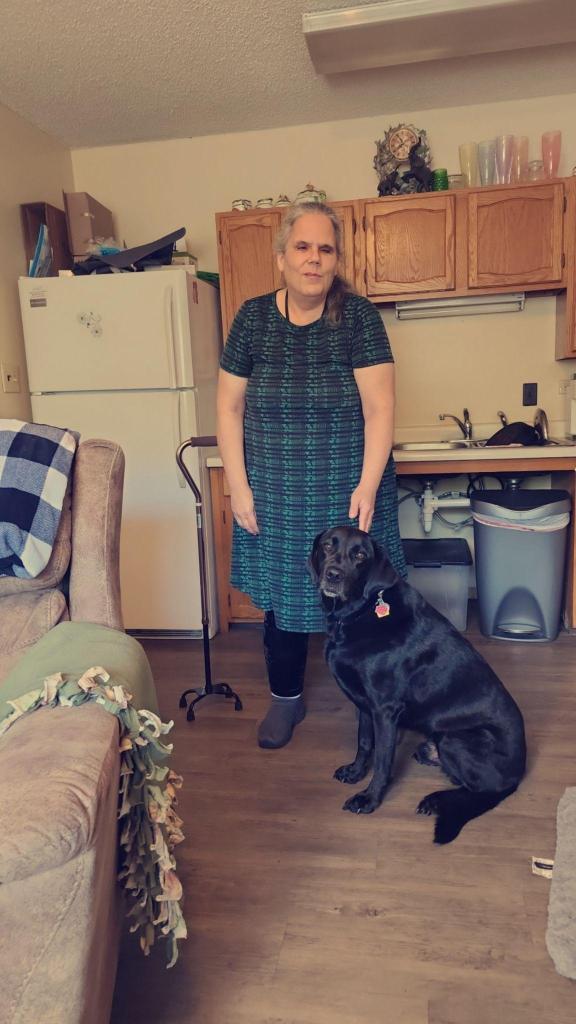
Patty Fletcher is a single mother with a beautiful daughter, of whom she is enormously proud. She has a great son-in-law and six beautiful grandchildren. From April 2011 through September 2020, she owned and handled a black Labrador from The Seeing Eye® named King Campbell Lee Fletcher A.K.A. Bubba. Sadly, after a long battle with illness on September 24, 2020, King Campbell went to the Rainbow Bridge where all is peace and love. In July 2021, she returned to The Seeing Eye® and was paired with a Black Labrador Golden Retriever cross named Blue.
PATTY’S BLINDNESS…
Patty was born one and a half months premature. Her blindness was caused by her being given too much oxygen in the incubator. She was partially sighted until 1991, at which time she lost her sight due to an infection after cataract surgery and high eye pressure. She used a cane for 31 years before making the change to a guide dog.
WHERE SHE LIVES AND WORKS…
Currently, Patty lives and works in Kingsport, Tenn.
Though she’s not yet found her place there, she is learning things from their informational content.
She’s the creator and owner of Tell-It-To-The-World Marketing (Author, Blogger, Business Assist), The Writer’s Grapevine Online Magazine and the creator and host of the Talk to Tell-It-To-The-World Marketing Podcast, which have recently been reconstructed and can all be found in Patty’s Worlds.
WRITING GOAL…
Patty writes with the goal of bridging the great chasm which separates the disabled from the non-disabled.
Today my guest is author Sylva Fea, whose debut book is a short fiction collection, rather than a novel. She got her start writing for children and has published several children’s books. Let me introduce her, and then we’ll go on to the interview, followed by my review of her short story collection, No Fairytale.
About Sylva Fae
Sylva Fae is a married mum of three from Lancashire, England. She grew up in a rambling old farmhouse with an artistic family and an adopted bunch of dysfunctional animals. Her earliest memories are of bedtime stories snuggled up close to Mum to see the pictures. It was a magical time, those last special moments before dozing off to sleep would feed dreams of faraway lands and mystical beings. She spent twenty plus years teaching literacy to adults with learning difficulties and disabilities but now lives in Cheshire, juggling being a mum, writing children’s stories and keeping up with the crazy antics of their naughty rabbits.
Sylva and her family own a small woodland and escape there at every possible opportunity. Adventures in their own enchanted woodland, hunting for fairies and stomping in puddles, originally inspired Sylva to write stories for her girls. Whether it’s sat at the campfire in her own woods, or pottering around the beautiful local countryside, Sylva now finds her story inspiration being out in nature.
Sylva published her first children’s book Rainbow Monsters, in 2017. She has since published seventeen other children’s picture books, two chapter books, four illustrated anthologies, and has several short stories published in other anthologies. Three of her books have won Best in Category for children’s books at the Chanticleer International Book Awards and she’s seven won Reader’s Choice Awards. In addition to writing her own, Sylva has ghost written several books, and is an editor and writer for Mom’s Favorite Reads magazine and Connections eMagazine.
Kaye: I just released the first three books in my own children’s series, so I want to ask you to talk about being a children’s author briefly. How did being a children’s author come about for you? How did you handle illustrations? What were the challenges in writing for children?
Sylva: I started making up stories to entertain my children when we went on walks in our woods. Hunting for pixies and faeries hiding in the trees turned a boring walk into a woodland adventure, and it kept my girls amused. Later on, my middle daughter asked if I would write the stories down so she could read them herself, and then she demanded pictures to go with the stories. I obliged, of course, but I never intended to publish anything – these were just to entertain my children, and fun for me to create.
Sometime later, I joined Twitter (X) and my first follower was the amazing author, Lesley Hayes. She asked me to write a short story for her blog. I was daunted by the prospect, but gave it a go. Lesley convinced me to keep writing, she encouraged and supported me and gave me the confidence to publish my first children’s book. I discovered how much I loved writing stories and haven’t stopped since.
Kaye: You started your writing career with children’s books and then, moved on to short fiction for adults. How did that transition happen?
Sylva: Lesley Hayes encouraged me to join a group for indie authors (I now admin it) so I could learn from the more experienced authors. The group was putting together an anthology (You’re Not Alone) in aid of Macmillan Cancer Support, an although it wasn’t my genre, I wanted to get involved. I enjoyed the challenge of writing a short story, and submitted more stories to our group’s anthologies. A couple of years later, I joined up with some author friends to run an online magazine, Mom’s Favorite Reads, which ran a monthly flash fiction challenge. This gave me the opportunity to write flash stories – another new challenge to master! I now help author, Melanie P Smith with Connections eMagazine, and contribute 1000-word stories for the picture prompt challenge. The transition from children’s stories to adult shorts was quite easy because the word counts are similar and my brain is programmed to tell a whole story in a few words.
Kaye1; I’m curious. Why did you choose to use a pen name? And how did you choose the name to use?
Sylva: When my children were little, I wanted to safeguard them from the world of social media, and so set up accounts under a pseudonym, Sylva Fae. This meant I could have a public account and keep my real name account for just family and friends. My youngest daughter’s name is Sylva – I love the name – and it means ‘of the woodlands’. Fae is a term to cover all kinds of faerie folk, so Sylva Fae simply means woodland faerie. I like names with meanings, and this fit with how I started out, telling faerie stories to my girls in the woods.
Kaye: You’re just now releasing your first short fiction collection, No Fairytale. Tell us about these stories. Do they have a common theme? What inspirations can you share with us?
Sylva: The stories are very random, both in subject, and in length. They range from 200-word flash fiction stories, to 8k words. There are a few familiar themes that appear; I often use my woods as a setting, and characters are based on people I know. I guess the common theme is me, because every story contains a little of my real-life experiences.
Kaye: You are a wife and mother, and you write, too. Do you have any advice for juggling family and writing life?
Sylva: All of my stories are planned in my head before they ever make it onto paper. I play around with ideas, and think through how the characters would react to different scenarios, while I do mundane tasks, like washing up and vacuuming. A boring chore becomes an opportunity to plan a story. I tend to work out dialogue while walking, so walking to and from school to pick up my girls also becomes a multitasking opportunity. I try to give myself a little time to write each day. Some days I get the chance to work on my laptop for a few hours, but on other days, I grab five minutes here and there, typing on my phone. Writing every day keeps me sane, but family comes first, so multitasking is the only way I can do this.
Kaye: Some of your books have won awards. Can you talk about the award-winning books? Which award do you feel is the most prestigious?
Sylva: My books have won sixteen awards over the years. It’s hard to pick the most prestigious, so I’ll pick my favourite. My very first book, Rainbow Monsters won in the children’s story category in the Chanticleer International Book Awards. Winning this award gave me a huge amount of confidence to become a children’s author.
Kaye: You also write for Connections emagazine. Would you tell my readers a little about that? What type of content do they print? And what type of writing do you do for them?
Sylva: Connections is primarily a magazine for people who love to read books. It features author interviews, new book releases, short stories and poems, but it also contains general interest articles and interviews. As I mentioned before, I write short stories for the magazine, but I also contribute articles, interviews and source general interest content. The magazine is always free to download, so feel free to check it out: https://melaniepsmith.com/emagazine/
Kaye: Do you plan to stick with short fiction? Or do you envision a novel in your future? Do you already have future works planned out?
Sylva: Now my children have grown up, I keep meaning to leave the children’s genre and write for adults, but I still have a ridiculous number of works in progress that I want to finish before I leave picture books for good. I have a YA story ready for publishing, and two adult novels on the go. The new challenge of writing a full-length novel is a little daunting but I keep telling myself, to just take one chapter at a time, and each chapter is just the same as writing a short story. We shall see…
Kaye: Please tell my readers how they can find you online, if they’d like to learn more about you and your books. (Include links here.)
Sylva: You can find me on most social media by searching for Sylva Fae, but I am stuck in my ways, and mainly use Facebook for connecting with readers.
This multi-genre collection of 36 tales is comprised of 18 short stories and 18 flash fiction stories. From crime in a quaint village to woodland horror. Go on a time-travelling mystery, or imagine the horror of encountering a real earworm. Discover magic and mayhem, mystery and adventure, and delight in tales of karma and vengeance. No Fairytale is an eclectic assortment of stories to entertain a wide audience.
My Review
I proofread a copy of No Fairytale, thus discovering both book and author. What follows is my honest review. All opinions stated here are my own.
No Fairytale is a collection of short stories by author Sylva Fae. Tales of magic and mystery with a hint of life lessons mixed in. With more than thirty short and flash fiction stories, this collection is a worthy read. Too many stories to review individually, but I’ll offer up here my favorites.
“The Magic Box of Apples” – A tale about the magic of kindness. This one touched my heart. Granny Apple has a magic box that is always filled with what she needs. But is it really magic? Peter Aspen learns the secret as this short tale unfolds.
“Hollin Hey” – I’m a bird lover, so it is only natural that I would fall in love with this story about an animal sanctuary and a recued crow. The touching ending makes it all worth it.
“No Fairytale” – The book’s namesake story is one of cheating and revenge. No Fairytale indeed! When this girl says it’s over, she means it.
“The Witch in the Woods” – A short ditty about a self-perpetrated deception. But this witch has good reason and good intention.
“Dwelling in the Shadows” – I love this story because of the somber tone and poetic language that could make one believe they have stepped into a fairytale. The story of a secret pact told so eloquently I had to read on to the end.
The collection, as a whole, is delightful; a mixture of short and flash fiction which has a little something for everyone. The characters in these stories are easy to relate to because we’ve all been there. Sylva Fae takes the ordinary and finds the magic in it. I give No Fairytale five quills.
Today I’m chatting with author Julie Jones about her author journey thus far, as she releases her debut novel, Blood Follows Blood: The Legend of Ginny Sutton. I’ve worked with Julie in the past, and she has stories in both the Visions and MidnightRoost anthologies from WordCrafter Press, so I know she is a top notch writer who knows how to craft a good story. She is a promising new author and I welcome her here today.
When she asked if I’d like to review her first novel, I was happy to oblige and to invite her to be the first guest on this new blog series, where I’ll be interviewing new authors and reviewing their books. I’m pleased to have her as my guest for this first segment.
So let’s learn a little more about Julie, and then we’ll get into the interview.
About the Author
Julie Jones is an award-winning writer from northeast Oklahoma and author of the Legend of Ginny Sutton, a weird western series debuting in June 2024 with the first book titled Blood Follows Blood.In May 2020, she won the Best Horror Story award from the Oklahoma Writers Federation for Camelot, a chilling ghost story set in the once-impressive and now demolished Camelot Hotel in Tulsa, OK. Julie’s short stories can be found in anthologies published by WordCrafter Press and WordFire Press, as well as her own collection Chain Reaction available on Amazon.
Interview
Hi Julie. I am thrilled to have you as my guest today. Thank you for agreeing to chat with me.
Please tell us a little bit about yourself and your author journey to this point.
I’ve been fascinated with reading and storytelling as long as I can remember. I wrote poems and stories as a child and loved thinking up my own Weird Al-style parodies of favorite songs. In high school I was an accomplished student journalist and did well in creative writing and English classes throughout my education. Once my kids reached the age they no longer needed me quite as much, I wondered if I still had any chops. I found a short-term creative writing class at my local technology center and loved it so much I attended two more times. The third class resulted in a long-term writing group, and we published three books together. I learned a lot from that talented group and that’s where I met my editor, Aarika Copeland. In 2020 I entered the Oklahoma Writers Federation short story contest and won the horror category. The honor gave me a fresh boost and I decided to pursue writing even more seriously. Since then, I’ve attended the Superstars Writing Seminar in Colorado Springs three times and had several short stories published. Now I’ve got a novel series of my own!
You’ created a strong female protagonist who is believable and relatable. How wàs the character of Ginny developed?
In early 2022 I stumbled across an open anthology call for weird western stories. The description tickled my fancy and some brainstorming birthed Ginny Sutton. The story was ultimately rejected, but Ginny wouldn’t let me alone. She insisted on spinning yarns about her dead brother-in-law and sharing her heartbreaking backstory. I recognized the spark of true inspiration and began writing down all of Ginny’s adventures. Along the way I tried to put not only my best, but also the broken parts of myself into the story. Some readers will identify most with Ginny’s brokenness and flaws, while some will identify with her strength and determination. Both are valid. Ginny is me, and my mother, and my best friends, and every strong, capable woman I’ve ever known. By the way, the original short story is now chapter four of Blood Follows Blood.
You’ve written a kind of genre mash-up. I love that. Did you chose the genre or did the story dictate it? Why weird western?
It makes more sense to me now than it did when I decided to do it, as odd as that sounds. At the time it just struck me as a lot of fun, so I bought popular books in the genre and read them, then read their reviews. The insights were valuable, but the main thing I figured out was that I needed to do it my way. That meant throwing everything I love into the pot, stirring it all together, and hopefully serving a delicious, satisfying story to my reader. Setting it in the old West made perfect sense once I considered that all my favorite stories, books, songs, and movies feature characters who are self-reliant, personally responsible, capable, mostly moral, and believe in justice. The West encapsulates all those ideals, and to me it made sense to take the quintessential American mythos and marry it with everything that has shaped me as a person.
In your bio, you claim that your fiction is on the weird and creepy side. With your stories in two WordCrafter anthologies, I can verify the truth in that. You’re an average Jane, or maybe an average Julie, but you write all these strange stories. Where do your story ideas come from?
On paper I’m more boring than drying paint but I’ve always loved the weird and macabre, the fantastical and futuristic. I grew up in a town of less than 1,500 people before the internet existed, so books were my escape. I don’t know how many of my classmates spent their summers on the Ringworld with Louis Wu and His Motley Crew or fled Emond’s Field with the Dragon Reborn, but I did. I suppose slice-of-life stories or standard fiction doesn’t appeal to me as much because I live in those worlds already. Take me somewhere impossible to ride along with incredible people doing amazing things. That’s what I want to read.
This tale begins with the story already in motion. Instead of giving us background or introducing the character, you just slam us right into an action scene, then fill us in on the rest as the story unfolds with little exposition, works for this story quite well. But I have to ask, how did you decide that that was where your story needed to begin?
I once received the advice, “In late, out early.” Meaning, don’t bore the reader with things like Ginny walking across the high desert lugging her saddlebags and worrying about water. Start with the inciting action and backfill, then end the story when it’s over, not five pages of exposition later. That piece of advice dovetailed nicely with my journalism training where I first learned the importance of snappy introductory sentences and paragraphs that hook the reader. I decided to lean into the classic pulp novel feel with this series and structure each chapter like its own episode. I wasn’t sure if it would work at first, but feedback has been positive. There’s a lot of action and Ginny endures quite a bit, so I wanted to give readers plenty of points along the way where they could break from the story if they wanted or binge if it was just too compelling to stop. But each chapter purposely has my twist on the classic pulp episodic feel.
What was the best part of writing this Blood Follows Blood? Why?
Discovering the story along the way and brainstorming creative ways to connect the events was by far my favorite part. I also crammed so many hidden easter eggs into this book (and its sequels) that I’ve now forgotten them all. Some are obscure and only other fans of that particular thing will recognize it, and some are just for me that nobody knows, but they were all fun to include. I love every weird thing in this book, and figuring out how to connect it all together was one of the most enjoyable things I’ve ever done.
What was the most difficult part of the book to write? Why?
Editing was tough, and I have to give recognition to Aarika here. I tend to write blunt-force style and things like emotional cues and sensory details run sparse. She did a lot to highlight where I needed to add those things and challenged my thinking on some of Ginny’s desires and motivations. At one point I realized time and distances weren’t working out and had to fix that, but because everything in this book is so interconnected, it was a job to make sure I caught all the ripples downstream of every change.
What is the best piece of writing advice you’ve ever been given?
This is tough because I’ve been honored to meet and visit with many incredible authors. I wish I could remember who told me “In late, out early” but I don’t. The very best thing a writer can do is finish the story. All the other advice that’s given to authors can be addressed once the first draft is done, but if someone is new to the craft, just finish the story. And one more thing, why is the most important question you can ask yourself about your story and your characters. Why was Ginny out in the high desert? Why did Jim’s corpse walk into her camp? Why does she hate him so much? Stories are built on this word.
It’s been a pleasure to have you as my guest today. Please tell readers where they can find out more about you and about Blood Follows Blood: The Legend of Ginny Sutton.
Thanks so much for your time! I’d love for everyone to follow me on Facebook and/or Instagram, and over on my website is a signup form for my monthly newsletter. Readers will want to definitely check it out, as subscribers get early news, chances at secret giveaways, and every newsletter ends with a picture of my dog!
How many times does a woman have to kill the same outlaw?
Broken and alone, Ginny Sutton roams the West. After hunting down and killing Jim Puckett—her former brother-in-law and notorious leader of the Mad Dogs gang—Ginny believes justice has finally been served. Until he walks into camp hellbent on claiming her soul.Plunged into a waking nightmare of possessed posses, thirsty vampires, stubborn corpses, and every other manner of supernatural evil her enemies can raise against her, Ginny is forced to embrace one universal truth:
HOPE IS NOT A STRATEGY
All she wants is peace. But the fates have other plans for her, and more than ever her survival depends on grit, wit, and an open heart.Will Ginny survive her bloody path to absolution?
Saddle up for a wild ride into the weird west where the myths are real and body count matters!
My Review
Blood Follows Blood: The Legend of Ginny, by Julie Jones is a captivating weird western that will keep you thinking, “What else could possibly happen?” And, “How much can one girl take?”
This story has so much nonstop action that it makes the reader tired, but Ginny Sutton takes it all in stride. I guess when you live in a world where nothing stays dead, battling supernatural beings wouldn’t make you bat an eye, and deals with the devil would come as no surprise.
For five long years Ginny Sutton had been is a woman haunted by her past and out for revenge, chasing Jim Puckett half-way over the mountains and back. When she finally decided to give it up and go back home to Oklahoma, she caught up with him and chased him some more, hunting him down like the mangey dog he was. But now, Jim won’t stay dead, and the devil’s got a price on her head.
I was impressed with the craftsmanship of this debut novel. Jones has done her research, setting the perfect tone for the tale, with a strong female protagonist I couldn’t help but like.
A delightfully dark, weird western tale that you won’t want to put down. “Bravo!” to Miss Jones. I give BloodFollows Blood five quills.
______________________
If you are an author releasing a debut novel, and you’d like to be a guest on “Chatting with New Blood”, please drop me a line at kayebooth@yahoo.com.
______________________
This segment of “Chatting with New Blood” is sponsored by The D.I.Y. Author and WordCrafter Press.
Being an author involves not only writing, but often, the publishing and marketing of the book.
In this writer’s reference guide, multi-genre author and independent publisher, Kaye Lynne Booth shares her knowledge and experiences and the tools, books, references and sites to help you learn the business of being an author.
I’m so excited to tell you about the new things happening on Writing to be Read, starting this month. We’ve got a new way to build revenue for the blog and promotion opportrunities for you, as well as two new blog series on Saturdays. Read on to learn more.
Sponsor page is now live
I’m happy to be able to tell you that the new sponsor page on Writing to be Read is now live . Now you can be a WtbR sponsor and get your books or services promoted right here on this blog each month. Sponsors must be book, writing, or publishing releated. That’s the only rule. By becoming a WtbR sponsor, you not only help to support this blog and my author business, but you take advantage of affordable marketing opportunities that help you to reach a wider audience with your books and services.
Here’s how it works. You can choose from a single time promotion or a weekly ad for a sponsorship of three months or annualy. The new page has all the pricing and other details. All sponsors will also be listed on the sponsor page, as well. You can be a WtbR sponsor and sponsor your favorite WtbR blog series for as little as $5 a month. If you are interested in being a sponsor, I encourage you to contact me at KLBWordCrafter@gmail.com prior to submitting payment found there. Let’s chat to find the sponsorship plan that will work best for you.
If you’ve been following this blog for a few years, you may remember this blog series, although it has been a couple of years since I ran a segment. It’s not a new blog series as much as a revived blog series where I interview seasoned professionals to gain insights into the worlds of writing and publishing. We’re starting out right, with national and international bestselling author Kevin J. Anderson as my guest for the first segment. He’ll share insights into the publishing industry, talk about what works for him, and offer advice on increasing your writing productivity.
“Chatting with New Blood”
This series is a companion series to the “Chatting with the Pros” series, where I will be interviewing new authors and chatting about their author journey and their debut novels. For this series, my first guest with be author Julie Jones, and we’ll be chatting about her weird western novel, Blood Follows Blood.
Will I see you there?
I hope I have piqued your interest in the upcoming changes. Watch for the two new blog series on Saturdays and be sure to visit the sponsor page to become a member of the WtbR sponsors. Your support is always appreciated.
_______________________________________________
For Kaye Lynne Booth, writing is a passion. Kaye Lynne is an author with published short fiction and poetry, both online and in print, including her short story collection, Last Call and Other Short Fiction; and her paranormal mystery novella, Hidden Secrets; Books 1 & 2 of her Women in the West adventure series, Delilah and Sarah, and her Time-Travel Adventure novel, The Rock Star & The Outlaw. Kaye holds a dual M.F.A. degree in Creative Writing with emphasis in genre fiction and screenwriting, and an M.A. in publishing. Kaye Lynne is the founder of WordCrafter Quality Writing & Author Services and WordCrafter Press. She also maintains an authors’ blog and website, Writing to be Read, where she publishes content of interest in the literary world.
This post is sponsored by The D.I.Y. Author and WordCrafter Press
Being an author today is more than just writing the book. Authors in this digital age have more opportunities than ever before. Whether you pursue independent or traditional publishing models, or a combination of the two, being an author involves not only writing, but often, the publishing and marketing of the book.
In this writer’s reference guide, multi-genre author and independent publisher, Kaye Lynne Booth shares her knowledge and experiences and the tools, books, references and sites to help you learn the business of being an author.
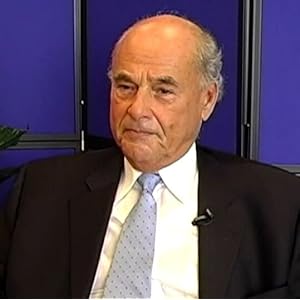
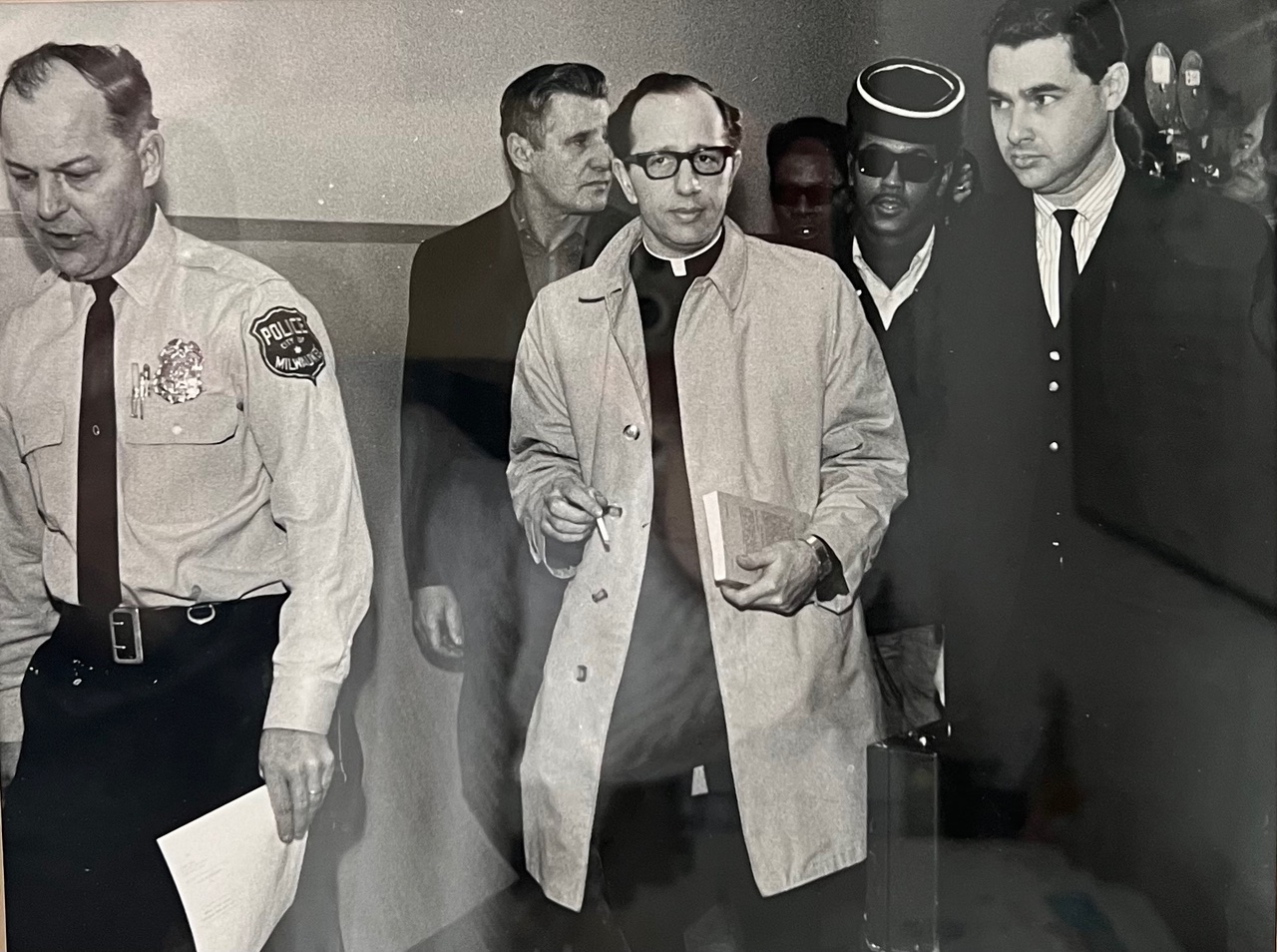
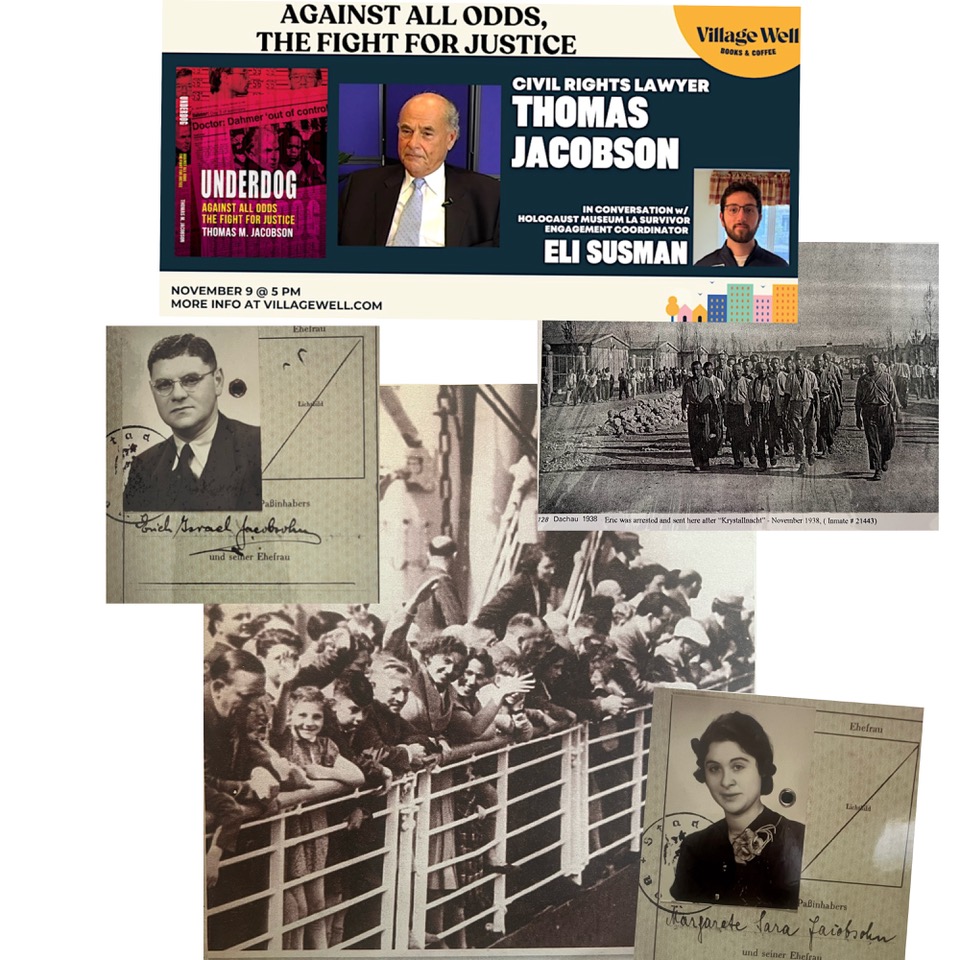





 Through the years I created many, many children’s stories but never tried publishing. I’ve written poems, song lyrics, two songs with tunes, a short story, many articles on topics of interest to me, and a couple of skits for my grandkids to act out.