Read and Cook with Robbie Cheadle – Ghost Train by Natalie Anna Jacobsen and a Japanese cooking class #Japan #bookreview
Posted: February 12, 2025 Filed under: Book Review, Books, Fiction, Read and Cook, Recipes, Review, Supernatural | Tags: Book Reviews, Read and Cook, Recipes, Robbie Cheadle, Writing to be Read 59 Comments
Ghost Train by Natalie Anna Jacobsen

What Amazon says
“A haunting and immersive read.” – Eva Wong Nava, author of The House of Little Sisters. “With lyrical prose that evokes the mystique of 19th-century Kyoto, this meticulously researched narrative weaves together historical authenticity with the ethereal allure of ‘yokai’ folklore.” – Jake Adelstein, journalist and author of Tokyo Vice and The Last Yakuza
Set in 1877 Kyoto during the early years of the Meiji “Restoration” Era, Ghost Train tells the story of Maru Hosokawa, a samurai daughter who is thrust into a life opposite how she grew up. Her father has surrendered his sword with other samurai, assimilating into a role as a civilian merchant. As his work takes him further and further from home, she is left to find work of her own to help rebuild the family wealth — and protect herself, “just in case,” her father says. But during the summer festivals, ghosts begin appearing before Maru. Unsure of where to turn or who to trust, Maru fends for herself, facing an abusive employer, unreliable friends, and insecurity at home. In the search for answers, a kitsune offers to help in exchange for Maru’s aid in confronting a demon rampaging Kyoto at night. As summer passes on, more ghosts appear, plagues sweep through the city, and a stench of blood in the streets, and rumors of a samurai rebellion obscure reality, driving Maru to make a choice against all instincts, to save herself, her father — and Kyoto. Inspired by true historical events and based on myths of yokai, this story began taking shape first in 2010. With guidance by historians both in Japan and the US, subject matter experts in geisha, kimono, and samurai life, and countless beta readers and supporters, Natalie Jacobsen has carefully crafted this historical fantasy to reflect 19th century life during the tumultuous, society-altering leadership of Emperor Meiji… just with a few more ghosts.
My review
Having recently visited Tokyo, Japan, and being exposed for the first time to the concepts of Japanese Yokai and other supernatural beings, this book immediately caught my attention. During my short time in Japan, I also learned a little bit about the coming of the Black Ships to Japan in 1853, which marked the beginning of the end for the Tokugawa shogunate, and the last Shogun. This book, set in Kyoto in 1877 during the Meiji Restoration Era, addresses both of these fascinating aspects of Japanese history and culture.
The story revolves around a young girl, Maru, the daughter of a former-samurai, and her journey to understanding and acceptance of the end of the reign of the samurai and transitioning of her city (and country) into a new era of progress under the ‘young’ emperor.
Maru’s father has gone away, theoretically on ‘business’ and left her in the care of the geiko of an okiya – a traditional geisha house, in the role of shikomi, a junior position to the geiko and maiko of the house. Maru clearly dislikes her new role and is struggling to make the adjustment from the daughter of a former-samurai to her new life having to survive as a woman in a misogynistic, male dominated society where women were either wives, geiko/meiko (entertainer of men) or oiran (prostitute). The fate of women, in the new society under the Emperor, was worst than before and many girls had no option but to resort to prostitution in order to survive. Maru clings to the thin hope that her father will soon come for her and her life will return to how it was in the past.
Maru is traumatised by scenes of death and destruction from the past during the period of the demise of the samurai and daimyo, and has blocked out memories relating to her father and his decisions in order to adapt to her new situation. She is also surrounded by anxiety in the general population as people, especially women, struggled to integrate their superstitions and beliefs of the past with a new society including technology like trains. Maru hears stories about yokai and disappearing girls, and is conflicted about strange metallic smells caused by rain on the new electrical wires and which are reminiscent of blood. Many people believe the train and electrical wires are killing girls and feeding on their blood as well as causing general illness. All of this anguish and mental strain ultimately manifests as visions by Maru of various yokai and also kitsune, foxes that possess paranormal abilities that increase as they get older and wiser. Maru meets a kitsune which has the ability to shapeshift into various forms but which is ‘damaged’ by the new technology and needs her help to survive.
Maru must walk her path alongside her kitsune manifestation to find acceptance of her father’s decisions, her own rejection by her former friends and acceptance of her new life and progress in general.
This is an exciting tale with an abundance of amazing historical information and Japanese folklore woven throughout. There are exciting scenes of conflict and a grand finale which, the way I understood this story, are effectively all part of Maru’s spiritual and mental healing, in other words, in her imagination.
This is a clever and well research story, the history is fascinating, and the folklore mesmerising. It is a complex tale that requires attention throughout and the understanding of Maru’s mental state and internal conflicts for the story to pull together effectively.
An excellent book for people who are interested in Japanese history and folklore. It helps to have some knowledge and understanding of this era of transition and cultural shock in order to best appreciate the historical nuances and information presented.
I wrote this review as a member of Rosie Amber’s book review team. You can find out more about Rosie’s reviews and review team here: https://rosieamber.wordpress.com/.
Purchase Ghost Train from Amazon US here: https://www.amazon.com/Ghost-Train-Natalie-Jacobsen-ebook/dp/B0DHSXH8FM
Cooking Sun Tokyo
During my recent trip to Japan, TC and I attended a 10-course Japanese cooking class. It was great fun and the food was delicious.
The basis of Japanese cooking is dashi stock made with water and 1 – 2 kombu strips (dried kelp seaweed). The cold method for making good dashi stock is simple. Put water into a bottle with the kombu and let it steep overnight.
The dashi is used in all the recipes of which I am sharing two here.
Dashimaki Tamago (rolled egg)
Ingredients: 1 egg, 1 TBsp dashi, 1/2 tsp light soy sauce
Method:
In a small bowl, whisk the egg, dashi and light soy sauce.
Heat the prepared Japanese rectangular egg pan after drizzling the pan with a little cooking oil. When its hot, pour half the egg mixture into the pan ensuring the egg covers the full surface. Once the egg is starting to set, use cooking chopsticks to roll the egg to the far end of the pan. Pour the rest of the egg mixture into the pan. Allow it to go under the rolled egg by lifting the roll using the cooking chopsticks. Once the fresh egg mixture sets, roll it up over the previous rolled egg to make a bigger role. Remove from the pan and place on a bamboo mat. Shape the egg roll into a rectangular shape with patterns.


Grilled stuffed lotus roots with chicken
Ingredients: 30 gram portion of lotus root, 30 grams of minced chicken, finally diced Japanese leek, finally diced carrot, a little fresh ginger, 1 tsp sake, sprinkle of salt, 1/2 tsp potato starch, 1 TBsp dashi
Method:
- Dice Japanese leek and carrot and mix into chicken mince. Add the grated ginger, sake, salt and potato starch.
- Powder one side of the lotus root with additional potato starch. Stuff the meat mixture into the lotus root holes and layer the rest of the meat on top of the lotus root.
- Heat the frying pan and place the lotus root into the pan, meat side down. Cook for approximately 3 minutes. Turn the lotus root over, pour on the dashi and steam in the pan with the lid on for about 5 minutes until cooked.


About Robbie Cheadle
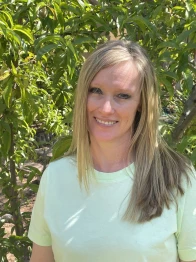
South African author and illustrator, Robbie Cheadle, has written and illustrated seventeen children’s books, illustrated a further three children’s books, and written and illustrated three poetry books. Her work has also appeared in poetry and short story anthologies.
Robbie also has two novels and a collection of short stories published under the name of Roberta Eaton Cheadle and has horror, paranormal, and fantasy short stories featured in several anthologies under this name.
You can find Robbie Cheadle’s artwork, fondant and cake artwork, and all her books on her website here: https://www.robbiecheadle.co.za/
_______________________________________
Did you know you can sponsor your favorite blog series or even a single post with an advertisement for your book? Stop by the WtbR Sponsor Page and let me advertise your book, or you can make a donation to Writing to be Read for as little as a cup of coffee, If you’d like to show your support for this author and WordCrafter Press.
_______________________________________
This post is sponsored by the My Backyard Friends Kid’s Book Series and WordCrafter Press.

The My Backyard Friends kid’s book series is inspired by the birds and animals that visit the author Kaye Lynne Booth’s mountain home. Beautiful illustrations by children’s author, poet, and illustrator, Robbie Cheadle, bring the unique voices of the animal characters to life.
Get Your Copy Now.
Heather Hummingbird Makes a New Friend (Ages 3-5): https://books2read.com/MBF-HeatherHummingbird
Timothy Turtle Discovers Jellybeans (Ages 3-5): https://books2read.com/MBF-TimothyTurtle
Charlie Chickadee Gets a New Home (Ages 6-8): https://books2read.com/MBF-CharlieChickadee
Share this:

Book Review: The Silent Children
Posted: January 31, 2025 Filed under: Book Review, Books, Suspense, Thriller | Tags: Book Review, Kaye Lynne Booth, Marie Wilkens, mystery, Suspence, The Silent Children, Thriller, Writing to be Read Leave a comment
About the Silent Children

A gripping journey of a mother’s relentless pursuit through danger and deceit to reclaim her missing son.
In a gripping tale of courage and desperation, Annabelle’s world spirals when her son Fergus is abducted. Teaming up with her husband Benny and best friend Barb, she embarks on a relentless quest for clues. Facing uncooperative local police, they turn to the FBI, uncovering chilling ties to Annabelle’s past and a kidnapper driven by vengeance. With time against them, Annabelle forms an unlikely alliance with a mob boss, both united in a single mission. This intense story captures the fierce determination of a mother fighting against all odds to bring her child home.
My Review of The Silent Children
I purchased a digital copy of The Silent Children, by Marie Wilkens from Freebooksie. All opinions stated here are my own.
I was confused when looking for an image for this book. All I could find is the above image for the box set of 3 books, and the book I read was definitely just a single story about a single child who was kidnapped and his mother’s relentless search to find him.
My first thoughts when reading The Silent Children, was that this was this author’s first book, as there were many typos and logic inconsistencies throughout the story, which had more tell than show. But again, when looking up the book’s information, I was surprised to see that Marie Wilkens has many books under her belt. I just hope they are of better quality than this one.
While there is a good story here, the title alludes to a story of several children in peril, which is what I expected as I picked it up, so the author didn’t really deliver on the promise of the premise. I had trouble with the buy-in because the events portrayed as the distressed mother desperately searches for her son would never actually happen in real life. She would be charged with impeding an active investigation by the FBI, regardless of who her friends were. Of course, it had to unfold that way in order to allow the mother to be the hero, but it is not very realistic to what would happen in real life.
The telling of the story is just that, with a bit of dialog and action thrown in here and there. It doesn’t put the reader in the scene, but is more like a tale told around a campfire. Because of this, I was unable to relate to the character and feel her desperation. As a mother who lost a son to suicide, I should have been able to empathize with this character, and I couldn’t do so, even when I tried. Her feelings and actions just didn’t ring true.
It is a story worth reading, but not what you think from marketing materials. Because there is a good story here, in spite of the misleading title, and the inconsistencies in both writing and promotions, I give The Silent Children three quills.

__________________________________
Kaye Lynne Booth does honest book reviews on Writing to be Read in exchange for ARCs. Have a book you’d like reviewed? You can request a review on the Book Review tab above.
Share this:

WordCrafter News: Calls for Submission & an Upcoming Release
Posted: January 27, 2025 Filed under: Book Release, Books, Call for submissions, Dark fiction, Story Bundle, WordCrafter News, WordCrafter Press | Tags: 2025 WordCrafter Short Fiction Contest, Call for submissions, Midnight Oil, Story Bundle, The Rock Star & The Outlaw 2: Seeing Doubles, WordCrafter News, WordCrafter Press 1 Comment
Call for Submissions for Midnight Oil
The Call for Submissions for the Midnight Oil anthology went out on January 1. Submissions which submit the required $5 entry fee will be entered in the 2025 WordCrafter Dark Fiction Contest for a chance to be featured in the anthology, which is the third book in the Midnight Anthology Series from WordCrafter Press and display the winner’s badge on your site. The deadline is April 30, 2025.
You can find submission guidelines here: https://wp.me/pVw40-9SL

Looking for Books for Story Bundles
In 2025, I hope to currate a couple of Story Bundles. Specifically, I’m looking at one Supernatural Fantasy bundle, and one Paranormal bundle. However, I still don’t have enough authors interested to make it work. So, I’m looking for authors with books in these catagories who would like to be considered for the bundles. If you are one of those authors, I’d like to1 hear from you. You can contact me at KLBWordCrafter@gmail.com and put “Story Bundle Submission” in the subject line.
The Rock Star & The Outlaw 2: Seeing Doubles to be released in March
The second book in my Time Travel Adventure series, The Rock Star & The Oulaw 2: Seeing Doubles, will be coming out in March, and I’m really excited about it. If you thought the first book was crazy, this one will blow your socks off. Amaryllis and LeRoy are back after the disastrous jump in time which seperated them, along with most of the characters you came to love or hate in the first book, and a few new ones. With multiple story lines, multiple time loops, and multiples of the characters. This book was so much fun to write, and I know that you’ll enjoy reading it.
About The Rock Star & The Outlaw 2: Seeing Doubles

In 1887, LeRoy is stuck, bringing trouble down on those around him. When Sissy is kidnapped and he’s the only one who can save her.
In 2030, Amaryllis will stop at nothing to find LeRoy fix what she messed up in the past, when she wakes up in a future very different to the one she knows, one in which she may not be born.
She and a version of Monique which is different from the one she grew up with travel back to 1887 to try and make things right.
When they cross the other time loops, already created, things change, but not the way Amaryllis intended.
Add two time travel regulators from the future who are after the time module, and things start to get wild.
________________________________
Did you know you can sponsor your favorite blog series or even a single post with an advertisement for your book? Stop by the WtbR Sponsor Page and let me advertise your book, or you can make a donation to Writing to be Read for as little as a cup of coffee, If you’d like to show your support for this author and WordCrafter Press.
__________________________________
This segment of “Writer’s Corner” is sponsored by The Rock Star & The Outlaw and WordCrafter Press.

A time-traveler oversteps his boundaries in 1887. Things get out of hand quickly, and he is hanged, setting in motion a series of events from which there’s no turning back.
In 1887, LeRoy McAllister is a reluctant outlaw running from a posse with nowhere to go except to the future.
In 2025, Amaryllis Sanchez is a thrill-seeking rock star on the fast track, who killed her dealing boyfriend to save herself. Now, she’s running from the law and his drug stealing flunkies, and nowhere is safe.
LeRoy falls hard for the rock star, thinking he can save her by taking her back with him. But when they arrive in 1887, things turn crazy fast, and soon they’re running from both the outlaws and the posse, in peril once more.
They can’t go back to the future, so it looks like they’re stuck in the past. But either when, they must face forces that would either lock them up or see them dead.
Purchase Link: https://books2read.com/RockStarOutlaw
Share this:

Book Review: “The Book of Wounded Healers”
Posted: January 24, 2025 Filed under: Book Review, Books, Fiction, Review, Science Fiction, Self-Discovery | Tags: Book Review, Joseph Carrabis, Scieince Fiction, The Book of Wounded Healers, Writing to be Read 10 CommentsAbout The Book of Wounded Healers
Ben Matthews is a mathematical linguist studying spontaneous languages at Columbia University in New York City. Recently home from committing himself to a northern New Hampshire psychiatric center, he spends a relaxing late-May day bonding with his son, Jimmy, at South Street Seaport.
They’re watching a juggler when the East River to Brooklyn and beyond becomes a white sand desert. A sirocco wind raises waves and whips ice cream wrappers, crumpled napkins, visitor guides, ticket stubs, and other ground level trash in town.
Three creatures, their images shimmering in the heat like a mirage, walk across the sand towards The Battery and TriBeCa South. Ben is knocked down and loses track of Jiminy as people race to safety.
The desert fades away, the sirocco recedes, and the three creatures walk up to Ben. The one in front says, “We are Healers from the Land of Barass.” It points to the one on its right. “He is Cetaf, who cries for his own pain.” It turns to the one on its left. “This is Jenreel, who tends to his own needs. I am Beriah. I will tell you how I feel.”
The creature offers Ben its hand. “We are Healers from the Land of Barass.”
All Ben can think of to say is “I’ve lost my little boy.”
Beriah helps him up. “Then you must find him.”

Ben, aided by The Healers from the Land of Barass, embarks on a quest through Manhattan and learns he’s lost much more than his son, and finds much more in himself.
My Review of The Book of Wounded Healers
I requested a review copy because I know Joseph Carrabis writes fiction that makes you think. Every book of his I’ve read, I’ve learned something from, as well as being thoroughly entertained. I have read and reviewed several of his books and you can find those reviews at the following links:
I received a digital copy of of The Book of Wounded Healers from the author in exchange for an honest review. All opinions here are my own.
The Book of Wounded Healers is a journey into the truths of humanity through the eyes of a man named Ben, who loses his son in the confusion, upon the arrival of three visitors, ambassadors from the Land of Barass. Once Ben’s son, Jiminy, is safe, he goes on a walk-about over the island of Manhatten with the alien tourists, and he learns to see, as they do, stirring his own memories, and bringing him revelations about himself and his fellow human beings.
I am not a mathematician, and I won’t claim to understand the formulas Ben uses to explain the truths of the human condition. But I understood enough to relate many of them to my own life and know they are valid. The revelations that Ben makes for himself can be applied to our own lives.
A tale of truths, brilliantly woven into the tapestry of a story. I give The Book of Wounded Healers five quills.

_______________________________________
Kaye Lynne Booth does honest book reviews on Writing to be Read in exchange for ARCs. Have a book you’d like reviewed? You can request a review on the Book Review tab above.
Share this:

Book Review: “Guilty Knowledge”
Posted: January 17, 2025 Filed under: Books, Crime, Fiction, Mystery, Review, romance, Suspense 2 CommentsAbout Guilty Knowledge

Detective Jesse Aaron has no leads in the murder of Rosa Logan when pretty blonde Sariah Brennan claims to have seen the killer—in a vision. Unfortunately, the man she identifies is dead—or is he?
Sariah is an unsophisticated small town girl, but her background and her motives are mysterious, and she seems to be hiding something. Jesse is increasingly convinced she has guilty knowledge of the crime, even as he finds himself more and more attracted to her. How can he unravel the web of secrets, without putting Sariah at risk, before the killer strikes again?
Purchase Link:
My Review of Guilty Knowledge
I recieved an audiobook copy of Guilty Knowledge, written by Linda Griffin and narrated by Scott LeCote, in exchange for an honest review. All opinions stated here are my own.
Guilty Knowledge is a romantic crime mystery about a cop who falls in love with a possible suspect in his case. When Seriah comes forward with information about a murder which she should have no way of knowing, and it turns out to be right, Detective Jesse Aaron, knows she’s not being totally forthcoming, and determines to ferret out the truth. But he finds himself strangely attracted to her during the investigation, and his partner, Camille never fails to remind him in her bullying sort of way, to keep his emotions in check, not only because she is a suspect, but because she doesn’t approve of interracial relationships. Sariah is illusive and alluring, but whatever she’s hiding is an obstacle to their relationship, one that, if revealed, could bring it to a crumbling halt.
Jesse is a smart detective who knows Sariah is holding something back, yet he gives her the benefit of the doubt against his own better judgement, and shelters her from his brutish bully of a partner, who I found very hard to like. Camille is bigoted and pushy, and critical of Jesse to the point that she acts more like Jesse’s spouse or parent than his partner. Sariah, is secretive and moody, and should have set off all the warning signals in a good cop, not blinded by his emotions.
The story is well crafted, but I had a hard time in investing in any of the characters. I don’t think I related to any of them enough to root for them. The narrator, Scott LeCote, tries to differeniate the voices, but I found it difficult at times to know who was speaking. The mystery is what drives this tale, and what kept me listening.
A romantic crome mystery that keeps you guessing. I give Guilty Knowledge four quills.

___________________________________
Kaye Lynne Booth does honest book reviews on Writing to be Read in exchange for ARCs. Have a book you’d like reviewed? You can request a review on the Book Review tab above.
_______________________________________
Want exclusive content? Join Kaye Lynne Booth & WordCrafter Press Readers’ Group for WordCrafter Press book & event news, including the awesome releases of author Kaye Lynne Booth. She won’t flood your inbox, she NEVER sells her list, and you might get a freebie occasionally. Get a free digital copy of her short story collection, Last Call and Other Short Fiction, just for joining.
Share this:

Treasuring Poetry – Enjoying poetry with Dave Williams and a review of Gasp! Poetry! #TreasuringPoetry #bookreview #poetry
Posted: January 15, 2025 Filed under: Books, Poetry, Treasuring Poetry, Writing to be Read | Tags: BookReview, Dave Williams, Gasp! Poetry!, Interview, Poetry, Robbie Cheadle, Treasuring Poetry, Writing to be Read 81 Comments
I am very excited to welcome talented artist, poet, and author, Dave Williams to “Treasuring Poetry”. Dave is discussing his thoughts on poetry and I’ve reviewed his unique poetry book Gasp! Poetry!
What is your favourite style of poetry to read i.e. haiku, ballad, epic, freestyle, etc?
Freestyle. I like playful poetry, and poetry that causes me to think of stuff in different ways than my status quo. Also, I’m a big fan of short poetry about nature. Doesn’t have to be haiku. Poems that focus on one aspect of nature, be that a particular animal or plant or season. This kind of poetry is like a seed for me to meditate over that aspect of nature.
What is your favourite poem in your favourite style to read?
My favorite poem by another writer is “maggie and milly and molly and may” by E. E. Cummings. I love it because it’s lively and frisky and profound. And because it reminds me of growing up near the Atlantic Ocean. And because one of my daughters is named Molly (with a capital M, not lowercase like in the poem — although she’s welcome to be creative with the capitalization of her name if she likes).
The poem:
maggie and milly and molly and may
went down to the beach (to play one day)
and maggie discovered a shell that sang
so sweetly she couldn’t remember her troubles,and
milly befriended a stranded star
whose rays five languid fingers were;
and molly was chased by a horrible thing
which raced sideways while blowing bubbles:and
may came home with a smooth round stone
as small as a world and as large as alone.
For whatever we lose (like a you or a me)
it’s always ourselves we find in the sea
Source: https://poets.org/poem/maggie-and-milly-and-molly-and-may
What is your favourite style of poetry to write? Why?
I enjoy writing freestyle the most. Limericks and haiku can be fun to write by following their rules. But I typically go with freestyle because I don’t have to worry about rhymes or syllables or meter.
What is your favourite of your own poems?
A tough question, Robbie! One poem of mine doesn’t jump out as a favorite. I looked through Gasp! Poetry! to find one to include here. I chuckled over several poems, but the poem that clicks with me right now isn’t aimed at humor. Rather, it feels hopeful:
Chickadee
Seeing an eagle,
the chickadee
aspired to greatness:
soaring high in the
Great Blue
Yet he could not
transform into that epic bird
In her son’s sullenness,
mama chickadee asked
the elders to offer wisdom
They told him
there’s a quiet dignity
in being a chickadee
and that
warmed his heart.
Your poetry collection Gasp! Poetry! has a most unusual name and blurb. Please tell us a bit about this book, what the poems are about, and what your intentions were will the collection.
The cover tries to warn people who have no interest in poetry. The title and cover illustration pretend what such a person’s reaction might be to a poetry book. They might throw up their hands and shriek, “Gasp! Poetry!” Then they’d run for the safety of a Non-Poetry Zone. Where, after catching their breath, they might tell other people how close they got to a poetry book and how terrifying it was. The cover uses drama for humor (hopefully).
Some poems in the book aim for silliness, while others are serious. The topics are assorted. One short poem is about a monkey taking a bath. One long poem is about how Scheherazade told a thousand tales to avoid being murdered. If you’ve followed my blog for a while, chances are good that you’ve read poems from this collection.
My intention was to package a bunch of poems on my blog, and ones that haven’t been published there yet. I hoped to entertain readers who like playfulness and absurdity in poems.
You write both novels and poetry. Which do you prefer?
Novels. Even when short, they’re more immersive than poems — which are like sketches to me (since I don’t write epic poems). I enjoy pondering possible plot paths of novels, as well as possible backgrounds of characters. It’s akin to reading a book and being immersed in the story. But with novel writing, the story can unfurl in various, potential directions. Joy is in exploring and shaping the story. So is frustration. But it’s worth the frustration when the book is finished.
My review of Gasp! Poetry!

The amusing title of this poetry collection by Dave Williams is indicative of the nature of the poetry. All of the poems are clever, slightly dark, and poke fun at humans and humanity in general. In other words, these poems are brilliant and hugely entertaining.
Is a Poem about Grains of Sand on a Beach Too Pretentious?
“I wondered that question,
lying on a floral beach towel,
a speck in a crowd
of swimsuited people –
all of us were lumps of cookie dough
glazed with sunscreen and coconut oil
baking in this oven.”
The short extract above is a great example of Dave dark humour in relation to human behaviours and his engaging descriptions.
Valor is a great example of the poet’s quick and clever mind and attitudes towards adversity:
“”You’re not sharp enough?”
“Get some sides!”
Yells were hurled from
the crowd of octagons
at the little circle.
“You look ridiculous!”
The circle puffed up
with valor,
said “I am what I am,”
refused to conform,
then rolled defiantly towards home.”
This was my favourite poem in the book. I really enjoyed the personification of shapes and it reminded me of Flatland by Edward Abbott Abbott.
There is some wonderful life wisdom encased in these freestyle poems. A short extract from Ocean Inside which captivated my mind:
“Meanwhile I work against the urge to liquefy myself
and pour myself into the container
others have sculpted for me”
Having gone through my own teenage years and watched three sisters and two sons go through theirs, I am acutely aware of how very real this pack mentality is with young people. Sometimes, people never manage to escape its grip and find their own path in life.
If you enjoy dark humour, excellent poetry, and life truths, you will love this engaging and entertaining collection.
You can purchase Gasp! Poetry! from various suppliers here: https://books2read.com/u/mBJjRk
You can find all of Dave William’s great books on Amazon US here: https://www.amazon.com/stores/Dave-Williams/author/B08662D961
About Dave Williams

Surely many people are named “Dave Williams” and this particular Dave is a redheaded one who enjoys writing speculative fiction, drawing, and reading. He lives in Maryland with his wonderful wife, two inspirational daughters, and two cats (a lazy one and a playful one).
You can find Dave Williams on his blog here: https://davewilliamswriter.wordpress.com/
About Robbie Cheadle
South African author and illustrator, Robbie Cheadle, has written and illustrated sixteen children’s books, illustrated a further three children’s books, and written and illustrated three poetry books. Her work has also appeared in poetry and short story anthologies.
Robbie also has two novels and a collection of short stories published under the name of Roberta Eaton Cheadle and has horror, paranormal, and fantasy short stories featured in several anthologies under this name.
You can find Robbie Cheadle’s artwork, fondant and cake artwork, and all her books on her website here: https://www.robbiecheadle.co.za/
________________________
Did you know you can sponsor your favorite blog series or even a single post with an advertisement for your book? Stop by the WtbR Sponsor Page and let me advertise your book, or you can make a donation to Writing to be Read for as little as a cup of coffee, If you’d like to show your support for this author and WordCrafter Press.
__________________________
This segment of “Treasuring Poetry” is sponsored by WordCrafter Press and the Poetry Treasures series.

Get Your Copy Today!
Poetry Treasures: https://books2read.com/PoetryTreasures
Poetry Treasures 2: Relationships: https://books2read.com/PT2-Relationships
Poetry Treasures 3: Passions: https://books2read.com/u/b5qnBR
Poetry Treasures 4:In Touch With Nature: https://books2read.com/PT4-Nature
Share this:

Review in Practice: “Falling to Fly”
Posted: January 13, 2025 Filed under: Books, Nonfiction, Review in Practice, Writing, Writing Business, Writing Reference | Tags: Falling to Fly, Kaye Lynne Booth, Review in Practice, Todd Fahnestock, Writing Resource, Writing to be Read 5 CommentsI received a copy of Falling to Fly, by Todd Fahnestock in the 2024 Novel Writing Story Bundle, and it was so fortunate that I did. This book is a must read for all struggling authors who have fallen more than once, and brushed themselves off to continue forward in pursuit of their writing dream.
This book is essentially the story of the author’s writing journeyThere were so many things that Fahnestock talks about that I could relate to. He talks about the failure of academia to validate genre fiction as legitimate literature. I was fortunate enough to stumble onto Western State Colorado University, where there M.F.A. program deals directly with genre fiction, but it is a rare program. Fahnestock did not let educators rigid viewpoints deter him, but instead rejected the idea of letting educators shape his writing career.
I also related to his “Say Yes to Everything” policy of not letting any writing opportunity which presents itself pass you by. That is what led him to in-person selling at Cons, and sent him on the path to success in his writing journey. Although I have been fortunate to attend a few writing conferences, the only time I had a booth was at the beginning of my own writing journey, before I had any books to sell. If you follow me, you may know that I sold poems on pretty backgrounds at that conference, and was surprised to earn $100 doing it. While that first conference experience didn’t send me soaring up the ladder of success, it did prove that the possiblilities are there when it comes to direct selling. Fahnestock’s experiences just reinforced this for me, reminding me that I’m not going find my success from behind my laptop.
There are two parts to writing as a business, and in order to be successful as an author, you must school yourself in both craft, and in publishing and marketing, which make up the business part. When I graduated with my M.F.A., I was ready to write and create story, and they primed me to enter the world of traditional publishing, which at that point in time, 2016, was the way it was done. But, I was in my forties, and I didn’t feel like I had time to wait years for someone in the traditional publishing to notice how awesome my stories were. They hadn’t prepared me to delve into the world of independent publishing, which at that time, still left a bad taste in most author’s mouths and held stigma in reader’s minds, well. Like Fahnestock, I stumbled through the plethora of information, and misinformation that flooded the Internet, and muddled my way through the independent publishing arena. Unlike, Fahnestock, I didn’t find the answers I was looking for, and I turned back to academia to learn the necessary skills to navigate the independent publishing community.
The author talks about his attempt at the rapid release marketing strategy, and why it didn’t work for him. He surmised that he was only able to keep the hype going for a short period of four months, and that if he could find a way to keep it going year round, he would have seen better success from his efforts. Then, he went out and found a way to do just that, by collaborating on an epic fantasy series with other fantasy authors. I employ a similar strategy by publishing in volume, releasing 5 – 8 books per year, but they aren’t in a series.
I found this book at a serendiptous time in my life, when I’m trying to pull myself up from a period of failures and obstacles over the past two years, and Fahnestock reminds me that I must keep working to achieve my Dream. He reminds me that sometimes it’s necessary to fall in order to fly.
About Falling to Fly

Dreamer. Wannabe. Overnight success. Catastrophic failure. Writer.
Glimpse the gritty, behind-the-scenes struggles of author Todd Fahnestock as he reveals his dreams, trials, and adventures through the creative swamps of writing and the hard-edged world of publishing.
Fahnestock dodges junior high bullies armed with needles taped to Bic pens, cracks into traditional publishing by hitchhiking to the middle of nowhere to meet writing legend Gary Paulsen, and nearly falls to his death hanging cables inside an oil tanker. All to follow the author’s dream.
Submerged in the treacherous, ever-changing ocean of art and business, Fahnestock paints an unforgettable portrait with honesty and touching vulnerability.
Purchase Link: https://www.amazon.com/Falling-Fly-Before-Writing-Dreams-ebook/dp/B0D3KP376H
_____________________________
About Kaye Lynne Booth
For Kaye Lynne Booth, writing is a passion. Kaye Lynne is an author with published short fiction and poetry, both online and in print, including her short story collection, Last Call and Other Short Fiction; and her paranormal mystery novella, Hidden Secrets; Books 1 & 2 of her Women in the West adventure series, Delilah and Sarah, and her Time-Travel Adventure novel, The Rock Star & The Outlaw,as well as her poetry collection, Small Wonders and The D.I.Y. Author writing resource. Kaye holds a dual M.F.A. degree in Creative Writing with emphasis in genre fiction and screenwriting, and an M.A. in publishing. Kaye Lynne is the founder of WordCrafter Quality Writing & Author Services and WordCrafter Press. She also maintains an authors’ blog and website, Writing to be Read, where she publishes content of interest in the literary world.

__________________________________
Did you know you can sponsor your favorite blog series or even a single post with an advertisement for your book? Stop by the WtbR Sponsor Page and let me advertise your book, or you can make a donation to Writing to be Read for as little as a cup of coffee, If you’d like to show your support for this author and WordCrafter Press.
___________________________________
This segment of “Review in Practice” with Kaye Lynne Booth is sponsored by The Women in the West Adventure Series and WordCrafter Press.

Historical Women’s Fiction
Get Your Copy Today!
Delilah: https://books2read.com/DelilahWiW1
Sarah: https://books2read.com/Sarah-Women-in-the-West
Marta: Coming in 2025
Share this:

Book Review: “Stiffs and Stones”
Posted: January 10, 2025 Filed under: Book Review, Books, Dark fiction, Dark Humor, Fiction, Review, Speculative Fiction, Zombie Fiction | Tags: Book Review, Dan Shamble Zombie P.I., Kaye Lynne Booth, Kevin J. Anderson, Stiffs & Stones, Writing to be Read 4 CommentsI’m a big fan of the Dan Shamble, Zombie P.I. series, so when I got a review request for the two latest books in the collection, you know I couldn’t turn it down. All opinions stated here are my own.
Other titles I’ve reviewed in the Dan Shamble, Zombie P.I. Series
- Horn Dogs: https://writingtoberead.com/?p=37841
- Bats in the Belfry & Heart of Clay: https://writingtoberead.com/2023/12/29/book-review-bats-in-the-belfry-heart-of-clay/
- Zomnibus: https://writingtoberead.com/2018/07/27/zomnibus-two-zombie-detective-novels-in-one-book/
- Double Booked & Bump in the Night: https://writingtoberead.com/2022/07/22/book-reviews-double-booked-bump-in-the-night/
About Stiffs and Stones

Dan Shamble, zombie P.I. is back from the dead and back on the case in this new collection of eight wacky adventures with enough plot twists and stomach turns to keep you guessing, and chuckling, until the very end.
My Review of Stiffs and Stones
I requested a digital revew copy of Stiffs & Stones from Kevin J. Anderson’s Reader’s Club. All opinions stated here are my own.
Stiffs & Stones, by Kevin J. Anderson is a collection of eight Dan Shamble, P.I. short stories, some which were published earlier, so I chose to focus my review on the stories I hadn’t read and reviewed previously. This collection of undead stories will keep you laughing until the last page.
- “Hand Job” is the tale of a disembodied hand who has been framed for a robbery it didn’t commit and it’s up to Dan Shamble to prove its innocence. If there’s one thing the zombie P.I. doesn’t need with this case, it’s a hand. (Although these stories are filled with it, that corney humor is my own.)
- “Bull Runs” is the tale of the Meter Maid Minitaur with tummy trouble. It’s up to Dan Shamble to discover the reason the Minituars are all falling ill and stop the debilitating illness before the big charity race.
- “Mystery Meat” is the case of the giant Momma Fly with missing baby maggots. This case takes Dan Shamble into the backstreets of the Unnatural Quarter where he uncovers the source of the new and delicious mystery meat being served while searching for the missing tots.
- “Holy Balls” is the tale of a warlock whose witchy wife is after his (crystal) balls, and it’s up to Dan Shamble to protect them. But the witchy wife is relentless, and Dan Shamble must use the highest security measures he has to protect the warlock’s balls.
- “The Eyeball at the End of the Rainbow” is the tale of an inebriated Leprechaun who has misplaced the eye of the Centuar stoner, leaving him blind and straight until Dan Shamble can solve the case and find the missing eyeball.
Also included are “Bump in the Night”, “Fire in the Hole”, and “Heart of Clay”.
_______________________________________
Kaye Lynne Booth does honest book reviews on Writing to be Read in exchange for ARCs. Have a book you’d like reviewed? You can request a review on the Book Review tab above.
________________________________________
Want exclusive content? Join Kaye Lynne Booth & WordCrafter Press Readers’ Group for WordCrafter Press book & event news, including the awesome releases of author Kaye Lynne Booth. She won’t flood your inbox, she NEVER sells her list, and you might get a freebie occasionally. Get a free digital copy of her short story collection, Last Call and Other Short Fiction, just for joining.
Share this:

Cook and Read – My review of A Town Like Alice by Nevil Shute and Peach Chicken #CookandRead #fiction
Posted: January 8, 2025 Filed under: Books, Read and Cook, Recipes, Review, romance | Tags: A Town Like Alice, Nevil Shute, Peach Chicken, Read and Cook, Robbie Cheadle, romance, Writing to be Read 45 CommentsMy review of A Town Like Alice by Nevil Shute

This was my favourite classic book read of 2024. A delightful romance initially set in Malaysia during World War II and then moving between post-war London and Australia, Jean Paget’s story of strength, endurance, and leadership made for an amazingly uplifting read.
The novel commences with the main character, Jean Paget, a secretary in a leather goods factory, receiving notification from a solicitor, Noel Strachan, that she has inherited a large sum of money from an uncle she never knew. Noel is the trustee of the funds until Jean can inherit at the age of 35 years old (this age was set by the uncle who believed that women were incompetent fools who couldn’t be trusted with money until they had a family and life experience). Strachan acts as Jean’s financial advisor and, over time, a good friend. His part of the story is all the more interesting because of the secret love he develops for Jean. Noel is the narrator of the story.
Jean announces to Noel that her first priority is to build a well in a village in Malaysia and this introduces her poignant backstory as a prisoner of war in Malaysia during WW2. This part of the story is based on a real survival story which makes it all the more fascinating. Jean was working in Malaysia when the Japanese invaded and she was taken prisoner along with a large group of other European women and children. The Japanese authorities doesn’t know what to do with the group so they end up walking from one village to another for months. The lack of good food, exposure of the elements and hardship results in the deaths of a large number of the group. Jean meets an Australian soldier, Joe Harman, who is also a prisoner of war and is driving a lorry for the Japanese invaders. He tries to help the women and ultimately steals five chickens from a local Japanese commander. He is eventually caught and beaten, crucified and left to die by the Japanese soldiers. Jean believes that Jo Harman is dead. Soon after, the women’s Japanese guard dies and they take shelter in a Malaysian village for the rest of the war. Jean wishes to build a well in this village as a gesture of gratitude to the villagers who saved the lives of the remaining women and children by taking them in. During the construction of the well, Jean discovers by accident that Joe survived and returned to Australia. She decides to go in search of him in Australia and this sets the stage for the rest of the story and the romance. Joe had mentioned the town of Alice Springs during their short time as friends, and this is where Jean heads.
The writing is completely engaging and the characters of both Jean and Joe are well developed and admirable. As a reader, I become completely involved in both their stories and was rooting for their romance and success as individuals and a couple. Jean is portrayed as a strong willed survivor with a strong sense of compassion and responsibility. She is a remarkable leader and an excellent role model for young women.
Joe is portrayed as being recklessly brave and this results in his undoing. He is a very determined and strong willed person, however, an these characteristics result in his miraculous survival.
I read this book because I am interested in learning more about the war in the Pacific and the Japanese involvement in World War II. I have read several books on this topic and A Town Like Alice is the one that stands out the most in my memory. I highly recommend this book to lovers of romance and war literature.
You can purchase A Town Like Alice by Nevil Shute from Amazon US here: https://www.amazon.com/gp/product/1842323008
Recipe for Peach Chicken
This recipe is based on Matt Preston’s recipe for Apricot Chicken in his book, Cook Book. I made some variations. If you are interested in purchasing Matt Preston’s book, you can do so here: https://www.amazon.com/Cook-Book-recipes-incredibly-popular-ebook/dp/B016NIBORU
Ingredients
8 chicken thighs and 8 chicken drumsticks, on the bone with skin
160 ml olive oil
1 Tbspn garlic flakes
1 heaped Tbspn dried oregano
5 ml dried thyme
1 tin peaches and the juice
24 caperberries
24 green olives, pits removed and cut in half
2 bay leaves
1 Tbspn chicken stock (powder)
Ground black pepper to taste
1 1/2 cups (375 ml) white wine
Method
Heat the over to 180 C. Line the bottom and sides of a oven baking dish with silver foil. Lay the chicken skin up on the bottom on the dish. In a separate bowl, mix the oil, wine, herbs and caperberries. Pour the tinned peaches over the chicken. Add the wine mixture. Lastly, place the olives over the chicken. Cover the dish with tin foil.
Bake in the oven for 45 minutes. Turn the oven to grill. Remove the tin foil and grill the chicken until nicely browned. Do not let the peaches burn. About 15 – 20 minutes.
Enjoy with rice.

About Robbie Cheadle
South African author and illustrator, Robbie Cheadle, has written and illustrated seventeen children’s books, illustrated a further three children’s books, and written and illustrated three poetry books. Her work has also appeared in poetry and short story anthologies.
Robbie also has two novels and a collection of short stories published under the name of Roberta Eaton Cheadle and has horror, paranormal, and fantasy short stories featured in several anthologies under this name.
You can find Robbie Cheadle’s artwork, fondant and cake artwork, and all her books on her website here: https://www.robbiecheadle.co.za/
_______________________________________
Did you know you can sponsor your favorite blog series or even a single post with an advertisement for your book? Stop by the WtbR Sponsor Page and let me advertise your book, or you can make a donation to Writing to be Read for as little as a cup of coffee, If you’d like to show your support for this author and WordCrafter Press.
_______________________________________
This post is sponsored by the My Backyard Friends Kid’s Book Series and WordCrafter Press.
The My Backyard Friends kid’s book series is inspired by the birds and animals that visit the author Kaye Lynne Booth’s mountain home. Beautiful illustrations by children’s author, poet, and illustrator, Robbie Cheadle, bring the unique voices of the animal characters to life.
Get Your Copy Now.
Heather Hummingbird Makes a New Friend (Ages 3-5): https://books2read.com/MBF-HeatherHummingbird
Timothy Turtle Discovers Jellybeans (Ages 3-5): https://books2read.com/MBF-TimothyTurtle
Charlie Chickadee Gets a New Home (Ages 6-8): https://books2read.com/MBF-CharlieChickadee
Share this:

Writer’s Corner: Writing in Multiples
Posted: January 6, 2025 Filed under: Books, Character Development, Fiction, Science Fiction, Time travel, Writer's Corner, Writing | Tags: Kaye Lynne Booth, The Rock Star & The Outlaw 2: Seeing Doubles, Writer's Corner, Writing, Writing to be Read 1 Comment
In December, I finished writing the first draft of The Rock Star & The Outlaw 2: Seeing Doubles. This book will be the second book in my Time Travel Adventure Series, and I have to say I have been having so much fun writing it. Time travel is cool to write about, because it is pure fiction, so you have a lot of lee-way in your story, although there are still some scientific parameters that should be kept in mind.
In The Rock Star & The Outlaw, my protagonists created some time-loops, which crossed. In The Rock Star & The Outlaw 2: Seeing Double, they create a few more , intersecting with the time-loops created in the first book. What that means, is there is multiple versions of some characters, and the story is dealing with multiple time lines. While the first book dealt with two alternating P.O.V.s, those of the two protagonists, the second book also deals with multiple P.O.V.s from several different characters.
Multiple character P.O.V.s
This will be the first book I’ve written and published with so many different P.O.V.s. Because I have multiple versions of some characters, I had to differentiate which version’s eyes we were seeing things through. Thus, I ended up with ten different P.O.V.s and I must admit, it was challenging keeping track of which P.O.V. I was in, as well as which time line. My hope is that I did a good enough job with all this to not confuse my readers.
I chose to follow the method used by George R.R. Martin in his epic fantasy series, Game of Thrones. Each chapter has the name of the character whose P.O.V. readers will see the story unfold through. I don’t believe Mr. Martin used anything but the name of the character, but my chapters will also have chapter titles that are, in line with the first book, song titles. And, each chapter has to have a time designated so that readers won’t get confused about what time they are in, as well.
Multiple Time Lines
Writing about time travel, and thinking about time travel, and trying to reason out how things would work if time travel were real, can be enough to give an author a migraine. I admit there were times when I had to set the writing aside because it almost hurt to try and wrap my brain around the implications. But, mostly, it was just fun trying to figure out what would be possible and what wouldn’t.
When I first started writing this second book, I thought the first book was written and done. But by crossing time-lines and changing things in previous time lines, I realized my characters changed what happened in the first book. Each thing they change in the time line from the first book, changes things that happened in that story, and I found that it changed the way the first story comes out. So, I ended up rewriting the first story with an alternate ending.
Multiple Versions of Characters
This was where writing the second book got really confusing. With two Amaryllis and three LeRoys, all running around in different timelines, things get crazy. As mentioned above, each version of the character is designated with a different moniker. The characters from this second story are Amaryllis and LeRoy, while the characters from the first story timeline are “Rock Star” and “Cowboy”, and the very first LeRoy even makes an appearance as “Original LeRoy”. And there are two Moniques, (one designated “Shaman Woman”), although they never cross paths. I even have a duplicate horse, Blaze, who gets aggitated when her other self is in the vicinity.
Each of these characters were the same but different than their duplicates. In the first book, Amaryllis is a rock star, living in the fast lane, an adreneline junkie who gets off on facing danger. That Amaryllis is “Rock Star” in this story and the Amaryllis character is one who was changed by her time travel experiences and the lessons they taught her. But one thing is certain, they are both in love with their own version of LeRoy.
It did get confusing at times, but it was a lot of fun to write. The first chapters had to be rewritten halfway through because I realized that the time jumps I had initially planned wouldn’t work, but the new beginning works much better. I’m bad about editing as I write, but it is a part of my writing process. Writing about time travel, I found it to be necessary, especially when things were changed in the story, so earlier chapters had to be edited or revised to keep the storylines consistant.
Even though I edited as I wrote, I consider the completed manuscript a first draft. Now, it must go through a first and second edit by me and be passed through at least one very thorough beta-reader. The beta-reader for this story has done research and written in the time-travel genre, so I’m expecting her to be tough in her commentary. As you can see, I’ve still got a ways to go before doing the final revisions and publishing, but every step brings me closer.
______________________________________
About Kaye Lynne Booth
For Kaye Lynne Booth, writing is a passion. Kaye Lynne is an author with published short fiction and poetry, both online and in print, including her short story collection, Last Call and Other Short Fiction; and her paranormal mystery novella, Hidden Secrets; Books 1 & 2 of her Women in the West adventure series, Delilah and Sarah, and her Time-Travel Adventure novel, The Rock Star & The Outlaw,as well as her poetry collection, Small Wonders and The D.I.Y. Author writing resource. Kaye holds a dual M.F.A. degree in Creative Writing with emphasis in genre fiction and screenwriting, and an M.A. in publishing. Kaye Lynne is the founder of WordCrafter Quality Writing & Author Services and WordCrafter Press. She also maintains an authors’ blog and website, Writing to be Read, where she publishes content of interest in the literary world.
______________________________________
Did you know you can sponsor your favorite blog series or even a single post with an advertisement for your book? Stop by the WtbR Sponsor Page and let me advertise your book, or you can make a donation to Writing to be Read for as little as a cup of coffee, If you’d like to show your support for this author and WordCrafter Press.
______________________________________
This segment of “Writer’s Corner” is sponsored by The Rock Star & The Outlaw and WordCrafter Press.
A time-traveler oversteps his boundaries in 1887. Things get out of hand quickly, and he is hanged, setting in motion a series of events from which there’s no turning back.
In 1887, LeRoy McAllister is a reluctant outlaw running from a posse with nowhere to go except to the future.
In 2025, Amaryllis Sanchez is a thrill-seeking rock star on the fast track, who killed her dealing boyfriend to save herself. Now, she’s running from the law and his drug stealing flunkies, and nowhere is safe.
LeRoy falls hard for the rock star, thinking he can save her by taking her back with him. But when they arrive in 1887, things turn crazy fast, and soon they’re running from both the outlaws and the posse, in peril once more.
They can’t go back to the future, so it looks like they’re stuck in the past. But either when, they must face forces that would either lock them up or see them dead.
Purchase Link: https://books2read.com/RockStarOutlaw


















