Writer’s Corner: Person & Tense
Posted: April 6, 2026 Filed under: Fiction, Point of View, Tense, Writer's Corner, Writing | Tags: Kaye Lynne Booth, Point of View, Tense, Writer's Corner, Writing, Writing to be Read 13 Comments
I recently wrote a short story for the upcoming Legends anthology. I wrote it in third person, present tense to give the tale a sense of immediacy. My beta reader sent back comments, saying that, while the story was a good one, the present tense put her off, as she does not care for stories in present tense. Who would have known?
I had a similar reaction when I first read The Hunger Games, which was written in first person, present tense. It really was a bit off-putting, particularly in the dialog tags when reading aloud. But as I got into the story, I became more accustomed to the style and by the end of the book, I hardly noticed it anymore. First person, present tense is difficult to write, because it must be done well, or it doesn’t work. I’m not that brave.
But, I have been playing around with third person, present tense, which I find a little easier to pull off. I like using present tense because it makes the story feel more immediate, pulling the reader into the story and helping to build suspense. I’ve been using third person, present tense in writing Marta, the third book in my Women in the West Adventure Series, although the first two books were written in third person, past tense. I felt using the present tense in Marta helped to build tension and move the story along.
After the comments from my beta reader, I am wondering if I should rethink that. Readers are put off by different things, and I realize I can’t please all of the people all of the time. But, if this is off-putting to one reader, how many others may feel similarly? If I do change it, that means going back and rewriting the three quarters of the story that is already written, roughly 55,500 words, but if it will turn away readers, perhaps it is worth the effort to go the other way.
So, I’m asking you. Please tell me how you feel about the passage below. Is first person, past tense off-putting to you? Would it be better in third person, past tense?
It’s a passage from chapter one of Marta, just a few paragraphs:
“Excuse me. Is this seat taken?” a man’s voice draws her attention away once more. She turns to see a man, fancily dressed, standing in the aisle and addressing her, indicating the seat next to hers. She had met the infamous Doc Holliday once during his stay in Leadville. This man is like him. She’d seen plenty of his type in Leadville. They dress like a dandy, and come to gamble, but they aren’t particular about how they come by their money and aren’t above working on the other side of the law, and they all carry guns on their hips.
The man is staring at her, expectantly, waiting for a response to his question. He had been polite enough to ask, and the seat wasn’t taken. How could she say no? “No sir, it is not,” she admits. She doesn’t own the train seat and can’t stop him from sitting there, but she doesn’t have to trust him. A woman traveling alone can’t be too careful.
She reaches down by her feet to be sure her carpet bag is still there. Not only does it contain all her money, but also the thirty-two caliber pistol which she purchased in Leadville. Before sitting up straight in her seat once more, she brushes her fingers over the top of her boot to check that her knife is still there, as well. That knife had saved her life with Franz, the dirty traitor, and it gives her comfort to know it was within reach.
He gives her a smile that doesn’t quite reach his eyes as he slides into the seat. “Why, thank you, Ma’am,” he says. “William Barnesby is the name, but my friends call me Bill.”
She plasters her best smile across her face and says, “I’m Marta Olmstead, and this young woman is Rose… uh… Dunbar, is it?” she says, looking toward the young woman.
“Yes, Ma’am,” she says, nodding her head and quickly averting her eyes from the gentleman, toward the window. Obviously, the man’s presence made Mrs. Dunbar uncomfortable, as well. But what could she do? The seat didn’t belong to her, and Mr. Barnesby had purchased a ticket just like everyone else on the train.
About Kaye Lynne Booth

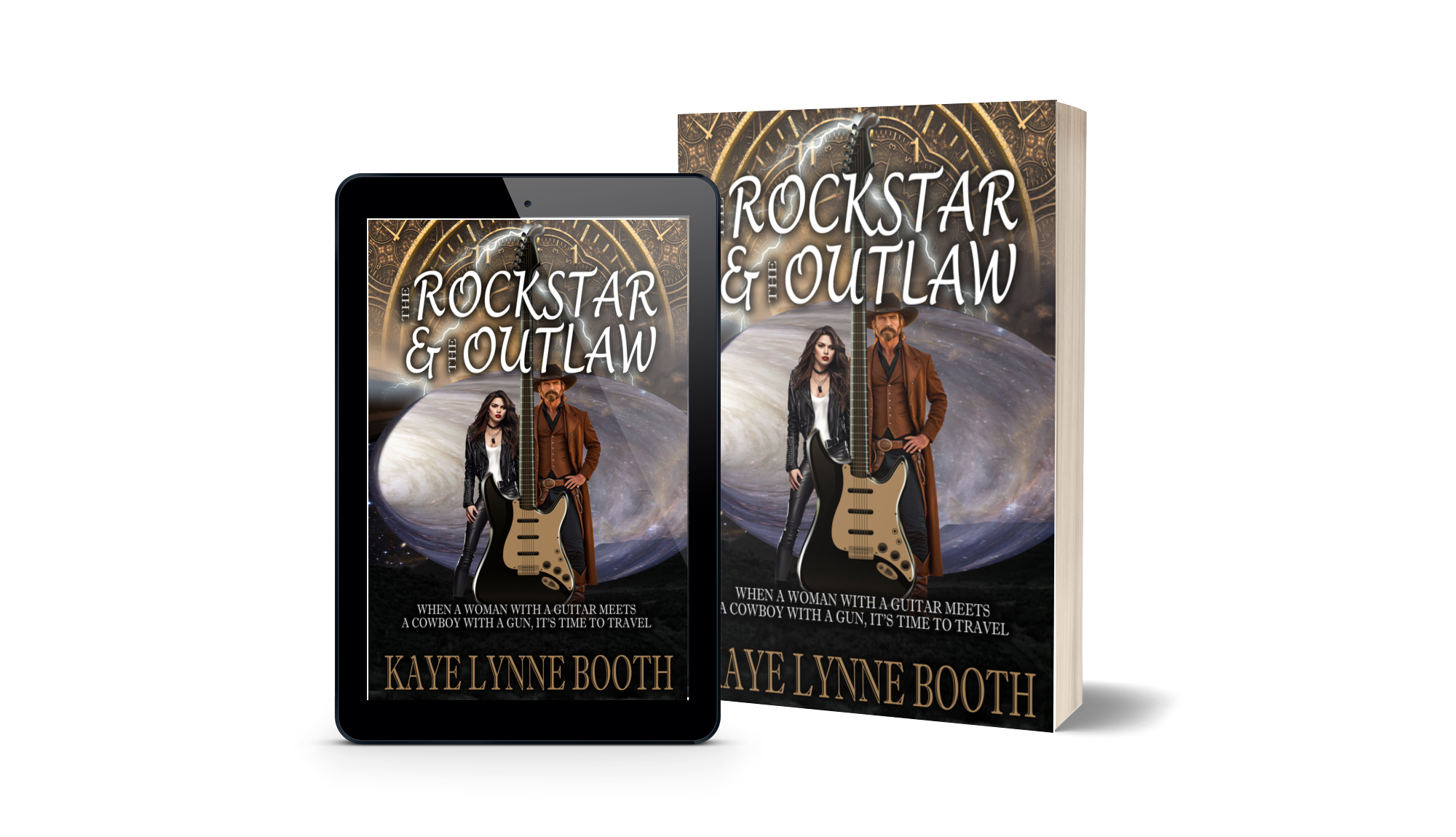
For Kaye Lynne Booth, writing is a passion. Kaye Lynne is an author with published short fiction and poetry, both online and in print, including her short story collection, Last Call and Other Short Fiction; and her paranormal mystery novella, Hidden Secrets; Books 1 & 2 of her Women in the West adventure series, Delilah and Sarah, and Book 1 in her Time-Travel Adventure series, The Rock Star & The Outlaw, as well as her poetry collection, Small Wonders.
Kaye holds a dual M.F.A. degree in Creative Writing with emphasis in genre fiction and screenwriting, and an M.A. in publishing. Kaye Lynne is the founder of WordCrafter Quality Writing & Author Services and WordCrafter Press, where she edits and publishes two short fiction anthologies and one poetry anthology every year amidst her many writing projects. She also maintains an authors’ blog and website, Writing to be Read, where she publishes content of interest in the literary world.
_____________________________________________
Did you know you can sponsor your favorite blog series or even a single post with an advertisement for your book? Stop by the WtbR Sponsor Page and let me advertise your book, or you can make a donation to Writing to be Read for as little as a cup of coffee, If you’d like to show your support for this author and WordCrafter Press.
_____________________________________________
This segment of “Writer’s Corner” with Kaye Lynne Booth sponsored by WordCrafter Quality Writing & Author Services.

Whether it’s editing, publishing, or promotion that you need, WordCrafter Quality Writing & Author Services can help at a price you can afford.
Stop by and see what we have to offer today: https://writingtoberead.com/readings-for-writers/wordcrafter-quality-writing-author-services/
Discover more from Writing to be Read
Subscribe to get the latest posts sent to your email.












I rather like it, personally. it makes me feel in the scene and knowing how she feels immediately
LikeLiked by 1 person
I agree, Beth. That’s why I chose to experiment with it. 🙂
LikeLiked by 1 person
From reading this short piece, I would say it works. Sometimes something different takes a bit of getting used to but it does bring you right into the scene.
LikeLiked by 1 person
Thanks, Darlene. You opinion is appreciated. 😊
LikeLiked by 1 person
Your last paragraph is written in past tense, and I found this disconcerting. I suggest consistency. Write from one tense or the other, and don’t shift tenses in the middle of a scene. Otherwise, this works.
LikeLiked by 1 person
You’re right Abby- “made” Mrs. Dunbar, should be “makes” Mrs. Dunbar. Thanks for pointing that out. It just goes to show how a single word can throw the whole thing off. 😘
LikeLiked by 1 person
The way you’ve written this passage is not confusing or awkward to me. If you mean to use third person present tense, it works here. I looked through your verbs and nearly all fit that style. The reason I say this is because the woman ( Marta?) sees the man. “She had met the infamous Doc Holliday once during his stay in Leadville. This man is like him. She’d seen…” You use past tense to show why Marta compares the man to Doc Holliday. This also shows the reader why she had this reaction. But I honestly don’t know how else you could write this scene! What I mean is the whole story could start to feel awkard if you make absolutely every verb present tense.
If I had read this passage before you asked about point ofview and verb tense, I wouldn’t think anything was wrong. I would just keep reading. I like all points of view or tense as long as the story and characters are entertaining. I know how hard it is to go back and change POV and tense.
LikeLiked by 1 person
Thanks Kay. I believe past tense is always called for in flashbacks and inner thoughts of memories. I don’t see any other way to do it, and on fact, I thought it might help to differentiate and cue the reader to those changes. We know we’re back in the present reality when the tense goes back to present. It can get confusing though, even when you’re the one writing it. Lol.😁
LikeLike
Those are the words I was looking for. Flashbacks and cues. I would continue what you’re doing!
LikeLiked by 1 person
🙂 ❤
LikeLike
Hmm. Generally I don’t like present tense. First person is fine, but that means someone is telling their story to the reader. From that standpoint it’s artificial. People don’t usually tell someone what happened last week in the present tense.
One exeption , though, is historians who almost exclusively use the present tense, annoyingly, to me. “In 1066, William, Duke of Normandy, gathers an army and sets sail for England.” I call this the present historic.
Present tense means it’s happening now; in the present. Past tense means it happened before the current time.
Having said that, I have read present tense novels that I enjoyed, and if the story is strong enough, I forgot about it.
It can be confusing in first person, especially, when the protagonist reflects on the past and uses past tense, as you do here. You’ve managed it quite well, but it’s not always the case.
LikeLiked by 1 person
Thanks for weighing in, Vivian. I look at first person as being all in the character’s head, but you are correct that it makes for an unreliable narrator, because we don’t always look at ourselves honestly. 🙂
LikeLike
[…] https://writingtoberead.com/2026/04/06/writers-corner-person-tense/ […]
LikeLike