Weekly Writing Memo: The Query Letter
Posted: June 1, 2016 Filed under: Fiction, Uncategorized, Weekly Writing Memo, Writing, Writing Tips | Tags: Writing, writing advice, Writing Process 1 Comment A query letter to an agent or a publisher is one of the basic things you should be able to write if you want to be a writer. Sooner or later, if you want to go the traditional publishing route you will have to send a query letter out to get your writing read. So what goes in a query?
Salutation:
To start your query letter, you’ll want to address it to a specific person instead of using something generic. So find out the editor of the publishing companies name, or who reads the queries. If you’re sending it to an agent, make sure you know the agent’s name. You don’t want to use a generic greeting like “to whom it may concern” because you want to show the person you are sending it to that you’ve done your research about them, and that you’ve chosen them specifically for a reason. By addressing the letter to a specific person, you’re saying I want you specifically to read this because you specifically are right for my story, instead of implying that the letter could go to anyone.
Introduction:
The introduction paragraph of your letter needs to have a few specific details in it. First, it should say why you are writing the person. Are you seeking representation, or publication? Second, it should tell them what you are writing them about, specifically the name of your novel or piece you’re trying to sell, what genre it is in, and a general idea of the word count. Finally, the introduction paragraph should include a line or two summary or description of your novel that gives the general feel of the novel. This should be some sort of hook about your novel and doesn’t have to tell the whole story or anything. The point is to show the person reading the query what type of novel it is in as short a way as possible.
Synopsis:
The second paragraph of your query should be a brief summary of your novel. It doesn’t have to tell everything, but it should touch on who your protagonist is, who the villain is, and what the core conflicts of the novel are. You want it to sound as narrative as possible. I like to think of it as the paragraph that would go on the back of the book – it’s meant to get people to want to read your story. The point of this section of the query is to give the person reading it a taste of what your novel is about, and to get them interested enough to want to read more. So don’t give everything away, but do give them the important details if you can.
Bio:
The final paragraph of your letter should tell a bit about yourself. Specifically, mention your experience as a writer, any publication history, and if you’re seeking representation you should mention what other genres or projects you may be working in. This section shouldn’t be too long, as you just want to give the letter a sample about you. End this section with a final “thank you” to the person who is reading your letter, and maybe something about looking forward to hearing from them.
Sign-Off:
Finally, end your letter with some sort of sign off. Some people like the classic “sincerely”, others prefer to use something less formal such as “best” or “thank you.” Whatever you use, make sure to sign your name. You can also add your contact information below your name, and if you attached anything to the letter you should include the words “Encl.” and whatever is attached after. Such as: “Encl. First three pages and synopsis.” That way the receiver knows what is coming with the query.
Final Notes:
The best way to get good at writing queries is to look up examples online of successful queries, and to practice. There are a lot of examples out there if you look. Just remember, always read what the person you are querying wants you to send, and do everything you can to stick to those guidelines. Not sticking to the guidelines is a very quick way to get yourself rejected if the query reader isn’t feeling generous.
Share this:

It’s Not About Speed
Posted: March 2, 2013 Filed under: Writing | Tags: Writing, writing advice, Writing Process 7 Comments I’ve heard a good average for writers is one book a year. For some of us aspiring writers, that seems like a break-neck pace. Then there are those that whip out a novel in a month’s time for NaNoWriMo each year, and there’s a girl in my class who participated in a 365 stories project where she wrote a story a day for a year. Many of us may not write that fast though. I’ve done NaNoWriMo twice unsuccessfully. Those who do finish may have something that resembles a novel, but it’s far from a polished manuscript. It’s good to be able to write fast if you’re writing to deadline or if you want to make a living as a novelist, producing one or more books per year. But the fact of the matter is, it’s not how fast you write that is important, as much as it is that what you write is good, quality writing.
What is important, my instructors at Western State will tell you, is that you find a writing speed that is comfortable for you, that allows you to produce quality writing and set your own pace. I’ve heard it suggested that if you write three hundred words a day, which probably adds up to a couple of hours on slow days, you can complete a novel in a year, and supposedly, that’s a reasonable pace. That’s probably true, and it at least shows dedication, but some writers may find that even meeting that three hundred word per day mark is difficult at times. I know for me, if I have what I want to write, firmly planted in my head before I start, I can write a lot faster than that. But, if I start out with only a vague idea that I’m not sure how I want to express it, those three hundred words may come agonizingly slow, like pulling cactus needles from my derriere after not choosing my seat carefully on a long mountain hike.
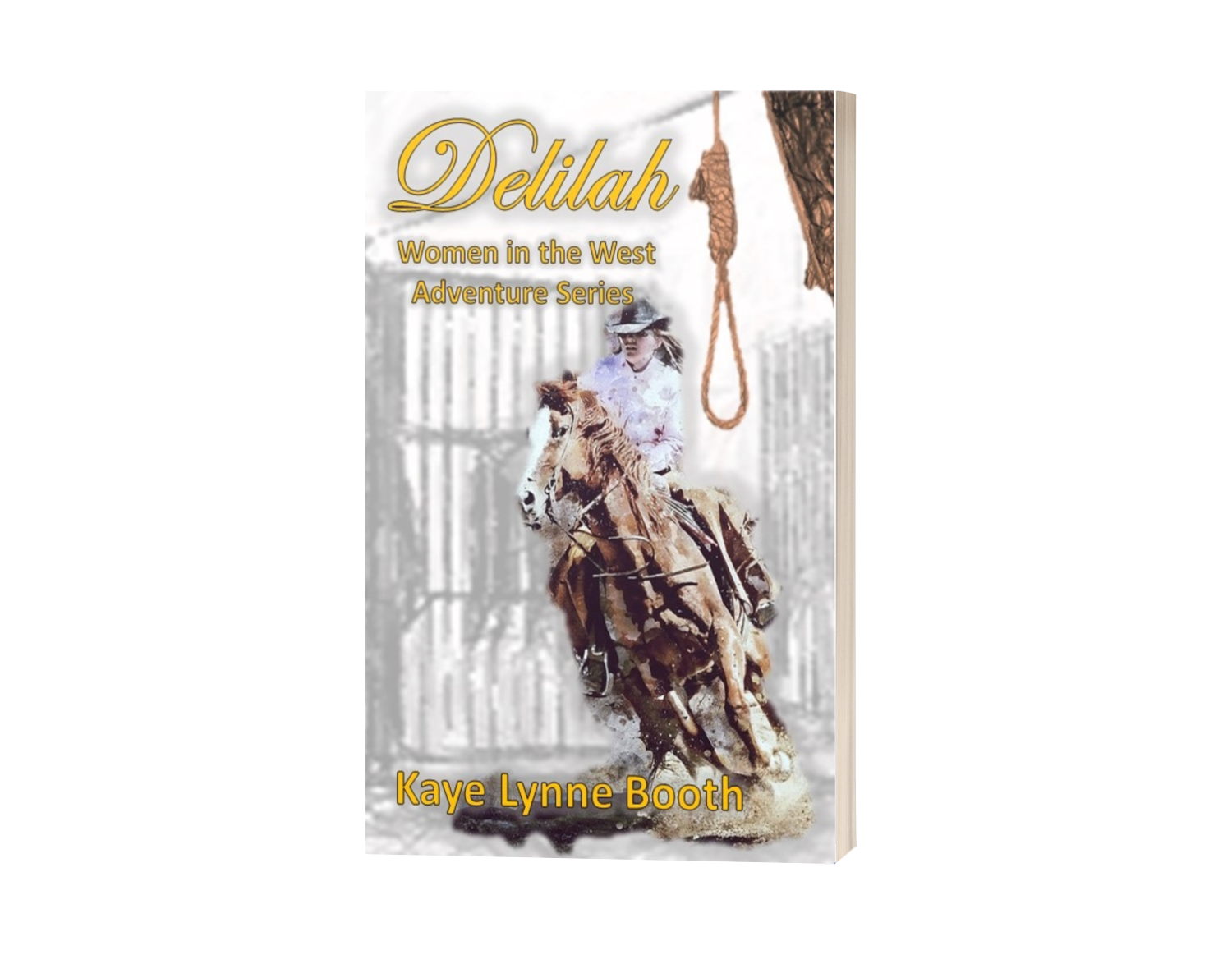
I wrote the first draft of my first novel, Delilah, in six months, which I’m told is pretty good. I wrote between 600 and 1,000 words a day on the days I actively wrote. But honestly, I didn’t write on Delilah every single day of that six months. Many days I just worked out stuff in my head, figuring out what I wanted to write and how I would write it. It was a pace that worked for me. I didn’t feel I was pushing it too hard I sand I still produced some quality writing. I still have a lot of work to do on the rewrites, but it feels good to know I have a good solid base that can withstand some minor alterations or even major reconstruction if necessary.
Writers are human beings, and just as each and every one of us are unique individuals with different strengths and weaknesses, every writer has their own speed at which they write. Can someone else write a first draft faster than I did? Yes, my instructor, Barb Chepaitis, wrote a novel in a weekend. It probably took her longer to regain her sanity afterwards, than it did to write the story, but it is possible. She did it to see if she could. It’s not her normal writing speed, but she does write much faster than I do. Other writers struggle to get a first draft done in a year.
On the first day of class last summer, Barb asked us if we knew how many words we could write in an hour. Being beginning MFA students, most of us did not. She said it was important that we know how fast we write, but she didn’t say it was important that we write fast. Finding that comfortable rhythm where the story flows out without being forced is what produces good quality writing. It doesn’t matter if you only put down two hundred words a day, as long as they are good words. It’s not about speed. The story will always get told in its own time. It’s our job to our job as writers to make sure it’s told well.
Share this:

Listening to Experience
Posted: November 16, 2010 Filed under: Writing | Tags: Books, Writing, writing advice Leave a commentNo two writers are alike, and what works for one, may not necessarily work for another. On the other hand, every successful author was once a writer, just starting out. We’ve all been there. Some of us are still there. So, why not learn from those that have moved on and achieved a degree of success? With this in mind, I have composed a list of the top twenty writer’s tips for all to learn from. Some, I have found through Internet research, while others were given me personally, while doing author profiles for my Southern Colorado Literature Examiner column. Often, these author quotes may seem to be saying the same thing as other authors have said before them. I figured that if I was hearing it again and again, from more than one successful author, then maybe it is worth taking special note of, so I have included them all, even if the advice is similar to what others have said.
My Top Twenty Writer Tips
• “Write what you love, and love to write. Honestly, I can think of nothing more important and more true.” Susan Orlean, author of The Orchid Thief (“Q&A: Susan Orlean”, Editor Unleashed)
• “read widely in your chosen genre, to see what kind of writing and stories are being published.” Beth Groundwater, author of the Claire Hanover Gift Basket Designer Mystery series (“Beth Groundwater – Success is no Mystery”, Southern Colorado Literature Examiner)
• Never give up – “after being rejected by 89 agents before the 90th one signed me on, I advise every writer who is looking for an agent to query at least 100 before giving up, especially if you’re getting feedback and full-manuscript requests” (“Beth Groundwater – Success is no Mystery”, Southern Colorado Literature Examiner)
• “Read a lot first — I read 100 novels my last year in law school and 200 more over the next couple of years after that. I wasn’t educated and didn’t know what had been done.” Kent Nelson, author of The Touching that Lasts and numerous others (“Kent Nelson – A True Southern Colorado Author”, Southern Colorado Literature Examiner)
• “If there’s a formula for writing a “successful novel” I don’t know it. If you’re serious about it, you write the best book you’re capable of, for your own reasons, according to your own lights. I think it’s as impossible as that.” Kent Haruf, author of Plainsong (“Kent Haruf: Colorado Author Touches the Heart”, Southern Colorado Literature Examiner)
• “Write what you know…I think once you write in and or about something
you’re truly passionate about, the work will show it.” Cicily Janus, author of The New Face of Jazz (“Cicily Janus Helping Fellow Writers Along the Way”, Southern Colorado Literature Examiner)
• “I wasn’t the best writer I knew when I was a teenager. I knew many, many
writers who were much, much better than I was. But most of them stopped
writing somewhere along the way. So part of what you can do to be a
writer is just keep writing.” Jessy Randall, author of The Wondora Unit (“The Literary World of Jessy Randall”, Southern Colorado Literature Examiner)
• “The best piece of writing advice I ever got was to write the sort of story you always wanted to read.” Todd Mitchell, author of young adult novel and finalist for the Colorado Book Award, The Traitor King (his website)
• “Don’t give up, if you truly believe and love this work, then work harder. Go back and re-edit your manuscript a third time. Make it stronger. Take a chance and go deeper with the emotions.” Romance author Lorhainne Eckhart (“Interviewing Romance Author Lorhainne Eckhart”, Talk About My Favorite Authors: Our Opinions About the Authors We Love to Read, Jordan, Phoebe, 8/25/2009)
• Start with a promise and then make sure to follow through and deliver to your readers. Jessica Page Morrell, veteran writing coach and author (“Start with a Promise”, Editor Unleashed)
• Learn to write excellent query letters, as this is where you sell your work and yourself. Sue Midlock, writer and illustrator (Personal communication)
• “Make sure that by the time you have one novel published, you have the next half-written,” she said. “Always be a moving target.” Author, Iris Murdough, quoted by author Amanda Craig, “Starting A New Novel – or being a moving target”(Aug. 6, 2009, Amanda’s Blog)
• “Two things are important to remember:
#1 Once the book is published, it no longer belongs to us. It belongs to each individual reader.
#2 The book is not the writer who wrote it. Your book is not you. You are not the book.” Colorado Springs romance author, Barbara O’Neal (“Preparing for Publication Anxiety”, Writer Unboxed)
• “Read, read, read. And write, write, write. Then rewrite, rewrite, rewrite. Subscribe to the magazines you want to be published in. Don’t give up.” Annie Dawid, author of AND DARKNESS WAS UNDER HIS FEET: STORIES OF A FAMILY (“Westcliffe author Annie Dawid is always on the go” Southern Colorado Literature Examiner)
• “Invest in your profession. Take classes, attend workshops, join a supportive critique group, participate in professional writers’ organizations and as early as you possibly can, go to workshops and conferences (SCBWI, Chautauqua, and Highlights Founders Workshops). Look into correspondence courses such as those offered by The Institute of Children’s Literature. And, if you are serious about becoming a top quality children’s writer, consider finding the $20,000 to enroll in a low residency MFA program in writing children’s Literature.” Young adult author of the Santa Fe Trail Trilogy, Mary Peace Finley (“Award winning children’s author Mary Peace Finley brings history alive for young readers” Southern Colorado Literature Examiner)
• “Join writers’ organizations, get in a critique groups, enter writing contests, write every day, finish projects, then submit them to agents and publishers. Submit a lot, and stick with it through the rejections (I once got twelve in one day). While submitting one project, work on another. Keep writing. Keep writing. Keep Writing.” Mystery author, Robert Spiller (“Author Robert Spiller writes what he knows” Southern Colorado Literature Examiner)
• “Discover your writing life style. Do you work best with a strict routine, writing on a set schedule? Does your writing respond best when the muses call or when the mood is right? There’s no right way to approach writing. Find what works for you, and when you do, honor your commitment with the space, equipment and undisturbed focus it deserves.” Young adult author of the Santa Fe Trilogy, Mary Peace Finley (E-mail interview, September 1, 2009)
• “ if you don’t love it, you won’t persist through the hard bits and you won’t dig deeper to fund the truth of your characters and the logic of your plot.” Fantasy author, Carol Berg (“Epic fantasy author, Carol Berg lives a writer’s fantasy of success”, Southern Colorado Literature Examiner)
• “Subscribe to Writer’s Digest. Read writers who specialize in helping other writers get started, like James Scott Bell and Randy Ingermanson. Go to a writer’s conference–or two or three. The more you learn, the more it’ll help you. But the best is to read what you love and then write better than those you’re reading. Tough orders, but what it takes these days to get published…” Christian Fiction author, Lisa Tawn Bergren. (“Heavenly inspiration keeps author Lisa Tawn Bergren running at a fast pace”, Southern Colorado Literature Examiner)
• “Don’t look to people like me for guidance. Publishing exists in a starkly different world than it did twenty years ago. The strategies that were successful for me would probably doom a hopeful writer today. What endures? Good stories, intriguing characters, quality writing. What is required beyond that? Determination, tenacity, and a thick skin.”, bestselling mystery/thriller series author, Stephen White (“Bestselling series success was an unexpected surprise for Colorado author, Stephen White”, Southern Colorado Literature Examiner)










Write What You Know
Posted: May 23, 2016 | Author: kayelynnebooth | Filed under: Commentary, Fiction, Nonfiction, Writing | Tags: Creative Fiction, Fiction, Nonfiction, Writing, writing advice, Writing Process | 1 CommentAs an emerging writer, I hear that advice a lot. I think we all do. But what does it really mean? Before a writer can write about a subject or topic, she must experience it. Which is not to say that it isn’t possible to research a subject and then write about it as if you’re an expert, or at least know what you’re talking about, but it is saying that when you experience something, you must own the emotional aspects associated with it, and that will come through in your writing.
Now you know why I am not a travel writer. I wish I were, but I don’t travel often. Travel writers get paid big bucks. No, I’m a prime example of a starving artist. I work menial labor jobs to scratch out a living, and seek out cheap entertainment. But I do write what I know.
When I started out freelancing, I knew one thing. I loved to write, and I wanted to find a way to make a living at it. When I filled out the application for Examiner.com, I had to pick a category to write on. I chose writing, and as the Southern Colorado Literature Examiner, I covered writing events in southern Colorado and wrote author profiles and book reviews for Colorado authors. I served in this capacity for six years, not because I was getting rich off it, but because I loved what I was doing. I met many Colorado authors, most of whom I’m still in contact with, I got free ARC copies of books for review and I occasionally was able to attend some great writing events, such as the 2013 Pike’s Peak Writers’ Conference, 2012 Writing the Rockies Conference and Performance Poetry Readings, with wonderful poets such as word woman, Rosemerry Wahtola Trommer. The money was never an issue for me, (I maybe made a whole $20 during the whole six years I wrote for Examiner), but the perks were great. It may have actually played a role in my acceptance to Western State Colorado University as a graduate student in their low-residency Creative Writing program, since I had interviewed and written a three part profile on the then director of their poetry concentration, David J. Rothman. But I digress.
When I applied to write for Demand Media writing How-to articles, they didn’t have a lot of call for articles to do with writing, so I had to think. What else did I know? I started out with simple things like How to Put a Chain Back on a Huffy 10-speed Bicycle. I’ve always been an avid gardener, since I helped my grandfather plant petunias when I was a little girl, so I ended up writing a lot of gardening How-tos, like How to Grow Vegetables in a Bathtub. The topics I wasn’t as familiar with required a minimal amount of research, like The Best Potting Soils for a Vegetable Garden and I had references at hand to look up anything I needed. At $8 per article, the research had to be minimal. If I spent too much time researching, the time spent wouldn’t prove to be profitable.
As I mentioned, I don’t do a lot of traveling, and my entertainment is limited by my pocketbook, but I’ve learned to write about the things I do know. You won’t catch me writing about the Emmies, or the Oscars, or $100 a ticket charity fundraisers, because I’ll never be at one of those events and I know very little about them. What you will see me writing about are weird, off the wall things like, How Writing is Like Building a Storage Shed, or Getting in Shape for Writing, which combines my own experience, with building or exercise, with my knowledge of writing.
Of course, that doesn’t work with everything. My experiences on this day involved digging a ditch. Somehow, that just doesn’t seem as creative building a shed. But I could always write a fictional story in which the characters dig a ditch. You see, “write what you know” applies to fiction, too. My whole children’s series, My Backyard Friends, feature characters based on the birds and wildlife that frequently visit my mountain home. I wrote a short story one time that developed from a visit to Lake DeWeese, not far from my home. It was about a woman who walks naked into a waterfall and disappears. The funny thing about that story, titled, The Woman in the Water, was that my narrator turned out to be male, giving it a very interesting twist. But it was still based on the experience I had, hiking up to the top of the dam, and then sitting, gazing down into the waterfall.
It really is important to write what you know, for although some can “fake it” convincingly with just research, in most cases, the readers know. When the words on the page don’t feel genuine, like they’ve come from deep within the author, readers can’t quite buy in to what they’re being told, whether it is something being explained to them in an article, or a fictional story they’re being asked to believe. And if readers can’t buy in to the story, or feel the authority in the author’s voice, they are often left feeling unsatisfied, with the promise of the premise unfulfilled.
In short, what is really meant when someone says “write what you know”, is that you should draw from your own experiences, whether they be many or few, and inject a little bit of yourself with words that come from deep within into your writing. Let the readers feel the same emotions you feel when you write about your topic, or create your story. Write honestly, and the readers will feel that, too.
Like this post? Subscribe to Writing to be Read for e-mail notifications whenever new content is posted.
Share this: