Treasuring Poetry – An introduction to the poetry of Lindsey Martin-Bowen and a review
Posted: March 18, 2026 Filed under: Book Review, Collection, Interview, Poetry, Review, Treasuring Poetry | Tags: #poetry, #RobbieCheadle, #TreasuringPoetry, Book Review, Interview, Lindsey Martin-Bowen, Treasuring Poetry, Where Water Meets the Rock, Writing to be Read 21 Comments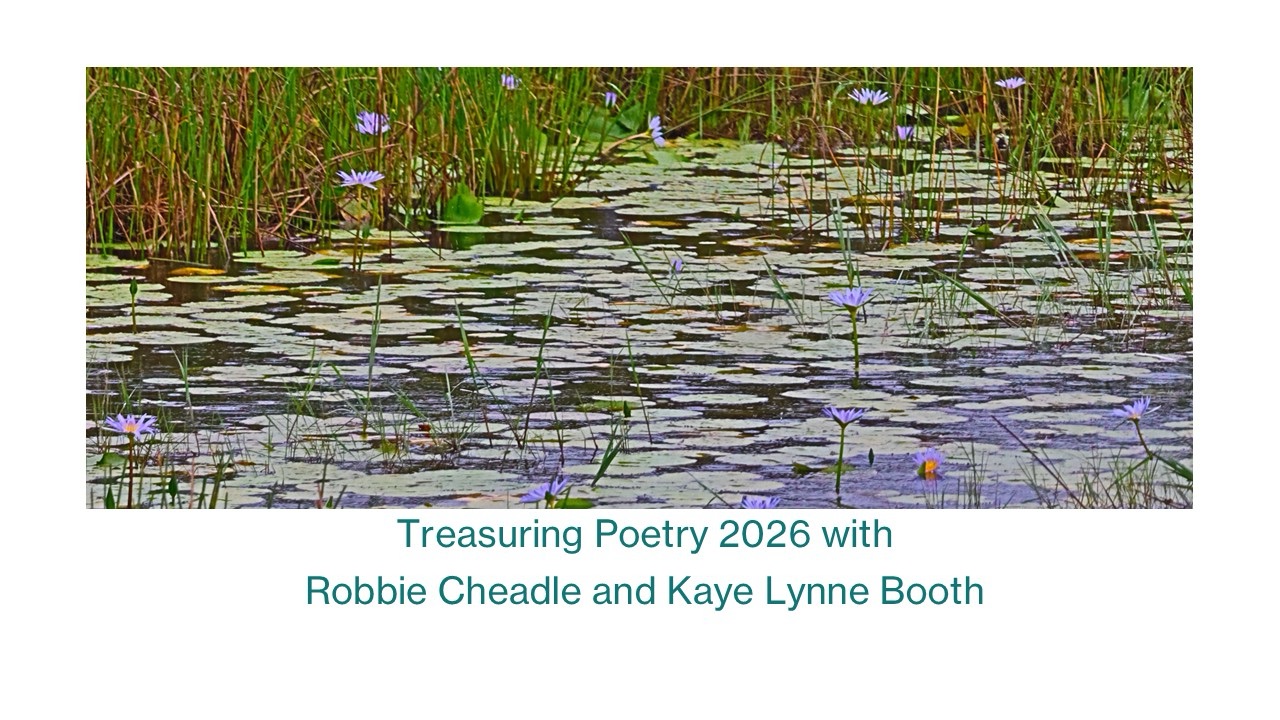
Today, I am delighted to host talented poet Lindsey Martin-Bowen as my March Treasuring Poetry guest. Lindsey is a fellow contributor to Writing to be Read and you can read her latest post here: https://writingtoberead.com/2026/03/04/lindseys-writing-practice-out-of-this-world-writing-exercise/
Interview with Lindsey Martin-Bowen
My poetry journey: How I became a poet
I must admit as a child, I wrote more stories than poetry. And the poems I wrote then were sentimental and trite. (During grade school (from third or fourth through sixth grade), I compiled annual Christmas books containing “Christmas” stories I wrote—but each year, the manuscript also included a Christmas poem (or one about winter) and a Christmas tale from Readers Digest (which influenced me to compose Christmas books). I also illustrated the books with colored pencils the first year and I gradually moved to water color illustrations (which I sometimes marked with felt-tip pens). My sixth-grade teacher (Mrs. Ferguson) introduced us to Robert Frost and Carl Sandburg, whom I liked, but I liked Emily Dickson the best when I attended elementary school—and I still consider her one of my favorites today. (Unfortunately, at the time, I was too naive to pickup on her style (and skills).
Being the nerd I was in high school, I opted to take a journalism classl. There, for the Christmas issue (of our high-school newspaper), I wrote a humorous Christmas poem from the staff, which I illustrated with an ink sketch of Santa , his gift-filled sleigh (which included B/W head-shot photos of each new-staff member )
and eight reindeer flying through skies above my sketches of Victorian two-stories. (Even then, I preferred old homes to the contemporary ranch styles where most my classmates and I lived.)
Also in high school, I continued writing in my diary, which I used to create short stories (from events in that diary). And I submitted those stories in English classes when a teacher requested them. But my poems were overly sentimental and personal. And basically about teen angst. (For example, one was entitled “Alone.”)
In fact, during my senior year in high school, my English composition teacher enjoyed my short stories and offered encouraging comments. I wouldn’t have shared my poetry, but she’d asked to see it. So I submitted the dreary poems I’d written (mainly centering on unrequited love). She read them and returned them without comment. I mean—absolutely NO comments. No encouragement. So I figured I was no better poet than I’d been a violinist. Sigh.
Thus, my true poetry journey did not take flight until my sophomore year at the University of Missouri-Kansas City, when fellow student Robert (“Bob”) Haynes and I became close friends. Even then, he was an excellent poet—and he boosted me along the journey to poet-hood. He shared not only his poems, but pointed out many contemporary experts who’d been gaining attention in the early 1970s, , such as W.S. Merwin, Galway Kinnell (both born the same year as my father: 1927), Lawrence Ferlinghetti, and Alan Ginsburg, popular in the late 1960s.-and who gave a reading at UMKC. Bob also introduced me to surrealists Kenneth Patchen and Kenneth Koch, who inspired my frenzies, (which I didn’t write until fifty years later.) I discovered James Tate, who I’d include as a “surrealist,”too. Shortly thereafter I enrolled in the university’s poetry writing classes taught by professors Dan Jaffe and David Ray, who introduced me to an array of well-known contemporary poets, including Diane Wakoski (whom Dan Jaffe brought to UMKC to give a reading), James Dickey, Etheridge Knight, Denise Levertov, John Berryman, David Ignatow, Randall Jarrell, William Stafford, Robert Lowell, Thomas Merton, Later, I also started reading Adrienne Rich, Denise Low, and Mary Oliver.
And, I did improve—enough that my senior year, Dan Jaffe asked me to read a few of my poems at a poetry reading on the UMKC campus for the public. He also published two of my poems in an anthology he compiled, one that included many professional poets.
Favorite poem by another poet
O my goodness—I’ve read so many poets and poems, this one is a tough question. Along with the previous set of poets I mentioned, I’ve always admired Emily Dickinson’s style and work, along with William Butler Yeats (especially his “The Second Coming.” And T.S. Eliot: His “Wasteland” is remarkable, but far too long to include here. And the sounds in that poem make it come alive so much that it’s best to listen to a recording of it. Even his “The Love Song of J. Alfred Prufrock” is a bit long to include. Thus, I’ll share Yeates’s “The Second Coming,” which not only inspired one of my poems that I’ll share later, but also remains relevant to our current world situation (a century later).
The Second Coming
Turning and turning in the widening gyre
The falcon cannot hear the falconer;
Things fall apart; the center cannot hold;
Mere anarchy is loosed upon the world,
The blood-dimmed tide is loosed, and everywhere
The ceremony of innocence is drowned;
The best lack all conviction, while the worst
Are full of passionate intensity.
Surely some revelation is at hand;
Surely the Second Coming is at hand.
The second Coming! Hardly are those words out
When a vast image out of Spiritus Mundi*
Troubles my sight: somewhere in sands of the desert
A shape with lion body and the head of a man,
A gaze blank and pitiless as the sun,
Is moving its slow thighs, while all about it
Reel shadows of the indignant desert birds.
The darkness drops again; but now I know
That twenty centuries of stony sleep
Were vexed to nightmare by a rocking cradle,
And what rough beast , its hour come round at last,
Slouches toward Bethlehem to be born?
1920-1921
Favorite style of poetry and why
Although I love my surreal frenzies, I also like other forms of poetry, including sonnets, when they come “naturally.” (The two times I’d written sonnets but didn’t realize it until I re-examined them, tweaked them here and there, and voila! I’d written two sonnets without trying—the best for me). Those two appeared n my second published poetry book (the first full collection) Standing on the Edge of the World (Washburn University/Woodley Press 2008).
I’ve also fallen in love with the Japanese tanka form. (Haiku doesn’t allow enough syllables for my poems. 😉 ) Thus, I created a section of tankas in my last collection, CASHING CHECKS with Jim Morrison (redbat books 2023). More about that later.
Moreover, I generally write in “free verse” with sounds and rhythms and internal rhymes (not at the end of a line), that flow so smoothly, the rhyme doesn’t “hiccup” or stop the reader. Why is this usually my favorite form? As I’ve mentioned in a number of my bios, “poetry is my way of singing.” Thus, in most poems I write, I strive to use sound so they have somewhat the same effect that a song does.
Favourite poem of my own
O so many poems—so little time. I cannot name one favorite poem. But three of them come to mind. First, here’s my response to “The Second Coming,” which I wrote in response to the violence occuring in Ferguson, Missouri:
Re-reading “The Second Coming’ by W.B.Yeats
after Ferguson, Missouri\
No one listens anymore. No one works
in tandem. No horses pull this cart.
Now trembling, it falls apart.
The center hub’s blown, exploded.
Rioting in city squares—rioting along beaches.
Is this anarchy—or something more?
The blood of victims rushes onto shores.
Innocents no more, their lungs fill
till they can’t speak—can’t breathe.
Their passions now sneseles, uneasy—
bringing the strange revelation:
the Second coming lies on the horizon.
It’s the day, it’s the day—
O yes, it’s the holy day—
it’s the Day of the Dead.
A wide-winged beast rises above—
eyes black and gleaming, onyx
glistening through bone.
O Momma, Momma,
come back, come back
again. The world’s too cold.
No lion-bodied beast alouches
toward Bethlehem. It’s a creature
with a jackal’s head, a jackal’s soul.
Where Water Meets the Rock, p. 30 (39 WEST PRESS 2017)
Two other poems I must also count as favorites, because they seemed to write themselves.
The words came to me without me planning them. It was if they suddenly appeared in my brain, and I had to scramble to pen them onto paper before they evaporated.
The first, I wrote during the months that revealed my father was not to stay much longer on this earth. (This was when the frenzies started coming to me. Many of the frenzies are absurd—but comical. This one’s more serious. (And I’ve included it in three of my books: It must be a favorite.)
It’s Never Like the Movies—
for my father
this dying, no background chords
rising to a crescendo,
no adagio of strings.
You watch these ants instead,
trickle across peonies
They disappear. And you
can’t keep your grip
on that granite wall of reason
but slip downstream
into some wild current
till you run aground .
There, you search
for the deserted place, a Holy Land,
where Ekijah met God.
Even if you’re hiking
the Appalachian Trail, up
Standing Indian Mountain,
you watch vultures circle
in and out of clouds festering
into some murky, yellow soup.
And when lightning hits,
Father Davis says Hail Marys—
and there, on the horizon,
you see wovoka whirl
in his dance of ghosts.
Standing on the Edge of the World, p. 85 (Washburn U/Woodley Press, 2008)
Inside Virgil’s Garage, p.52 (Chatterhouse Press, 2013)
The Book of Frenzies, p. 76 (Pierian Springs Press, 2022)
And “From the Emerald City to the Mountain of Quaff” is special to me because it came to me in pieces—often as I was awaking from sleep. At the time, it seemed to be one of the most imaginative poems I’ve written. Perhaps that’s why one of my former poetry professors, David Ray selected it to run in an anthology he assembled (Whirleybird Anthology of Kansas
City Poets, 2012).
From the Emerald City
to the Mountain of Quaff
(or This Must Be Kansas)
Go out and get that long face lost, you say,
Bury me in Jerusalem, I reply.
I want to be one of the first to rise,
like yeast on a rock in the desert,
among iron stones, hills filled with brass,
in a land of olive oil and honey—
wrapped in silver and gold,
where water eats fire
and fire drowns water, and the angel
of the presence outlasts them both.
Or, if poetry must be delirious and weird,
or even a prophetic frenzy,
then bury me in absurdia,
where the lemons bloom.
Inside Virgil’s Garage, p. 7 (Chatter House Press 2008)
Kansas City Voices (October 2007)
Whirlybird Anthology of Kansas City Poets, Whirlybird Press (2012).
The BOOK of FRENZIES, p. 66 (Pierian Springs Press 2022)
About CASHING CHECKS with JIM MORRISON
This book has a strange history. Although it resulted in being a sequel to CROSSING KANSAS with JIM MORRISON (Paladin Contemporaries 2016), it wasn’t exactly planned. I wrote the first collection in about six months. It was odd, too, because it took two years for me to write and revise the book’s initial poem entitled “Crossing Kansas with Jim Morrison, which, of course, became the book title. Yet—once that poem came together, I wrote the rest of the book within six months and entered it into the 2015-2016 QuillsEdge Chapbook Contest, Although it didn’t win, it was a finalist. Concurrently, Thorny Locust literary magazine ran three poems from the collection, and Amethyst Arsenic, another lit mag, took one more.
And the Jim Morrison poems kept coming to me. So I added them and others that fit into the collection, to make a complete book, which Paladin Contemporaries published that summer. On Amazon, the book made it to number 23 or so on the top 100 Poetry Books by Women list—and stayed there most of the following year. (Inside Virgil’s Garage was on that same list concurrently, but it didn’t rise as high Crossing Kansas w/JM did.
About two years later after Where Water Meets the Rock was published, I put together CASHING CHECKS, designed around the themesof actual money becoming obsolete. (Checks, along with credit cards, debit cards, and other contemporary methods of payment don’t include actual money, correct? It money going the way of the manual—or even electric typewriter?) That collection, of course, included other sectons centering around the tanka form and the frenzies. (At present three of my collectons include a section of “frenzies,” and of course, The BOOK of FRENZIES contains solely frenzies, some less zany than others).
In short, after accruing more Jim Morrison poems—I mean, Jim just wouldn’t hush, but kept popping words into my brain—I considered merging the new Jim Morrison poems with the CASHING CHECKS book.
When I submitted both versions to redbat books, both the publisher and her editor preferred the collection containing Jim Morrison. So that’s where we went with it.
What’s next?
What’s next? I’m now working on a manuscript, named for a 10-stanza poem (which can be set in five pages or in in ten, whichever works best) that’s appeared in three publications. I’ve been adding to it and hope to complete a full collection within a few months. The DARK HORSE WAITS in BOULDER, my fourth novel (third on Amazon) is scheduled to be released this spring—so that will precede the poetry book release. At present, I have one more poetry collection I’ve started but don’t see it going anywhere for a year or more. That one may be my last poetry collection, too. (Three more novels and one short story collections are ahead of that poetry collection.) And then, what may be my last novel—now in a VERY ROUGH state-of-being—just may allow the likely last poetry collection to supercede it .But who knows? Rock star archetype Jim Morrison may hop into one or the other manuscript and upset the entire scene.
My review of Where Water Meets the Rock
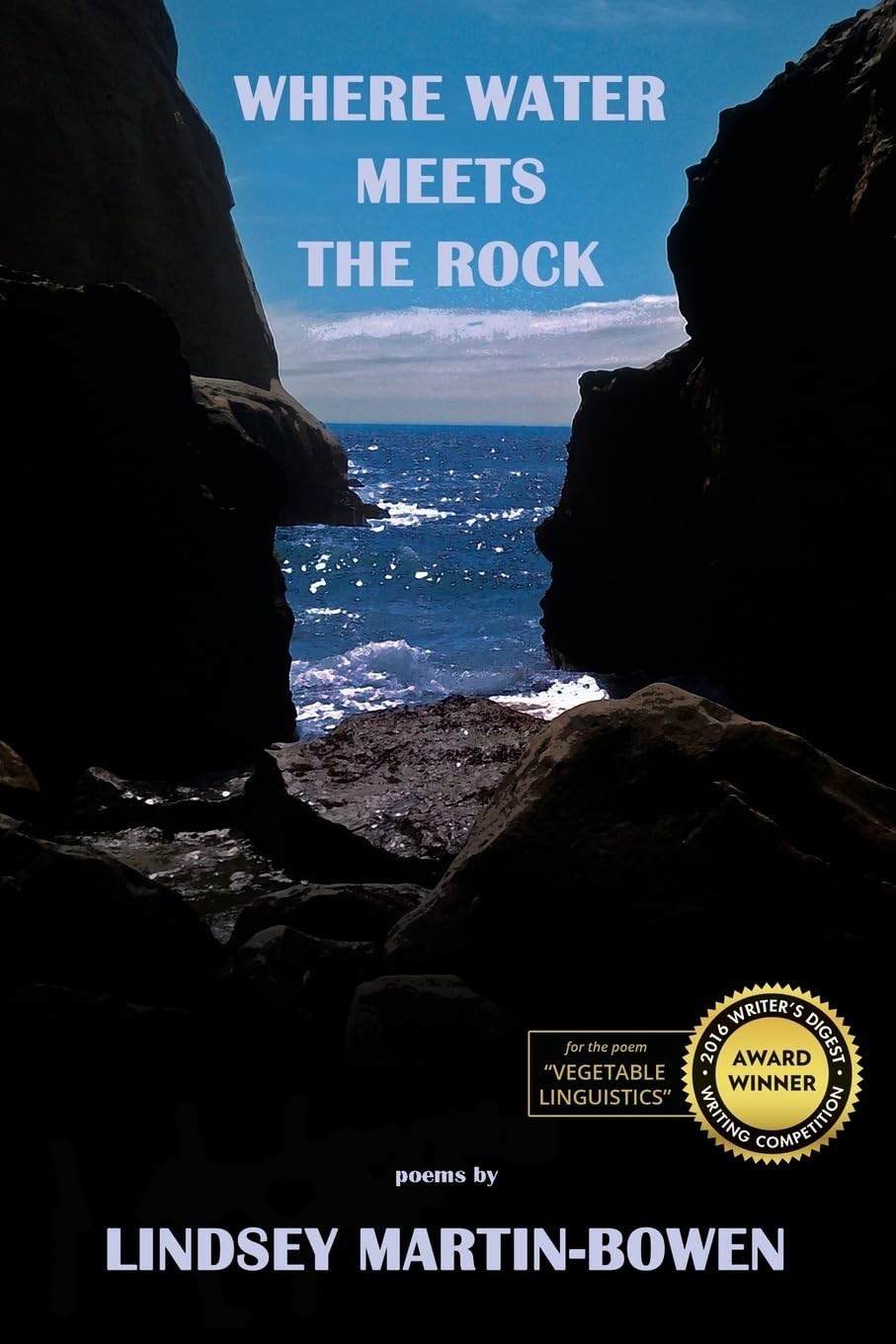
I enjoy reading poetry collections that include a common thread that links all the poems together. The common thread for this collection is loss and recuperation. This theme is relatable to everyone as we all suffer loss in various forms throughout our lives and we are forced to recuperate whether we want to or not.
The collection is divided into three sections: Erosion which explores the slow build up to loss; Frenzies which seeks to unravel the immediate chaos and emotion that follows loss; and On the Shore which delves into the slow path to acceptance and continuation.
The poems are unique and make use of various techniques to either exaggerate or bring out the humorous side of deep emotion and complex thought patterns relating to loss.
A poem that resonated strongly with me in Erosion is titled Psyche in the Suburbs. For me, this poem exposed the conflicting emotions of love, resentment, and self sacrifice that arise when caregiving for aging relatives.
This is the final stanza in this poem:
“Now, lavender scents fill the air,
sending me to the Aegean Sea.
When I step onto the asphalt,
I remember the bottled water.
I must go back. Without it,
the world will know her face
grows old. And she’ll blame me.”
Another poem in this section I especially related to is entitled My Bones are Glass. I have often thought this same thing when dealing with the elderly and aging. The poet includes an apology to Mark Strand, one of my favourite poets, so the style also worked very well for me.
Section 2: Frenzies, includes a lot of humour relating to people’s eccentricities and wants in their final moments. The poems also touch on the need for the observers to fulfil every desire and make the passing easier – perhaps to alleviate the guilt of survival. I enjoyed the poems although humour in poetry is not my personal favourite style. This section lifts the tension in death and loss and will appeal to most readers.
Section 3: On the Shore was very compelling for me. It explored inevitable change and endings coupled with new beginnings of a different sort. I reminded me that we move from one phase to another in our lives without even realising it until we look back and the end and beginning stand out in stark reality. The poem I enjoyed the most in this section was Two Mothers with Kids in Winchell’s. Perhaps because my children are now adults and have both finished school so I can understand and appreciate this poem through the lens of a soon to be empty nester.
This is one stanza in the poem that I strongly related to:
“The Winchell’s mothers nod, talk in buzzing hums,
eye their toddlers, who hop, slide on linoleum.
The kids scratch glass, balance on window ledges.
The pregnant one smooths seersucker. “Guys,” she says,
“They don’t like that here. Come, be quiet, Sit down.”
Like seatbelts, her words rein them in. I frown,
wonder how she renders her voice firm but not loud.”
As a mother who always worked, this stanza fills me with thoughts about what might have been had my own path taken me along a different path. What kind of mother would I have been had I not always been struggling to balance work and home demands. A writer who can introduce such reflections has to be great.
I highly recommend this compelling collection.
Where Water Meets the Rock is available from Amazon US here: https://www.amazon.com/Where-Water-Meets-Lindsey-Martin-Bowen/dp/1946358053
Lindsey Martin-Bowens Amazon Author page is here: https://www.amazon.com/stores/Lindsey-Martin-Bowen/author/B00JA31KW0
About Lindsey Martin-Bowen
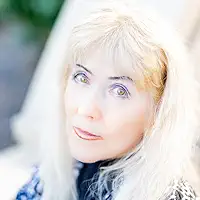
Lindsey Martin-Bowen’s CASHING CHECKS with Jim Morrison has just been released this fall (2023) by redbat books (a La Grande, Oregon publisher) as part of its Pacific Northwest Writers series. She serves as a Literary Consultant for Pierian Springs Press, which published The BOOK of FRENZIES in April 2022 (hardback copy in December 2022–BEFORE she became its Literary Consultant). She has taught Criminal Law and Procedure (online) at Blue Mountain Community College, Pendleton, Oregon since January 2019. Until August 2018, she taught writing, literature, and Criminal Law at MCC-Longview and taught literature and writing at the University of Missouri-Kansas City 18 years.
A Pulitzer-Prize nominee, her fourth full-length poetry collection, WHERE WATER MEETS THE ROCK (39 West Press 2017) contains “Vegetable Linguistics,” which received an Honorable Mention in the Non-rhyming Poetry category of Writers Digest’s 85th Annual Writing Competition (2016). Her third collection, CROSSING KANSAS with Jim Morrison, won the “It Looks Like a Million” Award for the 2017 Kansas Authors Club competition. The book is an expansion of her chapbook named a finalist in the 2015-2016 QuillsEdge Press Chapbook Contest. “Bonsai Tree Gone Awry” from INSIDE VIRGIL’S GARAGE (Chatter House Press 2013) was nominated for a Pushcart Prize. This collection was also runner-up in the 2015 Kansas Authors Club Nelson Poetry Book Award. Woodley Press (Washburn University) published her first full-length collection, STANDING ON THE EDGE OF THE WORLD, which McClatchy newspapers named one of the Ten Top Poetry Books of 2008. Paladin Contemporaries released her novels RAPTURE REDUX (2014), HAMBURGER HAVEN (2009) and CICADA GROVE (1992). Her work has appeared in NEW LETTERS, I-70 REVIEW, THORNY LOCUST, FLINT HILLS REVIEW, PORTER GULCH REVIEW, SILVER BIRCH PRESS, COAL CITY REVIEW, PHANTOM DRIFT, TITTYNOPE ZINE, BARE ROOT REVIEW, , AMETHYST ARSENIC, THE SAME, THE ENIGMATIST, ROCKHURST REVIEW, BLACK BEAR REVIEW, LITTLE BALKINS REVIEW, KANSAS CITY VOICES, LIP SERVICE, 21 anthologies, and others.
With Dennis Etzel, Jr., she edited GIMME YOUR LUNCH MONEY: Heartland Poets Speak out against Bullies (Paladin Contemporaries 2016). She holds an MA in English (creative writing emphasis) and a Juris Doctor degree.
Before focusing upon teaching and writing poetry and fiction, she served as a full-time journalist and magazine editor for THE LOUISVILLE TIMES, the Johnson County SUN, MODERN JEWELER Magazine, and THE NATIONAL PARALEGAL REPORTER. She also worked as a legal editor for the Office of Hearings and Appeals (USDI) in Washington, DC.
She has two brilliant children and contends with super Chihuahuas Chia Maria La Rue and Chico the Man, her canine companions. And often, she spars verbally with poet Carl Rhoden.
About Robbie Cheadle

South African author and illustrator, Robbie Cheadle, has written and illustrated sixteen children’s books, illustrated a further three children’s books, and written and illustrated three poetry books. Her work has also appeared in poetry and short story anthologies.
Robbie also has two novels and a collection of short stories published under the name of Roberta Eaton Cheadle and has horror, paranormal, and fantasy short stories featured in several anthologies under this name.
You can find Robbie Cheadle’s artwork, fondant and cake artwork, and all her books on her website here: https://www.robbiecheadle.co.za/
________________________
Did you know you can sponsor your favorite blog series or even a single post with an advertisement for your book? Stop by the WtbR Sponsor Page and let me advertise your book, or you can make a donation to Writing to be Read for as little as a cup of coffee, If you’d like to show your support for this author and WordCrafter Press.
__________________________
This segment of “Treasuring Poetry” is sponsored by WordCrafter Press and the Poetry Treasures series.
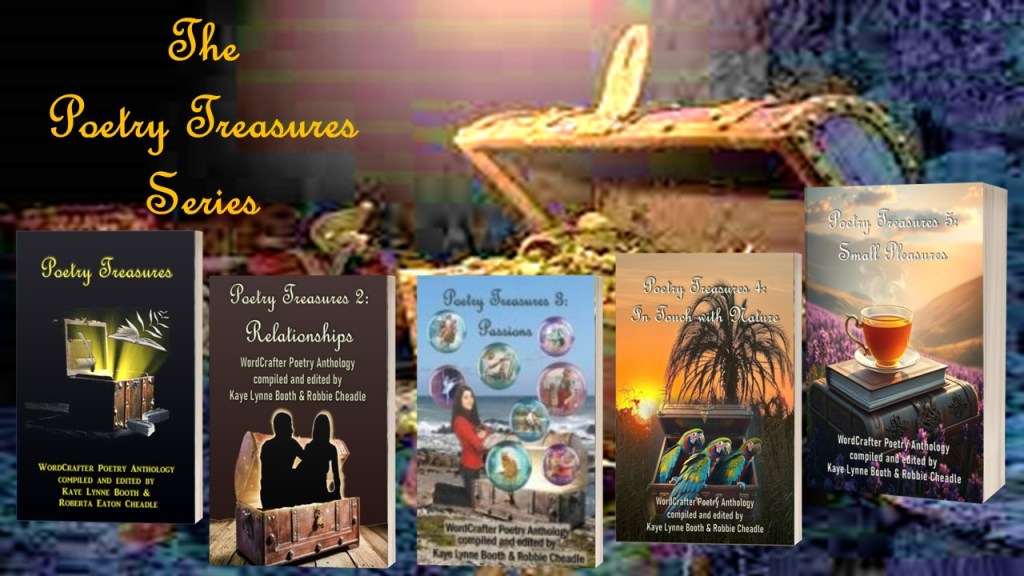
Get Your Copy Today!
Poetry Treasures: https://books2read.com/PoetryTreasures
Poetry Treasures 2: Relationships: https://books2read.com/PT2-Relationships
Poetry Treasures 3: Passions: https://books2read.com/u/b5qnBR
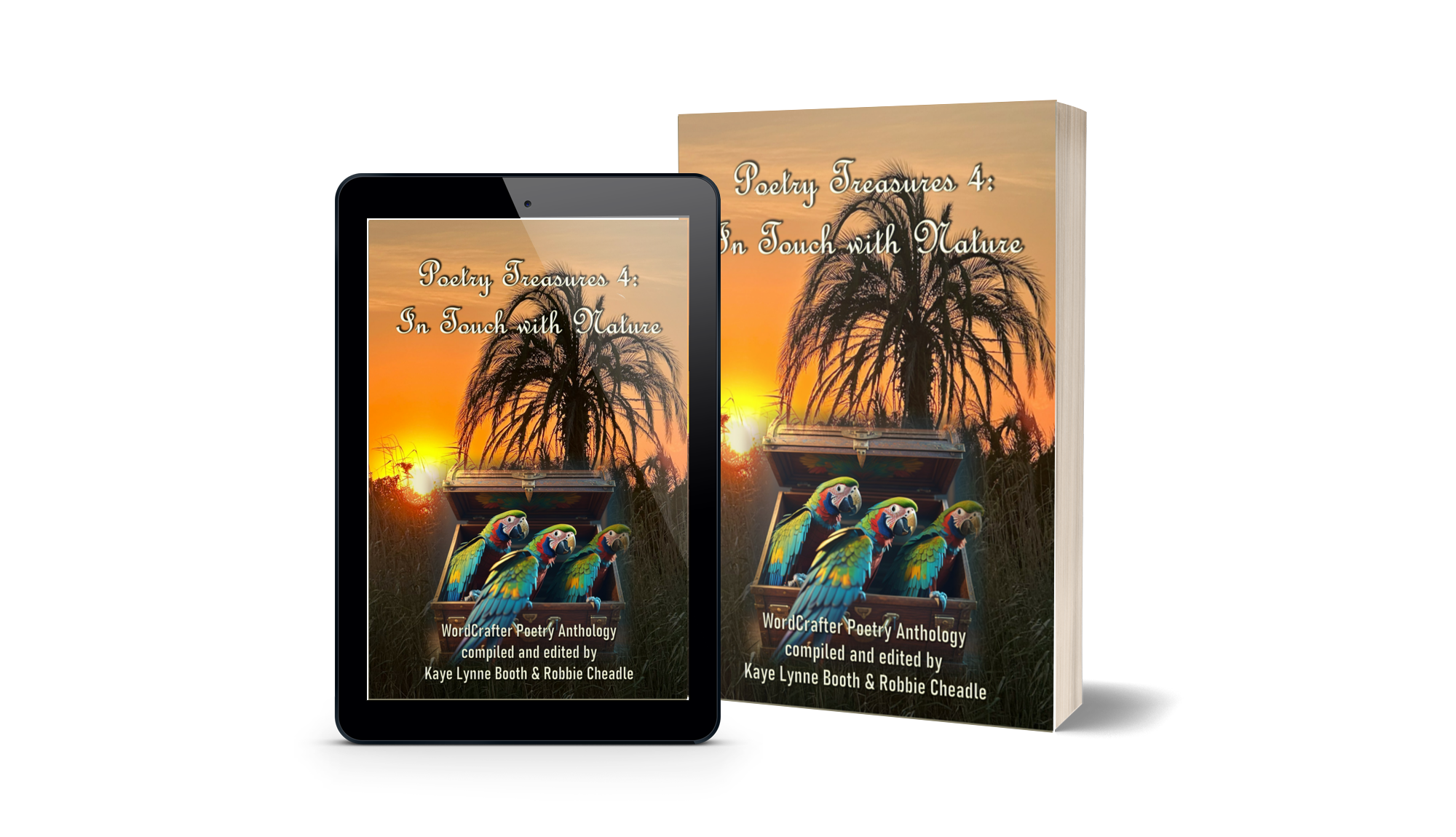
Poetry Treasures 4:In Touch With Nature: https://books2read.com/PT4-Nature
Poetry Treasures 5: Small Pleasures: https://books2read.com/PT5-SmallPleasures
Share this:

Treasuring Poetry – Meet poet and author, Laura Lyndhurst, and a review
Posted: February 18, 2026 Filed under: Book Review, Books, Collection, Interview, Poetry, Review, Treasuring Poetry | Tags: #RobbieCheadle, #TreasuringPoetry, Book Review, Interview, Laura Lyndhurst, Poetry, Robbie Cheadle, Social Climbing and Other Poems, Treasuring Poetry, Writing to be Read 31 CommentsHi everyone, today I’m thrilled to introduce you to Laura Lyndhurst. Laura is an accomplished author and poet and is also a new member of Story Empire blog which is a great resource for writers. You can read Laura’s first Story Empire post here: https://storyempire.com/2026/02/10/sowing-the-seeds-of-a-story/
Welcome Laura!
Tell us a bit about yourself and your poetry journey. How did you come to be a poet?
I never intended to write poetry. At school it was my least-favourite of the three prose-poetry-drama disciplines, and I didn’t like many of the poems that we studied. It was the same at university, when I finally got there in my forties. I was obliged to study Romanticism for my first-year core module, and I hated it. Wordsworth, Coleridge, Shelly; I wasn’t keen on them, although I was okay with some of Keats’s work. In the second year I couldn’t help but study more poetry, and I didn’t mind John Donne at all.
As to my own work, it was when I joined a Facebook writing group that it started. The group leader decided to post a picture every day for the month of October, inviting the group members to write a few paragraphs of prose around them. I sat with the first picture, thought, wrote—and what came out was poetry. The leader and members liked it, and thereafter I challenged myself to write poem every day from the picture prompt. At the end of the months I decided to publish them in a book, to claim copyright on them as much as anything. I called it October Poems, after the month in which I wrote them, and three more little collections followed in the next year or two.
What is your favourite poem by another poet and why?
That’s difficult. I like poetry more now than I used to, and there are several poets whose work appeals. I tend to listen to Leonard Cohen’s songs more than I read his poems, but he does have a way with lyrics; I mean, ‘the place is dead as Heaven on a Saturday night’ is so great. Hardy’s ‘The Darkling Thrush’ is up there, along with ‘This Be The Verse’ by Phillip Larkin. ‘Pity me not because the light of day’ by Edna St. Vincent Millay and ‘Rubbish at Adultery’ by Sophie Hannah attract, from the serious and the not-so as well. Choice for today, however, has to be ‘Refugee Blues’ by W.H. Auden. It never gets old, unfortunately, and although it’s written around one specific ethnic refugee group it can be applied to the myriad groups in existence before and since it was written; and now, in the 2020s, it feels massively relevant. You can find it here: https://allpoetry.com/refugee-blues
What is your favourite style of poetry and why?
Another difficult question. I don’t have a favourite style as such. I’ll read many different poems, some I’ll like and some I won’t, but the style of writing doesn’t have much bearing on why I like them or not. I do have an author friend, Thomas Leverett, who writes extensively in haiku form, and I loved his E Pluribus Haiku, which feels like travelling around the USA in haiku form. It’s on the link below, if you’re interested.https://www.amazon.com/Pluribus-Haiku-Anthology-3487-ebook/dp/B08X2YRQB2
Which is your favourite of your own poems?
I love them all, some more than others, it has to be admitted. I’ll choose the last one I wrote, however, because it is the last one and about ‘the end’. It’s from Social Climbing and Other Poems, and inspired by Clive Thompson’s photo of the altar of a Greek Orthodox Church.

Due Process
Your case has been a lengthy one; eighty-four years it’s taken, to
observe your less-than-perfect deeds and gather evidence to
aid the prosecution. But now you’ll have your day in court and
the jury gathered here, the Twelve, will finally decide, for or
against, whether you stay righteous here or whether you go down.
You wish to conduct your own defence? No, really, that won’t do, you’ll
be given representation. One of these saintly suits here gathered,
yes, that’s right, the ones with haloed wigs, will intercede for you.
Sorry for the delay; we understand that it’s a real nerve-wracking time for
you, but we can’t begin until His Honour gets here to take His place there,
in the big chair. The witnesses are here for you, plus jury, twelve good men
and true, not to forget the female sex, the immaculate, to try to push
your sins aside and hide you ‘neath their garments of compassion.
But nothing can occur until the God-Father is here; He’s judge
and jury all in one, Divine Justice in person. So please don’t fret,
or maybe do, for He knows you as well as you, and maybe better.
This whole set-up is just for show, to satisfy the need to see the
wheels of justice set in motion; your sentence fixed already,
your judgement day is here.
And here Our Father approaches now.
The court will rise …
Tell us a bit about your book, Social Climbing and other poems – what is the inspiration for the collection?
At the time I was friends with a photographer, Clive Thompson, and one of his pictures inspired a poem – ‘So This is Christmas’, which I recently published on my blog. Clive then allowed me to put together a book of my poems written to the prompts of some of his pictures.
What’s next for Laura Lyndhurst in the world of writing?
No more poetry, I’m afraid; nothing planned, at any rate, but if something occurs then I’ll be putting it together. At present I’m editing my latest novel, a whodunnit of sorts; a new departure for me, sort-of, because although I like adding a bit of a mystery to some of my stories this will be the first time I’ve brought the police in to investigate. It’s more focussed on before the murder, the personalities involved and their potential motivations. After that I’ll see what else occurs to me.
Many thanks for interviewing me. I’ve enjoyed it very much.
My review of SOCIAL CLIMBING: and Other Poems
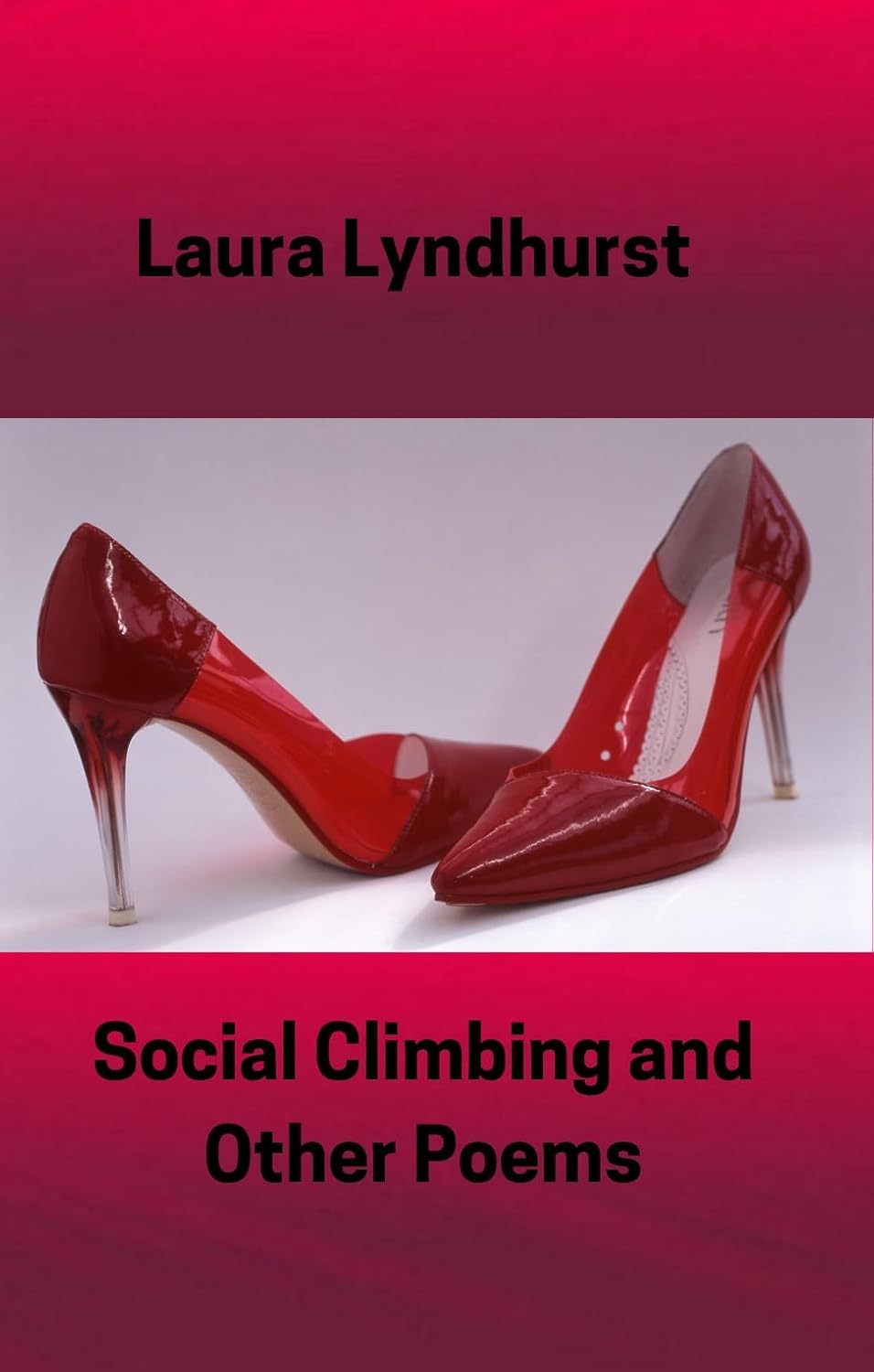
When I saw the cover of this collection, the shiny, red high heeled shoes against a white background, it reminded me of the movie, The Devil Wears Prada featuring Merril Streep and I was completely fascinated. I was not disappointed as this interesting collection of freestyle poems is a head on collision with an array of social situations, many of which are uncomfortable.
“The sit inside and watch the show, these Parisian fans of opera; but we,
lacking the means to buy the tickets for the red-plush, well-upholstered
seats and ornate murals, gilt-decked swirls and whirls of rococo decor,
prefer to take our entertainment in quite another way. Out here in the street”
from Street Theatre
Laura slices to the heart of human emotions and frustrations and these poetic expressions resonated with me. One poem I particularly delighted over is “I don’t know much about art but I know what I like”.
“So I’m breaking out of normalcy,
gone so very Modernisth,
this El Greco’s got his paintbox out
and given life a twist.”
Honestly, this poem made me laugh until I cried. Fantastic!
Each poem is introduced with a beautiful colour photograph by photographer, Clive Thompson.
Do yourself a favour, purchase this collection and allow Laura to put your life in perspective for you.
About Laura Lyndhurst
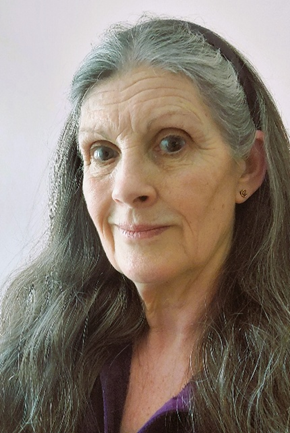
Laura Lyndhurst was born and grew up in North London, England, before marrying and travelling with her husband in the course of his career.
When settled back in the UK she became a mature student and gained Bachelor’s and Master’s degrees in English and Literature before training and working as a teacher.
She started writing in the last few years in the peace and quiet of rural Lincolnshire, and published her debut novel, Fairytales Don’t Come True, in May 2020. This book forms the first of a trilogy, Criminal Conversation, of which the second is Degenerate, Regenerate and All That We Are Heir To the third. Innocent, Guilty, the first of another trilogy, continues the story told in these three books and leads on to The Future of Our House, which is followed by Uphill, Downhill, Over, Out as the sixth and final book to end the series. An Honourable Institution was published as a stand-alone novel in January 2025, as was The Guilty Party in September 2025.
Laura also developed a taste for psychological suspense, which led to the writing and publication of You Know What You Did, to which What Else Did You Do? is the sequel.
Laura has also published four small books of poems, October Poems, Thanksgiving Poems and Prose Pieces, Poet-Pourri and Social Climbing and Other Poems.
Find Laura Lyndhurst
Website: https://booksthatmakeyouthink2.co.uk/
Facebook: https://www.facebook.com/laura.lyndhurst (personal profile)
Facebook: https://www.facebook.com/lauralyndhurstauthor/ (author profile)
Amazon: https://www.amazon.co.uk/stores/Laura-Lyndhurst/author/B088QFJJ3Q
Goodreads: https://www.goodreads.com/author/show/20336562.Laura_Lyndhurst
Instagram: https://www.instagram.com/lyndhurstlauraauthor/
Pinterest: https://uk.pinterest.com/lyndhurstlaura/
Tiktok: https://www.tiktok.com/@alectrona47
About Robbie Cheadle
South African author and illustrator, Robbie Cheadle, has written and illustrated sixteen children’s books, illustrated a further three children’s books, and written and illustrated three poetry books. Her work has also appeared in poetry and short story anthologies.
Robbie also has two novels and a collection of short stories published under the name of Roberta Eaton Cheadle and has horror, paranormal, and fantasy short stories featured in several anthologies under this name.
You can find Robbie Cheadle’s artwork, fondant and cake artwork, and all her books on her website here: https://www.robbiecheadle.co.za/
________________________
Did you know you can sponsor your favorite blog series or even a single post with an advertisement for your book? Stop by the WtbR Sponsor Page and let me advertise your book, or you can make a donation to Writing to be Read for as little as a cup of coffee, If you’d like to show your support for this author and WordCrafter Press.
__________________________
This segment of “Treasuring Poetry” is sponsored by WordCrafter Press and the Poetry Treasures series.
Get Your Copy Today!
Poetry Treasures: https://books2read.com/PoetryTreasures
Poetry Treasures 2: Relationships: https://books2read.com/PT2-Relationships
Poetry Treasures 3: Passions: https://books2read.com/u/b5qnBR
Poetry Treasures 4:In Touch With Nature: https://books2read.com/PT4-Nature
Poetry Treasures 5: Small Pleasures: https://books2read.com/PT5-SmallPleasures
Share this:

Treasuring Poetry – Meet talented poet Paul Cannon
Posted: January 21, 2026 Filed under: Poetry, Treasuring Poetry | Tags: #Poetrycommunity, #RobbieCheadle, Paul Cannon, Poetry, Poetry Challenges, Robbie Cheadle, Treasuring Poetry, Writing to be Read 33 CommentsHi everyone, welcome back to Treasuring Poetry 2026. My first guest of the year is talented poet, Paul Cannon, who I met through the d’Verse Poets Pub. You can find the latest d’Verse challenge here: https://dversepoets.com/2026/01/15/its-open-link-night-and-our-live-session-is-just-around-the-corner/. d’Verse hosts three challenges a week and they are all very interesting.
Tell us a bit about Paul Cannon. How and why did you start writing poetry?
My earliest memory of my interest in poetry is my parents encouraging me to listen to them reading poetry to me from the Children’s Book Of Verse. I remember in later primary school having to memorise poems like Coleridge’s ‘The Rime of the Ancient Mariner’ and Southey’s ‘The Inchcape Rock’ along with Patterson’s ‘The Man From Snowy River.’ Poetry captured my imagination.
Later, in high school, we were introduced to many poets and forms from around the world. We were also tasked with writing poetry which I enjoyed. One poet who I continue to read from that time is Robert Frost, I love the way he draws me into observing human behaviour and feelings, and how he observes nature.
After high school I continued to write. The incentive was, naturally, love interests. My girlfriends were always polite about my writing, not least Lyn my wife to be. From the time I married in 83 to the mid nineties I was hit and miss with writing, what brought me back in earnest was my journey into becoming an Anglican priest and the pathway of training to be a spiritual director or companion for those needing a sounding board for personal discernment. This journey opened me up to the poetry of Mary Oliver, R.S. Thomas, Denise Levertov, Blake, Milton, Edwina Gateley, Noel Davis, Rumi, Hafez, Layli and many more. These poets inspired me and I became intentional about my writing at this point.
I didn’t go online with my poems until 2017. I was writing prose on Face Book and switched to WordPress in 2013 and it was through the WordPress community that I was encouraged to take the plunge into poetry after posting some tentative pieces.
Calm Kate from aroused blog prodded me along. Through the late Sarah Conner I discovered the wonderful world of dVerse and she encouraged me to keep working on my craft. Liz Gauffreau, Melissa Lemay are two people who have supported my desire to go further with my work. dVerse offers a broad and rich palette to enjoy and learn from.
Last year I joined Tanka Tuesday and I’m enjoying the community that Colleen Cheseboro has created, as well as the poetry. I was thrilled to have three of my poems in the Sunflower Tanka 2025 Anthology. I also write on bluesky, where I have joined a few poetry challenge sites, including The Broken Spine – Alan Parry #PoemsAbout (thank you Merril), Paul Brookes’ Starbeck Orion and others. I haven’t posted yet (coming soon) but I have become a friend of Melissa Lemay’s Collaborature and I’m interested in the venture of collaborative writing having done a little bit elsewhere. In 2021 I was faced with a decision, when events overtook me. I had been thinking of resigning as a priest, I was disillusioned with the institution of the church and policies and procedures and my views had radically changed by experience. While mulling that over I experienced a series of aggressive and violent incidences over three weeks resulting in PTSD. I fell apart, but I continued writing, and in fact, my poetry became a life line (there are more than a few journals based on writing and poetry as healing). I resigned. I continue in private practice as a spiritual director but one who is eclectic and open minded and not tethered to a theology or philosophy. In that work I belong to a professional body and we have a journal for which I am the poetry editor and I facilitate a monthly online group for which I send out a prompt. So many wonderful people and such delightful contemplative poetry.
So, why do I write? I can’t not write! I enjoy expressing myself, I love writing, I enjoy community. I was also formed for it from my earliest days, through school and through friends, and especially the online community now.
So now if anyone asks what I do, I reply – “I’m a Poet.”
Which poet has influenced you the most and why?
Who do I pick? Neruda, Li Po, Basho, Bukowski, Dickinson, Hejinian, Whyte, Heaney, Eliot? So many have been instrumental in my life. The poet I come back to the most is Mary Oliver. Her love of people, her passion for nature, her metaphors and the simplicity of her poems have all captured my heart. Oliver speaks my language and touches my experience.
Please share your favourite poem by your favourite poet
There are so many poems I could list. One of my favourites by Mary Oliver is ‘The Journey”
The Journey – by Mary Oliver
One day you finally knew
what you had to do, and began,
though the voices around you
kept shouting
their bad advice—
though the whole house
began to tremble
and you felt the old tug
at your ankles.
“Mend my life!”
each voice cried.
But you didn’t stop.
You knew what you had to do,
though the wind pried
with its stiff fingers
at the very foundations,
though their melancholy
was terrible.
It was already late
enough, and a wild night,
and the road full of fallen
branches and stones.
But little by little,
as you left their voices behind,
the stars began to burn
through the sheets of clouds,
and there was a new voice
which you slowly
recognized as your own,
that kept you company
as you strode deeper and deeper
into the world,
determined to do
the only thing you could do—
determined to save
the only life you could save.
Please share your favourite of your own poems and tell us a bit about it.
I have written so many, but one that is recent and is close to my heart is:
Light Dreams by Paul Cannon
If the whole world were
in an impenetrable darkness
the sun in hibernation
I would dream some light,
reach in and carefully gather it
up into my cupped hands and
cast it across the hungry sky
until every speckle sparked
in every living thing.
In 1979 I had a brief conversation with Bob Dylan around meaning. I asked him what he attached to his lyrics and poems and he said that his work meant something to him, but in the wider world audience his work would take on whatever meaning others found in it. In short, a poem means what it means for you. And I stand by that. What ‘Light Dreams’ is about for me is that we can sit around and worry about the state of the world (and it is, in my view, dire politically, economically and environmentally) but what is needed is for us to be an agent of change, and agent of light, and agent of hope, of love in some way. It fits my belief that all things have an intrinsic right to be treated with dignity, fairness and care. It also fits my belief that love makes the world go round.
You enter a lot of poetry challenges. What attracts you to poetry challenges?
I really enjoy the challenge of writing to a prompt, it stretches me, makes me think and feel. The other side of a challenge is the communal aspect, people interacting through their work, and offering their perspective. The communities I engage with for prompts and challenges are so supportive and encouraging. It is also an opportunity to learn and grow, I know I am not the same poet as I was twenty, or even five years ago as a result.
My Blog Parallax can be found at https://pvcann.com Parallax means that we can see something, see it from another angle and therefore see it differently, so too no two people see things the same – hence – a poem means what it means for you.
You can also find other poetry I write at @pvcannon.bsky.social
About Paul Cannon

Paul is a poet and writer who lives with his wife Lyn in Augusta, Western Australia, they have two adult sons and now grandchildren. Paul loves being creative whether in the garden, with wood, with paint or clay, and not least with the pen. Paul enjoys hiking, camping, reading, wine and a good single malt whiskey.
About Robbie Cheadle
South African author and illustrator, Robbie Cheadle, has written and illustrated sixteen children’s books, illustrated a further three children’s books, and written and illustrated three poetry books. Her work has also appeared in poetry and short story anthologies.
Robbie also has two novels and a collection of short stories published under the name of Roberta Eaton Cheadle and has horror, paranormal, and fantasy short stories featured in several anthologies under this name.
You can find Robbie Cheadle’s artwork, fondant and cake artwork, and all her books on her website here: https://www.robbiecheadle.co.za/
________________________
Did you know you can sponsor your favorite blog series or even a single post with an advertisement for your book? Stop by the WtbR Sponsor Page and let me advertise your book, or you can make a donation to Writing to be Read for as little as a cup of coffee, If you’d like to show your support for this author and WordCrafter Press.
__________________________
This segment of “Treasuring Poetry” is sponsored by WordCrafter Press and the Poetry Treasures series.
Get Your Copy Today!
Poetry Treasures: https://books2read.com/PoetryTreasures
Poetry Treasures 2: Relationships: https://books2read.com/PT2-Relationships
Poetry Treasures 3: Passions: https://books2read.com/u/b5qnBR
Poetry Treasures 4:In Touch With Nature: https://books2read.com/PT4-Nature
Poetry Treasures 5: Small Pleasures: https://books2read.com/PT5-SmallPleasures
Share this:

Treasuring Poetry – Sunflower Tanka Dreams anthology compiled by Robbie Cheadle and Colleen M. Chesebro
Posted: December 17, 2025 Filed under: Anthology, Poetry, Treasuring Poetry | Tags: #Poetryanthology, #Poetrycommunity, #RobbieCheadle, #TreasuringPoetry, Colleen M. Chesebro, Dreams, Poetry, Poetry Anthology, Robbie Cheadle, Sunflower Tanka, Treasuring Poetry, Writing to be Read 67 CommentsHi everyone, this is my last Treasuring Poetry post 0f 2025 and I’m thrilled to be ending with a post about the second anthology in the Sunflower Tanka anthology series with the theme of dreams.
This wonderful anthology has 54 contributors and the variety of fascinating takes on the theme of dreams is fascinating. Colleen M. Chesebro and I are contributing editors of this collection and Colleen created an amazing cover using one of my watercolour paintings. The green-haired flower maiden is based on Meadow, a character from one of Teagan Riordain Geneviene’s imaginative stories, Atonement in Bloom. You can learn more about this book here: https://teagansbooks.com/2025/12/08/a-bloomin-snippet-for-cffc/
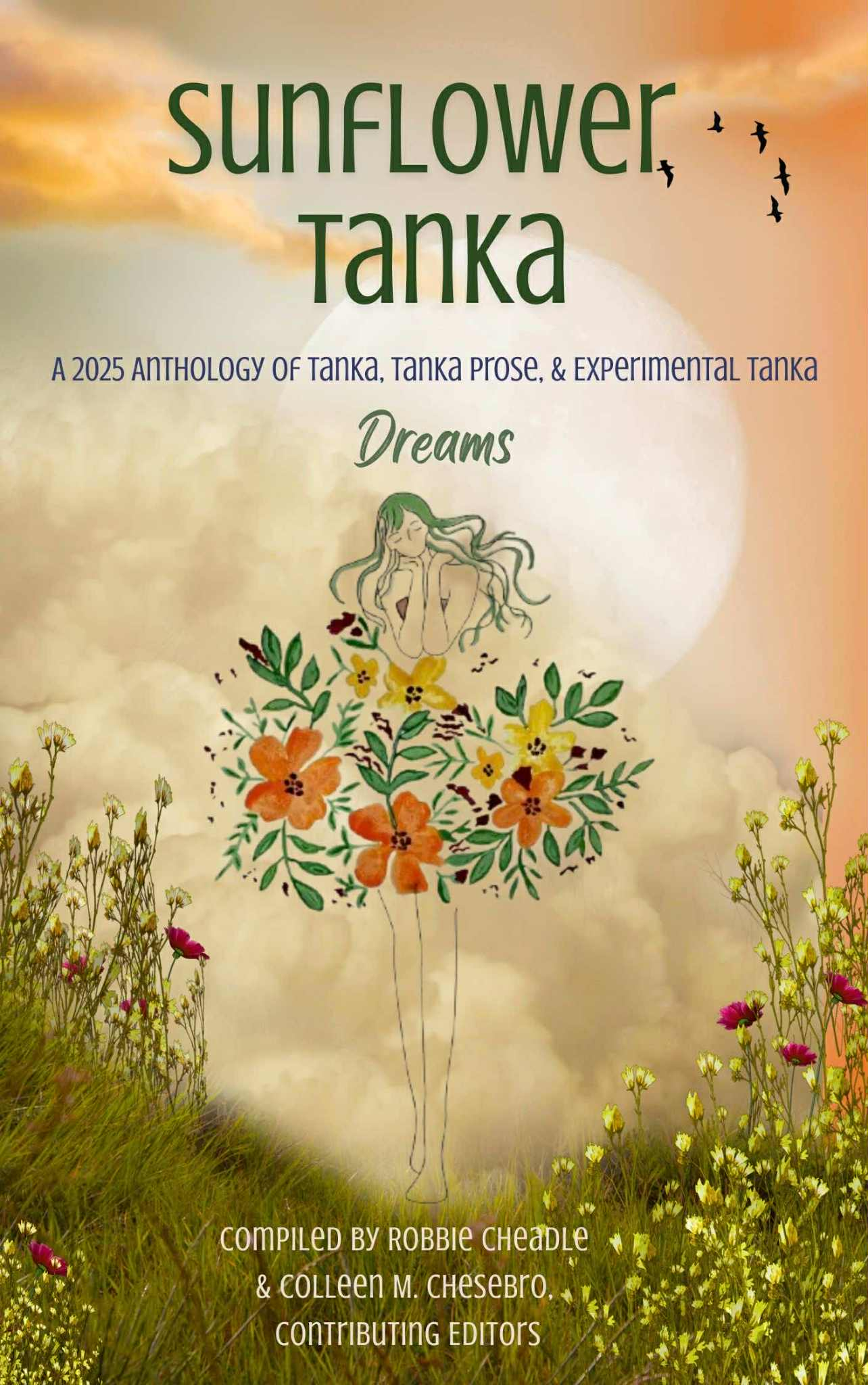
Blurb
Sunflower Tanka, edited by Robbie Cheadle and Colleen M. Chesebro, is an annual anthology showcasing contemporary tanka, tanka prose, and experimental tanka. Each volume brings together a vibrant tapestry of voices—both emerging and established—from across the globe.
For 2025, our theme “Dreams” invites poets to explore the symbolic language of dreaming, where metaphors blur the line between reality and imagination. Dreams often serve as gateways to layered meaning, offering fertile ground for syllabic poetry.
This year’s contributors journeyed deep into their dreamscapes, opening portals to boundless creativity. Through the timeless form of syllabic verse, they captured visions that transcend waking life, weaving poetry that resonates with mystery, wonder, and the infinite possibilities of the human imagination.
This is the promo video on YouTube:
I am going to take this opportunity to share one of Colleen’s poems and one of my collaborative poem’s with my son, Michael, from this collection.
Writing Through Dreams (tanka Puente) by Colleen M. Chesebro
in the fog of lies
honesty outlines a path
beyond my worst fears
my dreams, a shining lighthouse
nudge out my darkest secrets
– Honesty is the first chapter in the book of wisdom. – Thomas Jefferson, former U.S. president
dreams empower me
to use my curative skills
a fresh cup of tea
affords me the wisdom to
write syllabic poetry
The End In Sight (Tanka Puente Collaboration) by Robbie and Michael Cheadle
on the brink of change
bright eyes viewing the future
my son and his friends
graduation imminent
transition to adulthood
– If you think you can do a thing or think you can’t do a thing, you’re right – Henry Ford
anxiety creeps
deep despair spreads like fire
spars fear of failure
disappointing those you love
mother’s nagging tongue lashes
My review
This is a collection of beautiful syllabic poems contributed by 54 poets from around the world. All the poems centre around the theme of dreams and the range of interpretations is fascinating.
The poems in the collection comprise of tanka, tanka prose, garland tanka, tanka Puente, bussokuseki, rensaku and taiga which includes a black and white image and they collectively form a delightful poetry adventure.
The collection is introduced with an interesting overview about the inspiration for the theme and the various meanings of the word dreams. This section closes with a delightful tanka by partnering editor, Colleen Chesebro, as follows:
rain cools with sky-mist
sweet drops spark my appetite
whispering prayers
moonlight breaks through the darkness
a feverish dream of you
The collection concludes with a selection of each of the partnering editors favourite poems and the reasons why those specific poems resonated with each of them.
One of my favourite poems is by Yvette M. Calleiro:
miracle baby
you came to me in a dream
blessing from above
missing puzzle piece in life
my greatest accomplishment
I feel this way about my own two sons and so this poem has stayed in my heart.
A delightful collection of poetry that will make a lovely gift to others or to yourself.
Amazon US purchase link: https://www.amazon.com/Sunflower-Tanka-Anthology-Prose-Experimental/dp/B0G51RKG61
Tanka Tuesday
You can join in weekly syllabic poetry challenges on Tanka Tuesday here: https://tankatuesday.com/2025/12/09/tankatuesday-poetry-challenge-no-42-gift-gifting-12-09-25/
About Colleen M. Chesebro
Colleen M. Chesebro grew up in a large city in the Midwest. Keen on making her own way in the world, she joined the United States Air Force after graduation to tour the world and find herself. To this day, that search continues.
An avid reader, Colleen M. Chesebro rekindled her love of writing poetry after years spent working in the accounting industry. These days, she loves crafting syllabic poetry, flash fiction, and creative fiction and nonfiction.
In addition to poetry books, Chesebro’s publishing career includes participation in various anthologies featuring short stories, flash fiction, and poetry. She’s an avid supporter of her writing community on her blog on by organizing and sponsoring a weekly syllabic poetry challenge, called #TankaTuesday, where participants experiment with traditional and current forms of Japanese and American syllabic poetry.
Chesebro lives in the house of her dreams in mid-Michigan, surrounded by the Great Lakes with her husband and two (unicorn) cats, Chloe & Sophie.
You can find Colleen M. Chesebro on her personal blog here: https://colleenchesebro.org/
About Robbie Cheadle
South African author and illustrator, Robbie Cheadle, has written and illustrated sixteen children’s books, illustrated a further three children’s books, and written and illustrated three poetry books. Her work has also appeared in poetry and short story anthologies.
Robbie also has two novels and a collection of short stories published under the name of Roberta Eaton Cheadle and has horror, paranormal, and fantasy short stories featured in several anthologies under this name.
You can find Robbie Cheadle’s artwork, fondant and cake artwork, and all her books on her website here: https://www.robbiecheadle.co.za/
________________________
Did you know you can sponsor your favorite blog series or even a single post with an advertisement for your book? Stop by the WtbR Sponsor Page and let me advertise your book, or you can make a donation to Writing to be Read for as little as a cup of coffee, If you’d like to show your support for this author and WordCrafter Press.
__________________________
This segment of “Treasuring Poetry” is sponsored by WordCrafter Press and the Poetry Treasures series.
Get Your Copy Today!
Poetry Treasures: https://books2read.com/PoetryTreasures
Poetry Treasures 2: Relationships: https://books2read.com/PT2-Relationships
Poetry Treasures 3: Passions: https://books2read.com/u/b5qnBR
Poetry Treasures 4:In Touch With Nature: https://books2read.com/PT4-Nature
Poetry Treasures 5: Small Pleasures: https://books2read.com/PT5-SmallPleasures
Share this:

Treasuring Poetry – Kevin Morris shares about his book, Passing Through: Some thoughts on life and death, and a review #poetry #poetrycommunity #TreasuringPoetry
Posted: September 17, 2025 Filed under: Book Review, Books, Collection, Poetry, Review, Treasuring Poetry | Tags: Book Review, K. Morris, Passing Through, Poetry, Robbie Cheadle, Treasuring Poetry, Writing to be Read 45 CommentsToday, I am thrilled to welcome talented Kevin Morris back to Treasuring Poetry. Kevin was one of my inaugural guests when I first started this series nearly six years ago. Kevin’s latest book is a real treasure and I am proud to showcase it here.
The blurb of your book, Passing Through: Some thoughts on life and death, explains the circumstances that resulted in this book of poetry. Please can you give a bit of background to this health event and how it motivated you to write the poetry in this book.
In late January this year I collapsed whilst at home. At that time I had no idea that I had suffered a seizure. Therefore, I continued my life as normal. Then, on the first Sunday in February I suffered another seizure whilst out walking with my guide dog, Apollo, and a friend and her dog.
Following my seizure I was admitted to Croydon University hospital where I suffered another seizure, as a consequence of which I was kept in overnight for observations and tests.
The next morning I was discharged with a diagnosis of epilepsy and Levetiracetam, tablets designed to treat the condition.
Following my discharge from hospital, I decided to spend a week with my family in Liverpool to recuperate prior to returning to work. However, a few days after having arrived in Liverpool I lost most of the movement in the right side of my body, began slurring my speech and became very confused. Consequently I was admitted to hospital where a scan revealed that I was suffering from a brain abscess which was causing the health issues I was experiencing.
Having undergone an operation for the removal of my brain abscess, I spent some 6 weeks in the Walton Centre recovering, during which time I was treated with antibiotic drips and, in the latter stages by a combination of drips and oral antibiotics. My health scare brought me face-to-face with my own mortality in a profoundly shocking manner. And being a poet I responded in the only way I knew how, by spending a considerable part of my time in hospital in the composition of poetry. Hence my book, “Passing Through: Some Thoughts on Life and Death” was born.
What is your main hope for readers of this poetry book? What would you like them to take away from the experience?
Writing poetry whilst recovering in hospital provided me with tremendous solace. I hope that those who read my work will derive both pleasure and solace from my collection. We all must come face-to-face with death and I believe that poetry can help us when this occurs.
Which poem/s is/are the most meaningful for you in the collection. Please share the text of the poem/s and what it means to you.
The first poem in the collection, “On the Death of a Writer”, was written in 2024 prior to me becoming unwell. It relates to the death of a writer I met only once. However, I was reminded of the poem on becoming ill, hence it seemed appropriate to include it here:
“The rain is falling again.
The garden smells fresh
And a solitary blackbird sings.
I heard of your death.
Your book remains unread.
You had others to write
And now are dead.
Each man has his plans,
Literary or otherwise.
But none knows
When his eyes may close.
The clock ticks as I write.
The scent of wet earth
Enters the house.
Tonight, I will close my eyes
And tomorrow write…” .
Whilst in the Walton Centre, I longed to return to my home in London’s Upper Norwood, and my poem “Humility” deals with my yearning to be back in my own space:
“My old blue armchair
Is still there
By the wooden bookcase.
In that space,
I sat and read
As the antique clock ticked
My day away.
Here, no clock ticks
And my need
Is for these antibiotic drips.
But how I miss
My old bookcase
And the ageing armchair where
I read the day away.
When I return again
To my own private place
The tick tock
Of my old clock
From high on the bookcase
Will teach me humility.”
Are there any poems by other poets on the subject of life and death that influenced your writing? If yes, is there any specific poem that you would like to share.
Following my discharge from Liverpool’s Walton Centre, I spent some time recovering at my mum’s home. My poem, “Emily’s Carriage” was composed during this period and stems from a walk I took on a sunny windswept day. It was also influenced by Emily Dickinson’s poem “Because I Could not Stop for Death”, hence the title “Emily’s Carriage”:
Because I Could not stop for Death by Emily Dickinson
Because I could not stop for Death –
He kindly stopped for me –
The Carriage held but just Ourselves –
And Immortality.
We slowly drove – He knew no haste
And I had put away
My labor and my leisure too,
For His Civility –
We passed the School, where Children strove
At Recess – in the Ring –
We passed the Fields of Gazing Grain –
We passed the Setting Sun –
Or rather – He passed Us –
The Dews drew quivering and Chill –
For only Gossamer, my Gown –
My Tippet – only Tulle –
We paused before a House that seemed
A Swelling of the Ground –
The Roof was scarcely visible –
The Cornice – in the Ground –
Since then – ’tis Centuries – and yet
Feels shorter than the Day
I first surmised the Horses’ Heads
Were toward Eternity –“.
What’s next for Kevin Morris?
Back in 2019 I published “The Selected Poems of K Morris”. Since then I have published several other collections, including this one. I have long intended to update my “Selected Poems” and will now sit down and do so.
My review of Passing Through: Some thoughts on life and death by K Morris

I have read a lot of this poet’s thoughtful and though provoking poetry and, for me, this is his best collection to date. A short collection of intense and heart felt poems written by the poet in the aftermath of a seizure leading to brain surgery, and his subsequent recovery in hospital.
Having experienced a similar health incident with a loved one, I related strongly to Kevin’s reflections on both life and death as he grappled to come to terms with ‘looking death in the eye’ as depicted in his poem, Seizure:
“I felt no cold breath of Death
Nor the Reaper’s skeletal hand
Yet he greeted me
And I mumbled and tumbled
And found myself on the cold ground
Where all are bound.”
The tedium and drift towards institutionalisation that characterise a long stay in hospital are exposed through the poet’s fine words in Free Air”
“How dear the air is to me.
It enters through my window
And calls to me of liberty
And says how, below, people don’t know
The profundity of the air.”
A change in attitude towards life having faced mortality intimately is a common reaction. I have witnessed this same change in others and I believe it does lead to better life choices and seizing joy in moments. All of these reflections and subtle changes in outlook are clearly evident in these compelling poems.
Extract from A Garden in Early Spring:
“I could decide to go inside
As the temperature has dropped.
Yet the blackbird has not stopped
His song, which brings delight.
So I stay as the day
Moves imperceptibly towards the night.
A beautiful and moving collection.
Purchase Passing Through: Some thoughts on life and death from Amazon US here: https://www.amazon.com/gp/product/B0F8TWMZJD
About Kevin Morris

I was born in Liverpool on 6 January 1969, a year best known of course for my birth. Well no actually it is better known for the moon landings which certain
peculiar conspiracy theorists still maintain never took place (the moon landings that is, not my birth!).
One of my earliest recollections is of eating roast dinners, on Saturday in British Home Stores with my grandfather. Although cooked in the kitchen of a department store they tasted wonderful to a small boy but then again it is easy to look back at one’s childhood with rose tinted spectacles.
On Saturdays my grandfather and I would invariably pop into W H Smiths and buy a book. Often he bought Enid Blighton books and I’ve happy memories of him
reading to me about the adventures of Julian, Dick and Ann – not forgetting Timmy the Dog (who could!) Being blind, it was a real treat to sit on my grandfather’s knee, hearing him regail me with children’s adventures. It was from my grandfather – a man who had never so much dreamed of going to university that I derived my love of literature.
As I grew older I learned to read braille which opened up a world of independent reading to me. Only a tiny proportion of books are available in braille, however it was still amazing to me, as a young boy to be able to sit with a book on my knee reading for myself. Besides braille I was also a huge consumer of spoken word cassettes, everything from Treasure Island to Wuthering Heights.
I still possess almost all of the many cassettes which I have purchased and had bought for me over the years but many of them have now warped with age so are, sadly unusable. Today it is the text to speech facility on my Kindle and iBooks (using voiceover) on my iPad which is my favourite means of accessing the wonderful world of literature.
I attended school in Liverpool and later went on to read history and politics at university. I must be a glutton for punishment as having obtained my degree
I went onto study for and obtain a MA in political theory (I can see your eyes glazing over already)!
Since 1994 I have lived and worked in London. I live in Crystal Palace, a part of London high above sea level and famed for it’s steep hills. It is very
green and the air is much fresher than many parts of London. I like were I live and I’m lucky that my home overlooks a large garden and an historic park.
I began to write seriously in mid 2012. All of my writing takes place in my spare room surrounded by books. Being blind I use a standard laptop with Jaws (software which converts text into speech and braille allowing me to access my computer’s screen).
I can not write with background noise other than the singing of birds, as conversation and other extraneous sounds interfere with my concentration. I do most of my writing at weekends and once the bit is between my teeth I can write for hours sustained by copious cups of coffee!
Other than writing I enjoy walking in green places with my guide dog Trigger, listening to a wide variety of music and socialising with friends.
I hope that you enjoy my books.
To find me on amazon.com please go to: http://www.amazon.com/-/e/B00CEECWHY
You can visit my website here for regular updates: http://kmorrispoet.com
About Robbie Cheadle
South African author and illustrator, Robbie Cheadle, has written and illustrated sixteen children’s books, illustrated a further three children’s books, and written and illustrated three poetry books. Her work has also appeared in poetry and short story anthologies.
Robbie also has two novels and a collection of short stories published under the name of Roberta Eaton Cheadle and has horror, paranormal, and fantasy short stories featured in several anthologies under this name.
You can find Robbie Cheadle’s artwork, fondant and cake artwork, and all her books on her website here: https://www.robbiecheadle.co.za/
________________________
Did you know you can sponsor your favorite blog series or even a single post with an advertisement for your book? Stop by the WtbR Sponsor Page and let me advertise your book, or you can make a donation to Writing to be Read for as little as a cup of coffee, If you’d like to show your support for this author and WordCrafter Press.
__________________________
This segment of “Treasuring Poetry” is sponsored by WordCrafter Press and the Poetry Treasures series.
Get Your Copy Today!
Poetry Treasures: https://books2read.com/PoetryTreasures
Poetry Treasures 2: Relationships: https://books2read.com/PT2-Relationships
Poetry Treasures 3: Passions: https://books2read.com/u/b5qnBR
Poetry Treasures 4:In Touch With Nature: https://books2read.com/PT4-Nature
Poetry Treasures 5: Small Pleasures: https://books2read.com/PT5-SmallPleasures
Share this:

Treasuring Poetry – A chat with poet and blogger, Marsha Ingrao, and a review #TreasuringPoetry #poetrycommunity #bookreview
Posted: June 18, 2025 Filed under: Book Review, Books, Interview, Poetry, Review, Treasuring Poetry, Women's Fiction and Poetry | Tags: Embracing the Power to Live, Marsha Ingrao, Poetry, Robbie Cheadle, Treasuring Poetry, Writing to be Read 68 Comments
Today, I am delighted to host blogger and hostess of Story Chat about which she says the following: “Story Chat is more than a writing challenge. It is a unique and proven online program that encourages interaction between authors and readers. It’s part writers group, part beta readers, part fun fiction, and pure enjoyment.”
You can find out more about Story Chat here: https://alwayswrite.blog/story-chat-2025-a-unique-blogging-program/
Now, over to Marsha.
Robbie, thank you so much for inviting me to be on your blog. It is such an honor. I’ve spent a lot of time reading and researching poetry since you sent these questions to me, so it’s taken me a long time to come up with the answers.
What is your favourite style of poetry to read i.e. haiku, ballad, epic, freestyle, etc.?
I adore reading tankas, but my favorite style to read is freestyle, words that are natural without the constraints of order.
What is your favourite poem in your favourite style to read?
Mary Oliver is a new author to me, but well-known to many. I picked her because I have so many favorites among our friends, and I don’t want to choose. Mary Oliver published poetry from 1963 to 2015 before she passed in 2019. She was well known for her observations of the natural world, tying them to deep emotions or emotional events, as you can see in the following poem.
Gethsemane
By Mary Oliver
The grass never sleeps.
Or the roses.
Nor does the lily have a secret eye that shuts until morning.
Jesus said, wait with me. But the disciples slept.
The cricket has such splendid fringe on its feet,
and it sings, have you noticed, with its whole body,
and heaven knows if it ever sleeps.
Jesus said, wait with me. And maybe the stars did, maybe the wind wound itself into a silver tree, and didn’t move,
maybe
The lake far away, where once he walked as on
a blue pavement,
lay still and waited, wild awake.
Oh the dear bodies, slumped and eye-shut, that could not
keep that vigil, how they must have wept,
so utterly human, knowing this too
must be a part of the story.
(Mary Oliver Devotions p. 129, © 2019 by NW Orchard LLC, Penguin Books)
What I loved about this poem is that it takes a familiar biblical event way outside the box. When you saw the title, Gethsemene, did you think about the grass sleeping or the wind winding itself into a silver tree? I didn’t, until her poem suggested that I think about it.
How can I train myself to think past and around the outer edges of my topic? That is my goal this year.
What is your favourite style of poetry to write?
I like free style, acrostic, limericks, and tankas best. But I also enjoy other syllabic poems and some of the French form poetry when I want a challenge. What I want to improve this year are some of the nuances that I’ve missed in writing syllabic poetry as well as thinking outside the box with freestyle poems.
What is your favourite of your own poems?
Messages From the Cat (free verse)
Poems, no longer innocent kittens,
Intentionally sneak up on you at night,
Concise imagery padding silently across the carpet,
Weaving its way into your dreams.
Rhyming couplets stealthily leap onto your bed,
Pretending they would curl at your feet for a long nap,
Or lie warm against the curve of your spine,
But instead, they pounce on your head, tearing it open.
If you cry out, call for help,
Precise verses slip away, leaving only an open gash.
Life’s language drips from the wound.
You jump to consciousness, capture each phrase
As it percolates from your throbbing skull
Like slush melting away from Frosty on a sunny day.
At sunrise, linguistic gems gleaming,
Iambic felines sun themselves
In a streaming hot shower of midmorning light,
Licking their forms to glistening perfection,
For all to stroke with admiration,
While you trod off to work,
Exhausted from your sleepless scratch with immortality.
Please tell us about your poetry book, Embracing the Power to Live. How did this book come about? What would you like readers to take away from this collection?
You’ve asked several important questions, Robbie. I hope I’ll answer the first question as I answer the second and third ones.
I’ve written (and kept) poems since the 1980s when my first husband and I moved to Visalia, California, to pastor a tiny church in the rural community of Ivanhoe, California. At that time, I experimented with different styles of poetry, most of which were out of date, but writing them challenged me.
After I retired in 2012, I wanted to write a book, but my blog led me in a different direction. Arcadia Books contacted me because of some of my posts about Woodlake, California. Five months later, they published my book, Images of America Woodlake.
Then I tried fiction, and struggled for years trying to write a bestseller that would become the next Netflix series. That didn’t happen.
I loved blogging, and that’s what I did best, so I gave up my dream of publishing a book of my own work until I met Colleen Chesebro and had a year of writing Haiku and other syllabic poetry under my belt. Meanwhile, several of my blogging friends started publishing poetry books. I was intrigued. Normally, I struggled to read a whole book of poetry. However, Robbie, when I read your book, Lion Scream, that changed for me. I was not ready for this poem. I had to put the book aside and wait for my heart to calm down. I had never read such moving poetry in my life.
Rhino Dilemma
Near-sighted eyes observe
Through tall, swaying grass
Yellowish curtain hides heavy-set body
But, camouflage fails him
The poachers close in
Small bird cries a warning
Animal reacts
Stands upright, facing the wind, ready for flight
Tranquiliser gun fires
Ground shakes when beast falls
Savage men move quickly
Hack out valued horn
Animal left bleeding;
awakes to sure death
Tears of pain and anguish
Slide from fading eyes
Cheadle, Robbie. Lion Scream: Syllabic Poetry About Southern African Wildlife (pp. 22-23). Kindle Edition.
As I read the poem aloud to a friend, while I prepared for this interview, it brought tears to my eyes and made my stomach churn. I wanted my poems to matter, but I didn’t have an agenda. So, I fell back on what I do naturally, which is to encourage people to do what they do best.
When I picked my word of the year for this year, the title fell into place. I wanted to create something that would be uplifting to others and would help them fulfill their own dreams. So, somehow, I had to go from the poems I had written about random topics and pull them together with new poems that would minister to people’s souls and encourage them to find their own creativity.
I drew a lot from Sunflower Tanka and Cindy Georgakas’s book Celebrating Poetry. As I read her book, I fell in love with certain poems and the titles of poems. For example, isn’t her title “Messages from the Moon” a great title? The idea of the moon sending me messages set my imagination on fire. It became “Messages from the Cat” in Embracing the Power to Live. There were no similarities in the poetry or the subject, but I loved the title.
I have already started to realize the joy that comes from reaching the goal of helping others. I’ve shared on social media and my blog about my neighbor Dan Daniels. Dan started writing poetry at age 11 when he was a rough and tumble New York City kid in a large family. He started working at about age seven.
As he handed me an aged sheet of paper with a typewritten poem, he told me I was only the second person he had ever shared his poem with. I was blown away. He is now in his 80s, and he and his wife inspired one of the poems in my book, “Aging Gracefully.” This is his poem, and I am proud to announce that you are now collectively the third person he is sharing it with.
Stand Amongst the Flowers Gentle
By Dan Daniels
Stand amongst the flowers gentle
Look and smell and feel their power
How they light the day with beauty
Not long enough to stay an hour.
Stand amongst the flowers gentle
Let them fill your soul inspired
Touch them all with love and kindness
Nothing more of you required.
Nature all around us speaks
We, who hear, must answer strongly
Love all that nature has to give
Stand amongst the flowers gentle.
Robbie, I can’t wait to read what your readers say about Dan’s poem. When I called to ask permission to use his poem, he and his wife were sitting in their living room reading Embracing the Power to Live and talking about where he might have hidden the other poems he wrote through the years. Dan has Parkinson’s Disease, so I am going to help him publish them in a small book that he can give to his family as part of his legacy to them.
Another friend called me the week the book came out to tell me she was ordering it for a couple of relatives of hers who had stopped communicating with each other and with her. She thought somehow my book might encourage them to start talking. Helping Dan come out of his poetry shell and helping people find ways to communicate their feelings exemplifies the reasons I wrote the book, Embracing the Power to Live.
Thank you again for inspiring and encouraging me, and for inviting me to take part in this project. It means so much to me.
Thank you, Marsha, for this wonderful interview. It is truly amazing how much you have gained from being part of this on-line poetry community. I am deeply honoured that my poem resonated with you and thank you for the contribution of Dan’s gorgeous poem as well as detailing how Sunflower Tanka and Celebrating Poetry inspired and guided you.
My review of Embracing the Power to Live

What Amazon says
Embracing the Power to Live is a poetic journey of a woman’s perseverance despite life’s hard knocks. This collection taps into the true spirit of poetry—reaching ordinary people with the message that they are enough. Some poems hold profound meaning. Others are included simply for the fun of playing with words – a joy reborn when she stepped into the world of syllabic poetry.
Told by different authority figures in her life that she would never marry or achieve her dreams, the author defied the discouraging voices. Her poetry shatters shame uplifts the spirit, and encourages readers to embrace the strength to do the same.
This collection isn’t a self-help guidebook—it’s an invitation to laugh, weep, grow, and live together, connecting hearts through poetry. Embracing the Power to Live is for anyone who seeks to rise above a spinning world to gain strength, perspective, and a new beginning.
My review
This is a most unusual and enjoyable collection of poems, photographs, memories, and religious quotes that collectively tell the story of the poet’s life. A most interesting memoir, the poet has not shied away from sharing her human experience in all its marvelous highs and compelling lows. The short paragraphs embellishing the poems with additional colour and memories are enlightening and the photographs make the whole experience more visual and vivid.
This book is presented in different chapters, each focusing on different aspects of life and living to highlight and reveal in. While the poems are all encompassing and share moments of sadness and discomfort, the collective package is a positive experience of finding contentedness and peace to support the poet on her journey through life in all its manifestations. Religion, the poet’s guiding light, is threaded throughout the book as a common thread of hope and support.
I am sharing one poem, It’s hard being semi smart (pantoum) which I feel embodies the spirit of this book and its relatability to us all.
It’s hard being semi-smart because,
It’s so hard to choose.
I have many skills with several flaws
And activities that enthuse.
It’s so hard to choose
Because I’m sort of good.
And activities that enthuse
Make me think I should.
Because I’m sort of good,
I try to do too much.
Makes me think I should,
But nothing has the master’s touch.
I try to do too much.
I have many skills with several flaws.
But nothing has the master’s touch.
It’s hard being semi-smart because.
In closing, I must mention the cover of this book which I think is gorgeous.
Purchase Embracing the Power to Live from Amazon US here: https://www.amazon.com/Embracing-Power-Live-Marsha-Ingrao-ebook/dp/B0F6423PSJ
Find Marsha Ingrao’s Amazon Author page here: https://www.amazon.com/stores/author/B0CJ9ZLQ9C
About Marsha Ingrao

Marsha’s newest book, Embracing the Power to Live, a poetry anthology and memoir, is set to come out in late May or early June. She is the contributing editor for Story Chat Volumes I and II. Previous works include a chapter in This Is How We Grow (2023) by Yvette Prior, contributions to Sunflower Tanka, a Poetry Anthology by Colleen Chesebro and Robbie Cheadle (2024), and Images of America: Woodlake – Arcadia Publishing (August 13, 2015), available on Amazon. In addition, Ingrao published numerous poems and articles. She has blogged since 2012.
She earned a Bachelor of Arts, Teaching, and Administrative Credentials from Fresno State University. As a bilingual teacher, she earned a CLAD Certificate. While employed at Tulare County Office of Education, she earned her Master’s in Curriculum and Instruction from Fresno Pacific University. At the county office, she developed curriculum for Migrant Education and later served as a History Consultant for the county’s Educational Resource Services.
Ingrao believes in lifelong learning. Today, she remains active as a blogger, writer, photographer, and history buff.
She grew up in Indiana and Oregon, moved as an adult to Colorado, then near the Giant Sequoias. After living in Arizona for four years, she and her husband, Vince, her dog, Goldie, and her cat, Moji, have recently returned to the land of the big trees in California.
About Robbie Cheadle
South African author and illustrator, Robbie Cheadle, has written and illustrated sixteen children’s books, illustrated a further three children’s books, and written and illustrated three poetry books. Her work has also appeared in poetry and short story anthologies.
Robbie also has two novels and a collection of short stories published under the name of Roberta Eaton Cheadle and has horror, paranormal, and fantasy short stories featured in several anthologies under this name.
You can find Robbie Cheadle’s artwork, fondant and cake artwork, and all her books on her website here: https://www.robbiecheadle.co.za/
________________________
Did you know you can sponsor your favorite blog series or even a single post with an advertisement for your book? Stop by the WtbR Sponsor Page and let me advertise your book, or you can make a donation to Writing to be Read for as little as a cup of coffee, If you’d like to show your support for this author and WordCrafter Press.
__________________________
This segment of “Treasuring Poetry” is sponsored by WordCrafter Press and the Poetry Treasures series.

Get Your Copy Today!
Poetry Treasures: https://books2read.com/PoetryTreasures
Poetry Treasures 2: Relationships: https://books2read.com/PT2-Relationships
Poetry Treasures 3: Passions: https://books2read.com/u/b5qnBR
Poetry Treasures 4:In Touch With Nature: https://books2read.com/PT4-Nature
Share this:

Treasuring Poetry – Meet poet and author V.M. Sang and a review #poetry #poetrycommunity #bookreview
Posted: April 16, 2025 Filed under: Book Review, Books, Poetry, Review, Treasuring Poetry | Tags: January to June, Poetry, Robbie Cheadle, Treasuring Poetry, V.M. Sang, Writing to be Read 74 CommentsToday, I am delighted to Welcome V.M. Sang, author and poet, as my April Treasuring Poetry guest.
Welcome Viv!
Thank you, Robbie, for inviting me to come and chat about poetry. I am honoured that you asked me.
What is your favourite style of poetry to read?
I enjoy Haiku and Tanka. I appreciate the structure and the work that goes in to make the syllables fit. But I also enjoy sonnets.
What is your favourite poem in your favourite style to read?
I struggled with this. There are so many I enjoy. I like the 1st World War poets and their take on the war. Particularly poignant are the two lines from Yeates An Irish Airman Forsees His Death.
Those that I fight I do not hate
Those that I guard I do not love.
But one poem I’ve loved since studying it at College is the sonnet, Ozymandias, by Percy Bysshe Shelley. It is a warning to all who strive to get above themselves. I think it is particularly pertinent at this time.
Ozymandias
by Percy Bysshe Shelley
I met a traveller from an antique land,
Who said, “Two vast and trunkless legs of stone
Stand in the desert. Near them, on the sand,
Half sunk, a shattered visage lies, whose frown,
And wrinkled lip, and sneer of cold command,
Tell that its sculptor well those passions read
Which yet survive, stamped on these lifeless things,
The hand that mocked them, and the heart that fed;
And on the pedestal these words appear:
‘My name is Ozymandias, king of kings:
Look on my works, ye Mighty, and despair!’
Nothing beside remains. Round the decay
Of that Colossal Wreck, boundless and bare,
The lone and level sands stretch far away.”
What is your favourite style of poetry to write?
I enjoy writing most forms, but particularly those with a strict form, like the sonnet and the Japanese forms, but I especially like to write rhyming poetry. I know it’s not fashionable at the moment, but I find the discipline a challenge. Discovering words with the right sound and number of syllables can be quite a challenge.
What is your favourite of your own poems?
I have to admit that there are two, both related. ‘I Am Earth’ appears in my first poetry book, Miscellaneous Thoughts, and the second one ‘I Am Earth 2’ is in From January to June, February 7th.
I Am Earth
I am Earth.
I am your mother.
I gave you birth.
I gave you a nest.
A wonderful home
On which you can rest.
I gave you food .
Plenty to eat.
You waste all that’s good.
I gave you the seas
And forests and hills,
But you chop down the trees.
You think you’re so cool,
But you pollute the air
By the burning of fuel.
You heat up the air
And care not a jot
For the poor polar bear.
Animals die
Because of your greed.
You hear not their cry.
I teemed with life,
Both great and small,
Yet extinction is rife.
Like a cancer you spread
Throughout the whole world.
It won’t end till you’re dead.
But I’ll make you pay
For all you have done.
You’ll be sorry one day.
I’ll shiver my skin.
Your buildings will fall
And bury your kin.
The land I will flood
By raising the seas
And drown all in mud.
My mountains so high
Will belch forth their flames
And you will all die.
I am Earth.
I am your mother.
I gave you birth.
BUT I WILL DESTROY YOU.
I Am Earth (2)
I am Earth.
I am your mother
I gave you birth.
I told you
What will occur.
And now you will rue.
You ignore me
And take little heed
Of my anxious plea.
So I send you rain
To flood all your homes
And give you pain.
I send the drought
So no crops will grow.
There’s famine, no doubt.
I heat the world
And many will die
From the heat I have hurled.
Winds I will send
In hurricanes now.
Your lands they will rend.
Yet you will not learn.
To me you are deaf
So the world I will burn.
Fires in the summer;
Deep snow in the cold.
You get dumber and dumber.
My skin I do shiver
And make buildings fall
As the ground it does quiver.
I will belch forth fire
From deep in my heart.
Make Earth like a pyre.
Will you now learn?
Don’t exploit my wealth.
Or you I will burn.
I AM DESTROYING YOU.
Please tell us about your poetry books, One Poem A Day Series? How did this book come about? It is a big commitment to write a poem a day.
My daughter, when she was little, had a bedtime story book with a very short story or a little poem for each day of the year. It was amazing because when she asked for more, as children will, I could say that the next poem or story was tomorrow’s.
For some reason I found myself thinking about this book one day. I’ve no idea why. It was decades ago when she was so small.
Then I thought, “Why not try to write one poem each day for a year, just like that book.” So that’s how it began.
It was quite difficult. Some days I had no inspiration and had to search for it. Other days I just didn’t feel like writing.
The discipline was good for me. I tend to be a procrastinator. There were some days when I couldn’t write due to circumstances, but I caught up by writing two poems until I was back on track.
My review of From January to June (One Poem A Day Series Book 1)

I enjoyed this collection of poetry very much. It is very British in its content and language and the poems reminded me of the stories of my mother has told me of her childhood growing up in a small town in Suffolk, UK. The references and descriptions are all familiar to me and reading this book was like putting on a comfortable dressing gown.
The style of the poems is varied from freestyle, to rhyming verse, to syllabic poetry and I enjoyed this aspect. There were also several limericks to make the reader smile. The content is also wide ranging from nature, to a Roman gods theme, to friends and family. The poems are grouped by month and tell a story of the poet’s daily experiences during that month in terms of the environment, the holidays, and entertainment.
A few of my favourite poems with a short synopsis:
Grown Up – a fun poem asking about why the poet should do certain expected things in order to be deemed grown up;
The Peacock – a delightful descriptive poem of a male peacock;
Destruction – a sad commentary of the damage humans have, and continue to, inflict on the planet;
The Fishmonger’s – a delicious commentary on the yummy seafood enjoyed by the poet;
Robin – a gorgeous depiction of a robin in the poet’s garden;
Starlings – a tanka about a murmuration of starlings going to roost;
Tea – a poem about English tea;
Blackpool – a comparative poem between the Blackpool of the poet’s childhood memories and the modern Blackpool;
Mum – a very special tribute to the poet’s mother;
Boudicca – a poem about this famous historical queen. I was interested to note that the name of this woman has been changed from Boudicea which is the name my mom always calls her. It cleared up a confusion for me;
Son – a delightful poem about the poet’s son;
Rainbow – an interesting and unique take on the colours of the rainbow;
Spring cleaning – an entertaining take on spring cleaning which is very familiar to me;
I am a Writer – a poem about why the poet writes. I always enjoy peeks into why poets and authors write;
True Love – a romantic poem about a lost love;
Teddy – a delightful poem about the poet’s teddy bear from childhood. I also had mine until recently;
Fickle Muse – a commentary about when the words don’t come;
Gardens, I’ll quote this short poem:
“Gardens are bits of heaven
Fallen from above.
Gardeners are angels
Tending them with love.”
Ode to Beer – an amusing poem about the historical and modern joys of beer;
The Village Green – my personal favourite in this collection. A poem about British communal life;
This is a delightful collection that really warmed my heart.
You can purchase From January to June (One Poem A Day Series Book 1) from Amazon US here: https://www.amazon.com/gp/product/B0CNW1NQPZ
And from Amazon UK here: https://www.amazon.co.uk/January-June-One-Poem-Day/dp/482418892X
About V.M. Sang

V.M. Sang was born and lived her early life in Cheshire in the north west of England. She has always loved books and reading and learned to read before she went to school.
During her teenage years she wrote some poetry, one of which was published in Tecknowledge,the magazine of the University of Manchester Institute of Science and Technology (UMIST). Unfortunately, that is the only one that is still around.
V.M. Sang became a teacher and taught English and Science at her first school.
She did little writing until starting to teach in Croydon, Greater London. Here she started a Dungeons and Dragons club in the school where she was teaching. She decided to write her own scenario. The idea of turning it into a novel formed but she did nothing about it until she took early retirement. Then she began to write The Wolves of Vimar Series.
Walking has always been one of V.M. Sang’s favourite pastimes, having gone on walking holidays in her teens. She met her husband walking with the University Hiking Club, and they still enjoy walking on the South Downs.
V.M.Sang also enjoys a variety of crafts, such as card making, tatting, crochet, knitting etc. She also draws and paints.
V.M.Sang is married with two children, a girl and a boy. Her daughter has three children and she loves to spend time with them.
She now lives in East Sussex with her husband.
Find V.M. Sang
Goodreads: https://www.goodreads.com/user/show/23500375-vivienne-sang
Pinterest: https://www.pinterest.co.uk/sang0566/
Amazon Author Profile: http://viewauthor.at/VMSang
Facebook: https://www.facebook.com/Carthinal/
Instagram: https://www.instagram.com/v.m.sang/
Bluesky: @aspholessaria.bsky.social
Find V.M. Sang’s books
FANTASY
The Wolves of Vimar series.
The Wolf Pack https://books2read.com/u/m0lxEy
The Never-Dying Man https://books2read.com/u/3R6ozR
Wolf Moon https://books2read.com/u/mvWjXe
The Wolves of Vimar prequels.
Jovinda and Noli
https://books2read.com/u/mgjrO0
The Making of a Mage
https://books2read.com/u/mddNNO
Dreams of an Elf Maid
https://books2read.com/u/4ElDZg
Horselords:
https://books2read.com/u/31XQ0a
Elemental Worlds duo.
The Stones of Earth and Air
https://books2read.com/u/mYygKV
The Stones of Fire and Water
https://books2read.com/u/brwoVE
Historical Fiction
A Family Through the Ages
Vengeance of a Slave
https://books2read.com/u/3kLZxR
Jealousy of a Viking
https://books2read.com/u/bMYGKk
POETRY BOOKS
Miscellaneous Thoughts.
January to June. One Poem a Day. Book 1
https://books2read.com/u/bx6azJ
July to December. One Poem a Day. Book 2
https://books2read.com/u/3kXvDR
Non-Fiction
Viv’s Family Recipes
https://books2read.com/u/mVR7dM
All the books are available in many formats, including audio for several of them.
About Robbie Cheadle
South African author and illustrator, Robbie Cheadle, has written and illustrated sixteen children’s books, illustrated a further three children’s books, and written and illustrated three poetry books. Her work has also appeared in poetry and short story anthologies.
Robbie also has two novels and a collection of short stories published under the name of Roberta Eaton Cheadle and has horror, paranormal, and fantasy short stories featured in several anthologies under this name.
You can find Robbie Cheadle’s artwork, fondant and cake artwork, and all her books on her website here: https://www.robbiecheadle.co.za/
________________________
Did you know you can sponsor your favorite blog series or even a single post with an advertisement for your book? Stop by the WtbR Sponsor Page and let me advertise your book, or you can make a donation to Writing to be Read for as little as a cup of coffee, If you’d like to show your support for this author and WordCrafter Press.
__________________________
This segment of “Treasuring Poetry” is sponsored by WordCrafter Press and the Poetry Treasures series.
Get Your Copy Today!
Poetry Treasures: https://books2read.com/PoetryTreasures
Poetry Treasures 2: Relationships: https://books2read.com/PT2-Relationships
Poetry Treasures 3: Passions: https://books2read.com/u/b5qnBR
Poetry Treasures 4:In Touch With Nature: https://books2read.com/PT4-Nature
Share this:

Treasuring Poetry – Meet poet and author, Freya Pickard, and my book reviews #poetry #bookreviews
Posted: March 19, 2025 Filed under: Book Review, Books, Collection, Interview, Poetry, Review | Tags: Book Review, Freya Pickard, Insides, Interview, My Mythology, Poetry, Robbie Cheadle, Treasuring Poetry, Writing to be Read 42 CommentsToday, I am delighted to feature poet and author, Freya Pickard, as my March Treasuring Poetry Guest. Freya is a great supporter of the WordPress poetry community and runs a bi-annual haiku challenge on her haiku blog which you can find here: https://purehaiku.wordpress.com/.
Welcome Freya.
What is your favourite style of poetry to read ie haiku, ballad, epic, freestyle, etc?
I’m not sure I have a favourite style of poetry. I enjoy both modern and traditional haiku, as well as tanka and other short form poetry due to their ability to create startling, vivid images and contrasts. But I also enjoy other poetical forms, including free verse. I usually look for poetry that captures my imagination, that allows me to connect the dots without the poet telling me how I should feel or think or believe. I enjoy any kind of poetry that allows my inner being to connect with ideas and concepts too. My favourite reads from the last couple years include Linda Imbler’s “Twelvemonth” and Willow Croft’s “Quantum Singularity”. I’m also a huge fan of Italian poet, Claudia Messelodi and love her collections “Blue Moon” and “Sky-Blue Wisteria”. I also love JRR Tolkien’s epic poems, especially those in The Lays of Beleriand.
What is your favourite poem in your favourite style to read?
A poem I return to again and again is The Lay of Leithian by JRR Tolkien. It tells of a tragic love story between a human man, Beren, and an immortal elf woman, Luthien. Their love is forbidden by Luthien’s father and the story covers many years of suffering for both protagonists. There are horrendous monsters and dark peril for both to overcome. Beren’s task is to obtain one of the elvish jewels, a Silmaril, and in doing so, he loses his life. If you’ve not read it, I won’t spoil it by telling you the ending, but it really is worth reading! (No, I’ve not seen The Rings of Power because I can’t stream images. Plus, I’ve seen trailers for it and the characters are not how I imagined them to look/act!)
I suppose this Lay satisfies my need for both poetry and stories. The narrative is also dark, which suits me fine, and contains both vampires and werewolves amongst the monsters who tread the shadows! The romance isn’t cloying and the ending is bittersweet, which, for me, is a true reflection of life. The Lay of Leithian is incredible long, so here are just a few excerpts which I love.
The first excerpt sets the scene for Luthien’s dancing beneath the moonlight:
There darkling stood a silent elm
And pale beneath its shadow-helm
There glimmered faint the umbels thick
Of hemlocks like a mist, and quick
The moths on pallid wings of white …
The second excerpt describes the vampire that haunts the tale:
A vampire shape with pinions vast
Screeching leaped from the ground and passed,
It’s dark blood dripping on the trees …
And the last excerpt describes one of the many fight scenes:
From shape to shape, from wolf to worm,
From monster to his own demon form,
Thu changes, but that desperate grip
He cannot shake, nor from it slip …
What is your favourite style of poetry to write?
I write from my heart, how I feel, what I see, what I experience, so more often than not I write free verse. Sometimes this outpouring of poetry is rhythmical such as in
Down through the dewy woods, damp and leafy
Wading rivers that rush and whirl
Lost in the mist, in the moors and marshes
Stumbles at last to a steep-sided cliff…
Sometimes it rhymes:
I dream of mermaids, magic and myth,
Of silvery fish tails, immortal gifts,
Flaming red hair and liquid green eyes,
Of laughter and singing old sea-songs.
Songs that whisper of seaweed, wind-rippled sands
That tell of the monsters who walk on land,
That speak of Ancients who dwell in the deeps,
Hinting at languages no man can speak.
I dream of dolphins so free in the sea
Of the whale and the seahorse,
Of what might have been…
But normally I find a rhythm of words that reflects my emotion:
this blurred moment
when
hydrogen combines with
oxygen –
too much water
I drown
swiftly rising
I gasp
draw air
to resurrect myself
wavering
on the edge
I feel life
flickering
doused in moisture
I reach for the wind
bursting full
I skim, I dance
across this strange
ocean called
death
I do use poetic forms to express myself and have experimented with many different short forms in the past. My favourite styles are haiku, tanka and elfje because they are short and focus my attention on one thing at a time. I love haiku, particularly traditional haiku because it tests my ability to say something in just 17 syllables!
eggshell thin fragile
touch me and I will shatter
empty, blank inside
What is your favourite of your own poems?
My favourite poem, so far in my life, is I, Vampire from my most recent poetry collection, Vampirical Verse. I, Vampire sums up how I feel post cancer and encapsulates the experience of near death, open surgery and chemotherapy too.
I understand emptiness
I feel no fear
no pain
no joy
no sorrow
I am hollowed out
what used to live within
has long since fled
yet still, I am not dead
unable to care
to be concerned
no heart beats within my breast
no hormones surge inside
I feel nothing –
un-dead yet un-alive
Please tell us about your poetry book trilogy, This Is Me. What is your main intention with this collection of poems?
This Is Me boxset/paperback contains the frost three published volumes of my poetry. Each volume has a different reason for being in the collection.
Volume 1 – Insides
These poems were written between July 2014 and October 2015 and covers my near death experience of bowel cancer, open surgery, chemotherapy and the start of my recovery. Most days I wrote something in my journal, even if it was just one sentence. I found it hardest to write during chemo due to the utter exhaustion I experienced for 6 months. At other times I was lucid enough to experiment with poetic forms and often, some of my prose sentences became poems when I looked back in my journals during recovery. My intention in this section was to help people understand what it is like to go through the above-mentioned experiences.
Volume 2 – My Mythology
The poems in this section were written between 1990 and 2015. My intention was to allow readers an insight into the sources of my creative inspiration. Again I use free verse as well as poetical forms to explore biblical imagery, Nordic influences and tales of vampires, zombies and werewolves! These poems show others what is important to me as a prose writer as well.
Volume 3 – This Is Me
This section is a compendium of real-life and fantastical imaginings and were written between 1990 and 2017. I explore how important certain things are to me; dancing, writing, the seasons, being single, being married, having cancer, and, of course, reading! This volume gives readers a different kind of insight into my everyday life and routine.
All three volumes together form a poetical auto-biography that I think is more dynamic than a prose re-telling of my life so far. This Is Me was designed so that the reader can dip in an out of it as they wish, or read great chunks at one time if they so desire.
Anyone who reads this book will understand me, the real me!
My reviews of Insides and My Mythology by Freya Pickard
Insides

I have read several memoires of journeys through the horrors of cancer and its treatment and they have been very compelling. Depicting this journey using the short and powerful lines of poems took the poet’s experiences to a higher level of emotional involvement for me. Each poem is vivid and visceral and sliced right through my heart. I related deeply to the poet’s reaction to medical confirmation of cancer which took me back to my mother’s diagnosis of cancer. I couldn’t take about it for two weeks because the shock was so great.
This book comprises of four parts and I am going to share a poem or verse from a poem from each section to illustrate the gut wrenching power of these poems.
Part One Colostomy
Stoma-ached
“my insides on my outside,
red blancmange in jellied form,
dark innards encrusting
pale, tired flesh,
interruption of natural order –
raspberry flavoured belly belches.”
Part Two Surgery
“cancer;
cancer;
barren fruit
inside my flesh,
pierced through,
cut free,
removed from
within”
Part Three Chemotherapy
“frustration of not being able to do what I
want to do; no energy to do anything
this long haul of weariness seems never-ending
endless waiting, patiently sitting in three different
waiting rooms – checking my swollen arm for clots …”
Part Four Recovery
“fogged
landscape
reveals
my future path;
life”
The poems in this book depicting cancer in all its stark reality have stayed with me. They brought back my own memories of countless waits in hospital for news – sometimes good, sometimes not so good. It feels like I’ve spend a huge portion of my life waiting for outcomes. It was psychologically uplifting to me that Freya’s treatment process, unbelievably hard as it was, had a successful outcome.
Purchase Insides from Amazon US here: https://www.amazon.com/gp/product/B01M2UQAWJ
My Mythology

My Mythology delves into the poet’s interest in mythology and legends which is an important aspect of who she is as a person, poet, and writer. My mother is English and I was brought up on a diet of dragons, unicorns, Arthur and the knights of the round table, and other British myths and legends. My mother’s home town of Bungay has an array of ghosts and the church my mom attended as a girl is home to a famous story about the Black Shuck of Bungay. I knew all of these stories as a youngster and as I grew older, I expanded my interest into Greek and Norse mythology. As a result, I recognised many of the figures and creatures featured in this book.
The poet has written beautiful and lyrical word pictures and stories incorporating elements from various myths and legends, all of which are vivid and a delight to read. The poems are divided into ten sections: Roots, Imaginate, Oceansong, Legend, The Lizard, Fringes of Fear, Blank Mirror, Spectral Visions, Time & Space, and Deity.
I am going to share extracts from a few poems that particularly captivated me under the specific section heading.
Roots
“I am the lifting of your heart
I am a candle in the dark.
I am the cry of a new-born child
I am a cub in the bitter wild.”
from ‘Hope’
Oceansong
“The sun was dying through the mist
And in the waves that kissed the beach
Bright blue and purple, grey and green,
Tails flickered with a rainbow sheen.”
from ‘Shifting Wave of Green’
Legend
“metalled
horn spirals up
gleams between dark, liquid
eyes contrasting with his pale coat
that shines
with starlight, moonlight – luminous’
from ‘Silvered Constellation’
Deity
‘Air is
Breath of my sould,
That which will last beyond
My body’s destruction, living
Always.’
from Substance
This is a book for the dreamers of this world. Those of us that revel in the possibility of a bit of magic and wonder around the next corner. A superb book of gorgeous poems.
You can purchase My Mythology from Amazon US here: https://www.amazon.com/gp/product/B07NGQQ3DJ
About Freya Pickard

Pushcart Prize nominee, Freya Pickard is the quirky, unusual author of The Kaerling series, an epic fantasy set in the strange and wonderful world of Nirunen.
A cancer survivor, she writes mainly dark fantasy tales and creates expressive poetry in order to rest the prose side of her brain. Her aim in life is to enchant, entertain and engage with readers through her writing.
She finds her inspiration in the ocean, the moors, beautifully written books and vinyl music (particularly heavy metal and rock). Her most recent relaxation techniques to get her through lockdown include hatha yoga and painting landscapes and monsters in watercolour.
Find out more about Freya and her books at https://dragonscaleclippings.wordpress.com
Freya blogs at:
https://purehaiku.wordpress.com
https://dragonscaleclippings.wordpress.com
Her spoken word poetry and prose can be found at https://studio.youtube.com/playlist/PL9e82GWvh7Sxzb3LcN4iuHJjtZ0CVw3eB/videos
About Robbie Cheadle
South African author and illustrator, Robbie Cheadle, has written and illustrated sixteen children’s books, illustrated a further three children’s books, and written and illustrated three poetry books. Her work has also appeared in poetry and short story anthologies.
Robbie also has two novels and a collection of short stories published under the name of Roberta Eaton Cheadle and has horror, paranormal, and fantasy short stories featured in several anthologies under this name.
You can find Robbie Cheadle’s artwork, fondant and cake artwork, and all her books on her website here: https://www.robbiecheadle.co.za/
________________________
Did you know you can sponsor your favorite blog series or even a single post with an advertisement for your book? Stop by the WtbR Sponsor Page and let me advertise your book, or you can make a donation to Writing to be Read for as little as a cup of coffee, If you’d like to show your support for this author and WordCrafter Press.
__________________________
This segment of “Treasuring Poetry” is sponsored by WordCrafter Press and the Poetry Treasures series.
Get Your Copy Today!
Poetry Treasures: https://books2read.com/PoetryTreasures
Poetry Treasures 2: Relationships: https://books2read.com/PT2-Relationships
Poetry Treasures 3: Passions: https://books2read.com/u/b5qnBR
Poetry Treasures 4:In Touch With Nature: https://books2read.com/PT4-Nature
Share this:

Treasuring Poetry – Enjoying poetry with Dave Williams and a review of Gasp! Poetry! #TreasuringPoetry #bookreview #poetry
Posted: January 15, 2025 Filed under: Books, Poetry, Treasuring Poetry, Writing to be Read | Tags: BookReview, Dave Williams, Gasp! Poetry!, Interview, Poetry, Robbie Cheadle, Treasuring Poetry, Writing to be Read 81 CommentsI am very excited to welcome talented artist, poet, and author, Dave Williams to “Treasuring Poetry”. Dave is discussing his thoughts on poetry and I’ve reviewed his unique poetry book Gasp! Poetry!
What is your favourite style of poetry to read i.e. haiku, ballad, epic, freestyle, etc?
Freestyle. I like playful poetry, and poetry that causes me to think of stuff in different ways than my status quo. Also, I’m a big fan of short poetry about nature. Doesn’t have to be haiku. Poems that focus on one aspect of nature, be that a particular animal or plant or season. This kind of poetry is like a seed for me to meditate over that aspect of nature.
What is your favourite poem in your favourite style to read?
My favorite poem by another writer is “maggie and milly and molly and may” by E. E. Cummings. I love it because it’s lively and frisky and profound. And because it reminds me of growing up near the Atlantic Ocean. And because one of my daughters is named Molly (with a capital M, not lowercase like in the poem — although she’s welcome to be creative with the capitalization of her name if she likes).
The poem:
maggie and milly and molly and may
went down to the beach (to play one day)
and maggie discovered a shell that sang
so sweetly she couldn’t remember her troubles,and
milly befriended a stranded star
whose rays five languid fingers were;
and molly was chased by a horrible thing
which raced sideways while blowing bubbles:and
may came home with a smooth round stone
as small as a world and as large as alone.
For whatever we lose (like a you or a me)
it’s always ourselves we find in the sea
Source: https://poets.org/poem/maggie-and-milly-and-molly-and-may
What is your favourite style of poetry to write? Why?
I enjoy writing freestyle the most. Limericks and haiku can be fun to write by following their rules. But I typically go with freestyle because I don’t have to worry about rhymes or syllables or meter.
What is your favourite of your own poems?
A tough question, Robbie! One poem of mine doesn’t jump out as a favorite. I looked through Gasp! Poetry! to find one to include here. I chuckled over several poems, but the poem that clicks with me right now isn’t aimed at humor. Rather, it feels hopeful:
Chickadee
Seeing an eagle,
the chickadee
aspired to greatness:
soaring high in the
Great Blue
Yet he could not
transform into that epic bird
In her son’s sullenness,
mama chickadee asked
the elders to offer wisdom
They told him
there’s a quiet dignity
in being a chickadee
and that
warmed his heart.
Your poetry collection Gasp! Poetry! has a most unusual name and blurb. Please tell us a bit about this book, what the poems are about, and what your intentions were will the collection.
The cover tries to warn people who have no interest in poetry. The title and cover illustration pretend what such a person’s reaction might be to a poetry book. They might throw up their hands and shriek, “Gasp! Poetry!” Then they’d run for the safety of a Non-Poetry Zone. Where, after catching their breath, they might tell other people how close they got to a poetry book and how terrifying it was. The cover uses drama for humor (hopefully).
Some poems in the book aim for silliness, while others are serious. The topics are assorted. One short poem is about a monkey taking a bath. One long poem is about how Scheherazade told a thousand tales to avoid being murdered. If you’ve followed my blog for a while, chances are good that you’ve read poems from this collection.
My intention was to package a bunch of poems on my blog, and ones that haven’t been published there yet. I hoped to entertain readers who like playfulness and absurdity in poems.
You write both novels and poetry. Which do you prefer?
Novels. Even when short, they’re more immersive than poems — which are like sketches to me (since I don’t write epic poems). I enjoy pondering possible plot paths of novels, as well as possible backgrounds of characters. It’s akin to reading a book and being immersed in the story. But with novel writing, the story can unfurl in various, potential directions. Joy is in exploring and shaping the story. So is frustration. But it’s worth the frustration when the book is finished.
My review of Gasp! Poetry!

The amusing title of this poetry collection by Dave Williams is indicative of the nature of the poetry. All of the poems are clever, slightly dark, and poke fun at humans and humanity in general. In other words, these poems are brilliant and hugely entertaining.
Is a Poem about Grains of Sand on a Beach Too Pretentious?
“I wondered that question,
lying on a floral beach towel,
a speck in a crowd
of swimsuited people –
all of us were lumps of cookie dough
glazed with sunscreen and coconut oil
baking in this oven.”
The short extract above is a great example of Dave dark humour in relation to human behaviours and his engaging descriptions.
Valor is a great example of the poet’s quick and clever mind and attitudes towards adversity:
“”You’re not sharp enough?”
“Get some sides!”
Yells were hurled from
the crowd of octagons
at the little circle.
“You look ridiculous!”
The circle puffed up
with valor,
said “I am what I am,”
refused to conform,
then rolled defiantly towards home.”
This was my favourite poem in the book. I really enjoyed the personification of shapes and it reminded me of Flatland by Edward Abbott Abbott.
There is some wonderful life wisdom encased in these freestyle poems. A short extract from Ocean Inside which captivated my mind:
“Meanwhile I work against the urge to liquefy myself
and pour myself into the container
others have sculpted for me”
Having gone through my own teenage years and watched three sisters and two sons go through theirs, I am acutely aware of how very real this pack mentality is with young people. Sometimes, people never manage to escape its grip and find their own path in life.
If you enjoy dark humour, excellent poetry, and life truths, you will love this engaging and entertaining collection.
You can purchase Gasp! Poetry! from various suppliers here: https://books2read.com/u/mBJjRk
You can find all of Dave William’s great books on Amazon US here: https://www.amazon.com/stores/Dave-Williams/author/B08662D961
About Dave Williams

Surely many people are named “Dave Williams” and this particular Dave is a redheaded one who enjoys writing speculative fiction, drawing, and reading. He lives in Maryland with his wonderful wife, two inspirational daughters, and two cats (a lazy one and a playful one).
You can find Dave Williams on his blog here: https://davewilliamswriter.wordpress.com/
About Robbie Cheadle
South African author and illustrator, Robbie Cheadle, has written and illustrated sixteen children’s books, illustrated a further three children’s books, and written and illustrated three poetry books. Her work has also appeared in poetry and short story anthologies.
Robbie also has two novels and a collection of short stories published under the name of Roberta Eaton Cheadle and has horror, paranormal, and fantasy short stories featured in several anthologies under this name.
You can find Robbie Cheadle’s artwork, fondant and cake artwork, and all her books on her website here: https://www.robbiecheadle.co.za/
________________________
Did you know you can sponsor your favorite blog series or even a single post with an advertisement for your book? Stop by the WtbR Sponsor Page and let me advertise your book, or you can make a donation to Writing to be Read for as little as a cup of coffee, If you’d like to show your support for this author and WordCrafter Press.
__________________________
This segment of “Treasuring Poetry” is sponsored by WordCrafter Press and the Poetry Treasures series.
Get Your Copy Today!
Poetry Treasures: https://books2read.com/PoetryTreasures
Poetry Treasures 2: Relationships: https://books2read.com/PT2-Relationships
Poetry Treasures 3: Passions: https://books2read.com/u/b5qnBR
Poetry Treasures 4:In Touch With Nature: https://books2read.com/PT4-Nature
Share this:

Treasuring Poetry – Sunflower Tanka: An Anthology of Tanka, Tanka Prose, & Experimental Tanka collated by Colleen M. Chesebro and Robbie Cheadle #poetry #treasuringpoetry
Posted: December 18, 2024 Filed under: Anthology, Poetry, Treasuring Poetry | Tags: Colleen M. Chesebro, Robbie Cheadle, Sunflower Tanka, Treasuring Poetry, Writing to be Read 52 Comments
For this final post of 2024, I am sharing about Sunflower Tanka: An Anthology of Tanka, Tanka Prose, & Experimental Tanka collated by Colleen M. Chesbro and myself, Robbie Cheadle.
The theme for this collection, “Into the Light,” was influenced by how a young sunflower bud always faces the sun. This sun tracking is called heliotropism.
It is believed that sunflowers participate in heliotropism because they possess an internal clock similar to humans. This internal clock enables the plant to maximize its growth and absorb optimal energy.
The buds are heliotropic until the end of the bud stage. Upon reaching maturity, the sunflower ceases to follow the sun.
The combination of sunflowers as an emblem, and “Into the Light” as a theme is intended to throw shards of brightness out into the world. By actively seeking out happiness and sharing love and light, we can make this planet a better place for all its people and creatures.
golden sunflowers
watch Apollo’s chariot
move across the sky
from dawn’s first light to sunset
forever seeking the light
by Colleen M. Chesebro

Blurb
Sunflower Tanka, edited by Robbie Cheadle & Colleen M. Chesebro, is an annual anthology of contemporary tanka, tanka prose, & experimental tanka from a broad mix of new and established poetic voices from across the world.
Our theme, “Into the Light,” draws inspiration from the way a young sunflower bud constantly turns to face the sun. Poets delved into the realms of death, love, and the natural world, capturing their human experiences in the timeless form of syllabic poetry.
Contributors to the first edition of the Sunflower Tanka: Suzanne Brace, Yvette Calleiro, Kay Castenada, Luanne Castle, Robbie Cheadle, Colleen M. Chesebro, E.A. Colquitt, Melissa Davilio, Destiny, Tamiko Dooley, Lisa Fox, Cindy Georgakas, Chris Hall, Franci Hoffman, Marsha Ingrao, Jude Itakali, JulesPaige, Kenneth, MJ Mallon, Brenda Marie, Selma Martin, Michelle Ayon Navajas, Lisa Nelson, D. Wallace Peach, Freya Pickard, Dawn Pisturino, Gwen M. Plano, Jennifer Russo, Aishwarya Saby, Reena Saxena, Merril D. Smith, Nicole Smith, Ivor Steven, Ben Tonkin, Trilce Marsh Vazquez, Cheryl Wood.
A few examples of the poetry in this book
All the poems in this book are gorgeous, so I have just randomly selected three pieces to share here:
echoes of despair
hushed as tears fail haunted eyes
silence expresses
a quiet faiths’ grip on hope
firm through darkened horizons
Tanka By Destiny
***
ash and dust reclaim
from flames of passion or shame
born this, raised as that
do butterflies from cocoons
ditch all that was, for petals?
Extract from Intertwined Essence (garland tanka) by Jude Itakali
***
within the forest
there’s a glen where children play
under a white light
where mystical faeries
flit around, happy and free
Tanka by Ivor Steven
Jacaranda Blue
As a photographer and painter, I am always trying to capture light in my work. This series of three photographs of my painting, Jacaranda Blue, was intended to demonstrate how this painting captures light in different ways.


This painting is dedicated to my amazingly artistic blogging friend, Resa McConaghy, who recently shared a most extraordinary series of articles about The Painted House. You can find the last article, with links to all the rest, here: https://graffitiluxandmurals.com/2024/11/24/exterior/. In addition to her amazing photography, Resa creates the most incredible art gowns out of recycled materials. Click on Resa’s name to discover more about her gowns.
This is a short extract from my poem Jacaranda Blue, a rensaku, inspired by this painting and included in Sunflower Tanka:
dressed for a spring ball
frocks of filmy organza
Jacaranda blue
delicate forms gently swaying in softly flowing fabric
Sunflower Tanka Video
Did you know you can sponsor your favorite blog series or even a single post with an advertisement for your book? Stop by the WtbR Sponsor Page and let me advertise your book, or you can make a donation to Writing to be Read for as little as a cup of coffee, If you’d like to show your support for this author and WordCrafter Press.
About Robbie Cheadle
South African author and illustrator, Robbie Cheadle, has written and illustrated sixteen children’s books, illustrated a further three children’s books, and written and illustrated three poetry books. Her work has also appeared in poetry and short story anthologies.
Robbie also has two novels and a collection of short stories published under the name of Roberta Eaton Cheadle and has horror, paranormal, and fantasy short stories featured in several anthologies under this name.
You can find Robbie Cheadle’s artwork, fondant and cake artwork, and all her books on her website here: https://www.robbiecheadle.co.za/
___________________________
This segment of “Treasuring Poetry” is sponsored by WordCrafter Press and the Poetry Treasures series.
Get Your Copy Today!
Poetry Treasures: https://books2read.com/PoetryTreasures
Poetry Treasures 2: Relationships: https://books2read.com/PT2-Relationships
Poetry Treasures 3: Passions: https://books2read.com/u/b5qnBR
Poetry Treasures 4:In Touch With Nature: https://books2read.com/PT4-Nature