February: Taking a look at nonfiction
Posted: February 25, 2019 Filed under: Biographies, Biography, Books, Commentary, Creative Nonfiction, His Name Was Michael, Memoir, Nature writing, Nonfiction, Self-Help, Travel, Writing, Writing to be Read | Tags: Biography, Creative Nonfiction, Diaries, How-to books, Journalism, Memoir, Nature Guides, Nonfiction, Self-Help, Travel Books, Travel Memoir, Writing to be Read Leave a comment
Our monthly theme for February on Writing to be Read was, you guessed it – nonfiction. So, what tipped you off? Was it the great interview I did with nature author Susan J. Tweit? Or maybe the nonfiction revues of How to become a Published Author and Letters of May? Or perhaps it was the “Chatting with the Pros” interview of nonfiction author Mark Shaw? Whatever it was that gave it away, I’m here to tell you that these few posts on nonfiction don’t even scratch the surface of what the genre of nonfiction encompasses.
There are many subgenres of nonfiction, just as there are many subgenres under each of the genres of fiction. When someone asks what type of book your fiction novel is, we are quick to catetgorize it as a paranormal mystery, a historical romance, or a science fiction thriller. For some reason, we don’t seem to think about nonfiction the same way we do fiction and when someone asks what type of book your memoir is, or your travel diary, or your self-help book, we tend to lump it in with all the rest in nonfiction. Why this is, I don’t know, but I find that it is the case, time and time again.
The fact is, not all nonfiction books are alike and there are many categories or subgenres that fall within the nonfiction realm. Mark Shaw writes biographies and creative nonfiction tales that are very different from the memoirs, illustrated travel books and nature guides of Susan J. Tweit. Other types of nonfiction that are hard to define are books like Mark Todd and Kym O’Connell Todd’s Wild West Ghosts, which chronicles their ghost hunting experiences and offers advice on how you can be a ghost hunter too. Or Hollywood Game Plan by Carole Kirshner, which is a how-to guide for anyone wanting to break into the screenwriting world. These books are all nonfiction, but they are all very different types of books.
According to wikipedia the genres of nonfiction are biographies, autobiographies, memoirs, commentaries, creative nonfiction, critiques, essays, owners manuals, journalism, personal narratives, reference books, self-help books, speeches, and text books. I would add to that spiritual texts, encyclopedias, documentaries, how-to books, cookbooks, diaries and anthologies such as the one found in Letters of May, which is a collection of writings and artwork illustrating the world of those afflicted with mental illness. I’m sure there are others, but as you can see the list is quite extensive.
Nonfiction books may or may not be aimed to entertain, but the primary purpose, no matter the type of nonfiction book, is to inform. This may account for the fact that my reviews of nonfiction books receive more views in general, than most of my fiction reviews. A fact that I found to be surprising when I uncovered it while looking over the data for this blog. My theory is that readers turn more quickly to books they may find useful than they do to those with entertainment as their sole purpose.

My reasons for interest in nonfiction and all it’s many forms stems from preparation for my journey to write my own memoir, telling the story of my son’s death and my life without him, His Name Was Michael. My bi-monthly blog series which will chronicle that writing process, “The Making of a Memoir“, came out with the first segment in February, too. It was a good month for it to come out, as it also fits in with the nonfiction theme. I hope you’ll join us again next month, when the theme will be science fiction and fantasy.
Be sure to join me next month when we will explore science fiction and fantasy, with guest author Kevin J. Anderson on “Chatting with the Pros” on March 18th, as well as a review of his Selected Stories: Science Fiction Volume 2, and Jordan Elizabeth’s Rogue Crystal.
Update: In Friday’s post I talked about the changes coming for Writing to be Read. One more change that I just recieved confirmation of, and I’m pleased to announce: Art Rosch will also be posting one movie review a month, on the forth Friday of the month, in “Art’s Visual Media Review”.
Like this post? Subscribe to Writing to be Read for e-mail notifications whenever new content is posted or follow WtbR on WordPress.
Share this:

The Making of a Memoir: Stage 1: Prewriting Tasks
Posted: February 11, 2019 Filed under: Books, His Name Was Michael, Memoir, Writing, Writing to be Read | Tags: His Name Was Michael, Memoir, Pre-writing, research, The Making of a Memoir, Writing, Writing to be Read 4 Comments
His Name Was Michael
I’m starting this bi-monthly blog series, The Making of a Memoir, which will chronicle my journey as I write my memoir of my teenage son’s suicide and my life without him, breaking down the memoir process into stages. I am sharing thios process for several reasons. One, Michael’s story deserves to be told. It needs to be told. Two, telling my own story may act as a catharthis and help me to resolve my own unresolved issues surrounding Mike’s death. Three, commiting to bi-monthly accountability to you, my readers and fellow authors, forces me to create and meet deadlines, assuring that I make adequate progress on the book. It is too easy to make excuses and avoid the emotionally difficult tasks if I’m accountable only to myself. And four, I believe there are those of you out there who are interested in the methodology behind creating memoir.
Before I can begin writing the my memoir telling the story of my son’s death and the story of my own journey to find closure and my need to be sure that he will always be remembered, I must know what it is that I want to say, and have some idea of how I want to present it. After Michael’s death, I went through his writings and artwork, I went through every picture of him over and over and over. I listened to his music. And I cried and cried, and I thought I would never stop. It never has. At least not completely, but I did gain control over it by putting all his things away, to be dealt with at a later time. I knew I needed to tell his story then, but I wasn’t ready. Not then.
I actually made several false starts at writing his story at different times, I wrote poetry, some of it semi-epic, but the emotional wounds were still fresh. I was angry and overcome by grief, and I wanted by son back. I wasn’t able to portray what I was feeling with the depth of emotions I was experiencing. I had to set it all aside and heal some before I could undertake this immense task.
In addition, I wasn’t a skilled enough writer to undertake it at that point. I’ve since earned my M.F.A. in Creative Writing, published three books, and have short fiction and poetry featured in several publications and anthologies. Does that make me an expert now? No. But it has taken me down that path, and certainly I know more about writing books and my writing skills are much improved. I believe that I’m ready now to undertake the writing of my son’s story and my own.
There is no doubt in my mind that this book will be the most difficult book I could ever attempt to write. It is difficult because there is so much emotional investment in this book for me. I’ve collected and saved a mass of materials which may or may not end up in this memoir, but it first must be sorted and compiled. This is a difficult task because of the emotions attached to every piece of material I’ve collected and with the memories associated with each one. Michael has been gone from my life for a decade, but the compilation of these materials still must be taken slowly, a little at a time.
On the other hand, emotional investment in the author lends authenticity to the story and that, according to some, leads to best seller material that people want to read. If you go by that thinking, the more difficult the book is to write, the better it will be. You can let me know if I’m right after you’ve read it.
I thought I had the title. His Name Was Michael: How I lost my son to teen suicide. The title, “His Name Was Michael”, is perfect, for it reflects the feelings I had as time passed and others went on with their lives. Sometimes, I felt that everyone had forgotten about him except my husband and I. A title that would make people remember is a must, and I think it does that. But the subtitle, “How I lost my son to teen suicide”, although clearly and concisely telling the reader what the story is about, it doesn’t roll off my tongue smoothly when I say it aloud. I came up with the idea of replacing it with “No Happy Endings”, and although it states a truth about this story, the potential reader picking it up off the shelf or spotting it online, might pass it over because it sounds depressing and doesn’t really tell them what the book is about. At this point, I have to wonder if a subtitle is even necessary. Comments on Facebook reflect the idea that the title is strongest without any subtitle. So, I am rethinking the title and I’m open to suggestions or thoughts in the comments.
There is still much to do in addition to compiling material and deciding on a title, before I can begin the actual writing of the story, pre-writing tasks, if you will. There are still more materials to gather and research to be done. I know you may be wondering what there is to research. Don’t I know my own story? After all I lived it. But the fact is there is research to be done on every book. On this one, I need to know things like statistics on teen suicide, and I need resources for warning signs of suicide and other information on the subject. I may not use everything I dig up, but I will have it available if I decide that it has a place in this book. I believe it does but I haven’t worked out how I want to present it. There is so much that I want to say, but not all of it belongs. Finding my voice for this book will mean finding my true voice.
There are several people I need to interview, people who I haven’t seen since Michael died, people who have something valuable to contribute to his story. I must learn to control the emotional whirpool that surfaces when I anticipate these contacts, the memories connected, cause turmoil within me. But, I know his story must be told, and to tell it in the manner it deserves, and so, I must contain my emotions and silence the memories in order to what must be done. The very act of doing this very difficult task for the sake of his story will become a part of my own, for it is my story, as well.
There must be at least a vague outline, which is now begining to take shape in my head. I believe I know how I want to begin the story and the structure I need to use. The next step will be to get it down in print, so I have a clear direction in which I want the story to go which I can refer back to to ensure that I stay on track. Outlines are a valuable tool in giving any story direction and making sure it doesn’t veer off into left field and lose the storyline and the way I’ve chosen to structure this particular story demands that guidance.
I’m starting this blog series, The Making of a Memoir, which will break down the memoir process into stages, for two reasons. One, Michael’s story deserves to be told. It needs to be told. Two, telling my own story may act as a catharthis and help me to resolve my own unresolved issues surrounding Mike’s death. And three, commiting to bi-monthly accountability to you, my readers and fellow authors, forces me to create and meet deadlines, assuring that I make adequate progress on the book. It is too easy to make excuses and avoid the emotionally difficult tasks if I’m accountable only to myself.
Since I hope to get this memoir published traditionally, I will also need a book proposal, a query letter and somewhere around the first three to five chapters for that. We’ll cover that in the April segment The Making of a Memoir: Stage 2: Selling the story. I do hope you will join me on my journey.
Like this post? Subscribe to Writing to be Read for e-mail notifications whenever new content is posted or follow WtbR on WordPress.
Share this:

Interview with nature author Susan J. Tweit
Posted: February 4, 2019 Filed under: Author Profile, Books, Interview, Memoir, Nature writing, Nonfiction, Teaching Writing, Uncategorized, Writing | Tags: Author Interview, Connections, Memoir, Nature Guides, Nature writing, Susan J. Tweit, Travel Books, Writing to be Read 6 Comments
My guest today is an author, nature lover and plant ecologist. Her books include memoirs, beautifully illustrated travel books, nature guides, and even children’s books, but they all have strong ties with nature. Her books reveal connections with nature and life that have not been pondered or may have been overlooked in our everyday lives. Her books have won the ForeWord Book of the Year, the Colorado Book Award, and she is a five time recipient of Colorado Author’s League Award. With a background in science and plant ecology, she expertly weaves her natural environment into her writings, illustrating how all things interact and connect. Let me introduce creative nonfiction author, Susan J. Tweit.
Kaye: You are a female author who champions the natural environment. Do you identify most as a feminist, a naturalist or an environmentalist?
Susan: All of the above. I grew up in a family of naturalists and scientists; restoring everyday nature is my way of leaving the world a better place. And I work in two fields where women are still second-class citizens in so many ways: science and writing. So am a feminist just be participating in those fields as a woman.
Kaye: On your website you claim that you taught yourself to write after you realized that you enjoyed the stories told by the data more than you did doing the research. How does one teach oneself to write?
Susan: I don’t know how other people teach themselves to write creatively, but for me, as a scientist trained to eschew personal opinions and emotions, and to be extremely parsimonious with descriptive adverbs and adjectives, I found my writing voice in reading the works of writers whose works I admire. I read Ann Zwinger and Terry Tempest Williams, Barry Lopez and Kim Stafford, Brenda Peterson and Linda Hogan, Leslie Marmon Silko and Denise Chávez, Robert Pyle and Gary Paul Nabhan, Sharman Apt Russell and Barbara Kingsolver, and so many others.
As I read, I thought about the mechanics of how each writer told their stories (whether fiction or essays), how they introduced subjects and characters, where they got personal and where they stepped back, how they described landscape and culture, how they used words and language… I tried out techniques and styles until I found my own voice, which has continued to evolve through twelve books and hundreds of essays, articles, and columns for newspapers and magazines.
Kaye: Connections are a common theme in many of your works. Can you talk a little about those?
Susan: As a plant ecologist, I am fascinated by the relationships and interrelationships that form community, whether the human community, or what I call “the community of the land,” the interwoven communities of species—from tiny microbes to gigantic redwood trees—that make life on Earth possible. Who loves who, who eats who, who sleeps with or pollinates who, who can’t stand who… All of those relationships weave the fabric of Life with a capital L. Without them we would not exist, and we have so much to learn about the connections that are vital to this planet. I just collaborated with science illustrator Samantha Peters on “Natural Partners,” a feature for WILDFLOWER Magazine on plants and the animals they rely on. It’s up on the internet here: https://www.wildflower.org/magazine/fauna/natural-partners (The print version took the cover of the magazine, and it’s really gorgeous!)
Kaye: Writing seems to be a way of life for you, and your love for nature is woven into almost everything you do. You have a background as a plant biologist and most of your books offer a perspective on nature and the environment, and you call your books love letters “to the earth and its living web of lives”. If you could convey one message to your readers, what would it be?
Susan: Get outside and get to know nature nearby. Learn even a handful of your neighbors in the world of plants and animals and you’ll never be bored. Nature is vital to our health and wellbeing—it’s the best antidote to stress I know of, the closest source of inspiration and renewal, and it doesn’t require a prescription or training. And it’s free!
Kaye: Besides writing and ecological restoration projects, what are your favorite things to do?
Susan: I’m an outdoors person, so I love taking long walks in the arroyo near my home, hiking with friends, and setting out on long road trips to see this amazing continent. At home, I tend a small garden of native wildflowers and other plants chosen to provide habitat for songbirds and pollinators, cook elaborate dinners for family and friends, and read. I’m an omnivorous reader, which leads into your next questions…
Kaye: You’ve written three memoirs about your life experiences. What makes an experience worthy to become a memoir?
Susan: Memoir is a way of distilling what our own lives and experiences have to offer others. What makes an experience worthy of memoir is partly whether we can find a way of telling the story that is compelling to others (that is, to a wider audience than our close friends and family!). It might be that we lived through a critical part of history, or our personal journey is exceptional in some way, or simply that we figure out how to relate our very ordinary story in a way that offers some universal wisdom about being human. Both of my published memoirs—Walking Nature Home; and Barren, Wild, and Worthless: Living in the Chihuahuan Desert—taught me about how to tell a story, how show the way we grow and change over time, and how to pick and choose telling detail. Each one presented different challenges, and the memoir I am working on now is challenging me in new ways. Telling my personal story may be my greatest learning experience as a writer!


Kaye: Would you tell us about your Write & Retreat Workshops?
Susan: They are an immersion in writing, in learning place and story, and in the inner work that is the source of our creativity. Each one includes hands-on writing and workshop time, as well as time to retreat and nurture our inner selves. Each one is set in some extraordinary place chosen to inspire us, with time spend exploring that place. I don’t have any W&R workshops planned this year, but next year I may offer one set near Yellowstone National Park, that place of wildness and wonders.
Kaye: You are a member of Story Circle Network, Women Writing the Westand Colorado Author’s League. How are these organizations beneficial to you as a writer?
Susan: I am also a member of Wyoming Writers. Belonging to at least one professional writing organization is critical to writing: they offer education, resources, and, most importantly. community. Writing is an inherently solitary activity: pulling words from deep within, honing them into stories, and then offering the work of our hearts to the world is perilous. Finding a community of fellow sufferers… uh, writers, is essential to maintaining our sanity, growing in the craft, and getting published.
Kaye: What is the one thing in your writing career that is the most unusual or unique thing you’ve done so far?
Susan: Besides leaving behind a paycheck, benefits, and job security to chase words and stories? Hmm… It’s hard to choose just one. Kayaking with sea turtles in the Sea of Cortez off Baja California? Learning about how to blow up dams to restore a river and its salmon run? Dancing with a Native American community to celebrate the return of those salmon? Watching a grizzly bear mom teach her twin cubs how to dig and eat spring-beauty bulbs in a meadow in Yellowstone National Park? Walking alone through some of the wildest country in the Lower 48 states, carrying all I needed on my back to listen to myself? Tending my husband and the love of my life through his death from brain cancer and then figuring out how to write how to survive loss? Seeing monarch butterflies return to a restored patch of urban nature? I’ve been fortunate to experience miracles and wonders all along the way.
Kaye: What are you working on now? What can readers expect in the future from Susan J. Tweit?
Susan: I’m working on The Climate Victory Garden, a book about how gardens can help grow The Green New Deal and slow climate change. It’s another chapter in my life-long quest to leave this world in better shape than I found it by restoring nature nearby and our connection to the green and living world.
Many thanks to Susan for sharing with us today. You can learn more about Susan J.Tweit and her work by visiting the following links:
Amazon Author page: https://www.amazon.com/Susan-J.-Tweit/e/B000AQ53RY/ref=sr_ntt_srch_lnk_1?qid=1547778739&sr=1-1
Website: http://susanjtweit.com/
Join us next Monday, when I’ll begin a new bi-monthly blog series, “His Name Was Michael”, which will chronicle the stages of writing a memoir as I work through them for my own memoir of the same name, telling the story of my son’s death and my own grief process. This first post will talk about the prewriting stage for memoir.
Like this post? Subscribe to Writing to be Read for e-mail notifications whenever new content is posted or follow WtbR on WordPress.
Share this:

Interview with multi-genre author Brenda Mohammed
Posted: October 10, 2018 Filed under: Author Profile, Books, Fiction, Interview, Memoir, Nonfiction, Science Fiction, Travel, Writing | Tags: Author Interview, Brenda Mohammed, Memoir, Science Fiction, Travel Memoir 2 Comments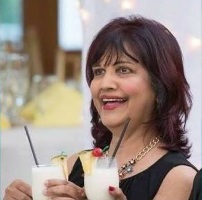
I have the pleasure of interviewing independent author Brenda Mohammed today. She is not only a multi-genre author, but a multi-award winning author, who seems to dabble in a bit of everything. She comes from a background in finance, but became an author when she wrote a memoir about her battle with ovarian cancer. Since then, she’s written several other memoirs, as well as a science fiction series, a horror novel and a crime novel, as well as a wonderful self-help book for aspiring authors. She has done so much, and made so many travels, and I’m thrilled to have her share all that with us here, on Writing to be Read. Please give a warm welcome to Brenda Mohammed.
Kaye: When did you know you wanted to be an author?
Brenda: I never planned to be an author. I was a successful Bank Manager for many years. After I retired from the Bank at an early age, I became an Insurance Professional. I loved working in Finance and helping many people achieve their financial goals. In 2005 I was stricken with ovarian cancer. My doctor in Trinidad told me that she could not help me, and no other doctor in Trinidad at that time was qualified to do so. I sought treatment in Miami and gained a new lease on life. In 2013 I wrote a book about my cancer ordeal and recovery, I am Cancer Free. That was my first book and I have never stopped writing after that. To date I have written nineteen books.
Kaye: You’ve written 6 memoirs, 2 children’s books, a science fiction series, a crime novel, and a nonfiction book on writing. What’s the secret to tackling so many different genres?
Brenda: There really is no secret to writing in multiple genres. I have always loved a challenge and constantly seek out new opportunities. I write whatever I feel passionate about.
Kaye: You have written books in multiple genres: science fiction, memoir, self-help, etc… What are some of the differences you run into in writing different genres?
Brenda: When I am writing science fiction I maintain my focus on science fiction, and similarly with the other genres. The secret is to stay focused on the plot or the subject to achieve the end result. However, the problem I faced was in promoting my books.
I discovered a way around that and made Facebook Author pages for each genre. I have seven Facebook author pages. I also joined several Facebook groups that specialise in genres in which I write, to promote my books.
Kaye: Which genre is your favorite to write in? Why?
Brenda: I really enjoyed writing my science fiction series because it took me to another world for a while. When I wrote it I found myself becoming the hero or heroine and doing impossible things.
Kaye: You won a Readers’ Favorite Award in the 2018 International Book Awards for both your YA science fiction series Zeeka Chronicles,and your memoir I Am Cancer Free. What, if anything do these two books have in common besides both being Reader’s Favorite Book Award recipients? What makes them award winning books?


Brenda: Strange. I think I just answered that question above. The books have nothing in common yet there is a common thread. One is a futuristic thriller and the other is a survival story. As I said above when writing science fiction. i.e. Zeeka Chronicles, I found myself becoming the hero or heroine. In I am Cancer Free I am the heroine.
Seriously though, I quote from Readers Favorite: “Contest entries are judged all year long and are given a rating score based on key literary elements. The judges simply read the book and score it based on its merits.”
Kaye: Those are not the only award winning books you’ve written. Two other memoirs, My Life as a Banker received a second place award in memoirs in the Metamorph Publishing’s Summer Indie Book Awards in 2016 and Your Time is Now received IHIBRP 5 Star Recommended Read Award Badge. What can you tell us about those two books?


Brenda: My Life as a Banker is a memoir about my life in Banking. Banking was my first love. I always wanted to work in a bank. I love serving and helping people and seeing them prosper. Banking gave me the opportunity to do so and especially when I climbed the ranks to Commercial Area Credit Manager and was able to help business people with startups and expansion. Banking allowed me to play my part in building the economy of my native country, Trinidad.
Your Time is Now is intended to help people understand their own lives and to realize that we are all here on earth for a purpose.
The reviews for both these books speak a lot for them.
Kaye: What is it like to receive notification that your book is the recipient of a prestigious award?
Brenda: I have won many awards before in both Banking and Insurance.in my home country
However, as this was an International Award it was a most joyous feeling to tell my friends and family that I won two prestigious awards with Readers Favorite International and will be attending the Awards Ceremony in Miami. In November.
Kaye: What’s something most readers would never guess about you?
Brenda: I dabble in art, poetry, and graphics in my spare time. Some of my art work hang on the walls of my home.
Kaye: What time of day do you prefer to do your writing? Why?
Brenda: I prefer to write in the still of the night. When everyone is asleep I find peace to think and write.
Kaye: What is the biggest challenge of being a writer?
Brenda: Only a few days ago I penned this poem about writing:
Writing takes me into a fantasy world.
Sometimes I find myself in a black hole.
I edit and fight to come out of it
But not before I get into a fit.
My books have gathered great reviews
Won awards and made the news.
Is it worth it, I sometimes ask?
Writing a book is a great task.
A writer’s life is a rather lonely one.
All day behind a computer is no fun.
An author must make the time
Read others’ books and go out and lime.
Do not sit at your computer all day.
Join the family in travel and play
Love of a family is life’s greatest gift
When you need to relax they give you a lift.
Kaye: Is there anything unique or unusual about your writing process?
Brenda: Before writing a story I write an outline of the entire plot in a couple of pages. I then use that to build my story. It sounds simple, but it is not.

Kaye: Your book on writing is titled How to Write for Success: Best Writing Advice I Received. Can you briefly share what the best writing advice you ever received really was? What is the main message of this book?
Brenda: The Best Writing Advice I Received was “Keep the Reader in mind when writing. In other words write for the reader and your books will sell.”
To answer the second part of the question I will quote one of the five-star reviews. The one from Readers Favorite is too long so I will share this one from an Amazon Reviewer:
“Having read a couple of Mohammed’s books, I knew I wouldn’t be disappointed in this self-help book, and I was not. The book covers not only the gamut on the art of writing, but the formulation of an idea for a book, to proofreading, and eventual marketing of his/her book. This is an excellent book for anyone who finds him/herself contemplating becoming a writer. With Mohammed’s book in hand, there should be little, if any, room for error. I highly recommend.”
Kaye: You like to travel. Do the places you travel end up in your books?
Brenda: Yes they do and they did. I wrote Travel Memoirs with Pictures: Exploring the world. It is an illustrated picture book filled with reflections of my travels around the world.

In this pictorial travel book of my priceless memories, I describe places visited and the wonderful times I and my family had in our tourist trips. The book is great to read while on a vacation or for some travel inspiration.
I want to thank Brenda Mohammed for joining us here today and sharing a little about her lovely books. You can learn more about Brenda and her books on Amazon at: http://Author.to/BCM786. I love how she turned her own life experiences into books to be shared by all.
Like this post? Subscribe to Writing to be Read for e-mail notifications whenever new content is posted or follow WtbR on WordPress.
Share this:

Wake Me Up When September Ends
Posted: September 10, 2018 Filed under: Books, Memoir, Nonfiction, Poetry, Writing, Writing Inspiration | Tags: Memoir, Michael Daniel Lee Booth, Mother's Grief, Nonfiction, Teen Suicide 9 Comments
September is a month that I’d prefer to skip over if I could. It is not an easy month for me and hasn’t been for the last ten years. My son Michael was born on September ninth, he died on September 21 at the age of nineteen, and he was buried on September twenty-eighth. Had he lived, he would have been 30 years old yesterday. Since his death the Green Day song, Wake Me Up When September Ends, has held a special personal meaning for me, because it would be preferrable to go to sleep and not wake up until September was over each year. But of course, that isn’t possible and so, I plod through the month, struggling with my emotions, and life goes on. I haven’t forgotten, and I don’t miss him any less as time goes on, but I am now able to prevent my loss from consuming my life, as it did at first.
After he died, I felt his story needed to be told, but I couldn’t bring myself to do it, even though most of what I wrote during the first two years concerned him in one way or another. The wounds were still too fresh and I couldn’t distance myself from the situation enough to write it. I always knew that it was a tale that needed to be told, and I knew I was the only person who could write it, so I saved all the files and the photos, as well as physical momentos and hand written stories and poems written by my son.
As I mentioned in a recent post, It’s All a Matter of Time, I’ve begun compiling the plethora of journals, stories, poetry and visual images I have accumulated in releation to my son, so tuning out the world and hoping September will go away is not going to work this year. I’ve gathered these materials over the past ten years since his death and they are my works, as well as his, and eventually, it will all be included in my memoir about his life and death, His Name Was Michael: How I Lost My Son to Teen Suicide. After a decade, it is time for his story to be told. The pre-writing preparations have begun and I hope to have it ready for publication by this time next year.
This September will be filled with many tears, as I read through all the materials I’ve gathered and/or written for this book. To put it all together I must read through every piece of writing and go through all the photos of him. I’m not saying that it will be easy for me, because it won’t. In fact, it will probably be one of the most difficult things I’ve ever written, but there is no one else who can do it. It’s all up to me and I feel it’s got to be written.
Michael’s story is many stories wrapped up into his tale. His story will tell the tale of an amazingly unique young man in love, who made some poor choices. It will tell who Michael Daniel Lee was and who he might have been one day, had he lived. It will tell of a mother’s grief and attempts at denial. It will tell of the coping mechanisms employed just to make it through each day after the loss of a child. It will tell of a son, who was also my best friend, and a sense of loss that is undescribable, unknowable, unfathomable. It will tell of an epidemic that sweeps through our world taking young people who have their whole lives ahead of them.
Below is the eulogy that I wrote, which I read standing before a mortuary filled with mourners for my son one week after his death. It’s one piece in the tapestry of writing that will be used to illustrate Michael’s brief time on this Earth. I hope it will pique your interest and encourage you to read the book when it comes out, hopefully by this time next year. If you’d be interested in pre-ordering the book, leave a comment letting me know and I’ll put you on the list, making sure you get your copy when the time comes. It would be great to know that someone is interested, and that I will be writing this for someone other than myself.

Michael Daniel Lee Booth
When Mike said, “I love you”, it was forever, and when he called you his friend, you knew you could depend on him to stand by you, no matter what. He loved to try new things, to explore and to learn. He had a love for life and for all that he held sacred. Mike strove for excellence in all that he did, and lived by a code of honor that was extremely tough to uphold. His Christian upbringing was intermixed with Hindu and Buddhist beliefs to make up the tapestry of his own personal belief system that was disciplined and unyielding. When he made mistakes, Mike was harder on himself than anyone else ever could have been.
When he got mixed up with the wrong people and things, he made some poor choices. He did not deny what he had done, but instead stood up and accepted the punishment that was given to him. He tried to make amends for his wrongs and was on his way to accomplishing that goal. He expressed great sorrow for his errors, and inflicted emotional punishment on himself over and above what the law could ever require of him.
He had a strong will and could accomplish anything that he set his mind to, including learning to speak Japanese and perform martial arts skillfully, all on his own. Mike had a love for Japanese culture and he could have lived off of green tea and sushi. His knowledge and skills were gladly shared with those who wished to learn. Mike had a love for nature and enjoyed all kinds of outdoor activities, including skiing, hunting, fishing and hiking. His imagination was endless and he created stories and drawings that reveal a talent far beyond his tender youth.
Mike was so much to so many people; a loving son, a dependable big brother, a doting little brother, a respectful grandson, a loyal friend and a devoted husband. He loved his dog, Zaar, who was a companion and loyal friend to him. Mike was sensitive, and hurt so easily and so deeply, yet he was too strong willed to ever let it show outwardly. Only through his writing, can we glimpse the love that he embraced or the pain that he felt. When he loved, he loved with all of his being. Mike was fun loving and enjoyed spending time with those that were important in his life. He had beautiful curls and the most wonderful smile, which could light up my heart whenever I saw it. Mike turned 19 three weeks ago. He had a whole life ahead of him. He was much too young to be called home to God.
Like this post? Subscribe to Writing to be Read for e-mail notifications whenever new content is posted or follow WtbR on WordPress.
Share this:

It’s All a Matter of Time
Posted: August 27, 2018 Filed under: Books, Memoir, Nonfiction, Revision, Writing | Tags: Future, Last Call, Memoir, Michael: How my son became a teen suicide statistic, Non-fiction, Past, Time, Time travel, Writing 1 Comment
Time. It fascinates us, captures our imaginations with the possibilities of time and time travel, so much so that our literature and the entertainment industry are filled with stories and songs which follow that theme. There have been countless movies on the subject: the Back to the Future series; Time Cop; The Terminator; Groundhog Day; Planet of the Apes; Bill and Ted’s Bogus Journey; The Butterfly Effect; Land Before Time; and Timestalkers, to name a few. And of course, television series: Dr. Who; Quantum Leap; Sliders; Time After Time; Outlanders – not to mention series with one or more episodes that involve time travel. Books and stories about time travel include: A Connecticut Yankee in King Arthur’s Court, by Mark Twain; The Time Machine, by H.G. Wells; Rip Van Winkle, by Washington Irving; A Christmas Carol, by Charles Dickens; “The Langoliers”, by Stephen King (Four Past Midnight); Timeline, by Michael Crichton; Harry Potter and the Prisoner of Azkaban, by J.K. Rowlings; The Time Traveler’s Wife, by Audrey Niffenegger; and more recently, All Our Wrong Todays, by Elan Mastai. Even the music industry has gotten in on the theme: Fleetwood Mac can’t stop thinking about tomorrow; Tim McGraw deals with it in segments, so he only worries about the next thirty years; Bad Company is ready for love and figures better things are bound to happen looking forward; Jim Croche wants to save it in a bottle; Cindy Lauper comments on the repetitiveness of it, as things tend to happen time after time; and Stevie Nicks would do it all again, even though it’s not always a breeze. These lists don’t even scratch the surface. So, why is it that time so fascinates us?
I had a little Australian Shepherd named Dorchester. I got her when she was a pup. When she was young, she was agile and fast. Man, was she fast. She could smoke both the male Blue Heelers she grew up with to get a Frisbee. Then, she’d run off with it and wouldn’t give it back. She never was much for playing by the rules. But, as she got older, of course, she slowed. Age affects dogs in many of the same ways that it affects people: it gets harder to get up and down; movement is slower, more careful; the senses are not as accute as they once were, etc… Dorchester began to lose her eyesight first, even before her she lost her speed and her agility, so I had to become her seeing eye person. I began carrying a walking stick on our walks, thunking it down firmly on the ground with each step I took, so that she could hear where I was and follow. We walked this way for several years until eventually she was no longer able to go on walks with me anymore due to poor eyesight and other effects of aging.
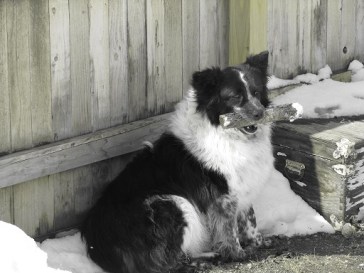
Dorchester isn’t with me anymore, but I still go on walks with both of the Heelers. We all walk a little slower these days. Our walks are shorter and there’s not a lot of rabbit chasing anymore, but they are are enjoyed, never the less. My son’s dog, Zaar, was Dorchester’s mate. They were the same age, each joining our family at about the same time. As Zaar ages, he is not only losing his sight, but his hearing, as well. He is very frightened of thunder and storms always gave him major anxiety attacks, so his not being able to hear so good hasn’t been a totally bad thing, but it does pose new problems on our walks. Zaar grew up walking on our property, so he thinks he knows where he’s going and doesn’t always pay attention to where his walking companions are headed. He gets into ‘the zone’, nose up, sniffing th air, and no matter how loud I yell, he doesn’t hear me, causing me to have to chase after him, touching him to get his attention and get him back on track. Zaar was also raised around a Heeler who was deaf, so he learned hand signs and once I have his attention, he will follow, but it’s getting his attention that’s the trick.

The exercise he gets from his walks is what keeps him healthy and mobile. As I watch him getting older, I feel a sense of urgency, knowing that time may be running short for our walks and I want to enjoy my time with him while I can. I guess I just don’t know how to be a seeing eye person for a dog that can’t hear. He doesn’t hear my stick. I must figure out how to adapt and rise to the challenge, because left to his own devices, Zaar would soon be lost, especially after dusk, when his eyesight is at its poorest. It seems none of us are as young as we used to be.
It’s easy to look back and see what we’ve lost. ‘Hindsight is better than foresight’, and all that. Looking to the past, all our regrets become vividly obvious, but we tend to embellish the good times, as well. I think happy moments may be remembered as euphoric, more so than what they actually were, because those are the times we wish to hold onto. When I look back, there’s a dividing line to my timeline, seperating my life before my teenaged son died, and post-death, signifying the time when he was no longer in my life. That’s my loss. The time when Mike was alive seems brighter, more vivid in my memories. He was my biggest fan, with aspirations and the ability to be a writer himself. He was a unique soul and a source of inspiration for me.
These days, I feel a sense of urgency to make this writing for a living thing work while I still have time to do so. I have certainly taken enough time making it happen. I was 52 when I finally earned my M.F.A. and 53 before I became a published author. I’m sure I have some good years left, but I have to wonder if there will be enough for me to realize my dream. I wish I could go back in time and do things differently, but of course that’s only possible in my fiction.
 Now, with time travel, there’s the possiblity of doing things over, making things turn out different. Granted, it doesn’t usually turn out well when you go messing around with time, but things can, on occasion turn out better. If you don’t believe me, just take a look at MY time travel short, Last Call. Things aren’t going good for Derek, but he finds a way to make his life better. Maybe I could go back and get started on this career path a lot earlier in life. That’s not Derek’s solution, but it could work.
I don’t live in Derek’s world and there is no Last Call bar for me. I know I can’t just sit back and wait for things to happen, so if I want to reach my dreams while I’m still alive to see it, I have to take action. I must market what I already have published, but even more importantly, I must keep writing. So, my plan is to just keep at it. Eventually, my efforts will pay off. I have to believe that.
So what if I didn’t earn my M.F.A. until I was 52 and wasn’t published until I was 53? I’m not the only one to get a late start on their dream. After all, according to an inspirational Facebook post by Karen Caron, Stan Lee’s first big comic came out at age 40, Morgan Freeman had his first major movie role at age 52, and Julia Child didn’t make her cooking show debut until age 51. That puts me in some pretty good company.
Young or old, all we can do is look to the future. (There’s that time thing again.)

With that in mind, I’ve begun the writing and compilation of my memoir about my son’s life and death, finally, after nine years. I’ve decided that it’s time to reunite the two time periods that divide my life and my thinking. After his death, I wrote poems and stories about him, pouring my grief out onto the page. I compiled all the photos of him into a slideshow for his memorial dinner. In addition to that, I plan to contact some of Mike’s friends and request them to contribute writings of their own about who Mike was for them. It’s going to be a massive amount of work, but his story deserves to be told and there is no one else who can tell it. It will be my first non-fiction work of book length.
I’ve always said that I never have less than three works in progress. Michael: How my son became a teen suicide statistic, will make the third one, as I’m also writing the first draft of the sequel to my western novel, Delilah: The Homecoming and I’m revising the first book in my science fantasy Playground for the Gods series, The Great Primordial Battle. Writing is an integral part of my life, past, present and future. I may be an old woman, but there is no other direction in which my life can go. Mike would be proud of my accomplishments so far and I think he would be glad that his story will finally be out. After nine years, it’s about time.
Like this post? Subscribe to Writing to be Read for e-mail notifications whenever new content is posted or follow WtbR on WordPress.
Share this:

Interview with author B. Lynn Goodwin
Posted: June 11, 2018 Filed under: Author Profile, Books, Interview, Memoir, Nonfiction, Self-Help, Writing, Young Adult | Tags: B. Lynn Goodwin, Book Review, Love, Memoir, Never Too Late, Writing 3 Comments
My guest today is an author with a unique story. She’s published three books, two of which are nonfiction, inspired by her own experiences. The third is a work of fiction, so she traverses both realms. In addition she does editing and acts as a writing coach for her fellow authors on her site, Writer Advice. Her book, Never Too Late: From Wannabe to Wife at 62, which she’s going to tell us about, has recently become a 2018 National Indie Excellence Award finalist. I am pleased to welcome B. Lynn Goodwin to Writing to be Read.
Kaye: Would you share briefly the story of your own publishing journey?
Lynn: I began writing seriously while I was also caring for my mother in the last years of her life. It was a great outlet. I also began Writer Advice, www.writeradvice.com, which started as an e-mail newsletter with a mailing list of 35. Sorry this isn’t linear—but life events often overlap.
Since my mother was a private person, I decided not to tell her story. A better option was writing a book to help caregivers journal relieve stress, and You Want Me to Do WHAT?: Journaling for Caregivers was born.
Afterwards, I returned to a book I’d started years earlier, a YA that I renamed Talent. It was incomplete until I gave the protagonist, Sandee Mason, a brother. The pitch became “Sandee Mason wants to find her talent, get her license, and stop living in the shadow of her big brother, who disappeared while serving in Afghanistan.” The publisher, Eternal Press, has changed three times since I signed the contract. While I was doing both of these books I also started running writing contests on Writer Advice and had the pleasure of reading some amazing books from Random House for review.
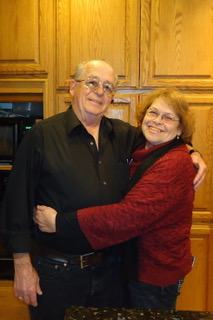 Kaye: Your most recent book is Never Too Late: From Wannabe to Wife at 62. This book is your story in memoir. Would you tell us a little about how this book came into being?
Lynn: I knew Richard was special by our second date. Maybe earlier. To find out how I knew, read the book. 😉
I began taking notes early on, because he told me he was looking for a wife before we met, and I thought that if this worked out, or even if it didn’t, the story of a 62-year-old woman who had never been married and a two-time widower she met on Craigslist had to be unique. To find out why, read the book.
Kaye: You recently became a 2018 National Indie Excellence Award finalist for Never Too Late. Did you do anything special to get to that point?
Lynn: Only if you consider entering special. I’ve been looking for indie contests where I thought I might stand a chance. This one looked a bit too big, but I entered it anyway.
Kaye: Writing memoir requires an author to open up and reveal parts of themselves. For many that’s hard to do. What motivates you to share your story with others?
Lynn: I figured if a woman who looked like me and had my level of inexperience could get married at 62 there was hope for everyone. Women needed to know that. Richard read the book before I sent it out, and I put the rest of the world on a back burner.
Kaye: What is it you hope your readers will come away with from Never Too Late?
Lynn: It is never too late to find happiness, especially when you accept what is and is not within your control.
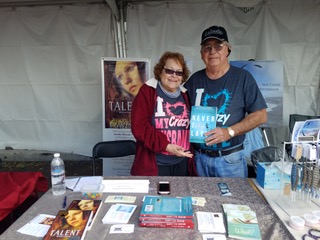
Kaye: Your previous works include You Want Me To Do What?: Journaling for Caregivers, and Talent, the story of a young girl who lost her older brother in Afghanistan and is struggling to get out from under the stigma of his death to become her own value. How is Never Too Late different from the other books you’ve written?
Lynn: Every book is different. Never Too Late is a memoir that reads like a novel. The only other novel I’d written was for young adults. The only other book for adults I’d written was about empowering oneself by journaling. Self-help meets how-to, as one reviewer put it.
Kaye: What is the strangest inspiration for a story you’ve ever had?
Lynn: Tough question. I’ve played around with telling a story from the pov of a mentally ill woman, and that was both unsettling and intriguing. I’m not mentally ill, but I’ve read about mental illness, and I’m fascinated by all the different ways we see the world.
Kaye: On your site, Writer’s Advice, you give out a lot of advice to fellow writers. What’s the best piece of advice you were ever given?
Lynn: Although I’m not sure what was best, here are the statements I remember well:
1. When free writing, go wherever the writing takes you.
2. Edit later.
3. Go deeper (whatever that means to you).
4. Put your writing in a different font and color and read it out loud or have someone read it to you. It will help you catch the errors you never see.
5. You don’t lose until you quit trying.
Kaye: If writing suddenly made you rich and famous, what would you do?
Lynn: Seriously? I don’t think there’s much I’d change, though if I were famous, I’d make more time for interviews, and if I were rich, I hope I’d give to causes that make the world better.
Kaye: For you, what is the biggest challenge of being a writer?
Lynn: I couldn’t say whether it’s being more open to suggestions or rising above the doubts that plague all of us (except the top 3% and even they may have doubts).
Kaye: What kind of Chinese food do you order all the time?
Lynn: Zucchini chicken or beef broccoli with steamed rice, but we don’t eat Chinese food all the time.
I want to thank Lynn for joining us and sharing with us today. It’s been a pleasure chatting with her. And thank all my readers for joining us, too. If you want to learn more about B. Lynn Goodwin, check her out on Writer Advice or visit her Amazon Author page.
Like this post? Subscribe to Writing to be Read for e-mail notifications whenever new content is posted or follow WtbR on WordPress.
Share this:

How writing is like building a storage shed
Posted: March 24, 2013 Filed under: Fiction, Memoir, Mystery, Writing | Tags: building a shed, Fears, Memoir, Writing 3 Comments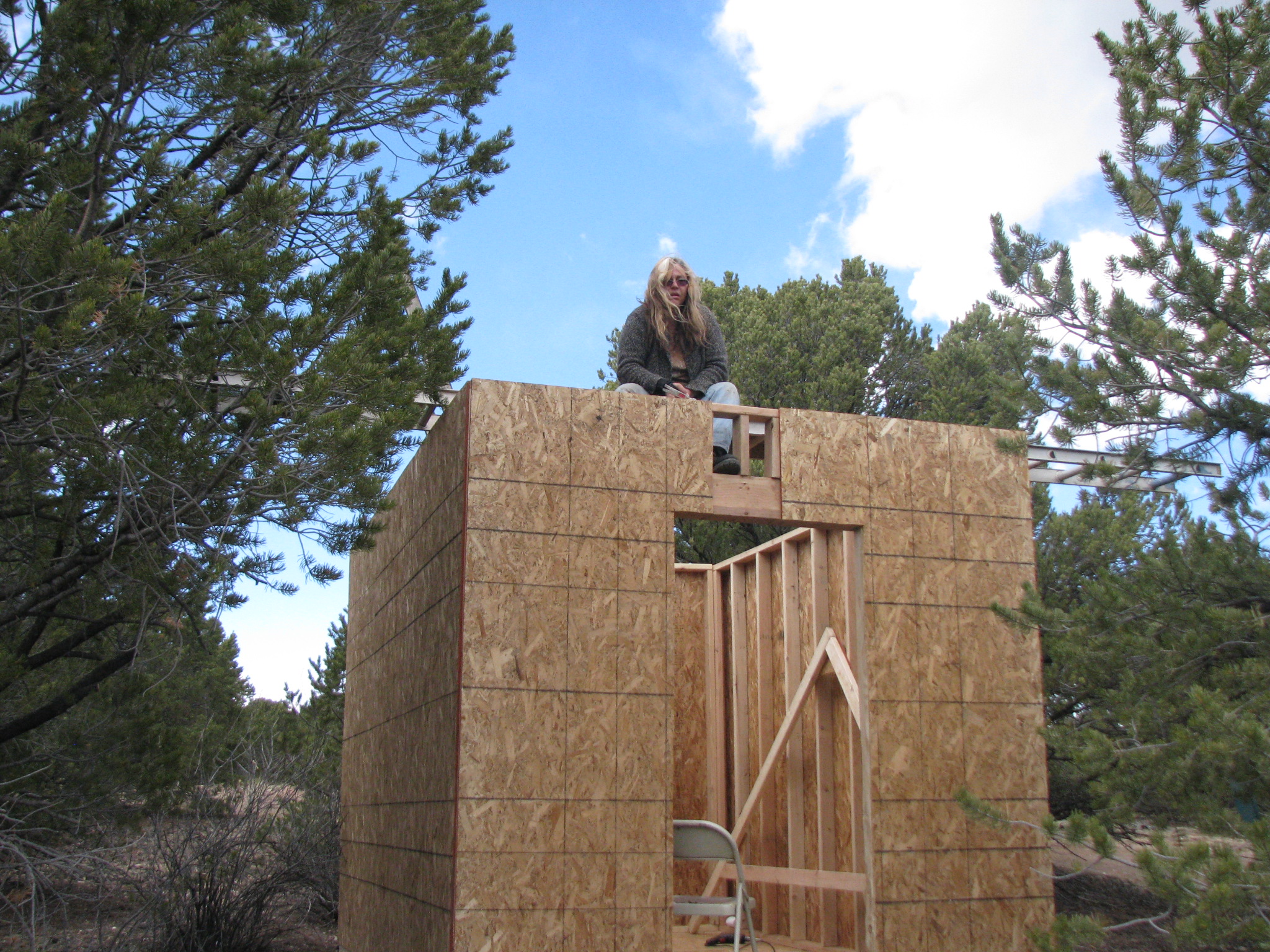 My husband asked me to help him build a storage shed and I agreed to the task. How hard could it be, right? Except that I am not a carpenter, and I was committing time away from my writing. Well, that’s not true either. I’m never very far from my writing. I’m always thinking about my writing in my head, even when I’m physically occupied with other tasks. So, although I was out hammering nails, my thoughts kept straying to how building this shed related to the YA mystery I am working on for my Genres II class.
The good solid twang you hear when you hit the nail head on reminds me of the feeling I get when I find an element the story is missing and added it in, knowing I’ve nailed it, (pun intended). But more often, I don’t get that direct hit, the story elements shooting off pell-mell into the forest, like the nails that I miss, or curling up like the nails that hit knots and won’t be driven forward, and I have to keep going at it from different angles until I am able to drive it home.
The story is sort of along the tradition of the Nancy Drew mysteries, with two young girls, growing up in the 1940’s as the protagonists. The story is three-quarters of the way finished, but I keep second guessing myself on what it is lacking. As I begin to pound nails into a new wall, I notice that I am starting on one side, with the intent to work my way to the other, yet I begin halfway up from the bottom corner. I wonder why I chose to start where I did, and it occurs to me just how many different places there are to begin on this wall, just as there is in my story. There is no hard and fast rule that a story has to start at the beginning, just as there’s no law that says you must start nailing a wall from the top right hand corner. With the wall, where I begin won’t really make a lot of difference in the end, but with my story it might. I toy with the idea of changing the point where I begin the story until I’m abruptly brought back to the here and now by the throbbing in my thumb after I missed the nail and hit it with the hammer. All these thought about writing are very distracting, which isn’t necessarily a good thing.
I’m afraid of heights. It’s a fear I’ve been dealing with for the past thirty years. I believe the official term is acrophobia, from the Greek words that combine “summit”, “edge” or “peak” and the word meaning “fear”. Merriam Webster’s Dictionary defines it as an “abnormal dread of being in a high place”, although I’m not sure I would define it as abnormal. I like to think of it as a healthy fear of potentially dangerous situations. That being said, I am a firm believer in meeting my fears head on and overcoming them. I have forced myself to face this one on many occasions, yet it still keeps rearing its ugly head to challenge me.
When I agreed to help with this project, I knew that at some point I would be required to climb a ladder to help with the roof, but we weren’t to that point yet, so his request that I climb up and slid across the ladder he had positioned across the top, extending from one side of the building to the other to nail in a small board caught me by surprise. I had gone for four solid hours and was tired when I started out this morning, and I couldn’t muster the energy to fight off my fear. Instead something inside my brain just mentally snapped.
“Oh, no. Oh, no,no,no,” I said even as I picked up my hammer and nails and began to climb the ladder with tears streaming down my face.
“What? Just climb up there and pound in a couple of nails. What’s so hard about that?” my husband asked, absorbed in whatever he was working on and not really paying attention to my reaction.
“I’m going,” I said.
There must have been something in my voice that made him look up and take notice. “Are you crying?” he asked. “Really?” He was puzzled by my reaction because I usually just buckle down and do what needs doing in situations like this, without making a big deal of it.
I swung my legs over the vertical ladder and slid my butt across it. “No, I’m fine,” I said, hammering in two nails as quickly as I could. When I turned to slide back the way I had come, my body didn’t move. I was temporarily frozen. I’d had this happen before when I climbed out under a large cement bridge that spanned the Colorado River to get pictures of my party of rafters, so I knew eventually my body would respond to my minds commands to move, once I got control of my fear, but knowing that made the experience no less terrifying for the moment.
“Wait, I’ll get a picture of you up there,” my husband offered.
“No!” I said.
“It’s okay,” he replied. “You look good up there. Just stop crying a minute and look up at the camera.”
Having my picture taken was the last thing I wanted at that moment, but as I was stuck for the moment, there was nothing to do about it. So, I wiped the tears from my face and resolved myself to the fact that I would have a photo to capture the moment. My eyes remained glued to the top of the front wall however, because every time I tried to look down at him with the camera, I felt my fear rise once more.
“Oh, you decided to come down,” he said, as I finally emerged from the opening that would be the door. He had gone about his business, allowing me time to gather my courage and get myself down from above. “I thought maybe you were going to make a nest up there.”
Now, with my feet firmly planted on the ground, his statement made me realize what a great opportunity I had missed because of my dumb fear and it made me angry. There I was, sitting with a bird’s eye view of the forest around me and I hadn’t taken advantage of it. I’d been too scared to even notice.
That’s when I realized that I’ve been doing the same thing with my memoir. Writing the story of my son’s death and my own grief is a difficult task. There are many issues that the memories stir that I’m not sure I’m ready to deal with. I’ve been putting off doing the research for several sections for this very reason, because I didn’t want to rehash the pain that interviewing the people who knew my son would inevitably produce. My instructor at Western State, Barb Chepaitis, has emphasized that eventually I must face these memories in order to portray the story honestly, and I suddenly realized how right she is. By putting off the necessary interviews because I fear the pain they will bring, I’m depriving myself of the full picture, just as I deprived myself of that high altitude view that would have allowed me to see the world a little differently. Eventually, I’m going to have to do them to present an honest portrayal of the story I need to tell, and by putting it off, I risk losing track of the key players. It’s already been four years since my son died. His friends have all gone on with their lives. They aren’t just hanging around waiting to be interviewed by me.
That night, I got on the computer and sent messages to several of the people who knew Mike, asking for their assistance. Already, I’m going to have to track down some that I no longer know how to contact. Once I have this part of the research done, I still won’t have a finished book, any more than pounding in those two nails produced a finished shed, but it will bring me one step closer to having all the material I will need to do the job.
Share this:

Now I am Ready to be a Memoirist – Well, . . . Maybe
Posted: July 26, 2010 Filed under: Memoir, Writing | Tags: Creative Fiction, Memoir, Workshop, Writing Leave a commentYesterday, I attended the final workshop in the Writing Your Life: Crafting Creative Non-Fiction and Memoir from Life Experience workshop in Salida, Colorado. Presented by New York writer, Alex Van Ark, this workshop was really a great experience. I chose to attend this workshop for two reasons: the main one being that I have started a memoir about the life of my son, Michael, and the bond that he and I shared; and the workshop was free, so it fit into my budget quite well. Although I was unable to attend the first of the three Sunday afternoon workshop sessions, the two that I did attend taught me a lot about my own writing. Now I sit here, chewing on an English muffin, reflecting on what I really got from this workshop:
Through a series of writing exercises, Alex showed us all how to write more factually, by writing with only nouns and verbs, thus eliminating all opinions. This is more difficult than it sounds, believe me. Using this method though, you can create a picture that is much more clear and concise, (and it also seemed to cut down on run-on sentences, but maybe that was just me). It is amazing how much we tend to interject our own impressions and biases into our writing, and while this is not necessarily a bad thing, the exercises showed us how those same impressions can be portrayed through the action in the scene being described, so that readers can reach their own conclusions. While you can say that a character was not a good mother, but it is much more effective to show the ways in which she was not good. For example,
“More often than not, she would promise her boys that she would
be there for Christmas and then never show up, making up
some excuse, maybe car trouble or some fictional emergency
that didn’t really make sense, but would be believable enough for
two young boys who needed to have faith in their mother. She
would promise to send the presents, then, claim that she had to
move, and the presents were in storage, so she couldn’t get to
them, or claim that they must be lost in the mail. Sometimes
they would arrive in March, or May, with price tags still
attached, but sometimes they would never come at all. One
of her favorite tricks was to ask, “Didn’t you receive the card
that I sent?”, knowing full well they hadn’t. There never was a
card. She would claim that there was money in it and their
father must have stolen it, when they said that they had not
gotten it, with tears in their eyes.”
When you read this piece of writing, you can easily imagine how disappointed her children must have been, over and over, and most people reading this would come to the conclusion on their own that this woman was not a good mother. Moreover, this is much more powerful than simply stating that she was not a good mother. Readers may or may not believe it just because you say it, but they believe it after reading the passage about how she disappointed her children, because they came to the conclusion themselves and her actions leave no question as to the matter.
We also talked about how not to get sued when writing memoir and including real people and places. You can change the names, or use titles in place of names, or have the real life people sign clearance forms, giving permission for you to write about them, or you can turn the whole thing into creative fiction. Even with clearance forms, people can come back on you if they don’t like the way that their character is portrayed. In my case, many of the people involved, especially those associated with his death, would probably not be very open to giving clearance anyway, so I will have to come up with another solution.
The other thing that I learned was how to use archetypes to create my characters. Combining different types of characters creates diversity and adds conflict to the story. One exercise had us pick an archetype and write a description, using behavioral examples, of course, the reading our descriptions to see if the other workshop participants could identify the archetype. Another writing exercise involved having two archetypes interact. I think that by placing characters into an archetypal mold, it allows the character to be more rounded, while remaining focused. I found both exercises to be very interesting and helpful, as character portrayal can be a very difficult thing for me.
The last session, yesterday, was a Cowboy Story Hour, where each of us did a reading of some of our work. I chose three pieces, two of which were poetry. I had been fortunate enough to attend a Poetry Performance Reading with Rosemary Wahtola-Trommer, of Telluride, (The Word Woman), whose reading was vibrant and filled with energy. I couldn’t hope to do a reading even close to that quality, but I tried to keep her in my mind and emulate her, as I stood before the other workshop participants and did my first reading ever. I tried to read slowly and pause in all the right places to give the proper inflection of my words. I probably should have selected different pieces, as the ones I chose were maybe too personal, and I can’t even read them to myself, without choking back tears. My fellow workshoppers were very gracious though and gave me a nice round of applause, even though they may not have understood the last lines through my tears. It was scary to walk up there to read my work, but I think I did okay, and I definitely lived through it. I know because I couldn’t have heard all the other readings if I were not alive following my own. The talent of all those in the room was just amazing, with readings that carried us all over the world, to places that I had never been before, but never the less, made me feel as if I were really there. That was the best part: all of the great writers that I met there.
The facilitator, Alex Van Ark, was just a wonderful guy, who had the ability to draw on your hidden talent with his exercises, which aside from their learning value, were also quite fun. He was easy to talk to and he never asked us to do anything that he did not do himself. He did a writing of his own for each exercise, and then read what he had come up with, right along with the participants. He is a very talented writer, as are many who attended. All in all, it was a wonderful experience that I very much enjoyed. I am looking forward to Alex’s promised return next year and plan to attend his workshop again. It will be interesting to see how my memoir has developed over the year.











The Making of a Memoir: Obstacles and Roadblocks
Posted: April 8, 2019 | Author: kayelynnebooth | Filed under: Commentary, Memoir, Nonfiction, The Making of a Memoir, Writing, Writing Process | Tags: Creative Nonfiction, Losing Michael: Teen Suicide and a Mother's Grief, Memoir, Nonfiction, The Making of a Memoir, Writing Process, Writing to be Read | Leave a commentLosing Michael: Teen Suicide and a Mother’s Grief
“The Making of a Memoir” is a bi-monthly blog series which explores the stages of writing a memoir as I write the story of losing my nineteen year old son, Michael, to suicide, through his story and the tale of a life without him and the grief I experience every day, even after he’s been gone for a decade. Some progress has been made toward the actual writing of the book since the last segment. I made a final decision on the title above for the book, and work on the cover is in progress with Art Rosch at Starrts Creative. Although there is still a lot of material still to sort through and compile what I want to include, I managed to work through a considerable amount. The going is slow, as I knew it would be, due to the emotional nature of the material and the memories some of it awakens.
In the last segment, “Stage 1: Prewriting Tasks“, I said I expected this book to be the most difficult story I have ever attempted to write, and that has proven to be true. In fact, it has proven to be difficult in more ways than I had imagined. This segment was supposed to be titled “Stage 2: Selling the Story”, but alas, unexpected “Obstacles and Roadblocks” has become a more appropriate title. Over the past two months, I run into several and I’m still trying to find a way around, over or through one huge one in particular – legalities.
Memoir can and should be a work of creative nonfiction. It is a true story told creatively, so as to capture and hold the readers’ attention. What memoir is not, is a work of fiction, with fictitional characters and places. You are telling a true story, something that actually happened, something in which other real people played different roles, and to tell the story, their parts must be told as well, even if the tale doesn’t portray all of them in a positive light. A good memoir must be told with honesty, from the heart.
As I sorted through the plethora of material I have gathered and saved since my son’s death: his poetry, writings and artwork; my poetry and writings; and oh so many photos, I couldn’t help but think about the other people involved, directly or indirectly with the story of the events leading up to Mike’s death and also the events that came after, and I realized that there were more than a few, people associated with Mike, and law enforcement officers, who might not want this story to come out because of the manner in which they might be viewed for their parts in his death.
It normally wouldn’t be a problem at all. I’m writing the story of events as they happened to the best of my knowledge. Many facts surrounding Mike’s death were suspicious, and for a time I believed that Mike might have been murdered. Things didn’t add up, but the proof to back up what I know to be true was withheld from me by local law enforcement. I no longer entertain the idea that Mike’s death was anything other than suicide, without the proof that the events happened the way I claim they did, I could be open to liable in telling this story.
The individuals involved wouldn’t really be a problem. The obvious solution is to change the names. Even in a true story, real people can have fictitious names, without damaging author credibility. Authors do this all the time; you just state that some names have been changed and readers won’t feel cheated.
The law enforcement agency and certain individual agents present a bigger problem. Do I change the names of the law enforcement agents? Do I change the name of the area they represent? How much can be changed before a true story becomes a work of fiction? The proof I lack wouldn’t portray the local law in a positive way and they know it, so they aren’t likely to have a change of heart about sharing it with me for the book. They play major roles in the events leading up to Mike’s death, and the story really can’t be told without their inclusion.
Although this issue has presented a roadblock that appears it might be unsurpassable, I have a couple of ideas on how I might be able to get around it. I need to let it play out and see. If not, I’ll look for a way to go over, or under if I have to. This is a story that must be told, and I’m determined to tell it. By the next segment, in June, I should be moving forward once more. I’ll let you know how it gets resolved. I do hope you’ll join me then.
Join me in my writing journey through “The Making of a Memoir” the second Monday every other month on Writing to be Read: February, April, June, August, October and December. To be sure not to miss one segment, subscribe to email or follow on WordPress for notification of new content.
Share this: