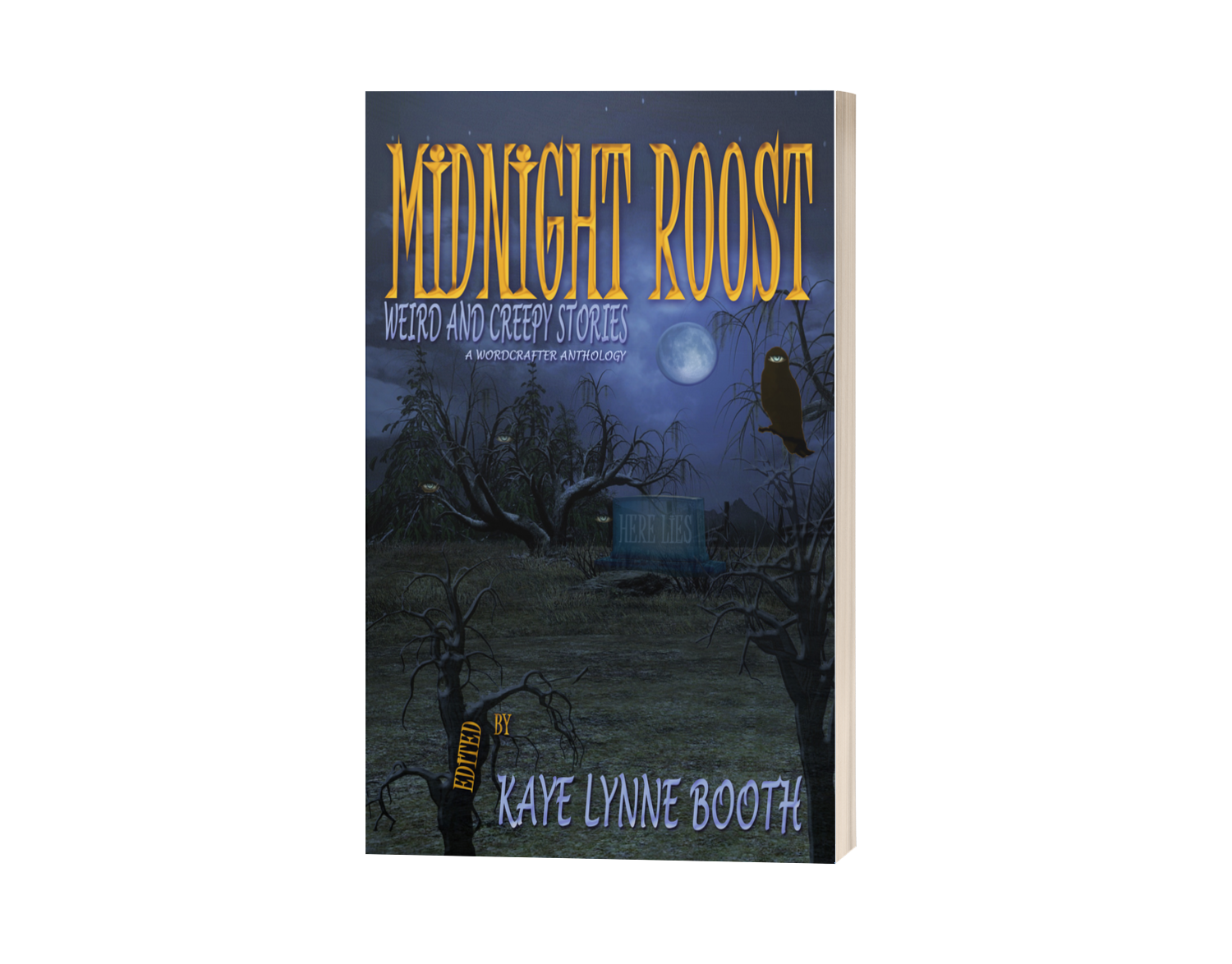
LINDSEY’S WRITING PRACTICE: Book Review – “Midnight Roost: Weird & Creepy Stories”
Posted: December 3, 2025 Filed under: Anthology, Book Review, Books, Dark fiction, Lindsey's Writing Practice, Paranormal, Review | Tags: Book Review, Linda Griffin, Lindsey Martin-Bowen, Lindsey's Writing Practice, Midnight Roost: Weird & Creepy Stories, Writing to be Read 1 Comment
Warning: These Stories May Disturb Your Sleep
Review: Midnight Roost (Volume 1 of the Midnight Anthology series)
By Lindsey Martin-Bowen
I confess it: My preferred reading choices have leaned toward the “rom-coms,” both traditional literary and contemporary, i.e., Jane Austen’s Pride and Prejudice, Emma, Sense and Sensibility, and so forth: Emily Brontë’s Wuthering Heights and Charlotte Brontë’s Jane Eyre, James Joyce’s “Ulysses,” and his short stories, especially “Araby.” Likewise, early 20th century novelist Daphne Du Maurier thrilled me by combining romance and suspense in Rebecca and Fisherman’s Cove. Plus, a more recent plethora of novels, (especially The Accidental Tourist and Pultizer-prize winning Breathing Lessons) by Anne Tyler, and Toni Morrison’s Beloved have enticed me to donate my hours (and cash) many times, as did Joan Didion’s Play It as It Lays.
Further, even if Edgar Allen Poe’s “The Tell-Tale Heart,” Oscar Wilde’s “The Picture of Dorian Gray,” and Franz Kafka’s “Metamorphosis” intrigued me, they didn’t match my love for the romances.
Yet after reading Midnight Roost, comprising 23 not only chilling, but well-wrought tales, I declare Move over, Poe, Wilde, Kafka, Steven King—here’s a fiction collection that matches your scary stories. And as alluring as the Twilight Zone stories may be, they’ve “got nuthin” over the mastery of the fictional elements (detailed sensual descriptions, rhythmic,flowing sentences, and strong tension buildup—interlaced wth imaginative, sometimes bizzare settings and outcomes) than these 23 tales reveal. In short, this masterfully-written collection mesmerized me. And here’s why:
The first two tension-filled stories play with the “haunted house” archetype, even though the reader can’t be sure it’s the house that’s haunted, especially in Zack Ellafy’s “House on the Plains” which opens with a sad story— after her marriage ended, Madison attempts to set up a new household—yes, on the Plains. Not only does her initial move into the house create tension, when her husband follows her to her new home, he adds to the stress by threatning her life.
The setting plays a huge role in the themes and outcome in the second tale, too. Chris Barili opens “Shaken” with a baby crying. Neither of the parents, Misty and George can make their son stop, and when nothing will stop his tears, the couple slowly realizes their child isn’t crying because of colic. And the world beyond the earth may well have caused the babe’s screams.
In contrast to the two opening stories, Joseph Carrabis’s “The Beach” occurs outdoors (on a real beach), which the protagonist “hadn’t seen in forty years,” when “[m]oss and ivy grew over the gate’ s red brick pillars, once clearly visible.” Throughout most of this tale, Carrabis’s detailed imagery engaged me up to the tense ending.
This collection includes two more Carrabis pieces combining strong imagery and symbolism, “Blood Magic,” uses the Genesis “apple” imagery intertwined with witches whose arms are tree limbs and who present humans with apples to resolve their problems. Again, his detailed imagery captures the reader. Set in a “copse of ancient, dark boled trees,” this story builds even more tension than “The Beach” and “Binky.” And Carrabis indeed knows how to twist a tale, enhance its drama by turning it upside-down, especially toward the ending, where it zaps the reader.
Then toward the end of the anthology, Carrabis’s futuristic “Binky” explores genetic markers and abortion advocates with with this frightning tale that entices readers to question today’s sociological values.
D.L. Mullan set “Mangled” in an opposite setting from the previous landscapes. In fact, it opens within what appears to be a hospital inside a space ship. Told in the first person point-of-view by a wounded female soldier, now a patient sharing visions now appearing in her heads “images splashed in my mind’s eye. My twentieth birthday party. Then a picture of my graduation from boot camp. The darkness of a moonless night, where millions of stars shone in their galaxies above filled me with apprehension . . . ” Despite all the trauma, the narrator takes the reader into an unexpected dimension hinting at hope. Insightful multi-levels of meaning exist here.
“The Easterville Glass Ghost” by Christa Planko is indeed a ghost story, and the main character Taryn studies a history of the town’s glassworks, which includes an “other-worldly” event with a likely “friendly spirit” that “she believed wanted to look out for her well-being. A foreman, maybe. Taryn could feel the spirit smile when that thought entered her mind.” Clever writing here made reading this story a delight.
Award-winning and best-selling author of more than 100 books and master at character development, Paul Kane penned a contemporary piece about an old legend, “The White Lady,” set in a blizzard that changes life dramatically for Harry Sharpe, publicist for Binge TV Productions, a man who “always believed you made your own luck.” After Sharpe gave up driving his car, he trudged through snow till he found his way to a nearby inn, entitled The White Lady. There, he encountered hints of his fate from the barman, an expert on “The White Lady” legends worldwide, who explained,
“Like so many variations going back centuries, she is said to have no
visible face.” He shrugged. “I did a bit of research when I knew it was
going to be important. You do, don’t you?”
Harry shrugged himself now; he couldn’t give a flying shit. Ex-
except he found himself saying, “And your version?”
The man smiled. “The original spirit of vengeance, ours is.”
Harry couldn’t help grinning too. “I’ve seen that one as well, only
it was Nicolas Cage riding a motorcycle.”
“Vengeance for the wronged, vengeance against—”
Harry flapped his hand, cutting the man off in mid-flow. “Urban
legends. I don’t blame you for pushing the marketing side of things,
I t’s what I’d do. Play to the tourists, the audience, right? But you can
save the spiel as far as I’m concerned.”
That conversation hooked me—and I quickly read the 23-page story. It’s now one of my favorite “thriller” stories ever.
A new addition to WordCrafter Press authors, Colorado’s Sonia Pipkin displays Disney-like appeal in “Once Upon a Time.” Not only does her tale with that phrase, but it draws readers into “a magical forest, [where] woodland creatures lived in peaceful co-existence, and not one human was the wiser.” Layering this opening with crisp descriptions of a sky “the perfect shade of aazure blue, trees with full leafy crowns,” she enforced the peaceful setting by adding, “not one drop of blood had ever been spolt on the soil in the enchanted land until that day.”
After building tension among the creatures with their response to events that transpire that day,, she recounts the “Goldilocks” tale—but with a twist—from the bears’ point-of-view.
And trust me, this story’s depth and word choices allow readers to see this is no mere “fairy tale” today. Just ask any deer who may roam in your neighborhood, as they do in mine.
Another tale, C.R. Johansson’s “She Shed Galleria,” reveals the author’s talent for developing intriguing, even odd-ball characters that can snare a reader’s heart, even if those characters are quite ornery. Such is Uluna, a portrait artist who owns the She She Galleria, dresses in mink, and likes to paint men performing work that excites them. Auto mechanic Bob describe her when she waltzed into a bar where he nursed a beer:
Having grown up surrounded by hunters, he recognized the expensive mink fur that lined the collar of the woman’s long, thick coat which swallowed her body like a giant bear. Even without the coat, he knew she was rich by the way she shook her head in contempt while she surveyed the room, as if the bar and the people were vermin.
After Bob became one of her subjects, this story twists into one that could easily find a home in The Twilight Zone among such tales with a comparable “oddball” sense of humor. I loved it. (But note, this is one for the “over-21” crowd.)
Another of my favorites, South African author Roberta Eaton Cheadle’s “The Behemoth’s Rage” exhibits flowing, descriptive language emulating sounds of the sea, which it personifies with detailed imagery. For example, the saga opens with,
The sun breached the horizon, spilling brilliant light across both sky and ocean. The water, an expanse of silver satin encrusted with clusters of glittering diamonds, paid homage, gracefully rising and dropping into curtseys.”
The light unveiled the dark grey behemoth, seated on the shore. It illuminated her edges, turning them into a froth of lighter grey lace. Shards of brilliance splashed across her sombre mourning dress. The aging face of the immobile matriarch disappeared into thick, golden edged clouds, leaving a headless hulk.
Especially significant in this tale is the word, “Behemoth,” (also known as Leviathan) alluding to the huge creature in Job 40:15-24, wherein God humbles Job by presenting the behemoth to him. With a parallel theme, Cheadle’s piece retells an old sea legend, but describes the creature as a female and adds a twist at the end—one that isn’t in Job 40.
Patty L. Fletcher’s “Casualties of War” opens with the lines,
DERRICK SAT AMONG the drunken Clear Bloods, allowing
their teasing to wash over him. He hated this role, but what choice
did he have? If he didn’t learn what plans were being set against
the Blended Lives Federation, all which he’d fought for would be
for nothing.
Ah ha! From this intro, I interpreted this story about “war casualties” was set in the Old West during the struggles between the settlers and Native American tribes. I wondered if it would entail time-travel or if it would reflect actual historical events in our nation’s early decades, which it would symbolically connect to the our nation’s contemporary situation.
Then,after a few pages, I realized my misinterpretation: Yes, the story contains aspects that apply to our nation—but dear readers, it was a tale quite opposite from what I anticipated. I won’t spoil the ending—or any possible interpretations: Both are surprises you won’t forget.
In contrast, Keith J. Hoskins’s tale, “Teddy,” centering around Quarterback Brad Jarrett, “is based on a true story,” according to its narrator. And it opens with Jarrett throwing a pigskin to the runner who scored the winning touchdown. When his team members hosted him to their shoulders, Jarrett “relished the splendor of the moment and bathed in the praise,” thinking “Could life get any better.”
Surely Hoskins expanded that story into a different dimension by making Jarrett’s stuffed Teddy bear come alive—but only to the quarterback. The ensuing battle between the two makes this surreal story a delight.
Another story that would serve well as a Twilight Zone episode, Denise Aparro’s “The Pines” leaves the reader in a strange space with female protagonist Orna Douglas, who happens to be both a nurse and a mystery writer. Opening with “The ping of brass.” auditory and visual descriptions, and quick dialogue, this story captures a reader and moves quickly. Bravo!
Likewise, Julie Jones’s “Night of Terror” opens opens with a description and rapid movement that also makes it another excellent Twilight Zone candidate:
THE FIRST SPACESHIP showed up around two o’clock in the afternoon. Doug and
Billy ran in from the sandbox to tell use about it, too worked up to notice Miss Clara
hollering about tracking up the clean floors. Their alarm cinvinced us something was ]
going on, though a UFO seemed far-fetched. We went outside to look at the sky—to
appease the upset boys, if nothing else—and there it was, just like they said.
Dear readers, his story hooked me immediately—and engaged me till its ending.
Another quick-moving tale with lush imagery and humor, Isabel Grey’s “Rabbits Cannot See Pink Fireworks,” written from a rabbit’s point-of-view, hooked me into reading it through the wee hours. The ninth-year rabbit storyteller not only provides a unique perspective, but adds nuances of social comment on a still controversial subject in our current society.
One more possible Twilight-Zone nomination, Robera M. Senese’s“Take Two” focuses upon a daughter-mother relationship. It opens showing the daughter, Sondra, revealing her perfectionism
in her profession:
“SONDRA STOOPED TO PEER through the camera focus. The camera rested
on a tripod set up in front of her usual recording location in the corner of her bedroon.
Yes, perfect. The lighting on the stool in front was just right, making the red leather
look lush. Beside her was her makeup table, styish and shining with black lacquer.
Once, she had noted in oneofher videos that the table was a little too shiny. A lovely
charcoal grey table runner took care of that problem and also stopped the various
makeup bottlesand boxes from sliding on the smooth surface.
After Sondra decides to help her aging mother, Florence “freshen” her looks, the tale
becomes more intriguing with what may be a surprise ending. Likely, many readers may
find that ending justified, too.
“Immediate Intervention” by Mario Acevedo takes on a more somber tome in this futuristic piece that may become closer to reality within a few years. Along with bringing in AI and algorithms, the story creates a frightening reality wherein The System rules human outcomes.
In contrast, Kaye Lynne Booth’s “Melina” leads the reader into the magical world of a mermaid (Melina) and her encounter with humans. Thestory opens with a delightful scene of Melina flipping her tail “playfully at her little siser, Elsbeth, who gives a mental titter and swims off . . .” Being a mermaid, Melina is able to sit with her sister by sending thought waves to her.
This allows Elsbeth (who swam too far away) to contact her sister when she becomes caught in
a fisherman’s net. In her attempt to help thr young mermaid, Melina becomes captured by humans
and begins to morph legs. Great tension here—but no spoilers. Part of this tale’s charm is its intensity.
Michacele Jordan’s “Afterwards” is a psycho-drama about Brad, riddled with nightmares after he’d suffered a car crash, an accident that killed a young woman, who re-appeared in his subsequent constant nightmares. This sent Brad to a psychiatrist, Dr. Rosenberg, whose “traffic light green” eyes haunted him while she attempts o help him regain his mental health. Albeit grounded in “reality,” this
one’s another suspenseful tale.
And speaking of suspense, Robert Kostanczuk’s “A Visitant Comes to the Window” evokes shades of imagery from Franz Kafka’s “The Metamorphosis” wherein the main character, Gregor transforms “into a gigantic insect.” This tale just may be more frightening.
Indeed, the last two stories in this collection definitely raised the hairs on the back of my neck. M.J. Mallon’s “The Cull” reflects some ideas similar to those in Oscar Wilde’s “The Painting of Dorian Gray,” but this tale is far more gastly—and heartbreaking.
And finally, Isabel Grey’s award-winning (WordCrafter’s Short Fiction Award 2023) “Red Door House” sent the proverbial chills down my spine (all the way to my toes). At first, the story brought to mind Toni Morrison’s Pulitzer Prize-winning novel, Beloved, wherein House 124 is haunted by the ghost of the character Sethe’s murdered daughter..
Yet that haunting is mild compared to the Red Door House—a house that narrates this wild tale.
Indeed, those who love thrillers will likely enjoy this one. Yes, the story is indeed well-written, especially the way it builds suspense. But the ending overwhelmed me, perhaps because my 1906 historic house may be haunted, I don’t know. Nevertheless, it was a tad too thrilling for my sensitivities—and kept me up till 4 AM., shivering. Sigh.
About Lindsey Martin-Bowen
On Halloween 2023, redbat books released Lindsey Martin-Bowen’s 7th poetry collection, CASHING CHECKS with Jim Morrison. Her 4 th collection, Where Water Meets the Rock, was nominated for a Pulitzer; her 3rd, CROSSING KANSAS with Jim Morrison was a finalist in the QuillsEdge Press 2015-2016 Contest. In 2017, it won the Kansas Writers Assn award, “Looks Like a Million.” Writer’s Digest gave her “Vegetable Linguistics” an Honorable Mention in its 85th Annual (2017) Contest. Her Inside Virgil’s Garage (Chatter House Press 2013) was a runner-up in the 2015 Nelson Poetry Book Award. McClatchy Newspapers named her Standing on the Edge of the World (Woodley Press/Washburn University) was one of the Ten Top Poetry Books of 2008. It was nominated for a Pen Award.

__________________________________
Did you know you can sponsor your favorite blog series or even a single post with an advertisement for your book? Stop by the WtbR Sponsor Page and let me advertise your book, or you can make a donation to Writing to be Read for as little as a cup of coffee, If you’d like to show your support for this author and WordCrafter Press.
__________________________________
This segment of “Lindsey’s Writing Practice” is sponsored by the Midnight Anthology Series & WordCrafter Press.

Midnight Roost: Weird and Creepy Stories: 20 authors bring your nightmares to life in 23 stories of ghosts, paranormal phenomenon and the horror from the dark crevasses of their minds. Stories of stalkers, both human and supernatural, possession and occult rituals, alien visitations of the strange kind, and ghostly tales that will give you goosebumps. These are the tales that will make you fear the dark. Read them at the Midnight Roost… if you dare. https://www.amazon.com/Midnight-Roost-Kaye-Lynne-Booth-ebook/dp/B0CL6FPLVJ
Midnight Garden: Where Dark Tales Grow: 17 authors bring you 21 magnificent dark tales. Stories of magic, monsters and mayhem. Tales of murder and madness which will make your skin crawl. These are the tales that explore your darkest fears. Read them in the Midnight Garden… if you dare. https://www.amazon.com/Midnight-Garden-Where-Tales-Anthology-ebook/dp/B0DJNDQJD3
Midnight Oil: Stories to Fuel Your Nightmares: 14 authors bring you 16 dark tales that explore your deepest fears. These are the stories which nightmares are made of. Tales of monsters, mayhem, and madness which will make you shiver in the dark. Read them while you burn the Midnight Oil… if you dare. https://books2read.com/Midnight-Oil
Share this:

Book Review: Seventeen Days
Posted: March 21, 2025 Filed under: Audio Books, Audiobook Review, Book Review, Books, Mystery, Review, romance | Tags: Audiobook, Book Review, Catherine Hein Carter, Linda Griffin, Murder Mystery, mystery, romance, Seventeen Days, Writing to be Read 9 Comments
About Seventeen Days

Divorcee Jenna Scott moves to a quiet California fishing village during the first Gulf War to make a new life in a house inherited from her grandfather. Her next-door neighbor recommends widowed handyman Rick Alvarez to fix her leaky roof. Jenna is intimidated by his good looks and annoyed by his self-assurance, but disarmed by his affection for his young son. She is still hurting from her ex-husband’s betrayal and resists the attraction between them.
Rick has lived in the village for only three years and is still an outsider, friendly but not sharing his past with anyone. When an attractive vacationer is murdered, local gossip says he is the killer, and rumors spread about his wife’s death as well. Jenna is determined not to believe the gossip, but will she ever be able to trust Rick with her wounded heart?
My Review of Seventeen Days
I received an audiobook copy of Seventeen Days, by Linda Griffin, and narrated by Catherine Hein Carter, in exchange for an honest review. All opinions stated here are my own.
I’ve reviewed several of Griffin’s audiobooks, but this is the second one narrated by Catherine Hein Carter, and I have to say that this narrator does a smashing job. Carter is my favorite of Griffin’s narrators, to be sure. You can read my other reviews of audiobooks by Linda Griffin here:
Seventeen Days is a sweet romance about a woman learning to trust after a hurtful divorce, and a widower with a young son trying to fit in to the small California fishing village, where a murder puts him in the spotlight as the prime suspect. Griffin does a smashing job of drawing the characters in a way that makes them feel familiar, making it easy to care about what happens to them.
Jenna is hurt and reluctant to place her trust in anyone after her relationship with her cheating ex-husband. But when she meets Rick, the local handyman, her feelings are torn. Rick’s relationship with his son, Aiden, endears her to him, although he strikes her as being a bit forward, and she finds herself wanting to give him her trust. But when there is a murder in the small town, suspicions are thrown onto the widower, who is still an outsider among them, and Jenna doesn’t know what to believe.
A romance mystery that will steal your heart. I give Seventeen Days five quills.

______________________________________
Kaye Lynne Booth does honest book reviews on Writing to be Read in exchange for ARCs. Have a book you’d like reviewed? You can request a review on the Book Review tab above.
Share this:

Book Review: “The Rebound Effect”
Posted: November 8, 2024 Filed under: Audio Books, Book Review, Books, Fiction, Review, romance | Tags: Audiobook Review, Book Review, Catherine Hein Carter, Linda Griffin, mystery, romance, The Rebound Effect, Writing to be Read 2 CommentsAbout The Rebound Effect
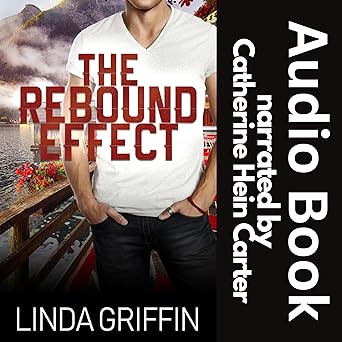
In the small town of Cougar, struggling single mother and veterinary assistant Teresa Lansing is still bruised from a failed relationship when Frank McAllister sweeps her off her feet.
Frank is a big-city SWAT officer who moved to Cougar only four months ago. He’s handsome, charming, forceful, very sexy, and a bit mysterious. He had his eye on Teresa even before they met and is pushing for a serious relationship right away.
Teresa finds his intense courtship flattering, and the sex is fabulous, but she doesn’t want her deaf six-year-old son to be hurt again. Her former fiancé cheated on her when he got drunk after being unjustly fired, but he loves her and her son, and the whirlwind romance is complicated by his efforts to win Teresa back.
And then there’s the matter of the bodies buried at Big Devil Creek…
Purchase Link: https://www.amazon.com/Audible-The-Rebound-Effect/dp/B0DHLWSYRW
My Review
I received a free audiobook of “The Rebound Effect” from author, Linda Griffin, in exchange for an honest review. All opinions stated here are my own.
Narrated by Catherine Hein Carter, I felt the narration was well done, although I could tell she was reading in some places. This story had a female protagonist, so I didn’t have the same reservations about the female narrator as I did in my review of Love, Death, and the Art of Cooking. With The Rebound Effect, I found the narration went much better from the female protagonist, Theresa’s perspective, and Carter was a much better fit in my opinion.
Theresa is a single mom, divorced from her deaf son’s father, and she’s on the rebound from Bret, who wasn’t faithful in the relationship she had with him, which hurt her deeply. She focuses her life on her son, Aiden, and tries to make herself believe that is all she needs. She’s hesitant to enter into yet another relationship with when Frank comes along, intent on sweeping her off her feet.
I found Frank to not be very likeble. I felt that he is pushy and controlling, and I had a hard time rooting for the two characters to get together because he is so arrogant. It made it hard to think that he would be a good match for Theresa. He keeps telling her that they will go as fast or slow as she wants, but then just keeps coming even when she repeatedly tells him to slow down, and ignores when she says his buying an item is too much and buys the item anyway. That doesn’t show the respect for her which he claims he has. Obviously, this really bothered me with this story. But then, I thought I was reading a romance and this turned out to be so much more.
As it turns out, we have more of a love triangle situation, where Theresa is faced with a choice between two men, Frank and her ex-boyfriend, Bret, who won’t give up after his single indescretionary act of infidelity broke Theresa’s heart. I do wish we could have gotten to know Bret a little better. Most of the focus was on Frank, because Theresa has cut Bret out of her life without giving him a chance to redeem himself until well into the story.
This book has a crime fiction subplot, as the bodies of young girls are found in the opening scene and other girls go missing throughout, with these scenarios playing through Theresa’s head throughout the story, adding a sense of mystery to the story. While I thought all along that eventually the mystery would be solved, I didn’t realize what a vital part it would play in the end. (No spoilers.) Even with all the clues we’re given, the real hero was a surprise to me, and in the end, I was quite satisfied as a reader.
Not what I expected, but it held my interest and wrapped things up nicely in the end. I give The Rebound Effect four quills.

_________________________________________________
Kaye Lynne Booth does honest book reviews on Writing to be Read in exchange for ARCs. Have a book you’d like reviewed? You can request a review on the Book Review tab above.
Share this:

Book Review: Love, Death, & the Art of Cooking
Posted: July 26, 2024 Filed under: Book Review, Books, Fiction, Review, romance, Suspense, Writing to be Read | Tags: Book Review, Carter, Catherine Hein, Linda Griffin, Love Death & the Art of Cooking, Romance Suspense, Writing to be Read 6 CommentsAbout Love, Death & The Art of Cooking
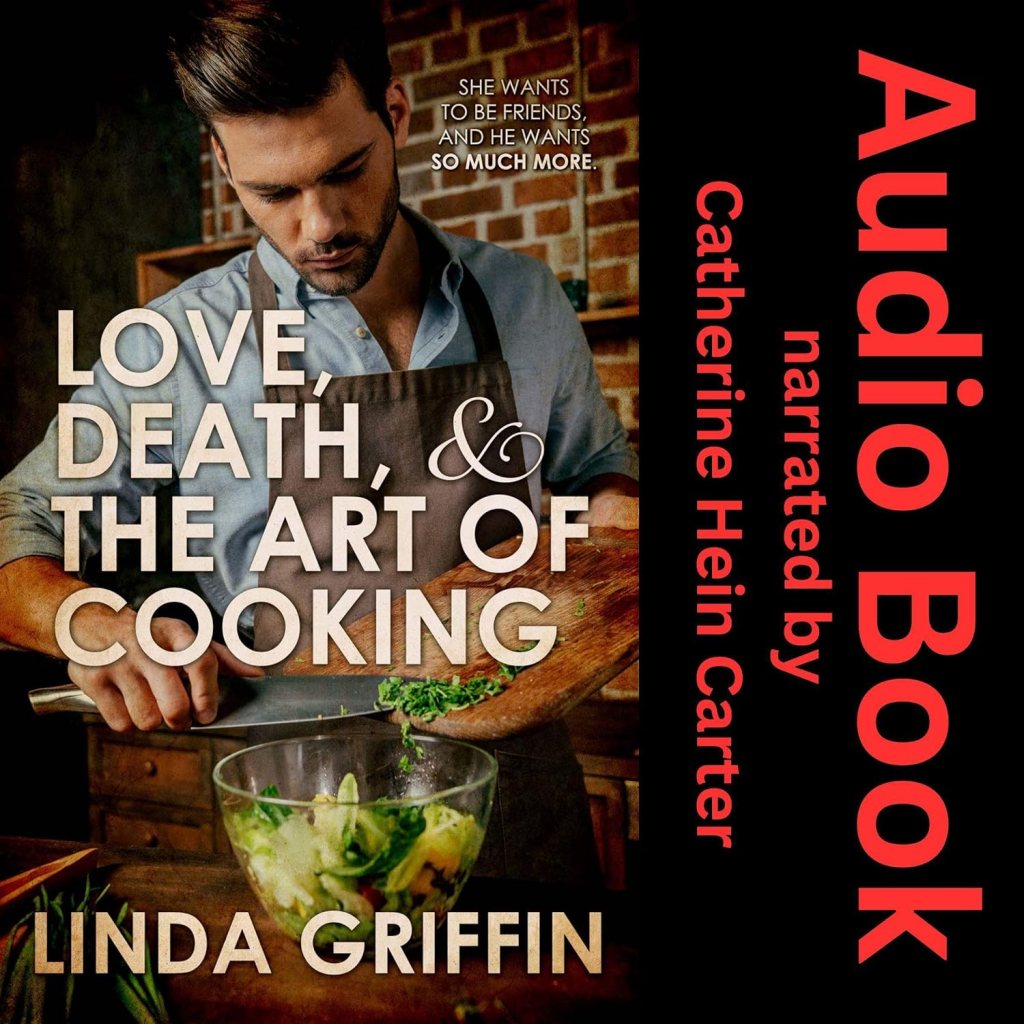
Software engineer Reid Lucas loves to cook and has a history of falling in love with married women. When he leaves his complicated past in Chicago for a job in California, he runs into trouble and must call a virtual stranger to bail him out of jail. Alyssa Knight, a tough street cop waiting for a church annulment from her passive-aggressive husband, is the roommate of the woman Reid calls for help, and she reluctantly provides bail for Reid. He falls for her immediately, and cooking for her is an act of love. She just wants to be friends, but they keep ending up in bed together. When his boss is murdered, Reid is a suspect. Or is he the intended target?
My Review
I received an audiobook copy of Love, Death, & the Art of Cooking, from the author, Linda Griffin in exchange for an honest review. All opinions expressed here are my own.
The story is well-crafted and well-paced, feeding the reader the backstory one small taste at a time, with minimal servings of exposition. The narrator, Catherine Hein Carter, did a good job with the narration of the story, although I felt like this story, with it’s male protagonist might have been served better by a male narrator.
When Reid Lucas takes a new software job in a new town, he’s hoping for a new start on life. But when his boss turns up dead, it brings back memories of why he left Chicago, and as the events back there come to light, it makes him first a prime suspect and then, a possible target. Alone in a new town, there are few people he can turn to for support except a girl he only knows from a chance meeting, but he gets her roommate, Alyssa instead, a woman he doesn’t know at all, who turns out to be a cop. Alyssa doesn’t trust him, her roomate wants to sleep with him, and all he wants to do is cook for them. But can his delicious meals win overcome her doubts and win Allyssa’s heart? No spoilers here. You’ll have to read the book.
Everything a romance suspense novel should be, I give Love, Death, & the Art of Cooking four quills.
_________________________________
Kaye Lynne Booth does honest book reviews on Writing to be Read in exchange for ARCs. Have a book you’d like reviewed? You can request a review on the Book Review tab above.