Writer’s Corner: Researching down a rabbit hole
Posted: February 21, 2022 Filed under: Books, Western, Women's Fiction | Tags: Colorado History, Delilah, Doc Holliday, Glenwood Springs, LEadville, research, Writer's Corner, Writing to be Read 3 Comments
I just took a short trip to Glenwood Springs, Colorado; one of many that I have taken in search of the truth about Doc Holliday; a curiosity that began while doing research for Delilah back in 2016. At the time, I found evidence connecting Doc Holliday with the mining camp of Leadville, where that story ends up, and I used that in my story line to give it authenticity. I learned a lot about John Henry (Doc) Holliday, but I also found a lot of facts which are conflicting, and those conflicts have tickled at my brain ever since.
Many of the facts which are not to be disputed are John Henry Holliday’s birthplace and date: Griffin, Georgia on August 14, 1851. In addition it is known that he attended the Pennsylvania College of Dental Surgery, but before he could get his practice well established, he was diagnosed with consumption, what we know of today as tuberculosis, ruining a promising career when no one wanted to be treated by “a lunger”, so headed out west to be a gambler, which was considered a legitimate way to earn a living in those days, similar to that of a professional poker player today, as differentiated from a gambler.
But it wasn’t until the 1881 events in Tombstone Arizona and the “shoot-out at the O.K. Corral”, involving Doc Holliday and the infamous Earp brothers that his noteriaty grew into legendary proportions. months to seek relief from the reported health benefits of the natural mineral hot springs and vapor caves located there. In those days there were close to fifty hot springs running up and down the banks of the Grand River (now known as the Colorado River), as this was before Walter Devereaux purchased the townsite of Glenwood Springs and secured funding to build The Hotel Colorado and The Hot Springs Pool, as well as the city’s first power plant in 1892.
Glenwood Springs is where Doc died in 1887. It is there that he was supposedly buried, although there are claims that the hillside cemetary was flooded and several graves were washed out into the streets below and bodies scattered, so that no one really knew whose bodies were reburied where, leaving the exact location of Doc’s final resting place a bit of a mystery. A more recent addition to the cemetary is a sign suggesting that because he was destitute and could no longer hold a job as a dealer in one of the saloons, that he may have been buried further up the hillside in the pauper’s graveyard where many were buried with no headstone. I find this assertion to be highly unlikely, and assume this sign was made in an attempt to deter vandalism.

Sign at the bottom of the trailhead to the hillside Linwood Cemetary in Glenwood Springs, Colorado.
When talking to the locals, I learned that vandalism has been a problem for the cemetary and particularly for the grave of the infamous dentist, gambler and gunman, and the headstone which currently marks Holliday’s alleged gravesite in the Linwood Cemetary is the third headstone to mark the spot. The one prior to this one is displayed in Bullock’s Store, where the basement houses The Doc Holliday Museum with an interesting collection said to be connected to the man, as well as the only surviving pieces of the original building, which was destroyed in a fire in a 1945 fire. The building is in the loction where The Hotel Glenwood stood, Doc spent the last six months of his life, in a room on the third floor, destitute and dying of consumption. It is rumored that, broke and unable to work due to his failing health, and according to Bill Kight of the Glenwood Springs Historical Society, it is rumored that a friend, Walter Devereaux and his longtime companion, Mary Katherine Horony-Cummings, also known as Big Nose Kate, cared for him during his last days and were at his side when he died. (Glenwood Springs: The Official Insider’s Guide 2021-22, “Get to Know Doc Holliday”, by Bill Kight)


These are pictures of the older headstones that have since been removed from the Linwood Pioneer Cemetary. You can tell how old they are because of the grainy quality of the photos. The one on the right is now on display at Bullock’s Store. There was too much snow to make the trek up to the hillside cemetary on this trip, so I wasn’t able to get a picture of the current headstone.
A few doors down on the block from Bullock’s is Doc Holliday’s Saloon. I couldn’t find any evidence that there was any real connection to Doc here, but they serve good food and historical atmosphere make it a favorite of mine whenever I visit Glenwood Springs. It’s a great place to relax and enjoy a rib-eye sandwich and a game or two of billiards. Nobody said a research trip has to be all work and no play.

It seems a little bit ironic that Glenwood plays up the association with Doc and Leadville doesn’t, knowing that he spent much more time in Leadville than Glenwood Springs, where Doc visited in hopes of improving his health to make his last days a bit more comfortable. Another irony of this move was that the moisture of the waters and the steam, as well as the altitude, would have actually been detrimental to his failing health, which is why Doc did better in the desert atmosphere of Arizona, but he was forced to flee and seek sanctuary in Colorado, due to being wanted for murder after the Tombstone affair. (Gary L. Roberts, True West Magazine, “Doc Holliday’s Lost Colorado Years”, June 2013)

The story of Delilah takes place during the time when Doc would have been in Arizona, but Doc had visited Leadville prior to that and so he received a mention in my book, although he wasn’t present in the story. Delilah takes place in a very small time in Colorado’s vast history which I used bits and pieces of in my story, but there is much more history that the story didn’t cover, so don’t be surprised if Doc Holliday shows up in person in one of the books in the Women of the West Adventure Series, which Delilah may soon become a part of, now that I’ve spent all this time down a research rabbit hole.
Share this:

“Not My Father’s House”:A work of historical fiction true to western genre
Posted: October 30, 2019 Filed under: Book Review, Books, Fiction, Historical Fiction, Western, Women's Fiction | Tags: Book Review, Historic Fiction, Loretta Miles Tollefson, New Mexico, Not My Father's House, Western, Women's Fiction, Writing to be Read 5 Comments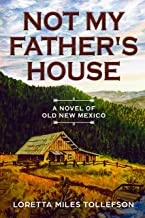
Historical fiction has almost as many flavors as there are time periods to write about. Not My Father’s House, by Loretta Miles Tollefson is an historical novel with a western flavor that leaves the reader smacking their lips for more. A true frontier wilderness tale, Tollefson takes true events and places from the annals of the wild backwoods of old New Mexico territory and crafts a tale of the struggles and hardships of frontier life in the untamed mountain wilderness.
Suzanna is a young bride of mixed blood, soon to be a mother when she moves from her father’s home in the village of Don Fernando de Taos, venturing into the backwoods of New Mexico territory to make a home of her own and raise her family with her husband Gerald and their friend Ramon. She knew she’d have to battle the elements and critters in the untamed mountain valley, but she never expected to have to battle with herself when cabin fever sets in each winter. Nor did she ever imagine that her biggest threat in the wilds would come from a predator that stalks her on two legs instead of four.
A story of female strength and courage in a time when the lands were still wild. Not My Father’s House is a finely crafted story in the western tradition. I give it five quills.

Kaye Lynne Booth does honest book reviews on Writing to be Read in exchange for ARCs. Have a book you’d like reviewed? Contact Kaye at kayebooth(at)yahoo(dot)com.
Share this:

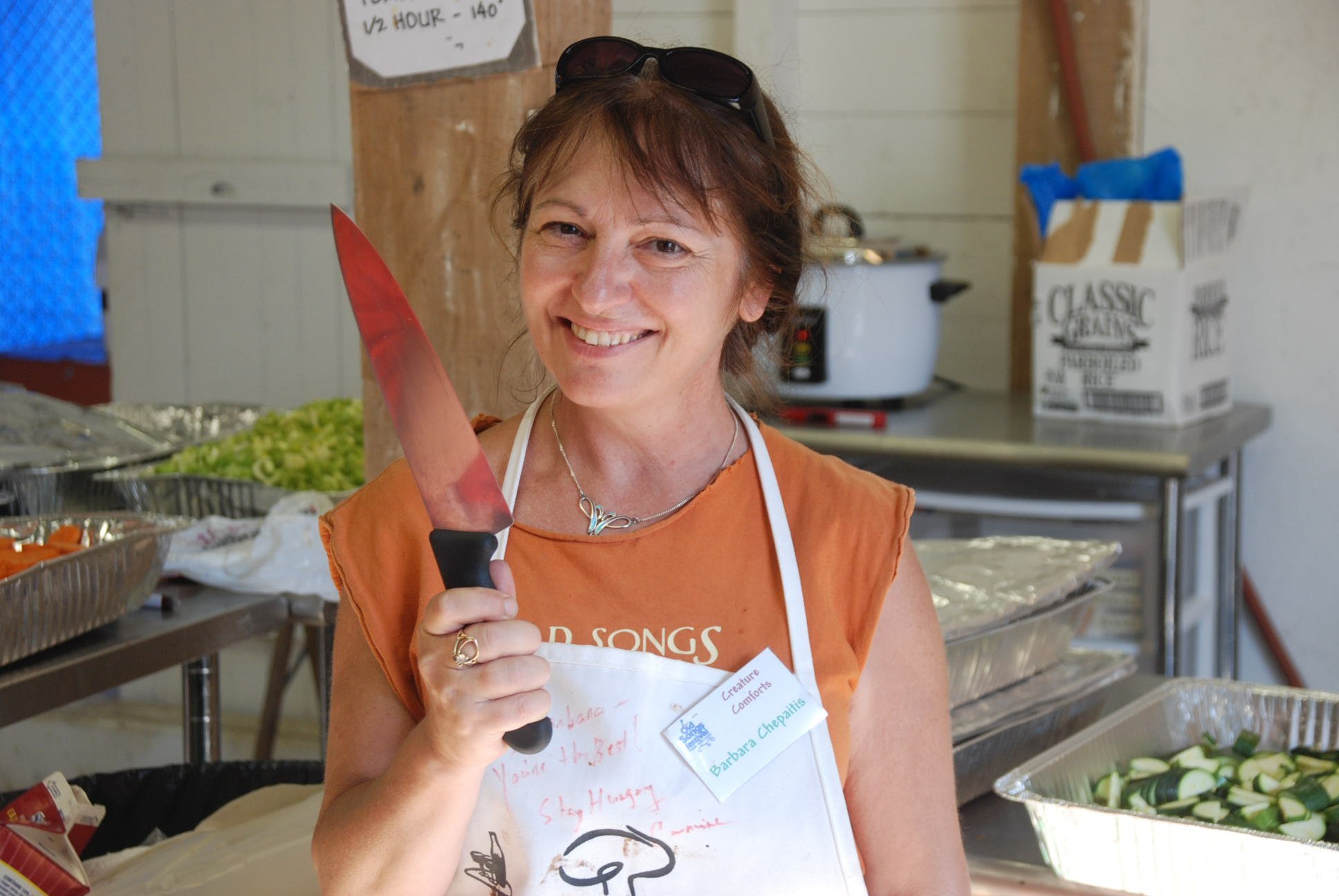
Chatting with the Pros: Interview with Women’s Fiction Author Barbara Chepaitis
Posted: January 21, 2019 Filed under: Chatting with the Pros, Interview, Science Fiction, Women's Fiction, Writing | Tags: Author Interview, Barbara Chepaitis, Chatting with the Pros, Science Fiction, Women's Fiction, Writing to be Read 1 Comment
In January, Writing to be Read is celebrating women’s fiction and female authors. You may have caught my Interview with Loretta Miles Tollefson two weeks ago, or my post about the history of female authorship last week. In continuation of this monthly theme, I’m pleased to welcome a woman who authors science fiction and women’s fiction as my first guest for this new monthly series, Chatting with the Pros. Barabara Chepaitis is a traditionally published author of both science fiction and women’s fiction, and she’s very familiar with the issues that surround being a woman author in today’s publishing industry. Let’s see what she has to say.
Kaye: What defines women’s fiction? Is it the subject matter, female protagonists, or the manner in which women are portrayed?
Barbara: In my experience, women’s fiction is defined by the publisher, who wants to have a specific place to put a book in a bookstore. For me, the difference between my science fiction and my ‘women’s fiction’ was what name they used. When I write science fiction, they want me to use my initials to hide that I’m a girl. When I write women’s fiction, they want to use my name, to prove I’m a girl.
Since I’ve never written a novel that doesn’t have a female protagonist, it’s clear to me that this isn’t the defining aspect. Other than that, I think the definition is kind of the way Dr. Who describes time – wibbly wobbly.
Kaye: What draws you to women’s fiction?
Barbara: I don’t know that I am drawn to women’s fiction. I’m a feminist, for sure, but I never set out to write any particular genre. I just get an idea for a character and story, then tell it. If they happen to be female, that’s because I’ve known some fascinating women, with very complex lives.
Kaye: Do you think it is tougher female authors today, or has digital and self-publishing evened the playing field for women in the publishing industry?
Barbara: It’s always been more difficult for women, in every field of endeavor we have in our culture. There’s so many many ways to block women. First, you can just not hire (or publish, or pay) them. Second, you can let them do the work, but not acknowledge the work they’ve done, attributing it to others. Only time will tell if digital and independent publishing will change that kind of move. Being cynical, I guess that women will have to continue to fight for their place. But that’s just me, being cynical.
Kaye: Romance usually has female protags. Why is it not considered as women’s fiction?
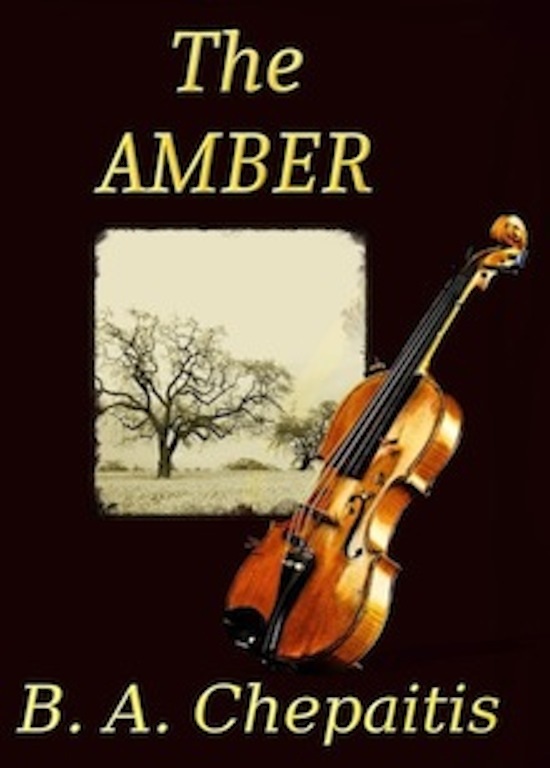 Barbara: The quick answer – because the narrative arc primarily follows a trajectory of romance. I know that when I’ve written material that has a strong romance (as in The Amber) but has something else as it’s narrative arc (coming of age, self-discovery, overcoming demons, etc.) then it isn’t seen as romance. For instance, there’s some pretty strong romantic properties to the whole Jaguar series, but she’s primarily dealing with criminals and crime.
Kaye: What makes a good story?
Barbara: The answer to that varies pretty wildly, depending on who you ask. For my husband, a good story is often one of a hero who makes the ultimate sacrifice for a cause. He loves Spartacus, Saving Private Ryan, and so on. For me, a story of a hero who overcomes incredible obstacles to reach a goal that serves others, or creates a new understanding of life, is always entrancing. I’m guessing that for romance readers, the tale of finding true love is what winds their clocks. So the question to ask, really, is what makes a good story for you?
Kaye: Your Fear series has a futuristic setting, an action adventure storyline and a strong female protagonist, Jaguar Addams. It’s really women’s genre fiction. What genre or genres do you put it in?
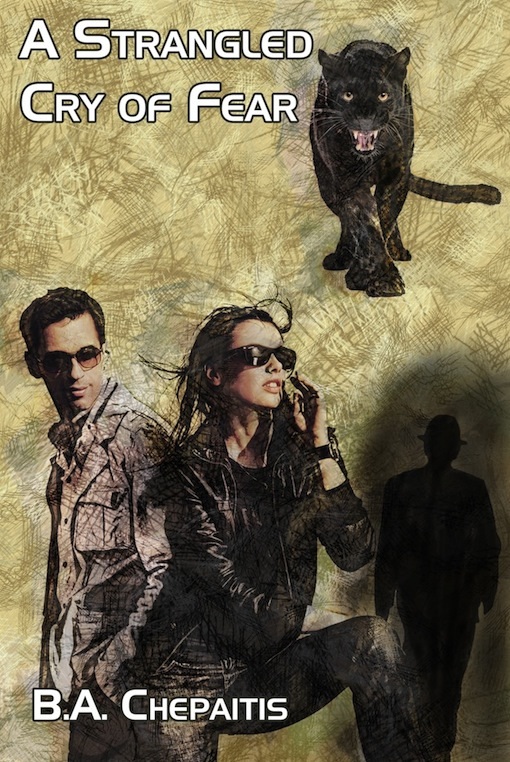 Barbara: I wrote the Fear series as a detective/mystery series. It just happened to be set in the future. When I was seeking a publisher, there was no such thing as ‘cross-genre’, and the mystery/detective market wanted nothing to do with it. Thus it landed in science fiction, which was more open, and they called it cyberpunk suspense – which made me wonder if I had to do something different with my hair, you know?
You can say Jaguar is ‘women’s fiction’ in that it has a powerful female protagonist and is written by a woman, but there’s plenty of men hanging around as well, and they all have their own obstacles to overcome, sacrifices to make, stuff to learn. Most of my work crosses literary lines in some way. I’m bitextual, and trangenre, I guess. And proud of it.
Kaye: Would you like to tell us a little about the series?
Barbara: Jaguar Addams and Alex Dzarny work on Prison Planetoid 3, which was established after a time of massive domestic violence known as The Killing Times. Now the worst criminals are sent to the Planetoid Prisons, where they’re run through programs that make them face the fears which drove their horrid crimes, based on the theory that all crime grows out of fear. Jaguar and Alex are both practitioners of the Empathic arts, and have some maxxed out psi capacities, which they use in their work.
Jaguar and Alex are alike in their dedication to the job, but they approach it differently. Jaguar runs with scissors, and colors way outside the lines. If Alex runs with scissors, he points them down. Both characters have close and complicated friendships with others who work on the Planetoids, and Jaguar has a ‘family’ in a Native American community in the Southwest. She’s an offshoot of a Mayan nation by heritage.
Each book is its own case, as in a detective series, but there is a larger arc along the way, which deals with Jaguar’s need to develop trust in intimacy, and Alex’s need to get a little more wild.
Kaye: Would you talk a little about the books that are published under Barbara Chepaitis, the ones that annnounce that you’re a girl and would probably most be classified as ‘women’s fiction’?
Barbara: I’ve got 3 under the ‘Barbara’ name:
Feeding Christine: “It was the season of Miracles in Teresa’s kitchen, and while none of the women particularly believed in miracles, neither did they think they’d be needing one. They were wrong.”
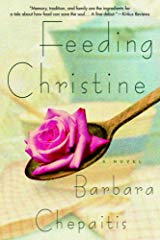 TERESA DI ROSA, owner of the thriving catering business Bread and Roses, makes the feeding of bodies and souls her life work. Now, with her niece CHRISTINE and her friends DELIA and AMBERLIN, she’s gearing up for the big event of the year – the annual Christmas open house. But as the party gets organized, her life is spinning out of control.
Her divorce is barely final, her son is spending Christmas with his father, and Christine seems to be losing her grip on sanity as she grieves the death of her mother, Teresa’s sister. The radical steps Teresa takes to rescue Christine shock everyone, but with her friends, Teresa feeds Christine a healthy dose of courage, wisdom and love.
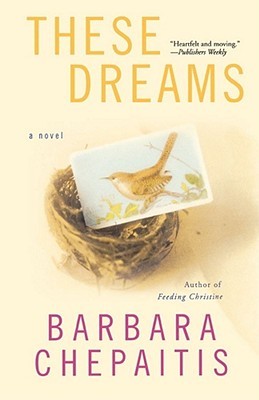
These Dreams: Cricket Thompson’s routine life of husband, home, and family becomes a land of nightmare when an act of random violence leaves her daughter critically wounded. The crisis destroys her family, exposes her illusions and defies her belief in dreams. She seeks solace at the bird sanctuary where she volunteers, and learns that healing is a miracle of choice rather than chance.
Something Unpredictable: Just FYI – SOMETHING UNPREDICTABLE is based on a house that me and my husband actually tried to buy. There really is a circus house.
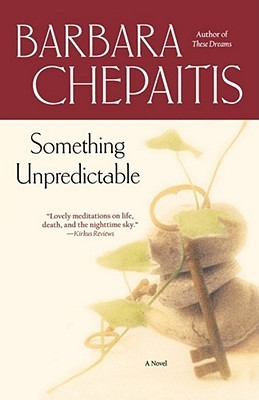 Delilah is 31, has no career to speak of, and is living at home with her hippie parents, and hanging on to a boyfriend who likes to photograph her naked in tubs of blue jello. Clearly, Delilah needs a plan.
Her sister is living the perfect life with the perfect husband, her father continues to make money off the stock market, and her mother continues to spend it on the latest social cause. Delilah would love to save the world as well if only it weren’t such an overwhelming task. She longs for inspiration. But she’s about to encounter some things she never predicted – a long-lost grandmother, Carla, who used to tame tigers with the circus; a 260 year old house with septic problems; an ex-fiancee; and a man named Jack – all of which will change her life forever.
Kaye: Food plays a central role in much of your women’s fiction. In fact, you might consider it a core theme for your books. Can you explain why this is, and why it’s important?
Barbara: Mmm. Foood. I’m a real foodie, and love to cook and play with my food. Perhaps because my mother’s family is Italian, I also understood from an early age that food is a language all its own, something we consume to learn about the land and its people and our relationship to all that. To me, cooking is similar to writing, and eating and reading are the way we enrich ourselves, body and soul.
Kaye: Why does symbolism play such a big role in your work?
Barbara: Symbolism? Actually, none of it is symbolism. It’s all experience and reflection on experience. If I write about a family violin that’s been lost and must be found, it’s because I know that music connects us across time with our ancestry. If I write about food, it’s because food speaks to us all the time.
Kaye: Children of the Land (Songs of the Mothers Book 1): This title screams women’s fantasy. I imagine a fantasy world laden with legends of yore. Would you like to tell me a little about this book?
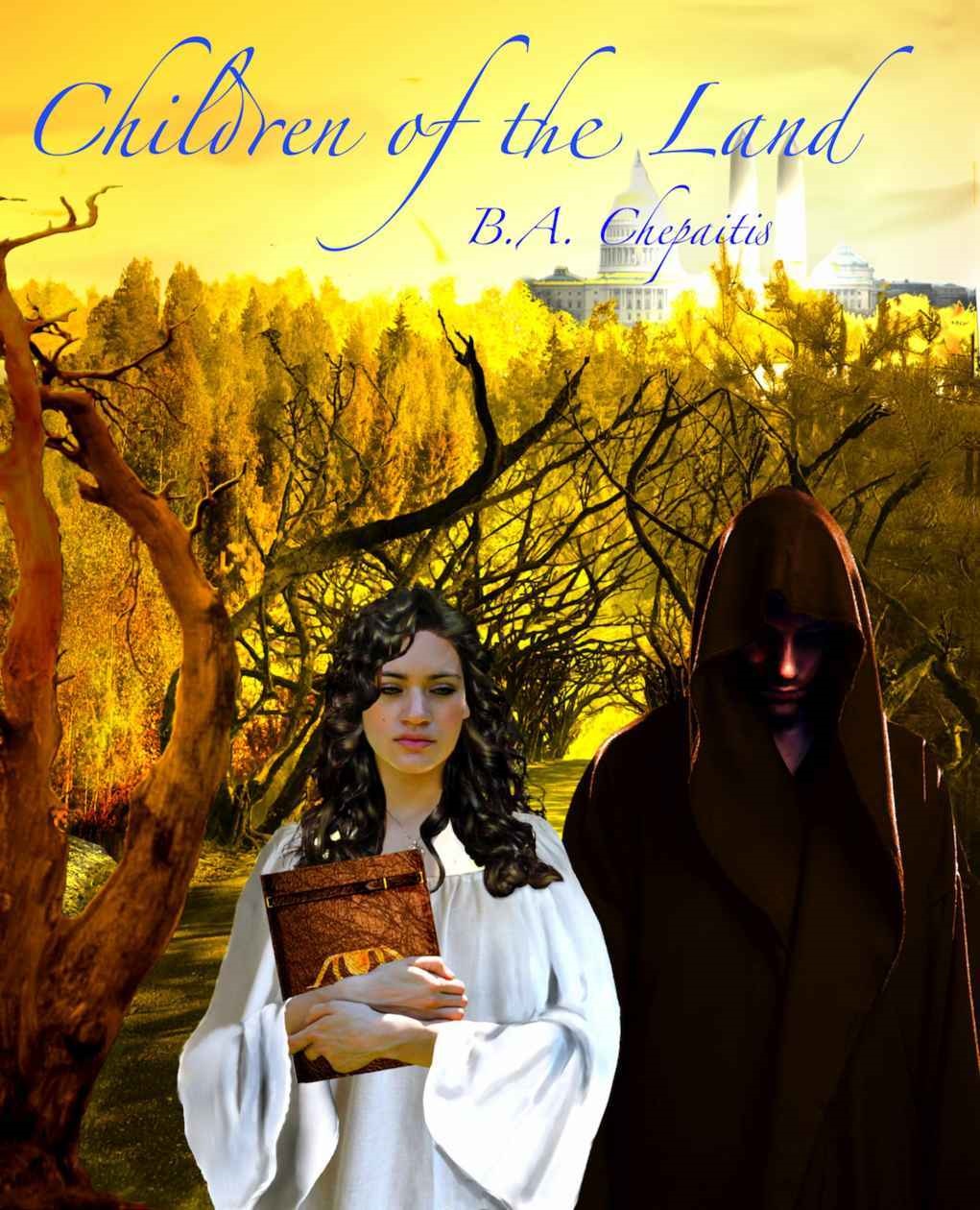 Barbara: Children of the Land is actually the last novel in a series that I wrote which attempted to move across genres through each novel. It started with Children of the Gods, historical fiction with a contemporary twist, retelling the ancient history of the Haudonosaunee. Next was a near future novel titled Children of the World, which featured the descendants of the first novel as they approached the historical moment when biological immortality became possible. After that was Children of the Land, where the next round of descendants dealt with the political and world ramifications of that possibility in a fantasy novel.
When I talked to publishers about the series, they looked at me with something akin to terror. I swear their hair stood on end. It’s really the ultimate in transgenre, and couldn’t be handled by this market. Ultimately, I decided to go ahead with Children of the Land, which is indeed a fantasy novel, and worry about the others later. I have to say it was one of my favorite writing experiences ever. It really appealed to my love of language, and my love of the Heroine’s journey. It also allowed me to play with a lot of gods and goddesses from a variety of cultures, because part of the idea is that it’s time for them to return, and establish a closer relationship with humans, who are indeed the children of the land.
Here’s the synopsis:
Lord Aroc rules all, giving the gift of immortality only to his citizens. The balance between City and village has been preserved for a long age, but a change is at hand, signaled by the dancing of the Northern Lights. Now, a young woman’s choice to plant a small seed will determine world dominion, and the return of the gods.
That woman is Vareka, a Citizen working for Lord Aroc as Watcher for the villagers of Eryahsa. Such villagers live apart from the City, and are ultimately absorbed to feed the City’s energy. As heavy solar flares disrupt the City’s technology, the northern lights cause villagers to recall ancient stories of the Dreamers – spirit beings who would someday return. Then, an old man in Eryahsa tells Vareka she is inheritor of a task only she, daughter of a Dreamer and a Human, can complete.
She bears a locket handed down from mother to daughter for ages uncounted, and the seed it holds must be planted if the Dream is to continue.
She must choose her path, with no guarantee of success. Either she will take her friends on a perilous journey to find the place and time of planting, or she will accept Aroc’s rule, allowing him to remake the world, in his own image.
Kaye: Your fiction features strong female characters, and their strengths give them power. Where do you draw your characters from?
Barbara: For me, characters make themselves known in a very visceral way, speaking up inside me to tell me it’s time to tell their stories. Jaguar popped up when I was on the highway, and I had to pull over and make notes. I can still see her, sitting on the arm of her couch, in her apartment with its skulls and hanging herbs. She was smoking a cigarette, swinging her leg back and forth, and she said, “What you’ll do next is write me.”
Characters and their world, how they arise, where they come from, is a bit of a mystery to me, but I have noted that the best thing I can do is maintain an attitude of openness to their arrival. In fact, an attitude of openness in general. A kind of “Okay. I’m ready. Whaddya got?”
I’m sure that this attitude is assisted by the fact that I grew up with a horde of powerful and complicated women, but I can’t say that any one of them has become a particular character. Perhaps it’s just the flavor of their lives that gets put in the mix.
Kaye: So, would you say your stories are character driven?
Barbara: Yes, my stories are character driven. Characters, with all their complexities and eccentricities, create plot. They have something to say, and are blocked from saying it. Or they have something to hide and it’s revealed. Or they have something to BE, and are meeting obstacles in being that. Characters – human and animal – are at the heart of all plots, the heart of all interest, the heart of our hearts.
Kaye: They say the pen is mightier than the sword. What causes have you used your status as a writer to champion?
Barbara: I once helped a Navy SEAL and Army Ranger rescue a war-wounded eagle from Afghanistan, and that came about only because I’m a writer. I’ve also used my writing in any way I can to promote environmental causes. In fact, I’d love to do more of that.
You can get the full story on the war-wounded eagle in her book, Saving Eagle Mitch: One Good Deed in a Wicked World. Thank you for sharing with us today Barbara. You can learn more about Barbara Chepaitis and her works at the following links:
Goodreads Author Page (Barbara Chepaitis): https://www.goodreads.com/author/show/202062.Barbara_Chepaitis
Goodreads Author Page (B.A. Chepaitis): https://www.goodreads.com/author/show/841157.B_A_Chepaitis?from_search=true
Feeding Christine https://www.amazon.com/s/ref=nb_sb_noss?url=search-alias%3Daps&field-keywords=Feeding+Christine+chepaitis
SOMETHING UNPREDICTABLE https://www.amazon.com/s/ref=nb_sb_noss?url=search-alias%3Daps&field-keywords=Something+Unpredictable+chepaitis
Like this post? Subscribe to Writing to be Read for e-mail notifications whenever new content is posted or follow WtbR on WordPress.
Share this:

January: Celebrating female authors and women’s fiction
Posted: January 14, 2019 Filed under: Chatting with the Pros, Women's Fiction | Tags: Barbara Chepaitis, Female authors, Loretta Miles Tollefson, Women's Fiction, Writing to be Read 1 Comment
You may be aware of some of the changes planned for Writing to be Read for 2019, such as the new look and my newest team member, Robbie Cheadle. If you missed it, you can learn more in my post Writing to be Read: 2018 full of surprises – 2019 promises more. One such change that wasn’t really mentioned was that my posts will coincide with a monthly theme. In January, to kick off the new year right, we’ll be celebrating women authors and women’s fiction.
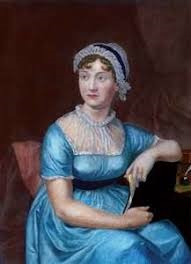
Jane Austen
There have always been female authors, although in the early days they were rare. Jane’s Austen’s Sense and Sensibility was published in 1811 under the pen name of “A Lady”. Her name never appeared on any of her books during her lifetime.
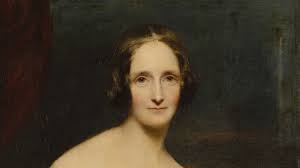
Mary Shelley
Mary Shelley wrote Frankenstein in 1816, when she was eighteen years old, inspired by a gloomy night of telling ghost stories in a mansion in the Swiss Alps.
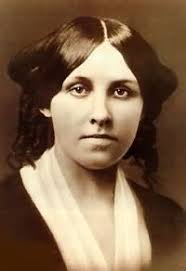
Louisa May Alcott
Louisa May Alcott used the pen name A.M. Bernard, and she only wrote Little Women under pressure from her publisher and her father.
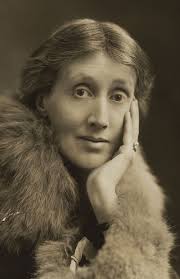
Virginia Woolf
The twentieth century brought us the feminist writings of Virginia Woolf and Margaret Atwood, the modernist short fiction of Katherine Mansfield, and the African-American literature of Toni Morrison, although originally not recieved well. Women authors today are easier to find and generally accepted, but do they still face many of the same stigmas their predecessors did?
That is one question this month’s Monday posts will be exploring. See last Monday’s interview with western author Loretta Miles Tollefson for a view of a female author of the western genre. Next Monday, be sure to catch the first segment of my new monthly blog series, Chatting with the Pros, where I will be interviewing science fiction and women’s fiction author Barbara Chepaitis for some insight into her views on women’s fiction and female authors in today’s publishing industry. I do hope you will join us Monday’s in January on Writing to be Read.
Like this post? Subscribe to Writing to be Read for e-mail notifications whenever new content is posted or follow WtbR on WordPress.




















