Everyone is a Critic: “Tulsa King”, Season 3
Posted: December 22, 2025 Filed under: Everyone is a Critic, Television review | Tags: Everyone is a Critic, Kaye Lynne Booth, Tulsa King Season 3, Writing to be Read 2 Comments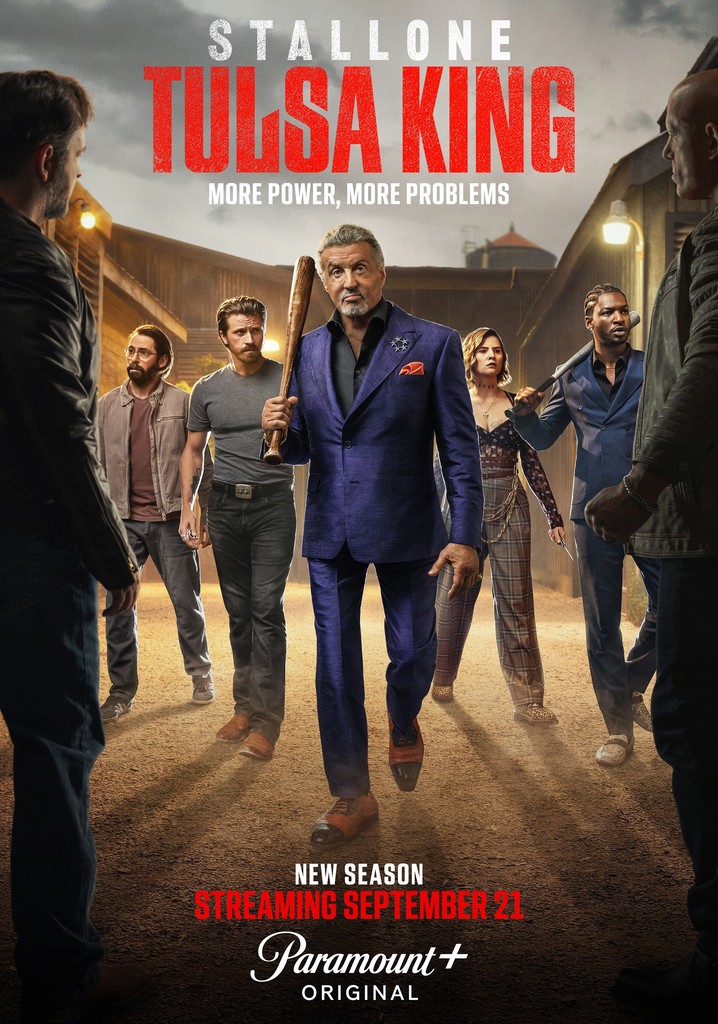
Back in December of 2024, I wrote my first review of what quickly became one of my favorite series, Tulsa King after I’d watched the first two seasons and was anxiously awaiting the third season, for which they kept us waiting until this past fall. Last week, I watched the season finale, and I just had to write a review for this season, as well.
At the end of the 2024 season, viewers are left with the General, Dwight Manfredi (Slyvester Stallone), being yanked from his home in the middle of the night with the impression that perhaps it is the Feds who took him. In the opening of this season, we learn that it was special agent Musso (Kevin Pollack), of the FBI, who took Dwight, and we find out he has a personal agenda for his actions. Setting up a main story line for season 3, as Musso uses Dwight to set up the terrorist who killed his partner.
We also see the return of an old girlfriend, Cleo Montague (Bella Heathcote), for Mitch (Garrett Hedlund), and an opportunity to take Manfredi’s business ventures in a new direction: bourbon. It seems Cleo’s father is being pushed into selling his distillery by a man named Jeremiah Dunmire (Robert Patrick), the head of the Dixie Mafia, setting up another main story line for season 3.
In the first two seasons, the General and his crew kicked butt and cleaned house on Kansas City and New York crews, as well as the Chinese Mafia. This third season with Dixie Mafia doesn’t disappoint. Added to the General’s crew is Spencer, played by Stallone’s daughter, (Scarlett Rose Stallone), who plays a major role as she moves up in the ranks of Dwight’s inner circle and befriends Dunmire’s son, Cole (Beau Knapp). And we have the reappearance of Cal Thresher (Neal McDonough) as Margaret (Dana Delaney) helps him rise up in the race for Governor of Oklahoma.
However, early in the season, Bill Bevilaqua (Frank Grillo), the Kansas City boss, who joined forces with the Tulsa crew in season 2, pushes too hard and Agent Musso takes him out of the equation, when he keeps too close an eye on Dwight as he tries to figure out what is going on, and threatens to interfere with Musso’s plans. Dwight spends a good part of the beginning of the season riling up Quiet Ray in New York, trying to find Bill, as Bill’s wife and crew are breathing down his back, suspicious that he has something to do with Bill’s disappearance. Mid-season, Musso admits to Dwight that he has detained Bevilaqua, but as soon as he does, Bill’s crew disappears from the scene. Apparently, once Manfredi knows where Bill is, no one else is worried about him anymore.
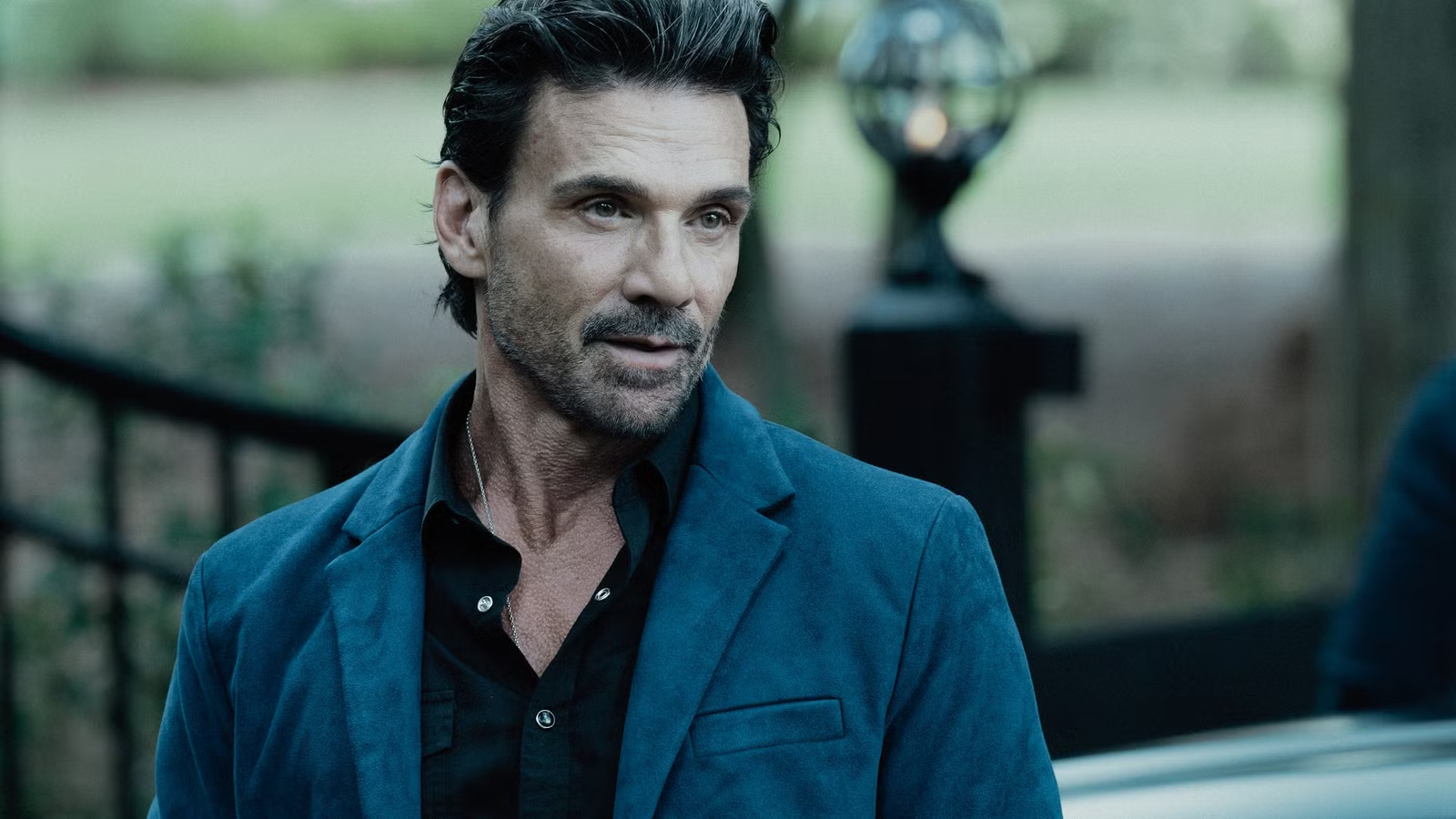
Not to mention that this is a highly unlikely scenario anyway. Are we to believe the FBI is so powerful they can incarcerate people for convenience, since Bill had broken no laws, but was proving an obstacle to Musso’s plans? And, further, that his wife and crew would just fade into the background, once Musso admits arresting him to Dwight Manfredi? We don’t hear about Bevilaqua for the rest of the season, and they leave his storyline unresolved with the finale, so now Bevilaqua fans are just hanging until next fall. Wtf?!
While I had great interest in the third season story line, and Dunmire turned out to be a worthy adversary for the General. The two main story lines which are unraelated at first, come together quite nicely for an exciting climax in the final episode. I also liked the story line for Cole Dunmire, as well, even if his moment of self-realization is a little predictable. But, to leave one of my favorite characters in a not so believable situation, and then try to sweep it under the rug and pretend like he doesn’t exist, for me, is unacceptable and uncool.
About Kaye Lynne Booth

For Kaye Lynne Booth, writing is a passion. Kaye Lynne is an author with published short fiction and poetry, both online and in print, including her short story collection, Last Call and Other Short Fiction; and her paranormal mystery novella, Hidden Secrets; Books 1 & 2 of her Women in the West adventure series, Delilah and Sarah, and book 1 in her Time-Travel Adventure series, The Rock Star & The Outlaw, as well as her poetry collection, Small Wonders and The D.I.Y. Author writing resource.
Kaye holds a dual M.F.A. degree in Creative Writing with emphasis in genre fiction and screenwriting, and an M.A. in publishing. Kaye Lynne is the founder of WordCrafter Quality Writing & Author Services and WordCrafter Press, where she edits and publishes two short fiction anthologies and one poetry anthology every year amidst her many writing projects. She also maintains an authors’ blog and website, Writing to be Read, where she publishes content of interest in the literary world.
_________________________________
Did you know you can sponsor your favorite blog series or even a single post with an advertisement for your book? Stop by the WtbR Sponsor Page and let me advertise your book, or you can make a donation to Writing to be Read for as little as a cup of coffee, If you’d like to show your support for this author and WordCrafter Press.
________________________________
This segment of “Chatting with New Blood” is sponsored by the Time Travel Adventure Series and WordCrafter Press.
When a Girl with a Guitar Meets a Man with a Gun, It’s Time to Travel
The Rock Star & The Outlaw: https://www.amazon.com/Rock-Star-Outlaw-Time-Travel-Adventure-ebook/dp/B0CJBRRCN1/
The Rock Star & The Outlaw 2: Double Visions: Coming in 2026
Share this:

Everyone is a Critic: Yellowjackets, Season 3
Posted: June 16, 2025 Filed under: Everyone is a Critic, Television review | Tags: Everyone is a Critic, Television review, Writing to be Read, Yellowjackets Season 3 Leave a comment
Back in February, I reviewed the first two seasons of the Showtime series, Yellowjackets. You can read that review here. They left us with the hope of rescue for our teenaged girls within grasp, but dashed away in a shocking singular act from which there is no going back. And their adult counterparts seem to wrap things up and set their pants to rest following the death of Natalie.
Upon writing that review, I couldn’t imagine what was in store in the next season and anxiously awaited the premiere of season 3. I have to say that I was not disappointed. Season 3 is filled with surprising twists which I could never have guessed for both groups of characters.
Another old teammate makes an appearance on the scene in the present as Shawna seems to be out of control in the present. And I have to wonder what Walter is up to as makes appearances throughout the season, yet remains mysterious in the background.
And things get tense for our teenagers with the addition of new characters, and changes in group dynamics, things get more desperate as winter once more approaches and return to civilization locked out of reach once again.
So now, I must wait for Season 4 to find out what happens. But, wait. What? They haven’t decided to make Season 4 yet? But, how can they do that? They can’t leave us on two fantastic cliffhanger endings and then just decide not to make Season 4 and leave viewers hanging, can they? This must be how many readers felt when George R.R. Martin didn’t finish the Game of Throwns series. But the thing is, Yellowjackets was written as a five season series, so the material is available, and the question is does the series generate enough revenue to continue it, which these days, is determined mainly by the sponsorship, rather than viewers, so there is a chance that fans of the series will be left in the lurch.
About Kaye Lynne Booth
For Kaye Lynne Booth, writing is a passion. Kaye Lynne is an author with published short fiction and poetry, both online and in print, including her short story collection, Last Call and Other Short Fiction; and her paranormal mystery novella, Hidden Secrets; Books 1 & 2 of her Women in the West adventure series, Delilah and Sarah, and her Time-Travel Adventure novel, The Rock Star & The Outlaw,as well as her poetry collection, Small Wonders and The D.I.Y. Author writing resource.
Kaye holds a dual M.F.A. degree in Creative Writing with emphasis in genre fiction and screenwriting, and an M.A. in publishing. Kaye Lynne is the founder of WordCrafter Quality Writing & Author Services and WordCrafter Press. She also maintains an authors’ blog and website, Writing to be Read, where she publishes content of interest in the literary world.

_______________________________
Did you know you can sponsor your favorite blog series or even a single post with an advertisement for your book? Stop by the WtbR Sponsor Page and let me advertise your book, or you can make a donation to Writing to be Read for as little as a cup of coffee, If you’d like to show your support for this author and WordCrafter Press.
________________________________
This segment of “Everyone is a Critic” is sponsored by the My Backyard Friends Kid’s Book Series and WordCrafter Press.

The My Backyard Friends kid’s book series is inspired by the birds and animals that visit the author Kaye Lynne Booth’s mountain home. Beautiful illustrations by children’s author, poet, and illustrator, Robbie Cheadle, bring the unique voices of the animal characters to life.
Get Your Copy Now.
Heather Hummingbird Makes a New Friend (Ages 3-5): https://books2read.com/MBF-HeatherHummingbird
Timothy Turtle Discovers Jellybeans (Ages 3-5): https://books2read.com/MBF-TimothyTurtle
Charlie Chickadee Gets a New Home (Ages 6-8): https://books2read.com/MBF-CharlieChickadee
Share this:

Everyone is a Critic: “Yellowjackets”: Seasons 1 & 2
Posted: February 10, 2025 Filed under: Everyone is a Critic, Horror, Television review | Tags: Everyone is a Critic, horror, Writing to be Read, Yellowjackets 1 Comment
I hesitated watching Yellowjackets because the weird cover image, so I passed it by several times . I thought it must be a pretty dumb horror movie where everyone gets attacked by killer wasps or something, and I had no idea what the weird image of a person with horns and netting over their head could have to do with it. But for a lack of anything better to watch which I hadn’t seen, and an urge to sooth my hankering for horror, I decided to give it a try. And boy, am I glad I did. I’m usually not a binge-watcher, but with the recent cold weather in Colorado keeping me inside, I found myself watching four to five episodes per day. I couldn’t wait to see what would happen next. I must declare this series totally binge-worthy.

The Yellowjackets are a girls soccer team bound for Nationals when their plane crashes deep in the Canadian mountains. In addition to the team members, Coach Ben Scott (Steven Kruegar), Coach Martinez(Carlos Sanz) and his two sons, Travis (Kevin Alves), and Javi (Luciano Leroux), and the student team manager, Misty (Samantha Hanratty). For a year and a half no rescue comes, and something terrible happened in those woods during that time, but the survivors aren’t talking. The Yellowjackets are winners, each determined to achieve their goals, but at what cost?

25 years later, the survivors are still haunted by the experience. Whatever happened, they have vowed silence about it, and no one is talking. But there’s a freelancer poking around and stirring things up, and the survivors are being blackmailed with a threat to expose all of their secrets. They band together to find and eliminate the threat, but they still harbor secrets, both old and new, and some have hidden agendas, as the story of what really happened out there in the wilderness is intermixed, and slowly revealed to keep viewers on the edge of their seats.

Everybody has secrets, both then, and now, 25 years later. And strange things are happening which stir memories of thier time in the woods for the survivors, drawing them together once more. Or maybe, it’s something deeper…, darker that is calling them. How far will they go to keep their secrets buried?
This series keeps you guessing. And just when you think you have it figured out, they throw in yet, another twist. Something happened out there in the woods, something horrific, and those who return to civilization are not unscathed. What happened back then affects each of the survivors in their present day life, no matter how hard they try to forget, and each is messed up in their own way.
This is a powerful series, featuring a vast cast of characters, with both teen and adult versions of several team members, as well as intrinsic storylines for each. Although a majority of the main characters are teenagers, the series deals with many adult issues and situations, as well as adult language. There are graphic scenes with blood, but it’s not slasher bloody. And I would not recommend for young children. It is a horror flick, after all.
I kept wondering how they were going to drag this story out over two or three seasons, but they did a great job of it, weaving the past in with the present, so that both storylines unfold simultaneously. The adult and teen actors are matched well and portray their complex characters consistantly to the characters’ experience. Season 2 ends on a cliff hanger, so I’m glad I chose to watch this series now. I don’t have long to wait for the new season. Season 3 premieres on February 14, 2025 on Showtime.
______________________________________________
For Kaye Lynne Booth, writing is a passion. Kaye Lynne is an author with published short fiction and poetry, both online and in print, including her short story collection, Last Call and Other Short Fiction; and her paranormal mystery novella, Hidden Secrets; Books 1 & 2 of her Women in the West adventure series, Delilah and Sarah, and her Time-Travel Adventure novel, The Rock Star & The Outlaw, her the first three books in her kid’s book series, My Backyard Friends, her poetry collection, Small Wonders, and her writer’s resource, The D.I.Y. Author. Kaye holds a dual M.F.A. degree in Creative Writing with emphasis in genre fiction and screenwriting, and an M.A. in publishing. Kaye Lynne is the founder of WordCrafter Quality Writing & Author Services and WordCrafter Press. She also maintains an authors’ blog and website, Writing to be Read, where she publishes content of interest in the literary world.
_______________________________
This segment of “Everyone is a Critic” is sponsored by The Rock Star & The Outlaw and WordCrafter Press.

A time-traveler oversteps his boundaries in 1887. Things get out of hand quickly, and he is hanged, setting in motion a series of events from which there’s no turning back.
In 1887, LeRoy McAllister is a reluctant outlaw running from a posse with nowhere to go except to the future.
In 2025, Amaryllis Sanchez is a thrill-seeking rock star on the fast track, who killed her dealing boyfriend to save herself. Now, she’s running from the law and his drug stealing flunkies, and nowhere is safe.
LeRoy falls hard for the rock star, thinking he can save her by taking her back with him. But when they arrive in 1887, things turn crazy fast, and soon they’re running from both the outlaws and the posse, in peril once more.
They can’t go back to the future, so it looks like they’re stuck in the past. But either when, they must face forces that would either lock them up or see them dead.
Purchase Link: https://books2read.com/RockStarOutlaw
Share this:

Everyone is a Critic: the “Tulsa King” series
Posted: December 9, 2024 Filed under: Everyone is a Critic, Television review | Tags: Everyone is a Critic, Kaye Lynne Booth, Review, sylvester-stallone, Television review, Tulsa King, Writing to be Read 5 Comments
I’m not a big Stallone fan. His roll as Rocky didn’t do much for me at all. Maybe I’m just not into boxing. I did enjoy him in his roll as Rambo, but it’s not like he made my list of favorite actors. But I have to say Sylvester Stallone as mobster Dwight Manfreddi in Tulsa King, Sylvester Stallone kicks butt. The man is perfect for the role, and very convincing, and I’ve become one of his biggest fans.
I don’t watch a lot of television, but Tulsa King has me hooked. I binged through the first season, then anxiously awaited for each new episode of Season 2 to come out every Sunday. Now I can’t wait for season 3 to come out, but they are saying that won’t be until 2026, although rumor has it that they are already started on the filming third season after the surprise ending at the end of the second season. I don’t know why it would take so long to bring out that third season, but I do know it’s going to be painful waiting for it.
In Tulsa King, Sylvester Stallone plays mobster Dwight Manfreddi, who did a twenty year prison sentence for the New York mob, and as repayment for his loyalty, they hung him out to dry by sending him to Tulsa Oklahoma. But instead of faltering in Tulsa, Dwight puts together his own crew of Tulsa locals, bands together with local business owners, and the elders of the Indian Reservation, creating a force to be reckoned with. The New York mob tries to forget about him, until they find that Tulsa could be a profitable territory and decide they want their cut, but Manfreddi refuses to share in what he has built on his own.
But New York isn’t the only villian that Dwight ‘The General’ Manfreddi must stand against. There’s the local marajuana grower, who is in league with the Chinese mafia, whose toes he’s stepping on as he ventures into new business ventures, and there is the Kansas City mob faction, who never paid much mind to Tulsa until Manifreddi made it a lucrative venture. With villians coming from every direction, there is never a dull moment for the Tulsa King, and I couldn’t help but cheer when Manfreddi’s crew kicks major butt, and cry when they take a hit.
But Sylvester Stallone doesn’t do it alone. The cast for this series all do a smashing job in their parts. When he arrives in Tulsa, he is one man, but soon builds a crew and network to make up his own army to stand against his foes. Tyson, played by Jay Will, is a cab driver who becomes his personal driver. Bar owner, Mitch Keller, played by Garrett Hedlund, becomes his partner as Dwight expands the bar and adds a casino. Martin Starr plays Bodhi, who becomes a partner in the retail marajuana industry. Max Casella plays Armand Truisi, who tries to kills Manfreddi in one of the first episodes, and then becomes a part of the crew. And Dennis ‘Goodie’ Carangi, played by Chris Caldovino, is sent from New York to keep an eye on Manfreddi and ends up as his right-hand man, and Cash Flo plays Bigfoot, the muscle of the crew. Together with many others, they stand against some formidable adversaries.

Dominick Lambardozzi plays Charles ‘Chickie’ Invernizzi, heads up the New York crime family and wants a piece of The General’s action. He and his right-hand man Vince Antonacci, played by Vincent Piazza, try to move in on the Tulsa territory, but Manfreddi has other ideas. In addition, Bill Bevillaqua, played by Frank Grillo, heads up the Kansas City faction and feels that The General is incroaching on his territory. Cal Thresher, played by Neal McDonough, is the owner of the local marajuana grow who feels threatened by Dwight’s interest in that industry, and he’s in bed with Jackie Ming, who heads up a Chinese Mafia faction.
And of course there are various subplots, such as Dwight’s relationship with his daughter, Tina, played by Tatianna Zappardinno,and grandchildren after being away for 20 years, as well as his sister, Joanne, played by Annabella Sciorra. And the love interest is the character of tough and gutsy ranch owner Margaret Deveroux, played by Dana Delaney, who does a smashing job in this role. I loved her as Josephine Marcus in Tombstone, and I love her in Tulsa King.

_____________________________________
About Author Kaye Lynne Booth

For Kaye Lynne Booth, writing is a passion. Kaye Lynne is an author with published short fiction and poetry, both online and in print, including her short story collection, Last Call and Other Short Fiction; and her paranormal mystery novella, Hidden Secrets; Books 1 & 2 of her Women in the West adventure series, Delilah and Sarah, and her Time-Travel Adventure novel, The Rock Star & The Outlaw,as well as her poetry collection, Small Wonders and The D.I.Y. Author writing resource. Kaye holds a dual M.F.A. degree in Creative Writing with emphasis in genre fiction and screenwriting, and an M.A. in publishing. Kaye Lynne is the founder of WordCrafter Quality Writing & Author Services and WordCrafter Press. She also maintains an authors’ blog and website, Writing to be Read, where she publishes content of interest in the literary world.
____________________________________
Did you know you can sponsor your favorite blog series or even a single post with an advertisement for your book? Stop by the WtbR Sponsor Page and let me advertise your book, or you can make a donation to Writing to be Read for as little as a cup of coffee, If you’d like to show your support for this author and WordCrafter Press.
______________________________________
This segment of “Everyone is a Critic” is sponsored by The Rock Star & The Outlaw and WordCrafter Press.
A time-traveler oversteps his boundaries in 1887. Things get out of hand quickly, and he is hanged, setting in motion a series of events from which there’s no turning back.
In 1887, LeRoy McAllister is a reluctant outlaw running from a posse with nowhere to go except to the future.
In 2025, Amaryllis Sanchez is a thrill-seeking rock star on the fast track, who killed her dealing boyfriend to save herself. Now, she’s running from the law and his drug stealing flunkies, and nowhere is safe.
LeRoy falls hard for the rock star, thinking he can save her by taking her back with him. But when they arrive in 1887, things turn crazy fast, and soon they’re running from both the outlaws and the posse, in peril once more.
They can’t go back to the future, so it looks like they’re stuck in the past. But either when, they must face forces that would either lock them up or see them dead.
Purchase Link: https://books2read.com/RockStarOutlaw
Share this:

“The Stand”: A Visual Media Review
Posted: January 18, 2021 Filed under: Apocalyptic, Character Development, Post-Apocalyptic, Story Telling Methods, Television review, Visual Media | Tags: Apocalyptic, Stephen King, Television review, The Stand, The Stand 20-21 mini-series, Whoopi Golderg, Writing to be Read 6 Comments
I’ve been a Stephen King fan since I was thirteen and read Carrie, but I didn’t realize it until a year later when I read The Shinning one night when I was babysitting. I picked it up after my charges were asleep and I was looking for something to read, and I couldn’t put it down. I called my mom and woke her up at four in the morning, because I was too scared to read more, but I didn’t want to put the book down. I finished it the next day, and after that, I soaked up anything by Stephen King that I could get my hands on. I’ve read The Stand through three times, including the “Special Edition” version with all the cut chapters and scenes. I’ve seen the original mini-series twice, so it was in great anticipation that I awaited the coming of the new mini-series on CBS All Access. I woke up analyzing this s new version of an old favorite, so I knew I had to write this review.
Let me begin by saying that I think they made a huge mistake by starting this mini-series after Captain Tripps has devoured humanity and placed the survivors into the two camps in Boulder and New Vegas, and only allowing us glimpses of the pre-Captain Tripps world, instead of letting us get to know the characters as the story unfolds, as in the book and the original mini-series. By eliminating what was basically the first half of the book and reducing it to flashbacks, we miss out on vital character development, not to mention many of the very intense scenes that occur there.
Now, I know we shouldn’t judge this version by those that have come before, and I’ve tried not to, but in my defense, I know this story inside and out, and it is very difficult not to draw on previous knowledge. But, I’m on episode 5 and I still don’t feel connected to any of the characters. That connection, the feeling of knowing and relating to the characters, is one of the big appeals of this story. Without it, I doubt anyone would keep turning the pages of this massive novel or continue watching, because without that feeling of connection, readers or viewers have no reason to care. And I have to admit, I’m hard-pressed to keep viewing the 20-21 version for this very reason.
But the method of storytelling is only one problem. I have difficulty buying-in to this new cast. There’s already been controversy over the Randall Flagg of the first mini-series and this one, portrayed by Alexander Skarsgard, who doesn’t come off as being evil enough in my opinion, but this could go back to the lack of character developement. Although I could get used to Jovan Adepo as Larry Underwood and Gabreille Rose as Judge Harris, who are opposites of their original counterparts, I feel Whoopi Goldberg misses the mark totally with the character of Mother Abigail.
While I like Whoopi as Guynan on Star Trek Generations, and I loved her as Oda Mea Brown in Ghost, she is not the right actress for this part. Mother Abigail is old and frail and determined to carry out the Lord’s work as long as she is able, and everyone loves her and is devoted to her. Whoopi is none of these things. Goldberg is not old enough, and she’s not frail in any way. In previous versions, Mother Abigail’s strength was established through her determination while she was still alone at Hemmingford Home, (which is now in Boulder instead of Nebraska), which we only see a glimpse of in this version. We don’t see her frailty, or her failing health in the Goldberg character, and it is difficult to buy-in to the character, when I don’t feel as if I know who she is or where she came from in the story.
Overall, I am disappointed in this recent rendition of one of my favorite apocalypse tales. I know Stephen King has writing credits for at least nine episodes, but cutting out half the original story was not a good storytelling decision. Flashbacks don’t offer enough to get to know and connect with the characters. There were also several questionable casting decisions, at least in my mind, which prevent relatabilty of the characters. I honestly don’t know how much more I will watch, because they haven’t made me care about this cast of characters in any meaniful way. I will say that Captain Tripps bears some scary resemblences to the Covid pandemic we’re all living through now, but I don’t know if that is enough to attract viewers, especially without many of the most powerful scenes, such as the journey through the tunnel out of New York, Nick’s time as jailer, and Lloyd’s rat problem, which is alluded to in flashback, but just didn’t carry the same impact. My continued viewing is doubtful. If you don’t already know this apocalyptic story, I recommend the original mini-series, or better yet, get the book.
Share this:

The Later Seasons: “Thirteen Reasons Why” Takes A Dive
Posted: June 26, 2020 Filed under: Art's Visual Media Reviews, Creative Nonfiction, Drama, Television review | Tags: 13 Reasons Why, acting, Clay Jensen, Dylan Minette, Reviews, series, Suicide, teens, TV 1 CommentPart Two: The Later Seasons of THIRTEEN REASONS WHY
The story is told. Hannah is dead. The series is popular enough to warrant funding for more seasons. I’m reminded of the Road Runner cartoon, where Wily Coyote follows Road Runner off a cliff. Road Runner doesn’t fall. He just stands there and says “Beep Beep”. Wily zooms over the edge of the precipice, stops dead still…and doesn’t fall. He stands next to Road Runner. He’s about to grab Runner in his evil claws but then he looks down. Way way down there is the bottom of the gorge with a teeny strip of road. When Wily realizes that he is standing on empty space, only then does he fall! EEEEeeeeeoooop! Puff of distant dust down below.
The three following seasons of “13 Reasons Why” bring to mind the dilemma of Wily Coyote. The first season received critical and audience acclaim. The series was banned by numerous school districts and libraries, the putative reason being “that it glorifies suicide”. This smacks of the disingenuous (I think it’s really about the sex, lots of it) but it put a rocket under the series’ ratings and created a demand for further content. Imagine telling an adolescent that a “hot” series is banned and forbidden. That’s like leaving a mouse trap sprung with the bait still in it. What an insult to the inventive intelligence of today’s teenagers. The writers and producers of this series got the funds to make yet another season. And another. And, yes! Another! Three more seasons! They’ve run off the cliff and don’t know yet that there is no ground under their feet. Netflix is usually so canny with regard to marketing and deploying content. That doesn’t mean they don’t stumble occasionally. Everything that follows season One is a reason to allow the characters to utter the same dialogue, hundreds of times.
“Are you okay?” asks Clay’s mom. “I’m fine,” says Clay, all surly and concealed. He is clearly not fine. His teenage brow is wrought, his eyes are tormented. “You can tell me anything, Clay” says mom. “Absolutely anything. We love you unconditionally. It doesn’t matter what you’ve done”
Mom has no clue what Clay has done. No one knows what anyone’s done. Has Jessica fucked Bryce without Justin knowing? Has Justin robbed a bank in the next town and raped a prostitute? Has Clay masturbated in front of the school principal? No one knows but people will say anything about anyone to get revenge. Teens live in a hot mess of drama like an X-rated Shakespeare play fueled by hormones. They’re dripping with pheromones and committing real crimes. Anyway, it isn’t about what anyone’s done. It’s about what they’re capable of doing. Bryce has raped Hannah, Jessica, maybe Clay’s mom. Bryce is a real villain who provides a lot of emotional energy to the series. Bryce has raped just about everybody, including the dog. Justin’s a drug addict, but now he’s clean. Uh oh. He’s not clean. He just bought a bunch of dope from his mother’s boyfriend.
There’s a curious variation of competence and skill in the casting. The actor who plays Clay Jensen couldn’t act his way out of a police lineup. That’s an apt metaphor because Dylan Minette has trapped himself in a repertoire of basic emotional modes. He plays “sensitive teen stricken with guilt” until I want to strangle him. I wanted to like him. He’s so nobly protective of Hannah. His obsession and unrequited love are sloppy sausages filled with angst. In the end it just seems like he’s fishing for credibility. He’s the series’ star but he’s also the worst actor in the ensemble. Whose decision was that? Most of the others fare pretty well. The roles aren’t terribly demanding and that strikes to the core of the problem with this as drama.
This is really a soap opera. It’s about bad decisions and catastrophes. The drama is predictable and sour. The plots are so thin that if they turn sideways they become invisible. We can speak the coming lines before the characters get to utter them. After the first season, the stories are fatuous and boring. They are soaked with the psychological arrogance of the writers and producers. “We know what’s going on with high school kids.” They seem to say. “These kids are the same age as our kids. We’re good parents; we’re Woke. We understand their issues.”
Season One was a siren and a rotating red light on an ambulance roaring down the street. The episodes reek of parental terror. “Our kids are dying!” they scream. Seasons 2.through 4 are a paper whistle from a carnival. The terror is gone.
Fuff! Tweet! The ragged ass follow-on seasons of Thirteen Reasons Why can’t stand up under their own weight.
Watch the first season of this teen-angst drama and leave the rest alone unless you’re a glutton for punishment. (See my review of season 1 here.)
A Midwesterner by birth, Arthur Rosch migrated to the West Coast just in time to be a hippie but discovered that he was more connected to the Beatnik generation. He harkened back to an Old School world of jazz, poetry, painting and photography. In the Eighties he received Playboy Magazine’s Best Short Story Award for a comic view of a planet where there are six genders. The timing was not good. His life was falling apart as he struggled with addiction and depression. He experienced the reality of the streets for more than a decade. Putting himself back together was the defining experience of his life. It wasn’t easy. It did, however, nurture his literary soul. He has a passion for astronomy, photography, history, psychology and the weird puzzle of human experience. He is currently a certified Seniors Peer Counselor in Sonoma County, California. Come visit his blogs and photo sites. www.artrosch.com and http://bit.ly/2uyxZbv.
Want to be sure not to miss any of “Art’s Visual Media Reviews” segments? Subscribe to Writing to be Read for e-mail notifications whenever new content is posted or follow WtbR on WordPress. If you find it interesting or just entertaining, please share.
Share this:

13 Reasons Why: A View
Posted: May 30, 2020 Filed under: Art's Visual Media Reviews, Television review | Tags: 13 Reasons Why, Adolescent Bullying, Art's Visual Media Reviews, Rape, Sexual Assault, Teen Depression, Teen Suicide, Television review, Writing to be Read 4 Comments
Suicides are complex events. They can be acts of rage, despair, even noble sacrifice. There’s no way to generalize suicide. I spent six years as a hotline volunteer, counseling those who were thinking of ending their lives. I was trained to never be judgmental. I was trained to listen. Sometimes that’s what it takes: someone who listens.
Thirty years ago I discovered my mother’s lifeless body lying sideways across her bed. Her lips were blue, her face the color of a bruise. There were two empty bottles of Nembutal on her night table. She had taken her own life.
I reveal these personal experiences because I’ve just finished watching the Netflix release of “13 Reasons Why.” It’s a dramatic series about suicide, adolescent bullying and rape. I have a familiar relationship with suicide. Watching the series, based on the book by Jay Asher, shook some bones in my own closet of secrets. It made me realize that secrets can be dangerous.
The TV series is not only powerful, but it occupies a unique niche as entertainment. The episodes are never repellant, though they can be brutally heavy and painful. I was glued to the story as it dealt with traumatic issues without getting preachy or sentimental. I am aware that people are upset about the series. They fear ‘copycat’ suicides, they fear that opening the subject will encourage more adolescent suicides.
I worry that we’ll lose more of our children if we don’t engage in discussion about bullying, rape and suicide.
The book/TV series involves the suicide of fifteen year old Hannah Baker. Before taking her life Hannah leaves a box of cassette tapes. This is her legacy, her suicide note. On these tapes she describes the people and events that lead to her death. These tapes are narrated in Hannah’s voice as the series proceeds. They single out key people who betray, misunderstand or criminally abuse Hannah. By the end of the series we have heard and witnessed her story.
The teenagers in this series are portrayed as emotionally isolated. Each character inhabits a solipsistic landscape full of intense but unexpressed feelings. These kids can’t or won’t talk to their parents. Their parents may as well be from another universe. The kids can barely talk to each other. It seems as if American teens are the loneliest people in the world. The stress on them piles up. They’re supposed to be preparing for college, right? Then what? The job market? There are huge demands made on adolescents to prepare for the world’s chaos, for a job market that may change beyond recognition by the time they’re ready to look for work. Sprinkle in a ton of sexual angst. Are these kids depressed? Hell yes, they’re depressed! Where does an adolescent get help for such lethal depression?
The French have a pithy folk saying. “The more things change, the more they stay the same”. This is true at a basic level, but things HAVE changed and changed profoundly. When I compare my experience of high school with today’s high school, I have to wonder: what happened?
The Internet happened. Smartphones, laptops, and tablets happened. The effect of having these tools and toys is that gossip travels with the speed of light. It travels fast and it travels far. Gossip is a staple of interaction among high school age people. Girls gossip ferociously. Boys lie shamelessly. Digital media can transform an ordinary event into a ruinous assault on one’s reputation. An adolescent’s reputation is crucially important. Reputations are built on perceived sexual behavior. Sex is now everywhere. Children have sex younger and they have it more promiscuously. They are oblivious to the emotional consequences of sex until they’re embroiled, confused, deeply hurt and maybe pregnant.
Adolescents face a different world today. In my time at high school the great threat was nuclear annihilation. Today such threats are multiplied. The teenage imagination must deal with a world where politics is so rotten it’s seen as a futile joke. An atmosphere of threat is pervasive. We face unpredictable, but real disaster from climate change, terrorism, tsunamis, volcanoes, earthquakes, plagues natural and plagues man-made. The earth is moving under our feet. How does a young person come to grips with the future if the future is so uncertain? The pace of change is dizzying. The nature of the future is beyond imagination. How does anyone think rationally in such an irrational world?
THESE ARE IMPORTANT ISSUES! We need to talk to our kids. We need to be available to our kids and we need to train people to help our kids. We’re not doing any of these things. The funding for counseling in school is vanishing along with funding for band and arts programs. Parents are so busy coping with economic pressures that they have no time or energy for their children. This is tragic and points to a fundamental flaw in our culture. Time is money and money is time spent away from our kids. I don’t know what to do. Circle the wagons. Slow down. Pay attention. Now I’m guilty of being preachy and I apologize. Watching “13 Reasons Why” scared me.
I fear that in our short-attention span culture, these issues will reach a media peak, the fuss over “13 Reasons Why” will reach a crescendo and then disappear. We can’t afford to let that happen.
A Midwesterner by birth, Arthur Rosch migrated to the West Coast just in time to be a hippie but discovered that he was more connected to the Beatnik generation. He harkened back to an Old School world of jazz, poetry, painting and photography. In the Eighties he received Playboy Magazine’s Best Short Story Award for a comic view of a planet where there are six genders. The timing was not good. His life was falling apart as he struggled with addiction and depression. He experienced the reality of the streets for more than a decade. Putting himself back together was the defining experience of his life. It wasn’t easy. It did, however, nurture his literary soul. He has a passion for astronomy, photography, history, psychology and the weird puzzle of human experience. He is currently a certified Seniors Peer Counselor in Sonoma County, California. Come visit his blogs and photo sites. www.artrosch.com and http://bit.ly/2uyxZbv.
Want to be sure not to miss any of “Art’s Visual Media Reviews” segments? Subscribe to Writing to be Read for e-mail notifications whenever new content is posted or follow WtbR on WordPress. If you find it interesting or just entertaining, please share.
Share this:

Better Call Saul: Part One Of A Review
Posted: April 24, 2020 Filed under: Art's Visual Media Reviews, Television review | Tags: Albuquerque, Art Rosch, Art's Visual Media Reviews, Arthur Rosch, Better Call Saul, Breaking Bad, New Mexico, TV reviews Leave a comment
BETTER CALL SAUL:
A Collision Of Two Worlds
When Breaking Bad appeared on television it became a peak moment in the history of the medium.
The world may be fucked up but television has never been better. If you use your remote with discernment, you will find incredible things to watch through your three hundred channel cable box. In its seventy year reign over the American psyche, there has never been more or better television. Nor has the human race been closer to mass tragedy. The importance of television expands as we get quarantined in our homes. TV’s always been important. Now it’s running a close second to Survival itself. I’m not sure we wouldn’t go insane as we wait for the stay-at-home orders to lift. We need TV. Desperately.
The Arts often flourish in times of decadence and turmoil. When a civilization becomes ill, a host of artists arise to attempt its healing. When Breaking Bad ascended to the pinnacle of great art, it created a new space for the production of yet more great TV.
I refer to the spin-off of Breaking Bad, the superb series, Better Call Saul.
We first met Saul Goodman in Breaking Bad. He turned up as the criminal defense attorney for Walter White and his confederates. His character was somewhat clownish. I made the unconscious surmise that series creators Vince Gilligan and Peter Gould did not take Saul Goodman seriously.
I was wrong. When Breaking Bad was seen and done I grieved because there was nothing as great to continue watching. Then Better Call Saul appeared and once again I was taken into the wry, dark, ironic world of Gilligan and Gould.
Better Call Saul has just completed its fifth season and may be ramping up for the sixth. Saul Goodman is the sly pseudonym taken by attorney Jimmy McGill. “It’s all good, man.” Jimmy himself explains the pun of his name. He’s a bit of a wild man, an outsider in his profession. Some would call him a shyster or ambulance chaser. He gives himself to the lost souls of the streets. He represents clients who are too dirty to be touched by more principled attorneys. For “principled” read snobbish. Saul doesn’t mind getting grubby.
The story arc of Better Call Saul is one that exposes the inner workings of two distinct worlds. One is the world of the drug cartel. The other is the world of middle class America. It is Saul Goodman who provides the bridge between these two worlds. In Breaking Bad it was Walter White who played the fulcrum character who bridged those worlds. Walter was a high school chemistry teacher who, when diagnosed with terminal cancer, turned to the manufacture of methamphetamine to provide for his family when he’s gone.
Saul is pressured into representing a Cartel lieutenant, a terrifying character named Lalo Salamanca. It is the Salamanca Cartel that is at war with other cartels for control of the drug trade in the Southwest. The series takes place in Albuquerque and the scenery is full of vast desert tracts. Out there, in the desert, dead bodies routinely disappear.
Albuquerque is a pleasant city, but its location makes it a prime route for drugs smuggled through Mexico. It’s home to the drug barons who maintain operations on both sides of the border. Jimmy McGill, aka Saul Goodman, is drawn inexorably into the cartel’s workings. In the first few seasons the conflict centers around Jimmy’s relationship with his brother, Charles “Chuck” McGill. Chuck is a famous and powerful corporate lawyer who is afflicted with a bizarre form of OCD. He’s allergic to electricity.
Jimmy takes care of Chuck when his allergies render him completely helpless. Jimmy wants to emulate his big brother. He’s put himself through law school and waits to pass the Bar Exam. Chuck does everything to sabotage Jimmy. From Chuck’s lofty position in the world of the courts there is no place for a clown like Jimmy McGill. Chuck’s brother is an embarrassment. Jimmy is hurt and bewildered by Chuck’s hatred and malice.
Lucky for Jimmy, he forms a relationship with attorney Kim Wexler. It’s Kim who keeps Jimmy grounded. Without her steadying influence he might spin off into some outer limits of legal brinksmanship. It is in fact Jimmy’s “edge” that attracts Kim. Behind her business suit and neatly wrapped pony tail is a wild child who savors the antidote to boredom that Jimmy provides.
Like Jimmy, the relationship itself often flirts with disaster. In spite of Jimmy’s ‘danse macabre’ the couple survives with their love intact. This love, this loyalty and unconditional regard, is the glue of the series. As long as Jimmy and Kim love each other, things will be all right.
Things will work out.
Tune in to Part Two of my review of Better Call Saul on the last Friday in May.
A Midwesterner by birth, Arthur Rosch migrated to the West Coast just in time to be a hippie but discovered that he was more connected to the Beatnik generation. He harkened back to an Old School world of jazz, poetry, painting and photography. In the Eighties he received Playboy Magazine’s Best Short Story Award for a comic view of a planet where there are six genders. The timing was not good. His life was falling apart as he struggled with addiction and depression. He experienced the reality of the streets for more than a decade. Putting himself back together was the defining experience of his life. It wasn’t easy. It did, however, nurture his literary soul. He has a passion for astronomy, photography, history, psychology and the weird puzzle of human experience. He is currently a certified Seniors Peer Counselor in Sonoma County, California. Come visit his blogs and photo sites. www.artrosch.com and http://bit.ly/2uyxZbv.
Want to be sure not to miss any of “Art’s Visual Media Reviews” segments? Subscribe to Writing to be Read for e-mail notifications whenever new content is posted or follow WtbR on WordPress. If you find it interesting or just entertaining, please share.
Share this:

Mindfields: TV Addicts Anonymous
Posted: February 26, 2020 Filed under: Art's Visual Media Reviews, Commentary, Opinion, Television review, Writing | Tags: "You", Art Rosch, Arthur Rosch, Comedy, Fleabag, marketing, Mind Fields, Phoebe Waller-Bridge, remote control, TV, TV drama, Writing to be Read 3 Comments There was a time when watching television would make people feel guilty…as if they had nothing better to do. I have something better to do. I can watch better quality TV instead of the ubiquitous TV crapola. These days we have choices in TV-Land. Sometimes my wife and I watch TV all day and all night. I admit to some exaggeration here. I don’t watch TV all day; not any more. There was a time when I was pretty unmotivated and I watched TV around the clock…and I felt guilty about it. Fortunately that time is passed. I watch TV judiciously, choosing carefully what I expose myself to. There are as many TV universes as there are significant demographics. There are ravening people who feast on Jerry Springer and gentle wine-drinking people who watch PBS-only docs and dramas. I fall somewhere towards the latter. My spouse is more broadminded; she helps me expand my range of experiences. She’s addicted to The Home Shopping Network. We are both addicted to shows about animals and veterinarians.
I’m a keen observer of TV-as-cultural phenomenon. It’s the most powerful thing in the world outside of the Hydrogen Bomb. Television has dominated our experiential landscape since the early fifties and never more so than today. We have emerged into a golden age for television. There’s immense variety, convenience, amazing quality and the television sets have become so smart that they require control like a rowdy drunk at a party. It took me days to figure out how our new device functions. I still haven’t conquered the remote control. I can talk to it and it often responds. I’d be screwed if I couldn’t talk to that thing. It wouldn’t surprise me, if, some day soon, the remote responds with something like “Hey, I’m busy, asshole. Try again later.” I would expect rudeness from a television device. After all, this is the thing that brought us “Here Comes Honey Boo Boo.” Sometimes I hear my wife talking in the bedroom. Is she on the phone? No. She’s talking to the remote. Begging, pleading, bargaining with the remote.
We love to binge. That sets the tone of our lives. What will we binge tonight? It’s not easy to find binge-worthy stuff. Thank god for National Geographic, Netflix and Amazon Prime. Between Mrs. Maisel, Dr.Pol and Fleabag we have a good time. Fleabag is the work of actress/director/writer Phoebe Waller-Bridge. When we saw the last episode of Fleabag I shouted “Magnificent!” I don’t always offer such spontaneous accolades. Phoebe plays the character known only as Fleabag. She’s a fairly gorgeous creature in her gawky comical way. She’s maybe too tall, her nose is a little skewed, but these aspects are essential to her character. She would be boring if she had all the beauty conventions. The stories revolve around the Search For Love. Who isn’t searching? This quest is especially powerful in the young. It surges in women who are reaching a certain age, an age when their mothers are asking “When are you going to get married?” Fleabag is precisely that age and her obsessions are pulling her puppet strings. If she weren’t wryly self-aware she’d be suicidal. She is recovering from an awful trauma. Her best friend committed suicide over a breakup. She walked out into traffic and gave up her life. This grief haunts Fleabag and steels her determination to continue living. She too has ended a long relationship. Now she’s thrust into the world of men, those strange groping creatures who don’t understand women. Sound familiar? That’s US! The thing is, Phoebe/Fleabag is funny! Her wit is corrosive yet compassionate. When the two seasons were over we were gasping for more. Alas, Phoebe is moving into new productions. Watch her!
We binged on the two seasons of “You”. It’s gripping, but it’s also repugnant. In the beginning of the series the protagonist, Joe Goldberg, seems to be a likeable fellow. He develops into a monster as the tale unfolds. I’m holding back the spoilers here. The story hangs on Joe’s transformation into something sinister. His obsession is, again, Love. Or, more specifically, Women. The show gives us Joe’s thought processes. The narration is Joe’s self-talk and he has a one track mind.
I must remind my readers that I have a “writer’s rule” that I scrupulously observe. “Is this story worth telling?” I have three criteria that stories should encompass. They should be entertaining, insightful, and, if possible, inspiring. If they can’t reach the level of inspiration they should at least not leave us depressed. We get enough of that shit all around us. After watching every episode of “You” and being entertained, I still have mixed feelings as to whether or not we should have gone through the experience. There are plenty of shows about dark characters. Darkness is important to drama. It’s like death itself. Without death there would be no passion in life. All of life’s tensions and excitement are generated by the clash between light and dark. Is this oversimplified? Perhaps. I’m left with a slightly sour feeling about “You”. If I had eaten Joe Goldberg for dinner, I would have gas and diarrhea in the morning. Watch the series, by all means. It’s very good, well acted, well written…but I’ve warned you. Take some Pepto Bismol to bed, put it on your night table.
A Midwesterner by birth, Arthur Rosch migrated to the West Coast just in time to be a hippie but discovered that he was more connected to the Beatnik generation. He harkened back to an Old School world of jazz, poetry, painting and photography. In the Eighties he received Playboy Magazine’s Best Short Story Award for a comic view of a planet where there are six genders. The timing was not good. His life was falling apart as he struggled with addiction and depression. He experienced the reality of the streets for more than a decade. Putting himself back together was the defining experience of his life. It wasn’t easy. It did, however, nurture his literary soul. He has a passion for astronomy, photography, history, psychology and the weird puzzle of human experience. He is currently a certified Seniors Peer Counselor in Sonoma County, California. Come visit his blogs and photo sites. www.artrosch.com and http://bit.ly/2uyxZbv.
Want to be sure not to miss any of Art’s “Mind Fields” segments? Subscribe to Writing to be Read for e-mail notifications whenever new content is posted or follow WtbR on WordPress. If you find it interesting or just entertaining, please share.




















Homeland: An Over(re)view
Posted: February 28, 2020 | Author: artrosch | Filed under: Art's Visual Media Reviews, Commentary, Television review, Thriller | Tags: Art's Visual Media Reviews, CIA, Claire Danes, Damian Lewis, Homeland, National Security, Showtime, spy thrillers, Television review, TV reviews, Writing to be Read | Leave a commentHomeland: An over-review
Showtime’s National-Security thriller, “Homeland”, is a Monster. It’s intense, cerebral, nerve-wracking, absorbing and addictive. It’s just the kind of stuff we like. Claire Danes is either a genius or the world’s most egregious over-actor since Adolph Hitler. Her eyes bug out of her head. She gives Bipolar Disorder a new public face. Her gaze darts everywhere in fits of paranoia. Claire is sensing the facts as they are: everyone is out to get her. Playing CIA analyst Carrie Mathison, she’s in disgrace. The agency to which she is devoted, the CIA, is also in disgrace, thanks to flubs, fumbles, the 9/11 disaster and political turf wars. Carrie’s the scapegoat. Everyone in the Intelligence community knows she’s a nut case. The thing is, she’s a nut case who is RIGHT. It takes a crazy person to identify the deeper reality. It takes a slobbering paranoid to fit all the pieces of the puzzle together in ways that no sane person would dare. This is a new era, a new paradigm. The Cold War is over. Hawkish right-wingers have spent the last decade enhancing the power of the Presidency, ditching congressional oversight and accountability. There is political and moral turmoil. A real President is never mentioned; there is just “The President” and he is kept out of the picture. How do we handle such issues as torture, assassination, domestic surveillance and murder-by-drone? The gloves are off. We do the expedient thing. If we have to kill people to save an intelligence operation, we do the killing. The operation is all-important.
There isn’t much ideology in “Homeland”. The characters are mostly driven by ambition, greed and ego. Carrie has given up trusting anyone. She’s fallen in love with Nick Brody (played by Damian Lewis). She doesn’t trust Brody, she’s “playing” him, but still she loves him. She suspects that he’s an agent of Iranian Intelligence, and she’s right. Nick Brody has endured eight years of torture by the Taliban. Now he’s a secret Jihadist. He’s been “turned” by his captors. He prays to Allah in his garage, out of sight of his family. He’s the Trojan Horse who’s going to wear a suicide vest. He’s going to blow up the political leaders of the U.S.A. in a single fiendish blast. He’s been elected as a Congressman on the basis of his heroic persona and is now being touted as the Vice Presidential nominee for the next general election.
“Allahu Akbar” he mutters reverently, bowing into his garage-floor prayer rug. His sixteen year old daughter, Dana, catches him in the act.
Oops.
She doesn’t say or do anything. She’s confused. She’s scared. She wants to love her father, the father who’s been gone since she was eight, who was declared dead before his dramatic recovery from the Taliban.
What do I know? Mandy Patinkin shrugs.
.
Shouldn’t everyone be suspicious of Nick Brody? But..but…he was a Marine, he survived eight years of captivity and didn’t break! He looks damn good in that uniform! Why shouldn’t he run for Congress? CIA sub-chief Saul Berenson is plenty suspicious. He’s played by a wooly faced Mandy Patinkin. He looks like the rabbi who presided over my Bar Mitzvah. I want him to embrace me in a bear hug, I want him to smell like cigars as his beard scratches my boyhood cheeks. He seems to be the only CIA officer who believes in Carrie’s crazed perceptions. He’s her mentor and protector. We, the audience, want to believe in his integrity. When he (apparently) succumbs to external pressure and betrays Carrie, it looks like he’s been lost as the story’s only honest character. Well, Carrie’s honest to a fault but she’s loop-dee-loo manic when she’s off her medications, which is most of the time. She’s a dedicated operative, her life and her family are the CIA. She’s on/again off/again with the CIA because she kept her Bipolar Disease a secret. Yet she’s so valuable, her results so palpable that she’s allowed to remain a kind of house pet with access to most of the deep secrets. In time she herself becomes one of the CIA’s secrets. She doesn’t know that she’s a secret, maybe the most important secret of them all. Well, I told you, she’s crazy!
Damian Lewis looks like Steve McQueen. His pursy little mouth is so McQueen. I know, it’s irrelevant, but it drives me crazy. I don’t know if he’s that good an actor. I just don’t know. The important thing is that he’s good enough. If he’s confused as Nick Brody, he damn well ought to be confused. He went to war as a gung-ho Marine and was taken prisoner and thrown into a hole. He spent five years in the hole and then was let out to be manipulated by arch-terrorist Abu Nazir. It was Stockholm Syndrome with full maple syrup. Devil-faced Abu Nazir played Good Cop on Nicholas Brody and converted him to Islam.
How confusing would it be if you came home to a wife, two kids and a nice suburban house, masquerading as a war hero while plotting to become a Martyr to the cause of global Jihad? Pretty damned confusing. Damian Lewis plays confused to the point of impenetrability. We don’t know who he is. His aberrations are written off to PTSD. As Congressman Brody he has access to all kinds of people and places. How lovely for terror chief Abu Nazir, who employs a full-time suicide vest maker: the little tailor who runs a small shop in Gettysburg with a sideline in explosives.
Nick Brody before cleaning up
“Homeland” is scary because we live in a scary world. An all-pervasive war is being fought everywhere, invisibly. It’s a war of computer hackers, Special Ops raids, spies, spooks, moles, rats, safe houses, cover identities, drone strikes, satellite imagery, surveillance at every traffic light and Seven Eleven. Nothing is too far fetched in today’s world. By creating a lead character who suffers from Bipolar Disorder, Showtime has pulled the band-aid off the wound. Ow! That hurts! It’s disturbing to contemplate Carrie Mathison running around, defying orders, blowing covers, making extremely risky decisions while her “handlers” in the communications van chew the ends of their fingers with anger and frustration. “Carrie, stop! Get back under cover!” Carrie doesn’t stop. She’s off her meds. Her judgment is impaired. This is the kind of spook in whom our trust resides, the spook who holds the safety of our nation in her agile but deeply warped mind.
I don’t recommend watching “Homeland” before bed time. We do it anyway. We dream freaky dreams.
Share this: