Writer’s Corner: Debunking Library Myths
Posted: March 4, 2024 Filed under: Books, Indie Publishing, Libraries, Publishing, Writing | Tags: Books, Libraries, Writer's Corner, Writing to be Read 6 Comments
Libraries as Institutions
When I was a little girl, I used to love going to the library. Sometimes, my mom would take me for story hour, where one of the kindly librarians would read a story aloud to a group of children. As I grew older and my reading abilities improved, I would visit the library on my own, and carry home stacks of books, because there were soooo many books that I just had to read. I might have to renew my checkout on some, but I was a voracious reader. (Still am.)
As an adult, I relished in taking my own children to the library, and practicing using their ‘library voices’. We would make a day of it, going to the park first, which was right down the street, and stopping at the drug store for a soda on the way home. The kids would each have two or three books which they had chosen, and I got to renew my book stack, as well.
With the rise of the internet and digital books, there were rumors that libraries would fade out of the picture and no longer be necessary when you could buy a book with the click of a button. But not everyone can afford to click that button, especially not with the sheer volume of books that are available today. Thank goodness libraries have learned to shift with the times and seem to still be thriving.
For me, with the feelings I have associated with libraries, it only makes sense that I would want to get my books into libraries. But not all authors feel that way. Many authors look at having their books in libraries as being detrimental to sales or that authors loose money by having their books in libraries.
Myths About Having Your Books In Libraries
Myth 1: If someone can walk into a library and read my book for free, then why would they go buy it? That’s like giving your work away.
Not true. In fact, many readers go to libraries to discover new authors. Once they find one they like, they may buy more books by the same author. I think this may be especially true for genres where whale readers are typical, like romance. When you read a lot of books, it might be smart to be sure you’re going to like their stuff before dropping a lot of coinage on an author.
Myth 2: If a library buys my ebook, it’s a once-and-done type deal. Then they can check it out as many times as they want, so I lose money.
There are two pricing models through library services which list the ebooks available to libraries.
The first, is the One Copy, One User model. This model is the one used most by library services. The library pays a set price for your ebook, higher than the price paid through retailers for each copy of your book . In the other model, they pay a certain price for each checkout made. In this model, you make money from the initial purchase, whether anyone checks out your book or not. With the second, the amount you make is in direct relation to the number of people who are reading your book.
The second model is the Cost Per Checkout model. In this model you get paid a small amount, under a dollar, everytime someone checks out your ebook. With this model, the amount of money you make is in direct relation to how many library patrons are reading your book.
Either method used, having your book in libraries offers exposure which could lead to recommendations by word of mouth, or maybe even a review. And that is gold for authors.
How To Get Your Books Into Libraries
There are two things required to get your books into libraries.
- Access
- Demand
Access
If you want to get your books into libraries, librarians must first have access to them. Librarians do not purchase books from Amazon or any of the other major retail distributors, but there are outlets which serve libraries specifically,including Overdrive, Bibliotheca, Odilo, Baker & Taylor, Hoopla, Borrow Box, and Palace Marketplace. These services provide lists of books which they have available to libraries, and that’s the main route librarians use to find and order books.
Mark Leslie Lefebvre wrote a book called How to Get Your Books Into Bookstores & Libraries (Purchase link at the end of this article). You can see my review of this book here.
In it, he talks about building relationships with local bookstores and libraries. They can’t support your books if they don’t know that they exist. Librarians are in contact with many readers every day. They are more likely to recommend the book of a local author they know and can put a face with the name. They are also more likely to purchase your book for their library if they know you, so here the underlying motivator is developing a relationship with your local librarian, by getting to know them and making yourself available for readings and/or author talks at their facility.
You can also listen to Mark discuss this subject and share his wisdom on Stark Reflections episode 292: https://starkreflections.ca/2023/02/24/episode-292-learning-by-doing-and-baptism-by-pyromancy-with-oskar-soderberg/
Demand
Library patrons coming in and requesting your books increases the chances phenomenally that they will order and carry your book. With the help of readers, who are also library patrons, it is often as simple as having them ask their acquisitions librarian to carry the book. So, it pays to encourage readers to request your books at their local libraries.
Purchase Link for An Author’s Guide to Working With Libraries & Bookstores: https://www.amazon.com/Authors-Libraries-Bookstores-Publishing-Solutions-ebook/dp/B082DJ1GZ6
Building Relationships
Getting your book listed on Overdrive and the other library services provides the access, and if people are requesting your book it demonstrates demand. But you can tell everyone over and over to walk into their local library and request your books, but there’s no way to assure they will follow through. And if they do, that’s great! Your books may now be carried in local libraries wherever it has been requested. But what about local libraies in your area, or in the area where your book is set?
This is the part that requires work on the author’s part. Just like books don’t sell themselves, they also don’t magically appear in libraries.
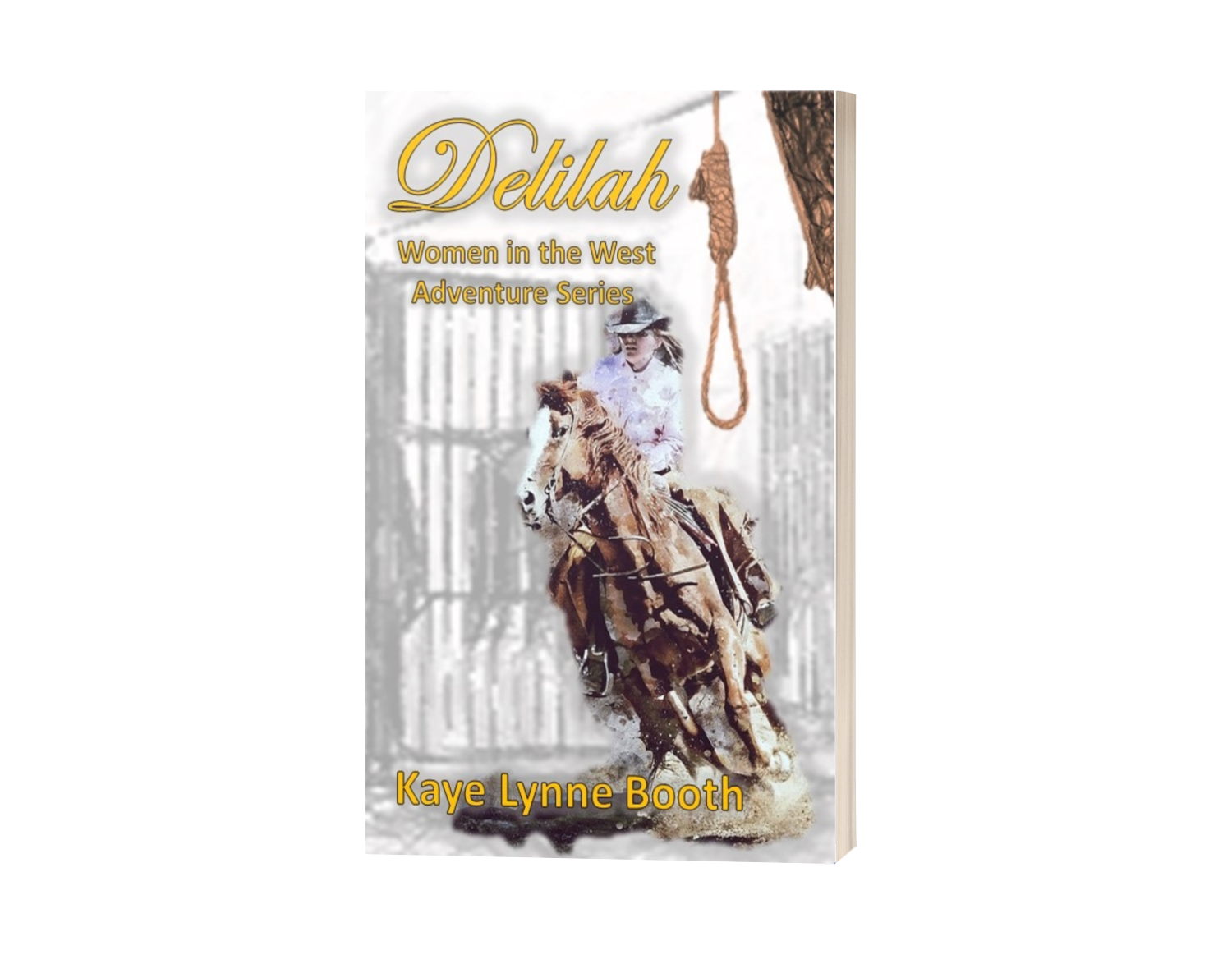
The library is a great place to discover local authors, and many folks are really into that. If your book is available in your local library, the folks who are into local authors may just discover your book, and go on to buy other books written by you. And if you write with settings in local areas, those libraries are likely to have folks interested in a book set near their homes. For example, my Women in the West series is set on the Colorado frontier, with stops in towns such as Leadville (Delilah) and Glenwood Springs (Sarah), and since they are historical fiction, they feature events and people from the local histories for those areas, so people who live there could be interested in those stories. The Leadville and Gunnison libraries are likely places where I’d like to see my books carried.
Local libraries are the easiest to build a relationship with, because it’s likely that you are already a patron, and a familiar face there. But you can’t just walk in and say, “Hey, I’m a local author, so you should carry my books.” That would be too much like a cold call, unless your face is very familiar there. But it also takes research to build the right relationships. Chances are, there are several librarians working in your local library, and while it doesn’t hurt to be familiar with all of them, the acquisitions librarian is the the one who offers the most benefit, because they are the person who decides which books to purchase for the library. If you can build a solid relationship with the acquisitions librarian, you might even get them to carry your print books, too.
I know one local author who just walked into the library and asked if they would display and sell her book there. They were quite agreeable to this, and she left a stack of print books, which they kept stacked on a corner of the checkout desk, where library patrons would see them, as they prepared to depart. Her book wasn’t even carried on the library shelves, but library patrons found her book there. She had her foot in the door, but didn’t build on the relationship. It’s too bad she didn’t take that next step and ask the library to purchase a copy, or even offered to donate a book for their shelves.
So, how do you build a relationship with your local librarians? You might start by introducing yourself, and letting them know what it is you have to offer. I’m not just talking about your books. Offer to do readings or to speak on a topic of your expertise. Libraries are always on the lookout for guest speakers, and often host local authors for readings. These are events that will draw patrons into their library, and they like that. Once you’ve done a reading of one of your books, the library is much more likely to carry on their shelves.
_____________________________________

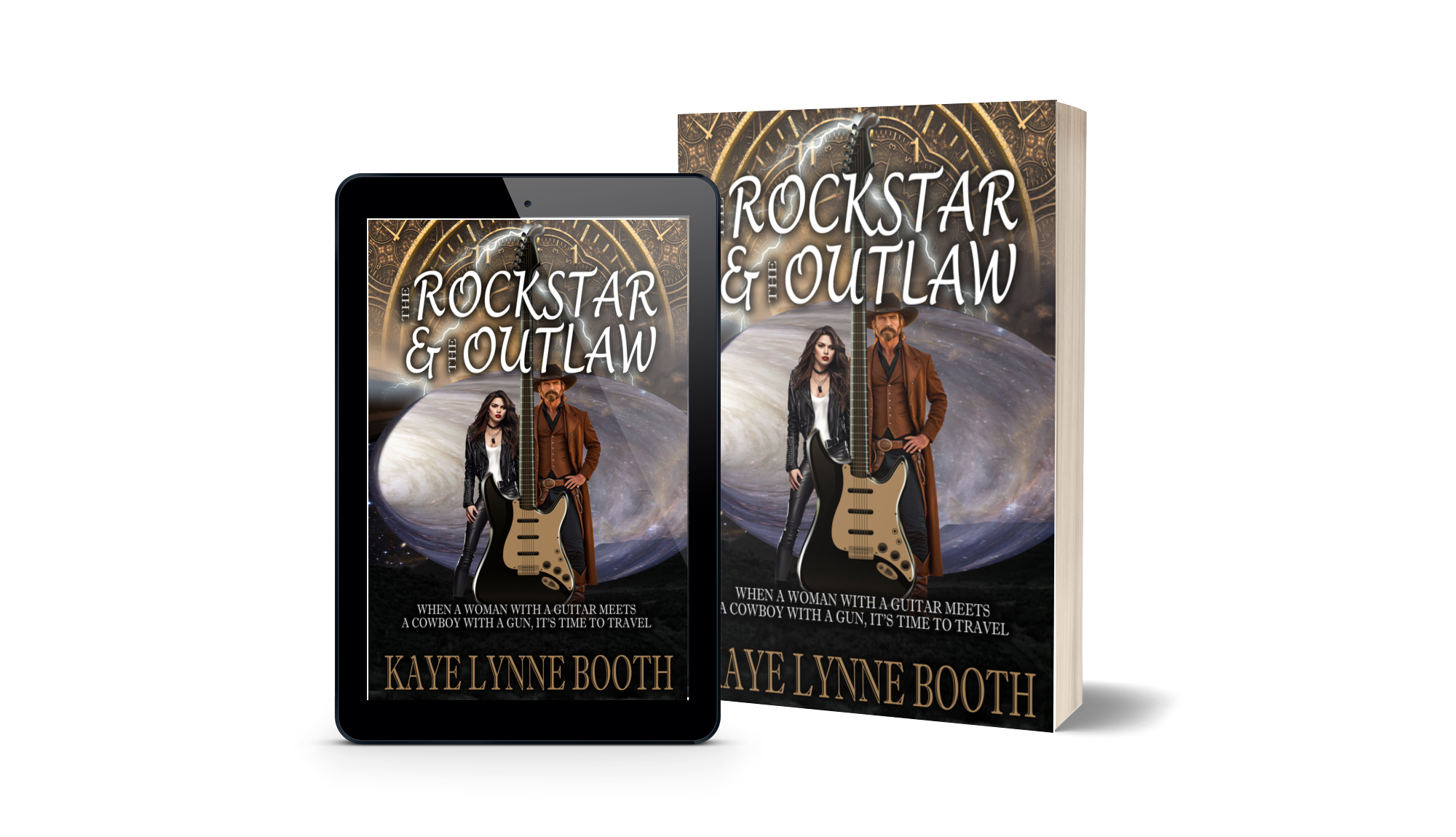
For Kaye Lynne Booth, writing is a passion. Kaye Lynne is an author with published short fiction and poetry, both online and in print, including her short story collection, Last Call and Other Short Fiction; and her paranormal mystery novella, Hidden Secrets; Book 1 of her Women in the West adventure series, Delilah, and her Time-Travel Adventure novel, The Rock Star & The Outlaw. Kaye holds a dual M.F.A. degree in Creative Writing with emphasis in genre fiction and screenwriting, and an M.A. in publishing. Kaye Lynne is the founder of WordCrafter Quality Writing & Author Services and WordCrafter Press. She also maintains an authors’ blog and website, Writing to be Read, where she publishes content of interest in the literary world.
_____________________________________________________
Want exclusive content? Join Kaye Lynne Booth & WordCrafter Press Readers’ Group for WordCrafter Press book & event news, including the awesome releases of author Kaye Lynne Booth. She won’t flood your inbox, she NEVER sells her list, and you might get a freebie occasionally. Get a free digital copy of her short story collection, Last Call and Other Short Fiction, just for joining.
Share this:

Writer’s Corner – Getting Your Books Into Libraries and Bookstores
Posted: November 14, 2022 Filed under: book marketing, Books, Indie Publishing, Libraries, WordCrafter Press, Writing | Tags: Book Distributors, Bookstores, Libraries, Publishing, WordCrafter Press, Writing to be Read Leave a commentQuestion: What advantage do traditional publishers have that indie publishers and authors don’t?
Answer: The ability to get their books into libraries and brick and mortar bookstores, where many readers actually go to find books.
No, really. Not everybody buys from Amazon. And while many authors sign on exclusively so their books can be in KU, there are other book distributors out there if you choose to publish wide. (See my post on why I publish wide.) It doesn’t make sense to me to limit yourself to a single sales channel when there are so many out there, and that goes for utilizing libraries and brick and mortar book stores.
There are a few obstacles which indie authors face in getting their books into libraries and bookstores, partially due to Amazon. They don’t like Amazon, and many brick and motar stores, even independent ones, won’t even look at carrying books which can only be ordered through the big book bully. Going wide solves that delimma, but there’s still the age old tradition of selling to bookstores at wholesale and allowing them to be returned.
Many authors may not know this about the publishing industry, but traditional publishers decided a long time ago to allow bookstores to buy at wholesale, which is less royalties for the author, but might be understandable. But they didn’t stop there. They also gave bookstores permission to return any books they don’t sell, if they choose to. Traditional publishers go through enough books, that returns may not put a dent in them, but to assure that it didn’t, they deducted it from the author’s cut. This practice can be devastaing to an indie author who is unprepared, to suddenly get a seven or eight hundred dollar return charge when they are not expecting it. Fortunately, an indie author can now opt to not allow returns, and I think D2D does this for you automatically, so the author won’t be caught by this surprise expense. Unfortunately, as soon as you decide to not take returns, you may be eliminating brick and mortar stores from your distributor list, because most bookstores won’t buy books they can’t return. This is one of those outdated dinosaur practices started by traditional publishing, but bookstores don’t want it to change.
Libraries are the same in many ways. They don’t like Amazon and won’t order books from them. But there are certain lists put out by distributors who work solely with libraries, such as Overdrive, and if your book isn’t on that list, they won’t consider carrying it. Libraries have been smart enough to include digital lending, but the lists are extensive and before they can lend out your book, they have to know that your book exists, and it helps a lot if they know someone wants to read it. So the first task for an indie author who wants their book in libraries is to be sure their book is carried by the library distributors, so that librarians can find it.
But that’s not enough. Librarians have to know that your book exists and that people want to read it.That’s why authors need to get to know and be familiar with their local librarians. When you know them, it’s easier to ask them to carry your book, and sometimes that’s all it takes if you have established a relationship with them. If you can get readers to request your books from their local libraries, all the better.
Now you might ask yourself, why go to all this trouble to get into libraries, where they will only buy one or two print copies at the most. That’s where the digital lending program becomes of interest, because most libraries follow one of two models, which pay authors a set amount per checkout, which can add up if your books are popular. But more than that, libraries are a way to reach out to potential readers, because when a reader finds an author they like, they are likely to want to read more of their work. And library patrons are hardcore readers, especially these days when it is so easy to sit at home and order up your reading material at the click of a button.
I think that’s enough reason to warrent the extra effort required to get my books into libraries. All WordCrafter Press books are available on Overdrive and other library distributors, so they will be easy to find when people request a WP book. I’m working to get my local libraries to carry WP books, and since I live in a rural area, there are at least three libraries which I consider local. But I need to get out the word and have readers and contributors request WP titles and make librarians aware of their existance, and that’s part of what this post is about, even if the titles you want are not published by WordCrafter Press, beacuse this can help all authors – spreading this message:
Go to your local library and ask for the titles that you crave,
so you can read them for free,
and help your favorite authors at the same time.
_____________________________________________________________________

For Kaye Lynne Booth, writing is a passion. Kaye Lynne is an author with published short fiction and poetry, both online and in print, including her short story collection, Last Call and Other Short Fiction; and her paranormal mystery novella, Hidden Secrets. Kaye holds a dual M.F.A. degree in Creative Writing with emphasis in genre fiction and screenwriting, and an M.A. in publishing. Kaye Lynne is the founder of WordCrafter Quality Writing & Author Services and WordCrafter Press. She also maintains an authors’ blog and website, Writing to be Read, where she publishes content of interest in the literary world.
____________________________________________________________________
Join Kaye Lynne Booth & WordCrafter Press Readers’ Group for WordCrafter Press book & event news, including the awesome releases of author Kaye Lynne Booth. Get a free digital copy of her short story collection, Last Call and Other Short Fiction, as a sampling of her works just for joining.
Share this:

Writing for a YA Audience: The Truth about Libraries
Posted: August 21, 2019 Filed under: Books, Fiction, Libraries, Reading, Writing, Writing for a YA Audience, Young Adult | Tags: Jordan Elizabeth, Libraries, Writing for a YA Audience, YA, Young Adult, Young Adult Fiction Leave a comment
“This looks great!” The young woman picked up my book from the table at the craft show. She read the back and took a free bookmark. “I’m going to look for this in the library.”
I let her know which of the local libraries had the book. Smiling, she left for the next table.
Across the aisle, a woman sold beeswax lip balm. She shook her head at me. “That’s a horrible thing for her to say to you. She should have just bought it.”
Was it a horrible thing, though?
I hear from at least one person at every book signing I do that they’ll look for my books in the library. I hear from other authors that it happens to them too. It might sound like a bad thing. The author isn’t getting a sale.
Here’s the truth –borrowing your book from the library isn’t a bad thing. In fact, it’s a great thing. That person is reading your book. That’s what all authors want: someone to read the book. Someone who borrows a book from the library has a limited time to keep that book in their possession, so they’re actually going to read it in a timely fashion. If you buy a book, it might sit on your shelf unread for years. That person who just read your book is hopefully going to leave a review. Bad or a good, a review always brings attention to the book online.
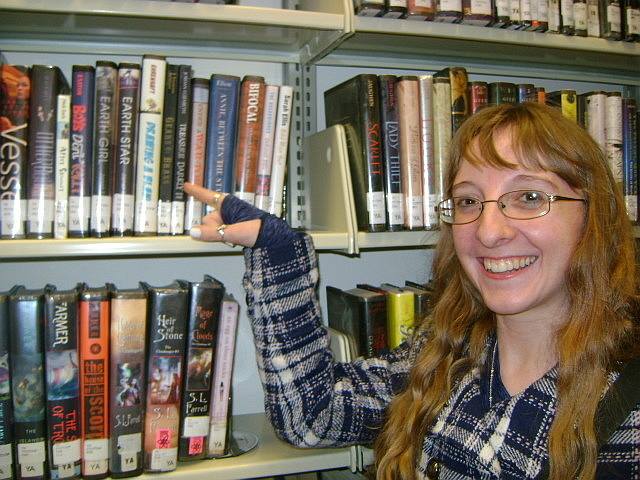
The reader is going to talk about your book in person too. They’re going to tell all of their reader friends. Those friends will hopefully buy or borrow your book. The buzz about your book is growing.
The more people who take your book out from the library, the longer the library will keep your book in circulation. They will also order your other books, because hey, you’re a popular author.
For everyone who says you don’t get a sale when someone borrows your book, keep in mind that the library did order your book originally. Most libraries will be willing to have you autograph their copy and host a book signing. Libraries are an author’s bosom buddy.
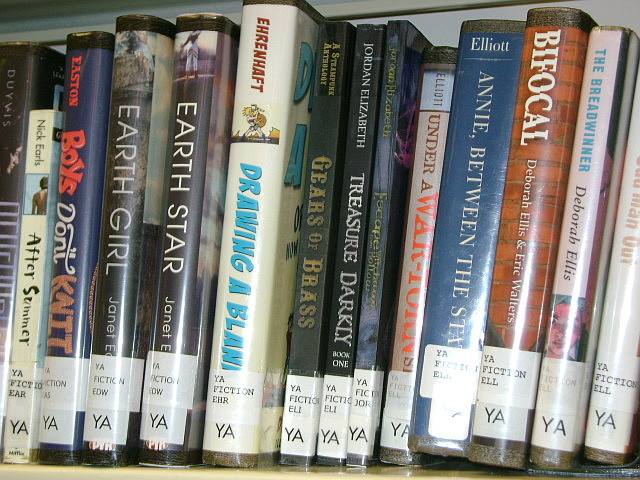
Jordan Elizabeth is a young adult fantasy author who is often at her local library participating in workshops or browsing the titles. You can connect with Jordan via her website, JordanElizabethBooks.com.
Want to be sure not to miss any of Jordan’s Writing for a YA Audience segments? Subscribe to Writing to be Read for e-mail notifications whenever new content is posted or follow WtbR on WordPress.
Share this:

Writing for a YA Audience: Books in the Library
Posted: May 15, 2019 Filed under: Books, Fiction, Libraries, Self-Publishing, Writing, Writing for a YA Audience, Young Adult | Tags: Books, Jordan Elizabeth, Libraries, Writing for a YA Audience, YA, Young Adult, Young Adult Fiction 1 Comment
“This is available at the library, right?’ I get that question a lot.
You should know that I talk about my books. A lot. I get excited and that passion spills over whether I’m at a book signing or conversing with a coworker. Some people don’t want to buy books. They might not like the book, so they don’t want to invest in the purchase, or they don’t want to have books cluttering their homes. Whatever the reason, libraries are perfect.

Photo by Janko Ferlic on Pexels.com
If I’m asked locally, then I get to say yes, my books are available. Other places…well…not so much. That surprises people.
Here’s the thing about indie books. Libraries don’t normally stock them. They need a reason to purchase a copy. This could be because you’re a local author, because you did an event there, or because someone requested it.
The best way to help out an author is to ask your local library to purchase a copy. This is a sale for the author and exposure. People are going to borrow the book, read it, and talk about. There is no marketing tool as powerful as word of mouth.
Jordan Elizabeth is a young adult fantasy author. She’s often wandering libraries looking for something to spark her interest…or she’s squealing over a treasure discovered in a used book room. You can connect with her via her website.
Want to be sure not to miss any of Jordan’s Writing for a YA Audience segments? Subscribe to Writing to be Read for e-mail notifications whenever new content is posted or follow WtbR on WordPress.