“Not Just Any Man”: A Journey into New Mexico’s Past
Posted: May 10, 2019 Filed under: Book Review, Books, Fiction, Historical Fiction, Western | Tags: Book Review, Historical Fiction, Loretta Miles Tollefson, Not Just Any Man, Western, Writing to be Read 1 Comment
A true western makes you feel the landscape, and Not Just Any Man, by Loretta Miles Tollefson does just that. Tollefson’s use of present tense narration and vivid visual imagry don’t just help readers see the scene in their mind, but actually puts you there. Woven into true events in New Mexico’s history, Tollefson portray’s the landscape as it was, with a storyline and fictional characters which could have been, and for as long as it takes to read the book, maybe they were.
Gerald Locke is not just any man. He’s a man of mixed race, trying to find a place for himself and acceptance from his fellow man, which he believes might be found in the frontiers of what is today, New Mexico. In Gerald’s time, it is a vast land filled with open spaces and wildlife, plentiful with opportunity, and Gerald has hopes of finding a spot where he can settle down and live comfortably, but first, he must raise the funds to embark on such an endeavor. He hasn’t planned on sharing his dream, but when he makes the acquaintance of Suzanna Peabody, new dreams in which she is by his side begin to foster as he makes his way following the rugged life of a trapper. Upon his return to Taos, he finds his dreams haven’t changed but his doubts have grown. He’s not the same man he was when he set out. Will Suzanna have him when she learns just who he really is?
Tollefson’s masterful use of third person present tense and her vivid descriptions make this book seem like a journey into the past. I give Not Just Any Man five quills.

Kaye Lynne Booth does honest book reviews on Writing to be Read in exchange for ARCs. Have a book you’d like reviewed? Contact Kaye at kayebooth(at)yahoo(dot)com.
Share this:

Interview with Christian western romance author Patricia PacJac Carroll
Posted: May 6, 2019 Filed under: Author Profile, Books, Christian fiction, Fiction, Historical Fiction, Historical Romance, Interview, Uncategorized, Western, Writing, Writing to be Read | Tags: Author Interview, Author Profile, Christian western romance, Christion fiction, Historical Romance, Lockets and Lace, Patricia PacJac Carroll, romance, Sandra's Journey, Sweet Romance, Western, Writing to be Read 2 Comments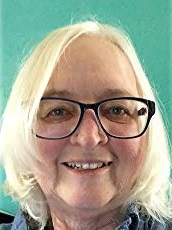
My author guest today is a prolific writer, who must publish an average of at least six books per year, in numerous romance series. Patricia PacJac Carroll writes historical and western Christian romance at a rate that I find amazing. The books on her Amazon Author page scroll in what seems like a never ending flow. In addition to her own series, which are many, on occasion, she’s invited to participate in series with a collection of other authors, as is the case with her most recent release. Let’s see what she has to share with us today.
Kaye: In what ways is writing a Christian western romance different from writing a western romance?
Patricia: For me, saying it is Christian means at least some of the characters have a Christian world view. Faith and hope in the Lord are evident in their lives. No preaching or sermons or a lot of verses, only faith as it relates to the story and the characters.
Kaye: Your latest book was recently released, Sandra’s Journey. Would you like to tell me a little about the story?
Patricia: Sandra is struggling, she’s walled herself in away from others. Her little brother’s death and the fact that a fiance left for Calfornia the year before and she only received one letter from him, have stolen her courage. She meets a corporal who is escorting the wagon train, and he challenges her to dream. Romance blossoms along the California trail where by trails end she will have to choose between the two men. A story of courage rediscovered and dreams coming alive.

Kaye: Sandra’s Journey recently came out as a part of a historical western series with a wagon train theme, which includes your book and those of several other Christian western authors. Would you like to tell me about the Lockets and Lace series?
Patricia: The Locket and Lace series is made up of several different authors. I was asked to join in 2018 and wrote Oregon Dreams for the Locket and Lace series for 2018. And then this year again for the Locket and Lace series for this year with Sandra’s Journey.
Every book has a connection to the Bavarian Jeweler in St. Joseph, Missouri. They have a locket that was made in the shop and a piece of lace. We had 9 books last year and 10 this year. They are all wonderful books
Kaye: The Lockets and Lace series books are not the only books you’ve written, by far. You have written several other series, including the Mail Order Brides and The Law Keepers series. How many books have you written? How long have you been writing?
Patricia: I have been writing seriously for thirteen years and began publishing in 2012. I have 40 books out right now and plans for many more. I have several series ~ Mail Order Brides of Hickory Stick, Montant Brides of Solomon’s Valley, and several others.
Kaye: Tell me a little about your author’s journey, if you would?
Patricia: I began writing and attending critique groups in 2006. I loved it, but my friends would call me the book of the week person because story ideas would attack me. I love the thrill of a new story and still do. Finally, I decided I better finish a book and my first book was Liberty Belle that I published in 2012.
Kaye: Your husband is instrumental in your writing, so much so that you’ve incorporated both of your initials into your author’s name – PacJac. Would you talk about how he enables you to write?
Patricia: My husband is a wonderful prince of a man who gives me the time to do what I love. He let me retire in 2006 so I could write. And now, my writing has enabled him to retire. We are a wonderful team and are enjoying our lives. I added the PacJac to my writing name because I found there were other Patricia Carroll’s out there in the writing world. It works well though because you put PacJac in Amazon and it will pop up my books.
Kaye: Your female characters of the contemporary strong and independent variety, or do they follow the traditional damsel in distress variety of heroine?
Patricia: I’d say they are a combination. While I want to be historically correct, readers live in the 21st century. I do like spunky women, but I also enjoy writing about a character who grows in courage and strength, too.
Kaye: What part of writing do you find to be the biggest challenge?
Patricia: The self-discipline. I am a seat-of-the-pants writer, and I tend to live my life the same way. I enjoy fun, family, and friends as well as writing so at times the need to balance comes into play.
Kaye: Where does your inspiration come from?
Patricia: The Lord. He gives me the stories. I am amazed at how He has made sure I understand that. One time I had the opportunity to put a Christmas story in an anthology and had a weekend to write it as it was due Monday at noon. Now, I had bragged that if you just give me a name and a place, I will come up with a story. Well, after my haughty attitude, my friends gave me a name and place and my imagination heard crickets. Nothing. Nada. No story. Now, that was a bit scary to me. A writer isn’t much without a story. So I figured I missed the anthology. But then at 5:30 Monday morning I woke up with a picture in my mind of a cowboy on a horse pulling a Christmas tree and knew I had a story. And I wrote it and turned it in before noon. You can find that story in my book Christmas in Texas. The Richest Christmas. So I will give the Lord all the credit for anything good that I do. Any mistakes are mine.
Kaye: Your books obviously are portrayed in a western landscape, based on historical times and events. What kinds of research do you find yourself doing for your books?
Patricia: Documentaries, books on the old west. I have always loved the west and westerns.
Kaye: Do you feel you draw pieces from your own life into your stories? How so?
Patricia: Yes, and I tell my friends anything may be used in a story. I know I often have my characters state “How hard can it be?” That is all me.
Kaye: What is the most fun part of writing western romance for you?
Patricia: I enjoy the characters and the things they get themselves into. Plus horses, I love horses and they have always been part of the draw to westerns for me. I also love the idea of the wide open wild country.
Kaye: What is something many of your readers wouldn’t guess about you?
Patricia: For twenty years, I owned and ran a pet store. Sea Horse Pets in Arlington, Texas. As you can guess I love animals. And people. I love to write, and my heart is that readers will enjoy my stories and be strengthened and encouraged by reading them. I enjoy making readers happy.
I want to thank Patricia for joining me today to share her thoughts with us. I don’t know about all my readers, but I am astounded by the sheer volume of her works. You can learn more about Patricia at the links below. Stop in and see if you too are not awed by the books she’s produced within the span of the past seven years.
Links
Author page on Amazon: https://www.amazon.com/Patricia-PacJac-Carroll/e/B008R9JCN2/
Facebook Author page: https://www.facebook.com/PatriciaPacJacCarrollAuthor/
Website: http://www.pacjaccarroll.com/
Newsletter sign up http://eepurl.com/bpPmbP
Like this post? Subscribe to Writing to be Read for e-mail notifications whenever new content is posted or follow WtbR on WordPress.
Share this:

“Ripper”: Not your typical historical romance
Posted: April 5, 2019 Filed under: Book Review, Books, Fiction, Historical Fiction, Historical Romance, romance | Tags: Amy Cecil, Book Review, Historical Romance, Ripper, romance, Writing to be Read 2 Comments
Romance author Amy Cecil writes both contemporary and historical romance, but her latest release, Ripper, is like no historical romance I’ve ever read. Set in London, during the times of the Jack the Ripper roamed the streets of White Chapel, this story explores possibilities and throws in more than a few surprising twists.
Life is looking up for Marie, with a new client turned lover, it looks as if she might be able to leave behind her life of poverty. But Jax’s behaviors cause suspicions she can’t ignore, suspicions that, if proven true, might make it impossible to follow this dream life she’s found. What’s a girl to do when she learns the man she loves might be Jack the Ripper?
A cleverly-crafted tale that will keep readers guessing until the last pages. I give Ripper five quills.

Kaye Lynne Booth does honest book reviews on Writing to be Read in exchange for ARCs. Have a book you’d like reviewed? Contact Kaye at kayebooth(at)yahoo(dot)com.
Share this:

Interview with western author Loretta Miles Tollefson
Posted: January 7, 2019 Filed under: Author Profile, Book Covers, Books, Cover Art, Fiction, Historical Fiction, Interview, Western, Writing Process | Tags: Author Interview, Author Profile, Delilah, Loretta Miles Tollefson, Not Just Any Man, The Pain and the Sorrow, western fiction, Western genre, Writing to be Read 12 Comments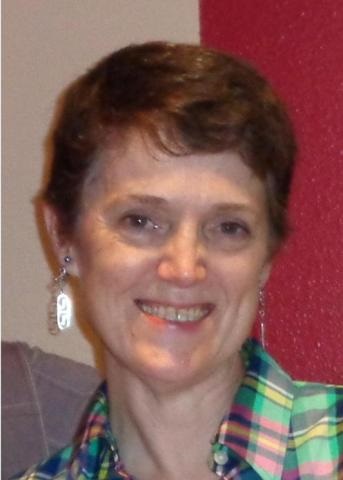
After writing an excerpt of Delilah for an assignment in grad school, I remember thinking, ‘this could be a book’. But I also remember thinking that a western by a female author probably wouldn’t sell. Women weren’t supposed to write westerns. After all, the western frontier was for rugged men. I knew there were women in the west, but I guessed that they weren’t protagonist material. Then, I wrote and published Delilah anyway. It was a story that wanted to be told. My character, Delilah spoke to me and the writing of the tale was too important for me to let the idea that it might not be a best seller stand in the way.
In the meantime, I was happy to learn that there are other female western authors out there. I’m pleased to have one as my guest today. Her books are set in the historical New Mexico landscape based on factual historical people and places. Western fiction author Loretta Miles Tollefson will share her thoughts on the matter of gender in the western genre and other aspects of writing and her books.
Please welcome Loretta Miles Tollefson.
Kaye: Would you share the story of your own publishing journey?
Loretta: When I was fifteen I won a writing contest in a Sunday School paper and that triggered a deep desire to continue to see my words in print. I published a couple more pieces in that same paper, then branched into short stories and poetry in my 20s and 30s. I had a few things published and received a co-publication offer for a novel. Unfortunately, I didn’t have the financial resources to follow up on that. I continued to write and had some poetry published in my 40s and early 50s. I self-published a couple novels in my mid-50s and then The Pain and the Sorrow was published by Sunstone Press in 2017. I was frustrated by the lack of opportunities to advertise a novel that had been traditionally published and went back to the self-pub route with Not Just Any Man.
Kaye: When did you know you wanted to be an author?
Loretta: I was 15 but, because I come from a very practical family, I chose to take the pragmatic approach of going into newspaper and magazine work instead of stepping into the uncertain waters of fiction. Eventually, I became a Special Projects Manager for a regional planning organization here in New Mexico, a job which utilized both my writing and research skills. I didn’t realize my dream of writing full time until I retired about five years ago.
Kaye: What is the most enjoyable part of writing westerns for you?
Loretta: For me, the most enjoyable part of writing is finding ways to bring the historical details, my characters’ personalities, and the storyline itself together. It’s like weaving a tapestry. And then there’s always the sudden inspiration that seems to come out of nowhere, when my characters seem to be telling me what they want to say. Although I, as the author, always have control, I’m sometimes surprised at where the story takes me.
Kaye: What is the biggest challenge of writing western fiction for you?
Loretta: I think my biggest challenge in writing historical fiction set in the West is feeling like I need to double check all the details. Even though I grew up on a small farm and we had horses and cows and chickens and hung the clothes on a line and pretty much all the rest of it, there’s a great deal I don’t remember or took for granted at the time. And, of course, I didn’t actually live in the early 1800s. I have to be careful not to assume certain ways of doing things or specific pieces of equipment were common back then. I’m always concerned that I’ll slip into an anachronism.
Kaye: You follow the old adage “write what you know”, setting your books in areas where you have lived and are familiar with, yet you must envision those settings in another time period. It seems perhaps your own setting acts as inspiration for your stories?
Loretta: It does. Very much so. I’ve lived in New Mexico almost thirty years and was fortunate enough to travel all over the state in connection with my job. Then, after I retired, we moved to Eagle Nest, New Mexico, on the northern end of the Moreno Valley. We lived there five years and that experience really brought together my love of history and my desire to write full time. There’s so much history here in New Mexico that I don’t think I will ever run out of ideas. We recently moved to Santa Fe, New Mexico, and that will continue to inspire me and to provide me with great resources for my research.
Kaye: Your novel, Not Just Any Man, was recently released. Would you like to tell us a little about that book?
 Loretta: Not Just Any Man is about a black mountain man in 1820s New Mexico named Gerald Locke, Jr. It’s an adventure story, as Gerald traps in Northern New Mexico and then joins a fur trapping expedition across the Arizona desert and up the Colorado River. The group includes Enoch Jones, the only mountain man in the West who seems to have an issue with Gerald’s skin color. Jones has a few other issues as well, and the conflict between the two men is a crucial plot element.
But this isn’t just an adventure story. Gerald has met a young woman in Taos who seems far above his station in life and he can’t stop thinking about her. Even if he can survive the Sangre de Cristo mountains, the Mohave Indians, and the arid rim of the Grand Canyon, as well as Enoch Jones, can Gerald prove to himself and the girl he loves that he is, after all, not just any man?
Kaye: Do you think western readers are more receptive to male protagonists?
Loretta: There certainly are a lot of male protagonists in the western genre. I think this is because the traditional Western initially reflected the cultural assumption that only men played an active role in events in the West. As we broaden our understanding of the historical West, both before and after the United States was the primary actor there, we’re realizing just how often women played critical roles on the frontier. Life was harsh. Any family that was going to survive needed everyone in it to be fully engaged. Women had to take on roles they hadn’t necessarily played before. If anything, I believe their experiences on the frontier helped to begin breaking down the barriers that we’re still disassembling today. As we do that, I suspect Western readers will become more and more receptive to all kinds of protagonists.
Kaye: You have wonderful covers with beautiful landscapes that cry out ‘western’! Where do you get your covers?
Loretta: Well, thank you! I’m glad you like them. I worry about my covers. Other than The Pain in the Sorrow, I’ve designed them all myself and created most of them using a combination of Publisher and Gimp. The pundits’ advice is to have someone else do them, but I tend to have very specific ideas about what I want, and I haven’t yet discovered anyone who can quite catch my vision.
Loretta: The Pain and the Sorrow was strongly inspired by New Mexico history. Its characters actually existed and the primary incidents in the story are based on historical artifacts.
The plot of Not Just Any Man is also strongly situated in actual events. While the protagonist and villain are both fictional, most of the mountain men in the novel, are based on actual people—Old Bill Williams, Milton Sublette, Ewing Young, etc.—and much of the story line is based on their first-hand accounts.
Kaye: The Pain and the Sorrow has historical basis, as do all your books as I understand it. And it’s obvious that you strive to make your details as accurate as possible. Do you weave the history into your stories or is it the New Mexico history that inspires the stories?
 Kaye: The Pain and the Sorrow is based in New Mexico history and a historical figure of legend, but the story about your female protagonist. Not all of your novels have female protagonists though. Was the female protagonist easier to write since you have a natural female perspective?
Loretta: The Pain and the Sorrow was a very difficult story to tell because of the abuse my teenage protagonist suffers at the hands (and other body parts) of her husband. I think that writing Gregoria’s story may have been more difficult for me precisely because I am female. My emotions were very raw during the entire process. I might have found it easier to tell Gregoria’s story if I didn’t have a “natural female perspective” and felt less connection with her.
Kaye: Do you think it’s more difficult for a female to make it in the western genre than it is for male authors?
Loretta: I think it’s difficult for any author to break into any genre today, regardless of their gender. However, it seems to me that more women are writing Western-style stories and getting them published than has been true in the past. For example, of the fourteen authors showcased in Five Star Publishing’s recent The Trading Post and other stories, four or five are women. In early December 2018, the twenty top-sellers in Amazon’s Western category included at least two women. There may have been more, publishing under a male pseudonym. We’ll really know that women have made it in western fiction when no one finds it necessary to use a male, or male-sounding, pen name when they do so.
Kaye: My publisher slapped Delilah into the romance category, listing it as a frontier romance. While there is a romantic element to the story, I didn’t make it the major focus of the story. I guess they thought it was more marketable as a romance, and I do think that because my protagonist is female, the book might have a stronger appeal to a female audience. Do you think western readers are more receptive to stories with a male protagonist?
Loretta: That’s hilarious. I really liked Delilah and I enjoyed the romance element in it, but classifying it as a frontier romance seems to me to diminish its marketing potential. I never search for frontier romance. As a result, I would have missed Delilah entirely if that’s the only place it could be found. I feel strongly that the current way the market is being sliced into finer and finer categories does us all — readers and writers alike — a disservice because it makes it more difficult to find the well-written, well-conceived books like Delilah that transcend easy categorization.
Kaye: Do you feel that it is harder for women authors to be taken seriously in the western genre?
Loretta: To a certain extent, this may be true. After all, as I mentioned above, some women authors of Westerns apparently feel that it’s necessary to use pseudonyms to obscure their gender. But I think that as we persist, this will become less and less of an issue.
Kaye: You are also a poet and you have out several poetry books. Would you talk a little about what inspires your poetry?
Loretta: My poetry is very personal, especially But Still My Child, which contains the poems I wrote after a miscarriage over thirty years ago. The poems I wrote during that time and afterwards helped me process that grief and I hope publishing them will support others in that same process.
My other volumes of poetry were the result of an attempt to blend my interest in poetry with my love of story. For historical stories, now that I think of it. The poems in But Then Moses Was There and Mary At The Cross try to get inside the heads of Biblical characters to express what living their experiences might have felt like.
Kaye: You’ve also written other non-western novels. What other genres do you write in?
Loretta: I’ve written an urban fiction about coming of age/homelessness in 1980s Seattle and a chick lit novel about a New Mexico couple who wins the lottery. I’m not working in either of those genres now. I’m focusing my energies exclusively on historical fiction set in Old New Mexico.
That focus on historical fiction has also resulted in two short story collections set in New Mexico: Valley of the Eagles and Old One Eye Pete. Valley is a collection of micro-fiction. The stories are all 500 words or less. Old One Eye Pete contains longer pieces, with stories featuring the mountain man Old One Eye Pete acting as the narrative thread.
Kaye: What is the working title of your next book?
Loretta: It’s called Not My Father’s House. It’s a sequel to Not Just Any Man and (spoiler alert!) focuses on Suzanna’s struggle to adapt to living high in New Mexico’s Sangre de Cristo mountains. I’ve just finished the second draft, so it should be out by the middle of 2019.
Kaye: Besides writing, what are your favorite things to do?
Loretta: I research material for my upcoming books — or at least I tell myself it’s for my upcoming books. Hah! And I read fiction: historical, mystery, suspense, Westerns, and pretty much anything else that looks interesting to me at the moment. I review most of everything that I read, unless it has 100 reviews or more. I would love to review more historical fiction set in 1800s New Mexico and Southern Colorado, since Southern Colorado was part of New Mexico at one time.
Kaye: Would you tell us a little about your blog? What will readers find there if they visit?
Loretta: My blog is at http://www.LorettaMilesTollefson.com. About once a week, I post a short piece about a historical event or a flash fiction story set in Old New Mexico, which I define as anything prior to statehood in 1912. The site also includes news about, and links to, my books.
Kaye: Which author or poet, dead or alive, would you love to have lunch with?
Loretta: I have so many favorites. This is a hard question to answer. I think right now, given the work I’m doing, the person I would most like to have lunch with would be Paulette Jiles. I really enjoyed her News Of The World and the way she brought actual events to life in that book.
Kaye: What do you like to do when you’re not writing?
Loretta: I read and explore the region with my husband. Ultimately, it’s all research.
Kaye: Is there anything unique or unusual about your writing process?
Loretta: My writing process consists of writing the first draft, letting it sit a month, revising, letting it sit a month or so, then revising again until I feel it’s really ready. This process seems to be becoming more unusual in today’s fast-paced writing environment.
Kaye: How much non-writing work, (research, marketing & promotion, illustrations & book covers, etc…), do you do yourself for your books?
Loretta: At the moment, I’m doing all my own research, marketing, promotion, book covers, and so forth. I’m stretching myself pretty thin with all these different activities, but doing it all gives me a lot of control. I may have to start farming some of the non-writing work out as I move along in my journey.
Kaye: If your book was made into a film, who would you like to play the lead?
Loretta: To tell you the truth, I watch so little television and so few movies these days, that I’m not sure who would be the best actor to play Gerald or Susanna in a movie based on Not Just Any Man or Gregoria or Charles Kennedy in The Pain And The Sorrow. I’d love some input from your readers on this question.
Kaye: I can and will reach out to readers for input on who should play your leads were your story made film, but now you have to answer another question: Since many of my readers may not have read your books, can you tell us what characteristics these characters would have so they can better imagine who would be a good fit?
Loretta: Hmmm,
Characteristics:
Gerald: square forehead, gray eyes. Half black/half Irish. Late 20s.
Suzanna: slim, tall for a woman (about Gerald’s height). long black hair, dark brown eyes. Half anglo (WASP), a quarter french, a quarter Navajo. About 16.
Alright readers. Here’s your chance be heard. Who do you think would be good for the roles of Gerald and Suzanna? Please comment with your suggestions. Loretta and I would both love to hear the possibilities.
Kaye: What advice do you have for aspiring authors?
Loretta: In a nutshell: read, revise, revise again.
If you plan to write fiction, read fiction. Especially classic fiction: Hemingway, Steinbeck, Austen, Dickens, and so forth. Also, read contemporary fiction, and not just books in your genre. Some of my favorite authors right now are Louise Penny and Donna Leon. They teach me pacing and character development. I’m especially fascinated by the way their protagonists develop over the course of the series. Everything’s research, even the books you don’t like. And don’t be afraid to express your opinions and trust your instincts. It’s okay to not like a book even if everyone else is saying how wonderful it is.
Most of all, revise! As Anton Chekhov said, “rewrite everything five times.” Well, maybe not that many, but you see what I mean. I would add “but not immediately” to that advice. Take the time to let your work rest, and then go back and look at it again. When you start changing sentences back to the way you had them in a previous version, that’s when you should stop. But not until then.
Revise it, let it rest, then revise it again. There’s a popular saying that “Perfection is the enemy of done.” I am uncomfortable with that statement. While no work is going to be absolutely perfect, rushing to publication is the enemy of quality work. Try to get your story as well-written as possible. Producing quality work is what will keep your readers coming back for more.
I want to thank Loretta for joining us today and sharing a glimpse into the world of western writing from a female author’s perspective. I have admired her work since I reviewed The Pain and the Sorrow last May, and it’s a thrill to have the privelage of interviewing her. It’s a real treat to hear from another female author in the world of western fiction.
Like this post? Subscribe to Writing to be Read for e-mail notifications whenever new content is posted or follow WtbR on WordPress.
Share this:

“Doomed to Repeat”: A Mystery in History
Posted: October 5, 2018 Filed under: Action/Adventure, Book Review, Books, Fiction, Historical Fiction, Mystery, Thriller | Tags: Action, Book Review, mystery, Tim Baker, Time, Time travel 1 Comment
Doomed to Repeat is author Tim Baker’s latest crazy crime novel, complete with his usual cast of lovable characters; Ike, Brewski, Ralph Donabedian and the Golden Lion Staff.
Ike and Brewski get a blast from the past when Nazis with amnesia show up in Flagler Beach. As they work to unravel the mystery of how they came to be in this time, while trying to stay one step ahead of the white supremicist who is trying to muscle Ralph Donabedian and the other Flagler Beach business owners into selling all of their properties, they learn their new found friends may hold the evidence to prove two great historical myths to be truths. But, with the bad guys, the C.I.A. and the Russians all closing in, can they save their new found friends and the secrets they carry with them without getting themselves killed or letting their secrets fall into the wrong hands?
When you pick up a novel set in Flagler Beach, and find Ike and Brewski sitting in the middle of it, you know the story will be entertaining, and Doomed to Repeat does not disappoint. I give it five quills.
Kaye Lynne Booth does honest book reviews on Writing to be Read in exchange for ARCs. Have a book you’d like reviewed? Contact Kaye at kayebooth(at)yahoo(dot)com.
Share this:

“The Pain and the Sorrow”: Historic Fiction at its Best
Posted: May 18, 2018 Filed under: Book Review, Books, Historical Fiction, Western | Tags: Book Review, Historical Fiction, Loretta Miles Tollefson, The Pain and the Sorrow, Western 1 Comment
The Pain and the Sorrow is a western which takes a true historic tale and crafts the details to the in a way that makes Loretta Miles Tollefson’s rendering not only plausible, but probable. Her background as a journalist is evident in every historic detail included, and in the Author’s Note at the end, she offers up the discrepancies in the reported facts and her reasoning for the choices made as she crafted the details into this heart wrenching New Mexico legend to make it come alive. It gripped me and I didn’t want to put it down. I couldn’t wait for the story to unfold.
From the view point of a young New Mexican girl, the story takes on a feeling of sadness in addition to the unbelievable horror of the originally reported events. Charles Kennedy offered food and lodging to weary travelers in the mountains of New Mexico for a price, but Charles had a temper and a lust for money, and those who stopped there didn’t always leave. Charles was an old west version of a serial killer. So claimed his young wife, Gregoria, when she appeared in a saloon in Etown one night after walking ten miles in the bitter cold to get away from her abusive husband.
A western with a female perspective, attention to the historic details, a story that compels me to keep the pages turning and characters that make me care. What more could this reader want? I give The Pain and the Sorrow five quills.
Kaye Lynne Booth does honest book reviews on Writing to be Read in exchange for ARCs at no charge. Have a book you’d like reviewed? Contact Kaye at kayebooth(at)yahoo(dot)com.




















