Treasuring Poetry – Meet the poet, Merril D Smith, and a book review #poetry #poetrycommunity #bookreview
Posted: October 18, 2023 Filed under: Book Review, Books, Interview, Poetry, Review, Treasuring Poetry | Tags: Book Review, Merril D. Smith, Poet Interview, Poetry, River Ghosts, Robbie Cheadle, Treasuring Poetry, Writing to be Read 65 Comments
Today, I am delighted to welcome talented poet, Merril D Smith as my October Treasuring Poetry guest. Merril has recently launched River Ghosts, a beautiful book of poetry which I have reviewed below.
Tell me a bit about your poetry collection, River Ghosts. What inspired the poetry in this book? Does it have a particular theme?
I had submitted a chapbook to Nightingale & Sparrow Press, which was longlisted, but ultimately not chosen for publication. The editor gave me some positive feedback, and I decided I would submit a full-length manuscript the following year. Of course, I did not expect a pandemic, nor that my mom would die from it in April 2020 during the first wave and lockdown. By that time, she was in a nursing home, and we were not allowed to be with her. I compiled River Ghosts in the months after her death with some already written poems—some published—and some new poems.
I walk by the Delaware River nearly every morning. Sometimes I go to a nearby park, which is also a historic battle site. The battle took place during the American Revolution, and there is an eighteenth-century house there. Recently, they’ve found more remains of soldiers—Hessians who fought for the British. If ghosts exist, I think they are at rivers, which carry so much history, and because of the battle and soldiers killed, I imagine them here.
So, the collection’s title comes from my musings about rivers and ghosts, including the ghosts of memory. However, I don’t think River Ghosts is all about sadness and grief by any means! I also want to mention that my older child, Jay Smith, designed the cover art, and the book is dedicated to my mother’s memory.
Do you do a lot of editing of your poetry or does the poem manifest itself fully formed?
That really depends. I nearly always do some editing, even for poems written for prompts. Sometimes, I go back to poems though, and I revise them. Then again, I’ve had some poems published that I pretty much wrote and sent off.
What do you find to be the most effective way of sharing your poetry with fellow poetry lovers?
I don’t know about effective. I suppose more people read my poetry on my blog, especially in response to a prompt, than anywhere else. I’ve also shared poems on Twitter /X for Top Tweet Tuesday (run by Black Bough Poetry), and I’ve read at some online open mics.
Do you think poetry is still a relevant form of expressing ideas in our modern world? If yes, why?
I think it’s relevant. I think I’ve read there’s been an upsurge in poetry, both reading and writing. Perhaps that’s because of social media and Covid lockdowns. I think most people enjoy poetry, especially if it’s read. For example, so many people were energized by Amanda Gorman’s reading of her poem, “The Hill We Climb,” at the inauguration of President Joe Biden in 2021. She is the youngest poet to have read a poem at a US presidential inauguration, and she is also an activist.
Which of your own poems is your favorite and why?
I don’t have a favorite anything—book, movie, song, or poem– it depends on my mood. But I will share one of my favorites from River Ghosts. “Moon Landing” was originally published by Black Bough Poetry.
Moon Landing
On that warm July night,
my father watched moonstruck
as Neil Armstrong took his giant leap.
I remained firmly earthbound,
watching our new puppies in the TV screen light,
their small black and white bodies tumbling,
stepping hesitantly into their futures.
Now—ensorcelled by moon-glow—
I plummet back, landing my time-rocket
on the rocky surface of memory.
Which poem by any other poet that you’ve read, do you relate to the most and why?
Again, I can’t say there is any poem that I relate to the most. I like many different types of poetry.
I think this is the poem I wish I had written. You will see in a way it’s connected to the poem of mine that I shared. “My God, It’s Full of Stars” is by Tracy K. Smith, who was US Poet Laureate, and who won a Pulitzer Prize for her collection Life on Mars.
My God, It’s Full of Stars by Tracy K. Smith
We like to think of it as parallel to what we know,
Only bigger. One man against the authorities.
Or one man against a city of zombies. One man
Who is not, in fact, a man, sent to understand
The caravan of men now chasing him like red ants
Let loose down the pants of America. Man on the run.
Man with a ship to catch, a payload to drop,
This message going out to all of space. . . . Though
Maybe it’s more like life below the sea: silent,
Buoyant, bizarrely benign. Relics
Of an outmoded design. Some like to imagine
A cosmic mother watching through a spray of stars,
Mouthing yes, yes as we toddle toward the light,
Biting her lip if we teeter at some ledge. Longing
To sweep us to her breast, she hopes for the best
While the father storms through adjacent rooms
Ranting with the force of Kingdom Come,
Not caring anymore what might snap us in its jaw.
Sometimes, what I see is a library in a rural community.
All the tall shelves in the big open room. And the pencils
In a cup at Circulation, gnawed on by the entire population.
The books have lived here all along, belonging
For weeks at a time to one or another in the brief sequence
Of family names, speaking (at night mostly) to a face,
A pair of eyes. The most remarkable lies.
2.
Charlton Heston is waiting to be let in. He asked once politely.
A second time with force from the diaphragm. The third time,
He did it like Moses: arms raised high, face an apocryphal white.
Shirt crisp, suit trim, he stoops a little coming in,
Then grows tall. He scans the room. He stands until I gesture,
Then he sits. Birds commence their evening chatter. Someone fires
Charcoals out below. He’ll take a whiskey if I have it. Water if I don’t.
I ask him to start from the beginning, but he goes only halfway back.
That was the future once, he says. Before the world went upside down.
Hero, survivor, God’s right hand man, I know he sees the blank
Surface of the moon where I see a language built from brick and bone.
He sits straight in his seat, takes a long, slow high-thespian breath,
Then lets it go. For all I know, I was the last true man on this earth. And:
May I smoke? The voices outside soften. Planes jet past heading off or back.
Someone cries that she does not want to go to bed. Footsteps overhead.
A fountain in the neighbor’s yard babbles to itself, and the night air
Lifts the sound indoors. It was another time, he says, picking up again.
We were pioneers. Will you fight to stay alive here, riding the earth
Toward God-knows-where? I think of Atlantis buried under ice, gone
One day from sight, the shore from which it rose now glacial and stark.
Our eyes adjust to the dark.
Continue reading here: https://www.poetryfoundation.org/poems/55519/my-god-its-full-of-stars
Here is the last part of the poem with a reading by Tracy K. Smith:
My review of River Ghosts

River Ghosts is the perfect name for this beautiful collection, which gives the reader glimpses into the poet’s life in the present, shadowed by memories, and coloured by traditions and behaviours passed down by her parents, and the ancestors that came before them. It is, in essence, an insight into the factors that make the poet who she is, and that have shaped her thoughts, ideas, and actions.
I found the ideas of loss contained in this book, interwoven with the concepts of long-lasting memories and loved ones living on through us, their offspring, compelling and delightful. For me, it made the overwhelming thought of the losses that must come, more bearable. Love, and the family traditions and behaviours we continue to honour, and pass down to our own children and grandchildren, bind us strongly to those who came before and to those who will come after. I love that idea.
A few examples of beautiful stanzas and/or lines:
“a tiny glove in the street,
the small hand grows colder
now unclasped from a larger one.”
From Observe, And Again
Above and about, dreams soar –
I pluck one from a thousand –
of red petals crushed beneath rocks
after a storm, like blood drops growing, glowing”
From Almost, and Never
“Once some brilliant star breathed time
in the after-wake of explosion and danced across a universe
exploring eternity”
From And If Always Lives
This poetry collection is a wonderful investment of time and mental energy.
River Ghosts Amazon US purchase link: https://www.amazon.com/gp/product/B09WZ8F9XJ
About Merril D. Smith

Merril D. Smith is a poet living in southern New Jersey. Her work has been published in poetry journals and anthologies, including Black Bough Poetry, Acropolis, Anti-Heroin Chic, The Storms, Fevers of the Mind, Humana Obscura, and Nightingale and Sparrow. She holds a Ph.D. in American history from Temple University in Philadelphia and is the author/editor of numerous books on gender, sexuality, and history. Her full-length poetry collection, River Ghosts (Nightingale & Sparrow Press) was Black Bough Poetry’s December 2022 Book of the Month.
Twitter: @merril_mds
Instagram: mdsmithnj
Blog: merrildsmith.org
US Amazon Link for River Ghosts: https://www.amazon.com/River-Ghosts-Merril-D-Smith/dp/B09WZ8F9XJ
UK Link: https://www.amazon.co.uk/River-Ghosts-Merril-Smith-ebook/dp/B09XKLDG6Q
Share this:

Treasuring Poetry – Meet poets, bloggers, and writers, Emily Gmitter and Zoe the Fabulous Feline, and a review #TreasuringPoetry #Poetrycommunity #review
Posted: July 19, 2023 Filed under: Book Review, Collection, Interview, Poetry, Review | Tags: Emily Gmitter, Happiness is a Warm Cat, Poetry, Robbie Cheadle, Treasuring Poetry, Writing to be Read, Zoe the Fabulous Feline 56 CommentsToday, I am delighted to welcome Emily Gmitter and her amazing writing cat, Zoe, to Treasuring Poetry. This is the first time I’ve interviewed such an interesting duo for this series and it has been a fabulous experience.
Welcome Emily and Zoe
I’d like to thank Robbie for inviting me and my co-author, Zoe the Fabulous Feline, to be guests on her lovely Treasuring Poetry blog. We’re happy to be here with her and all of you wonderful poets! Zoe says “hello” too—she’s waving her paw at the screen.
Is writing poetry easier for you compared to prose or do you do a lot of editing and revision of your poems?
While my initial writing efforts focused on poetry, and specifically, syllabic poetry, now I more often write short stories. However, poems or snippets of rhyme frequently find their way into my stories. My brain seems wired for rhyme, so if something comes to me, I don’t ignore it. But, to give you the short and direct answer to your question: I edit my prose far more than I do my poetry.
If I may elaborate, there is a distinct difference between the poet I thought I was back in the day, and the writer I hope I am today. Writing prose came much later in my life—that is, if you don’t count my very first short story, written in fourth grade, about a letter that was afraid of the dark. The story starts with a mom asking her daughter to take a letter to the mailbox. Just as the child is pulling the handle of the mailbox down and bringing the letter up to the opening, the letter starts to squirm and squeal in fear. It begs the child to not do it: “Please don’t drop me into the dark!” The child is startled, of course, but before she can say or do anything, the letter grows arms and legs and runs away. And that’s all I remember about that!
Getting back to your question … I’d add that, while I do edit my poetry, it seems most of my poems haven’t required heavy revision. I might tweak a word or two to keep the meter consistent or create an inner rhyme. Sometimes I’ve made an edit to deliberately include an alliterative phrase. But that’s about it. So I think syllabic poetry—unlike free verse—has always come easily to me. And it’s gotten easier as I’ve gotten older, or perhaps my personal bar has gotten lower. With my prose, though, it’s a far different story. The editing seems never-ending, but of course, at some point, you have to call it done.
I alluded to free verse; writing poetry in that style is not my forte, and has never been. Every once in a blue moon, something comes to me in that form, and usually it’s very short. (There is one example of that in my book, called “Soul Buddies.”) Free verse is much harder for me to write. I enjoy it, and I envy those who can create it, but it’s never come naturally to me. When I try to write it, it feels contrived. In one sense of the word, contrived is a positive thing; it’s what all writers do, right? We deliberately create a written piece; we calculate where to place an adjective, we assess whether a near-rhyme works well or at all. And on and on. So, contrived is not a dirty word. But it does have a negative sense, as well. When I find myself digging too deeply for words to convey what I wish to, the result sometimes feels forced and phony. I usually end up balling up the paper and aiming for the wastepaper basket. And that’s happened more times than I care to remember. I’ll leave free verse to those who can actually create it and spend my time enjoying the beauty of their creations.
Today I find that a poem is either there or it’s not. I most enjoy creating poetry when the words flow naturally. That feels like a gift. I write it down, and I leave it alone.
What mode (blog, books, YouTube, podcasts) do you find the most effective for sharing your poems with poetry lovers and readers?
I incorporated my poems into my newly released book and, while I’m not sure of its effectiveness over alternative modes, I really enjoyed using my poetry to mix up the flavor of the book. I also share my poetry (as well as my short stories and artwork) on social media.
Now, Zoe is more clever than I, or perhaps I should say, she’s a bit less technically challenged than I. She’s on Facebook, too, but she also posts on her The Life & Times of Zoe the Fabulous Feline blog. (A bit contrived if you ask me. To which Zoe just said, “Who’s asking you?”) Speaking of the little imp, she would like to say something. And I think I should be afraid.
Hi, Robbie, it’s me, Zoe the Fabulous Feline! I just wanted to point out something Emily neglected to tell you, which is that my poems are also in our book. Sheesh! Well, at least she gave me credit for my blog. My short stories sometimes include poetry, and I share my short stories on my social media pages. I did write one story completely in syllabic rhyme, which is in our book; it’s called “Zoe and Friends’ Strange Adventure.” It’s too long to include here,, so I’ll just summarize it for you:
A magic hat flies me and a couple of friends on a journey to different lands, one ruled by an evil dictator, and another led by a kind and compassionate old soul—the latter a land where a White Mist relays to us a message of hope and love. We return home with a new perspective.
I’m quite proud of that story-poem. (Story-poem might not be the right, or even a valid, term, but Emily would not let me say “epic poem”; she said I would sound terribly “arrogant.” I’m not even sure what that means, but it does not sound good.) About other modes for our writings: I’ve considered a podcast, but when I’d previously tried to teach Emily how to set up her own blog, that did not go well. Still, I took a chance and mentioned to her that I’d like her assistance with doing a “PodCAT” (a podcast for cats only). Well, I had to practically pick her up off the floor. So I took pity on her and did not push the idea. Anyway, I’m busy enough already. I’ll hand the baton back to Emily at this time and will be back if any other question catches my attention. Ciao for now!
Do you think poetry is still a relevant form of expressing ideas in our modern world? If yes, why?
Yes, I do, because poetry is a window into our souls. Poets write from the heart, and because people are multi-faceted creatures, and because there is so much going on around us all the time, there is no end to the food that will feed a poet’s imagination. Relevance abounds!
And then we have that other class of poets who are relevant in our modern world—the songwriter. Songwriters write lyrics that tell their own stories but also often speak to all our lives. Some artists may stick with the typical love song and/or love-gone-wrong song, and others may risk commercial success for at least occasionally penning songs that speak truth to power. In the latter category, the words of Kris Kristofferson come to mind. His diverse catalog includes every kind of song imaginable, from love songs to humor to satire, from the bittersweet of love and loss to the blessings bestowed on us by a higher power. He also writes biting, politically charged, contemporary songs; just one example of Kristofferson’s many topical tunes is an older one, called “In the News.” (A word of caution: Based on real life events, these lyrics are not easy to read.)
In the News
Read about the sorry way he done somebody’s daughter
Chained her to a heavy thing and threw her in the water
And she sank into the darkness with their baby son inside her
A little piece of truth and beauty died
Burning up the atmosphere and cutting down the trees
The billion dollar bombing of a nation on its knees
Anyone not marching to their tune they call it treason
Everyone says God is on his side
See the lightning, hear the cries
Of the wounded in a world in Holy war
Mortal thunder from the skies
Killing everything they say they’re fighting for
Broken babies, broken homes
Broken-hearted people dying everyday
How’d this happen, what went wrong
Don’t blame God, I swear to God I heard him say
Not in my name, not on my ground
I want nothing but the ending of the war
No more killing, or it’s over
And the mystery won’t matter anymore
Broken dreamers, broken rules
Broken-hearted people just like me and you
We are children of the stars
Don’t blame God, I swear to God he’s crying too
Not in my name, not on my ground
I want nothing but the ending of the war
No more killing, or it’s over
And the mystery won’t matter anymore
Read about the sorry way he done somebody’s daughter
Chained her to a heavy thing and threw her in the water
And she sank into the darkness with their baby son inside her
A little piece of truth and beauty died
~ Kris Kristofferson ~ (In the News – YouTube)
It would be hard to be any more relevant in our modern world than that.
Which of your own poems is your favorite and why?
Oh, this is a tough one! I have favorites in different categories. If we’re talking humorous, “The Spider” is my favorite. I understand some will not find the killing of insects to be a humorous topic, but I have a serious bug phobia, so perhaps I will be forgiven.
The Spider
There you were on my wall the other day,
It wasn’t easy for me, but I let you go on your way.
Soon you were out of sight, but not out of mind,
For I need to know where you are at all times.
I needn’t have worried,
Soon enough you were back.
And busily building a translucent track.
Can’t spare you again, you should’ve stayed gone.
But no, you had to come back and build a new home.
And now, Lord have mercy, I feel bad, it’s a sin,
But when it comes down to your home or mine—mine wins.
My favorite poem of poignancy is “Unjust Desserts.” And for a fun read, I would choose “Nashville-Rainbow Style,” because it tells the story of a most memorable vacation with a bunch of my musician friends. And finally I—
Helloooo, this is Zoe again. I mean, I love Emily, but she sure can go on and on sometimes. Here is a little ditty I wrote as the ending to my short story entitled “Zoe the Poet.” The publisher liked it so much, he insisted on including it in our book, and that’s why it’s my favorite.
Zoe the feline just checking in
To bring you a laugh, a tear, or a grin.
The stories I give you, they come from within,
Except when they come from without.
Please note: With that poem, I answered the question of poetry relevance, too … saying in four lines what Emily said in four paragraphs.
Why do you write poetry?
It’s a good question. You could just as well ask why do I write prose? Both art forms paint images with words, and I equate words with power. Power to evoke emotions both positive and negative, power to entertain. And that’s what poetry is all about.
I love words! And I love to have fun with them. So my love of the English language is why I write anything at all. It’s also a way to communicate with others, a way of expressing myself without censoring myself, which I tend to do in oral communications. That’s the short and sweet answer to this question. As Zoe so kindly pointed out, I can go on and on, so if this satisfies, that’s cool. But I will say a few things more for those who like to read on and on.
As previously mentioned, my first writings of so many moons ago consisted entirely of poetry. But the truth is, these days I don’t set out to write poetry. These days, my creative endeavors have centered on prose and painting instead. However, I do still dip my toes in the pools of poetry every so often. Because of my love for language, I make a concerted effort to take advantage of the various forms of writing tools, such as alliteration, which adds interest to a piece, especially when it’s subtle—when it slips easily into the ear the way an old, well-worn glove slides over one’s hand.
Some short stories and all songs are poetry. In the short story category, flash fiction comes to mind, and especially those restricted-word-count story challenges; those can be poetry of the highest order. In word-challenge stories, one must use language in a very efficient yet meaningful way. When every word has to count, the result is often a rhythmic cadence that shouts “I am poetry!” I wrote the following in response to a 79-word challenge story. I may be biased but, to my mind, it is nothing if not poetic.
Letting Go
No shame in letting go. The freedom of the fall was stronger than her sister’s hand. They were having a passionate discussion. A decade separated the sisters. Their differences, strengthened over every day of each of those years, became more apparent as the discussion threatened to explode. The younger sister stood firm against the fire of her older sister’s fears. She knew it came from love, as surely as she knew she would survive the freedom of letting go.
My early poems came from a place of typical teen-age angst, most often fairly short expressions of whatever was on my mind at the time. Looking back at some of those now… well, I won’t say I’m embarrassed, exactly; I never planned for anyone to read them. But I am, at the least, amused at having taken myself so seriously back then. This might be the first poem I ever wrote. Needless to say, Growing Old did not make it into my book!
Growing Old
My brain is numb,
My heart is cold.
I must be dead,
Or am I old?
Was I describing my youthful thoughts on senility, dementia, growing old in general? Most likely the latter—the concept of aging in general—but the former shows that I had no real sense or kind thoughts about what it meant to be old. Clearly, I was not going to age gracefully!
Many of us younger folks had some angst about our elders—you know, those folks over thirty years of age and considered part of the establishment. Everybody expressed it in their own way. One of my earlier poems relays how I envisioned our world if nuclear powers were to lose their senses. It’s too long to include in this interview (it’s in my book), but here’s a stanza that shows the basic theme of the poem:
The Future of the Child
“What shall I be, Dad, when I grow up?”
Looking toward the future, an eager young pup.
“Anything you want, Son,” you say with a smile.
And secretly pray for the future of the child.
So, that was then, when I set out to write poetry. And this is now when I don’t. “Soul Buddies” is one of those short, free-verse poems that gave birth to itself without any help from me.
Soul Buddies
I found you so easily, where I found you,
not because you are predictable,
but because you go where I go.
You are where I am.
Worlds apart in time, bound by soul.
And that is my long answer to your question, Robbie. And to anyone who has read this far, thank you!
Which poem by any other poet that you’ve read, do you relate to the most [please provide the poem or a link to the poem] and why?
So many speak to me that it’s hard to choose the one that speaks the loudest. The volume also seems to change depending on my mood at any given time. But, at the top of my list of poets are Kris Kristofferson and Gibran Khalil Gibran. You might think Kris and Khalil is a strange pairing, but when you read the lyrics written by Kris and the poems written by Khalil, you see that both write poetry that hits you in your heart. Poetry that makes you wonder how they knew your innermost feelings.
Shel Silverstein is another genius I admire. His body of work is relatable, his sense of humor is bound to give the reader a new perspective on this crazy little thing called life. A well-known author of children’s books and poetry collections, his poems appear funny and light-hearted, and they are. But most contain considerable substance, as well. I really love “Put Something In” simply because it’s a great message, and not just for children.
I relate to this one a lot, at least partly because it speaks to the artist I fancy is in there somewhere, and the child I pray is still in there somewhere.
Put Something In
Draw a crazy picture,
Write a nutty poem,
Sing a mumble-grumble song,
Whistle through your comb.
Do a loony-goony dance
‘Cross the kitchen floor,
Put something silly in the world
That ain’t been there before.
~ Shel Silverstein ~
But you asked which one poem I relate to the most. I would choose this one by Gibran Khalil Gibran, called “Do Not Love Half Lovers.” In this poem, Khalil takes two simple idioms we’ve probably all heard all our lives (Live life to the fullest and Do it well or not at all) and presents them in a poetic fashion that is brilliant. This piece is accessible and contains valuable advice, yet is so mundane that it cannot help but be universal. I feel as though he was in my head when he wrote it. Who hasn’t, at one time or another, found themselves exhibiting such negative or self-damaging behaviors? Who hasn’t, at one time or another, felt only half alive?
One might say this poem reminds them that life is too short to live it only halfway. Others might say life is too long.
Do Not Love Half Lovers
Do not love half lovers
Do not entertain half friends
Do not indulge in works of the half talented
Do not live half a life
and do not die a half death
If you choose silence, then be silent
When you speak, do so until you are finished
Do not silence yourself to say something
And do not speak to be silent
If you accept, then express it bluntly
Do not mask it
If you refuse then be clear about it
for an ambiguous refusal is but a weak acceptance
Do not accept half a solution
Do not believe half truths
Do not dream half a dream
Do not fantasize about half hopes
Half a drink will not quench your thirst
Half a meal will not satiate your hunger
Half the way will get you no where
Half an idea will bear you no results
Your other half is not the one you love
It is you in another time yet in the same space
It is you when you are not
Half a life is a life you didn’t live,
A word you have not said
A smile you postponed
A love you have not had
A friendship you did not know
To reach and not arrive
Work and not work
Attend only to be absent
What makes you a stranger to them closest to you
and they strangers to you
The half is a mere moment of inability
but you are able for you are not half a being
You are a whole that exists to live a life
not half a life
~ Gibran Khalil Gibran ~
********
Well, I think I better stop here, Robbie. Zoe and I thank you again for this opportunity to take part in such a fun feature!
Thank you, Emily and Zoe, for being such entertaining guests.
Happiness is a Warm Cat by Emily Gmitter and Zoe the Fabulous Feline

Blurb
In Happiness is a Warm Cat, author Emily Gmitter and her feline friend, Zoe, serve up a mixed genre of short stories and poems brimming with passion, love, and humor. The majority of the stories are told from the perspective of her cat, Zoe—a cool cat of perspicacity if ever there was one. Zoe’s stories will make you laugh, cry, and occasionally scratch your head in wonder, while Emily’s stories of fiction and nonfiction mingle humor with a sharp poignancy that you’ll find both heartwarming and entertaining.
My review
Happiness is a Warm Cat is a wonderfully unique book filled with experiences and adventures told through the eyes of Emily Gmitter’s fabulous cat, Zoe, as well as some beautifully written romantic and other fictional pieces and biographical stories about aspects of Emily’s life. There are also some lovely poems and several pictures of Emily’s artwork. All of the creations in this book are filled with vibrancy, colour, and passion.
The stories about Zoe and her adventures are fun filled and interesting. Zoe is typical of a cat and is filled with self importance and quite sure about her status as ‘top dog’. She does all manner of naughty things to ensure that Emily remembers her place in the family structure. Zoe is also big hearted and curious (aren’t all cats?) and likes to meet other animals, including Bella the dog and Burt the writing cat, Bella and Barre the Siamese twins, as well as spending time with her sister, Jaz. Zoe also gets to experience some pain and loss.
As a reader, I thought that experiencing daily life through the eyes of Zoe, was a wonderful way to make sense of everyday trials and tribulations and find the happiness in small things and moments.
A wonderful book for readers who appreciate experiencing the ordinary contentedness of life from a different perspective.
Purchase Happiness is a Warm Cat by Emily Gmitter and Zoe the Fabulous Feline
About Emily Gmitter
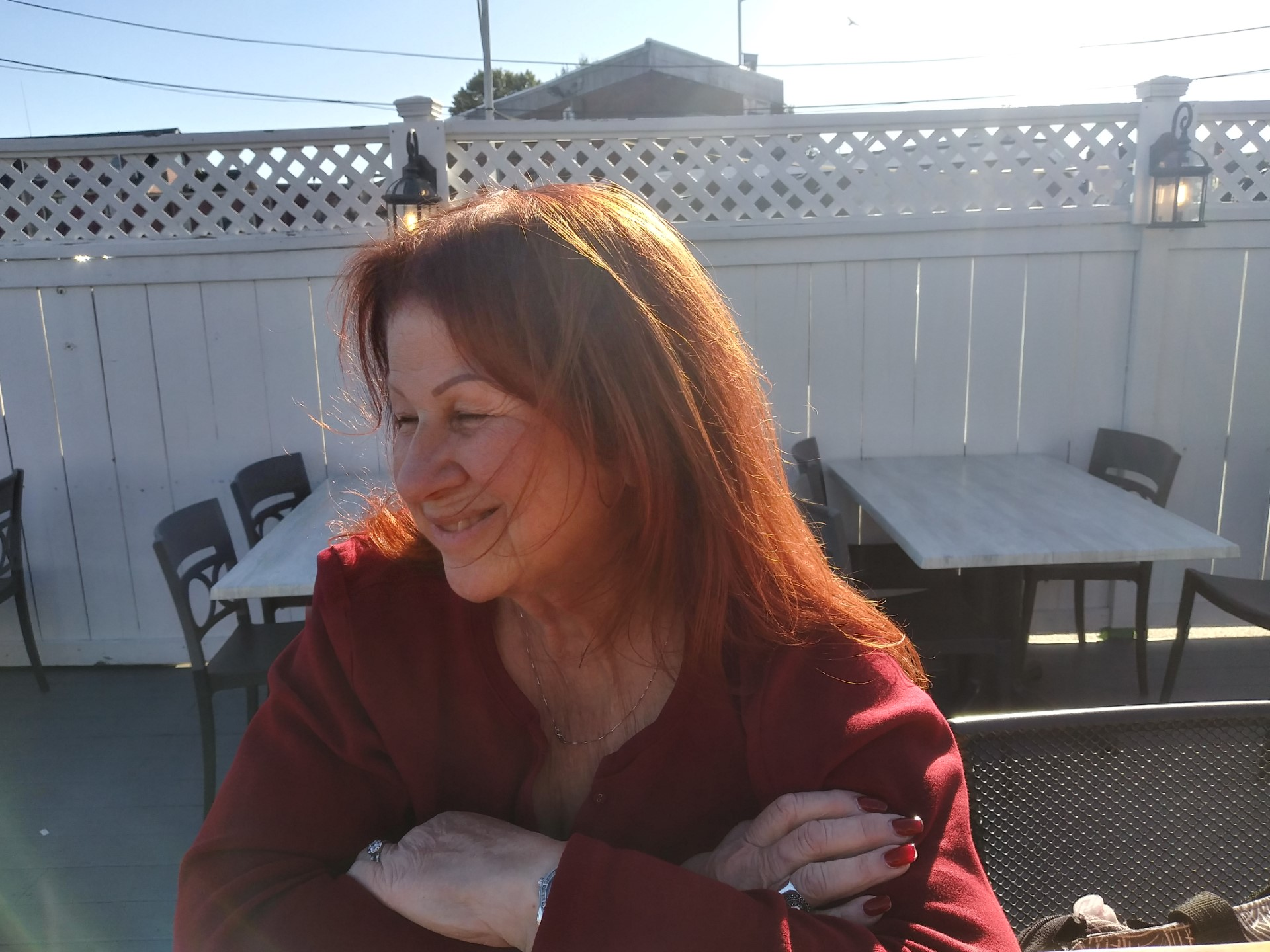
Emily lives on the North Shore of Massachusetts. She loves to spend alone-time at the beach, fun-time singing at local karaoke clubs, and the rest of her time engaged in activities with family and friends … when she’s not reading, writing, or painting.
Share this:

Treasuring Poetry – Meet poet and author, D.L. Finn and a book review #TreasuringPoetry #bookreview #poetry
Posted: June 21, 2023 Filed under: Blog Tour, Book Release, Book Review, Books, Collection, Interview, Poetry, Treasuring Poetry | Tags: D.L. Finn, Just Her Poetry, Robbie Cheadle, Treasuring Poetry, Writing to be Read 93 Comments
My June Treasuring Poetry guest is the talented poet and author, D.L. Finn. Welcome Denise.
Why do you write poetry?
I write poetry for many reasons but the most important one is that I can describe what I’m seeing or feeling in ways I am unable to when I speak. Poetry also expresses or records the world as I see it or want it to be. I can use poetry to convey the pure awe of nature, share my thoughts, or vent frustrations. Writing poetry is not only a wonderful vehicle to communicate my emotions but I like that my perspective can be interpreted differently by the readers.
Do you think poetry is still a relevant form of expressing ideas in our modern world? If yes, why?
I do think poetry is still relevant. It is a beautiful art form that allows us to glimpse the world in new ways like any good painting would but through words.
Which poem by any other poet that you’ve read, do you relate to the most and why?
The first poem that captured me was A Road Less Traveled. I have the poem framed on my wall so I can enjoy it every day and appreciate that it can have a more layered meaning, and interpretations.
The Road Not Taken
BY ROBERT FROST
https://www.poetryfoundation.org/poems/44272/the-road-not-taken
Two roads diverged in a yellow wood,
And sorry I could not travel both
And be one traveler, long I stood
And looked down one as far as I could
To where it bent in the undergrowth;
Then took the other, as just as fair,
And having perhaps the better claim,
Because it was grassy and wanted wear;
Though as for that the passing there
Had worn them really about the same,
And both that morning equally lay
In leaves no step had trodden black.
Oh, I kept the first for another day!
Yet knowing how way leads on to way,
I doubted if I should ever come back.
I shall be telling this with a sigh
Somewhere ages and ages hence:
Two roads diverged in a wood, and I—
I took the one less traveled by,
And that has made all the difference.
Which of your own poems is your favourite and why?
I have two from when I first started writing poetry. So, these poems have a special place in my heart.
The Bearded Old Man
The bearded old man
Walks across the quiet desert,
His hooded white robe
Protecting and sheltering him
From the burning sky.
His feet are silent against the sand.
He walks day and night,
Going to a place that he knows exists.
He beckons strangers to join him
As he keeps walking toward…
That place he calls home.
Fingers of the Sea
The weightless world of the beach engulfs me
As the long, extended fingers of the sea
Gently
Stroke me—welcome me,
Enticing with its salty breath,
Satisfying my deep, hidden hunger.
Slowly
The fingers curl back
An invitation,
Beckoning toward the heart of the sea.
Beneath my gaze on the cold, wet world
Its subjects are sent out to tempt,
Screeching and scurrying
Above and below me,
All in a frenzied orchestrated rhythm.
The sea’s haunting song
Urgently
Seduces my soul.
All of my resistance floats away
Like the curling waves,
As I blissfully clutch
The fingers of the sea.
Is writing poetry easy for you compared to prose or do you do a lot of editing and revision of your poems?
Poetry does seem to come easily to me. I will usually write the poem by hand and then later put it on the computer. Editing comes later when I use the poem for my blog, a challenge, or a book. Each poem is different but when it feels and sounds right to me—it’s done. It is a different process for free verse over symbolic. In free verse I let the words flow naturally, while in symbolic poetry I need to make my words fit a pattern. I do enjoy writing both types of poetry and challenge myself to pen poetry in many different places. This includes the back of a Harley, underwater, or on a crowded plane. In writing prose, I need a quiet space and an idea to get me writing so it’s very different process from poetry.
What mode (blog, books, YouTube, podcasts) do you find the most effective for sharing your poems with poetry lovers and readers?
I share my poetry on my blogs, newsletters, and challenges. I also have a book, Just Her Poetry, and working on another one right now. I least like to read my poetry but will still do it.
My review of Just Her Poetry Seasons of a Soul (Poetry)

This book, packed with exquisite poems, is divided into two main sections, namely, Just her poetry about nature and the author’s experiences investigating sites of natural beauty from her seat behind the driver of a Harley and Seasons of a soul which includes a variety of passionate and evocative poems about the author’s emotional state during various experiences and circumstances she has faced during her life.
I was attracted particularly to the second section of poems and was captivated by the author’s depictions and descriptions of the states and stages of life. I selection of my favourite lines are as follows:
“I am alone
Yet the voices from my past sit with me.
They can haunt me – or comfort me.”
From Now
“It’s time to let go of the things I’ve collected.
Leaving room for my heart to shine through my smile.
Then my peace will be complete within my soul.”
From Simply Gone
And this extract from my favourite poem:
“I’m figuring out why I keep repeating the same issue over and over,
Like walking by a shoe in the middle of the room, tripping over it daily,
But not moving it or even taking another route so I don’t fall over that shoe.
Then it became guilt for me, always been there, while I kept tripping on it.”
From The Shoe.
This particular poem really spoke to me and I could relate to it completely. That, for me an avid reader of poetry, is a rare and wonderful thing.
Purchase link: https://www.amazon.com/gp/product/B07NVZ7FPF
My review of In the Tree’s Shadow (short story collection)

In the tree’s shadow is an entertaining collection of horror, paranormal and sci-fi short stories that is well worth reading. The stories all revolve around themes of self worth, love and relationships and use dark twists and turns to demonstrate the strength of love and its ability to overcome impossible seeming odds. The stories are of different lengths with some being quite long and detailed and others being 99-word flash fiction.
My favourite story was the first in the book called ‘End of the road’. The main character’s dismal life was well described and the reach of her grandmother’s love from beyond the grave was welcome and heart warming.
‘The Playdate’ and ‘A Man on the pier’ were both unexpectedly dark with most interesting twists that gave me quite a shock.
Another tale that I found particularly pleasing was ‘The Dolphin’. It was not dark, rather heart warming and unique.
All the stories are well written and the characters are nicely drawn.
Purchase Link: https://www.amazon.com/Trees-Shadow-collection-stories-nightmares-ebook/dp/B0BWL7LX9K
About D.L. Finn

D.L. Finn is an independent California local who encourages everyone to embrace their inner child. She was born and raised in the foggy Bay Area, but in 1990 relocated with her husband, kids, dogs, and cats to the Sierra foothills in Nevada City, CA. She immersed herself in reading all types of books, but especially loved romance, horror, and fantasy. She always treasured creating her own reality on paper. Finally, being surrounded by towering pines, oaks, and cedars, her creativity was nurtured until it bloomed. Her creations vary from children’s books, young adult fantasy, and adult paranormal romance to an autobiography with poetry. She continues on her adventures with an open invitation for her readers to join her.
About Robbie Cheadle
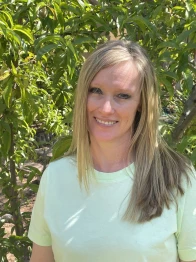
Award-winning, bestselling author, Robbie Cheadle, has published thirteen children’s book and two poetry books. Her work has also appeared in poetry and short story anthologies.
Robbie also has two novels published under the name of Roberta Eaton Cheadle and has horror, paranormal, and fantasy short stories featured in several anthologies under this name.
The ten Sir Chocolate children’s picture books, co-authored by Robbie and Michael Cheadle, are written in sweet, short rhymes which are easy for young children to follow and are illustrated with pictures of delicious cakes and cake decorations. Each book also includes simple recipes or biscuit art directions which children can make under adult supervision.
Robbie’s blog includes recipes, fondant and cake artwork, poetry, and book reviews. https://robbiesinspiration.wordpress.com/
Share this:

Treasuring Poetry – Meet poet and blogger, Luanne Castle, and a review #poetry #poetrycommunity #bookreview
Posted: May 17, 2023 Filed under: Book Review, Books, Interview, Poetry, Review, Treasuring Poetry | Tags: "Writing to be Read, Luanne Castle, Our Wolves, Robbie Cheadle, Rooted and Winged, Treasuring Poetry 56 CommentsToday, I am thrilled to introduce poet and blogger, Luanne Castle, as my May Treasuring Poetry Guest. Luanne has written four poetry books and had her work included in some anthologies too. I have read two of her four books and found her poetry to be unique and fascinating.
Welcome Luanne!
Why do you write poetry?
My connection to poetry feels as if it’s deeper than thought and precedes story. Until I was eight years old, I was an only child and spent time entertaining myself. Even before I could read, I listened to records of nursery rhymes and folk songs repeatedly, loving the rhythms and the magical way the words sounded. I started writing poetry when I was a child as it seemed a natural form of expression to me, possibly because of this nursery rhyme background. I still feel this same connection to poetry that I did as a child.
Do you think poetry is still a relevant form of expressing ideas in our modern world? If yes, why?
Poetry is very relevant because it can perform much of the same communication that prose does, but more besides! The music and delight in words found in poetry are memorable, even mnemonic. Poetry also tends to express on many levels, leaving gaps (ambiguity) where readers and listeners supply responses, emotions, and thoughts, thus making poetry the most active and interactive form. We need this activity as a guard against the increasing passivity of our culture.
Which poem by any other poet that you’ve read, do you relate to the most and why?
This is such a difficult question. In April I posted a favorite poem a day on Instagram, but being a favorite doesn’t mean the same thing as relating. Today’s choice for a poem I can really relate to is by Jane Kenyon. The beauty of the natural world, the shift of mood, and the comfort at the end are all very appealing to me.
Let Evening Come
Let the light of late afternoon
shine through chinks in the barn, moving
up the bales as the sun moves down.
***
Let the cricket take up chafing
as a woman takes up her needles
and her yarn. Let evening come.
***
Let dew collect on the hoe abandoned
in long grass. Let the stars appear
and the moon disclose her silver horn.
***
Let the fox go back to its sandy den.
Let the wind die down. Let the shed
go black inside. Let evening come.
***
To the bottle in the ditch, to the scoop
in the oats, to air in the lung
let evening come.
***
Let it come, as it will, and don’t
be afraid. God does not leave us
comfortless, so let evening come.
Which of your own poems is your favourite and why?
I have a few favorites from each book, but today’s favorite is this one from Rooted and Winged about my maternal grandfather. He and my grandmother (a big part of my roots) show in several poems throughout the collection. This one is a prose poem and although the majority of poems I write are lyrical, I do enjoy prose poems for the mix of storytelling and poetic language and imagery.
How to Create a Family Myth
My grandfather built a city with his tongue. Houses and little shops, celery fields and sand lots all connected to each other without roads or sidewalks. Once or twice he showed me a map of sewer lines running like Arcadia Creek underneath the cobblestones and packed dirt. We stood outside and found tall buildings in the clouds overhead. His hands gestured how his grandfather placed the bricks and taught his men to shape upwards, each building higher than the one before. Out there on the stoop, he pointed out where his mother, the one he said I looked like, had witnessed a man beating his horse. I saw her calico skirt billow out behind her, her hands wiping across her apron stomach even as she ran. When she reached the man, she snatched the whip from his hand, his surprise at her actions slowing him, rendering him stupid. When she cracked the whip down on his back time did not go on for her as it did for the rest of the world. Not until a week later, when she went to the market, did she realize that the story ran, too. It kept running until it reached all of us, each child and grandchild and great grandchild taking just what is needed from the tale. In my case, I plucked a heart from the clouds and tucked it safely inside a brick house in the city where it keeps the city alive to this day.
Is writing poetry easy for you compared to prose or do you do a lot of editing and revision of your poems?
I do edit and revise my poetry, but I can more quickly get to a finished poem than I used to be able to do. Practice really does improve speed. However, sometimes the fullest meaning doesn’t emerge for weeks after a poem is “finished,” so the best scenario is to put poem aside and look at it again later. As far as prose goes, I find prose fairly easy to write. Where I feel I would be out of my element would be in writing a novel. The plot intricacies and overall structure would drive me mad.
What mode (blog, books, YouTube, podcasts) do you find the most effective for sharing your poems with poetry lovers and readers?
Ah, that is such a good question. I think my blog is very effective for sharing poetry. I love interacting with blog readers and other bloggers about poetry. My books, of course, present a cohesive project to readers. I have a podcast hosted by Rebecca Budd coming up but have not done too much in that area to date. And I haven’t worked with YouTube yet other than some readings I have done have been posted by others. I would love to work more with YouTube and an audio format like Soundcloud in the future.
My review of Rooted and Winged by Luanne Castle

This is the second book of poetry and flash fiction by Luanne Castle I’ve read and I really like her style of writing.
Each piece is a reflection on a specific aspect of life and depicts the author’s thoughts and ideas about that particular aspect. It felt like a poetic journal of experiences and interpretations which I really appreciated. The poems are all freestyle and are written as a stream of consciousness without the restrictions imposed by strict sentence formation and punctuation. It flows well and suits the theme of the poetry.
An example of the thoughts and ideas expressed is this stanza from Gravity:
“Why are we only of the earth, Grandpa?
See your knees sunken in muck,
the sun sketching very plane of you.”
The imagery is rich and descriptive. An example of the language is as follows (extracted from Finding the House on Trimble Street):
“The house, once white and raw, has matured into gold. Ripened maples in October red temptingly frame the remembrance. The garage neatly unfolds from the side, the lawn edged in definition.”
My favourite piece is a slightly longer one entitled Today and Today and Today. It is about caregivers and is very poignant. The writer’s observations are so genuine and relatable.
“… She either ignores you or says mean things or praises you endlessly. Each response makes you sad.”
“He can wear only that one sweater. The others are too thin, too thick, too warm, too prickly, or pull over the head.”
Having recently had the experience of a close family member in intensive care in hospital for a period, completely dependent on the nurses who provide the medication and care, I felt as if this description had been pulled from my heart and mind:
“But you feel she knows you are at her side, joking with the staff, making sure that aides and nurses alike care for her as they would their mothers because her submissive form has been brushed with the glow of your personality.”
An extraordinary book of insightful poetry and prose.
Purchase Rooted and Winged: https://www.amazon.com/Rooted-Winged-Luanne-Castle/dp/1646628632
My review of Our Wolves by Luanne Castle
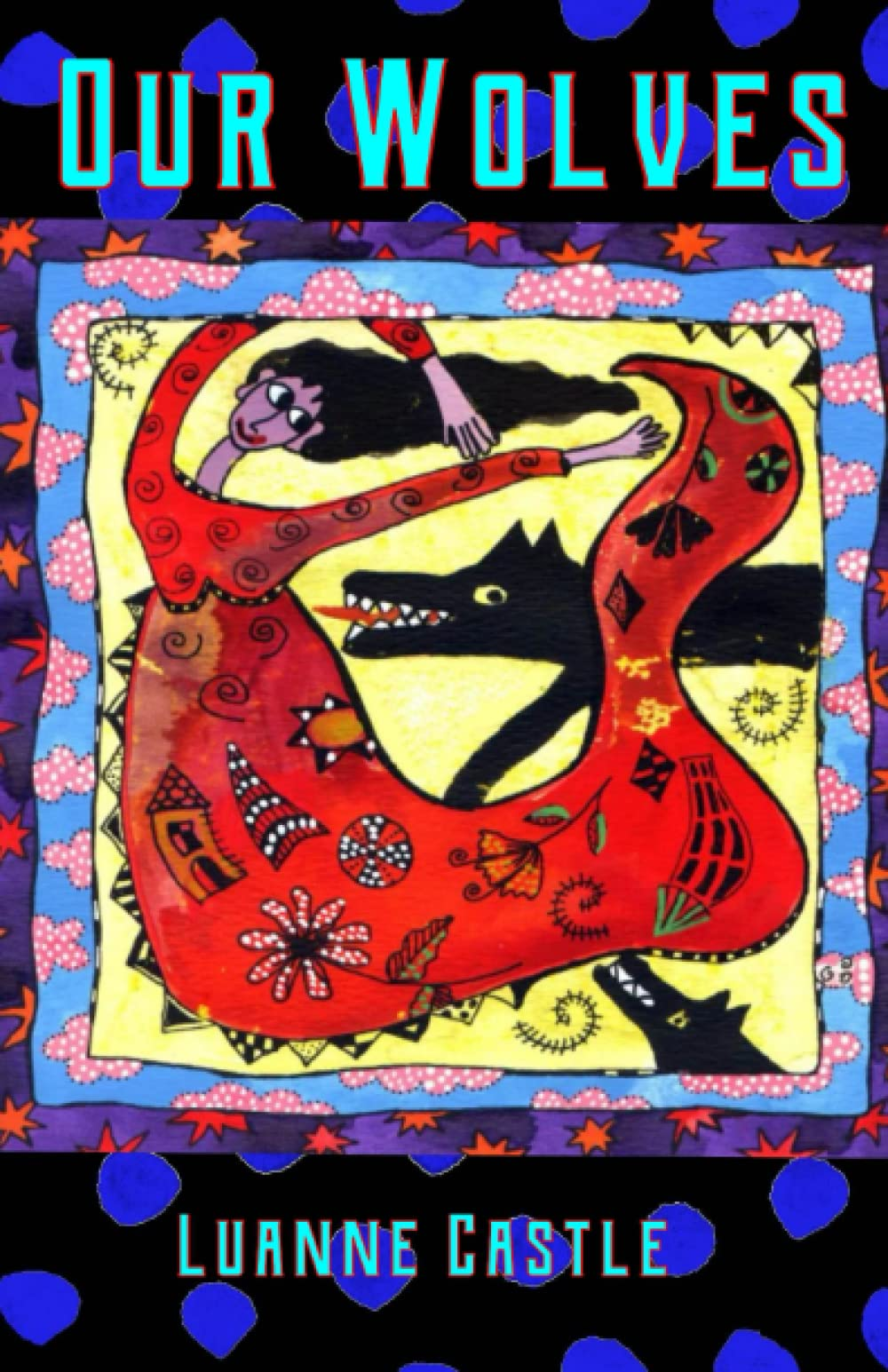
This book is an original and unique collection of poems that expose the wolves that appear in the lives of females during their formative years and through to maturity. The poet has linked many, but not all, of her poetic thoughts and interpretations of human predators to the wolf in the famous story Little Red Riding Hood or Le Petit Chaperon Rouge in the original French (which I have listed to with an English interpretation in my hand).
An example of this connection to the wolf is this extract from Our Old Wolves:
“But you will know how frightened they are
of the dark, shadowed forest and the abstruse mind.
Of human-like wolves concealed behind spruce and fir,
their shadows stretching out tentacles to grasp them
as they tremble past on their way to the locked river.”
Some of the poems turn the readers traditional idea of the hero and the predator on its head and force consideration of how misleading looks, perceptions of beauty and strength, and inbred prejudices can be. It highlights how frequently girls and young women walk right into trouble because of the messages drummed into them by their mothers and society. Women are not taught to accurately identify predators or ‘the wolf’.
Thanks for meeting me for coffee is a good example of this concept:
“I searched for the beginning
of your story and discovered you
were lost when you believed him.
All gone, One a milk carton missing.”
The poems in the book are mainly written in freestyle poetry and are filled with subtle meanings and innuendoes for the reader to consider. This book must be read with an alert and fresh mind in order to appreciate its full meaning and intrigue.
For me, the summary of the meaning and power of this book is set out in the following words from Your Sonnet:
“My mother taught me to be kind, to be helpful,
not to ignore the slow or less than able, the ones
who are different, the needy so I asked what
he needed from me and he misunderstood.
My story is not so very different from yours
and yours and yours and yours and yours.”
If you like interesting and thought provoking poetry, you will love Our Wolves.
Purchase Our Wolves: https://www.amazon.com/Our-Wolves-Luanne-Castle/dp/B0BTKNP31D
About Luanne Castle
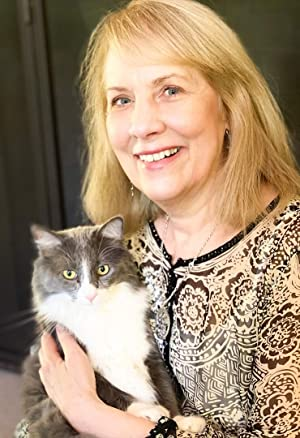
Luanne Castle lives in Arizona, next to a wash that wildlife use as a thoroughfare. She has published two full-length poetry collections, Rooted and Winged (Finishing Line 2022), a Book Excellence Award Winner, and Doll God (Kelsay 2015), which won the New Mexico-Arizona Book Award for Poetry. Her chapbooks are Our Wolves (Alien Buddha 2023) and Kin Types (Finishing Line 2017), a finalist for the Eric Hoffer Award. Luanne’s Pushcart and Best of the Net-nominated poetry and prose have appeared in Copper Nickel, American Journal of Poetry, Pleiades, River Teeth, TAB, Verse Daily, Saranac Review, and other journals.
Find Luanne Castle
Blog: https://writersite.org/
Website: https://www.luannecastle.com/
Twitter: https://twitter.com/writersitetweet
Luanne Castle Amazon Author Page
About Robbie Cheadle
Award-winning, bestselling author, Robbie Cheadle, has published thirteen children’s book and two poetry books. Her work has also appeared in poetry and short story anthologies.
Robbie also has two novels published under the name of Roberta Eaton Cheadle and has horror, paranormal, and fantasy short stories featured in several anthologies under this name.
The ten Sir Chocolate children’s picture books, co-authored by Robbie and Michael Cheadle, are written in sweet, short rhymes which are easy for young children to follow and are illustrated with pictures of delicious cakes and cake decorations. Each book also includes simple recipes or biscuit art directions which children can make under adult supervision.
Robbie’s blog includes recipes, fondant and cake artwork, poetry, and book reviews. https://robbiesinspiration.wordpress.com/
Share this:

Treasuring Poetry – Meet author and poet, Marcia Meara, and a book review #poetry #readingcommunity #TreasuringPoetry
Posted: April 19, 2023 Filed under: Book Review, Books, Interview, Poetry, Review, Treasuring Poetry | Tags: A Boy Named Rabbit, Marcia Meara, Poetry, Robbie Cheadle, Summer Magic, Treasuring Poetry, Writing to be Read 90 CommentsToday, I am delighted to welcome poet and author, Marcia Meara, as my April Treasuring Poetry guest. Marcia is sharing some of her thoughts about poetry and poems and I am sharing my reviews of A Boy Named Rabbit: Wake-Robin Ridge Book 2 and
Why do you write poetry?
I’ve written poetry since I was 5-years old, when I filled legal tablets with page after page of verses about cowboys and horses. (As imagined by a little girl who’d seen a few movies.) I really can’t remember when I didn’t love writing, and poems were what got me started. The rhythm and musicality of poetry is what I love most, and the main reason I still write poems today.
Do you think poetry is still a relevant form of expressing ideas in our modern world? If yes, why?
I think poems are very relevant, indeed. Poetry speaks of beauty and love and hate and danger and betrayal and every other human emotion, need, or failing. Do I think it’s as popular as it once was? No. Nor does it sell as well as novels and other works of fiction. But neither of those has any bearing on the actual relevance of poetry, and the more readers we poets manage to attract, the more likely folks are to understand exactly that.
Which poem by any other poet that you’ve read do you relate to the most and why?
That’s difficult to say, since I’ve been reading poetry for 75 years or so, including most of the greatest ones from poets like Edgar Allan Poe, Emily Dickinson, William Wordsworth, Amy Lowell, Elizabeth Barrett Browning, Robert Browning, Edna St. Vincent Millay, John Keats, Alfred Lord Tennyson, Henry Wadsworth Longfellow, Percy Bysshe Shelley, Walt Whitman, Dylan Thomas, Carl Sandberg, T. S. Eliot, Sara Teasdale, Ogden Nash, and on and on. You get my drift, I’m sure. It’s very hard for me to choose a favorite, but one poem I have always loved and never tire of is Poe’s The Raven. It’s long, I know, but the rhythm is so perfect, and the painful sadness of the subject, so very, very POE.
The Raven
Edgar Allan Poe – 1809-1849
Once upon a midnight dreary, while I pondered, weak and weary,
Over many a quaint and curious volume of forgotten lore—
While I nodded, nearly napping, suddenly there came a tapping,
As of someone gently rapping, rapping at my chamber door—
“Tis some visitor,” I muttered, “tapping at my chamber door—
Only this and nothing more.”
Ah, distinctly I remember it was in the bleak December;
And each separate dying ember wrought its ghost upon the floor.
Eagerly I wished the morrow;—vainly I had sought to borrow
From my books surcease of sorrow—sorrow for the lost Lenore—
For the rare and radiant maiden whom the angels name Lenore—
Nameless here for evermore.
And the silken, sad, uncertain rustling of each purple curtain
Thrilled me—filled me with fantastic terrors never felt before;
So that now, to still the beating of my heart, I stood repeating,
“‘Tis some visitor entreating entrance at my chamber door—
Some late visitor entreating entrance at my chamber door;—
This it is and nothing more.”
Presently my soul grew stronger; hesitating then no longer,
“Sir,” said I, “or Madam, truly your forgiveness I implore;
But the fact is I was napping, and so gently you came rapping,
And so faintly you came tapping, tapping at my chamber door,
That I scarce was sure I heard you”—here I opened wide the door;—
Darkness there and nothing more.
Deep into that darkness peering, long I stood there wondering, fearing,
Doubting, dreaming dreams no mortal ever dared to dream before;
But the silence was unbroken, and the stillness gave no token,
And the only word there spoken was the whispered word, “Lenore?”
This I whispered, and an echo murmured back the word, “Lenore!”—
Merely this and nothing more.
Back into the chamber turning, all my soul within me burning,
Soon again I heard a tapping somewhat louder than before.
“Surely,” said I, “surely that is something at my window lattice;
Let me see, then, what thereat is, and this mystery explore—
Let my heart be still a moment and this mystery explore;—
‘Tis the wind and nothing more!”
Open here I flung the shutter, when, with many a flirt and flutter,
In there stepped a stately Raven of the saintly days of yore;
Not the least obeisance made he; not a minute stopped or stayed he;
But, with mien of lord or lady, perched above my chamber door—
Perched upon a bust of Pallas just above my chamber door—
Perched, and sat, and nothing more.
Then this ebony bird beguiling my sad fancy into smiling,
By the grave and stern decorum of the countenance it wore,
“Though thy crest be shorn and shaven, thou,” I said, “art sure no craven,
Ghastly grim and ancient Raven wandering from the Nightly shore—
Tell me what thy lordly name is on the Night’s Plutonian shore!”
Quoth the Raven “Nevermore.”
Much I marvelled this ungainly fowl to hear discourse so plainly,
Though its answer little meaning—little relevancy bore;
For we cannot help agreeing that no living human being
Ever yet was blest with seeing bird above his chamber door—
Bird or beast upon the sculptured bust above his chamber door,
With such name as “Nevermore.”
But the Raven, sitting lonely on the placid bust, spoke only
That one word, as if his soul in that one word he did outpour.
Nothing further then he uttered—not a feather then he fluttered—
Till I scarcely more than muttered “Other friends have flown before—
On the morrow he will leave me, as my hopes have flown before.”
Then the bird said “Nevermore.”
Startled at the stillness broken by reply so aptly spoken,
“Doubtless,” said I, “what it utters is its only stock and store
Caught from some unhappy master whom unmerciful Disaster
Followed fast and followed faster till his songs one burden bore—
Till the dirges of his Hope that melancholy burden bore
Of ‘Never—nevermore.'”
But the Raven still beguiling my sad fancy into smiling,
Straight I wheeled a cushioned seat in front of bird, and bust and door;
Then, upon the velvet sinking, I betook myself to linking
Fancy unto fancy, thinking what this ominous bird of yore—
What this grim, ungainly, ghastly, gaunt and ominous bird of yore
Meant in croaking “Nevermore.”
This I sat engaged in guessing, but no syllable expressing
To the fowl whose fiery eyes now burned into my bosom’s core;
This and more I sat divining, with my head at ease reclining
On the cushion’s velvet lining that the lamp-light gloated o’er,
But whose velvet violet lining with the lamp-light gloating o’er,
She shall press, ah, nevermore!
Then, methought, the air grew denser, perfumed from an unseen censer
Swung by Seraphim whose foot-falls tinkled on the tufted floor.
“Wretch,” I cried, “thy God hath lent thee—by these angels he hath sent thee
Respite—respite and nepenthe, from thy memories of Lenore;
Quaff, oh quaff this kind nepenthe and forget this lost Lenore!”
Quoth the Raven “Nevermore.”
“Prophet!” said I, “thing of evil!—prophet still, if bird or devil!—
Whether Tempter sent, or whether tempest tossed thee here ashore,
Desolate yet all undaunted, on this desert land enchanted—
On this home by Horror haunted—tell me truly, I implore—
Is there—is there balm in Gilead?—tell me—tell me, I implore!”
Quoth the Raven “Nevermore.”
“Prophet!” said I, “thing of evil—prophet still, if bird or devil!
By that Heaven that bends above us—by that God we both adore—
Tell this soul with sorrow laden if, within the distant Aidenn,
It shall clasp a sainted maiden whom the angels name Lenore—
Clasp a rare and radiant maiden whom the angels name Lenore.”
Quoth the Raven “Nevermore.”
“Be that word our sign in parting, bird or fiend!” I shrieked, upstarting—
“Get thee back into the tempest and the Night’s Plutonian shore!
Leave no black plume as a token of that lie thy soul hath spoken!
Leave my loneliness unbroken!—quit the bust above my door!
Take thy beak from out my heart, and take thy form from off my door!”
Quoth the Raven “Nevermore.”
And the Raven, never flitting, still is sitting, still is sitting
On the pallid bust of Pallas just above my chamber door;
And his eyes have all the seeming of a demon’s that is dreaming,
And the lamp-light o’er him streaming throws his shadow on the floor;
And my soul from out that shadow that lies floating on the floor
Shall be lifted—nevermore!
Which of your own poems is your favourite and why?
I could say whichever one I’m writing at the time, but that wouldn’t be fair. Nor likely true, either, though I do think each one is a favorite at least during the moments of creation. However, instead of going that route, I’m going to choose the poem which most depicts large portions of my own life, spent canoeing on the wild and scenic rivers and creeks of Central Florida. Fittingly, it’s called On the River, and is included in my book, Summer Magic: Poems of Life & Love.
An extract from On The River by Marcia Meara
“Crystal green flows beneath me,
Leafy arches rise above,
Dip, glide.
Dip, glide.
Slide.
Duckweed parts as I float by.
I wonder where they went,
Those ducks?
Gone overnight, it seems.
Another parting, another loss,
And I slide by,
Under all that green.
Dip, glide.
Dip, glide.
Just there, in deepest shade,
Sleeping emeralds cling.
Tree frogs rest in their
Smooth, damp skins,
Waiting for the sliver moon.
They’ll open their eyes for the silver moon.
Sleeping now,
I pass him, too.
And on I go.
Dip, glide.
Dip, glide.”
Is writing poetry easy for you compared to prose or do you do a lot of editing and revision of your poems?
Oddly enough, I seldom do much, if any, editing on my poetry. When I’m “in the zone” the words I want seem to come to me, sometimes surprising me by fitting together exactly the way I like. This is definitely not true when I’m writing prose. Then, I spend a lot of time cleaning up, tweaking, and cutting before sending it off to an editor for more of the same. With poetry, if I’m in the mood, the words seem to flow much more smoothly and easily.
What mode (blog, books, YouTube, podcasts) do you find the most effective for sharing your poems with poetry lovers and readers?
I’ve actually never done any real marketing with my work, be it poetry or prose, and that’s something I do hope to change soon. But all I did with my book of poetry was publish it on Amazon and share poems now and then on my blog, The Write Stuff. NOTE: This is NOT how I would recommend new writers get the word out, no matter what their genre or style might be!
My review of Summer Magic: Poems of Life and Love by Marcia Meara

This book comprises the most beautiful freestyle poetry by Marcia Meara. The poetry is divided into two sections, the first is about the magic of life as experienced by a ten year old boy and the second is about love.
I loved both sections of the book but the poems about the joys and experiences of a ten year old boy were particularly poignant and meaningful for me as I have two sons who were ten years old in the not that distant past.
The two poems in this section that I enjoyed the most are, firstly, The Rope Swing which depicts the freedom and joy of swinging on a hot summer day. The depiction of a young boy of ten is very accurate and brings back lovely memories for me.
My second favourite poem is entitled Moccasins and describes the lovely and understanding relationship moms have with their sons.
The Rope Swing
The first stanza goes as follows:
“Sailing up, up into
Blue summer sky,
Hot rope rough against his hands,
He shouts with joy, and lets go.
For a crystal moment,
He hangs suspended,
Frozen in time
Like a fly in amber.”
Moccasins
“His dad smiles.
Moms are like that, Mac.
Moms always know what
Their children want most.
And Moms always want
Their children to have their
Heart’s desires.”
The poem I enjoyed the most in part two of the book describes the beauty of young love and the joy of watching small children play and develop.
The Sound of Dreams Coming True
“Listen, she says,
Kissing his fingers,
As a little girl laughs,
Chasing butterflies
With her big brother.”
Purchase Summer Magic: Poems of Life and Love by Marcia Meara here: https://www.amazon.com/Summer-Magic-Poems-Life-Love-ebook/dp/B00FNBLIPC
My review of A Boy Named Rabbit: Wake-Robin Ridge Book 2 by Marcia Meara
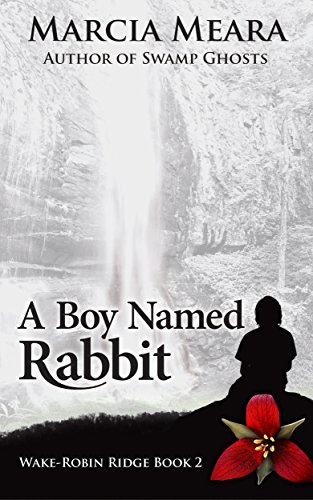
Sarah Gray and MacKenzie Cole from book 1, Wake-Robin Ridge, are now married and living in Mac’s lovely home built near the top of the mountain. Sarah is pregnant with their first child and Mac is happy and managing to keep his deep anxiety following the deaths of his ex-wife and son, Ben, under control. Mac’s emotional state is still delicate and he is desperately determined to keep his wife and their baby safe.
Ten-year old Rabbit has grown up in the mountains under the guidance and care of his grandparents who have taught him survival skills. The trios lifestyle is rough and ready with Gran living in a makeshift tent and the young boy and his grandpa generally sleeping outdoors in all weathers. At Grandpa’s insistence, the family has nothing to do with any people who are all designated as ‘bad people’ by Grandpa.
Gran has a progressive lung illness and Grandpa leaves his wife and Rabbit on their own one morning to travel into town and purchase medicine for her. He never returns. Gran continues to decline and, knowing she is dying, tells Rabbit that all people are not bad. She explains that contrary to Grandpa’s comments, there are also good people and Rabbit needs to find the good people, in particular, a man with winter blue eyes and hair like a crow’s wing. Gran dies and Rabbit is left on his own in the wilderness. With no other option, Rabbit packs up his belongings and sets off to find the man with the winter blue eyes.
Rabbit is well depicted as an old soul with a high intelligence despite his lack of book learning. His upbringing has provided him with survival tools and also the ability to assess situations and react in a clear headed and calm way. He is very endearing to the reader with his interesting way of looking at situations while still retaining the need for love and emotional immaturity of a young boy. He is very loving and giving and the reader can’t help routing for a good outcome for Rabbit.
Mac’s character continues to grow in this second book as he is faced with having to face up to his fears and deal with unexpected and unplanned events and circumstances despite his fears and anxieties. It is an intriguing journey to watch Mac struggling internally to move forward despite his anxiety and it is impossible not to be delighted by his progress and small victories.
Sarah is even more generous and loving than I remembered from book 1, and is the perfect wife to Mac. It is obvious she has a huge heart which is big enough for Mac, her unborn child, and Rabbit.
As with all lives, especially in fiction, the trio are faced with adversity and obstacles which they need to try to overcome. The storyline is engaging and entertaining and brings out the best in the various characters.
Purchase A Boy Named Rabbit here: https://www.amazon.com/Boy-Named-Rabbit-Wake-Robin-Ridge-ebook/dp/B00SQ4PID6
About Marcia Meara
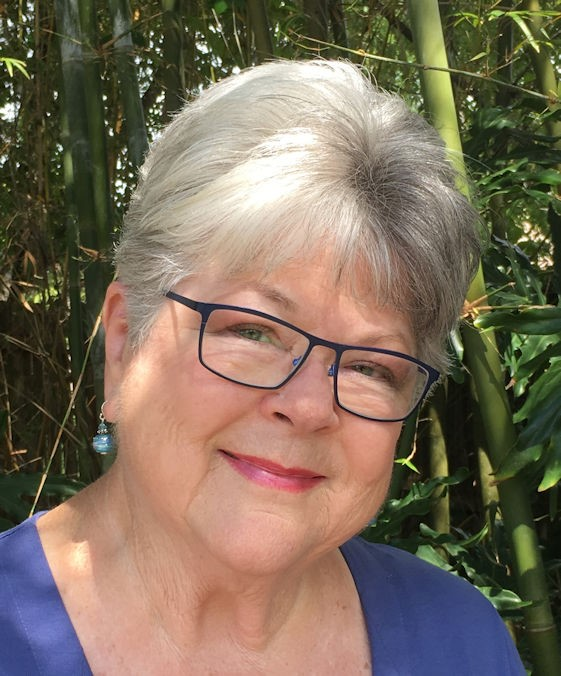
Marcia Meara lives in central Florida, just north of Orlando, with her husband of over thirty years and four big cats.
When not writing or blogging, she spends her time gardening, and enjoying the surprising amount of wildlife that manages to make a home in her suburban yard. She enjoys nature. Really, really enjoys it. All of it! Well, almost all of it, anyway. From birds, to furry critters, to her very favorites, snakes. The exception would be spiders, which she truly loathes, convinced that anything with eight hairy legs is surely up to no good. She does not, however, kill spiders anymore, since she knows they have their place in the world. Besides, her husband now handles her Arachnid Catch and Release Program, and she’s good with that.
Spiders aside, the one thing Marcia would like to tell each of her readers is that it’s never too late to make your dreams come true. If, at the age of 69, she could write and publish a book (and thus fulfill 64 years of longing to do that very thing), you can make your own dreams a reality, too. Go for it! What have you got to lose?
Purchase Marcia Meara’s books
Novels
Wake-Robin Ridge: Book 1
A Boy Named Rabbit: Wake-Robin Ridge Book 2
Harbinger: Wake-Robin Ridge Book 3
The Light: Wake-Robin Ridge Book 4
Swamp Ghosts: Riverbend Book 1
Finding Hunter: Riverbend Book 2
That Darkest Place: Riverbend Book 3
Riverbend Spinoff Novellas
The Emissary 1
The Emissary 2 – To Love Somebody
The Emissary 3 – Love Hurts
Poetry
Summer Magic: Poems of Life and Love
Reach Marcia on Social Media Here:
Blog: The Write Stuff
Facebook
Email: marciameara16[at]gmail[dot]com
About Robbie Cheadle
Award-winning, bestselling author, Robbie Cheadle, has published thirteen children’s book and two poetry books. Her work has also appeared in poetry and short story anthologies.
Robbie also has two novels published under the name of Roberta Eaton Cheadle and has horror, paranormal, and fantasy short stories featured in several anthologies under this name.
The ten Sir Chocolate children’s picture books, co-authored by Robbie and Michael Cheadle, are written in sweet, short rhymes which are easy for young children to follow and are illustrated with pictures of delicious cakes and cake decorations. Each book also includes simple recipes or biscuit art directions which children can make under adult supervision.
Robbie’s blog includes recipes, fondant and cake artwork, poetry, and book reviews. https://robbiesinspiration.wordpress.com/
Share this:

Treasuring Poetry – Meet multi-genre author and poet, Patricia Furstenberg, and a review #Poetry #writingcommunity #bookreview
Posted: March 15, 2023 Filed under: Book Review, Books, Interview, Poetry, Review, Treasuring Poetry | Tags: "Writing to be Read, As Good As Gold, Author Interview, Book Review, Patricia Furstenberg, Poetry, Robbie Cheadle, Treasuring Poetry 65 CommentsToday, I am delighted to welcome author and poet, Patricia Furstenberg, as my March Treasuring Poetry guest.
Why do you write poetry?
To me, writing poetry is like being a flâneuse of the literary world.
The history and meaning of flâneuse (with its masculine form, flâneur) derive from the turn of the century, late 19th to early 20th. It defines those men and women who had the time, the inclination, the passion (and the finances, back then) to wonder along the streets of a big city and to observe and be a part of the daily city life. Those who enjoyed taking in the city.
It was after this past holiday, when my family and I covered about 200km on the streets of Romania, in Bucharest and Sibiu, that I learned this expression, flâneuse.
Writing poetry is my reaction to being a flâneuse in a city of words. Writing poetry is like strolling among literary creations, classical or modern (buildings made of words if you wish) and taking in their beauty and rhythm. A turn of the word here, a phrase there, they blend with the breeze, the song of bird, or the memories of my youth (like dappled shadows) – creating poetry.
Do you think poetry is still a relevant form of expressing ideas in our modern world? If yes, why?
Absolutely. Poetry permanently sheds a light on the world; it helps us see our everyday life through a different perspective. It adds colour to a world monotonous in its everyday violence. It also highlights, thus helping us remember, the forgotten beauty of life.
Poetry also creates bridges that unite us, past distances (and I mean social distances) or any other barriers. Poetry is that one constant in times of change. Because poetry helps us understand our emotions and communicate them. It helps us make sense of an uncertain future or of a tumultuous past. Poetry translates, by use of imagery that what – at first – is hard to comprehend and it appears scrambled.
Which poem by any other poet that you’ve read, do you relate to the most and why?
So many times I asked myself this question and the answer varied, but more often it was Robert Frost’s “The Road Not Taken” the poem I most relate with.
The Road Not Taken
Two roads diverged in a yellow wood,
And sorry I could not travel both
And be one traveler, long I stood
And looked down one as far as I could
To where it bent in the undergrowth;
Then took the other, as just as fair,
And having perhaps the better claim,
Because it was grassy and wanted wear;
Though as for that the passing there
Had worn them really about the same,
And both that morning equally lay
In leaves no step had trodden black.
Oh, I kept the first for another day!
Yet knowing how way leads on to way,
I doubted if I should ever come back.
I shall be telling this with a sigh
Somewhere ages and ages hence:
Two roads diverged in a wood, and I—
I took the one less traveled by,
And that has made all the difference.
Life, the simple act of living and of leading a happy and fulfilled family life, are such a tremendous gift – but we tend to take it for granted. I think that contemplating the road that brought us here, as well as the ones followed by our ancestors, is a valuable exercise.
“The Road Not Taken” by Robert Frost is about the choices and the opportunities we encounter in life. But unlike Frost’s poem, I believe that it isn’t the regret over the roads not taken that should overshadow our future, but the excitement for further choices, born out of our past decisions. Life is a continuous maze, and a beautiful and exciting one.
Which of your own poems is your favourite and why?
I enjoyed following the antics of the puppies depicted in my poetry book “as Good as Gold”. There were times when I would write and laugh. When I grew up in Romania we would live in an apartment so we shared some pretty close living quarters with our dog. Whoever looked after a puppy will remember that, at the beginning, they hardly sleep through the night.
While writing “As Good as Gold” I enjoyed mentally watching a puppy conversing with the moon, or meeting an owl (during night-time, of course) for the very first time. Writing from experience… Today I look fondly on those memories. Thus, my favourite poem is “Why, Rain?” where we follow a puppy on his first encounter with a surprise storm during what starts like a perfect summer day, just right for some nature exploration.
Is writing poetry easy for you compared to prose or do you do a lot of editing and revision of your poems?
I enjoy writing poetry for its free form and lack of constraints. Poetry allows my thoughts to roam unrestrained. For me, writing poetry is like finding shapes in the clouds – they can be anything and I won’t be wrong in writing them as such. The reader, in turn, can interpret them the way she sees them and none will be wrong for taking that what her / his heart chose to see.
Writing prose asks for much more structure, although I enjoy it just as much. Writing prose is like building a house.
Poetry is like writing a song. Sometimes you hum it for a long time before you get the melody out on paper just the way you heard it in your mind. Prose is more like writing a symphony. Just as rewarding, perhaps more demanding. Prose will confer a whole set of ideas, where poetry will distil the thought to a perfect, silky thread.
What mode (blog, books, YouTube, podcasts) do you find the most effective for sharing your poems with poetry lovers and readers?
As an independent author with self-published poetry books as well as poems published in various poetry anthologies I find that, today, readers show a fear of commitment towards poetry. I discovered that publishing my poems on my blog or into an online literary magazine I can reach a wider audience than publishing a poetry book.
My review of As Good as Gold, A dog’s life in poems by Patricia Furstenberg

As Good as Gold: A Dog’s Life in Poems is a delightful and uplifting collection of poems about domestic dogs and puppies. Each poem is accompanied by a lovely photograph of the dog through whose eyes the poems is written. I liked that the poems were told from the perspective of the dogs and I thought the freestyle form of poetry suited this book well as each poem is a mini story or adventure.
The writing style is conversational and relaxed. The following few extracts give a feel for the style of the poetry:
“Puppy tiptoes,
Takes a peek.
Sniffs carefully …
What IS that squeak?”
“It’s oval, it bounces, it floats away,
It’s pink like his tongue, it wants to play!
“I’m coming!” barks pup and off he goes.
Down the hill the pink shape flows
And puppy follows suit. It’s just within his reach,”
For cat lovers, there are also a few poems told from the perspective of our feline friends and I loved those especially, as I am a cat owner.
I think this book is a lovely way of teaching children about animals as pets and the writing is appropriate for both children and adults, all of whom will adore the antics and curiosity displayed by the dogs, especially the puppies.
Purchase links
Patricia Furstenberg’s Amazon Author page
About Patricia Furstenberg
Writer and poet Patricia Furstenberg authored 18 books to date. Patricia grew up in Bucharest and was brought up listening to the legends and folktales of Romania’s past. She came to writing through reading, her passion for books being something she inherited from her parents. Her writing career followed a sinuous road that passed through a Medical Degree, practicing medicine, extensive traveling, and it also produced a happy marriage and two children. The recurrent motives in her writing are unconditional love and war, while Patricia’s keen interest for history and dogs brought her writing, through a perfect loop, to her native Romania. Today Patricia writes fiction and poetry. Her poems were published in anthologies by Green Ink Poetry, The Poem Magazine, and Lothlórien Poetry Journal as well as in over thirty online literary journals
Find Patricia Furstenberg
Twitter / Instagram / Facebook / LinkedIn / Goodreads / Book Bub / AllAuthor
About Robbie Cheadle
Award-winning, bestselling author, Robbie Cheadle, has published thirteen children’s book and two poetry books. Her work has also appeared in poetry and short story anthologies.
Robbie also has two novels published under the name of Roberta Eaton Cheadle and has horror, paranormal, and fantasy short stories featured in several anthologies under this name.
The ten Sir Chocolate children’s picture books, co-authored by Robbie and Michael Cheadle, are written in sweet, short rhymes which are easy for young children to follow and are illustrated with pictures of delicious cakes and cake decorations. Each book also includes simple recipes or biscuit art directions which children can make under adult supervision.
Robbie’s blog includes recipes, fondant and cake artwork, poetry, and book reviews. https://robbiesinspiration.wordpress.com/
Share this:

Treasuring Poetry 2023 – Meet poet and author Andrew McDowell and a review #poetry #bookreview #Treasuring Poetry
Posted: January 18, 2023 Filed under: Book Review, Books, Interview, Poetry, Review, Treasuring Poetry | Tags: Andrew McDowell, As the World Burns, Author Interview, Book Review, Mystical Greenwood, Poetry, Robbie Cheadle, Treasuring Poetry, Writing to be Read 40 CommentsWhich famous poet has influenced your poetry the most?
When I was young, I admired William Shakespeare. I was impressed with how he used words to convey emotions and ideas, and I wanted to follow his example. In my junior year of high school, I participated in a Poetry Out Loud contest where we had to recite a poem. I chose Sonnet XVIII (“Shall I compare thee to a summer’s day?”) and won third place. The Shakespearean sonnet was the first poetic form I tried to consistently write in beyond regular rhyming lines. It would not be until college that I began branching out to other forms and eventually free verse.
Which poem that you’ve read has impacted the way you see things in life?
This was a tough one, but one poem that has impacted me is Robert Frost’s famous “The Road Not Taken.”
Two roads diverged in a yellow wood,
And sorry I could not travel both
And be one traveler, long I stood
And looked down one as far as I could
To where it bent in the undergrowth;
Then took the other, as just as fair,
And having perhaps the better claim,
Because it was grassy and wanted wear;
Though as for that the passing there
Had worn them really about the same,
And both that morning equally lay
In leaves no step had trodden black.
Oh, I kept the first for another day!
Yet knowing how way leads on to way,
I doubted if I should ever come back.
I shall be telling this with a sigh
Somewhere ages and ages hence:
Two roads diverged in a wood, and I—
I took the one less traveled by,
And that has made all the difference.
In what way has this poem influenced your viewpoint?
Most people interpret it as about making new trails, which is how I interpreted it as a child. Many times, when I’ve been walking, when I took a turn different from the norm, the last three lines presented themselves in my mind.
However, I’d heard that interpretation is accurate, so I looked it up, and to my surprise, it’s true. Frost wrote it as a joke regarding his friend and colleague Edward Thomas, who often hiked with him and had trouble deciding which way to go. The poem is not only about how choices we make determine where we go in life, but also that we often look back and wonder whether we’ve made the right choice. Though I did not grow up with that interpretation, I have found it to be true and profound.
Perhaps Frost’s way of telling poetry influenced me, too; I remember a professor in college, who taught a poetry class I was in, observed that I liked to end poems with a meaning or lesson, drawing a parallel to Frost.
What is your favorite of your own poems?
This was another tough one, because several have special meaning to me. But of those I have published so far, one that deeply resonates is “Lonely Wolf,” which appeared in the 2019 Spring Edition of And I Thought Literary Magazine. It was written in college as a failed attempt at a pantoum, but after a few rejections, I rewrote it as a villanelle. It speaks to the loneliness I have felt—socially and romantically.
I am a lonely wolf who walks at night.
Amongst the tall pine trees and heavy snow,
Hear my cry to the half-moon shining bright.
***
Young once within a den huddled tight.
The years passed and sadly I had to go.
I am a lonely wolf who walks at night.
***
Embarking for the greatest peak tonight,
There shall I convey my long-held sorrow.
Hear my cry to the half-moon shining bright.
***
Though many have come within my sight,
Why they stand distant I can never know.
I am a lonely wolf who walks at night.
***
Winter’s bitter cold reigns in silent might.
Dark silence only brings light to my woe.
Hear my cry to the half-moon shining bright.
***
Here I stand alone on this rocky height.
Here I do bay up where countless stars glow.
I am a lonely wolf who walks at night.
Hear my cry to the half-moon shining bright.
What’s next for you in your writing career?
My focus right now is fiction. My fantasy novel Mystical Greenwood came out in a new edition, so my primary goal is to complete the sequel. I do have many unpublished poems, so I want to keep an eye out for publishing opportunities. A volume of poetry isn’t out of the question—if I can find a unifying theme (my poems touch on many unique ones).
About Andrew McDowell

Andrew McDowell became interested in writing at age 11, inspired by childhood passions for stories and make-believe. By the time he was 13, he knew he wanted to be a writer. He studied at St. Mary’s College and the University of Maryland, College Park. He is a member of the Maryland Writers’ Association.
In addition to his fantasy novel Mystical Greenwood, Andrew has written poetry, short stories, and creative nonfiction, and he is interested in writing drama and lyrics. He was diagnosed with Asperger syndrome, an autism spectrum disorder, when he was 14.
Find Andrew McDowell
Website | Facebook | Twitter | YouTube | LinkedIn | Tumblr | Goodreads | Amazon
Review of Mystical Greenwood
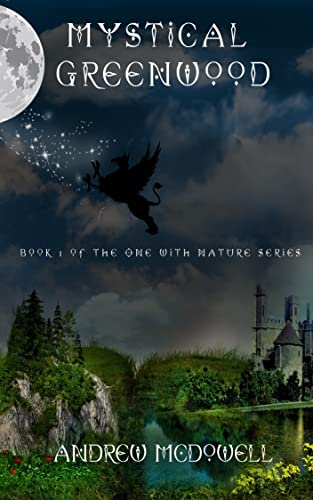
What Amazon says
Dermot is a fifteen-year-old boy living in a remote village in the land of Denú. He has always longed for something more in his life. Now, everything changes after he sees a renowned creature–a gryphon–in the sky, and then crosses paths with a reclusive healer who harbors a secret.
Soon, he and his brother have no choice but to leave the only home they’ve ever known. They travel with new friends across the land through several great forests, along the way meeting an old man, a family of unicorns, and witnessing an important birth. They must evade fire-breathing dragons and dark-armored soldiers hunting them down, all serving an evil sorcerer determined to subjugate the kingdom, and who will stop at nothing to destroy them.
Denú’s only hope is if a renowned coven returns to face the enemy after years in hiding. Dermot, however, suspects their own role may be more significant than he thought, as he slowly discovers a power which exists amongst the trees and creatures of every greenwood. Can they save those they hold dear? Will Dermot find what he has sought? Or will all that’s free and good be consumed by darkness?
My review
Andrew McDowell has written an extraordinary fantasy tale which centres around the guardians of nature and the Greenwood, called driadors. The plot follows a typical good versus evil path, but the overlay of the protection versus the destruction of the natural environment was unusual, topical, and really fantastic.
Dermot and his brother, Brian, do not get on. Brian is the son who always does as he is asked by his parents and fits the mould of a pleaser, while Dermot is a dreamer and has always felt he was intended for more than his life as an apprentice blacksmith to his father. The rivalry between the two boys comes to a head when Dermot is carried away by a hunting gryphon. Dermot persuades the gryphon to drop him but he is injured during his fall. He wakes up in the care of a healer called Saershe, and her grandson, Ruairi. Dermot realises that they are not ordinary forest dwellers and, following his return home, he becomes obsessed with finding them again.
Brian becomes aware that Dermot has had some sort of unusual experience during his absence and uses this knowledge to stir up trouble for Dermot with their parents. Meanwhile, an evil force in the shape of a fallen driador called Taranis, is lurking just beyond the village, waiting for an opportunity to wreak havoc and destruction and restart an old battle against the driadors. Dermot and Brian will have to learn to trust and rely on each other, and harness the power of nature if they want to save the Greenwood, their friends, family, and themselves.
This is an unusual and well paced story with interesting characters, and these elements more than makes up for the odd moments in the book when Dermot and Brian’s emotional reactions to situations seem slightly lacking in depth or incongruent to the circumstances.
The author has great potential as a writer and I would love to read the next book in this series and find out what happens next in the battle for control between Taranis and the driadors.
Purchase Mystical Greenwood
Andrew McDowell Amazon Author Page
My review of As the World Burns: Writers and Artists Reflect on a World Gone Mad

What amazon says
As the World Burns: Writers and Artists Reflect on a World Gone Mad is an anthology of poetry, prose, essay, and art inspired by the unprecedented events of the year 2020. It embraces fierce and raw creative works relating to life during the Covid-19 pandemic, Black Lives Matter, Donald Trump, and the economic uncertainty and horror of the last eight months. One hundred and fourteen writers and artists spanning ten countries and 30 states are represented in this powerful volume. It is both a story of survival and an act of resistance.
“We speak with many voices, to the damage wrought in these violent, fevered months. Let us never forget or turn away, from what is just, what is necessary, to keep light alive in this world.”
My review
This is an interesting recording by numerous contributors, of the status of the world and society in the run up to the Covid lockdowns, and during the subsequent on-going pandemic. The writings, which comprise of mainly poetry, but also some essays and visual art pieces, also cover events that ran parallel to the lockdowns and pandemic that had an impact on society and politics.
Reading this anthology is an adventure as the messages are intense and vivid and the styles of writing hugely varied due to the significant number of contributors. Although not all the styles of poetry appealed to me, they were all memorable due to the strong emotional messaging, and well worth reading.
My favourite poems are as follows: Falls the Shadow by John W. Leys, I Think the Birds don’t Care by Kelsey Hontz (the words “Somebody has mixed up the two themes of apocalypse and paradise, which would be a fireable offense if anybody were still in the director’s chair for this year of hindsight.” really resonated with me.), Lately by L. Stevens, Quarantine by Andrew McDowell, Upon Waking in a Pandemic by Christine E. Ray, Choice Perhaps by Jane Dougherty, Thirteen Ways of Looking at Life before the Virus by Leslea Newman, Am I Angry? by John W. Leys, Virus by Erik Klingenberg (nightpoet), and Tumbling by Merril D. Smith.
Two of the essays, were particularly interesting to me. I-Soul-Ation by Dr. Sneha Rooh. The closing words of this essay have sadly not come to fruition, in my opinion:
“I would like to think that we will hug people longer, be grateful to be able to work, that we will smile brighter when the masks come off and we’ll let the smiles fully enter our hearts, that we will be careful abut the lies sold to us and remember that we are precious mortals with precious lives and an immense ability to connect and care.”
I am of the view, that the world has returned to its previous status quo with alarming speed and that as a species, we have learned nothing from the lockdowns and the pandemic.
The other essay I particularly enjoyed was Serendipity by Kim D. Bailey.
This book is an important documenting of life during this difficult and stressful time of life when the entire world united to face a common enemy. Sadly, we have still not learned our lesson, as I mentioned above, but perhaps some of us have found more courage to fight for a better eventual outcome for our planet and for humanity.
Purchase As the World Burns
About Robbie Cheadle

Award-winning, bestselling author, Robbie Cheadle, has published thirteen children’s book and two poetry books. Her work has also appeared in poetry and short story anthologies.
Robbie also has two novels published under the name of Roberta Eaton Cheadle and has horror, paranormal, and fantasy short stories featured in several anthologies under this name.
The ten Sir Chocolate children’s picture books, co-authored by Robbie and Michael Cheadle, are written in sweet, short rhymes which are easy for young children to follow and are illustrated with pictures of delicious cakes and cake decorations. Each book also includes simple recipes or biscuit art directions which children can make under adult supervision.
Robbie’s blog includes recipes, fondant and cake artwork, poetry, and book reviews. https://robbiesinspiration.wordpress.com/
Share this:

Treasuring Poetry – A tribute to poet and author, Sue Vincent, plus some reviews #SueVincent #Poetrycommunity
Posted: December 14, 2022 Filed under: Books, Poetry, Treasuring Poetry | Tags: Poetry, SueVincent, Treasuring Poetry, Tribute, Writing to be Read 53 Comments
I am using this last Treasuring Poetry post for 2022 to celebrate the writing talent of Sue Vincent who passed in March 2021. Sue was an incredible blogger who did a huge amount to support her fellow bloggers, authors, and poets. Her poetry, books, and blog are still close to many of our hearts which is an incredible tribute to her talent and personal charisma.
I am sharing Sue’s responses to a Poetry Readathon I ran on Robbie’s Inspiration in December 2018, two years after I first met Sue.
Tell us a bit about yourself
I am a Yorkshire lass with two grown sons and two granddaughters. I live with the notorious Small Dog, in a village in rural Buckinghamshire, England. I write daily for my own blog, the Daily Echo, which is an eclectic mix of personal reflections, poetry, history and folklore. I help run the Silent Eye, an international organisation that helps people realise their potential through awareness, and write for our website too. As a writer, I have several books published, including one written with G. Michael Vasey, but most of the time I write in partnership with Stuart France, exploring ancient sites, myths and symbolism in a semi-fictional way.
When ever I think of Yorkshire it reminds me of the book, The Secret Garden by Frances Hodgson Burnett. Sue and Stuart’s separate and combined blog posts also remind me of this book with their amazing and wonder inducing sights and ideas.
Sue’s blog is still available to readers who share her love of poetry and fascinating places in the United Kingdom.
Who is your favourite poet?
That has to be an unfair question! It all depends on the moment and the mood. If I had to choose, I would say Omar Khayyam, whose poetry I have carried in my handbag and re-read for many years.
On the other hand, and completely at the other end of the literary scale, there is Marriot Edgar, whose rhyming monologues, written and recited in the vernacular, were so much a part of my childhood that even now, when I write humorous verse, it is to his rhythm.
As I lived in France for many years and learned the language as well as my own, I learned to love French poetry too, and while I could say my favourite is Alfred de Musset or Victor Hugo, I will be honest and say that the poet that moves me the most is the Belgian singer/songwriter, Jacques Brel. The lyrics of his songs are poems in their own right and have a good deal to say and to teach.
The idea of the book of poetry you carry in your handbag, Sue, is completely wonderful to me. It has quite captured my imagination and I think I may start a tradition like this with my son, Gregory.
What is your favourite poem?
Omar Khayyam is easy… Fitzgerald translated his work from the original Farsi, and the quatrains are all in one book, the Rubaiyat…
“The Moving Finger writes; and, having writ,
Moves on: nor all thy Piety nor Wit.
Shall lure it back to cancel half a Line,
Nor all thy Tears wash out a Word of it.”
But then, there is Marriot Edgar to consider… and although The Lion and Albert is probably his best-known work, which I can still recite by heart, I do have a fondness for his take on various events in British history. Particular favourites are The Battle of Hastings, where King Harold confronted William of Normandy:
King ‘Arold came up as they landed –
His face full of venom and ‘ate –
He said ‘lf you’ve come for t’Regatta
You’ve got here just six weeks too late.’
At this William rose, cool but ‘aughty,
And said ‘Give us none of your cheek;
You’d best have your throne re-upholstered,
I’ll be wanting to use it next week.’
Though if I had to pick one, it would be Magna Charter, which recounts how King John was forced to sign the Magna Carta, even if he did dip his pen in the jam…
“And it’s through that there Magna Charter,
As were made by the Barons of old,
That in England today we can do what we like,
So long as we do what we’re told.”
Thank you for introducing me and my readers to these poems, Sue. They are lovely and memorable.
What do you appreciate most in a poem?
The first word that sprang to mind in answer to this question was ‘integrity’, and that, I think, can be applied to all forms of poetry. With humorous verses, I want to laugh. With narrative poems, I want a story that has a beginning, middle and end. With short forms, like the haiku and tanka that are now so popular, I want the capture of a moment and layers of possible interpretation that make me think. With classic poetry, I want to feel what the writer felt, understand the elusive thought or emotion that made them write.
Whether it is free verse, rhyme or one of the many recognised forms, it is not enough to simply string words and phrases together across the lines and beats, arranging it to look like a poem. A poem has to flow; it should sing its own music as it is read, even free verse should have its own rhythm and inner shape. And, whether it is humorous, romantic, spiritual or dramatic, it should have something to say that will leave the reader the richer for having read.
You have summed up beautifully what I also think, Sue. A poem should be meaningful and leave a lasting impression upon the reader.
Why do you write poetry?
I grew up around poetry. My mother’s notebooks introduced me early to how odd incidents and fleeting emotions could be captured in verse. There were the monologues shared with my great-grandparents, and always books… even my first Sunday School Prize was written in verse, and I have loved Dr Seuss ever since.
Things that amuse me tend to be written in my head, as they happen, in Edgar-esque verses, but there are other, deeper things that seem as if they can only be conveyed by poetry. You cannot capture them in everyday words… transient realisations, fleeting emotions, inspiration half-understood. Thoughts and feelings too wide to condense into speech find a home in poetry, where the unspeakable can be spoken and the uncontainable contained in such a way that others might share and glimpse an elusive idea. That is why I read and write poetry.
Would you see Eden in a withered bough?
Sunlight in shadows, or flowers bloom in frost?
Beauty in sorrow, or gifts in the dark?
Ask the Earth and the song of wild water
To whisper their secrets.
Follow the moon-path to the horizon
And look within.
I feel you have written your reasons like a true poet, Sue. Writing poetry is something we are compelled to do as part of the communication of our deepest feelings and thoughts. It is really the only way some things can be said for some people.
Sue Vincent’s poetry books
My review of Notes from a Small Dog: Four Legs on Two
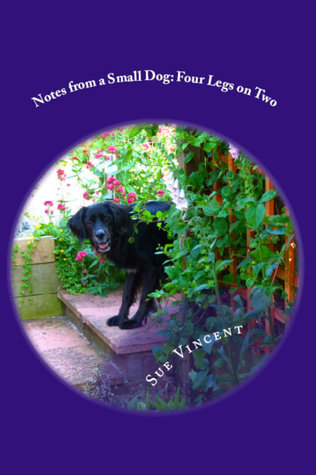
Where to start with a review of Notes from a Small Dog: Four Legs on Two by Sue Vincent? I loved this books so much and so did Michael. It became a bit of a contentious book between Mike and I as I sneakily read ahead and Michael realised that I wasn’t starting where I had finished reading to him and made me go back. He was very determined not to miss a single word. I love this type of story, told mainly through the eyes of a small and very cute dog called Ani. Sue depicts day to day life in such a humorous and fun filled way and I found it a wonderful way to end each stress filled day to sit down and read a few chapters of Ani’s antics to Michael [and to myself of course thereby sparking Mike’s intense displeasure as mentioned above]. Sue writes beautiful descriptions of the natural environment where she lives and her depictions of some of Ani’s learning experiences are very funny. I can just picture the surprise of a small dog taking a flying leap into a pond that has frozen overnight. Sue describes Ani’s anxiety and attention when she is ill and her concern and caring when Ani is ill. This book is altogether completely delightful and tells a beautiful story of the special relationship that can develop between man and his best friend. There are also a few of Sue’s humorous and clever Ani poems thrown in for good measure. This genre of book is just up my street and I rated this book five out of five on Goodreads and Amazon.
Purchase Notes from a Small Dog: Four Legs on Two from Amazon here: https://www.amazon.com/Notes-Small-Dog-Four-Legs-ebook/dp/B00GNHTIAW
Laughter Lines, Life from the Tail End
Michael and I are firm Ani addicts so another whole book about Ani’s antics is a real treat. The goings on of Ani’s two legs, sets Michael off into gales of laughter so we are really happy to read about the trials and tribulations of “Her” too.
The book is written in rhyming verse and tells all sorts of tales. To coin a phrase, Ani says:
“The time has come,” the doglet said,
“to talk of many things;
Of tennis balls and squeaky ducks,
and sneaky bees with stings; …”
In this book, Laughter Lines, Life from the Tail End, you will meet some of Ani’s friends, OR NOT:
The cat likes to sit on the roof of the shed
While the dog views this as an intrusion,
It’s all fur and teeth
As the dog growls beneath
And the birds flutter round in confusion.
We get some insights into Ani’s diet:
Its cream cheese and crackers for me and the dog,
While I’m more the epicure… she’s just a hog…
AND
Me and the dog had a sandwich for brunch
(Well, for me it was breakfast, for her it was lunch.)
NOT TO MENTION
The ham disappeared without leaving a trace
Except for the grin upon one small dog’s face.
So if you like to enjoy life and have a good giggle, pick up this delightful book of light-hearted poems and jump right in. There are also some lovely photographs in the book for the reader to enjoy.
You can purchase Laughter Lines, Life from the Tail End here: https://www.amazon.com/Laughter-Lines-Life-Tail-End-ebook/dp/B00USCYJ20
Doggerel: Life with the Small Dog
Ani, or the Small Dog, as she is referred to in this delightful collection of poetry, is a rescue dog whose mother and father were found living together in an Irish field, awaiting the birth of their litter of puppies. Ani’s two legs is named Sue Vincent and she is a Yorkshire born writer, a teacher and a director of The Silent Eye. Both Ani and Sue write highly entertaining blogs.
So what is life like for a Small Dog who blogs and writes poetry, living with another writer who is obsessed with bathing her? Ani tells us all about her life with Sue in a collection of hilarious and poignant poems, largely written in rhyming verse
Well, to start of with, Ani makes it quite clear she does not enjoy being tricked into bathing:
“I got them back on exit
When I shook my dripping fur…
(I didn’t get my boy too much,
But aimed it all at her.)”
“To add insult to injury…
All guilt upon her head…
When I went off to sulk a bit
I found she’d washed my bed!”
Both from Touche.
Ani also does not like having to diet:
“Now this works a treat, if you’ll pardon the pun,
‘Cause she either forgets, gives me treats or a bun
Or more likely she will not go in there at all
‘Cause, “You’ve put on a pound or two, girlie, since fall…”
from In hiding…
Of course, Ani is the first to worry if her Two-Legs gets sick:
“My two-legs has broken down again,
Or maybe she’s still broke,
I think she’s cute with hamster cheeks…
She says it’s not a joke.”
from Karma
Ani is also the first to admit that when she is sick, her Two-Legs nurses her with devoted care:
“Being poorly does have compensations;
‘Cause she’s worried to death, I can tell.
But now she is just so attentive…
I’m not in a rush to get well.”
from Sleeping Dogs Lie…?
This is a thoroughly enjoyable book of poetry about the antics and life experiences of the Small Dog. I would recommend it to anyone who loves dogs and who enjoys having a good giggle about life in general.
You can purchase Doggerel: Life with the Small Dog here: https://www.amazon.com/Doggerel-Life-Small-Sue-Vincent-ebook/dp/B081B8BSFC
Pass the Turkey: The Small Dog’s Christmas
Pass the Turkey: The Small Dog’s Christmas is a delightful book full of Christmas cheer. Ani, the small dog, is reflecting on Christmas’ past, present and future through a combination of letters to Santa and poems. The perplexities of ‘fake’ Santas, the ‘theft’ of a favourite sofa, and gifts of tennis balls and a chicken flavoured biscuit, all require Ani’s consideration. Her naughty secrets are also revealed such as the time she ate all the left over turkey and salmon and fell through the ice in the pond [it was shallow]. The indignities of baths and having to wear reindeer antlers are also shared.
Join Ani and her two legs, Sue Vincent, for a glorious romp through advent and Christmas Day.
A few of my favourite verses:
“I’ve tried to help with household chores,
I’ve laundered all my balls,
I’ve chased the pigeons form the shed
And spiders from the walls.” from Request
“She’s like a puppy when it snows
We just go out to play…
And if she wraps up warm enough
We might stay out all day.” from Wishing for the White Stuff
“The windows are all closed at night
The keyhole seems to small
To wriggle through with turkey
And a brand new tennis ball.” from Chimneys.
Purchase Pass the Turkey: The Small Dog’s Christmas here: https://www.amazon.com/Pass-Turkey-Small-Dogs-Christmas-ebook/dp/B081ZBR2GZ
Life Lines: Poems from a Reflection
I love poetry and I read a lot of poems and poetry books and I found the poems in this amazing little book to be quite profound. Sue Vincent touches on all aspects of life, including the sadder and more emotionally difficult aspects such as loss of a loved one, in a beautifully poignant and yet positive and uplifting way which make them satisfying and wonderfully uplifting.
Most of these poems are written in freestyle form with a couple in rhyming verse. The poet has matched the style well to the content of the poem and the rhyming verse poems present the more light hearted and upbeat toned poems.
A few short extracts that I found particularly impactful are as follows:
“The pen paints the souls longing
In jewel tones.” from Purpose
“There were flowers,
Three red roses,
Red as life,
Placed in a cold hand,
One for each heart
Saying a final farewell.
When the tears fall,
There are always flowers.” from Flowers
“Two ravens whisper in my ear,
As Thought and Memory begin.
Within the darkness of their wings
Stir images, both dark and bright,
That dance within the secret heart
And quiet hours of the night.” from Odin’s Ravens [my favourite poem in this collection]
“My pillow held the hollow where you lay,
With love glazed eyes that held me,
Watching as the wildness took me,
Smiling up at me.” from Memory [intensely poignant poem]
Purchase Life Lines: Poems from a Reflection here: https://www.amazon.com/Life-Lines-Reflection-Sue-Vincent-ebook/dp/B00PJSPLI4
Midnight Haiku: A Year in Contemplation

Sue Vincent is well know for her poetry. Some is poignant and sad, some is humorous, some is incredibly beautiful, and all is emotional, insightful, and meaningful. Sue has mastered many forms of poetry, including freestyle, rhyming verse, tankas, and haikus.
Her haikus, only 17 syllables long, are among the most powerful of her many poems. This book is a collection of 365 days of haikus and loosely follows the seasons.
The best way of demonstrating the beauty and power of these haikus is by sharing a few of my favourites:
“earth captures heaven
holding stars in tender hands
that the blind may see”
***
“a flaming chalice
raising itself to the sun
accepting the light”
***
“beyond the roses
colouring a summer sky
a smiling god paints”
***
“defiant colour
sparking through the fading days
celebrating joys”
***
“memory’s pictures
neatly framed in timeless rolls
colouring the day”
These five haiku are the ones that moved me the most and I hope they have illustrated the magnificence of this beautiful book.
Purchase Midnight Haiku: A Year in Contemplation here: https://www.amazon.com/Midnight-Haiku-Contemplation-Sue-Vincent-ebook/dp/B08YM9KBNJ
Poetry Treasures
Sue Vincent was also a contributor to Poetry Treasures, a WordCrafter anthology of poetry.

A review of Poetry Treasures
A sweet short read and a collaboration of a variety of poems written in various forms of poetry by some talented poets. I feel like this book was an introduction to the poets as well as a sampling of their creativity in poetry. I especially enjoyed the poetry of Colleen Chesebro and a delicious sampling of intrinsic poetry by the talented and missed, the late, Sue Vincent.
You can purchase Poetry Treasures here: https://www.amazon.com/Poetry-Treasures-Sue-Vincent-ebook/product-reviews/B0933KSJR9
More about Sue Vincent
You can read my Treasuring Poetry interview with Sue Vincent here: https://writingtoberead.com/2020/04/25/sue-vincent-shares-her-thoughts-on-poetry-and-a-review/
Diana Peach shared a most beautiful poem by the late Sue Vincent as a tribute to her mother who sadly passed from our Earthly world in late November 2022. You can read it here: https://mythsofthemirror.com/2022/11/13/go-gently-into-that-good-night-2/
Colleen Chesebro shared a lovely poem in celebration of the late Sue Vincent in her latest poetry book, which I reviewed here: https://robbiesinspiration.wordpress.com/2022/12/11/robbies-inspiration-book-blog-tour-fairies-myths-magic-ii-by-colleen-m-chesebro-and-a-review-poetry-shortstories-readingcommunity/
You can find out more about Colleen Chesebro’s book here: https://colleenmchesebro.com/category/colleens-books/
Find Sue Vincent’s books and poetry
Amazon: https://www.amazon.co.uk/Sue-Vincent/e/B00F2L730W/ref=dp_byline_cont_book_1
Goodreads: https://www.goodreads.com/author/show/6551588.Sue_Vincent
Blog: https://scvincent.com/about/
About Robbie Cheadle

Robbie Cheadle is a South African children’s author and poet with eleven children’s books and two poetry books.
The eight Sir Chocolate children’s picture books, co-authored by Robbie and Michael Cheadle, are written in sweet, short rhymes which are easy for young children to follow and are illustrated with pictures of delicious cakes and cake decorations. Each book also includes simple recipes or biscuit art directions which children can make under adult supervision.
Robbie and Michael have also written Haunted Halloween Holiday, a delightful fantasy story for children aged 5 to 9 about Count Sugular and his family who hire a caravan to attend a Halloween party at the Haunted House in Ghost Valley. This story is beautifully illustrated with Robbie’s fondant and cake art creations.
Robbie has published two books for older children which incorporate recipes that are relevant to the storylines.
Robbie has two adult novels in the paranormal historical and supernatural fantasy genres published under the name Roberta Eaton Cheadle. She also has short stories, in the horror and paranormal genre, and poems included in several anthologies.
Robbie Cheadle contributes two monthly posts to https://writingtoberead.com, namely, Growing Bookworms, a series providing advice to caregivers on how to encourage children to read and write, and Treasuring Poetry, a series aimed at introducing poetry lovers to new poets and poetry books.
In addition, Roberta Eaton Cheadle contributes one monthly post to https://writingtoberead.com called Dark Origins: African Myths and Legends which shares information about the cultures, myths and legends of the indigenous people of southern Africa.
Robbie has a blog, https://robbiesinspiration.wordpress.com. where she shares book reviews, recipes, author interviews, and poetry.
Find Robbie Cheadle
Blog: https://www.robbiecheadle.co.za/
Blog: robbiesinspiration.wordpress.com
Twitter: BakeandWrite
YouTube: https://www.youtube.com/channel/UCVyFo_OJLPqFa9ZhHnCfHUA
Facebook: Sir Chocolate Books
______________________________________________________________________________________________
Want to be sure not to miss any of Robbie’s “Treasuring Poetry” segments? Subscribe to Writing to be Read for e-mail notifications whenever new content is posted or follow WtbR on WordPress. If you found it interesting or entertaining, please share.
Share this:

Treasuring Poetry – Meet poet and author, Yvette Prior and a book review #Poetrylovers #readingcommunity @bookreview
Posted: September 21, 2022 Filed under: Author Profile, Bird Watching, Book Review, Interview, Poetry, Review, Treasuring Poetry, Women's Fiction and Poetry | Tags: Author Interview, Avian Friends, Book Review, Robbie Cheadle, Treasuring Poetry, Writing to be Read, Yvette Prior 61 Comments
Today, I am very excited to welcome Yvette Prior from Priorhouse blog as my September Treasuring Poetry guest. Yvette is among the first bloggers I met when I started Robbie’s Inspiration and she was always encouraging and supportive of my artwork and writing. Thank you, Yvette.
Today, Yvette, a talented poet and author herself and a huge supporter of other writers and bloggers, is going to share some of her thoughts about poetry and some readings from her lovely poetry book, Avian Friends.
What is your favourite poem and why?
Winter Chill
Stood and listened
to birds tweet and whistle
had breakfast to make
day to begin
stuff to do
but standing
in winter chill
at the back door
harmony
stopped me
hope flew in
melodious infusing during a winter chill
trees still bare
yet birds were there
dulcet air
momentary loss of care
cold days
soon to part ways
winter hard is exiting
birds returning
spring soon erupting
green grass, pleasant breeze
flowers, butterflies, bees
replacing freeze
shivering, I shut the door
musical deliverance once more
Behind the poem
Winter Chillwas written about a brief experience I had when I opened the backdoor one winter’s day. I was stopped in my tracks. It was the first time I had heard the birds in a long time and their “harmony stopped me” as “hope flew in.” I am not what people would refer to as a “birder.” I do not put out seeds and we don’t have any feeders on our property (although I might add some later). The birds have just found a nice little habitat on their own and I am grateful. In this poem, I described the scene exactly as it unfolded -opened the door, heard the birds, and I was reminded that a better season was on its way. This idea could apply to more than just a cold weather season ending – it could also apply to the trials and heavy times in life. Challenging times do not last forever and sometimes we might just need to pause – in the midst of a difficult season – and find small (healthy) ways to enjoy “momentary loss of care.” Hope can mean so much too – and so anytime we have Hope fly in – let’s embrace it.
Please share a poem you enjoy and why you enjoy it
This is just to say by William Carlos Williams
I have eaten
the plums
that were in
the icebox
***
and which
you were probably
saving for breakfast
***
Forgive me
they were delicious
so sweet
and so cold
Williams’ poem whispers so much to me and one takeaway is the freedom someone felt to indulge in the plum. There are times we sacrifice times we do outreach and hold back – but this depicts the opposite – it shows us someone so comfortable with the other person where they ate the plum (while knowing the person was saving it). The poem makes me smile because I can imagine how juicy and tasty it was. And the title and tone of the poem lets us know that the consumer here is not apologizing for eating it either. That’s my take.
What are your plans for your poetry going forward?
I try to write every day, in a paper notebook, and most of this year I have been busy working on non-poetry projects so I only wrote a handful of poems this year. My goal is to get back to my musings with poetry. Even if all of the poems do not make it into a future book, I enjoy writing them.
I started writing in middle school but really got into poetry while in college. In between classes, I created free verse poems. I moved words around andenjoyed simple rhyming schemes.
I know that folks sometimes put down the easy rhymes, but I like them. It is not about creating difficult poetry for me – it really is a type of solitude with words and ideas.
Thank you, Yvette, for your lovely answers and for being my guest today.
Yvette has shared a lovely YouTube video recital of some of her poems from Avian Friends.
My review of Avian Friends by Yvette Prior
What Amazon says
In Avian Friends, you will find more than forty poems that offer encouragement and uplifting stories. The poems are free rhyme and connect to different life scenarios. Each poem also includes a “behind the poem” section, which provides personal reflections, teaching tidbits, and ideas for wellness. Backyard birds inspired the poems and the topic of faith has been gently woven in (not in a religious way) with the hope that diverse readers can enjoy the content.
The poems in this book are not complicated poems; instead, they are light and can lift the reader’s mood. The poems are for those who do not always read poetry – as well as for the poetry lover.
My review
Avian Friends is a delightful book of poetry that centres around the author’s interactions with birds in her personal life. In the reactions and interactions of her avian friends, the author finds threads of similarity to human reactions to circumstances and experiences and in relationships. She weaves these thoughts into the observations expressed in her poems.
One of the most interesting section of poems for me where the ones written following the death of a young and close relative. The author’s grief is palpable and her understanding of nature and the role of all creatures in the cycle of life help her come to terms with her sorrow and emotions.
An verse from Part III Life and Death:
“The nest was found
on the ground after the storm
nestlings didn’t make it
we mourned
fuzzy little creatures
oversized eyes
chests without air
buried with care
patting down soil
reminded me that we, too, will die …”
I have referred to the poet as the author because there is a lot of reflective prose in this book. Each poem is followed by a discussion which provides the poet’s inspiration for the poem, and includes quotes and information about birds and other aspects of life that contribute to the meaning behind the poem. I really enjoyed these explanatory sections and gleaned a lot of insight into the poet’s emotions and thought process from it.
Enjoyment of this book is certainly not limited to people who love birds as, in many instances, the birds are a metaphor for human life. This book will be enjoyed by all lovers of poetry.
Purchase Avian Friends
Amazon paperback: https://www.amazon.com/Avian-Friends-Yvette-Prior-Ph-D/dp/1973831228
Amazon kindle: https://www.amazon.com/Avian-Friends-Encouraging-inspired-Backyard-ebook/dp/B07QHNZF81
About Yvette Prior

Yvette Prior lives on the East Coast of the United States with her spouse, Chris, and together they have three adult children, two grandchildren, and no pets (after having many dogs over the years).
Yvette enjoys working with people and her varied work background includes education, social work, hospitality management, and lots of outreach. Her passion area is studying about health and wellness and after earning a Ph.D. in I-O Psychology, she poured into waiting book projects and she has not stopped writing since.
Her goal as a writer is to educate, edify, and encourage readers. Her personal blog can be found at priorhouse.wordpress.com
About Robbie Cheadle
Robbie Cheadle is a South African children’s author and poet with eleven children’s books and two poetry books.
The eight Sir Chocolate children’s picture books, co-authored by Robbie and Michael Cheadle, are written in sweet, short rhymes which are easy for young children to follow and are illustrated with pictures of delicious cakes and cake decorations. Each book also includes simple recipes or biscuit art directions which children can make under adult supervision.
Robbie and Michael have also written Haunted Halloween Holiday, a delightful fantasy story for children aged 5 to 9 about Count Sugular and his family who hire a caravan to attend a Halloween party at the Haunted House in Ghost Valley. This story is beautifully illustrated with Robbie’s fondant and cake art creations.
Robbie has published two books for older children which incorporate recipes that are relevant to the storylines.
Robbie has two adult novels in the paranormal historical and supernatural fantasy genres published under the name Roberta Eaton Cheadle. She also has short stories, in the horror and paranormal genre, and poems included in several anthologies.
Robbie Cheadle contributes two monthly posts to https://writingtoberead.com, namely, Growing Bookworms, a series providing advice to caregivers on how to encourage children to read and write, and Treasuring Poetry, a series aimed at introducing poetry lovers to new poets and poetry books.
In addition, Roberta Eaton Cheadle contributes one monthly post to https://writingtoberead.com called Dark Origins: African Myths and Legends which shares information about the cultures, myths and legends of the indigenous people of southern Africa.
Robbie has a blog, https://robbiesinspiration.wordpress.com. where she shares book reviews, recipes, author interviews, and poetry.
Find Robbie Cheadle
Blog: https://www.robbiecheadle.co.za/
Blog: robbiesinspiration.wordpress.com
Twitter: BakeandWrite
YouTube: https://www.youtube.com/channel/UCVyFo_OJLPqFa9ZhHnCfHUA
Facebook: Sir Chocolate Books
______________________________________________________________________________________________
Want to be sure not to miss any of Robbie’s “Treasuring Poetry” segments? Subscribe to Writing to be Read for e-mail notifications whenever new content is posted or follow WtbR on WordPress. If you found it interesting or entertaining, please share.
Share this:

Treasuring Poetry – Welcome poet and author, Patty Fletcher and a review #poetry #bookreview #poetrycommunity
Posted: August 17, 2022 Filed under: Book Review, Interview, Poetry, Review, Treasuring Poetry | Tags: Author Interview, Book Review, Patty L. Fletcher, Poetry, Robbie Cheadle, Treasuring Poetry, Writing to be Read 43 CommentsToday, I am delighted to feature poet, author, and blogger, Patty Fletcher and share her thoughts about poetry and her favourite poems. I really enjoyed the poems included in this post, those written by Patty herself, and those included in A Poetic Apostrophe. I hope you enjoy them as much as I did.
What is your favourite poem?
Hello, Robbie. Before I begin, I’d like to thank you for including me in Treasuring Poetry.
Honestly, poetry isn’t my forte. I do, however dabble some and in fact this poem, Ever Lost in the Moment was eventually published in an issue of The Avocet Nature Magazine.
It is a favorite because writing it allowed me to put words to a fantasy which played out in my head.
What inspired you to write this particular poem?
In the poem, Ever Lost to the Moment you see two lovers who have longed for one another for many years finally come together. This, along with the raw bones of nature roaring around them makes it magical to me and since I’m a huge believer in manifestation I still read this poem with the belief that one day it might come true, and I like the lady in the poem may be reunited with someone I love and we would come together as the lovers in the poem do.
Here it is below for your reading enjoyment.
Ever Lost in the Moment
By Patty L. Fletcher
The scorching wind roared angrily across the jagged peaks above. The thundering waves pounded the steep cliffs below.
Standing, their bare toes clinging to the rocks, naked in the fading day. Faces moist with the ocean spray. The sunset a ball of fiery molten liquid melting into the churning sea.
He, seeing her there, dangerously close to the edge. She, breathing the dank salty air. Her ebony hair streaming long and beautiful round her there.
He, drinking her in, his senses catching fire with want and desire, she, like a deer, sensing danger in the wind, felt him there.
Turning to him her mouth parting in a gorgeous smile, they stood, the only sound the roaring of the wind, pounding of the waves, and song of the gulls. Their hearts beat as one. In perfect time with the rhythmic sea, they knew, they would be, ever lost in the moment.
Ever Lost in the Moment was originally written in 2018 and the rewriting of it was inspired by: http://scvincent.com/2019/02/14/thursday-photo-prompt-new-writephoto/ .
Another of my favorites, I happened upon while putting this interview together is called Ice Cream on the Fly. I wrote it after a visit from my daughter and six grandchildren after eight years of separation.
It tells the tale of our last day together and still makes me laugh until I’m near tears.
I hope you enjoy it too.
“Ice Cream on the Fly”
By Patty L. Fletcher
May 14, 2021
Ice Cream on the fly.
Sun shining bright in the sky.
Laughter on the air.
Happiness everywhere.
Kids got a sugar high.
Go to the park, let them swing, run, and slide.
Ride the merry-go-round round and round.
Oh, jeez if I did that after ice cream, well, I’d be sick on the ground.
Finally, momma says time to go. Must go home to ready ourselves so on the second part of our road trip we may go.
Back in the van rolling home with the setting sun.
WOW! We’ve had a great week of visiting and fun.
Home again, out we all flow.
Into the house we troop. Just one, big happy chattering group.
Eddy, we’re back nearly in unison we call. Eddy, no longer put off by our noise at all.
Meow! Jeez, what’s a cat to do. Nearly starved waiting for you.
“Who needs the bathroom?” I call. But though several said they did no one makes a move.
“OK, you snooze you lose.” I call to the room at large and then into the bathroom I barge.
Just when I think we’re gonna make it through the week with no serious issue. My beliefs are quickly washed away.
I flush and ready myself to leave the room when suddenly, Oh! What from yonder toilet breaks? What the… not to curse in several languages, all of my strength it takes.
Water is flowing across the floor, with every second which passes there is more and more.
Then, as I try to flee with my very life, the door refuses to budge and I fear I’m to be washed away.
“Oh! Oh! Oh! I scream! And yet, the water continues to stream.
“What the…” I demand of the air. This flipping water is everywhere.
“Turn it off! Make it stop!” Polly commands. Yet dumbfounded I continue to stand. “Turn it off! Turn it off!” She continues to insist, but in my brain, I continue to resist.
“I don’t know how.” I hear myself say. All the while knowing it’s not what I mean to state.
Suddenly my brain and fingers, they won’t connect. I’m panicked, what would one expect?
I am shoved aside, and Polly flashes past with a mighty cry.
“Here, in the back, turn it quick!” Still the words in my mind will not stick.
Then I see the water is everywhere. And all we can do is stand and stare.
Finally, with me and the others tucked safely out of the way, my oldest granddaughter begins to wipe the flood waters away.
After a time, all is set to right. We sit having supper in the deepening night.
Sweet Eddy hovers near, in hopes a morsel to his paw will drop near.
All too soon we’re calling good night. For they must rise with the early morning’s light.
Into the van sleepily Polly’s six-pack of kids, my beautiful grands they will fall.
As sure as the sun will warmly rise into the morning’s sky. I already know tears of good-bye I shall cry.
So, my friends I say to you wherever you go or what you do, be sure to hold those nearest and dearest to you.
Because you never know when they will return to you.
What are your plans for your poetry going forward?
Until recently, I never gave it much thought but while rummaging around in folders looking for some pieces, I could use in a Paranormal Romance Science Fiction manuscript I’m working on I ran upon a few more poems I’d written while dreaming of love lost so, I’ve been thinking more about trying to learn how to correctly write poetry.
I can write it but I’m never certain if I’m writing in the correct form. But as with a lot of things I want to learn, I keep putting it onto the back burner to simmer while other works bubble happily on the front of the stove.
Here, is one of the poems which was written after an encounter with someone with whom I used to have a secret relationship with.
I hope it’s OK to share.
If Only a Moment
Patty L. Fletcher
January 22 2018
They stood, their backs to the world, safe.
Even if only for a moment, happy and content.
Their arms round each other, her head on his shoulder.
His body, strong and lien. Muscles at the ready, hands like a cloud of thunder.
His voice, deep and rich.
They move through the house, talking in each room.
Stopping in the hall for a kiss.
Going onward into the study.
There, only a moment.
Moving as one to the bed.
Tumbling together, in a tangle of hands, arms, and legs.
Fire between his fingers, cold, as ice, yet somehow flames on her skin.
As they flow together, their passion runs deep.
Her mouth on his.
Their bodies become one.
They melt together in the molten lava of their sex.
Their hearts fly.
Their passions rise.
Her need peeks.
His fullness she seeks.
Together they explode, the white-hot throbbing, hums low.
After, they stand.
Their backs to the world. safe, if only for a moment, happy and content.
What is your favorite poem?
Robbie, had you asked me this a month ago, I’m not certain I’d have had a great answer. Though several of my clients are poets and some of their poetry does speak to me nothing has spoken to me quite like A Poetic Apostrophe by Joan Myles, Annie Chiappetta and Winslow Parker.
Here it is below for you.
A Poetic Apostrophe
By Joan Myles, Annie Chiappetta and Winslow Parker
Good poetry is the expression of an open heart and a creative spirit. The ability to fashion these qualities into moving and meaningful word images develops with practice of course. Practice rooted in honest self-reflection. And sometimes, the honest mirror of self-reflection resides in another poet.
Several months ago, Annie, Win and Joan started coming together to be that mirror for one another. In weekly sessions they alternate between reading and analyzing famous poetry and creating their own. They use the craft of such notables as Robert Bly, Amy Lowell, and Wallace Stevens as tutor and springboard for experimentation with word choice, rhythm and style. The three are dedicated to the process of learning as they write, grounding their exchanged feedback in honesty– for the sake of the poem only.
When the trio found Edgar Allen Poe’s piece, A Valentine less than pleasing, they used Billy Collins’s poem Workshop as inspiration to devise a suitable response. While each response relates to a specific element in the poem, all of them acknowledge Poe’s use of the apostrophe.
The apostrophe isn’t only a punctuation mark used in writing. It’s also a form or style of poetry. The Poetry Foundation defines an apostrophe poem as An address to a dead or absent person, or personification as if he or she were present. An apostrophe may provide a structure or reason for the poem. It can also provide tonal and figurative effects such as giving the poem an intimate or ironic tone.
The literary apostrophe is a tonal element of Poe’s poem, to be sure. But the essence of the piece feels more like a riddle. You see, “A Valentine is an acrostic wherein the letters of the poet’s love interest are to be discovered.
Now for the Poe poem the trio studied
A Valentine
Edgar Allan Poe – 1809-1849
For her this rhyme is penned, whose luminous eyes,
Brightly expressive as the twins of Loeda,
Shall find her own sweet name, that, nestling lies
Upon the page, enwrapped from every reader.
Search narrowly the lines! —they hold a treasure
Divine—a talisman—an amulet
That must be worn at heart. Search well the measure—
The words—the syllables! Do not forget
The trivialest point, or you may lose your labor!
And yet there is in this no Gordian knot
Which one might not undo without a sabre,
If one could merely comprehend the plot.
Enwritten upon the leaf where now are peering
Eyes scintillating soul, there lie perdus
Three eloquent words oft uttered in the hearing
Of poets, by poets—as the name is a poet’s, too.
Its letters, although naturally lying
Like the knight Pinto—Mendez Ferdinando—
Still form a synonym for Truth—Cease trying!
You will not read the riddle, though you do the best you can do.
This poem is in the public domain.
And below are the individual apostrophe poems written in response:
A Raven’s Dark Valentine
By Ann Chiappetta
There is only one poem I like, the
One with chilled somberness and a raven
This one, though, bores me
Taunts and jabs my intelligence
like the ebon beak
of the more Popular poem.
When I think of you
The sitcom comes to mind, you know
The one, with the altered family
Who lives on Mockingbird Lane.
And I snicker, recalling
the family’s clock that should have
held a black forest cuckoo.
I only wish what was once thought clever
Will never be more.
The Tell Tale Valentine
by Joan Myles
right off the rhythm grabs me line by line
a beating heart of sorts this valentine
but just as quick a mystery you pose
the name of your beloved to disclose
Greek allusions bleak confusions play
as I attempt the task and lose my way
I must confess I find it all a bore
your raven spoke with wisdom” Never More”
Poe’s Poem
By Winslow Parker
So, Mr. Poe,
Acknowledged mournful poet and macabre storyteller,
You wrote a love poem to Miss Frances,
Who died young,
Just like your tragic heroines.
You hid her name,
In the heart of your poem,
A clever way of declaring your love.
But then you spoiled it all with:
“You will not read the riddle, though you do the best you can do,”
Did you think so little of her intellect,
Her knot untying skills,
That you could not resist the impulse to make her feel small
In the presence of your mighty wit?
Is that love?
4/26/22
©2022 Winslow E. Parker All Rights Reserved
Annie, Win, and Joan encourage you to read poems wherever you may find them. Take your time to linger over the poet’s choice of words and images, to delight in shifting rhythms and rhymes, to let your mind and spirit play. And if you should find your thoughts stirred by an unexpected turn of phrase, or bedazzled by a sudden insight, a simple smile will do. For that’s the poet’s gift to you!
Why do you like this poem?
As you can see, not only is this an incredible piece of work by three poets but it’s as if the universe heard me grumbling about what I don’t know concerning the writing of poetry and WHAM! Just like that, a lesson appeared.
As I’m reading over this before sending to you, it occurs to me, I might have a poet somewhere within waiting to emerge.
Before I leave you today, I’d like to ask you indulge me with the privilege of sharing one more poem I wrote. This was written shortly after I returned from The Seeing Eye® with my first guide dog Campbell.
The Puppy Grew Up and Became
Once upon a time long ago,
When you were very small you know.
In the morning’s early dawn you were born,
But all too soon from your mother you were torn.
You were sent to live far away with a family you thought forever you would stay.
You learned the neatest and most awesome tricks.
So much more than chasing sticks.
You learned to sit to rest to lay,
You learned to obey in every way.
You did all these things so very well,
And every day you grew.
All too soon your life changed again,
And you made another new friend.
He was your teacher, your very own guide.
Would you forever walk by his side?
No! This was not to be.
You learned all you could from him,
And then,
You were given to me.
Fast we became best of friends,
And it is with me you will now stay until our work together ends.
In honor of Guide Dogs, puppy raisers, Trainers, and Handlers Everywhere!
Thank you, Robbie for allowing me to share a bit of my poetry with you. Though I’m sure you have more talented poets than I among your guests it’s been a pleasure.
Review of Pathway to Freedom – Book One: Broken and Healed – How a Seeing Eye Dog Retrieved My Life

What Amazon Says
In this, the first book in her memoir trilogy, Pathway to Freedom – Broken and Healed: Book One – How a Seeing Eye Dog Retrieved My Life, Patty shares how her decision to gain complete independence with the help of ‘The Seeing Eye Guide Dog’ school in Morris Town, New Jersey, reveals to her a glimpse into worlds she had never before known existed. Once home from ‘The Seeing Eye’ she soon begins to realize all is not right in her world. Watch your step as you journey down the pathway with Patty and Campbell, for there are many obstacles along the way. There are triumphs and tribulations, tears and fears, but through it all that forever guide by her side, King Campbell works tirelessly to keep her safe from harm.
My review
When I started reading this book I thought it was a memoir of the author’s experiences being trained as a guide dog handler by the Seeing Eye Institution in the USA. I was keen to read about Patty’s experiences and learn more about the process of both training a guide dog and also the handler of the guide dog. I’d realised from conversations and correspondence with a few non-sighted friends that the handler develops a very close relationship with the guide dog and I wanted to learn more.
This book did offer that insight into the training process offered by Seeing Eye and I followed Patty on her informative and wonderful journey of gaining independence through becoming a handler. I was interested in all the detailed including the different types of training the pair undergo including a trip to New York.
Right from the beginning of the book it was obvious that Patty was in a difficult relationship with a man who did not have her best interests at heart. This flawed relationship is also a major theme in the book and the negative impact on Patty of having to walk on eggshells around her partner in many areas of her life was evident and upsetting. Certain details about Donnie were also revealed that make him quite a difficult character to like the least of which was his ill-treatment of his own two dogs.
The last section of the book was a little unfulfilling for me as I didn’t really understand why Patty’s relationship with her trainer from Silent Eye and her daughter broke down completely. I could make a reasonable assumption about it based on the information provided, but I would have like a little more clarity. I would also have liked to have known a little more about Patty’s father and how he recovered from his ill health.
All in all, this is an interesting and compelling story and certainly a worthy read.
Purchase links
About Patty L Fletcher
Patty Fletcher is a single mother with a beautiful daughter, of whom she is enormously proud. She has a great son-in-law and six beautiful grandchildren. From April 2011 through September 2020, she owned and handled a black Labrador from The Seeing Eye® named King Campbell Lee Fletcher A.K.A. Bubba. Sadly, after a long battle with illness on September 24, 2020, King Campbell went to the Rainbow Bridge where all is peace and love. In July 2021, she returned to The Seeing Eye® and was paired with a Black Labrador Golden Retriever cross named Blue.
PATTY’S BLINDNESS…
Patty was born one and a half months premature. Her blindness was caused by her being given too much oxygen in the incubator. She was partially sighted until 1991, at which time she lost her sight due to an infection after cataract surgery and high eye pressure. She used a cane for 31 years before making the change to a guide dog.
WHERE SHE LIVES AND WORKS…
Currently, Patty lives and works in Kingsport, Tenn.
She’s the creator and owner of Tell-It-To-The-World Marketing (Author, Blogger, Business Assist), The Writer’s Grapevine Online Magazine and the creator and host of the Talk to Tell-It-To-The-World Marketing Podcast.
WRITING GOAL…
Patty writes with the goal of bridging the great chasm which separates the disabled from the non-disabled.
HOBBIES…
Patty’s hobbies include reading, music, and attending book clubs via Zoom.
FAVORITE TUNES…
Some of her favorite types of tunes are classic rock, rhythm and blues, and classic country.
FAVORITE READS…
Patty enjoys fantasy, science fiction, and books about the supernatural. She loves books by Stephen King, Dean Koontz, Norah Roberts, and many more. Some favorite books include Norah Roberts’ Hide Away, Stephen King’s Dark Tower series, J.K. Rowling’s Harry Potter series, Robert Jordan’s Wheel of Time series, and J.R.R. Tolkien’s Lord of the Rings series.
SPIRITUAL FAITH…
Patty describes herself as a spiritual Walker. She says she knows both Mother Goddess and Father God and embraces all they have to offer.
CONTACT…
Email: patty.volunteer1@gmail.com
Visit: https://pattysworlds.com/
About Robbie Cheadle

Robbie Cheadle is a South African children’s author and poet with 9 children’s books and 2 poetry books.
The 7 Sir Chocolate children’s picture books, co-authored by Robbie and Michael Cheadle, are written in sweet, short rhymes which are easy for young children to follow and are illustrated with pictures of delicious cakes and cake decorations. Each book also includes simple recipes or biscuit art directions which children can make under adult supervision.
Robbie has also published 2 books for older children which incorporate recipes that are relevant to the storylines.
Robbie has 2 adult novels in the paranormal historical and supernatural fantasy genres published under the name Roberta Eaton Cheadle. She also has short stories in the horror and paranormal genre and poems included in several anthologies.
Robbie writes a monthly series for https://writingtoberead.com called Growing Bookworms. This series discusses different topics relating to the benefits of reading to children.
Robbie has a blog, https://robbiesinspiration.wordpress.com/ where she shares book reviews, recipes, author interviews, and poetry.
Find Robbie Cheadle
Blog: https://www.robbiecheadle.co.za/
Blog: robbiesinspiration.wordpress.com
Twitter: BakeandWrite
Instagram: Robbie Cheadle – Instagram
Facebook: Sir Chocolate Books
______________________________________________________________________________________________
Want to be sure not to miss any of Robbie’s “Treasuring Poetry” segments? Subscribe to Writing to be Read for e-mail notifications whenever new content is posted or follow WtbR on WordPress. If you found it interesting or entertaining, please share.