Growing Bookworms – Developmental benefits of music for young children
Posted: March 8, 2023 Filed under: Children's Books, Growing Bookworms, music, Teaching children | Tags: Growing Bookworms, Musical, Musical Stories, Robbie Cheadle, Teaching children, Writing to be Read 44 Comments
When I was at school, we had music lessons during which we learned to play certain easy songs on an instrument like a recorder or a xylophone. We were also taught to sing musical notes in much the same way as Maria teaches the von Trapp children to sing notes in the film The Sound of Music.
I can remember listening to stories that taught me and my classmates about musical instruments and the different sounds they make. Peter and the Wolf comes to mind, as well as my personal favourite, Sparky’s Magic Piano.
If you are interested in watching Sparky’s Magic Piano, or have a child you would like to share it with, you can watch it here:
I always wanted to learn how to play the piano. Our neighbour started teaching me once and I was getting along nicely, but then we moved to another town and the opportunity didn’t present itself again.
Both my sons had music lessons and Gregory passed Grade 5 theory and practical piano. Michael initially wanted to learn the violin, but that didn’t last very long. He went on to learn the piano for a few years and is now having drum lessons.
Before my sons were born, I remember reading that learning to play an instrument was beneficial to the study of mathematics and this is one of the reasons I encouraged music so much with my sons. I understand that this link has been demonstrated through a study conducted by NAMM (National Association of Music Merchants Foundation) (You can read more about it here: https://www.nammfoundation.org/educator-resources/why-learn-play-music-advocacy-brochure-0).
More recently, I discovered recently that scientists at the University of Southern California’s Brain and Creativity Institute have discovered a link between music in early childhood and accelerated brain development. You can read more about that study here: https://news.usc.edu/102681/childrens-brains-develop-faster-with-music-training/
Studies have demonstrated that learning music can improve speech and readings skills in children by increasing their abilities to differential between different sounds and understand the patterns of language.
The top ten benefits of music and learning a musical instrument for children are as follows:
- Improved brain development due to music’s ability to stimulate parts of the brain that govern hearing, memory, movement, and emotion.
- Improved social skills as music helps children identify facial expressions, communicate with peers, and empathise with others.
- Increases creativity and builds problem solving skills.
- Learning to play an instrument promotes self-discipline in children.
- Learning to play an instrument increases children’s self-esteem.
- Musically trained children have better memories as music strengthens the hippocampus in the brain, which plays a vital role in regulating learning, memory encoding, memory consolidation, and spatial navigation.
- There is an overlap of the brain connections which process music and language with the result that learning music and learning to read complement each other.
- Music is a natural mood enhancer and helps children to reduce stress by calming and soothing them.
- Children who learn music have a better ability to control their own behaviour, emotions, and impulses.
- Learning a musical instrument improves co-ordination in children.
The one thing I noticed with my son, Gregory, who was reading music fluently at the age of five, was that the transition from written musical notes to written letters was a bit of an effort for him. It was a bit like learning a second language. This was not a big disadvantage for him, but it did take a little longer for him to learn the alphabet than I expected. Michael learned the alphabet before I started music lessons with him, and he found it more difficult to learn the music notes than the alphabet.
About Robbie Cheadle
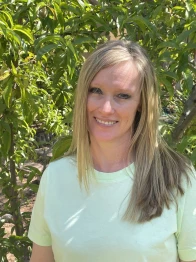
Award-winning, bestselling author, Robbie Cheadle, has published thirteen children’s book and two poetry books. Her work has also appeared in poetry and short story anthologies.
Robbie also has two novels published under the name of Roberta Eaton Cheadle and has horror, paranormal, and fantasy short stories featured in several anthologies under this name.
The ten Sir Chocolate children’s picture books, co-authored by Robbie and Michael Cheadle, are written in sweet, short rhymes which are easy for young children to follow and are illustrated with pictures of delicious cakes and cake decorations. Each book also includes simple recipes or biscuit art directions which children can make under adult supervision.
Robbie’s blog includes recipes, fondant and cake artwork, poetry, and book reviews. https://robbiesinspiration.wordpress.com/
Share this:

Growing bookworms – Audio books that teach children about music
Posted: March 9, 2022 Filed under: Children's Books, Fairy Tales, Fiction, Growing Bookworms, music | Tags: Growing Bookworms, Musical Stories, Petr and the Wolf, Robbie Cheadle, Sparky's Magic Piano, Storytelling, Writing to be Read 50 Comments
Peter and the Wolf

When I was a little girl in the pre-preparatory school, one of my favourite music lessons was when our teacher played the audio book of Peter and the Wolf. I loved the story about Peter who needed to protect his pets from a hungry wolf. Most of all, I loved the sounds of the musical instruments that accompanied the story. Each character in the story has its own musical instrument and each sound is perfectly suited to the character. Our teacher used this story to teach us about the different musical instruments, which family of instrument it belonged to, and the sound it made.
Peter is played by the violin (string instrument family), the bird is played by the flute (woodwind family), the duck is played by the oboe (woodwind family), the cat is played by the clarinet (woodwind family), the grandfather is played by the bassoon (woodwind family), the wolf is played by the French horn (brass family), and the hunters are played by the timpani (percussion family). I have never forgotten the names, sound, or family of any of these instruments. In fact, I loved the cat (clarinet) so much, I literally forced Greg to play this instrument for two years. I took advantage of his devotion to me and the fact he always liked to please me. I came to realise this wasn’t fair of me and allowed him to give it up in grade 6. Greg never took to the clarinet.
The purposes of Peter and the Wolf, created by Sergei Prokofiev, are as follows:
- the teach children how to identify a variety of musical instruments, instrument families and instrumental themes;
- the demonstrate how music can convey different emotions; and
- to extend a story through the use of movement, story sequencing, and musical art.
Peter and the Wolf is approximately 30 minutes long and you can listen to it here:
Sparky’s Magic Piano
My parents noticed my enthusiasm for music and my Dad bought me a Sparky record when I was about 9 years old. I listened to this record over and over again.
There were four stories on the record, as follows:
- Sparky and the Talking Train;
- Sparky’s Magic Piano;
- Sparky’s Magic Eco; and
- Sparky’s Magic Baton.
Of these four, two had a strong musical theme, namely, Sparky’s Magic Piano and Sparky’s Magic Baton.
In Sparky’s Magic Piano, the most famous of the Sparky stories, Sparky is a young boy who does not like practicing the piano. One day, when he is frustrated with practicing, the piano talks to Sparky and tells him he will show him how wonderful it is to play the piano well. Sparky then proceeds to amaze his mother and piano teacher, and then the larger world with his amazing piano playing.
Wikipedia says that these are the piano works which appear in Sparky’s Magic Piano in the order in which they appear in the story:
- Léonard Gautier – The Secret
- Chopin – Waltz in E minor, Opus posth.
- Chopin – Etude in C minor (“Revolutionary”), Opus 10 number 12
- Rimsky-Korsakov (adapted from the arrangement by J. Strimer) – The Flight of the Bumblebee (electronically played at double speed)
- Chopin – Etude in C sharp minor, Opus 10 number 4
- Liszt – Hungarian Rhapsody no. 2, in C sharp minor (excerpt from the end of the piece, arranged for piano and orchestra)
- Beethoven – Piano Sonata number 14 (“Moonlight”) in C sharp minor, Opus 27 number 2 (excerpt from the 1st mvt, arranged for piano and orchestra)
- Chopin – Waltz in C sharp minor, Opus 64 number 2 (excerpt)
- Rachmaninov – Prelude in C Sharp Minor (truncated, and arranged for piano and orchestra)
- Mendelssohn – “The Spinning Song” (from Song Without Words), Opus 67 number 4 (announced by Sparky, but the piano refuses to play it, so the music is not heard)
You can listen to the version of Sparky’s Magic Piano I loved here:
Do you know either of these stories? Let me know in the comments.
About Robbie Cheadle

Robbie Cheadle is a South African children’s author and poet with 9 children’s books and 2 poetry books.
The 7 Sir Chocolate children’s picture books, co-authored by Robbie and Michael Cheadle, are written in sweet, short rhymes which are easy for young children to follow and are illustrated with pictures of delicious cakes and cake decorations. Each book also includes simple recipes or biscuit art directions which children can make under adult supervision.
Robbie has also published 2 books for older children which incorporate recipes that are relevant to the storylines.
Robbie has 2 adult novels in the paranormal historical and supernatural fantasy genres published under the name Roberta Eaton Cheadle. She also has short stories in the horror and paranormal genre and poems included in several anthologies.
Robbie writes a monthly series for https://writingtoberead.com called Growing Bookworms. This series discusses different topics relating to the benefits of reading to children.
Robbie has a blog, https://robbiesinspiration.wordpress.com/ where she shares book reviews, recipes, author interviews, and poetry.
Find Robbie Cheadle
Blog: https://www.robbiecheadle.co.za/
Blog: robbiesinspiration.wordpress.com
Twitter: BakeandWrite
Instagram: Robbie Cheadle – Instagram
Facebook: Sir Chocolate Books
______________________________________________________________________________________________
Want to be sure not to miss any of Robbie’s “Growing Bookworms” segments? Subscribe to Writing to be Read for e-mail notifications whenever new content is posted or follow WtbR on WordPress. If you found it interesting or entertaining, please share.