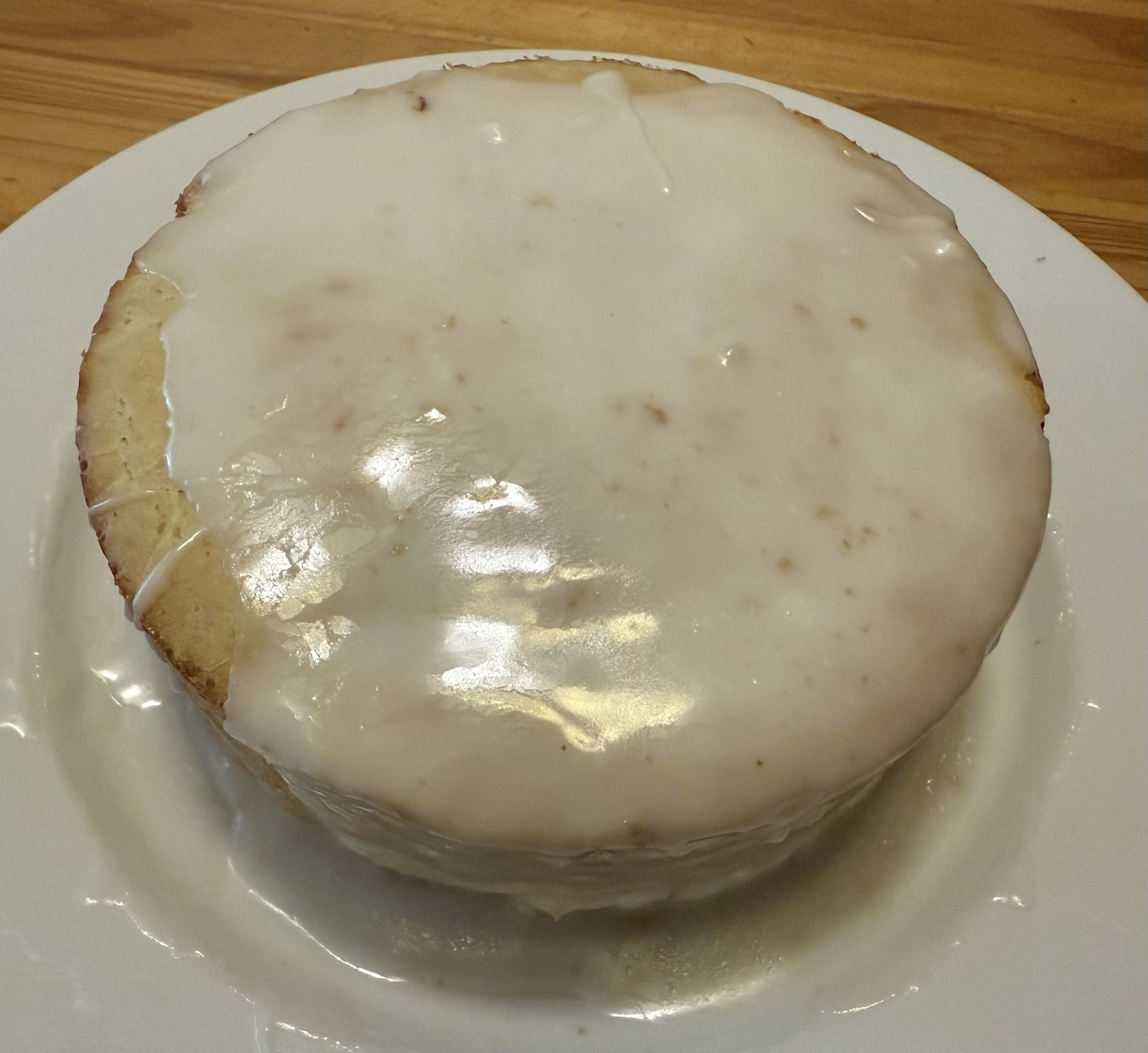
Read and Cook – Wind in the Willows by Kenneth Grahame and Sally Lunn Teacakes
Posted: January 14, 2026 Filed under: Book Review, Fiction, Recipes, Review, Robbie Reads and Cooks | Tags: #ReadandCook, #RobbieCheadle, Baking, BookReview, Kenneth Grahame, Sally Lunn Teacake, Wind in the Willows 16 CommentsWind in the Willows by Kenneth Grahame
Introduction
The Wind in the Willows is a charming tale that centres around four animals living in an idyllic English setting. The descriptions of the English countryside are delightful, and the book embodies the best of English country life.
The story commences with the mole experiencing a sudden desire to have an adventure and experience life outside of his underground home. He is busy doing his spring cleaning, but he follows the urge to throw down his paint brush and dig upwards and outwards. He comes out in a beautiful spring meadow. Seeing the river for the first time, he goes down to see it and meets the Water Rat. The two animals strike up a conversation and the Water Rat offers to take Mole on a picnic along the riverbank. During the picnic, Rat tells Mole about all the characters who live around the riverbank including Mr Toad, an impetuous creature who inherited wealth from his father and indulges himself in a variety of obsessive behaviours, the hermit-like Badger who lives in the Wild Wood, and Otter. On the way back to Rat’s den after the picnic, Mole seizes the oars from Rat and tries to row. He overturns the boat and nearly drowns. He is pulled out by the Rat who proceeds to rescue all his belongings and his boat from the water. The Mole is overcome by remorse at his rash action that caused the Rat so much trouble. Mole ends up spending the night at the Rat’s den and the pair become friends.
A few days later, Rat takes Mole to visit Mr Toad, a landed gentleman who lives in the best house in the area, Toad Hall. This visit results in the friends going off in a caravan with Toad who has a desire for adventure and to see the larger country. This adventure ends with Toad learning about motor cars and declaring that he shall have one. Mole and Rat return to Rat’s den and Mole ends up staying, time passes, and winter comes.
Rat has told Mole all about Mr Badger, a kindly creature who lives in the Wild Wood, a scary place where the river animals do not often go. Mole is curious about Badger who is a recluse and rarely undertakes social activities. One winter’s day while Rat is sleeping in his armchair in front of the fire, Mole sets off on his own to find Badger. This unfortunate decision nearly ends badly for Mole and the brave Rat, who comes to find his friend when he discovers he is missing. Good fortune, however, has the pair stumbling across the home of Badger and they are saved. Mole also gets his wish of meeting Badger. During their time at Badger’s home, the subject of Toad comes up and the reader learns that Toad’s obsession with motor vehicles has resulted in him wrecking eight vehicles, ending up in hospital a few times, and getting into trouble with the law because of his reckless behaviour on the roads. Badger decides that the Toad’s three friends, himself, Mole, and Rat, must take Toad in hand in the spring.
This first part of the novel introduces the two main themes of home as a source of strength and the power of nature. The development of the Mole’s character from a timid, nervous, and excitable animal into a brave, dependable, and thoughtful friend. It is only by leaving his home that Mole can learn about the vastness of nature and the joys of companionship and friendship.
The homes of Rat and Badger are integral to their characters and roles in the story. Water Rat and the river are joined together almost as one. Both are calm and poetic but also in constant motion as they follow the tides. Rat is a gregarious creature and accepts the changes to his life brought by the seasons and the river’s reactions to the seasons, with good grace. Rat is as accepting of flooding of his home as he is of newcomers into his life.
The Badger has a vast underground home that suits his slow, lumbering movements and winter hibernation. Badger’s home is his place of sanctuary from society where he can be alone and restore his equilibrium after social interactions.
When the spring comes, Badger makes good on his promise and the trio go to Toad’s house and confront him about his irresponsible behaviour. Toad refuses to listen and promise to amend his behaviour, and so Badger decides to imprison him in his bedroom until he sees reason. Naturally, the deceitful Toad manages to escape. Toad steals a car and gets arrested and thrown in jail for twenty years. The charges are theft, reckless driving, and being disrespectful to the police.
This sets the stage for the second part of the story which revolves around forcing Toad to behave with proper etiquette suited to his station in life. This second section of the book expands on the themes of home as a source of strength and the importance of animal etiquette. Mole learns these lessons quickly while Toad must learn them slowly and because of numerous unfortunate and difficult life lessons.
My thoughts
I loved the beautiful and scenic writing in this book. Nature is a force in this book that the animal characters must pay constant attention to or risk their lives. I liked how nature was so true to life, neither benevolent nor malevolent but rather a condition for existence that must be acknowledged and accommodated.
The scene where Mole and Rat are so in tune with nature, they can hear the music of the Piper while searching for the missing baby otter. The music guides them, and they find Portly and get a glimpse of nature personified as a demi-god. This scene is spiritual and powerful.
This book really spoke to me as it encapsulates everything I value in life: home, nature, and social harmony including consideration and respect for others.
Quotes from this book
“Spring was moving in the air above and in the earth below and around him, penetrating even his dark and lowly little house with its spirit of divine discontent and longing.”
“All this he saw, for one moment breathless and intense, vivid on the morning sky; and still, as he looked, he lived; and still, as he lived, he wondered.”
“But Mole stood still a moment, held in thought. As one wakened suddenly from a beautiful dream, who struggles to recall it, but can recapture nothing but a dim sense of the beauty in it, the beauty! Till that, too, fades away in its turn, and the dreamer bitterly accepts the hard, cold waking and all its penalties.”
“He saw clearly how plain and simple – how narrow, even – it all was; but clearly, too, how much it all meant to him, and the special value of some such anchorage in one’s existence. He did not at all want to abandon the new life and its splendid spaces, to turn his back on sun and air and all they offered him and creep home and stay there; the upper world was all too strong, it called to him still, even down there, and he knew he must return to the larger stage. But it was good to think he had this to come back to, this place which was all his own, these things which were so glad to see him again and could always be counted upon for the same simple welcome.”
Sally Lunn Teacake recipe
Ingredients ( 1 large teacake or 2 medium teacakes)
360 ml plain or cake flour
1 egg, beaten
1/2 teaspoon salt
7 grams powdered yeast
1 teaspoon sugar
165 ml milk and water (2/3 milk and 1/3 water)
30 ml (1 Tablespoon) butter
Egg or milk to glaze (I used milk)
Glace icing (I used this recipe for glace icing: https://www.snowflake.co.za/recipes/glace-icing)
Method
Sift the salt and flour into a mixing bowl. Mix the yeast power with the milk and water heated until its tepid (lukewarm – NOT HOT) and the sugar, pour into the flour and combine. Add the melted butter (NOT HOT) and beaten egg and mix to a light, sticky dough. Knead for few minutes. If you are doing the kneading by hand, cover hands with a coating of flour before starting to help prevent sticking. Grease a small cake tin or two smaller cake tins and transfer the dough to the tins. Set in a warm place to rise until the dough has more than doubled in size (I put in in a cool oven – 100 C) for 30 minutes.
Paint the top of the risen dough with warm milk and place in an oven pre-heated to 230 C (450 F) and bake to approximately 20 minutes or until a cake tester comes out clean. When cold, cover the teacake with glace icing.
About Robbie Cheadle

Robbie also has two novels and a collection of short stories published under the name of Roberta Eaton Cheadle and has horror, paranormal, and fantasy short stories featured in several anthologies under this name.
You can find Robbie Cheadle’s artwork, fondant and cake artwork, and all her books on her website here: https://www.robbiecheadle.co.za/
Find Robbie Cheadle
Blog https://wordpress.com/home/robbiesinspiration.wordpress.com
Bluesky https://bsky.app/profile/robbiecheadle.bsky.social
YouTube https://www.youtube.com/channel/UCVyFo_OJLPqFa9ZhHnCfHUA
Goodreads https://www.goodreads.com/author/show/15584446.Robbie_Cheadle
_________________________________
Did you know you can sponsor your favorite blog series or even a single post with an advertisement for your book? Stop by the WtbR Sponsor Page and let me advertise your book, or you can make a donation to Writing to be Read for as little as a cup of coffee, If you’d like to show your support for this author and WordCrafter Press.
___________________________________
This segment of “Read and Cook with Robbie Cheadle” is sponsored by WordCrafter Press and their themed anthologies.

Tales From the Hanging Tree: Imprints of Tragedy: There exists a tree that is timeless, spanning across all dimensions, which absorbs every life as those who are hanged as they die… and it remembers every one. The stories within are a select few of the Tales From the Hanging Tree.
Curses: Chronicles of Darkness:
There are all types of curses.
Cursed places, cursed items, cursed people, cursed families.
Curses that last throughout time. Curses which can’t be broken. Curses which are brought upon ourselves. Curses that will kill you and those that will only make you wish you were dead.
Legends: Monsters That Go Bump in the Night: Coming in 2026
Share this:

Treasuring Poetry – Enjoying poetry with Dave Williams and a review of Gasp! Poetry! #TreasuringPoetry #bookreview #poetry
Posted: January 15, 2025 Filed under: Books, Poetry, Treasuring Poetry, Writing to be Read | Tags: BookReview, Dave Williams, Gasp! Poetry!, Interview, Poetry, Robbie Cheadle, Treasuring Poetry, Writing to be Read 81 Comments
I am very excited to welcome talented artist, poet, and author, Dave Williams to “Treasuring Poetry”. Dave is discussing his thoughts on poetry and I’ve reviewed his unique poetry book Gasp! Poetry!
What is your favourite style of poetry to read i.e. haiku, ballad, epic, freestyle, etc?
Freestyle. I like playful poetry, and poetry that causes me to think of stuff in different ways than my status quo. Also, I’m a big fan of short poetry about nature. Doesn’t have to be haiku. Poems that focus on one aspect of nature, be that a particular animal or plant or season. This kind of poetry is like a seed for me to meditate over that aspect of nature.
What is your favourite poem in your favourite style to read?
My favorite poem by another writer is “maggie and milly and molly and may” by E. E. Cummings. I love it because it’s lively and frisky and profound. And because it reminds me of growing up near the Atlantic Ocean. And because one of my daughters is named Molly (with a capital M, not lowercase like in the poem — although she’s welcome to be creative with the capitalization of her name if she likes).
The poem:
maggie and milly and molly and may
went down to the beach (to play one day)
and maggie discovered a shell that sang
so sweetly she couldn’t remember her troubles,and
milly befriended a stranded star
whose rays five languid fingers were;
and molly was chased by a horrible thing
which raced sideways while blowing bubbles:and
may came home with a smooth round stone
as small as a world and as large as alone.
For whatever we lose (like a you or a me)
it’s always ourselves we find in the sea
Source: https://poets.org/poem/maggie-and-milly-and-molly-and-may
What is your favourite style of poetry to write? Why?
I enjoy writing freestyle the most. Limericks and haiku can be fun to write by following their rules. But I typically go with freestyle because I don’t have to worry about rhymes or syllables or meter.
What is your favourite of your own poems?
A tough question, Robbie! One poem of mine doesn’t jump out as a favorite. I looked through Gasp! Poetry! to find one to include here. I chuckled over several poems, but the poem that clicks with me right now isn’t aimed at humor. Rather, it feels hopeful:
Chickadee
Seeing an eagle,
the chickadee
aspired to greatness:
soaring high in the
Great Blue
Yet he could not
transform into that epic bird
In her son’s sullenness,
mama chickadee asked
the elders to offer wisdom
They told him
there’s a quiet dignity
in being a chickadee
and that
warmed his heart.
Your poetry collection Gasp! Poetry! has a most unusual name and blurb. Please tell us a bit about this book, what the poems are about, and what your intentions were will the collection.
The cover tries to warn people who have no interest in poetry. The title and cover illustration pretend what such a person’s reaction might be to a poetry book. They might throw up their hands and shriek, “Gasp! Poetry!” Then they’d run for the safety of a Non-Poetry Zone. Where, after catching their breath, they might tell other people how close they got to a poetry book and how terrifying it was. The cover uses drama for humor (hopefully).
Some poems in the book aim for silliness, while others are serious. The topics are assorted. One short poem is about a monkey taking a bath. One long poem is about how Scheherazade told a thousand tales to avoid being murdered. If you’ve followed my blog for a while, chances are good that you’ve read poems from this collection.
My intention was to package a bunch of poems on my blog, and ones that haven’t been published there yet. I hoped to entertain readers who like playfulness and absurdity in poems.
You write both novels and poetry. Which do you prefer?
Novels. Even when short, they’re more immersive than poems — which are like sketches to me (since I don’t write epic poems). I enjoy pondering possible plot paths of novels, as well as possible backgrounds of characters. It’s akin to reading a book and being immersed in the story. But with novel writing, the story can unfurl in various, potential directions. Joy is in exploring and shaping the story. So is frustration. But it’s worth the frustration when the book is finished.
My review of Gasp! Poetry!

The amusing title of this poetry collection by Dave Williams is indicative of the nature of the poetry. All of the poems are clever, slightly dark, and poke fun at humans and humanity in general. In other words, these poems are brilliant and hugely entertaining.
Is a Poem about Grains of Sand on a Beach Too Pretentious?
“I wondered that question,
lying on a floral beach towel,
a speck in a crowd
of swimsuited people –
all of us were lumps of cookie dough
glazed with sunscreen and coconut oil
baking in this oven.”
The short extract above is a great example of Dave dark humour in relation to human behaviours and his engaging descriptions.
Valor is a great example of the poet’s quick and clever mind and attitudes towards adversity:
“”You’re not sharp enough?”
“Get some sides!”
Yells were hurled from
the crowd of octagons
at the little circle.
“You look ridiculous!”
The circle puffed up
with valor,
said “I am what I am,”
refused to conform,
then rolled defiantly towards home.”
This was my favourite poem in the book. I really enjoyed the personification of shapes and it reminded me of Flatland by Edward Abbott Abbott.
There is some wonderful life wisdom encased in these freestyle poems. A short extract from Ocean Inside which captivated my mind:
“Meanwhile I work against the urge to liquefy myself
and pour myself into the container
others have sculpted for me”
Having gone through my own teenage years and watched three sisters and two sons go through theirs, I am acutely aware of how very real this pack mentality is with young people. Sometimes, people never manage to escape its grip and find their own path in life.
If you enjoy dark humour, excellent poetry, and life truths, you will love this engaging and entertaining collection.
You can purchase Gasp! Poetry! from various suppliers here: https://books2read.com/u/mBJjRk
You can find all of Dave William’s great books on Amazon US here: https://www.amazon.com/stores/Dave-Williams/author/B08662D961
About Dave Williams

Surely many people are named “Dave Williams” and this particular Dave is a redheaded one who enjoys writing speculative fiction, drawing, and reading. He lives in Maryland with his wonderful wife, two inspirational daughters, and two cats (a lazy one and a playful one).
You can find Dave Williams on his blog here: https://davewilliamswriter.wordpress.com/
About Robbie Cheadle
South African author and illustrator, Robbie Cheadle, has written and illustrated sixteen children’s books, illustrated a further three children’s books, and written and illustrated three poetry books. Her work has also appeared in poetry and short story anthologies.
Robbie also has two novels and a collection of short stories published under the name of Roberta Eaton Cheadle and has horror, paranormal, and fantasy short stories featured in several anthologies under this name.
You can find Robbie Cheadle’s artwork, fondant and cake artwork, and all her books on her website here: https://www.robbiecheadle.co.za/
________________________
Did you know you can sponsor your favorite blog series or even a single post with an advertisement for your book? Stop by the WtbR Sponsor Page and let me advertise your book, or you can make a donation to Writing to be Read for as little as a cup of coffee, If you’d like to show your support for this author and WordCrafter Press.
__________________________
This segment of “Treasuring Poetry” is sponsored by WordCrafter Press and the Poetry Treasures series.

Get Your Copy Today!
Poetry Treasures: https://books2read.com/PoetryTreasures
Poetry Treasures 2: Relationships: https://books2read.com/PT2-Relationships
Poetry Treasures 3: Passions: https://books2read.com/u/b5qnBR
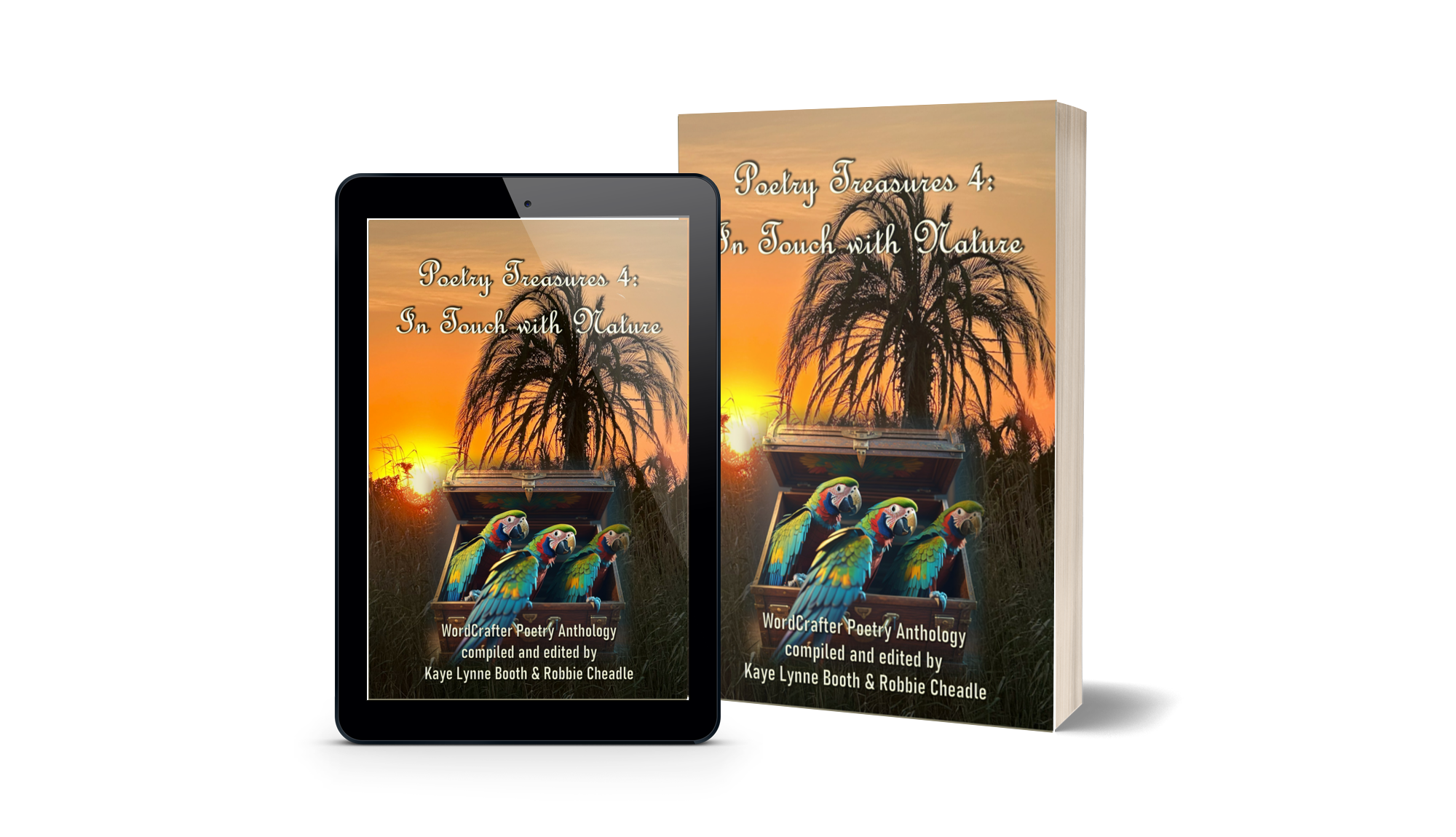
Poetry Treasures 4:In Touch With Nature: https://books2read.com/PT4-Nature
Share this:

Day 6 of the WordCrafter My Backyard Friends Book Blog Tour
Posted: July 20, 2024 Filed under: Animals, Book Release, Book Review, Books, Children's Books, Review, WordCrafter Book Blog Tours, WordCrafter Press | Tags: BookReview, Kaye Lynne Booth, My Backyard Friends series, Robbie Cheadle, WordCrafter Book Blog Tours Leave a comment
Today, we’re hanging out over at Carla Loves to Read, where Carla Johnson-Hicks is reading and reviewing all three books with her grandchildren for Day 6 of the WordCrafter My Backyard Friends Book Blog Tour. Won’t you stop by to see what the kids think of this wonderful kid’s series written by Kaye Lynne Booth and illustrated by Robbie Cheadle, and find out how you can help support the color print editions.
Share this:

Dark Origins – A Journal of the Plague Year by Daniel Defoe based on the Great Plague of London, 1665 #DarkOrigins #readingcommunity #history
Posted: October 25, 2023 Filed under: Books, Dark Origins, Fiction, Historical Fiction | Tags: A Journal of the Plague Year, BookReview, Daniel Defoe, Dark Origins, Robbie Cheadle, Writing to be Read 28 Comments
Overview

A Journal of the Plague Year by Daniel Defoe is a most interesting book particularly in light of the recent Covid-19 pandemic that swept the world.
It is written in the first-person as a first hand account of the protagonist’s, identified as H.F. and described as an unmarried saddler, experiences during the great plague that afflicted London in 1665. The story is fiction but it contains detailed statistics of the death bills as the plague started to take hold and over the months of its duration, charts, data and extracts from government documents which make it read like the non-fictional personal diary of someone who was recording the facts and figures of the time.
When the plague first comes to the city, it is contained to certain parishes and is staved off by the colder winter weather, but when late spring and summer arrive, the numbers of the infected and the dead increase significantly. The protagonist is aware that the rich are leaving the city, but he is very religious and believes that God wants him to stay.
He describes how the poor are tricked into purchasing preventative medicines and charms by quack doctors, fortune tellers, and other tricksters. It is interesting that he picks this thread up again later in the book and states that all of these ‘pretenders’ succumb to the plague.
H.F. describes in detail the horror of the plague. How infected people go mad and run naked through the streets until they drop down dead. He describes how the authorities implement a system of the shutting up of houses in terms of which when any member of a household was identified as having being infected, the entire household were locked up in the house and a watchman placed outside the door so they could not escape. The protagonist is not in favour of this system as it results in all the inhabitants of the household becoming infected and dying of the plague. It also results in a lot of desperate bids to escape shut up houses that resulted in the plague spreading further. Interestingly enough, a similar attempt to keep people in their homes during the Covid-19 pandemic also didn’t achieve the expected success and resulted in a huge amount of resistance by people.
H.F. depicts a governing structure in the city that is sympathetic to the situation of the poor and ensures that people have access to bread at a reasonable price throughout the duration of the plague. He goes into a lot of detail about the price of bread versus the weight of the loaves before the plague. The city is kept free of bodies which are collected at night and taken to mass graves.
The protagonist also goes into a lot of detail about the effect of the plague on the people of the city. The grief experienced by survivors who have lost their entire families and who follow their dead loved ones and throw themselves into the mass graves and other ‘infected’ people who effectively kill themselves because of the pain the disease is inflicting on them.
The narrator tells a lengthily story about three brothers who leave the city to escape the plague and meet up with a small band of other people also leaving. The difficulties experienced by Londoners who left the city and attempted to live in the countryside while the plague raged are detailed. The suspicion and lack of welcome by the rural villages and town who do not wish to accept any Londoners into their areas for fear of their carrying the plague, and the lack of shelter, food, and other amenities. The three brothers and their band manage to make a success of it with some help from a local wealthy landowner. They actually outlive a lot of the villagers when the plague does spread out of London and into the surrounding countryside.
Reading this book after the Covid-19 pandemic was fascinating. The parallels between this event more than 350 years ago in London and the experiences and reactions of people during the time of the pandemic are have a dreadful similarity. People turn to religion and to quack remedies, people resist the attempts by authorities to contain the disease by findings ways to escape from their homes, people suffer depression and loss.
This book is certainly not for everyone as it is filled with facts and figures, but I found it very interesting and appreciated the historical information shared.
The Great Plague of 1665 – 1666

The plague that broke out in London in 1665 was the worst outbreak to effect England since the black death of 1348. It is believed at approximately 15% of the population of London died. The recorded deaths were 68,596 but it is believed at least 100,000 people died. The population of the city in 1665 was 460,000.
The plague was carried by fleas on rats and they were attracted to the poorer parts of the city where rubbish and waste filled the streets.
There were three types of plague:
- Bubonic plague that caused swellings (buboes) in the lymph nodes found in the armpits, groin and neck. These sufferers experienced headaches, vomiting and fever. Sufferers had a 30% chance of dying within two weeks.
- Pneumonic plague which attacked the lungs and spread to other people through coughing and sneezing; and
- Septicaemic plague which occurred when the bacteria entered the blood. The chances of survival of this type of plague were very slim.

The treatments and methods of prevention were privative. Patients were bled with leeches. The air was cleansed using smoke and heat as people thought bad air caused the distemper. Children were encouraged to smoke to ward off bad air. Some people sniffed a sponge soaked in vinegar.
When the winter arrived, the plague started to decrease. Scientists believe this was due to people developing a stronger immunity to the disease rather than the great fire of London on 2 September 1666, making any notable impact through the destruction of houses within the walls of the city and on the banks of the River Thames. Many of the plague deaths had occurred in the poorest parishes outside the city walls
On The Plague Year: London, 1665
By DM Lovic
In London Town, the children played, the kittens purred, the flowers bloomed,
The adults laughed, the horses neighed, for no one knew they all were doomed.
Yes, all within the world was right when Death sneaked into town that night.
Beneath a haunted summer moon, upon a flute that whistled flat,
He played a slow, hypnotic tune that summoned every flea and rat
Who came from cellar, slum and glade to march the Devil’s plague parade.
Searching streets from side to side, the weakest souls with sword he struck,
Then left a token on their hide to signify the loss of luck.
For no one touched would e’er be saved, ‘twas six mere hours from spot to grave.
The wealthy fled to distant hills, doors were bolted, shutters locked,
But none could stop the morbid chills when death stood on the stoop and knocked.
Inside, they wept and fought with fate but, patiently, he’d smile and wait.
Sickness turned into despair, howls of terror, dreadful shrieks,
They echoed through the London air for weeks and weeks and weeks.
But panicked cries and wailing tears were only music to his ears.
One ghastly year that madness reigned and when Death fin’ly had withdrawn,
The price was tallied and explained: one hundred thousand souls were gone.
And London Town, in stark reverse, returned to life without the curse.
On city streets, the children played, the kittens purred, the flowers bloomed,
The adults laughed, the horses neighed, for every soul knew he was doomed.
From: The Poetry Nook
About Roberta Eaton Cheadle

Award-winning, bestselling author, Roberta Eaton Cheadle, is a South African writer and poet specialising in historical, paranormal, and horror novels and short stories. She is an avid reader in these genres and her writing has been influenced by famous authors including Bram Stoker, Edgar Allan Poe, Amor Towles, Stephen Crane, Enrich Maria Remarque, George Orwell, Stephen King, and Colleen McCullough.
Roberta has two published novels and has horror, paranormal, and fantasy short stories included in several anthologies. She is also a contributor to the Ask the Authors 2022 (WordCrafter Writing Reference series).
Roberta also has thirteen children’s books and two poetry books published under the name of Robbie Cheadle, and has poems and short stories featured in several anthologies under this name.
Roberta’s blog features discussions about classic books, book reviews, poetry, and photography. https://roberta-writes.com/.
Find Roberta Eaton Cheadle
Blog: https://wordpress.com/view/robertawrites235681907.wordpress.com
Twitter: https://twitter.com/RobertaEaton17
Facebook: https://www.facebook.com/robertawrites
Amazon: https://www.amazon.com/Roberta-Eaton-Cheadle/e/B08RSNJQZ5
_____________________________________________________________________________________________
Want to be sure not to miss any of Robbie’s “Dark Origins” segments? Subscribe to Writing to be Read for e-mail notifications whenever new content is posted or follow WtbR on WordPress. If you found it interesting or entertaining, please share.
Share this:

“Clay House”: A Middle Grade Paranormal Horror Novel
Posted: November 27, 2020 Filed under: Book Review, Books, Fiction, Horror, Middle Grade, Review | Tags: BookReview, Clay House, Ghosts, horror, Jordan Elizabeth, Middle Grade Fiction, Writing to be Read 2 Comments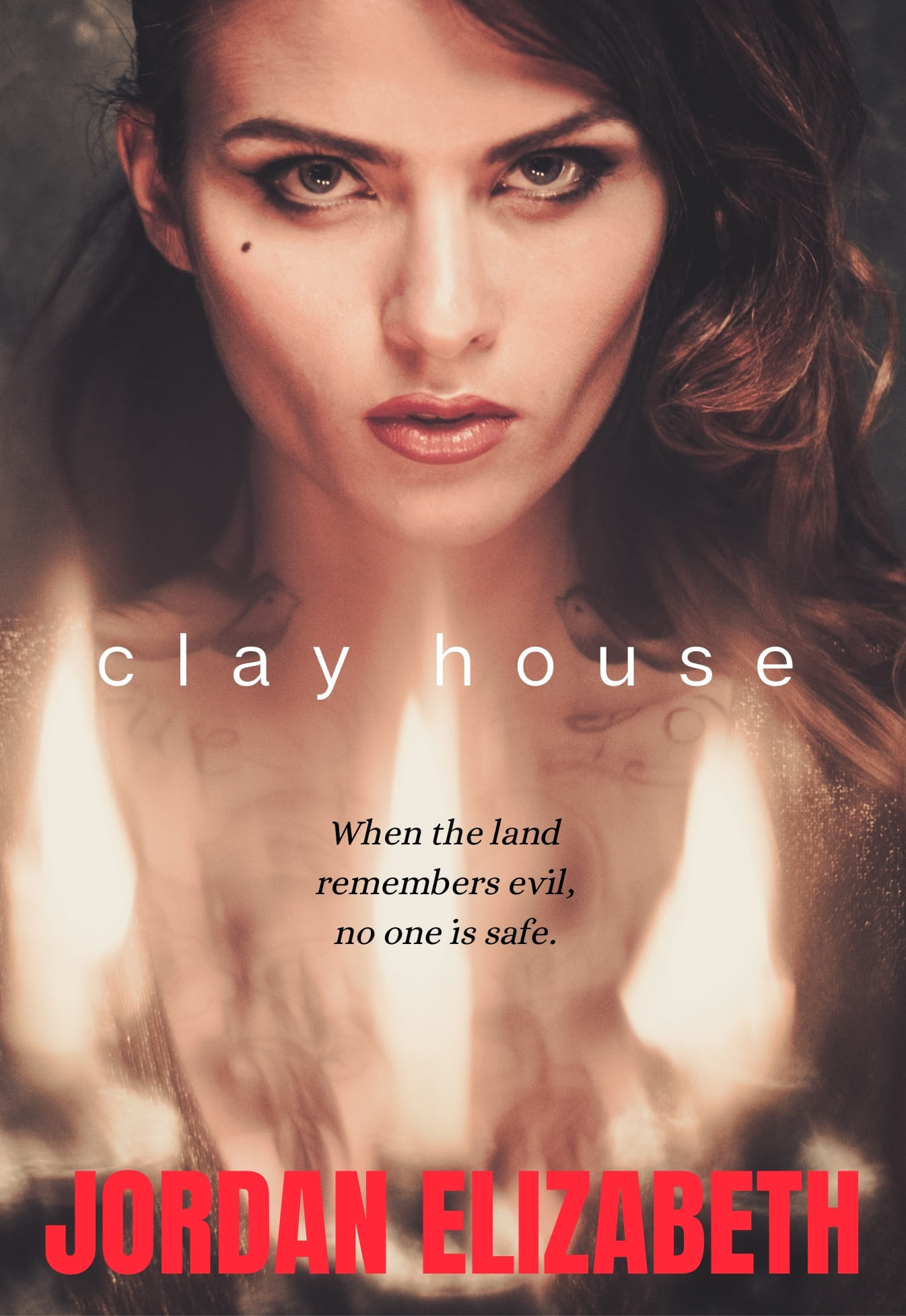
Sometimes evil dwells in the land itself, and it can burrow deep, laying dormant for a long time. But it always awakens eventually.
Moving to a new home is never easy, especially when you have to deal with a not so nice step-father, and the house is old and spooky. The town is quick to fill her in on the mysterious stories about her house, and when she finds a cemetary in her new back yard and her little brother Mark starts behaving oddly, Tatiana begins to get scared. The increasing cruelness of her step-father, leads her to uncover another kind of secret. Now all she has to do is figure out what to do with what she knows.
The bonus story, “Olney”, which is included with Clay House, is equally well-written with a similar theme, providing extra reader value for your book buck.
With two brave young heroines and two spine chilling ghosts, resulting in two well-crafted stories filled with twists and turns to keep readers guessing, I give Clay House five quills.

Kaye Lynne Booth does honest book reviews on Writing to be Read in exchange for ARCs. Have a book you’d like reviewed? Contact Kaye at kayebooth(at)yahoo(dot)com.
Share this:

“Wolves for the Holiday 1.1” has potential to be more
Posted: June 9, 2017 Filed under: Book Review, Books, Erotica, Fiction, Paranormal, romance, Speculative Fiction | Tags: BookReview, Josette Reuel, Paranormal Romanace, romance, Wolves for the Holiday 1.1 4 Comments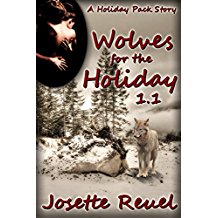
Wolves for the Holiday 1.1, by Josette Reuel is a short story with the potential to be a longer supernatural romance. As with many short stories, it feels like there should be more. The ground work is laid for secondary characters to have relationships, providing plenty of subplot material that Reuel fails to take advantage of, and readers are left wanting more. This story has the potential to become a novel length work, if more fully developed.
When first three wolves, and then later, three naked men show up at a secluded mountain cabin, where three writer friends are taking a writer’s retreat, things promise to get a little weird. That’s where the problem lies, for three women in a secluded cabin just wouldn’t react the way these women do, so I had a hard time buying into the story. The premise is good. Actually, the premise is great, but Reuel fails to suspend my disbelief.
Then there is the romance element, which is good, and almost believable. However, having our heroine submit to the Alpha male makes her appear weak, conforming to typical female stereotypes. The males are stereotyped as well, but I could buy that because they are wolves, after all.
After our two protagonists have their romp in the hay, there is no follow through. The story just ends, leaving the reader feeling cheated. Relationships with her friends and his pack members are alluded to, but not shown. We can only guess what was happening in the rest of the cabin while the main romance is blossoming in the bedroom. I will say the bedroom scene itself was done tastefully.
Wolves for the Holiday 1.1 has a great premise, but fails to deliver, doesn’t carry through the full romance arc, has a weak female protagonist, but does include a well written bedroom scene. I give it two quills.