Review In Practice: Content for Everyone
Posted: April 10, 2023 Filed under: Accessibility, Audio Books, Blog Content, Books | Tags: Accessibility, Book Review, Content for Everyone, Jeff Adams and Michele Lucchini, Kaye Lynne Booth, National Library Services, Print Disabled, Review in Practice, Visually impaired, Writing to be Read 4 Comments
Content for Everyone is a must-read for creative entrepreneurs looking to improve the usability and accessibility of their website, email and social media content.
With over a billion people living with some form of disability worldwide, it’s more important than ever to make sure your content is accessible. In this easy-to-follow practical guide, you’ll learn techniques to make your content more accessible, without needing any in-depth technical knowledge. From adding meaningful alternative text to images, to choosing colors with enough contrast for easy readability, to adding captions to your videos and more, Content for Everyone has everything you need to reach a wider audience and improve the user experience for everyone.
Don’t miss out on the opportunity to improve your content and reach more people.
Purchase Link: https://www.amazon.com/Content-Everyone-Practical-Entrepreneurs-Accessible-ebook/dp/B0BT6Z51N7/
We all want to be inclusive, right? Of course, we do.
But how do we, as authors and creatives do that? Many authors don’t have the first clue as to how to do that. I know I didn’t.
Content for Everyone, by Jeff Adams and Michele Luchini is a book which tells you how to make your website content more accessible to a huge audience who many authors overlook or bypass. Adams and Luchini talk about how we can create more accessible content for visual or hearing impaired readers on our websites, in emails and newsletters, in blogposts and in social media posts. They talk about ways in which we can reach a much wider audience by making our content inclusive for readers regardless of whatever adaptive technoloy they’re using, or whatever device is their preference for consuming content.
With the right amount of time and effort, websites and digital communications can be made accessible to those with disabilities or use adaptive technology in accessing digital content. But it requires work and/or money to make that happen, and many authors probably wonder why they should go to the trouble.
I’m here to tell you why. When you make your website or your books accessible to those with disabilities and impairments, you are reaching out to a whole new audience with your writing. It is a large community, “with millions of impaired or disabled readers, who would read if they could access the content” (Patty Fletcher, email March 24, 2023), and it makes good sense to make your content inclusive to these potential readers. Awareness of the large audience of potential readers who are visually impaired was the main reason that I sat up and paid attention when I heard about this book.
Content for Everyone deals with how to make digital content accessible. There are many things we can do to make our content more accessible including providing the right contrast for visually impaired individuals, or even the proper use of headers. It’s no secret that I’m a bit old fashioned and I’m not always aware of the incricate details of the tech I use, although I am always learning. Content for Everyone discusses many ways in which you can make your content accessible to those with disabilities, who must use adaptive technology in order to access online and digital content. Some of these areas wouldn’t seem to be problematic to those of us without disabilities, but they are for individuals who are impaired.
Although all of this is a lot of work, Adams and Lucchini offer up individual steps which can be performed singularly, instead of trying to undertake the enormous task of accessiblility as a whole, which could be daunting. Picking one area of accessibility at a time seems to make the goal more attainable. I found that I hadn’t been using my headings correctly, and this is something that I never dreamed made any difference to anyone. But it does make a difference to those using adaptive technology, such as screen readers. after finishing the book, the first thing I did, was to go and change all the headers on my upcoming blog posts. Then, I went through and fixed them all through my blog site. It’s not anything a sighted person would probably notice, but for someone who uses a screen reader, it can make a difference as they try to navigate my site. Knowing that it makes a difference to some people, and knowing that by making it accessible, I will be widening my potential reader audience considerably, makes my decision to use headings correctly from now on seem a small step to take.
Something else which I’ve been working on since reading this book is adding the alt text for the screen reader crowd. Doing this is not hard, and should be done when you set the image in the post, but it does take extra time. I work with several visually impaired authors who use screen readers, so I know this audience is quite large. This is a simple thing to do, which really doesn’t take much time if you do it as you go. My site is image heavy, with lots of book covers, so it may take some time to add alternate text to the visuals which are already there. Even though it does take time and effort, the increase in portential readers from taking a few simple steps is so great that I have to ask, why would you not want to take this step to ensure that your content is accessible to more potential readers?
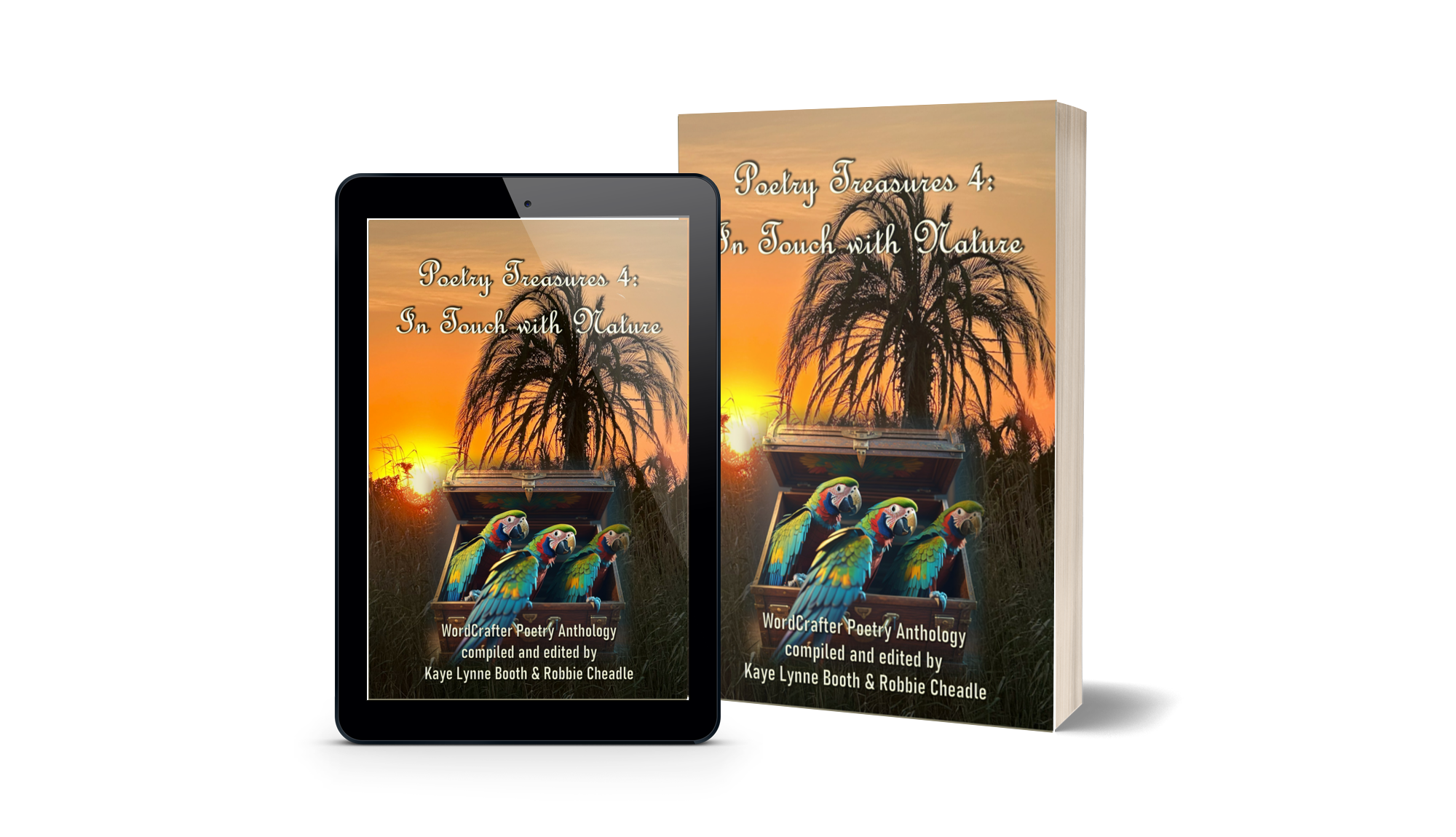
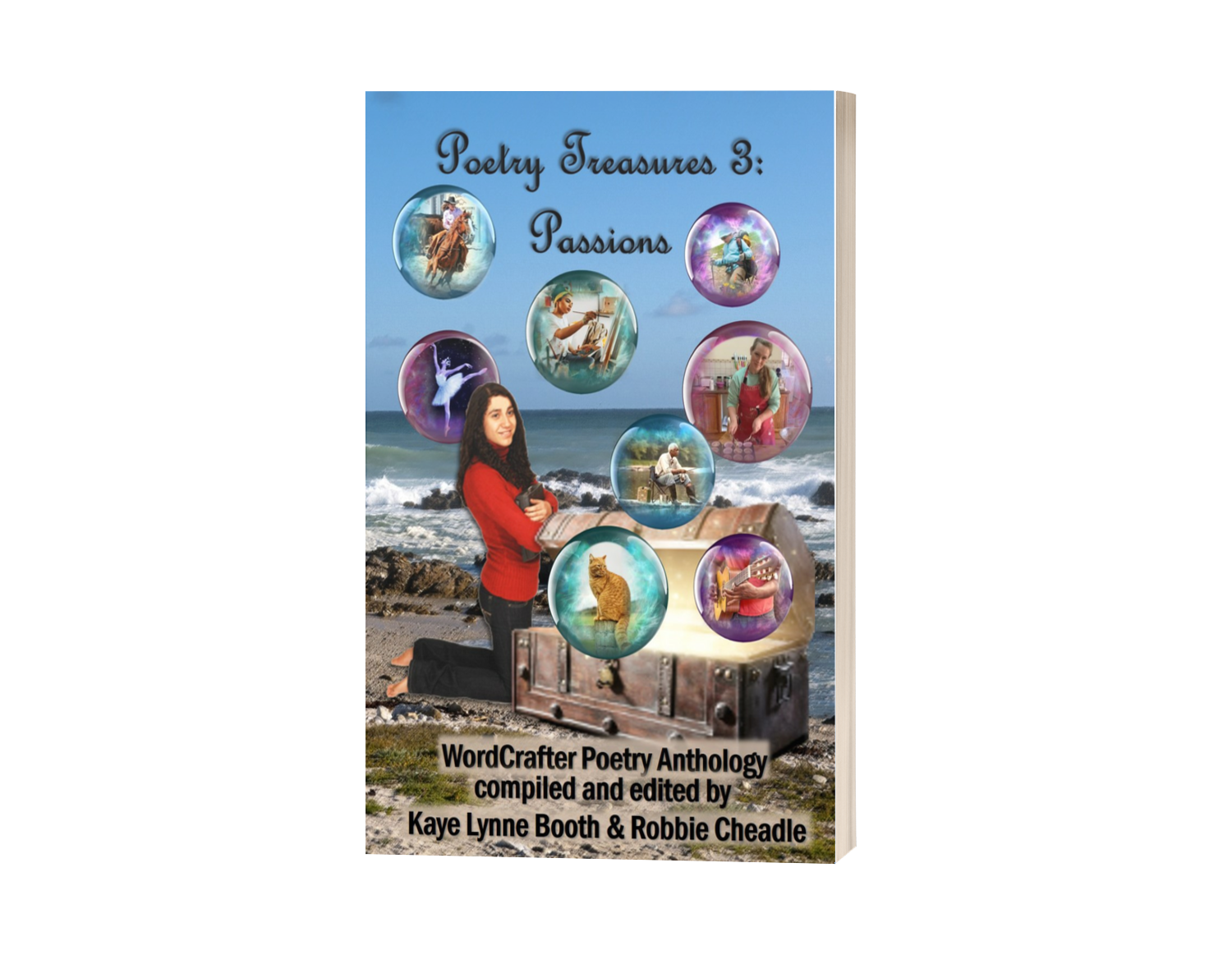
I am so pleased to be able to work with the wonderful authors within the visually impaired and print disabled community. It would be a shame to not be able to include their content within the WordCrafter tribe because of inaccessibility. And it would be a shame to have them miss out on WordCrafter content because they can’t access it. As Poetry Treasures 3 comes out this month, I’m pleased to be able to say it is the first book I have ever published with alternate text for each image. It’s just a small step in making Wordcrafter Press books more accessible to all.
You can learn more about these authors and their book, as well as learning a few things you may not know about accessibility in their interviews on the Stark Reflections podcast (episode 294), and on The Creative Penn podcast (March 13, 2023).
National Library Services
My grandmother was blind, and as a little girl, I often listened to her “talking books” with her and didn’t think much about it. I’m not sure, but I am thinking that those little cassette tapes that used to come to her in the mail, were sent by the National Library Services for the Blind and Print Disabled Library of Congress was behind them, even then. Yep. The visually impaired were doing “audio books” before they were even a thing. Today’s audio has caome a long way from those talking books on cassette, and there are now many adaptive technologies available to make books accessible to visually impaired and print disabled readers. And it makes sense for authors to tap into this audience by enrolling their their books in the NLS programs that are available. You can find out more about the National Library Services here.
Author Patty Fletcher encourages authors to enroll their books in the National Library Services to make them accessible to those who are visually impaired or print disabled to widen your audience and make many overlooked readers happy. She recomends that you read “That All May Read: Technological Innovations Extend Reach of National Library” by Wendy Maloney and then, if you are interested in making your books accessible, email nlscollections@loc.gov to find out how.
What is Accessibility and Assistive Devices?
“To know what accessibility is, one must first know what assistive technology is.”
Author Patty Fletcher
You can find out more about accessibility, what it is, and why we need it in our content. Patty Fletcher shares the following articles, which talk about assistive technology, how it works, and why it is important:
The subject is vast, and this book and the above articles are a good place to start.
Patty Fletcher is a visually impaired author and member of the American Council for the Blind, which is a large community of visual and print disabled readers. Patty’s goal is to bridge “the great chasm which separates the disAbled from the non-disAbled.” Toward that end, Patty is organizing a virtual event to help authors understand what adaptive technologies there are and steps we can take to adapt our websites, digital correspondence and books to be inclusive of these potential readers. Please reach out to myself or Patty if you would like to participate in this event.
_____________________________________________________________________________
About the Author

For Kaye Lynne Booth, writing is a passion. Kaye Lynne is an author with published short fiction and poetry, both online and in print, including her short story collection, Last Call and Other Short Fiction; and her paranormal mystery novella, Hidden Secrets. Kaye holds a dual M.F.A. degree in Creative Writing with emphasis in genre fiction and screenwriting, and an M.A. in publishing. Kaye Lynne is the founder of WordCrafter Quality Writing & Author Services and WordCrafter Press. She also maintains an authors’ blog and website, Writing to be Read, where she publishes content of interest in the literary world.
___________________________________________________________________________________
Want exclusive content? Join Kaye Lynne Booth & WordCrafter Press Readers’ Group for WordCrafter Press book & event news, including the awesome releases of author Kaye Lynne Booth. She won’t flood your inbox, she NEVER sells her list, and you might get a freebie occasionally. Get a free digital copy of her short story collection, Last Call and Other Short Fiction, just for joining.











Writer’s Corner: Accessibility = More Readers
Posted: May 1, 2023 | Author: kayelynnebooth | Filed under: Accessibility, Adaptive Technology, Blog Content, Books, Commentary, Reader Platform, Writer's Corner, Writing | Tags: Accessibility, Adaptive Technology, Kaye Lynne Booth, Patty Fletcher, Print Disabilities, Visual Impairment, Writer's Corner, Writing to be Read | 89 CommentsDid you know that there is a large audience of readers, which many authors are overlooking with their books? It’s true. Visually impaired and those with other disabilities are limited in the availability of reading materials which they can access, and authors are limiting themselves if they exclude this vast potential audience.
As a publisher, I have worked with several print disabled authors, who have helped to educate me on the why making my content accessible is important and how to better reach the members of this very large community of potential readers. Patty Fletcher is a visually impaired author who works hard to make her blog content and books accessible to the visually impaired community of readers, and she advocates to educate her fellow authors on this important subject. She points out that the size of this potential audience is immense, “with millions of impaired or disabled readers, who would read if they could access the content.” (Patty Fletcher, email March 24, 2023).
As an author, I want to get my books in front of as many potential readers as possible. That’s why I publish wide and offer my works in as many different formats that I can. But here, right under my nose, is this huge group of potential readers that I was overlooking. And I know that many of my fellow authors do, too. As authors, it makes good sense to be concious of this large group of potential readers, and do what we can to make our own online content and books accessible to them. What a great way to extend your author reach and grow your reader platform.
In order to reach out to this audience of potential readers, we must have some understanding of what visual impairment and other types of print disabilities are like and how they affect the lives of those who must deal with these issues every day. Ann Chiapetta is visually impaired due to retinal disease, which she acquired later in life. In her article, “The Print Barrier“, she talks about how she has adapted to her visual impairment, and how it has changed the way others percieve her, and the frustration of trying to work with people who just don’t get it. Being visually impaired doesn’t mean no longer “doing”, but it does mean adapting so that “doing” is possible.
My grandmother was blind from diabetes, so her disability also came to her later in life. I’m told that when I was born, she could see me as a shadow, but whether she could see me or not, she helped to raise me. She took care of me during the day when I was little, while my mother, who was a single parent, was at work. When I started school, she was who got me off each day. I wore a side-ponytail long before it came into fashion because my grandmother was who fixed my hair. Some of the kids teased me about it, but I always thought it made me special and unique. I’ve never been one to do what everyone else is doing. My grandfather was a doctor, so my grandmother ran the household. She could move through the house alone, with the aide of a cane; she cooked by feel, and she got her entertainment from television, radio, and talking books. I often wonder what she would think of the internet and modern adaptive technology.
Patty Fletcher uses a screen reader, as do many visually impaired and print disabled individuals, as a means to access online content. Technology that wasn’t thought of or needed in my grandmother’s day. Patty recommends “The Importance of Alt Text for Screen Reader Users: A Guide to Best Practices and Accessibility by Virtual Tech Advisor and Research Assistant Casey Mathews” for a good place to go for understanding what the technology is and what it does, and how you can make your content more accessible for people using screen readers by adding alternative text to your images.
This is not a difficult thing to do, but it does take time. This is a work in progress for me here on Writing to be Read, because the site is very image heavy, but the recent release of Poetry Treasures 3: Passions had alternate text added to all of the images in that book. It was the first WordCrafter Press book to have alt text, and I was pleased to accomplish the feat. I feel strongly that it was worth the time it took, to not exclude those who access content differently from the way that I access it, visually.
While your book and your site should be accessible to all, including those with disabilities, it can’t stop there. We live in a world where much of our communications with the world, including advertising and promoting your brand and your book, is done through social media. If a potential reader can’t access the promotion to receive your message, they won’t be a potential reader for long. Patty Fletcher’s “Life of a Blind Girl: Your A-Z Guide to socail media accessibility“, touches all the important points on accessiblity. This article lays out ways to make content accesible that every author should be thinking about, and areas where we can do this that might be overlooked if you are not aware of readers or potential readers with disabilities. I’ve been focused on creating proper headings and adding alt text to my images. After reading Patty’s article, it seems my next step will be learning how to add captions to videos, so that I can reach hearing impared individuals.
It’s a lot to learn and can’t all be done overnight. My site is a work in progress on this front, but I’ll keep at it, because I believe it is important to make muy content accessible to all. I will also continue to work on making my books and social media content more accessible as I go. If you would like to learn more about making online content accessible to visually impaired and print disabled individuals, beyond the aboove articles, Content for Everyone, by Jeff Adams and Michele Lucchini, is a good book of reference. They discuss not only why accessible content is necessary, but ways that you can make your content more accessible for many types of visual disabilities. You can read my “Review in Practice” for this book here.
It’s a large potential audience, which could turn into readers of your work. How far will you go to make sure they can all access your content?
___________________________________________________________________
About Kaye Lynne Booth
For Kaye Lynne Booth, writing is a passion. Kaye Lynne is an author with published short fiction and poetry, both online and in print, including her short story collection, Last Call and Other Short Fiction; and her paranormal mystery novella, Hidden Secrets. Kaye holds a dual M.F.A. degree in Creative Writing with emphasis in genre fiction and screenwriting, and an M.A. in publishing. Kaye Lynne is the founder of WordCrafter Quality Writing & Author Services and WordCrafter Press. She also maintains an authors’ blog and website, Writing to be Read, where she publishes content of interest in the literary world.
______________________________________________________________
Want exclusive content? Join Kaye Lynne Booth & WordCrafter Press Readers’ Group for WordCrafter Press book & event news, including the awesome releases of author Kaye Lynne Booth. She won’t flood your inbox, she NEVER sells her list, and you might get a freebie occasionally. Get a free digital copy of her short story collection, Last Call and Other Short Fiction, just for joining.
Share this: