Treasuring Poetry – An introduction to the poetry of Lindsey Martin-Bowen and a review
Posted: March 18, 2026 Filed under: Book Review, Collection, Interview, Poetry, Review, Treasuring Poetry | Tags: #poetry, #RobbieCheadle, #TreasuringPoetry, Book Review, Interview, Lindsey Martin-Bowen, Treasuring Poetry, Where Water Meets the Rock, Writing to be Read 21 Comments
Today, I am delighted to host talented poet Lindsey Martin-Bowen as my March Treasuring Poetry guest. Lindsey is a fellow contributor to Writing to be Read and you can read her latest post here: https://writingtoberead.com/2026/03/04/lindseys-writing-practice-out-of-this-world-writing-exercise/
Interview with Lindsey Martin-Bowen
My poetry journey: How I became a poet
I must admit as a child, I wrote more stories than poetry. And the poems I wrote then were sentimental and trite. (During grade school (from third or fourth through sixth grade), I compiled annual Christmas books containing “Christmas” stories I wrote—but each year, the manuscript also included a Christmas poem (or one about winter) and a Christmas tale from Readers Digest (which influenced me to compose Christmas books). I also illustrated the books with colored pencils the first year and I gradually moved to water color illustrations (which I sometimes marked with felt-tip pens). My sixth-grade teacher (Mrs. Ferguson) introduced us to Robert Frost and Carl Sandburg, whom I liked, but I liked Emily Dickson the best when I attended elementary school—and I still consider her one of my favorites today. (Unfortunately, at the time, I was too naive to pickup on her style (and skills).
Being the nerd I was in high school, I opted to take a journalism classl. There, for the Christmas issue (of our high-school newspaper), I wrote a humorous Christmas poem from the staff, which I illustrated with an ink sketch of Santa , his gift-filled sleigh (which included B/W head-shot photos of each new-staff member )
and eight reindeer flying through skies above my sketches of Victorian two-stories. (Even then, I preferred old homes to the contemporary ranch styles where most my classmates and I lived.)
Also in high school, I continued writing in my diary, which I used to create short stories (from events in that diary). And I submitted those stories in English classes when a teacher requested them. But my poems were overly sentimental and personal. And basically about teen angst. (For example, one was entitled “Alone.”)
In fact, during my senior year in high school, my English composition teacher enjoyed my short stories and offered encouraging comments. I wouldn’t have shared my poetry, but she’d asked to see it. So I submitted the dreary poems I’d written (mainly centering on unrequited love). She read them and returned them without comment. I mean—absolutely NO comments. No encouragement. So I figured I was no better poet than I’d been a violinist. Sigh.
Thus, my true poetry journey did not take flight until my sophomore year at the University of Missouri-Kansas City, when fellow student Robert (“Bob”) Haynes and I became close friends. Even then, he was an excellent poet—and he boosted me along the journey to poet-hood. He shared not only his poems, but pointed out many contemporary experts who’d been gaining attention in the early 1970s, , such as W.S. Merwin, Galway Kinnell (both born the same year as my father: 1927), Lawrence Ferlinghetti, and Alan Ginsburg, popular in the late 1960s.-and who gave a reading at UMKC. Bob also introduced me to surrealists Kenneth Patchen and Kenneth Koch, who inspired my frenzies, (which I didn’t write until fifty years later.) I discovered James Tate, who I’d include as a “surrealist,”too. Shortly thereafter I enrolled in the university’s poetry writing classes taught by professors Dan Jaffe and David Ray, who introduced me to an array of well-known contemporary poets, including Diane Wakoski (whom Dan Jaffe brought to UMKC to give a reading), James Dickey, Etheridge Knight, Denise Levertov, John Berryman, David Ignatow, Randall Jarrell, William Stafford, Robert Lowell, Thomas Merton, Later, I also started reading Adrienne Rich, Denise Low, and Mary Oliver.
And, I did improve—enough that my senior year, Dan Jaffe asked me to read a few of my poems at a poetry reading on the UMKC campus for the public. He also published two of my poems in an anthology he compiled, one that included many professional poets.
Favorite poem by another poet
O my goodness—I’ve read so many poets and poems, this one is a tough question. Along with the previous set of poets I mentioned, I’ve always admired Emily Dickinson’s style and work, along with William Butler Yeats (especially his “The Second Coming.” And T.S. Eliot: His “Wasteland” is remarkable, but far too long to include here. And the sounds in that poem make it come alive so much that it’s best to listen to a recording of it. Even his “The Love Song of J. Alfred Prufrock” is a bit long to include. Thus, I’ll share Yeates’s “The Second Coming,” which not only inspired one of my poems that I’ll share later, but also remains relevant to our current world situation (a century later).
The Second Coming
Turning and turning in the widening gyre
The falcon cannot hear the falconer;
Things fall apart; the center cannot hold;
Mere anarchy is loosed upon the world,
The blood-dimmed tide is loosed, and everywhere
The ceremony of innocence is drowned;
The best lack all conviction, while the worst
Are full of passionate intensity.
Surely some revelation is at hand;
Surely the Second Coming is at hand.
The second Coming! Hardly are those words out
When a vast image out of Spiritus Mundi*
Troubles my sight: somewhere in sands of the desert
A shape with lion body and the head of a man,
A gaze blank and pitiless as the sun,
Is moving its slow thighs, while all about it
Reel shadows of the indignant desert birds.
The darkness drops again; but now I know
That twenty centuries of stony sleep
Were vexed to nightmare by a rocking cradle,
And what rough beast , its hour come round at last,
Slouches toward Bethlehem to be born?
1920-1921
Favorite style of poetry and why
Although I love my surreal frenzies, I also like other forms of poetry, including sonnets, when they come “naturally.” (The two times I’d written sonnets but didn’t realize it until I re-examined them, tweaked them here and there, and voila! I’d written two sonnets without trying—the best for me). Those two appeared n my second published poetry book (the first full collection) Standing on the Edge of the World (Washburn University/Woodley Press 2008).
I’ve also fallen in love with the Japanese tanka form. (Haiku doesn’t allow enough syllables for my poems. 😉 ) Thus, I created a section of tankas in my last collection, CASHING CHECKS with Jim Morrison (redbat books 2023). More about that later.
Moreover, I generally write in “free verse” with sounds and rhythms and internal rhymes (not at the end of a line), that flow so smoothly, the rhyme doesn’t “hiccup” or stop the reader. Why is this usually my favorite form? As I’ve mentioned in a number of my bios, “poetry is my way of singing.” Thus, in most poems I write, I strive to use sound so they have somewhat the same effect that a song does.
Favourite poem of my own
O so many poems—so little time. I cannot name one favorite poem. But three of them come to mind. First, here’s my response to “The Second Coming,” which I wrote in response to the violence occuring in Ferguson, Missouri:
Re-reading “The Second Coming’ by W.B.Yeats
after Ferguson, Missouri\
No one listens anymore. No one works
in tandem. No horses pull this cart.
Now trembling, it falls apart.
The center hub’s blown, exploded.
Rioting in city squares—rioting along beaches.
Is this anarchy—or something more?
The blood of victims rushes onto shores.
Innocents no more, their lungs fill
till they can’t speak—can’t breathe.
Their passions now sneseles, uneasy—
bringing the strange revelation:
the Second coming lies on the horizon.
It’s the day, it’s the day—
O yes, it’s the holy day—
it’s the Day of the Dead.
A wide-winged beast rises above—
eyes black and gleaming, onyx
glistening through bone.
O Momma, Momma,
come back, come back
again. The world’s too cold.
No lion-bodied beast alouches
toward Bethlehem. It’s a creature
with a jackal’s head, a jackal’s soul.
Where Water Meets the Rock, p. 30 (39 WEST PRESS 2017)
Two other poems I must also count as favorites, because they seemed to write themselves.
The words came to me without me planning them. It was if they suddenly appeared in my brain, and I had to scramble to pen them onto paper before they evaporated.
The first, I wrote during the months that revealed my father was not to stay much longer on this earth. (This was when the frenzies started coming to me. Many of the frenzies are absurd—but comical. This one’s more serious. (And I’ve included it in three of my books: It must be a favorite.)
It’s Never Like the Movies—
for my father
this dying, no background chords
rising to a crescendo,
no adagio of strings.
You watch these ants instead,
trickle across peonies
They disappear. And you
can’t keep your grip
on that granite wall of reason
but slip downstream
into some wild current
till you run aground .
There, you search
for the deserted place, a Holy Land,
where Ekijah met God.
Even if you’re hiking
the Appalachian Trail, up
Standing Indian Mountain,
you watch vultures circle
in and out of clouds festering
into some murky, yellow soup.
And when lightning hits,
Father Davis says Hail Marys—
and there, on the horizon,
you see wovoka whirl
in his dance of ghosts.
Standing on the Edge of the World, p. 85 (Washburn U/Woodley Press, 2008)
Inside Virgil’s Garage, p.52 (Chatterhouse Press, 2013)
The Book of Frenzies, p. 76 (Pierian Springs Press, 2022)
And “From the Emerald City to the Mountain of Quaff” is special to me because it came to me in pieces—often as I was awaking from sleep. At the time, it seemed to be one of the most imaginative poems I’ve written. Perhaps that’s why one of my former poetry professors, David Ray selected it to run in an anthology he assembled (Whirleybird Anthology of Kansas
City Poets, 2012).
From the Emerald City
to the Mountain of Quaff
(or This Must Be Kansas)
Go out and get that long face lost, you say,
Bury me in Jerusalem, I reply.
I want to be one of the first to rise,
like yeast on a rock in the desert,
among iron stones, hills filled with brass,
in a land of olive oil and honey—
wrapped in silver and gold,
where water eats fire
and fire drowns water, and the angel
of the presence outlasts them both.
Or, if poetry must be delirious and weird,
or even a prophetic frenzy,
then bury me in absurdia,
where the lemons bloom.
Inside Virgil’s Garage, p. 7 (Chatter House Press 2008)
Kansas City Voices (October 2007)
Whirlybird Anthology of Kansas City Poets, Whirlybird Press (2012).
The BOOK of FRENZIES, p. 66 (Pierian Springs Press 2022)
About CASHING CHECKS with JIM MORRISON
This book has a strange history. Although it resulted in being a sequel to CROSSING KANSAS with JIM MORRISON (Paladin Contemporaries 2016), it wasn’t exactly planned. I wrote the first collection in about six months. It was odd, too, because it took two years for me to write and revise the book’s initial poem entitled “Crossing Kansas with Jim Morrison, which, of course, became the book title. Yet—once that poem came together, I wrote the rest of the book within six months and entered it into the 2015-2016 QuillsEdge Chapbook Contest, Although it didn’t win, it was a finalist. Concurrently, Thorny Locust literary magazine ran three poems from the collection, and Amethyst Arsenic, another lit mag, took one more.
And the Jim Morrison poems kept coming to me. So I added them and others that fit into the collection, to make a complete book, which Paladin Contemporaries published that summer. On Amazon, the book made it to number 23 or so on the top 100 Poetry Books by Women list—and stayed there most of the following year. (Inside Virgil’s Garage was on that same list concurrently, but it didn’t rise as high Crossing Kansas w/JM did.
About two years later after Where Water Meets the Rock was published, I put together CASHING CHECKS, designed around the themesof actual money becoming obsolete. (Checks, along with credit cards, debit cards, and other contemporary methods of payment don’t include actual money, correct? It money going the way of the manual—or even electric typewriter?) That collection, of course, included other sectons centering around the tanka form and the frenzies. (At present three of my collectons include a section of “frenzies,” and of course, The BOOK of FRENZIES contains solely frenzies, some less zany than others).
In short, after accruing more Jim Morrison poems—I mean, Jim just wouldn’t hush, but kept popping words into my brain—I considered merging the new Jim Morrison poems with the CASHING CHECKS book.
When I submitted both versions to redbat books, both the publisher and her editor preferred the collection containing Jim Morrison. So that’s where we went with it.
What’s next?
What’s next? I’m now working on a manuscript, named for a 10-stanza poem (which can be set in five pages or in in ten, whichever works best) that’s appeared in three publications. I’ve been adding to it and hope to complete a full collection within a few months. The DARK HORSE WAITS in BOULDER, my fourth novel (third on Amazon) is scheduled to be released this spring—so that will precede the poetry book release. At present, I have one more poetry collection I’ve started but don’t see it going anywhere for a year or more. That one may be my last poetry collection, too. (Three more novels and one short story collections are ahead of that poetry collection.) And then, what may be my last novel—now in a VERY ROUGH state-of-being—just may allow the likely last poetry collection to supercede it .But who knows? Rock star archetype Jim Morrison may hop into one or the other manuscript and upset the entire scene.
My review of Where Water Meets the Rock
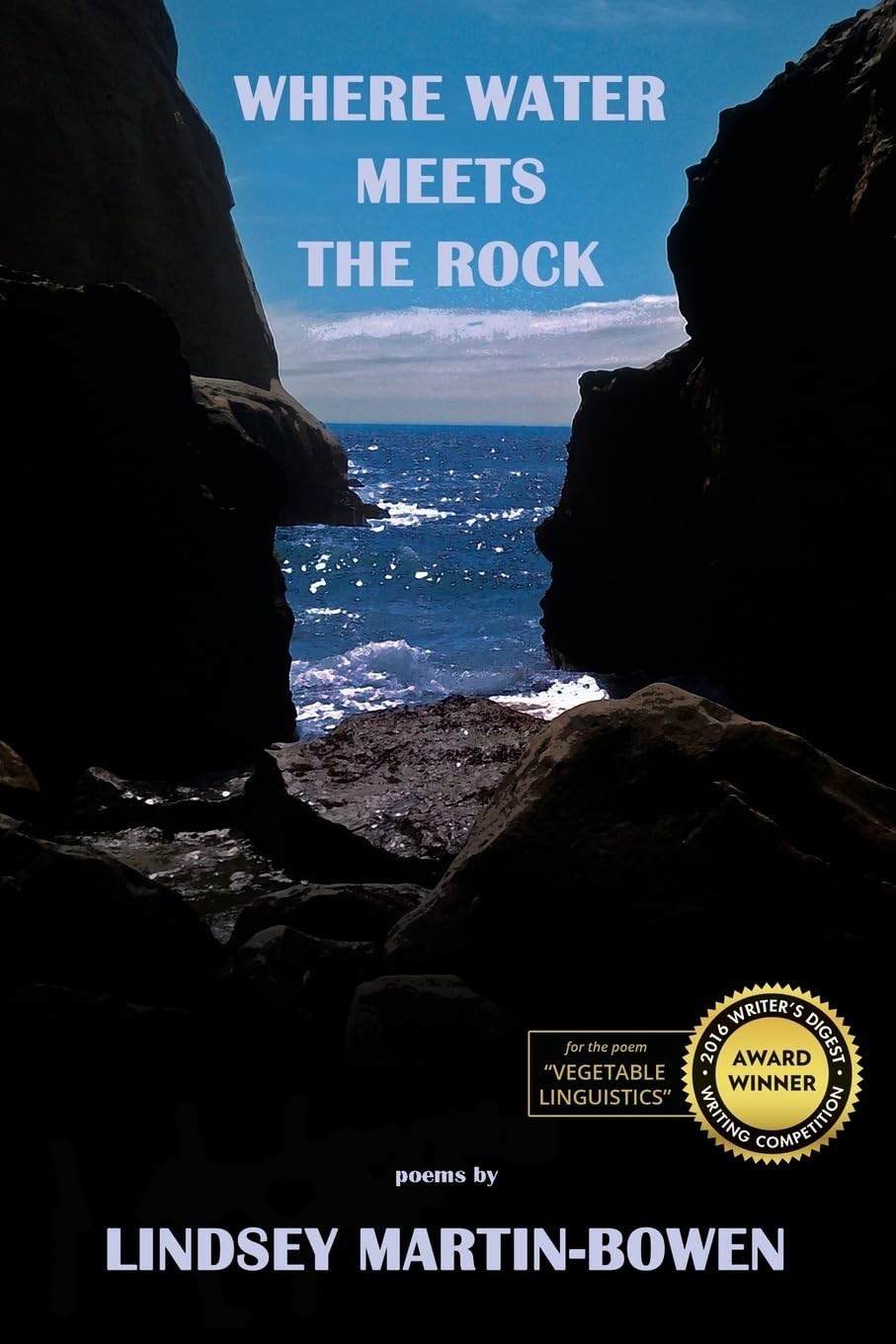
I enjoy reading poetry collections that include a common thread that links all the poems together. The common thread for this collection is loss and recuperation. This theme is relatable to everyone as we all suffer loss in various forms throughout our lives and we are forced to recuperate whether we want to or not.
The collection is divided into three sections: Erosion which explores the slow build up to loss; Frenzies which seeks to unravel the immediate chaos and emotion that follows loss; and On the Shore which delves into the slow path to acceptance and continuation.
The poems are unique and make use of various techniques to either exaggerate or bring out the humorous side of deep emotion and complex thought patterns relating to loss.
A poem that resonated strongly with me in Erosion is titled Psyche in the Suburbs. For me, this poem exposed the conflicting emotions of love, resentment, and self sacrifice that arise when caregiving for aging relatives.
This is the final stanza in this poem:
“Now, lavender scents fill the air,
sending me to the Aegean Sea.
When I step onto the asphalt,
I remember the bottled water.
I must go back. Without it,
the world will know her face
grows old. And she’ll blame me.”
Another poem in this section I especially related to is entitled My Bones are Glass. I have often thought this same thing when dealing with the elderly and aging. The poet includes an apology to Mark Strand, one of my favourite poets, so the style also worked very well for me.
Section 2: Frenzies, includes a lot of humour relating to people’s eccentricities and wants in their final moments. The poems also touch on the need for the observers to fulfil every desire and make the passing easier – perhaps to alleviate the guilt of survival. I enjoyed the poems although humour in poetry is not my personal favourite style. This section lifts the tension in death and loss and will appeal to most readers.
Section 3: On the Shore was very compelling for me. It explored inevitable change and endings coupled with new beginnings of a different sort. I reminded me that we move from one phase to another in our lives without even realising it until we look back and the end and beginning stand out in stark reality. The poem I enjoyed the most in this section was Two Mothers with Kids in Winchell’s. Perhaps because my children are now adults and have both finished school so I can understand and appreciate this poem through the lens of a soon to be empty nester.
This is one stanza in the poem that I strongly related to:
“The Winchell’s mothers nod, talk in buzzing hums,
eye their toddlers, who hop, slide on linoleum.
The kids scratch glass, balance on window ledges.
The pregnant one smooths seersucker. “Guys,” she says,
“They don’t like that here. Come, be quiet, Sit down.”
Like seatbelts, her words rein them in. I frown,
wonder how she renders her voice firm but not loud.”
As a mother who always worked, this stanza fills me with thoughts about what might have been had my own path taken me along a different path. What kind of mother would I have been had I not always been struggling to balance work and home demands. A writer who can introduce such reflections has to be great.
I highly recommend this compelling collection.
Where Water Meets the Rock is available from Amazon US here: https://www.amazon.com/Where-Water-Meets-Lindsey-Martin-Bowen/dp/1946358053
Lindsey Martin-Bowens Amazon Author page is here: https://www.amazon.com/stores/Lindsey-Martin-Bowen/author/B00JA31KW0
About Lindsey Martin-Bowen
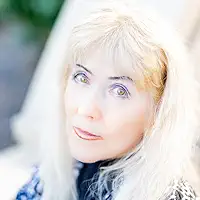
Lindsey Martin-Bowen’s CASHING CHECKS with Jim Morrison has just been released this fall (2023) by redbat books (a La Grande, Oregon publisher) as part of its Pacific Northwest Writers series. She serves as a Literary Consultant for Pierian Springs Press, which published The BOOK of FRENZIES in April 2022 (hardback copy in December 2022–BEFORE she became its Literary Consultant). She has taught Criminal Law and Procedure (online) at Blue Mountain Community College, Pendleton, Oregon since January 2019. Until August 2018, she taught writing, literature, and Criminal Law at MCC-Longview and taught literature and writing at the University of Missouri-Kansas City 18 years.
A Pulitzer-Prize nominee, her fourth full-length poetry collection, WHERE WATER MEETS THE ROCK (39 West Press 2017) contains “Vegetable Linguistics,” which received an Honorable Mention in the Non-rhyming Poetry category of Writers Digest’s 85th Annual Writing Competition (2016). Her third collection, CROSSING KANSAS with Jim Morrison, won the “It Looks Like a Million” Award for the 2017 Kansas Authors Club competition. The book is an expansion of her chapbook named a finalist in the 2015-2016 QuillsEdge Press Chapbook Contest. “Bonsai Tree Gone Awry” from INSIDE VIRGIL’S GARAGE (Chatter House Press 2013) was nominated for a Pushcart Prize. This collection was also runner-up in the 2015 Kansas Authors Club Nelson Poetry Book Award. Woodley Press (Washburn University) published her first full-length collection, STANDING ON THE EDGE OF THE WORLD, which McClatchy newspapers named one of the Ten Top Poetry Books of 2008. Paladin Contemporaries released her novels RAPTURE REDUX (2014), HAMBURGER HAVEN (2009) and CICADA GROVE (1992). Her work has appeared in NEW LETTERS, I-70 REVIEW, THORNY LOCUST, FLINT HILLS REVIEW, PORTER GULCH REVIEW, SILVER BIRCH PRESS, COAL CITY REVIEW, PHANTOM DRIFT, TITTYNOPE ZINE, BARE ROOT REVIEW, , AMETHYST ARSENIC, THE SAME, THE ENIGMATIST, ROCKHURST REVIEW, BLACK BEAR REVIEW, LITTLE BALKINS REVIEW, KANSAS CITY VOICES, LIP SERVICE, 21 anthologies, and others.
With Dennis Etzel, Jr., she edited GIMME YOUR LUNCH MONEY: Heartland Poets Speak out against Bullies (Paladin Contemporaries 2016). She holds an MA in English (creative writing emphasis) and a Juris Doctor degree.
Before focusing upon teaching and writing poetry and fiction, she served as a full-time journalist and magazine editor for THE LOUISVILLE TIMES, the Johnson County SUN, MODERN JEWELER Magazine, and THE NATIONAL PARALEGAL REPORTER. She also worked as a legal editor for the Office of Hearings and Appeals (USDI) in Washington, DC.
She has two brilliant children and contends with super Chihuahuas Chia Maria La Rue and Chico the Man, her canine companions. And often, she spars verbally with poet Carl Rhoden.
About Robbie Cheadle

South African author and illustrator, Robbie Cheadle, has written and illustrated sixteen children’s books, illustrated a further three children’s books, and written and illustrated three poetry books. Her work has also appeared in poetry and short story anthologies.
Robbie also has two novels and a collection of short stories published under the name of Roberta Eaton Cheadle and has horror, paranormal, and fantasy short stories featured in several anthologies under this name.
You can find Robbie Cheadle’s artwork, fondant and cake artwork, and all her books on her website here: https://www.robbiecheadle.co.za/
________________________
Did you know you can sponsor your favorite blog series or even a single post with an advertisement for your book? Stop by the WtbR Sponsor Page and let me advertise your book, or you can make a donation to Writing to be Read for as little as a cup of coffee, If you’d like to show your support for this author and WordCrafter Press.
__________________________
This segment of “Treasuring Poetry” is sponsored by WordCrafter Press and the Poetry Treasures series.
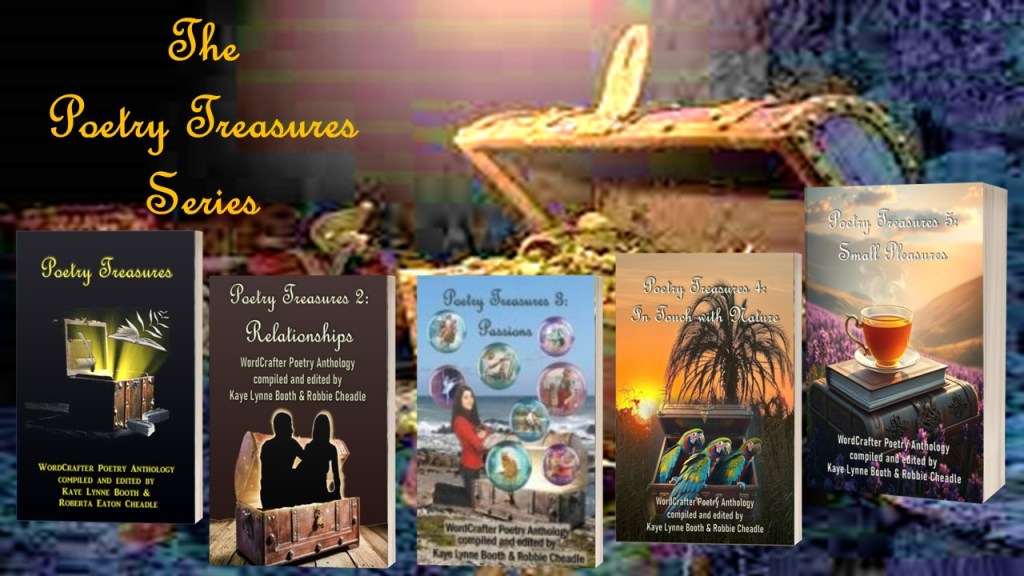
Get Your Copy Today!
Poetry Treasures: https://books2read.com/PoetryTreasures
Poetry Treasures 2: Relationships: https://books2read.com/PT2-Relationships
Poetry Treasures 3: Passions: https://books2read.com/u/b5qnBR
Poetry Treasures 4:In Touch With Nature: https://books2read.com/PT4-Nature
Poetry Treasures 5: Small Pleasures: https://books2read.com/PT5-SmallPleasures
Share this:

Read & Cook – On the Beach by Nevil Shute and chicken shawarma recipe
Posted: March 11, 2026 Filed under: Book Review, Books, Fiction, Post-Apocalyptic, Recipes, Review, Robbie Reads and Cooks | Tags: #ReadandCook, #recipe, #RobbieCheadle, Book Review, Chicken Shawarmas, Neville Shute, On the Beach, Read and Cook, Robbie Cheadle, Writing to be Read 54 Comments
Given the current state of affairs in the world, I think now is a good time to share my review of this post and pre-apocalyptic novel.
My review of On the Beach by Nevil Shute
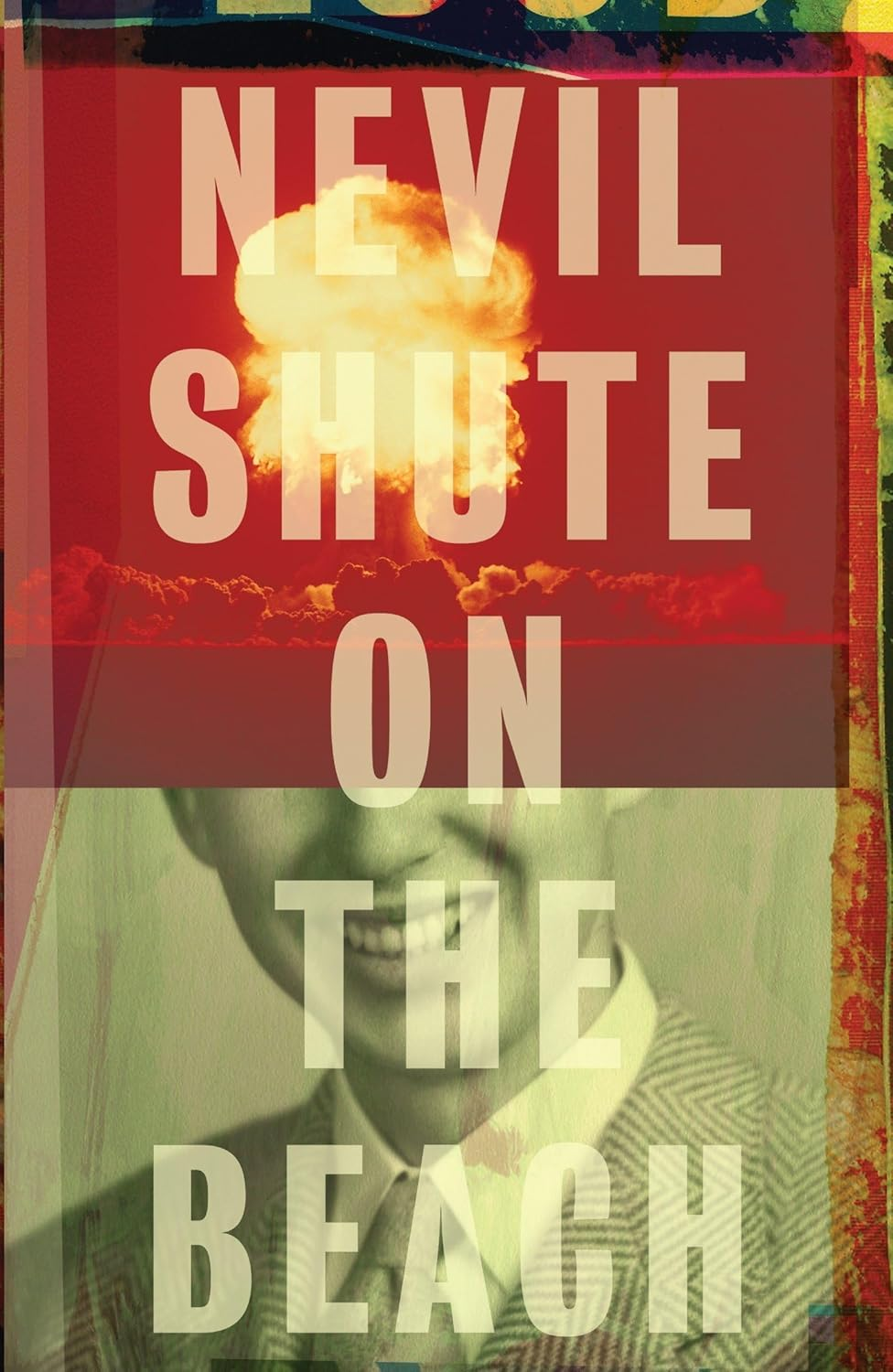
One the Beach is a post-apocalyptic novel set in Australia. The Northern Hemisphere has been completely destroyed by a nuclear war, and the residents of Southern Hemisphere are waiting for the inevitable arrival of deadly radiation. The story is set in Australia during the heat of the summer, and all of the characters are struggling to come to grips with their situations as short-term survivors of the war and the awful knowledge of their impending deaths from radiation as the nuclear fallout travels steadily southwards.
Lieutenant Commander Peter Holmes of the Royal Australian Navy is given a new and welcome assignment during this period of waiting for the inevitable deaths of himself and his family. He is appointed as the liaison officer to the American submarine, the U.S.S. Scorpion, commanded by Dwight Towers from New England in the U.S.A. The Scorpion had been near Australian waters when the global conflict erupted, and Towers and his men are now stranded with no country or homes to return to. There is an immediate contrast between the two men, Holmes and Towers, as Holmes still has his home, his wife and his baby daughter while Towers knows his home and family are gone. Towers, however, has retreated into fantasy of a sort where he still thinks of his wife and children as being alive and well and waiting for his return home even though he knows they are dead. It is incredibly moving and makes Towers’ loss that much more tragic and poignant.
Towers’ submarine has been placed under Australian command and Holmes is tasked with inspecting the Scorpion and briefing Towers about their orders to set out northwards in search of surviving life. This mission gives Holmes a small glimmer of hope that all might not be lost. In an attempt to distract Towers from his unhappy situation, Holmes extends an invitation for Towers to visit his home in Falmouth and enjoy the beach and time with Holmes’ family and friends. Towers accepts and during the visit is introduced to Moira Davidson, a beautiful and engaging young lady who has turned to alcohol and partying for solace.
The story involves three primary threads, namely, the journey of the submarine and its findings, a light romance of a sort between Moira and Towers, and the preparations by the Australian characters for their eventual deaths from radiation.
This story was an exceptionally intense and sad read for me as the characters are all such decent and ordinary people. The beach setting and sunny days at the beginning of the story combined with the forced merrymaking and pleasure taking of Holmes group of acquaintances slowly gives way to the cold and bleakness of winter and the acceptance by the various characters of their deaths. Many choose to end their lives with a pill provided by the Government for this purpose prior to succumbing to the radiation poisoning. There is no happy ending to this story and that is what’s so striking and awful about this story. There is no hope for survival for anyone right from the beginning. This is one of the few books I’ve read in my life that has made me cry.
The standout theme for me of this novel is finding meaning and purpose in the face of certain death. All of the characters in On the Beach exist in a strange period of time between the ending of the Northern Hemisphere through nuclear war and the ending of their own existence when the radioactive fallout reaches them, a period of approximately six months. The novel delves into the reactions of different people to an uncontrollable situation that can only end in death and demonstrates how some people can rise above despair and self-pity and make the most of the time they have left. Some characters turn to perpetual drunkenness or reckless car racing, but many resolve to carry on to the end with dignity and continue to do their duty. For Holmes, his duty includes continuing with his navel duties even though they ultimately become irrelevant. His wife continues to care for their baby daughter and run her home as if nothing could ever harm them.
This book was written at the height of the Cold War when the United States and the Soviet Union were engaged in ideological rivalry and a nuclear arms race. On the Beach reflects the fears of the period about a potential nuclear war and the destructive potential of atomic bombs.
Quotes from On the Beach
“It’s not the end of the world at all,” he said. “It’s only the end of us. The world will go on just the same, only we shan’t be in it. I dare say it will get along all right without us.” Dwight Towers raised his head. “I suppose that’s right. There didn’t seem to be much wrong with Cairns, or Port Moresby either.” He paused, thinking of the flowering trees that he had seen on shore through the periscope, cascaras and flame trees, the palms standing in the sunlight. “Maybe we’ve been too silly to deserve a world like this,” he said. The scientist said, “That’s absolutely and precisely right.” There didn’t seem to be much more to say upon that subject, so they went up on to the bridge for a smoke, in the sunlight and fresh air.”
“Mary looked at her gratefully. “Well, that’s what I think. I mean, I couldn’t bear to—to just stop doing things and do nothing. You might as well die now and get it over.” Moira nodded. “If what they say is right, we’re none of us going to have time to do all that we planned to do. But we can keep on doing it as long as we can.”
“Two days later they reached Port Darwin and lay in the harbour beneath the town. Here they could see nothing but the wharf, the roof of Government House, and a bit of the Darwin Hotel. Fishing boats lay at anchor and they cruised around these, hailing, and examining them through the periscope. They learned nothing, save for the inference that when the end had come the people had died tidily. “It’s what animals do,” John Osborne said. “Creep away into holes to die. They’re probably all in bed.” “That’s enough about that,” the captain said. “It’s true,” the scientist remarked. “Okay, it’s true. Now let’s not talk about it any more.” The report certainly was going to be a difficult one to write.”
Purchase On the Beach from Amazon US here: https://www.amazon.com/Beach-Nevil-Shute/dp/0307473996
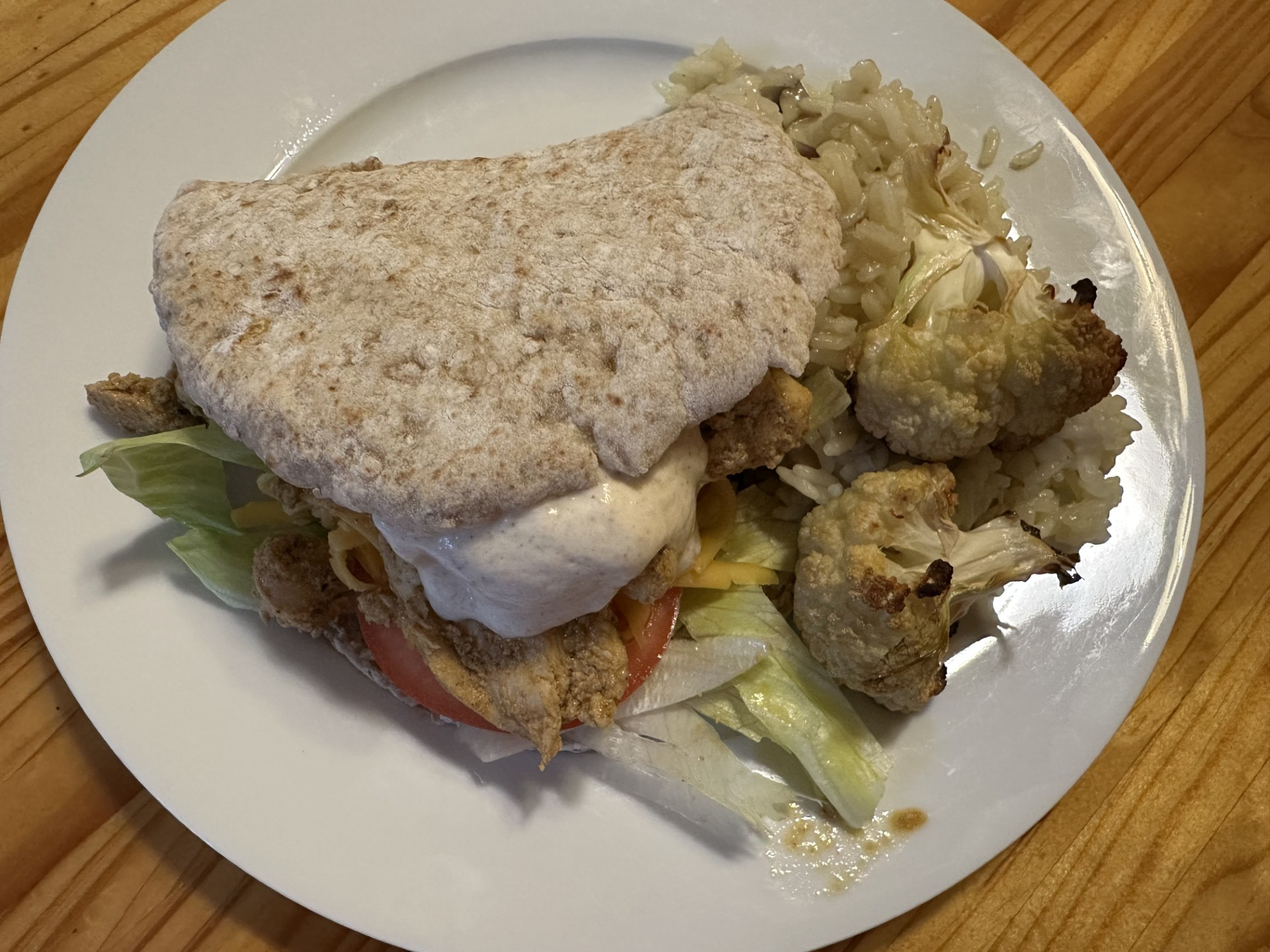
Recipe for chicken shawarmas
Marinade
15 ml garlic flakes
15 ml ground coriander
15 ml cardamon
5 ml ground cayenne pepper
20 ml ground paprika
10 ml chicken stock powder
black pepper to taste
10 ml lemon juice
45 ml olive oil
Combine the marinade ingredients in a bowl. Add 8 cubed skinless chicken breasts, cover, and leave to marinade for at least three hours. Overnight is best.
Cook the chicken pieces in a wok or frying pan until they are cooked through.
Yoghurt sauce
250 ml double thick Greek yoghurt
10 ml garlic flakes
5 ml cumin
2,5 ml lemon juice
salt and pepper to taste
Mix the ingredients together in a small bowl.
Slice5 or 6 flatbreads in half. Slice tomato, red onion, cheese, and lettuce.
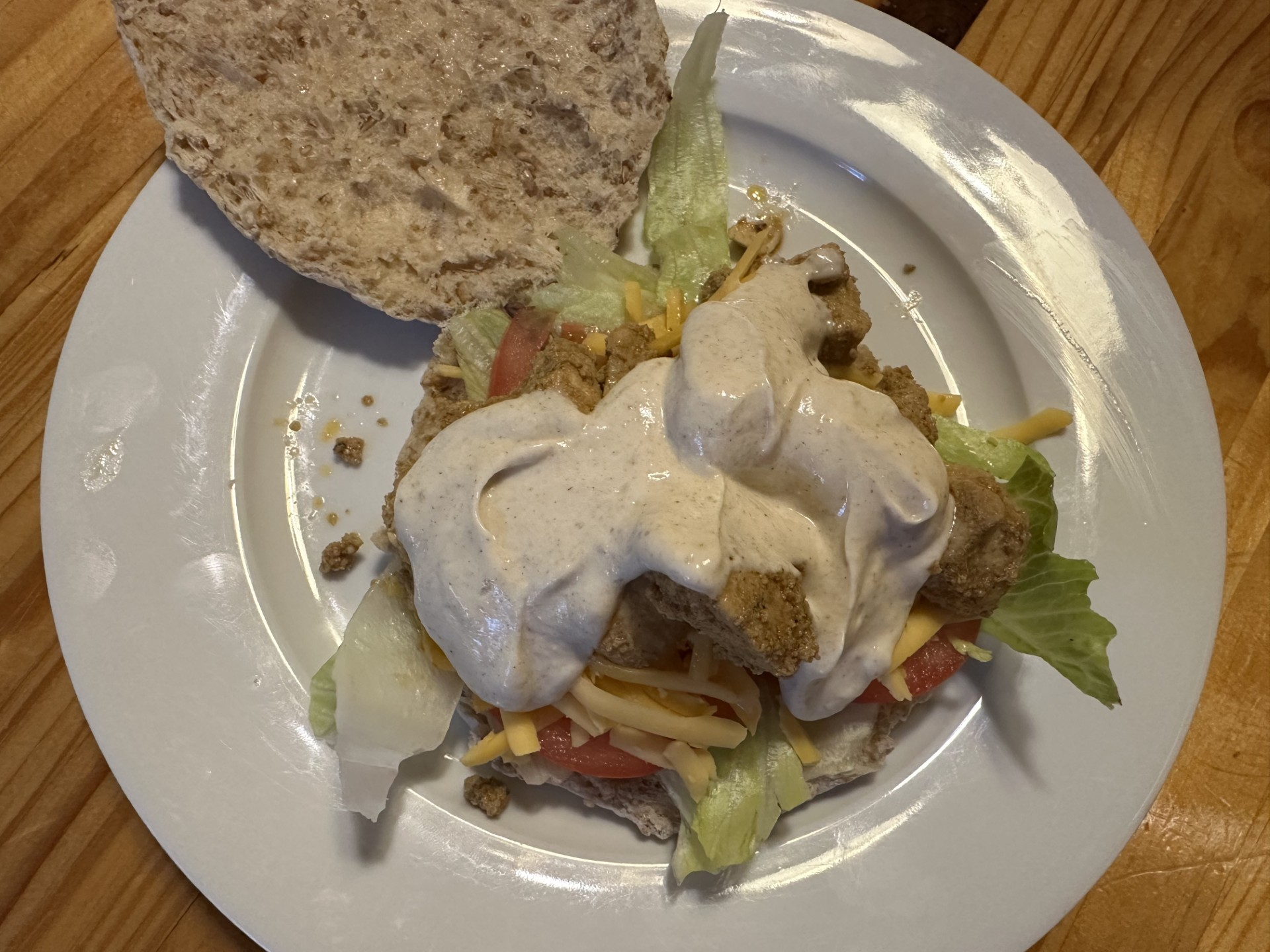
Assemble your shawarmas by adding a layer of lettuce, tomato, cheese, red onion, and chicken and topping it all with the yoghurt sauce.

About Robbie Cheadle

Robbie also has two novels and a collection of short stories published under the name of Roberta Eaton Cheadle and has horror, paranormal, and fantasy short stories featured in several anthologies under this name.
You can find Robbie Cheadle’s artwork, fondant and cake artwork, and all her books on her website here: https://www.robbiecheadle.co.za/
Find Robbie Cheadle
Blog https://wordpress.com/home/robbiesinspiration.wordpress.com
Bluesky https://bsky.app/profile/robbiecheadle.bsky.social
YouTube https://www.youtube.com/channel/UCVyFo_OJLPqFa9ZhHnCfHUA
Goodreads https://www.goodreads.com/author/show/15584446.Robbie_Cheadle
_________________________________
Did you know you can sponsor your favorite blog series or even a single post with an advertisement for your book? Stop by the WtbR Sponsor Page and let me advertise your book, or you can make a donation to Writing to be Read for as little as a cup of coffee, If you’d like to show your support for this author and WordCrafter Press.
___________________________________
This segment of “Read and Cook with Robbie Cheadle” is sponsored by WordCrafter Press and their themed anthologies.

Tales From the Hanging Tree: Imprints of Tragedy: There exists a tree that is timeless, spanning across all dimensions, which absorbs every life as those who are hanged as they die… and it remembers every one. The stories within are a select few of the Tales From the Hanging Tree.
Curses: Chronicles of Darkness:
There are all types of curses.
Cursed places, cursed items, cursed people, cursed families.
Curses that last throughout time. Curses which can’t be broken. Curses which are brought upon ourselves. Curses that will kill you and those that will only make you wish you were dead.
Legends: Monsters That Go Bump in the Night: Coming in 2026
Share this:

Treasuring Poetry – Meet poet and author, Laura Lyndhurst, and a review
Posted: February 18, 2026 Filed under: Book Review, Books, Collection, Interview, Poetry, Review, Treasuring Poetry | Tags: #RobbieCheadle, #TreasuringPoetry, Book Review, Interview, Laura Lyndhurst, Poetry, Robbie Cheadle, Social Climbing and Other Poems, Treasuring Poetry, Writing to be Read 31 CommentsHi everyone, today I’m thrilled to introduce you to Laura Lyndhurst. Laura is an accomplished author and poet and is also a new member of Story Empire blog which is a great resource for writers. You can read Laura’s first Story Empire post here: https://storyempire.com/2026/02/10/sowing-the-seeds-of-a-story/
Welcome Laura!
Tell us a bit about yourself and your poetry journey. How did you come to be a poet?
I never intended to write poetry. At school it was my least-favourite of the three prose-poetry-drama disciplines, and I didn’t like many of the poems that we studied. It was the same at university, when I finally got there in my forties. I was obliged to study Romanticism for my first-year core module, and I hated it. Wordsworth, Coleridge, Shelly; I wasn’t keen on them, although I was okay with some of Keats’s work. In the second year I couldn’t help but study more poetry, and I didn’t mind John Donne at all.
As to my own work, it was when I joined a Facebook writing group that it started. The group leader decided to post a picture every day for the month of October, inviting the group members to write a few paragraphs of prose around them. I sat with the first picture, thought, wrote—and what came out was poetry. The leader and members liked it, and thereafter I challenged myself to write poem every day from the picture prompt. At the end of the months I decided to publish them in a book, to claim copyright on them as much as anything. I called it October Poems, after the month in which I wrote them, and three more little collections followed in the next year or two.
What is your favourite poem by another poet and why?
That’s difficult. I like poetry more now than I used to, and there are several poets whose work appeals. I tend to listen to Leonard Cohen’s songs more than I read his poems, but he does have a way with lyrics; I mean, ‘the place is dead as Heaven on a Saturday night’ is so great. Hardy’s ‘The Darkling Thrush’ is up there, along with ‘This Be The Verse’ by Phillip Larkin. ‘Pity me not because the light of day’ by Edna St. Vincent Millay and ‘Rubbish at Adultery’ by Sophie Hannah attract, from the serious and the not-so as well. Choice for today, however, has to be ‘Refugee Blues’ by W.H. Auden. It never gets old, unfortunately, and although it’s written around one specific ethnic refugee group it can be applied to the myriad groups in existence before and since it was written; and now, in the 2020s, it feels massively relevant. You can find it here: https://allpoetry.com/refugee-blues
What is your favourite style of poetry and why?
Another difficult question. I don’t have a favourite style as such. I’ll read many different poems, some I’ll like and some I won’t, but the style of writing doesn’t have much bearing on why I like them or not. I do have an author friend, Thomas Leverett, who writes extensively in haiku form, and I loved his E Pluribus Haiku, which feels like travelling around the USA in haiku form. It’s on the link below, if you’re interested.https://www.amazon.com/Pluribus-Haiku-Anthology-3487-ebook/dp/B08X2YRQB2
Which is your favourite of your own poems?
I love them all, some more than others, it has to be admitted. I’ll choose the last one I wrote, however, because it is the last one and about ‘the end’. It’s from Social Climbing and Other Poems, and inspired by Clive Thompson’s photo of the altar of a Greek Orthodox Church.

Due Process
Your case has been a lengthy one; eighty-four years it’s taken, to
observe your less-than-perfect deeds and gather evidence to
aid the prosecution. But now you’ll have your day in court and
the jury gathered here, the Twelve, will finally decide, for or
against, whether you stay righteous here or whether you go down.
You wish to conduct your own defence? No, really, that won’t do, you’ll
be given representation. One of these saintly suits here gathered,
yes, that’s right, the ones with haloed wigs, will intercede for you.
Sorry for the delay; we understand that it’s a real nerve-wracking time for
you, but we can’t begin until His Honour gets here to take His place there,
in the big chair. The witnesses are here for you, plus jury, twelve good men
and true, not to forget the female sex, the immaculate, to try to push
your sins aside and hide you ‘neath their garments of compassion.
But nothing can occur until the God-Father is here; He’s judge
and jury all in one, Divine Justice in person. So please don’t fret,
or maybe do, for He knows you as well as you, and maybe better.
This whole set-up is just for show, to satisfy the need to see the
wheels of justice set in motion; your sentence fixed already,
your judgement day is here.
And here Our Father approaches now.
The court will rise …
Tell us a bit about your book, Social Climbing and other poems – what is the inspiration for the collection?
At the time I was friends with a photographer, Clive Thompson, and one of his pictures inspired a poem – ‘So This is Christmas’, which I recently published on my blog. Clive then allowed me to put together a book of my poems written to the prompts of some of his pictures.
What’s next for Laura Lyndhurst in the world of writing?
No more poetry, I’m afraid; nothing planned, at any rate, but if something occurs then I’ll be putting it together. At present I’m editing my latest novel, a whodunnit of sorts; a new departure for me, sort-of, because although I like adding a bit of a mystery to some of my stories this will be the first time I’ve brought the police in to investigate. It’s more focussed on before the murder, the personalities involved and their potential motivations. After that I’ll see what else occurs to me.
Many thanks for interviewing me. I’ve enjoyed it very much.
My review of SOCIAL CLIMBING: and Other Poems
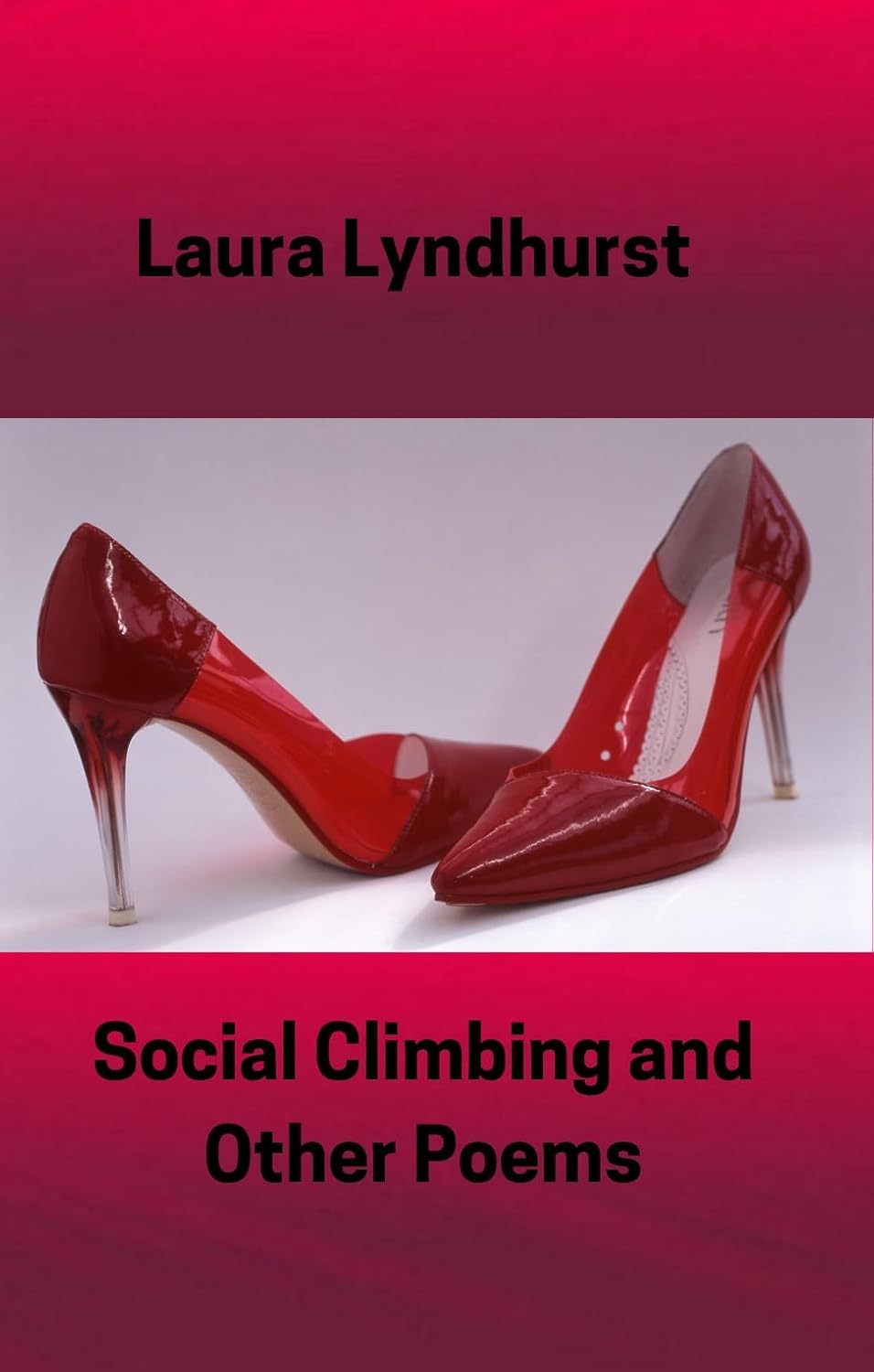
When I saw the cover of this collection, the shiny, red high heeled shoes against a white background, it reminded me of the movie, The Devil Wears Prada featuring Merril Streep and I was completely fascinated. I was not disappointed as this interesting collection of freestyle poems is a head on collision with an array of social situations, many of which are uncomfortable.
“The sit inside and watch the show, these Parisian fans of opera; but we,
lacking the means to buy the tickets for the red-plush, well-upholstered
seats and ornate murals, gilt-decked swirls and whirls of rococo decor,
prefer to take our entertainment in quite another way. Out here in the street”
from Street Theatre
Laura slices to the heart of human emotions and frustrations and these poetic expressions resonated with me. One poem I particularly delighted over is “I don’t know much about art but I know what I like”.
“So I’m breaking out of normalcy,
gone so very Modernisth,
this El Greco’s got his paintbox out
and given life a twist.”
Honestly, this poem made me laugh until I cried. Fantastic!
Each poem is introduced with a beautiful colour photograph by photographer, Clive Thompson.
Do yourself a favour, purchase this collection and allow Laura to put your life in perspective for you.
About Laura Lyndhurst
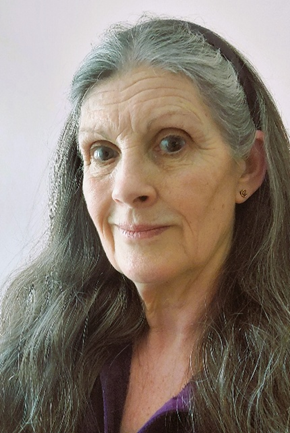
Laura Lyndhurst was born and grew up in North London, England, before marrying and travelling with her husband in the course of his career.
When settled back in the UK she became a mature student and gained Bachelor’s and Master’s degrees in English and Literature before training and working as a teacher.
She started writing in the last few years in the peace and quiet of rural Lincolnshire, and published her debut novel, Fairytales Don’t Come True, in May 2020. This book forms the first of a trilogy, Criminal Conversation, of which the second is Degenerate, Regenerate and All That We Are Heir To the third. Innocent, Guilty, the first of another trilogy, continues the story told in these three books and leads on to The Future of Our House, which is followed by Uphill, Downhill, Over, Out as the sixth and final book to end the series. An Honourable Institution was published as a stand-alone novel in January 2025, as was The Guilty Party in September 2025.
Laura also developed a taste for psychological suspense, which led to the writing and publication of You Know What You Did, to which What Else Did You Do? is the sequel.
Laura has also published four small books of poems, October Poems, Thanksgiving Poems and Prose Pieces, Poet-Pourri and Social Climbing and Other Poems.
Find Laura Lyndhurst
Website: https://booksthatmakeyouthink2.co.uk/
Facebook: https://www.facebook.com/laura.lyndhurst (personal profile)
Facebook: https://www.facebook.com/lauralyndhurstauthor/ (author profile)
Amazon: https://www.amazon.co.uk/stores/Laura-Lyndhurst/author/B088QFJJ3Q
Goodreads: https://www.goodreads.com/author/show/20336562.Laura_Lyndhurst
Instagram: https://www.instagram.com/lyndhurstlauraauthor/
Pinterest: https://uk.pinterest.com/lyndhurstlaura/
Tiktok: https://www.tiktok.com/@alectrona47
About Robbie Cheadle
South African author and illustrator, Robbie Cheadle, has written and illustrated sixteen children’s books, illustrated a further three children’s books, and written and illustrated three poetry books. Her work has also appeared in poetry and short story anthologies.
Robbie also has two novels and a collection of short stories published under the name of Roberta Eaton Cheadle and has horror, paranormal, and fantasy short stories featured in several anthologies under this name.
You can find Robbie Cheadle’s artwork, fondant and cake artwork, and all her books on her website here: https://www.robbiecheadle.co.za/
________________________
Did you know you can sponsor your favorite blog series or even a single post with an advertisement for your book? Stop by the WtbR Sponsor Page and let me advertise your book, or you can make a donation to Writing to be Read for as little as a cup of coffee, If you’d like to show your support for this author and WordCrafter Press.
__________________________
This segment of “Treasuring Poetry” is sponsored by WordCrafter Press and the Poetry Treasures series.
Get Your Copy Today!
Poetry Treasures: https://books2read.com/PoetryTreasures
Poetry Treasures 2: Relationships: https://books2read.com/PT2-Relationships
Poetry Treasures 3: Passions: https://books2read.com/u/b5qnBR
Poetry Treasures 4:In Touch With Nature: https://books2read.com/PT4-Nature
Poetry Treasures 5: Small Pleasures: https://books2read.com/PT5-SmallPleasures
Share this:

Read & Cook – Rhyming Dreams by Nicole Sara and Multicoloured Jelly Cupcakes
Posted: February 11, 2026 Filed under: Book Review, Collection, Poetry, Read and Cook, Recipes, Review | Tags: #ReadandCook, #RobbieCheadle, Book Reveiw, Nicole Sara, Poetry, Recipes, Rhyming Dreams, Writing to be Read 32 CommentsRhyming Dreams by Nicole Sara
What Amazon says
Rhyming Dreams is an enchanting and engaging collection of poems about the heart’s winding journey through deep wistful longing towards bliss and belonging along the meandering road of love and loss, hope and healing. This book is for anyone who dreams a lot, loves deeply, and has both good and bad days.. like steps on a pathway, be them confident or hesitating, nevertheless tirelessly searching for happiness in the enjoyment of small things around, yet so sweet, that life has to offer.
Each and every poem in this debut collection is deeply rooted in personal moments and experiences but still wonderfully universal, so that you feel taken by the hand and shown the beauty and brightness of it all, thus wholeheartedly invited to gently give yourself grace beyond the sadness of blue gloomy days, the tears or the brokenness.
This collection of beautifully flowing and uplifting verse is a soothing balm for the soul in search of serenity, helping the reader to reach peaceful shores deep within.
for here, on Earth, you and I
bearing within us the sky
we dance away beneath whispering stars
trying to reach beyond rails and bars
(fromKinship)
My review
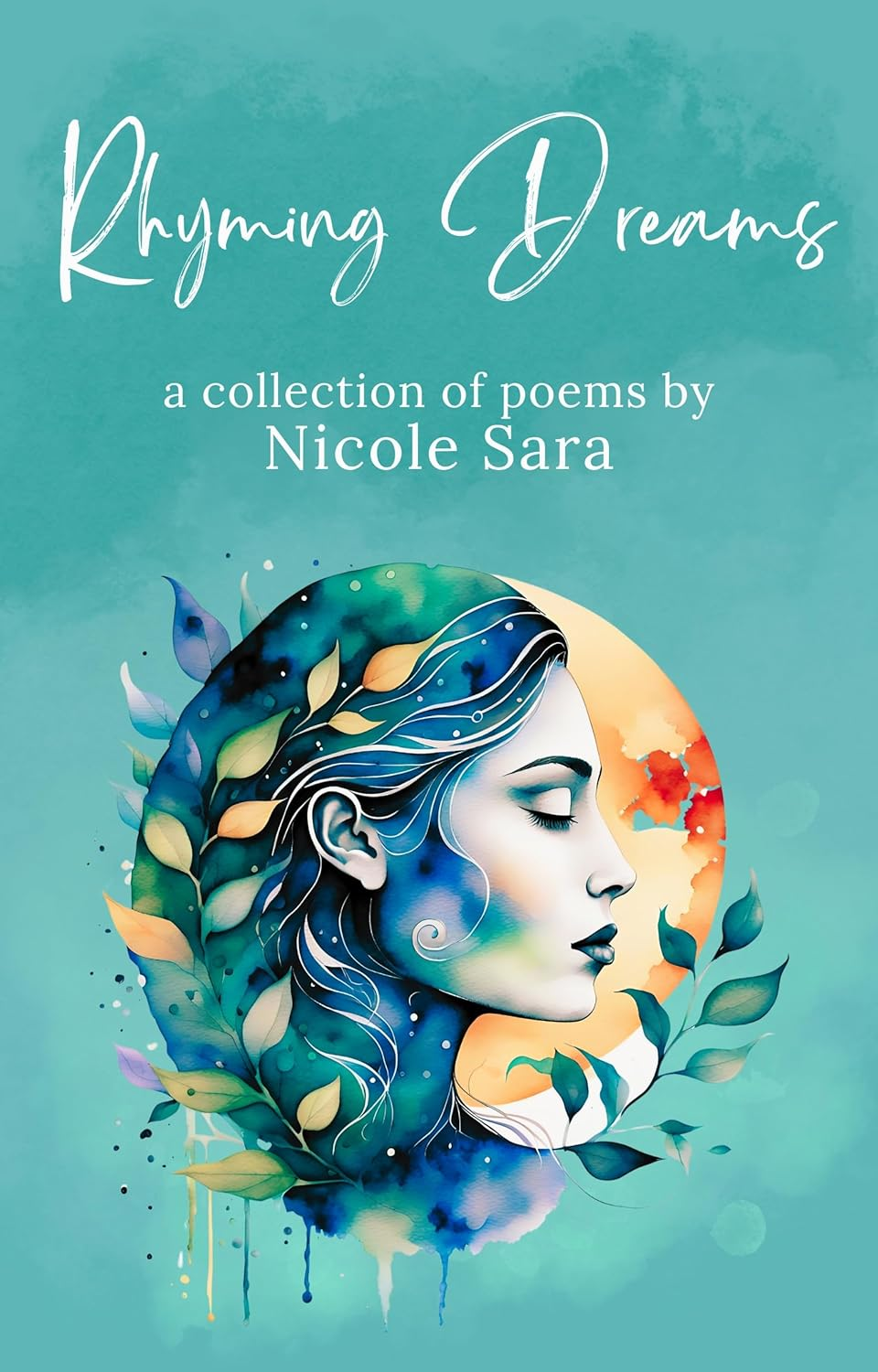
The poetry content of Rhyming Dreams is a delightfully ethereal as its striking cover of a female goddess in shades of blue against a turquoise background. The poet introduces this collection with an overview about the large variety of different steps she has taken during her life and how they have led her on different journeys. Some steps are hard to take and some are taken quickly, heedless of potential danger, but all lead to change. The overarching message in this introduction and in this book, is that no matter how tough life gets, our feet always eventually grow wings again and our steps led us upwards, in pursuit of our dreams and better opportunities.
Many of the poems are written in rhyming verse which is a favourite form of mine, and all are exquisitely beautiful. Each poem is matched with one of the poet’s wonderful colour photographs that compliment the words. One of the objectives of this collection is to create and share beauty by engaging all of the senses in a sensuous and vivid way. It creates a path of poems to joy and gratitude.
One of my favourite poems in the collection is called Starry Steps and it provides a small peek into the collection.
Starry Steps
“to step on stairs
of stars
to breathe in their light,
their dream
touching their statin star dust
beyond clouds
and the moon…
smiling
from within their shine
and hiding behind veils of rays
to fall asleep
sun in your heart…”
A poetry collection that uplifts and inspires.
Purchase Rhyming Dreams by Nicole Sara from Amazon US here: https://www.amazon.com/Rhyming-Dreams-Nicole-Sara-ebook/dp/B0DCZXWMBF
Multicoloured Jelly Cupcakes

Ingredients
1 each red, green, orange, blue and pink jelly; 1 lemon jelly; 125 ml evaporated milk; and 250 ml clear apple juice
Method
Make up the red, green, orange, blue and pink jellies according to the instructions on the packet. When set, chop the jellies roughly into squares. Heat the apple juice and dissolve the lemon jelly in the juice and allow to cool. Add the slightly beaten evaporated milk. Place cupcake holders on a baking tray and fill them to three quarters full with different coloured squares of jelly. Cover the jelly pieces with the lemon mixture. Place in the refrigerator to set overnight.
About Robbie Cheadle
Robbie also has two novels and a collection of short stories published under the name of Roberta Eaton Cheadle and has horror, paranormal, and fantasy short stories featured in several anthologies under this name.
You can find Robbie Cheadle’s artwork, fondant and cake artwork, and all her books on her website here: https://www.robbiecheadle.co.za/
Find Robbie Cheadle
Blog https://wordpress.com/home/robbiesinspiration.wordpress.com
Bluesky https://bsky.app/profile/robbiecheadle.bsky.social
YouTube https://www.youtube.com/channel/UCVyFo_OJLPqFa9ZhHnCfHUA
Goodreads https://www.goodreads.com/author/show/15584446.Robbie_Cheadle
_________________________________
Did you know you can sponsor your favorite blog series or even a single post with an advertisement for your book? Stop by the WtbR Sponsor Page and let me advertise your book, or you can make a donation to Writing to be Read for as little as a cup of coffee, If you’d like to show your support for this author and WordCrafter Press.
___________________________________
This segment of “Read and Cook with Robbie Cheadle” is sponsored by WordCrafter Press and their themed anthologies.
Tales From the Hanging Tree: Imprints of Tragedy: There exists a tree that is timeless, spanning across all dimensions, which absorbs every life as those who are hanged as they die… and it remembers every one. The stories within are a select few of the Tales From the Hanging Tree.
Curses: Chronicles of Darkness:
There are all types of curses.
Cursed places, cursed items, cursed people, cursed families.
Curses that last throughout time. Curses which can’t be broken. Curses which are brought upon ourselves. Curses that will kill you and those that will only make you wish you were dead.
Legends: Monsters That Go Bump in the Night: Coming in 2026
Share this:

Treasuring Poetry – Meet talented poet Paul Cannon
Posted: January 21, 2026 Filed under: Poetry, Treasuring Poetry | Tags: #Poetrycommunity, #RobbieCheadle, Paul Cannon, Poetry, Poetry Challenges, Robbie Cheadle, Treasuring Poetry, Writing to be Read 33 CommentsHi everyone, welcome back to Treasuring Poetry 2026. My first guest of the year is talented poet, Paul Cannon, who I met through the d’Verse Poets Pub. You can find the latest d’Verse challenge here: https://dversepoets.com/2026/01/15/its-open-link-night-and-our-live-session-is-just-around-the-corner/. d’Verse hosts three challenges a week and they are all very interesting.
Tell us a bit about Paul Cannon. How and why did you start writing poetry?
My earliest memory of my interest in poetry is my parents encouraging me to listen to them reading poetry to me from the Children’s Book Of Verse. I remember in later primary school having to memorise poems like Coleridge’s ‘The Rime of the Ancient Mariner’ and Southey’s ‘The Inchcape Rock’ along with Patterson’s ‘The Man From Snowy River.’ Poetry captured my imagination.
Later, in high school, we were introduced to many poets and forms from around the world. We were also tasked with writing poetry which I enjoyed. One poet who I continue to read from that time is Robert Frost, I love the way he draws me into observing human behaviour and feelings, and how he observes nature.
After high school I continued to write. The incentive was, naturally, love interests. My girlfriends were always polite about my writing, not least Lyn my wife to be. From the time I married in 83 to the mid nineties I was hit and miss with writing, what brought me back in earnest was my journey into becoming an Anglican priest and the pathway of training to be a spiritual director or companion for those needing a sounding board for personal discernment. This journey opened me up to the poetry of Mary Oliver, R.S. Thomas, Denise Levertov, Blake, Milton, Edwina Gateley, Noel Davis, Rumi, Hafez, Layli and many more. These poets inspired me and I became intentional about my writing at this point.
I didn’t go online with my poems until 2017. I was writing prose on Face Book and switched to WordPress in 2013 and it was through the WordPress community that I was encouraged to take the plunge into poetry after posting some tentative pieces.
Calm Kate from aroused blog prodded me along. Through the late Sarah Conner I discovered the wonderful world of dVerse and she encouraged me to keep working on my craft. Liz Gauffreau, Melissa Lemay are two people who have supported my desire to go further with my work. dVerse offers a broad and rich palette to enjoy and learn from.
Last year I joined Tanka Tuesday and I’m enjoying the community that Colleen Cheseboro has created, as well as the poetry. I was thrilled to have three of my poems in the Sunflower Tanka 2025 Anthology. I also write on bluesky, where I have joined a few poetry challenge sites, including The Broken Spine – Alan Parry #PoemsAbout (thank you Merril), Paul Brookes’ Starbeck Orion and others. I haven’t posted yet (coming soon) but I have become a friend of Melissa Lemay’s Collaborature and I’m interested in the venture of collaborative writing having done a little bit elsewhere. In 2021 I was faced with a decision, when events overtook me. I had been thinking of resigning as a priest, I was disillusioned with the institution of the church and policies and procedures and my views had radically changed by experience. While mulling that over I experienced a series of aggressive and violent incidences over three weeks resulting in PTSD. I fell apart, but I continued writing, and in fact, my poetry became a life line (there are more than a few journals based on writing and poetry as healing). I resigned. I continue in private practice as a spiritual director but one who is eclectic and open minded and not tethered to a theology or philosophy. In that work I belong to a professional body and we have a journal for which I am the poetry editor and I facilitate a monthly online group for which I send out a prompt. So many wonderful people and such delightful contemplative poetry.
So, why do I write? I can’t not write! I enjoy expressing myself, I love writing, I enjoy community. I was also formed for it from my earliest days, through school and through friends, and especially the online community now.
So now if anyone asks what I do, I reply – “I’m a Poet.”
Which poet has influenced you the most and why?
Who do I pick? Neruda, Li Po, Basho, Bukowski, Dickinson, Hejinian, Whyte, Heaney, Eliot? So many have been instrumental in my life. The poet I come back to the most is Mary Oliver. Her love of people, her passion for nature, her metaphors and the simplicity of her poems have all captured my heart. Oliver speaks my language and touches my experience.
Please share your favourite poem by your favourite poet
There are so many poems I could list. One of my favourites by Mary Oliver is ‘The Journey”
The Journey – by Mary Oliver
One day you finally knew
what you had to do, and began,
though the voices around you
kept shouting
their bad advice—
though the whole house
began to tremble
and you felt the old tug
at your ankles.
“Mend my life!”
each voice cried.
But you didn’t stop.
You knew what you had to do,
though the wind pried
with its stiff fingers
at the very foundations,
though their melancholy
was terrible.
It was already late
enough, and a wild night,
and the road full of fallen
branches and stones.
But little by little,
as you left their voices behind,
the stars began to burn
through the sheets of clouds,
and there was a new voice
which you slowly
recognized as your own,
that kept you company
as you strode deeper and deeper
into the world,
determined to do
the only thing you could do—
determined to save
the only life you could save.
Please share your favourite of your own poems and tell us a bit about it.
I have written so many, but one that is recent and is close to my heart is:
Light Dreams by Paul Cannon
If the whole world were
in an impenetrable darkness
the sun in hibernation
I would dream some light,
reach in and carefully gather it
up into my cupped hands and
cast it across the hungry sky
until every speckle sparked
in every living thing.
In 1979 I had a brief conversation with Bob Dylan around meaning. I asked him what he attached to his lyrics and poems and he said that his work meant something to him, but in the wider world audience his work would take on whatever meaning others found in it. In short, a poem means what it means for you. And I stand by that. What ‘Light Dreams’ is about for me is that we can sit around and worry about the state of the world (and it is, in my view, dire politically, economically and environmentally) but what is needed is for us to be an agent of change, and agent of light, and agent of hope, of love in some way. It fits my belief that all things have an intrinsic right to be treated with dignity, fairness and care. It also fits my belief that love makes the world go round.
You enter a lot of poetry challenges. What attracts you to poetry challenges?
I really enjoy the challenge of writing to a prompt, it stretches me, makes me think and feel. The other side of a challenge is the communal aspect, people interacting through their work, and offering their perspective. The communities I engage with for prompts and challenges are so supportive and encouraging. It is also an opportunity to learn and grow, I know I am not the same poet as I was twenty, or even five years ago as a result.
My Blog Parallax can be found at https://pvcann.com Parallax means that we can see something, see it from another angle and therefore see it differently, so too no two people see things the same – hence – a poem means what it means for you.
You can also find other poetry I write at @pvcannon.bsky.social
About Paul Cannon

Paul is a poet and writer who lives with his wife Lyn in Augusta, Western Australia, they have two adult sons and now grandchildren. Paul loves being creative whether in the garden, with wood, with paint or clay, and not least with the pen. Paul enjoys hiking, camping, reading, wine and a good single malt whiskey.
About Robbie Cheadle
South African author and illustrator, Robbie Cheadle, has written and illustrated sixteen children’s books, illustrated a further three children’s books, and written and illustrated three poetry books. Her work has also appeared in poetry and short story anthologies.
Robbie also has two novels and a collection of short stories published under the name of Roberta Eaton Cheadle and has horror, paranormal, and fantasy short stories featured in several anthologies under this name.
You can find Robbie Cheadle’s artwork, fondant and cake artwork, and all her books on her website here: https://www.robbiecheadle.co.za/
________________________
Did you know you can sponsor your favorite blog series or even a single post with an advertisement for your book? Stop by the WtbR Sponsor Page and let me advertise your book, or you can make a donation to Writing to be Read for as little as a cup of coffee, If you’d like to show your support for this author and WordCrafter Press.
__________________________
This segment of “Treasuring Poetry” is sponsored by WordCrafter Press and the Poetry Treasures series.
Get Your Copy Today!
Poetry Treasures: https://books2read.com/PoetryTreasures
Poetry Treasures 2: Relationships: https://books2read.com/PT2-Relationships
Poetry Treasures 3: Passions: https://books2read.com/u/b5qnBR
Poetry Treasures 4:In Touch With Nature: https://books2read.com/PT4-Nature
Poetry Treasures 5: Small Pleasures: https://books2read.com/PT5-SmallPleasures
Share this:

Read and Cook – Wind in the Willows by Kenneth Grahame and Sally Lunn Teacakes
Posted: January 14, 2026 Filed under: Book Review, Fiction, Recipes, Review, Robbie Reads and Cooks | Tags: #ReadandCook, #RobbieCheadle, Baking, BookReview, Kenneth Grahame, Sally Lunn Teacake, Wind in the Willows 16 CommentsWind in the Willows by Kenneth Grahame
Introduction
The Wind in the Willows is a charming tale that centres around four animals living in an idyllic English setting. The descriptions of the English countryside are delightful, and the book embodies the best of English country life.
The story commences with the mole experiencing a sudden desire to have an adventure and experience life outside of his underground home. He is busy doing his spring cleaning, but he follows the urge to throw down his paint brush and dig upwards and outwards. He comes out in a beautiful spring meadow. Seeing the river for the first time, he goes down to see it and meets the Water Rat. The two animals strike up a conversation and the Water Rat offers to take Mole on a picnic along the riverbank. During the picnic, Rat tells Mole about all the characters who live around the riverbank including Mr Toad, an impetuous creature who inherited wealth from his father and indulges himself in a variety of obsessive behaviours, the hermit-like Badger who lives in the Wild Wood, and Otter. On the way back to Rat’s den after the picnic, Mole seizes the oars from Rat and tries to row. He overturns the boat and nearly drowns. He is pulled out by the Rat who proceeds to rescue all his belongings and his boat from the water. The Mole is overcome by remorse at his rash action that caused the Rat so much trouble. Mole ends up spending the night at the Rat’s den and the pair become friends.
A few days later, Rat takes Mole to visit Mr Toad, a landed gentleman who lives in the best house in the area, Toad Hall. This visit results in the friends going off in a caravan with Toad who has a desire for adventure and to see the larger country. This adventure ends with Toad learning about motor cars and declaring that he shall have one. Mole and Rat return to Rat’s den and Mole ends up staying, time passes, and winter comes.
Rat has told Mole all about Mr Badger, a kindly creature who lives in the Wild Wood, a scary place where the river animals do not often go. Mole is curious about Badger who is a recluse and rarely undertakes social activities. One winter’s day while Rat is sleeping in his armchair in front of the fire, Mole sets off on his own to find Badger. This unfortunate decision nearly ends badly for Mole and the brave Rat, who comes to find his friend when he discovers he is missing. Good fortune, however, has the pair stumbling across the home of Badger and they are saved. Mole also gets his wish of meeting Badger. During their time at Badger’s home, the subject of Toad comes up and the reader learns that Toad’s obsession with motor vehicles has resulted in him wrecking eight vehicles, ending up in hospital a few times, and getting into trouble with the law because of his reckless behaviour on the roads. Badger decides that the Toad’s three friends, himself, Mole, and Rat, must take Toad in hand in the spring.
This first part of the novel introduces the two main themes of home as a source of strength and the power of nature. The development of the Mole’s character from a timid, nervous, and excitable animal into a brave, dependable, and thoughtful friend. It is only by leaving his home that Mole can learn about the vastness of nature and the joys of companionship and friendship.
The homes of Rat and Badger are integral to their characters and roles in the story. Water Rat and the river are joined together almost as one. Both are calm and poetic but also in constant motion as they follow the tides. Rat is a gregarious creature and accepts the changes to his life brought by the seasons and the river’s reactions to the seasons, with good grace. Rat is as accepting of flooding of his home as he is of newcomers into his life.
The Badger has a vast underground home that suits his slow, lumbering movements and winter hibernation. Badger’s home is his place of sanctuary from society where he can be alone and restore his equilibrium after social interactions.
When the spring comes, Badger makes good on his promise and the trio go to Toad’s house and confront him about his irresponsible behaviour. Toad refuses to listen and promise to amend his behaviour, and so Badger decides to imprison him in his bedroom until he sees reason. Naturally, the deceitful Toad manages to escape. Toad steals a car and gets arrested and thrown in jail for twenty years. The charges are theft, reckless driving, and being disrespectful to the police.
This sets the stage for the second part of the story which revolves around forcing Toad to behave with proper etiquette suited to his station in life. This second section of the book expands on the themes of home as a source of strength and the importance of animal etiquette. Mole learns these lessons quickly while Toad must learn them slowly and because of numerous unfortunate and difficult life lessons.
My thoughts
I loved the beautiful and scenic writing in this book. Nature is a force in this book that the animal characters must pay constant attention to or risk their lives. I liked how nature was so true to life, neither benevolent nor malevolent but rather a condition for existence that must be acknowledged and accommodated.
The scene where Mole and Rat are so in tune with nature, they can hear the music of the Piper while searching for the missing baby otter. The music guides them, and they find Portly and get a glimpse of nature personified as a demi-god. This scene is spiritual and powerful.
This book really spoke to me as it encapsulates everything I value in life: home, nature, and social harmony including consideration and respect for others.
Quotes from this book
“Spring was moving in the air above and in the earth below and around him, penetrating even his dark and lowly little house with its spirit of divine discontent and longing.”
“All this he saw, for one moment breathless and intense, vivid on the morning sky; and still, as he looked, he lived; and still, as he lived, he wondered.”
“But Mole stood still a moment, held in thought. As one wakened suddenly from a beautiful dream, who struggles to recall it, but can recapture nothing but a dim sense of the beauty in it, the beauty! Till that, too, fades away in its turn, and the dreamer bitterly accepts the hard, cold waking and all its penalties.”
“He saw clearly how plain and simple – how narrow, even – it all was; but clearly, too, how much it all meant to him, and the special value of some such anchorage in one’s existence. He did not at all want to abandon the new life and its splendid spaces, to turn his back on sun and air and all they offered him and creep home and stay there; the upper world was all too strong, it called to him still, even down there, and he knew he must return to the larger stage. But it was good to think he had this to come back to, this place which was all his own, these things which were so glad to see him again and could always be counted upon for the same simple welcome.”
Sally Lunn Teacake recipe
Ingredients ( 1 large teacake or 2 medium teacakes)
360 ml plain or cake flour
1 egg, beaten
1/2 teaspoon salt
7 grams powdered yeast
1 teaspoon sugar
165 ml milk and water (2/3 milk and 1/3 water)
30 ml (1 Tablespoon) butter
Egg or milk to glaze (I used milk)
Glace icing (I used this recipe for glace icing: https://www.snowflake.co.za/recipes/glace-icing)
Method
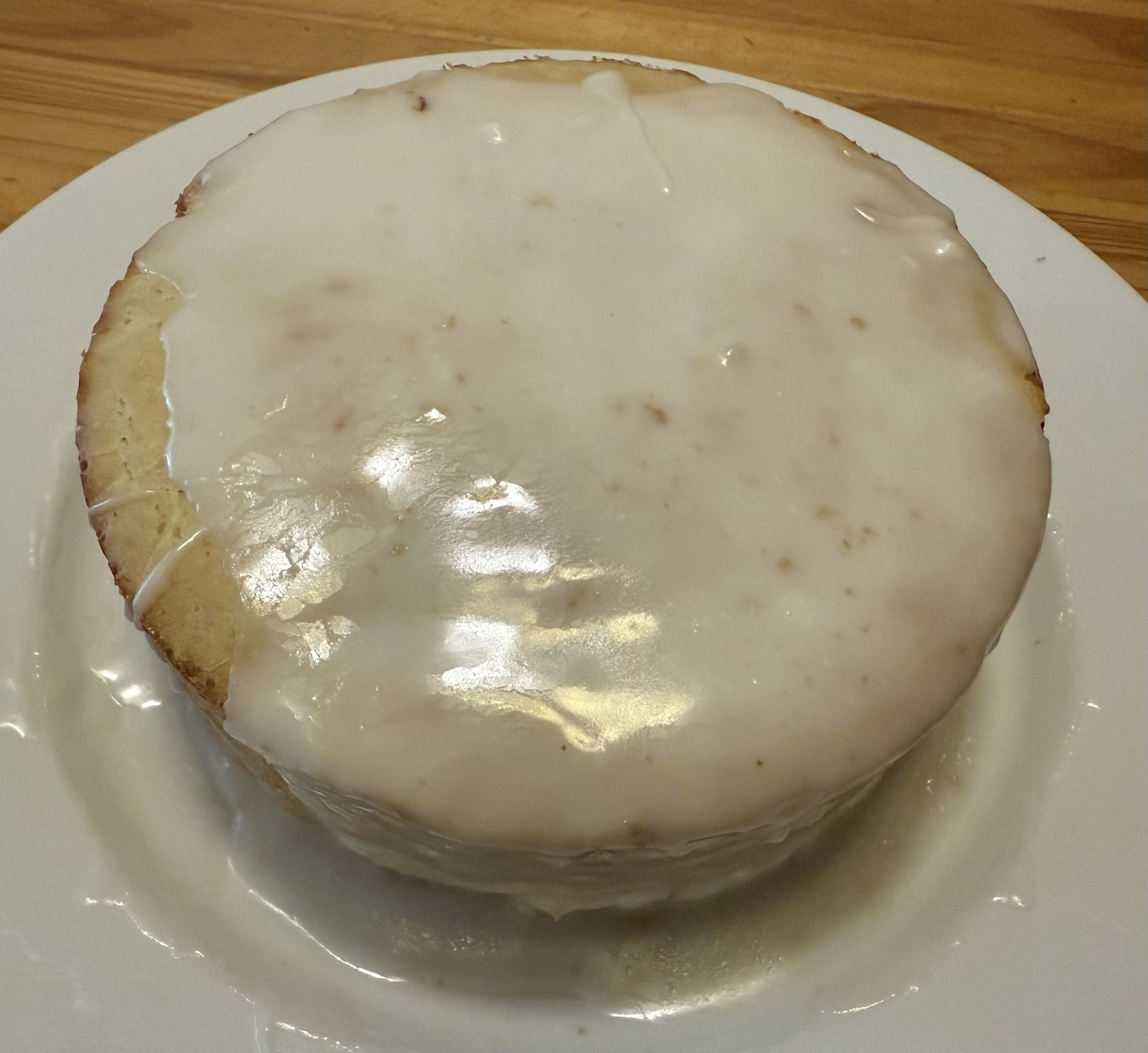
Sift the salt and flour into a mixing bowl. Mix the yeast power with the milk and water heated until its tepid (lukewarm – NOT HOT) and the sugar, pour into the flour and combine. Add the melted butter (NOT HOT) and beaten egg and mix to a light, sticky dough. Knead for few minutes. If you are doing the kneading by hand, cover hands with a coating of flour before starting to help prevent sticking. Grease a small cake tin or two smaller cake tins and transfer the dough to the tins. Set in a warm place to rise until the dough has more than doubled in size (I put in in a cool oven – 100 C) for 30 minutes.
Paint the top of the risen dough with warm milk and place in an oven pre-heated to 230 C (450 F) and bake to approximately 20 minutes or until a cake tester comes out clean. When cold, cover the teacake with glace icing.
About Robbie Cheadle
Robbie also has two novels and a collection of short stories published under the name of Roberta Eaton Cheadle and has horror, paranormal, and fantasy short stories featured in several anthologies under this name.
You can find Robbie Cheadle’s artwork, fondant and cake artwork, and all her books on her website here: https://www.robbiecheadle.co.za/
Find Robbie Cheadle
Blog https://wordpress.com/home/robbiesinspiration.wordpress.com
Bluesky https://bsky.app/profile/robbiecheadle.bsky.social
YouTube https://www.youtube.com/channel/UCVyFo_OJLPqFa9ZhHnCfHUA
Goodreads https://www.goodreads.com/author/show/15584446.Robbie_Cheadle
_________________________________
Did you know you can sponsor your favorite blog series or even a single post with an advertisement for your book? Stop by the WtbR Sponsor Page and let me advertise your book, or you can make a donation to Writing to be Read for as little as a cup of coffee, If you’d like to show your support for this author and WordCrafter Press.
___________________________________
This segment of “Read and Cook with Robbie Cheadle” is sponsored by WordCrafter Press and their themed anthologies.
Tales From the Hanging Tree: Imprints of Tragedy: There exists a tree that is timeless, spanning across all dimensions, which absorbs every life as those who are hanged as they die… and it remembers every one. The stories within are a select few of the Tales From the Hanging Tree.
Curses: Chronicles of Darkness:
There are all types of curses.
Cursed places, cursed items, cursed people, cursed families.
Curses that last throughout time. Curses which can’t be broken. Curses which are brought upon ourselves. Curses that will kill you and those that will only make you wish you were dead.
Legends: Monsters That Go Bump in the Night: Coming in 2026
Share this:

Treasuring Poetry – Sunflower Tanka Dreams anthology compiled by Robbie Cheadle and Colleen M. Chesebro
Posted: December 17, 2025 Filed under: Anthology, Poetry, Treasuring Poetry | Tags: #Poetryanthology, #Poetrycommunity, #RobbieCheadle, #TreasuringPoetry, Colleen M. Chesebro, Dreams, Poetry, Poetry Anthology, Robbie Cheadle, Sunflower Tanka, Treasuring Poetry, Writing to be Read 67 CommentsHi everyone, this is my last Treasuring Poetry post 0f 2025 and I’m thrilled to be ending with a post about the second anthology in the Sunflower Tanka anthology series with the theme of dreams.
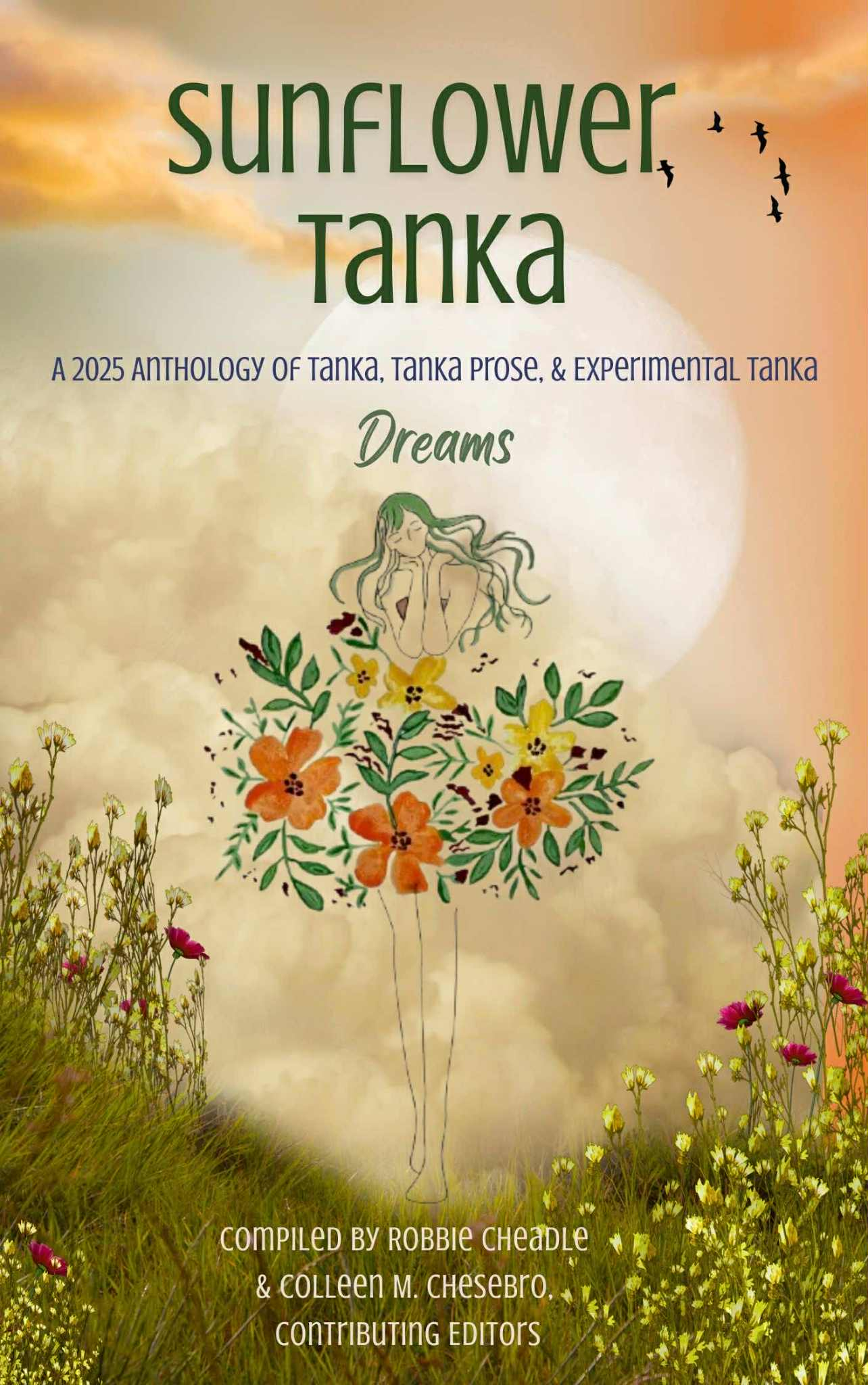
This wonderful anthology has 54 contributors and the variety of fascinating takes on the theme of dreams is fascinating. Colleen M. Chesebro and I are contributing editors of this collection and Colleen created an amazing cover using one of my watercolour paintings. The green-haired flower maiden is based on Meadow, a character from one of Teagan Riordain Geneviene’s imaginative stories, Atonement in Bloom. You can learn more about this book here: https://teagansbooks.com/2025/12/08/a-bloomin-snippet-for-cffc/
Blurb
Sunflower Tanka, edited by Robbie Cheadle and Colleen M. Chesebro, is an annual anthology showcasing contemporary tanka, tanka prose, and experimental tanka. Each volume brings together a vibrant tapestry of voices—both emerging and established—from across the globe.
For 2025, our theme “Dreams” invites poets to explore the symbolic language of dreaming, where metaphors blur the line between reality and imagination. Dreams often serve as gateways to layered meaning, offering fertile ground for syllabic poetry.
This year’s contributors journeyed deep into their dreamscapes, opening portals to boundless creativity. Through the timeless form of syllabic verse, they captured visions that transcend waking life, weaving poetry that resonates with mystery, wonder, and the infinite possibilities of the human imagination.
This is the promo video on YouTube:
I am going to take this opportunity to share one of Colleen’s poems and one of my collaborative poem’s with my son, Michael, from this collection.
Writing Through Dreams (tanka Puente) by Colleen M. Chesebro
in the fog of lies
honesty outlines a path
beyond my worst fears
my dreams, a shining lighthouse
nudge out my darkest secrets
– Honesty is the first chapter in the book of wisdom. – Thomas Jefferson, former U.S. president
dreams empower me
to use my curative skills
a fresh cup of tea
affords me the wisdom to
write syllabic poetry
The End In Sight (Tanka Puente Collaboration) by Robbie and Michael Cheadle
on the brink of change
bright eyes viewing the future
my son and his friends
graduation imminent
transition to adulthood
– If you think you can do a thing or think you can’t do a thing, you’re right – Henry Ford
anxiety creeps
deep despair spreads like fire
spars fear of failure
disappointing those you love
mother’s nagging tongue lashes
My review
This is a collection of beautiful syllabic poems contributed by 54 poets from around the world. All the poems centre around the theme of dreams and the range of interpretations is fascinating.
The poems in the collection comprise of tanka, tanka prose, garland tanka, tanka Puente, bussokuseki, rensaku and taiga which includes a black and white image and they collectively form a delightful poetry adventure.
The collection is introduced with an interesting overview about the inspiration for the theme and the various meanings of the word dreams. This section closes with a delightful tanka by partnering editor, Colleen Chesebro, as follows:
rain cools with sky-mist
sweet drops spark my appetite
whispering prayers
moonlight breaks through the darkness
a feverish dream of you
The collection concludes with a selection of each of the partnering editors favourite poems and the reasons why those specific poems resonated with each of them.
One of my favourite poems is by Yvette M. Calleiro:
miracle baby
you came to me in a dream
blessing from above
missing puzzle piece in life
my greatest accomplishment
I feel this way about my own two sons and so this poem has stayed in my heart.
A delightful collection of poetry that will make a lovely gift to others or to yourself.
Amazon US purchase link: https://www.amazon.com/Sunflower-Tanka-Anthology-Prose-Experimental/dp/B0G51RKG61
Tanka Tuesday
You can join in weekly syllabic poetry challenges on Tanka Tuesday here: https://tankatuesday.com/2025/12/09/tankatuesday-poetry-challenge-no-42-gift-gifting-12-09-25/
About Colleen M. Chesebro
Colleen M. Chesebro grew up in a large city in the Midwest. Keen on making her own way in the world, she joined the United States Air Force after graduation to tour the world and find herself. To this day, that search continues.
An avid reader, Colleen M. Chesebro rekindled her love of writing poetry after years spent working in the accounting industry. These days, she loves crafting syllabic poetry, flash fiction, and creative fiction and nonfiction.
In addition to poetry books, Chesebro’s publishing career includes participation in various anthologies featuring short stories, flash fiction, and poetry. She’s an avid supporter of her writing community on her blog on by organizing and sponsoring a weekly syllabic poetry challenge, called #TankaTuesday, where participants experiment with traditional and current forms of Japanese and American syllabic poetry.
Chesebro lives in the house of her dreams in mid-Michigan, surrounded by the Great Lakes with her husband and two (unicorn) cats, Chloe & Sophie.
You can find Colleen M. Chesebro on her personal blog here: https://colleenchesebro.org/
About Robbie Cheadle
South African author and illustrator, Robbie Cheadle, has written and illustrated sixteen children’s books, illustrated a further three children’s books, and written and illustrated three poetry books. Her work has also appeared in poetry and short story anthologies.
Robbie also has two novels and a collection of short stories published under the name of Roberta Eaton Cheadle and has horror, paranormal, and fantasy short stories featured in several anthologies under this name.
You can find Robbie Cheadle’s artwork, fondant and cake artwork, and all her books on her website here: https://www.robbiecheadle.co.za/
________________________
Did you know you can sponsor your favorite blog series or even a single post with an advertisement for your book? Stop by the WtbR Sponsor Page and let me advertise your book, or you can make a donation to Writing to be Read for as little as a cup of coffee, If you’d like to show your support for this author and WordCrafter Press.
__________________________
This segment of “Treasuring Poetry” is sponsored by WordCrafter Press and the Poetry Treasures series.
Get Your Copy Today!
Poetry Treasures: https://books2read.com/PoetryTreasures
Poetry Treasures 2: Relationships: https://books2read.com/PT2-Relationships
Poetry Treasures 3: Passions: https://books2read.com/u/b5qnBR
Poetry Treasures 4:In Touch With Nature: https://books2read.com/PT4-Nature
Poetry Treasures 5: Small Pleasures: https://books2read.com/PT5-SmallPleasures
Share this:

Read and Cook – This Is How We Work: Stories, Memoirs and Poems about Social Dimensions of Work and Stained Glass Biscotti for the Annual Cookie Exchange
Posted: December 10, 2025 Filed under: Recipes, Review, Robbie Reads and Cooks | Tags: #baking, #Bookreview, #non-fiction, #ReadandCook, #RobbieCheadle 90 CommentsToday, I am delighted to share my review of a unique anthology centering around work experiences in the broadest sense of the word work. This Is How We Work: Stories, Memoirs and Poems about Social Dimensions of Work was compiled by contributing editor Yvette Prior.
This Is How We Work: Stories, Memoirs and Poems about Social Dimensions of Work
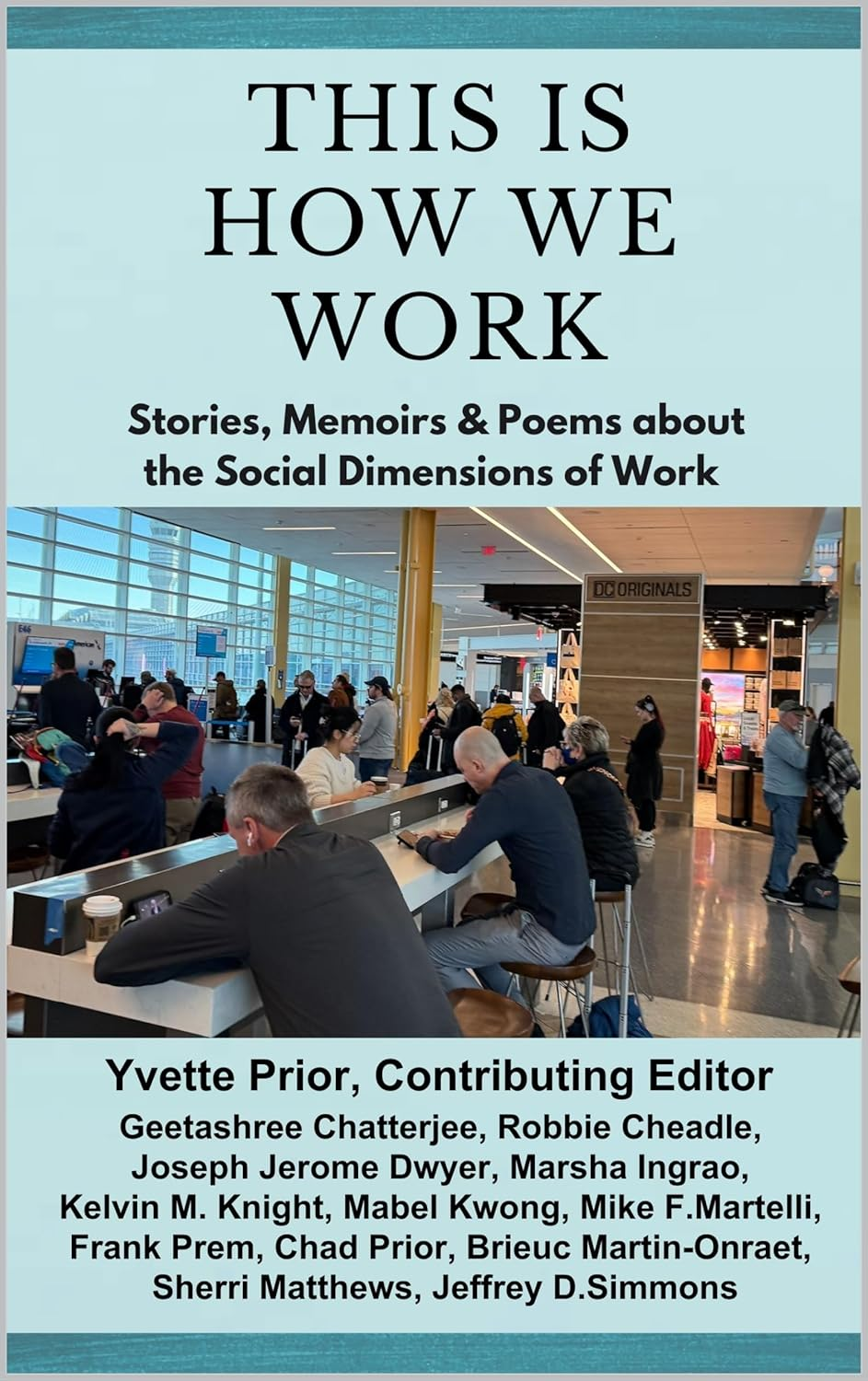
This Is How We Work is a unique collection of stories, memoirs and poems which all centre around the theme of the workplace. It is a most insightful and interesting collection as the various contributors from around the world all engage/engaged in different forms of work, many quite different from my own experiences in the corporate world.
Chapter 1 by Yvette Prior, the editor and a co-contributor, provides insight into why she selected this theme for the anthology and sets out the aims of the anthology for readers. It ends with a wonderful quote: “We work to live, but stories help us understand why we live, and sometimes, why we work.”
All of the contributions are compelling and give great insight into the evolution of the contributors careers and how their ideas on work changed over time. I have experienced this happening from my own perspective in my job so it is very relatable for me. I am going to share a bit more about the contributions that resonated the most with me.
Chapter 3, The Quiet Work of Love by Sherri Matthews was particularly useful and, in many ways heart rending, for me. Sherri depicts her journey as a caregiver to her mother as she aged and became less capable. I have followed this journey to a lessor extent with my aging aunt and am also following it with my own aging parents. The emotional angst of watching those we love giving up everything they enjoy and care about over time and becoming frail is hard – very hard. Sherri’s story was relatable and a mixture of encouraging and horrifying as I read it.
Chapter 4, The Creative Dream Job That Wasn’t So Dreamy, by Mabel Kwong also interested me greatly. I am a chartered accountant with a highly creative bend and spend a lot of my spare time writing and painting. Up until recently, I cherished the idea of turning these ‘hobbies’ into income producing activities. Prior to reading Mabel’s story, I had already arrived at the conclusion that turning creative outlets into work changed them in a negative way. When you paint commissions, you lose control over the creative output on many levels. Painting on demand is very different from someone seeing something you have created and asking to buy it as it is. Commissions means dancing to the purchasers tune which curtails your own creative ideas. It is the same with writing. If you write for the traditional publishing market, you write to the rules of the traditional publishers. That doesn’t work for me and I have never attempted to find a traditional publisher for my work. Mabel’s story of disillusionment with paid writing confirmed my own views, despite the fact that Mabel did gain a great deal from the experience and she grew as a writer. Anyone contemplating writing for a living should read this memoir.
Chapter 6, The Paper Knife Incident by Brian Martin-Onraet, was a delightfully entertaining story about working in Gabon, Africa. It highlights differences in work ethics and circumstances of workers and also focuses on management choices and behaviours. Brian is an excellent writer and I hope he publishes more of his fascinating stories.
Chapter 7, Serving The Patient, Resisting The System: Work Across by Career by Mike F. Martelli, is riveting reading. Mike’s journey in the field of mental health was insightful into how the health system has changed over time and is now focused on patient turnaround rather than patient service. It was sad for me as a reader and I’m sure its incredibly disillusioning for medical practitioners who enter the system full of the eagerness to make a difference of youth. Although this piece focuses on the health industry, its content applies to many other fields like teaching and even corporate work.
Chapters 11, Eighty-five Degrees For Me by Marsha Ingrao, and 13, Asylum Ghosts (And No Escape Room) by Frank Prem (Poetry), both give incredible insight into the worlds of teaching and psychiatric nursing, respectively. I learned a great deal about these professions, which are in my mind callings, and my respect for the people who enter these professions increased tenfold.
Chapter 16, Chapter Summaries by Yvette Prior, is a lovely summary of each of the contributions including her personal thoughts on how these pieces and poems can benefit readers. Yvette also contributed some beautiful and thought provoking poems to the collection.
I highly recommend this meaningful collection.
This Is How We Work: Stories, Memoirs and Poems about Social Dimensions of Work is available form Amazon US here: https://www.amazon.com/This-How-We-Work-Dimensions-ebook/dp/B0FWC6BMFP/
Recipe: Stained Glass Biscotti

My recipe for December is Stained Glass Biscotti. It is also my contribution to Staci Troilo’s annual Cookie Exchange. You can read more about it here: https://stacitroilo.wordpress.com/2025/12/01/thanks-deals-treats. You can find all the cookie recipes from the last four years of the Cookie Exchange here: https://stacitroilo.wordpress.com/recipes/
This recipe comes from The Australian Women’s Weekly Christmas miniatures finger food and tiny treats. I have this book as a paperback and have used it to make Christmas treats for years.
This is a gallery of the book cover and two of the recipe pages:


Ingredients
165 grams caster sugar
2 medium eggs
200 grams plain/all purpose/cake flour
50 grams self raising flour
300 grams multi glace cherries (a mix of colours is preferable)
80 grams sliced/diced almonds
Method
Preheat the oven to 180 C or 350 F. Prepare your cookie baking tray using grease or oil spray.
Mix sugar and eggs in a mixing bowl until well combined and then stir in flour, cherries and nuts. Knead the doub on a floured surface until smooth. Divide the dough into two parts and roll each part into a long sausage/log. Place logs on the prepared baking trays and bake for 30 minutes. Remove from oven and cool for 10 minutes.
Reduce the oven temperature to 150 C or 300 F. Using a serrated edged knife, cut the logs into slices. Place the slices in a single layer on prepared baking trays and bake for a further 30 minutes until dry and crisp. I turn the biscuits half way through the second baking session.
Wishing you all a Merry Christmas and/or Happy Holidays
About Robbie Cheadle
Robbie also has two novels and a collection of short stories published under the name of Roberta Eaton Cheadle and has horror, paranormal, and fantasy short stories featured in several anthologies under this name.
You can find Robbie Cheadle’s artwork, fondant and cake artwork, and all her books on her website here: https://www.robbiecheadle.co.za/
Find Robbie Cheadle
Blog https://wordpress.com/home/robbiesinspiration.wordpress.com
Bluesky https://bsky.app/profile/robbiecheadle.bsky.social
YouTube https://www.youtube.com/channel/UCVyFo_OJLPqFa9ZhHnCfHUA
Goodreads https://www.goodreads.com/author/show/15584446.Robbie_Cheadle
_________________________________
Did you know you can sponsor your favorite blog series or even a single post with an advertisement for your book? Stop by the WtbR Sponsor Page and let me advertise your book, or you can make a donation to Writing to be Read for as little as a cup of coffee, If you’d like to show your support for this author and WordCrafter Press.
___________________________________
This segment of “Read and Cook with Robbie Cheadle” is sponsored by WordCrafter Press and their themed anthologies.
Tales From the Hanging Tree: Imprints of Tragedy: There exists a tree that is timeless, spanning across all dimensions, which absorbs every life as those who are hanged as they die… and it remembers every one. The stories within are a select few of the Tales From the Hanging Tree.
Curses: Chronicles of Darkness:
There are all types of curses.
Cursed places, cursed items, cursed people, cursed families.
Curses that last throughout time. Curses which can’t be broken. Curses which are brought upon ourselves. Curses that will kill you and those that will only make you wish you were dead.
Legends: Monsters That Go Bump in the Night: Coming in 2026
Share this:

Treasuring Poetry – Meet poet and blogger, Melissa Lemay, and a review of Bro ken Rengay
Posted: November 19, 2025 Filed under: Treasuring Poetry | Tags: #Bookreview, #Poetrycommunity, #TreasuringPoetry 57 Comments
My November Treasuring Poetry guest is poet and blogger, Melissa Lemay. Melissa is also the editor of Collaborature, an online journal for poetry and fiction. You can find Melissa on her blog here: https://melissalemay.wordpress.com/2025/11/06/creating-community-syllabic-poetry-more-with-colleen-chesebro/
You can find out how to submit to Collaborature here: https://collaborature.blogspot.com/p/submit.html
Tell us about Collaborature. What inspired the idea for this on-line poetry platform and what are your aims for it going forward?
Collaborature is an online only journal for poetry and fiction. The key point of every submission is that it must be written by more than one author, or include a collaboration of two or more individuals (eg: art and poetry).
Inspiration for this idea was a result of my collaborating with various writers, like David Bogomolny, Lesley Scoble, Nigel Byng, and Lakshman Bulusu. I found that I enjoyed the art of creating poetry together very enjoyable. It was from these collaborations, along with my participation in the poetry community on WordPress and places like dVerse and Tanka Tuesday, that I turned my focus toward collaborative work.
I searched the internet and found that there were very limited options for people to have their collaborative work published. I mulled it over for a while, what this space and creating it would look like. Through encouragement of friends, and with help from Nigel coming up with the name, I decided to launch a journal in January of this year.
Submissions to Collaborature have slowed down a great deal. Initially, I scheduled one post for each publishing day. The amount of submissions I received was so great that I began to schedule two posts a day. I did this to reduce the wait time for publishing. Even now, I am scheduling a couple months out. Perhaps this was an error, and I should have kept to one per day. Now that submissions have slowed down, I have enough works to take us through January. If people aren’t interested in submitting, then unfortunately I won’t be able to maintain this publication schedule, and may even need to shut down Collaborature altogether. This is not my dream, but I accept that things are constantly changing, and that whatever there is a need for will flourish. It has been a great first year and a wonderfully engaging experience. I have gotten to know more friends from around the world and build relationships with some of the writers who submit to Collaborature.
How do you go about writing collaborative poetry? I am sure many poets would like to try but don’t know how to go about collaborating with a poem.
Initially, I wanted to host strictly collaborative poetry that was written by multiple authors at Collaborature. Even before it launched, I considered that it was such a niche market and might be difficult to gather enough submissions to have the journal running the way I envisioned. I wanted to have multiple posting days a week, preferably a couple posts per day. I realized that people may not submit enough poetry and fiction to have continued publication. So, I allowed submitters to collaborate by writing ekphrastic poetry, quoting other authors, and so on, in order to broaden the category for the journal’s purposes.
To write truly collaborative poetry in the present moment, one must have a partner to work with. People make this more difficult than it needs to be. In my experience, part of the problem is that people are hesitant to reach out to other people, for whatever reasons. Time is also a factor. I hear that from people, that they just don’t have time to collaborate.
My collaborations started via email. I think David’s Poetry Partners was a big inspiration. His is a great example of writing collaborative poetry. Poets submit a poem to him and he responds with a poem of his own, and then he publishes these pairings on his blog. This is a perfect example of how to write collaborative poetry. Well done, David!
In my mind, collaboration really can take on a broader view. Any time two people work together, in essence this is collaborative. Just as we are all connected and our actions every day influence other people around us, so do our words on the page. I don’t think it is an “easy out” to sit down and write a response poem to a poem written by someone who is deceased. You’re still working with that person’s ideas. Had they not had them, you would not have been prompted to create that response. So, I think this should be counted towards collaborative work.
However, I would love to see people truly connecting with one another. It can be as simple as you writing a line and sending it to me, then I respond with a line, then you respond with another line, and so on. Or send a short poem to a friend, and and them to respond with a short poem. There are tons of forms that lend themselves to collaborative work effectively. A lot of the Japanese forms were begun through collaborative work. Renga is a great example. This form started over 700 years ago, which tells me that people have had the desire far and wide and for a long time to engage collaboratively with one another.
My suggestion: if you have a friend and you’d like to try writing collaborative poetry (or fiction), get together in person, on the phone, or via email, and talk about your ideas. Decide how you will write, whether line by line, or maybe you’ll try a form like renga. Carol Anne and I have written acrostics together for each month of the year; we each take a letter, write a line, and alternate back and forth. You may see them all here: https://collaborature.blogspot.com/search?q=Carol+Anne+and+Melissa+Lemay
A quick internet search will return lots of results with different collaborative forms or ideas for collaborating together. Here are a few sources:
https://poets.ca/collaborative-poetry/
https://www.writersdigest.com/write-better-poetry/list-of-50-poetic-forms-for-poets
Tell us about Bro ken Rengay. How did this collection of collaborative poems come into being?
Bro ken Rengay came from my introduction of Rengay to Nolcha Fox and Barbara Leonhard. I became friends with both of them through submitting to different websites where they are editors, as well as responding to prompts Nolcha posted in various places. Nolcha and Barbara have published books both together and separately. I have read some of their writing and thought it would be fun to write together, so I reached out. Thankfully, they also liked the idea.
I had recently discovered Rengay, and I suggested we use this form. We were off to the races! We share similar senses of humor and thoughts about life. So, writing together was a breeze. Our voices compliment one another nicely. Bro ken Rengay includes around 30 published works. We have more in our arsenal.
Who is your favourite poet and why?
I don’t really have a favorite poet, although I have many whom I enjoy. Ai, Gwendolyn Brooks, Charles Bukowski, Emily Dickinson, Allen Ginsberg, Dorianne Laux, Sylvia Plath, Assotto Saint, Charles Simic, Dylan Thomas… There are also many WordPress poets whom I admire, too many to name, but a handful: David Bogomolny, Robbie Cheadle, Colleen Chesebro, Kim M. Russell, Kerfe Roig, Lesley Scoble, Merril D. Smith, Andrew Wilson… Okay, that’s more than a handful…
What is your favourite poem?
I have two favorite poems, and they’re both fairly short. I think they compliment each other quite well, they exhibit the tension of the duality of human existence and spirit, and I have been deeply embedded in both sides of the coin. I hope you enjoy them.
“Cause and Effect”
By Charles Bukowski
the best often die by their own hand
just to get away,
and those left behind
can never quite understand
why anybody
would ever want to
get away
from
them
“For the Sake of Strangers”
By Dorianne Laux
No matter what the grief, its weight,
we are obliged to carry it.
We rise and gather momentum, the dull strength
that pushes us through crowds.
And then the young boy gives me directions
so avidly. A woman holds the glass door open,
waiting patiently for my empty body to pass through.
All day it continues, each kindness
reaching toward another—a stranger
singing to no one as I pass on the path, trees
offering their blossoms, a child
who lifts his almond eyes and smiles.
Somehow they always find me, seem even
to be waiting, determined to keep me
from myself, from the thing that calls to me
as it must have once called to them—
this temptation to step off the edge
and fall weightless, away from the world.
My review of Bro ken Rengay
I am always hugely admiring of poetry and book collaborations. These three talented poets have managed to stitch the poems in this interesting book together in such a seamless way you would not know that they are written by more than one person.
The poems cover a spectrum of topics from experiences to emotions to aging and they all inject a thread of dark humour into the mundaneness of the human condition. Let’s be honest, daily life is generally pretty ordinary except when pain or joy make their ad hoc appearances and to be able to laugh at our daily grind is a wonderful thing.
This extract from ‘Everybody Knows My Name’ is an example of this humour:
“baskets of laundry
hanging out in the hallway
calling my name
I changed my name
and I don’t speak laundry
I speak frozen custard, French vanilla
country drives to count the deer
beer and pizza on date night”
‘Pain Will Do That’ is a poem that exposes the debilitating nature of on-going pain and how we are forced to face it and deal with it as we age. This is a short extract:
“pain is the perfect weight loss plan
food tastes bitter
even cheesecake makes me flee
holding a pen too long –
my wrists ask me for Ibuprofen
if I could, I’d challenge pain to a duel
my titanium joints, my weapons
I’m a cyborg, pain, get ready!”
These poems highlight the humanity of the poets and bring the reader into their worlds of ups and downs, achievements and disappointments. This is a relatable collection of poems that will make you feel better about your own life and give you some rose coloured spectacles through which to view life.
Purchase Bro ken Rengay from Amazon US here: https://www.amazon.com/Bro-ken-Rengay-Unruly-Poetry/dp/1962374572
About Robbie Cheadle
South African author and illustrator, Robbie Cheadle, has written and illustrated sixteen children’s books, illustrated a further three children’s books, and written and illustrated three poetry books. Her work has also appeared in poetry and short story anthologies.
Robbie also has two novels and a collection of short stories published under the name of Roberta Eaton Cheadle and has horror, paranormal, and fantasy short stories featured in several anthologies under this name.
You can find Robbie Cheadle’s artwork, fondant and cake artwork, and all her books on her website here: https://www.robbiecheadle.co.za/
________________________
Did you know you can sponsor your favorite blog series or even a single post with an advertisement for your book? Stop by the WtbR Sponsor Page and let me advertise your book, or you can make a donation to Writing to be Read for as little as a cup of coffee, If you’d like to show your support for this author and WordCrafter Press.
__________________________
This segment of “Treasuring Poetry” is sponsored by WordCrafter Press and the Poetry Treasures series.
Get Your Copy Today!
Poetry Treasures: https://books2read.com/PoetryTreasures
Poetry Treasures 2: Relationships: https://books2read.com/PT2-Relationships
Poetry Treasures 3: Passions: https://books2read.com/u/b5qnBR
Poetry Treasures 4:In Touch With Nature: https://books2read.com/PT4-Nature
Poetry Treasures 5: Small Pleasures: https://books2read.com/PT5-SmallPleasures
Share this:

Read and Cook – Bridget Jones’s Diary (Novel) and Mom’s orange & chocolate birthday cake #ReadandCook #bookreview #baking
Posted: November 12, 2025 Filed under: Book Review, Books, Read and Cook, Recipes, Review | Tags: Bridget Jones's Diary, Helen Fielding, Orange and Chocolate Birthday Cake, Read and Cook, Robbie Cheadle, Writing to be Read 45 CommentsToday, I have selected a humorous book for my review. Bridget Jones’s Diary is very amusing but it does also have a more serious theme. The movie is different to the book from what I have read. I haven’t seen the movie so I can’t comment on it.
Bridget Jones’s Diary (Novel)

Bridget Jones’s Diary is a fabulous and humorous romp through the world of an unmarried 30 something woman living on her own in London. The novel is written in the form of a personal diary and every entry starts with a list of her daily calory count, cigarettes smoked, and alcohol units consumed. This introduction is very telling as it summarises how Bridget views herself and her life. Caught up in the modern ideas of love being linked to looks and, especially, being thin, Bridget is obsessed with her weight. Although couched in humour, this theme is actually a serious one and centres around women’s unfortunate association of looks and weight with popularity, self worth, and romantic love.
Bridget has a job, but she wants to achieve more, she has friends and family, but she wants a relationship and to be part of a couple. The pursuit of these two goals are the main threads of this book which involves a career change for Bridget and also two potential romances. The first possibility is Daniel, a Casanova and womeniser, who is also Bridget’s boss – big mistake. The second is the seemingly stuffy and serious human-rights barrister, Mark Darcy, whom Bridget dislikes when they are reintroduced at a New Year’s party. Bridget’s mother is keen on Mark as a partner for Bridget and reminds her publically that they used to play together as children.
Bridget has a group of single friends, including Tom and Jude who both have never-ending ups and downs with their own relationships. These ‘singletons’ stick by each other through thick and thin. Bridget also has several ‘smug married’ friends who are always seeking to get her married off so she can join their club. As the novel progresses, Bridget is exposed to the realities of imperfect marriages and relationships but this doesn’t change her rose tinted views or desire to be part of a couple.
If you are looking for an entertaining and humorous read to distract your from the trials of daily life, this novel will certainly fit the bill.
Purchase Bridget Jones’s Diary from Amazon US: https://www.amazon.com/Bridget-Joness-Diary-Picador-Classic-ebook/dp/B01GOG7966
Mom’s orange and chocolate birthday cake
This recipe is also for Jo’s BKD Cookbook Club – November. You can join in this challenge here: https://brookfordkitchendiaries.wordpress.com/2025/11/03/bkd-cookbook-club-november/
My mother turned 87 on 21 October. I decided to host a family lunch to celebrate and she asked for an orange and chocolate cake. I ordered the Terry’s oranges from an on-line supplier and they were delicious and an interesting decorative feature for this cake. This time, I did not marble the cakes, but rather made two cakes. The bottom layer is and orange cake and the top layer is a chocolate cake. I made an orange flavoured buttercream to ice the orange cake and used ganache to ice the chocolate cake. I broke up two of the Terry’s oranges for the orange slices decorations and used a nearly whole one for the top main decoration feature. I sprinkled the entire cake with edible gold glitter as a final touch.

Recipe for rich chocolate cake
Ingredients
2 large eggs
500 ml (2 cups) sticky brown sugar
250 ml (1 cup) vegetable oil
250 ml (1 cup) Greek (double thick) yogurt
500 ml (2 cups) cake flour (plain)
2 teaspoons (10 ml) bicarbonate of soda
190 ml cocoa powder
1 teaspoon (5 ml) vanilla essence
250 ml (1 cup) boiling water from the kettle
Method
Line the bottom of a 23 cm x 30 cm round baking tin and spray the sides with no stick spray or grease with butter. Heat the oven to 160 C.
Beat the sugar into the eggs. Add the oil and the yogurt and beat well. Sieve the flour, bicarbonate of soda, and the cocoa powder and add, mixing well. Beat in the boiling water and the vanilla essence. The mixture will be thick and smooth. Pour the mixture into the prepared baking tin and bake for approximately 1 hour or until a cake tester comes out clean.
If you are baking in a humid and sticky climate, you will need to adjust the ingredients slightly by adding 1 additional Tablespoon (15 ml) of flour to the mixture. This is to combat the extra moisture the sugar and flour will have absorbed in muggy, moist climates.
This is my Youtube video of Mom’s birthday cake:
This recipe is out of Michael and my cookbook for children, Sir Chocolate and the Baby Cookie Monster story and cookbook which is available from TSL Publications here:
The ebook is available from Lulu.com and you will find the link on the TSL Publications page.
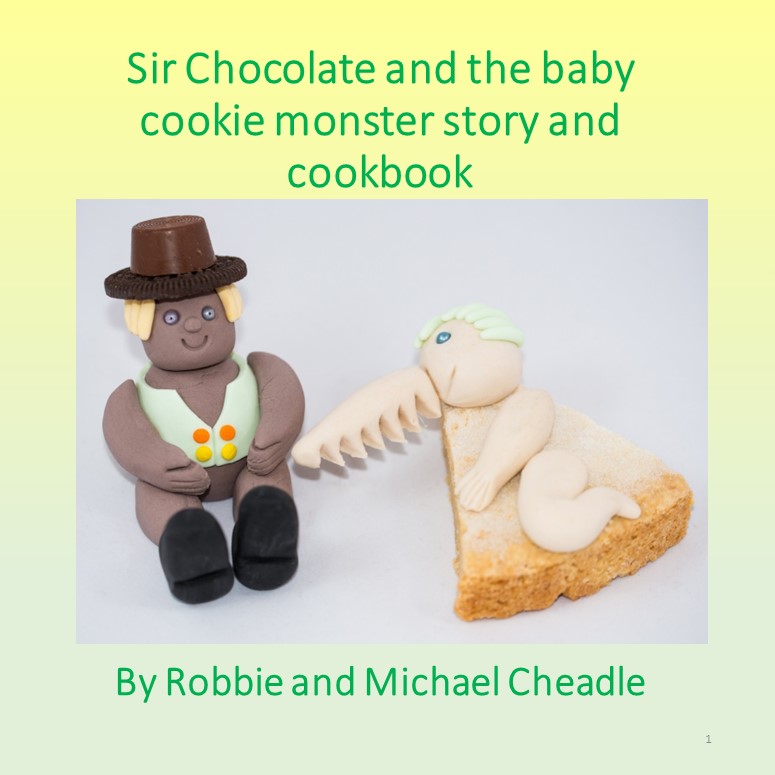
About Robbie Cheadle
Robbie also has two novels and a collection of short stories published under the name of Roberta Eaton Cheadle and has horror, paranormal, and fantasy short stories featured in several anthologies under this name.
You can find Robbie Cheadle’s artwork, fondant and cake artwork, and all her books on her website here: https://www.robbiecheadle.co.za/
Find Robbie Cheadle
Blog https://wordpress.com/home/robbiesinspiration.wordpress.com
Bluesky https://bsky.app/profile/robbiecheadle.bsky.social
YouTube https://www.youtube.com/channel/UCVyFo_OJLPqFa9ZhHnCfHUA
Goodreads https://www.goodreads.com/author/show/15584446.Robbie_Cheadle
_____________________________________
Did you know you can sponsor your favorite blog series or even a single post with an advertisement for your book? Stop by the WtbR Sponsor Page and let me advertise your book, or you can make a donation to Writing to be Read for as little as a cup of coffee, If you’d like to show your support for this author and WordCrafter Press.
_____________________________________
This segment of “Read and Cook with Robbie Cheadle” is sponsored by the Midnight Dark Fiction Anthology Series and WordCrafter Press.
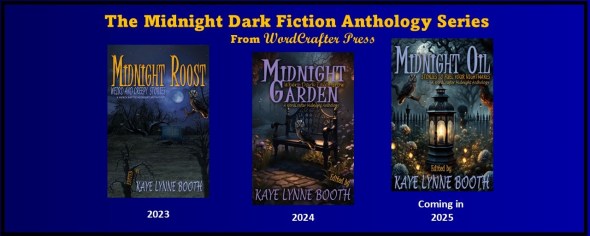
Midnight Roost: Weird and Creepy Stories: 20 authors bring your nightmares to life in 23 stories of ghosts, paranormal phenomenon and the horror from the dark crevasses of their minds. Stories of stalkers, both human and supernatural, possession and occult rituals, alien visitations of the strange kind, and ghostly tales that will give you goosebumps. These are the tales that will make you fear the dark. Read them at the Midnight Roost… if you dare. https://www.amazon.com/Midnight-Roost-Kaye-Lynne-Booth-ebook/dp/B0CL6FPLVJ
Midnight Garden: Where Dark Tales Grow: 17 authors bring you 21 magnificent dark tales. Stories of magic, monsters and mayhem. Tales of murder and madness which will make your skin crawl. These are the tales that explore your darkest fears. Read them in the Midnight Garden… if you dare. https://www.amazon.com/Midnight-Garden-Where-Tales-Anthology-ebook/dp/B0DJNDQJD3
Midnight Oil: Stories to Fuel Your Nightmares: 14 authors bring you 16 dark tales that explore your deepest fears. These are the stories which nightmares are made of. Tales of monsters, mayhem, and madness which will make you shiver in the dark. Read them while you burn the Midnight Oil… if you dare. https://books2read.com/Midnight-Oil




















