Growing Bookworms – The importance of character names in children’s fiction #GrowingBookworms #childrensfiction
Posted: January 10, 2024 Filed under: Children's Books, Fiction, Growing Bookworms | Tags: Character Names, characters, Enid Blyton, Growing Bookworms, Names, Robbie Cheadle, The Land of Far Beyond, Writing to be Read 57 Comments
The name of a child is important to him/her as well as to their community.
From an individual point of view, a child’s name plays an important role in the advertisement and maintenance his/her self identity. The first word most children learn to write is their name. Some children and adults chose to be known by a nickname and others prefer to use their full name.
From a parental perspective, the name they chose is often symbolic of their hopes and dreams for that child. Some families practice namesaking or the naming of a child after the father or grandfather. The practice of namesaking is much more common in male children than in female children. Namesaking can be positive for a child, but it can also result in high expectations being placed on the child if the person after whom they are named is a high performer. Namesaking often happens in wealthy families and royalty and comes with an expectation for the child to live up to the accomplishments of the previous generation/s. John Jacob Astor IV and his son, John Jacob Astor VI, come to mind when I think of failures to live up to an inherited moniker.
From a community point of view, names often have religious or cultural significance. In these circumstances, the name of a child can impact the way in which they are accepted by, and integrate into, a community. Names also have meanings which can be important. I remember smiling when meeting a heavily pregnant lady with the name of Chastity.
Based on the above, it is obvious that the name of a character / characters in a children’s book are important. The names will immediately tell the child a lot about the character and the child will also make assumptions based on the names, as follows:
- the religion of the character/s – does the character have a Biblical name or a Hebrew name or a Muslim name?
- the ethnic background of the character – does the character have an Irish, Spanish, English, American, or Japanese name? In South Africa, there are 11 official languages and each group of language speakers has its own traditional names. For example, popular Afrikaans names are Pieter, Willem, Hans, and Mariska and popular Zulu names are Amahle, Bongani, Lindiwe, and Dumisani.
- does the character use a nickname or their full name? I have always been called Robbie although my full name is Roberta. Both my sons chose to use their full names of Gregory and Michael.
- a name can also tell you about a character’s employment or social position. For example, a lot of native African people who work in service industries chose to either use European names instead of their traditional names or they use a short form that is easier for customers to say and remember.
English author, Enid Blyton, made great use of names in her children’s books. You can always tell what type of character you are dealing with from their names. You can also usually get a good idea about the genre and type of story from her naming conventions, as follows:
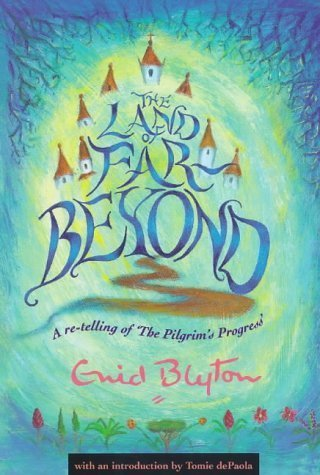
The Land of Far-Beyond is a Christian allegory and tells the story of a boy named Peter and his two sisters, Anna and Patience, who travel from the City of Turmoil to the City of Happiness in the Land of Far-Beyond. The three children carry the heavy burdens of their bad deeds on their backs. With them are two other children, Lily and John, and five adults—Mr Scornful, Mr Fearful, Dick Cowardly, Gracie Grumble and Sarah Simple.
The Enchanted Wood series of three books tells of the adventures of three children who live near the Enchanted Wood. One day they discover a great tree that reaches right up into the clouds called the Faraway Tree. The children climb the Faraway Tree and discover that it is inhabited by magical people, including Moon-Face, Silky, The Saucepan Man, Dame Washalot, Mr. Watzisname, and the Angry Pixie, whose houses are built in holes in the great trunk.
I have tried to make good use of names in my children’s book series. Sir Chocolate and Lady Sweet were intended to clearly indicate that the books are fantasy and are about sweet treats. All the illustrations are made from cake and fondant art and the books all include recipes.
Neema the Misfit Giraffe was intended to make it obvious that the book has an African setting. The name, Neema, means grace in Swahili. Neema’s companion, Amhale, has a Zulu name which means the beautiful one.

What are your thoughts on names in children’s fiction? Do you think they are important? Let me know in the comments.
About Robbie Cheadle
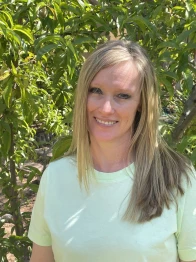
Award-winning, bestselling author, Robbie Cheadle, has published fifteen children’s book and two poetry books. Her work has also appeared in poetry and short story anthologies.
Robbie also has two novels published under the name of Roberta Eaton Cheadle and has horror, paranormal, and fantasy short stories featured in several anthologies under this name.
The eleven Sir Chocolate children’s picture books, co-authored by Robbie and Michael Cheadle, are written in sweet, short rhymes which are easy for young children to follow and are illustrated with pictures of delicious cakes and cake decorations. Each book also includes simple recipes or biscuit art directions which children can make under adult supervision.
Robbie and Michael’s new Southern African Safari Adventures series is aimed at teaching young children about Southern African wildlife in a fun and entertaining way. Each book contains a rhyming verse story about a particular animal, as well as illustrations by Robbie Cheadle, photographs and links to video footage about that animal.
Robbie’s blog includes recipes, fondant and cake artwork, poetry, and book reviews. https://robbiesinspiration.wordpress.com/
Discover more from Writing to be Read
Subscribe to get the latest posts sent to your email.










Some of the names parents choose for their children should be banned from use at a christening. The poor child has to carry that name through life. This was a very good article and easy to read.
LikeLiked by 3 people
Thank you, Danny, I appreciate your comment 💝. I agree about some names being real millstones.
LikeLiked by 3 people
There is logical and practical advice here! When the connections resonate, the stories have more significant meaning.
LikeLiked by 3 people
Hi Annette, that is exactly right. I am trying to include more indigenous African names and words to encourage our local children to read more.
LikeLiked by 2 people
This is an excellent post, Robbie! Names in literature (and in real life) do often have a lot of meaning.
Not to mention initials — as in Jim Casy (a Jesus Christ figure in “The Grapes of Wrath”), Undine Spragg (who embodies the worst of the United States in Edith Wharton’s “The Custom of the Country”), David Copperfield (the semi-autobiographical character with the reverse initials of Charles Dickens), and Martin Eden (the semi-autobiographical “me” character in Jack London’s “Martin Eden”).
I’m not related to the John Jacob Astors you mentioned. 🙂
LikeLiked by 3 people
Hi Dave, thank you for this interesting comment. I am familiar with Jim Casy and David Copperfield. I must read Edith Wharton. I haven’t gotten to her books yet but they are on my (very long) list.
LikeLiked by 2 people
I know what you mean about long lists, Robbie. 🙂 Wharton’s best novels are of course “The House of Mirth” and “The Age of Innocence,” but I also think her ghost stories are among the best I’ve ever read in that genre.
LikeLiked by 2 people
Wharton’s books have certainly been recommended by many people, Dave. I’m sure I’ll get one in this year 💜
LikeLiked by 2 people
Because I write memoir, name choices are easy. I did change the name of two characters in my first memoir to protect their reputations.
On another note, my grandson called me “Miss Cozy Sweet” once because he was referring to a character in a book about a mischievous boy named Tom. Sorry the book title eludes me. 😀
LikeLiked by 2 people
HI Marian, memoir has completely different rules. I understand your changing some character names, memoirists have to be be careful not to end up with a case of defamation of character or libel against themselves.
LikeLiked by 2 people
I love the names you picked and the reasoning behind them.
LikeLiked by 3 people
Hi Kymber, thank you, I’m pleased to know that.
LikeLiked by 1 person
You make some very good points, Robbie, and I think they extend to more than children’s books. But I can see that they are more important in children’s books.
LikeLiked by 3 people
Hi Dan, I think it depends on the content of an adult book and who the target audience for the book is. In Africa, there are many different tribes (that word still applies) of people and they all have different naming conventions and customs. You can tell a person’s country and tribe from their name.
LikeLiked by 2 people
Wow, that’s interesting.
LikeLiked by 1 person
I love this. Not only are children’s names important to their growth and development, but as characters in our stories. Fantastic, ladies!
LikeLiked by 2 people
Hi Jan, thank you for your lovely comment. I am including more Indigenous African names in my Safari Adventures series so that our local children can relate better to the characters.
LikeLiked by 1 person
I tend to choose character names by feeling rather than thinking about it logically. The name ‘Charlie’ felt right for the bad boy wizard in my WIP. His mother has a slavish admiration for the upper classes and royalty, and named him after the King.
I hated the name I was given as a child (I was named after Princess Margaret), and that feeling of hating my name contributed to a general feeling of low self-esteem. I changed it when I became an adult.
LikeLiked by 2 people
HI Annabelle, your feelings about your given name are interesting. Margaret is a very old English name. I was never fond of Roberta although I liked it better after I read The Railway Children. Your name of Charlie did have a thought process behind it and told readers about Charlie’s mother’s aspirations.
LikeLiked by 2 people
The name came first – the mother’s aspirations came second! 😀
LikeLiked by 1 person
Great post 🙂 Yes. I do think names are important in children’s stories and all stories. I spend some time getting not only a historically correct bame but one that fits their personality and where they live too..
LikeLiked by 2 people
Hi Denise, that makes absolute sense. It would be quite odd to name a child Brooke, for example, if the story was set in medieval England when they literally used 5 names for all girl children.
LikeLiked by 2 people
Great post, Robbie. An interesting topic. And I love the new GB banner for 2024. 🙂
(I want to review Neema.)
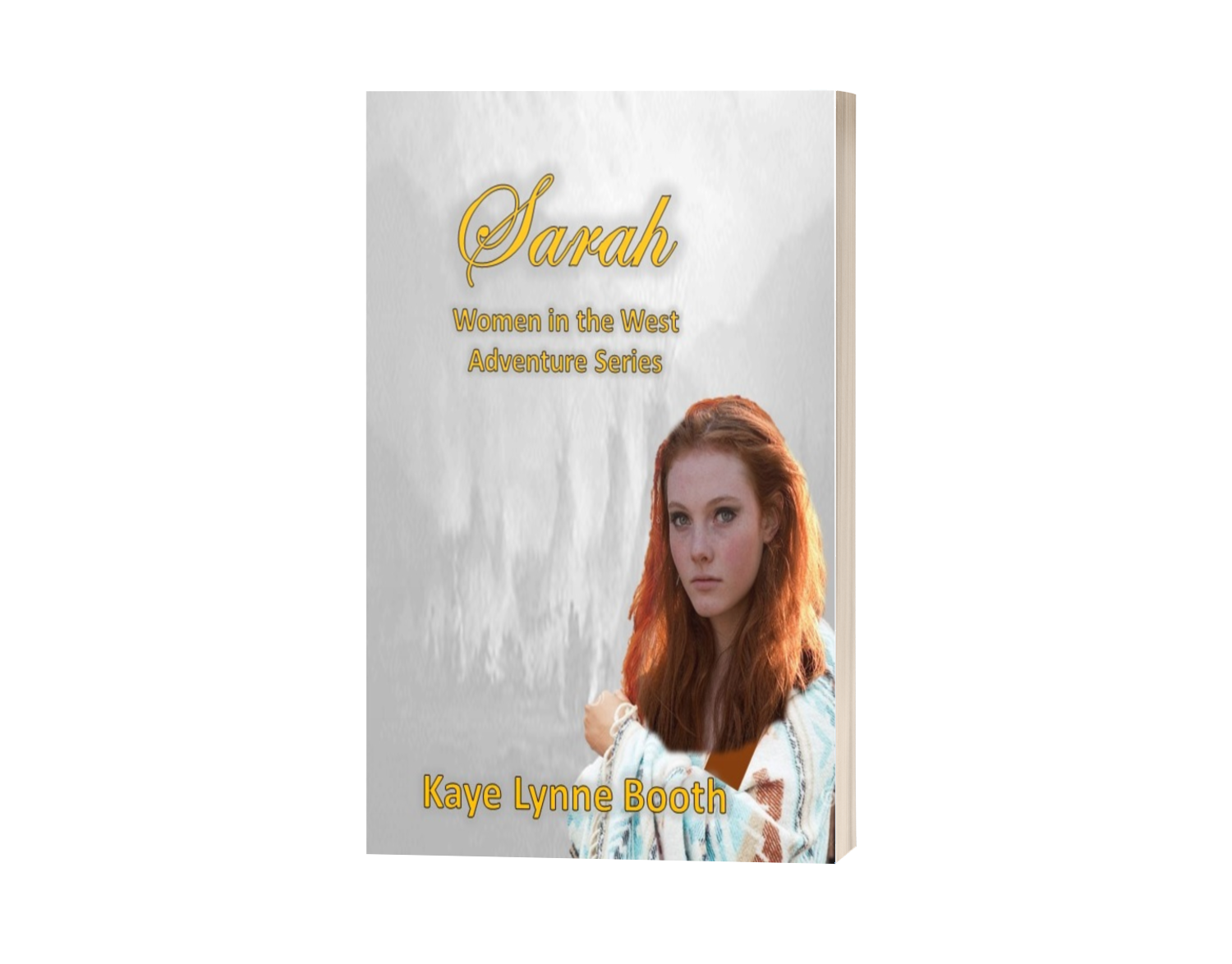
It is funny, but this is the same thing my protagonist, Sarah, says in my WIP about the Ute Indians: “She was An-ke-pom-py, or Hair of Fire, now. It was obvious why they had named her so. Unlike many of her own people, the Utes gave names with meaning, names that fit a person, and she liked that.”
LikeLiked by 2 people
HI Kaye, I read Sarah’s Ute name in your blurb yesterday. That interested me a great deal. All indigenous South African names have a meaning. One of my favourite names is Naledi which means Star.
LikeLiked by 1 person
I don’t think you can always anticipate the associations people bring to names, but certainly you should think about the names you give to your characters. They will help define the character for you, and hopefully that comes through to your readers. (K)
LikeLiked by 2 people
Hi Kerfe, you are right. I have a ridiculous prejudice towards the name Fiona because I was teased mercilessly by a horrid girl with that name in junior school. In SA, all local indigenous names have meanings and that is fun to include into a story.
LikeLiked by 2 people
I agree about name meanings adding an element to the story.
My own prejudice is against Larry. Totally irrationally based on a couple Larrys I knew.
LikeLiked by 2 people
I also remember the computer game Larry the Lounge Lizard. Larry wasn’t a great guy 😉
LikeLiked by 2 people
Excellent post Robbie! This reminds me of a book I read where I didn’t like a certain character’s name. It seemed as if the author was trying to be trendy and not being true to the character. The name was Chad which makes me think of a rich young guy who dates several girls at the same time and went to a prestigious college. Instead, the character was a sensitive, artistic guy who was faithful to his girlfriend and was a chef. I’ve never had that reaction to a character’s name. I don’t have much experience with children’s books.
My husband gives everyone a nickname. He might say Gordo (a heavy person) for a tall thin person. He calls his nephew Clark Kent who is Superman’s alter ego. Another brother is tall so Tony calls him Herman Monster. I think that was a character in The Adams Family or one of those 60s sitcoms. My husband’s nickname is El Chameleon because he can relate to anyone. Serious with serious people or vice versa. He’s had that nickname since he was a little boy. Giving people nicknames is a Mexican custom. It’s not meant to be mean so people aren’t offended. When he gives someone the name of an old movie star or singer, I have no idea who he’s referring to. A person may be 70 years old and still everyone calls them by their nickname.
LikeLiked by 2 people
Hi Kay, both of these anecdotes is interesting. I sometimes don’t like a character in a book based on their name which I have certain associations with. I like giving people nicknames too. I call Michael “Ratty” because his room is always such a mess and he likes to keep it dark. He also ‘hibernates’ – haha! Greg was called Gregory Tortoise at school. Two meanings, 1, he has always been a slow runner – everyone lapped him. 2. he is a natural teacher, he ‘taught us’.
LikeLiked by 1 person
I can never think of nicknames for people. But I do call babies things like sweetie, cutie pie, pumpkin.
LikeLiked by 2 people
🌟💜
LikeLiked by 1 person
Robbie, this is wonderful!
LikeLiked by 2 people
Thank you, Jennie
LikeLiked by 2 people
You’re welcome.
LikeLiked by 2 people
Interesting post. I confess, I got stuck for a bit on the idea that SA has 11 national languages. Yikes! We in America struggle whether to have one or two. I hadn’t heard the term ‘namesaking’, but I like it. We named my daughter ‘Meaghan’ after the family name ‘Margaret’.
LikeLiked by 1 person
Interesting article, Robbie. I never thought of that before. Although in my teen years, I wanted ti change my name.
Thank you!
LikeLiked by 2 people
Hi Resa, I think during our teen years we question every about ourselves. You are the only Resa I know and it is great to be unique. My name is also a rarity for a woman 🤗
LikeLiked by 2 people
🤗🤗
LikeLiked by 1 person
From my memory of reading children’s literature, I’d say that character names fall into three categories: names common at the time the book was written so children can relate to the characters, description names that support a book’s message, and whimsical names to support word play and language development (and, of course, fun!)
LikeLiked by 2 people
Hi Liz, that you for adding your thoughts. In a nutshell, that is correct.
LikeLiked by 2 people
You’re welcome, Robbie.
LikeLiked by 1 person
This is a fascinating topic, Robbie. I know some authors placed a lot of importance and significance in their choice of names, and others seem to go back time and again to the same names. Thanks for this post, and for coming back with more posts on the series in 2024.
LikeLiked by 1 person
I never really thought about character names in literature, Robbie. For my own characters they tell me their names. Sometimes I’ll hear a name I like and put it in my notes. I like the way you chose names.
LikeLiked by 2 people
Hi Teri, I think naming conventions depend on the genre of the book. Yours are all perfect 😍
LikeLiked by 1 person
This is such a great write up Robbie and introduction to setting a tone and and depict a period with names. I’ve never paid a bit of attention to names but so many do and for good reason. I will be reading with new eyes. Like Resa I wanted to change my name and did from Cynthia to Cindy and I was never 100 % with that either. I went to a workshop one name and had people call me Thea to see how I liked it. I thought Thea would satisfy my mom with the last part of my name thia and I liked it. After the workshop someone call and asked for Thea and I hated hearing it and said “you have the wrong number”. I obvi didn’t like the name or apparently the workshop. 😂
LikeLiked by 2 people
I like Cindy. My Mum in law is Cynthia and has no short name form. My hubby is also generally called by his full name of Terence ( I call him TC) and both my sons. Most people only know me as Robbie and don’t know I have a full name.
LikeLiked by 2 people
I loved The Land of Far Beyond! I still have a copy on my bookshelf. And yes, I totally agree that names are important, in adult fiction too. 😀
LikeLiked by 2 people
Thanks, Meeks. Few people know The Land of Far Beyond so I’m delighted you also love it 🌟
LikeLiked by 2 people
As a kid, I loved all of the Enid Blyton books, but The Land of Far Beyond stayed with me into adulthood. Some books are just…special. 🙂
LikeLiked by 1 person
This is a wonderful post, Robbie and Kaye, and the logic and significance you point out makes perfect sense. It made me think of the names I chose for the children’s books I’m working on. I believe they’re good to go, but I’ll probably give it more thought before publishing. Thank you for sharing!
LikeLiked by 1 person
Wonderful post about names Robbie. And you make good points about names in books should correspond and reflect on the background religion of the character. For example, in the Jewish religion, people don’t name their sons Jr. because Jewish people don’t name children after the living, only passed on relatives. ❤
LikeLiked by 1 person
Great points, Robbie. I’m usually making up names, but I’m conscious of the sound and how it fits into a cultural style, if that makes sense. I can definitely see how names in children’s books point to some cultural identifiers. I’m particularly fond of names like “Mr Scornful, Mr Fearful, Dick Cowardly, Gracie Grumble and Sarah Simple.” How fun is that? Thanks for the post and thanks to Kaye Lynne for hosting. 😀
LikeLiked by 2 people
🙂
LikeLiked by 1 person
Hi Diana, I’m glad you like the names in Enid Blyton’s book. Her work is criticized in literary circles, but I loved her books. They made my childhood great.
LikeLiked by 2 people
Literary circles aren’t made up of kids, obviously. Wouldn’t it be wonderful if there was a kid’s literary circle?!
LikeLiked by 2 people
It would be nice if kids had a voice when it came to books.
LikeLiked by 2 people