Growing Bookworms – Guest post with children’s author, poet, and memoirist, Miriam Hurdle #GrowingBookworms #childrensfiction #readingcommunity
Posted: December 13, 2023 Filed under: Uncategorized 138 Comments
Today, I am delighted to welcome children’s author, poet, and memoirist, Miriam Hurdle, as my final Growing Bookworms guest for 2023.
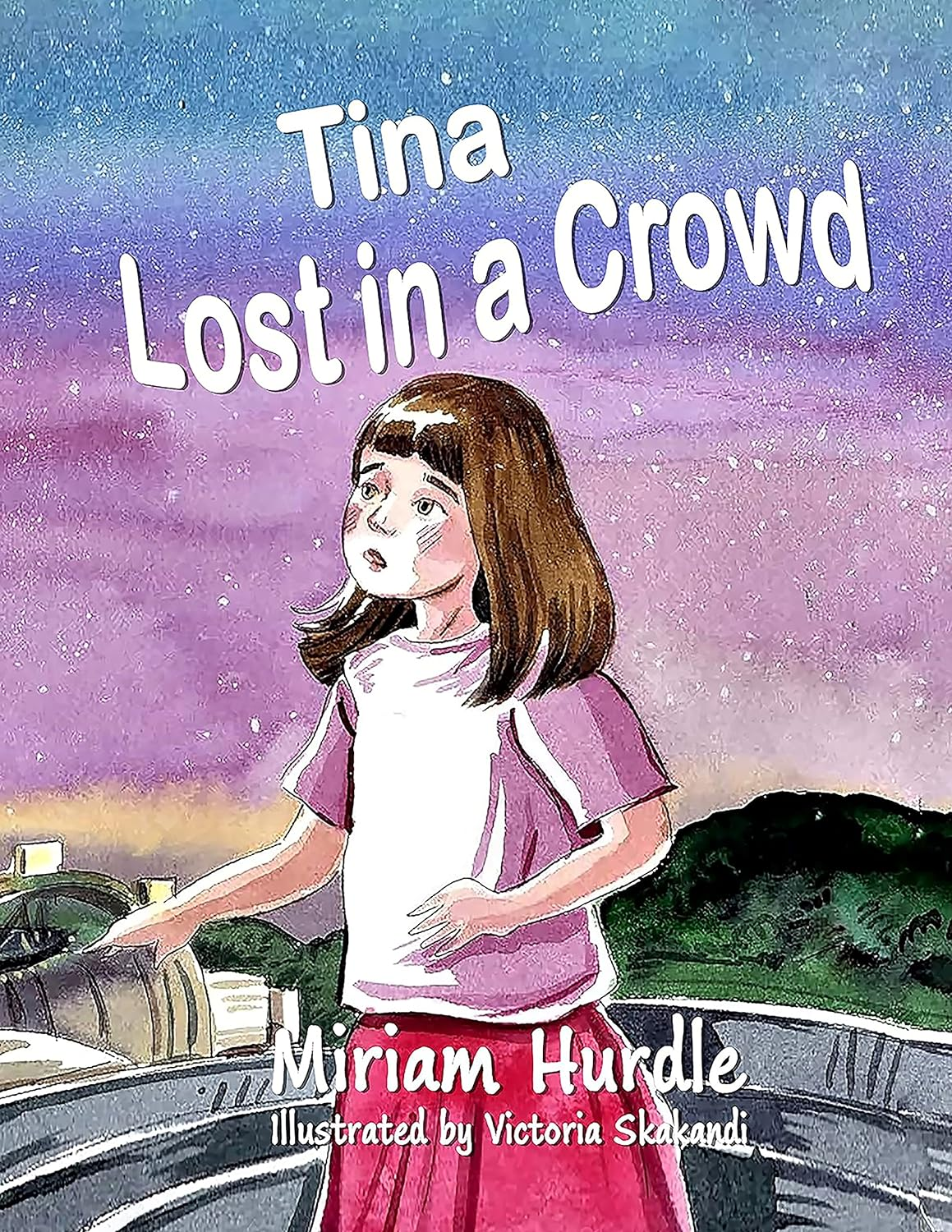
Miriam is a diverse author with a poetry book, memoir about her cancer journey, and a delightful children’s book called Tina Lost in a Crowd. Welcome, Miriam.
What is your history of writing for children?
I was the Director of the Children’s Department in a literacy organization in Hong Kong. My job was writing for a children’s magazine and promoting literature in elementary schools.
After I came to the U.S., I always wanted to write children’s stories again. In 2006, I took an online writing course at the Institute of Children’s Literature https://www.instituteforwriters.com for a year. An instructor corresponded with me to provide feedback and suggestions on my assignments and revisions. The Institute also provided marketing tools and an annual catalog of 800 magazines accepting submissions. The goal of the course was to have my essays published.
The Institute suggested that children’s literature writers observe the children. If the writers were not teachers or adults with young children at home, they could volunteer at organizations such as libraries or Boy/Girl Scouts to get first-hand experience to understand their behaviors and language.
At the time of taking the writing course, even though I was a school district administrator, my interaction with the elementary school students was still fresh in my mind.
There were many fun memories of activities with my daughter, Mercy. I combined one story about Mercy, my understanding of the children’s behaviors, and my writing skills to write my first assignment entitled “Tina Goes to Hollywood Bowl.”
I kept the stories written during this course in a computer folder for many years. Early in the year 2020, during the lockdown, I revised the Tina story to prepare for publication.
Your book, Tina Lost in a Crowd, involves lost children. Was it based on a personal experience of some kind?
The story of Tina Lost in a Crowd is partly based on fact. When my daughter Mercy was eight years old, my sister Yolanda, her husband Patrick, and their son Enoch, who was Mercy’s age, came from Hong Kong to visit us. We took them on tours in northern and southern California. One activity was going to a concert at the Hollywood Bowl in Los Angeles. I drove the five of us to Rowland Heights Regional Park, then we took the Park & Ride bus to the Hollywood Bowl.
The sky was dark with bright stars when the concert started. Mercy and Enoch swayed side to side when they listened to Tchaikovsky’s Swan Lake and smiled at each other. During the intermission, Patrick left his seat to buy some popcorn. Mercy and Enoch wanted to use the restroom. Yolanda and I urged them to catch up with Patrick.
Later, when Patrick came back without them, I panicked. Imagine losing 8-year-old kids in a crowd of 18,000 people. How would I find them? Yolanda and Patrick stayed in their seats while I followed the descending steps between the sections of seats to where I thought they could have gone.
I found them standing against a wall! It was such a relief, but I was curious about what made them stand there. “Were you scared?” I asked them.
“Not too scared,” Mercy said, “I learned from the Girl Scouts that if I get lost, I should stay at one spot to wait for the adults to find me.”
This was one of my fondest memories. I asked Mercy, “Should I write a story about this experience?” She answered me with no hesitance, “Of course!”
The story became Tina Lost in a Crowd.
The illustrations in your book are outstanding. How did you go about choosing an illustrator for your story? Did you have much input into the illustration process?
I’m a member of the Society of Children’s Book Writers and Illustrators (SCBWI). On one blog post, it featured an illustrator and her work. I liked the style of her artwork, so I contacted her and got an idea of how much she would charge for the number of pages in my book and how long it would take to complete the job. She charged more than my budgeted amount.
Some blogging friends recommended some websites with illustration services, and I checked them out. Some illustrators charged by hours. They didn’t have a portfolio with sample artwork, so I couldn’t tell if I liked their style. I preferred using services charged for the job not by hours.
Another recommendation from a blogger was Fiverr. I decided to search for an illustrator on Fiverr.com. https://www.fiverr.com The “gigs” provide their bio, sample work, and prices. Some would provide limited, and some unlimited revisions.
I do watercolor painting and wish to illustrate my book, but I don’t do portrait painting. There are thousands of gigs out there, and it would take forever to scroll through all the pages to find one. I entered watercolor as the criteria for the children’s illustration and got 660 services. It took me six months to find one I liked. I paid for one sample page. It was the style I liked so I ordered the rest as part of my entire book.
After I accepted the sample page, I sent the story summary and the description of each page to her. She then sent me a few sketches at a time. I gave her my feedback and suggestions. She revised them and sent them to me. Sometimes I respected her creativity and approved it. But if they didn’t correspond with my story, I asked for further revisions until they were done to my satisfaction. It was a pleasant experience working with Victoria Skakandi.
What do you like best about writing for children?
I was an elementary school teacher for 15 years before becoming a school district administrator. I loved teaching small children. They love to learn and are receptive to new ideas. I started by teaching kindergarten and eventually taught first to fourth grade before doing administration. I had lists of students’ first 100, 200, and 1000 words, etc. So, I had a good idea of their vocabulary level. Some immigrant students might not have the same vocabulary levels but they were expected to understand the subjects of studies. Teachers would have to use teaching materials with high content with low vocabulary to teach these students.
From my teaching experience, I love to use grade-level-appropriate words to write stories that boost their creativity, stimulate their imagination, build their confidence, encourage self-confidence, or for them to read for fun.
What is your favorite children’s book or series for children?
When I was a kid, I loved to read Aesop’s Fables. When I read them to my students, they would shout with me at the end of the fable “The moral of the lesson is…” My granddaughter, Autumn, loved The Magic School Bus series. Between my daughter and I, we accumulated a good collection of different subjects. She loved to look at the illustrations and followed the school bus transforming into a submarine, an airplane, and other transportation. One subject of the Magic School Bus was dinosaurs. After introducing the names of the dinosaurs, it created some fun names with illustrations, such as “bananasaurs,” and “sockosaurs.” We laughed and made up our own funny dinosaur names.
My review of Tina Lost in a Crowd
What Amazon says
Tina invited her friend Erica to attend a popular Tchaikovsky’s Spectacular concert on a summer evening with her parents. During the intermission, her dad left the seat to buy some snacks. Tina and Erica followed him wanting to use the restroom. The shoving crowd pushed them away, and they lost sight of him. It would be impossible to fight through the 18,000 people to find him or go back to Tina’s mom.
This story tells about what happened to Tina and Erica after they got lost. Children can adapt to learning from different situations they may observe or encounter. Adults could have discussions with the children about the situations to help them develop problem-solving skills.
My review
Tina Lost in a Crowd is a charming book for children about two young school friends who attend a busy concert with Tina’s parents and get lost on their way to the restroom.
I enjoyed the character of Tina, a lovely and friendly girl who demonstrated politeness and respect towards both her teacher and her parents as well as consideration towards her friend. She has sufficient presence of mind not to panic in the scary situation of being lost in a big crowd.
The depiction of Tina’s family life and her mother’s interest in her and eagerness to plan some fun family outings for the summer vacation are heart warming and lovely to see in a children’s book. I liked the fact that Tina’s mother made a picnic for her family and Tina’s friend, Erica, to enjoy at the concert with good, wholesome food.
The illustrations in this book are a real treat and every page is a visual delight. I would recommend this book to parents and caregivers who like books that encourage good family values and level headedness by children in difficult situations.
Purchase Tina Lost in a Crowd from Amazon US here: https://www.amazon.com/Tina-Lost-Crowd-Miriam-Hurdle-ebook/dp/B095TWG9VS
About Miriam Hurdle

Miriam Hurdle is a member of the Society of Children’s Book Writers and Illustrators (SCBWI). She published four children’s books at twenty-six years old. Her poetry collection received the Solo “Medalist Winner” for the New Apple Summer eBook Award and achieved bestseller status on Amazon.
Miriam writes poetry, short stories, memoir, and children’s books. She earned a Doctor of Education from the University of La Verne in California. After two years of rehabilitation counseling, fifteen years of public-school teaching and ten years in school district administration, she retired and enjoys life with her husband in southern California, and the visits to her daughter, son-in-law, and granddaughters in Oregon. When not writing, she engages in blogging, gardening, photography, and traveling.
Learn more about Miriam at:
https://theshowersofblessings.com
https://www.goodreads.com/author/edit/17252131.Miriam_Hurdle
About Robbie Cheadle
Award-winning, bestselling author, Robbie Cheadle, has published fifteen children’s book and two poetry books. Her work has also appeared in poetry and short story anthologies.
Robbie also has two novels published under the name of Roberta Eaton Cheadle and has horror, paranormal, and fantasy short stories featured in several anthologies under this name.
The eleven Sir Chocolate children’s picture books, co-authored by Robbie and Michael Cheadle, are written in sweet, short rhymes which are easy for young children to follow and are illustrated with pictures of delicious cakes and cake decorations. Each book also includes simple recipes or biscuit art directions which children can make under adult supervision.
Robbie and Michael’s new Southern African Safari Adventures series is aimed at teaching young children about Southern African wildlife in a fun and entertaining way. Each book contains a rhyming verse story about a particular animal, as well as illustrations by Robbie Cheadle, photographs and links to video footage about that animal.
Robbie’s blog includes recipes, fondant and cake artwork, poetry, and book reviews. https://robbiesinspiration.wordpress.com/
Share this:

POP—I Still Care About Star Wars, and so Should You
Posted: December 6, 2023 Filed under: Uncategorized Leave a comment
Exploring popular culture with both feet planted on terra firma. This is your monthly POP—
I Still Care About Star Wars, and so Should You
by Jeff Bowles
When I was just entering the sixth grade, I had very few comforts in life. My family had just disintegrated due to my parents’ divorce, and I was now living with just my mom in a small mountain apartment. I was getting mercilessly bullied at school due to my weight, and my two closest friends from grade school had recently left the area for good. To top it all off, my big brother—the one guy I admired most—had just a few months prior left for college, gone to start his own life, a thing I understand well now but at that point had challenges accepting. I was sad a lot, alone a lot, and felt pretty abused by life.
But I always had Star Wars. It got me through. I owned the three original movies on VHS and watched them religiously, until the tapes were all but worn out. I had the toys and the comics and books and video games. I could quote long lines of dialogue, and I one day hoped to write epic stories that captivated people just as fully as George Lucas’ magnum opus had captivated me. As time went on and life began to offer me new opportunities, my love of Star Wars endured. To this day, I watch every new Star Wars show and movie, buy the games and read (some of) the books and comics, because I know that the eleven-year-old within still needs to be comforted from time to time. Star Wars has been a positive force in my life. A hopeful force. I don’t know what I would do without it.

But is that all Star Wars is good for? Hopeful nostalgia for old-school fans like me? Because I’ve got to be honest, for more and more of the Star Wars devoted, that isn’t quite good enough anymore. In 2012, George Lucas sold his legendary production company, Lucasfilm, to The Walt Disney Company, and ever since, there have been more new Star Wars projects than you can shake a humming lightsaber at. Whereas Lucas himself only oversaw the creation and release of six original Star Wars films and a couple animated shows over the course of thirty-five years or so, it took Disney-owned Lucasfilm—under the leadership of Kathleen Kennedy—a third of the time to produce five new movies, six new animated series, and five big-budget live-action series available through Disney+.
Lucas himself coveted the frontier of live-action television but never managed to get there with Star Wars. Odd, because we would’ve killed for something like The Mandalorian or Andor back in the day. Disney has gone above and beyond TV, however. There are numerous multi-media properties that continue to push the boundaries of what Disney and Lucasfilm have come to call the Star Wars “timeline”. One of the things Disney did immediately after buying Lucasfilm was to excommunicate the Star Wars Expanded Universe, which Lucas himself commissioned from a multitude of very talented creators throughout the 70s, 80s, 90s, and early 2000s. That Expanded Universe had no filmic equivalent; it was made up solely of books, games, and comics, and maybe, just maybe—from a business standpoint, at least—Disney was smart to cut it loose.
Much to the chagrin of many a classic Star Wars fan, the truth is that the House of Mouse would’ve been adapting old projects to film for decades if they’d allowed the EU to live. For reasons almost too numerous to ponder, that was never an option for them. It seems clear George Lucas expected it to happen, however, that he literally thought every new Star Wars film and show for years to come would in some ways acknowledge those legacy projects. He himself pitched to Kathleen Kennedy and Disney his concepts for Episodes VII through IX, but those concepts were more or less ignored. Except for a few key characters that’ve managed to make the jump, like Grand Admiral Thrawn’s recent introduction on Ahsoka, the majority of the filmgoing world will never know of the original continued adventures of Luke, Leia, Han, Lando, Chewbacca and all the rest.
And that is kind of a shame. Many of those old books were pretty good. Of course, if Lucas had really wanted to continue his saga in a powerful and enduring way, he’d have kept making movies instead of cloistering and keeping lock-safe all his secret intentions. It really does no good to cherry-pick the past. That’s sort of the entire point. If Lucas felt betrayed by Disney, many of his fans took it even harder. Imagine spending hundreds if not thousands of dollars on Star Wars merchandise throughout the years, only to be told by Peter Pan’s parent company, “Sorry, everyone, but we own the goods now, and what we say goes.”
I don’t fault these fans for resenting, disliking, and even outright hating the choices Disney-owned Lucasfilm has made. By comparison, the Expanded Universe had everything, including a ton of great content depicting the years immediately following the fall of the Empire and the rise of the New Republic. None of the recently released Star Wars movies had a single scene in which all the original principal heroes shared screen time. Han and Luke never got to shake hands over another key victory, Luke and Leia never got to reconcile their father’s descent into the dark side and his miraculous redemption. That would’ve been some cool stuff to see. We assume it happened, but where’s the evidence?
Disney ultimately hired director J.J. Abrams and screenwriter Lawrence Kasdan (the guy responsible for penning The Empire Strikes Back) to produce Star Wars: The Force Awakens, the seventh part of the Skywalker Saga. The Force Awakens featured a new and original generation of heroes, led by female protagonist Rey, whose backstory is just as mysterious as her inexplicable proficiency with the Force. There’s gender politics tied up in all this, objections to Disney’s wokeness and a slew of counterarguments to oppose them. Suffice it to say, this is a debate that belongs on a political blog and not here on Writing to be Read. I’d rather this discussion remain as dignified as possible, if you don’t mind (now back to the corporate history of space wizards and their laser swords).
The Force Awakens was generally well received and did extraordinary business at the box office in the winter of 2015. I liked that movie for all its youth and vigor. It somehow kindled in me that wonderful glowing nostalgia I crave so much. It felt like Star Wars of old, perhaps a little too much, because while it was fun to watch, it didn’t necessarily do anything new. Episode VII, appropriately enough, was followed up two years later by Episode VIII: The Last Jedi. I also like The Last Jedi, but gosh, that is sometimes a controversial stance to take. Many diehards bemoan its existence; The Last Jedi marks a turning point at which fan-generated goodwill toward Lucasfilm and Disney began to fester.
Petitions started circulating the internet not long after its release, somehow expecting entertainment superpower The Walt Disney Company to remake a movie they’d already spent $250 million to produce. Not going to happen, in this galaxy or the next. I was surprised by the backlash, frankly, but my perspective is a bit different. When I said George Lucas inspired me as a child, I wasn’t kidding. I’m a novelist today, a short story writer, a nonfiction writer, a blogger, a poet; I went to grad school specifically to learn how to write popular fiction. And as a writer of pop fiction, I don’t fault other creators for doing things a little differently. The Last Jedi is a perfect example. I didn’t expect Luke Skywalker to become a bitter failure by the end of his life, but I respect Rian Johnson (the movie’s writer and director) for choosing to go there, because I recognize it both holds with Star Wars tradition and moves one of my favorite fictional characters in a direction I didn’t anticipate. It’s a bold decision. Not easy to make. I honor that as a writer.
But that’s just me. Around the same time as The Last Jedi, Lucasfilm also made two offshoot Star Wars movies, Rogue One and Solo. As an exploration of the events occurring just before the original 1977 film, Rogue One certainly nails the nostalgia factor. Solo, however, is less convincing, mostly because it tells the story of a young Han in a pretty glib manner. These two ‘Star Wars Story’ films didn’t perform as well as Disney anticipated, so they kind of axed the idea of doing more like them.

In 2019, Episode IX: The Rise of Skywalker—the quote, unquote “final” entry in the Skywalker Saga—premiered to almost unanimous fan derision. Even if you liked The Last Jedi, you probably weren’t so enamored with The Rise of Skywalker. The disparity in storytelling styles between filmmakers, and the basic fact that Kathleen Kennedy and J.J. Abrams clearly hadn’t planned this new trilogy as well as they said they had, contributed to the growing sentiment that Star Wars’ best days were behind it.
And maybe they are. Those old movies made over forty years ago do have the tendency to outshine their modern equivalents. Is Star Wars really dead? At least from a quality perspective? More to the point, is Disney-era Star Wars inferior to Lucas-era Star Wars? I will say this: nostalgia, rather than being a boon to people like me, can occasionally become a liability. The feeling I got as an eleven-year-old, when my family was in dire straits and the kids at school were picking on me, that feeling of sitting in front of the TV and watching those old VHS copies of my favorite three movies, it lends itself well to coloring my experience today. That’s the problem with nostalgia. That’s the problem with fandom. Many of us love Star Wars too much.
Need proof? When the prequels came out (in the years 1999 through 2005) most old-school fans declared the acting terrible, the writing and directing even worse. Even though many young adults today remember those movies fondly and feel they’re superior to the ones we grew up with. Back then, we said the prequels ruined our childhoods. Those were the words we used. As if the past can be ruined by anything in the present, as if it isn’t over and done with.
In my humble opinion, too many older fans can’t move on, can’t let go, even just a little, and accept the fact that if Star Wars is going to survive, it needs to speak to new generations of eleven-year-old kids. I’m thirty-nine now. Those new shows and cartoons I mentioned? They aren’t made for me, not really. They’re made for my nieces and nephews, for the kids of 2023 and beyond. Sure, they can go check out Luke, Leia, and Han’s old adventures, but odds are, they’ll like the new stuff better. Because it’s new. It’s made for them. Not for us. For them.
Which isn’t to say, of course, that us old fogies can’t enjoy modern Star Wars, too. The Mandalorian, Ahsoka, Andor, there’s some good stuff happening on those shows. It’s just that many grumpy adults would like to see the Disney era come to an end. They say so on social media, make long diatribe videos about it on YouTube, do their utmost from the safety of their internet pulpits to try to convince anyone and everyone Star Wars needs to end. And what for? What does it matter to any of us what kinds of entertainment others enjoy?
It comes down to this: do you as a Star Wars fan really want this thing to die because Disney ruined your childhood? Really? Again, lay aside the ridiculous argument that childhoods can be destroyed when we’re all middle-aged anyway. I’ll tell you what’s infinitely better and more inspiring. I’d rather see Star Wars continue to influence the lives and imaginations of the children who need it now. I don’t need Star Wars like I did when the world seemed like it was against me, when I felt lonely and angry, when George Lucas’ tale of good versus evil touched my heart in ways I still can’t quite quantify. Your sons and daughters, they’re the ones who need it. And hopefully someday, it’ll still exist in exciting new ways for their sons and daughters to enjoy and to need, and so on.
That’s the power of myth, of generational transmission. That’s the power of Star Wars, and George Lucas knew it the entire time.
I’m not saying people have to stick around if they don’t want to. If the sequel trilogy, Kathleen Kennedy, and Star Wars by-and-large turns you off, then by all means, unplug and never come back. But if there’s even just a glimmer of appreciation in you for characters like Grogu (the ‘baby Yoda’), Cassian Andor, Ahoska Tano, Finn, Poe Dameron, and even Rey Skywalker, please, I’m begging you, one fan to another, stop with all the wild resentment, the online petitions, the negative so-and-so.
I don’t like everything Lucasfilm produces. Heck, I resent the basic fact Star Wars has to be a silly, confusing timeline at this long-estranged point. But ultimately, under George Lucas, Star Wars was dying a slow death, no new content, nothing to connect it with new audiences, to keep it vital and alive. Under new leadership, it’s been given a fighting chance. They actually make Star Wars movies again. Just a decade ago, that was unthinkable. The basic truth is this: older Star Wars fans need to take a knee and let new generations have their say and have their day. Star Wars hasn’t been ruined by Lucasfilm, or Kathleen Kennedy, or The Walt Disney Company. Far from it, in fact. It has been preserved for generations to come.
May the Force be with you, always. Come back next month for a brand-new POP.

Jeff Bowles is a science fiction and horror writer from the mountains of Colorado. The best of his outrageous and imaginative work can be found in Resurrection Mixtape, Love/Madness/Demon, God’s Body: Book One – The Fall, Godling and Other Paint Stories, Fear and Loathing in Las Cruces, and Brave New Multiverse. He has published work in magazines and anthologies like PodCastle, Tales from the Canyons of the Damned, the Threepenny Review, and Dark Moon Digest. Jeff earned his Master of Fine Arts degree in creative writing at Western State Colorado University. He currently lives in the high-altitude Pikes Peak region, where he dreams strange dreams and spends far too much time under the stars.
_____________________________________________________
Want to be sure not to miss any “Pop with Jeff Bowles”? Subscribe to Writing to be Read for e-mail notifications whenever new content is posted or follow WtbR on WordPress. If you found it entertaining, please share.
Share this:

Dark Origins – Remembrance Month edition: War book quote quiz #DarkOrigins #Warnovelsquiz
Posted: November 22, 2023 Filed under: Uncategorized 40 Comments
I am not going to discuss the dark origins of war today. We all have our own views on what those are and they are all correct.
Last year I did a few book quiz posts on my home blog, Roberta Writes. I shared quotes from a number of famous books and readers (without using google) guessed which books they were from. I thought for this November post of Dark Origins, I would share quotes from a number of well know books about war. I will give you a clue to help you with your guesses.
This book is set in Asia and was written by an Australian-born British writer, screenwriter, director and World War II veteran and prisoner of war.
Quote 1: “Leave the problems of God to God and karma to karma. Today you’re here and nothing you can do will change that. Today you’re alive and here and honored, and blessed with good fortune. Look at this sunset, it’s beautiful, neh? This sunset exists. Tomorrow does not exist. There is only now. Please look. It is so beautiful and it will never happen ever again, never, not this sunset, never in all infinity.
Lose yourself in it, make yourself one with nature and do not worry about karma, yours, mine, or that of the village.”
Quote 2: “Love is a Christian word, Anjin-san. Love is a Christian thought, a Christian ideal. We have no word for ‘love’ as I understand you to mean it. Duty, loyalty, honor, respect, desire, those words and thoughts are what we have, all that we need.”
Quote 3: “Patience means holding back your inclination to the seven emotions: hate, adoration, joy, anxiety, anger, grief, fear. If you don’t give way to the seven, you’re patient, then you’ll soon understand all manner of things and be in harmony with Eternity.’ ”
This author was an English writer and philologist. From 1925 to 1945 hew was the Rawlinson and Bosworth Professor of Anglo-Saxon and a Fellow of Pembroke College, both at the University of Oxford.
“A hunted man sometimes wearies of distrust and longs for friendship.”
“The way is shut.
Then they halted and looked at him and saw that he lived still; but he did not look at them. The way is shut, his voice said again. It was made by those who are Dead, and the Dead keep it, until the time comes. The way is shut.”
“It is not despair, for despair is only for those who see the end beyond all doubt. We do not. It is wisdom to recognize necessity, when all other courses have been weighed, though as folly it may appear to those who cling to false hope.”
The title of this book means it is an impossible situation because you cannot do one thing until you do another thing, but you cannot do the second thing until you do the first thing
“The enemy is anybody who’s going to get you killed, no matter which side he is on.”
“What is a country? A country is a piece of land surrounded on all sides by boundaries, usually unnatural. Englishmen are dying for England, Americans are dying for America, Germans are dying for Germany, Russians are dying for Russia. There are now fifty or sixty countries fighting in this war. Surely so many countries can’t all be worth dying for.”
“When I look up, I see people cashing in. I don’t see heaven or saints or angels. I see people cashing in on every decent impulse and every human tragedy.”
This American author’s legacy to literature is his style
“Dying was nothing and he had no picture of it nor fear of it in his mind. But living was a field of grain blowing in the wind on the side of a hill. Living was a hawk in the sky. Living was an earthen jar of water in the dust of the threshing with the grain flailed out and the chaff blowing. Living was a horse between your legs and a carbine under one leg and a hill and a valley and a stream with trees along it and the far side of the valley and the hills beyond.”
“This was the greatest gift that he had, the talent that fitted him for war; that ability not to ignore but to despise whatever bad ending there could be. This quality was destroyed by too much responsibility for others or the necessity of undertaking something ill planned or badly conceived. For in such things the bad ending, failure, could not be ignored. It was not simply a possibility of harm to one’s self, which could be ignored. He knew he himself was nothing, and he knew death was nothing. He knew that truly, as truly as he knew anything. In the last few days he had learned that he himself, with another person, could be everything. But inside himself he knew that this was the exception. That we have had, he thought. In that I have been most fortunate. That was given to me, perhaps, because I never asked for it. That cannot be taken away nor lost. But that is over and done with now on this morning and what there is to do now is our work.”
“He smelled the odor of the pine boughs under him, the piney smell of the crushed needles and the sharper odor of the resinous sap from the cut limbs. … This is the smell I love. This and fresh-cut clover, the crushed sage as you ride after cattle, wood-smoke and the burning leaves of autumn. That must be the odor of nostalgia, the smell of the smoke from the piles of raked leaves burning in the streets in the fall in Missoula. Which would you rather smell? Sweet grass the Indians used in their baskets? Smoked leather? The odor of the ground in the spring after rain? The smell of the sea as you walk through the gorse on a headland in Galicia? Or the wind from the land as you come in toward Cuba in the dark? That was the odor of cactus flowers, mimosa and the sea-grape shrubs. Or would you rather smell frying bacon in the morning when you are hungry? Or coffee in the morning? Or a Jonathan apple as you bit into it? Or a cider mill in the grinding, or bread fresh from the oven?”
This author was an English Voluntary Aid Detachment nurse, writer, feminist, socialist and pacifist
“How fortunate we were who still had hope I did not then realise; I could not know how soon the time would come when we should have no more hope, and yet be unable to die”
“When I was a girl . . . I imagined that life was individual, one’s own affair; that the events happening in the world outside were important enough in their own way, but were personally quite irrelevant. Now, like the rest of my generation, I have had to learn again and again the terrible truth . . . that no life is really private, or isolated, or self-sufficient. People’s lives were entirely their own, perhaps–and more justifiably–when the world seemed enormous, and all its comings and goings were slow and deliberate. But this is so no longer, and never will be again, since man’s inventions have eliminated so much of distance and time; for better, for worse, we are now each of us part of the surge and swell of great economic and political movements, and whatever we do, as individuals or as nations, deeply affects everyone else.”
“When the sound of victorious guns burst over London at 11 a.m. on November 11th, 1918, the men and women who looked incredulously into each other’s faces did not cry jubilantly: ” We’ve won the war! ” They only said: ” The War is over.”
Let me know your guesses in the comments. I will share the answers in the comments a few days after the post goes live.
About Roberta Eaton Cheadle

Award-winning, bestselling author, Roberta Eaton Cheadle, is a South African writer and poet specialising in historical, paranormal, and horror novels and short stories. She is an avid reader in these genres and her writing has been influenced by famous authors including Bram Stoker, Edgar Allan Poe, Amor Towles, Stephen Crane, Enrich Maria Remarque, George Orwell, Stephen King, and Colleen McCullough.
Roberta has two published novels and has horror, paranormal, and fantasy short stories included in several anthologies. She is also a contributor to the Ask the Authors 2022 (WordCrafter Writing Reference series).
Roberta also has thirteen children’s books and two poetry books published under the name of Robbie Cheadle, and has poems and short stories featured in several anthologies under this name.
Roberta’s blog features discussions about classic books, book reviews, poetry, and photography. https://roberta-writes.com/.
Find Roberta Eaton Cheadle
Blog: https://wordpress.com/view/robertawrites235681907.wordpress.com
Twitter: https://twitter.com/RobertaEaton17
Facebook: https://www.facebook.com/robertawrites
Amazon: https://www.amazon.com/Roberta-Eaton-Cheadle/e/B08RSNJQZ5
_____________________________________________________________________________________________
Want to be sure not to miss any of Robbie’s “Dark Origins” segments? Subscribe to Writing to be Read for e-mail notifications whenever new content is posted or follow WtbR on WordPress. If you found it interesting or entertaining, please share.
Share this:

POP—Is the Marvel Cinematic Universe Dying?
Posted: November 1, 2023 Filed under: Uncategorized 5 CommentsExploring popular culture with both feet planted on terra firma. This is your monthly POP—
Is the Marvel Cinematic Universe Dying?
by Jeff Bowles
The original Iron Man movie launched the Marvel Cinematic Universe back in 2008, and perhaps nobody was more surprised than Marvel at how gigantic a success both that film and its subsequent sequels and spinoffs would become. Not long before Iron Man landed in theaters, the president of Marvel Studios, Kevin Feige, along with a squad of very talented, very shrewd writers and filmmakers, began to map out and then to successfully execute something never seen before in the movie business: a complete, functional shared universe, one that maximizes profits by intermingling a whole host of extremely popular characters.
Grossing just shy of $30 billion as of the time of this writing (and yes, that’s billion with a b), the thirty-one movies and nine Disney+ television series that make up the MCU have certainly set Hollywood on fire. So far, the universe is composed of five “Phases” that have each presented unique storytelling opportunities, including larger story arcs that have taken time and more than a few entries to complete, not unlike the semi-serialized storytelling made popular by comic book publishers decades ago.

You know, comic book publishers like Marvel and DC, the latter of which has its own cinematic universe, albeit it a somewhat smaller and less profitable one. The truth is, and it’s clear few in Hollywood understood this before it smacked them in the face, Marvel Studios is a bit of a ringer when it comes to the game of entertainment profit-making. It’s accurate to say the company has many decades of experience publishing lucrative, popular, larger-than life stories with hundreds of disparate and often unaffiliated characters thrown into the mix. Marvel’s roster of colorful heroes and villains is deeper than most non-fans know. Their origin stories have origin stories. As the old man might say, they could do this all day.
Except that maybe they can’t.
You see, due to unforeseen factors here in the second decade of Marvel Studios’ victory lap of a success story, the MCU, Marvel’s parent company Disney, and the entire Hollywood system have stumbled into something pretty alarming: fewer people are paying to see their movies and shows.
Why is that? There are a number of factors, in fact. This is not a simple issue. The big causes, of course, are the growing diversity and wealth of competing entertainment options, the great stagnation of the American middle class (vs. the price-gouging tendencies theaters, streamers, and other film and television providers have developed as inflation continues to rise), an unplanned writers and actors strike, the rise of AI, adjacent culture wars aplenty, and perhaps most significantly of all, the COVID pandemic, which couldn’t have been predicted even if the Hollywood elite were in fact unanimously psychic.
And they aren’t. Here’s the proof. It does seem as though Marvel is in a bit of trouble right now, which is a phrase both ridiculous and insane to have to write (see that $30 billion figure). There is no real reason the MCU shouldn’t continue accumulating monumental accomplishments, and you know, lesser failures, which are slightly more numerous than ‘true believer’ fans want to admit.
It’s correct both diehard and casual audiences are less over-the-moon for Marvel movies than they were ten years ago. That’s simply the nature of the entertainment beast. Here today, dollar bin tomorrow. However, Marvel as a corporate storytelling entity has traditionally proved immune to this effect, due to the fact that a Marvel Comics fan is not built like other fans. These people—my people—have weathered so much unpopularity in their lives it forms part of their identities. We were born in cultural squalor, birthed into dingy little comic shops no non-nerd dared enter, raised and bred on stories with so much impact, so much color, so much action and fun the movies and shows and other forms of storytelling all the “normies” love seem just, you know, like, lame by comparison.
The truth is that when a good Marvel movie comes out—and I do mean a good one—Marvel fans almost always show up. This thing, this loyalty, it makes for what the analysts call a core audience, a big one, which is something every single producer in Hollywood would sell her/his/their left arm and a single thumb to snag. The bigger problem is quality. This is Marvel’s smorgasbord to ruin, and every observant fan knows it. Because while those afore-mentioned unforeseen factors have certainly had a major impact, Marvel itself could lose the whole thing simply by producing, well, less than stellar work.
Now, as far as comic book movie quality goes, casual audiences typically like but don’t always love Marvel. For every Avengers: Endgame or Captain America: The Winter Soldier there’s a Thor: Love and Thunder or a Secret Invasion (the most recent completed MCU series available on Disney+, but come on, if you weren’t a little disappointed by it, you were probably watching Loki instead). The first three phases of movies were average to great, but after Endgame, most fans agree, quality has been on the decline. It turns out Iron Man’s birth in 2008 may have been just as consequential as his … you know what? I won’t spoil Endgame if you haven’t seen it, but for crying out loud, it’s a four-year-old movie. Catch up already!
Overall quality has slipped for two reasons, as I see it, and in retrospect, each of those reasons is more short-sighted than the last. Although Kevin Feige and Marvel meticulously planned out the first ten years or so of their behemoth mad-science experiment, they don’t seem to have done so hot crafting a second. The two Avengers movies that end the Infinity Saga (Infinity War and Endgame) must’ve been monumental in their undertaking. It’s no wonder, is it, that those responsible felt the crunch a little too keenly to keep their eyes on the long game?
To a certain degree, and more than once, narrative threads have been buried in this latest batch of Marvel content. Concinnity and follow-through have become an issue, as plot points plumet more than drop and wayward character cameos wither on the vine. I mean, how and why is Harry Styles Thanos’ brother? How and why, Marvel?! Just be patient? We’ll find out when we find out? Oh, okay. Asking for a friend.
Something else Feige neglected, the power of corporate mergers. It’s well known that when Disney bought Marvel back in 2009, the House of Mouse was betting big and hoping it’d pay off bigger. It did, but Disney also bought a couple other major entertainment entities at that time, such as Lucasfilm, National Geographic, and 20th Century Fox.
The acquisition of Fox had big implications for Marvel. In addition to producing new Star Wars movies and an endless, I don’t know, ice flow of Titanic documentaries, Disney also arranged for the film rights reunion of Marvel with a few key characters the comic company sold off in the 1990s to bail itself out from bankruptcy. Namely, The X-Men and the Fantastic Four, but Kevin Feige himself also made a deal with Sony Pictures, the owners of Spider-Man and all his corresponding characters, to feature the highflying web-head in some key MCU films, a huge boon if there ever was one. The Spider-Man movies have been moving financial mountains for Sony since 2002. So too have the X-Men films for Fox, since 2000 in fact, and do not doubt Feige is planning a major MCU homecoming for everyone’s favorite irascible mutants. When the time is right, of course.

Unfortunately, adding more toys to the toy box has tended to slow down and even halt some parts of Marvel’s famously rocksteady product pipeline. MCU filmmakers have often been forced to readjust and change things up, sometimes right in the middle of production. That sort of thing is typically not good for the quality control process, and sometimes the end results have felt rushed. As all the gears set themselves in motion in what became the Infinity Saga, you could almost feel the momentum gathering from your theater seat. Not so with this new “Multiverse Saga”, which just hasn’t ever managed to get airborne, narratively speaking.
Ironically, the last internal hurdle Marvel has had to face is their own parent company. For all the love (and money) with which Disney has showered the little comic company that could, bare economics and the necessity and nuisance of corporate expansion have forced Disney to place some demands on Marvel that clearly have been difficult to meet. First off, Disney compelled Marvel to expand their brand from a shared movie universe to a shared movie and TV free-for-all, requiring fans to subscribe to streaming or miss out, all for the glory of Disney+, which initially seemed like a smash success, but which has been struggling of late. Disney+ isn’t a bad service as such, but their initial monthly consumer asking price was far too low to maintain for long, and their original programming has been … you know … The Book of Boba Fett and Hocus Pocus 2.
On top of that, Bob Iger, the once and future Disney CEO, has seemed eager to shake things up within his company and all its subsidiaries, once again owing to the fact that fewer people are going to theaters to see his stuff. Iger and Feige are in a tight spot, and it’d be easy to conclude Bob Iger would sell Marvel and Lucasfilm and all his company’s many acquired Fox properties if it meant saving the mouse side of the business for good. As it was in Uncle Walt’s day, Disney is in the movie and theme park business, and if business isn’t booming, neither, I suspect, will be Thor’s raging thunder. So to speak. Sorry, bad Marvel puns are too easy to hammer out. Ugh…
The funny thing is, Disney has recently added huge Marvel expansions to both its California and Florida resorts, and they plan on building a third in Hong Kong. Avengers Campus, as it’s called, features a life-size Avengers headquarters, several state-of-the-art rides, and more food, beverage, and merchandise options than you can shake Cap’s shield at. But will it be enough? Because everyone knows people are visiting theme parks less, too.
And maybe that’s the real problem. Everybody—and I do mean everybody—does seem much less enthused about spending money on this stuff than they were a decade ago. Can you blame us, Marvel? The world has become a nerve-racking place. Mass shootings, international wars, global pandemics. I’d sure love there to be an Avengers in real life, but I’m not so sure I want to waste my hard-earned cash on their every big-screen adventure. Times are getting tougher, entertainment options are expanding, and truth be told, Marvel kind of overdid it.
Between Feige and Iger, no superhero prospect need go undeveloped. If it sells, let it sell, if it doesn’t, well, we have an answer for that, too. These knuckleheads (said with all respect due) flooded the marketplace with comic-book-isms galore. Some people eat this stuff up, but many do not. What do you say to folks who prefer more grounded ‘adult’ cinema? Drama? Romance? Maybe even some decent high-brow comedy? Sorry, sir or madam and any accompanying friends and dependents, but all you can see at the movie house tonight is Marvel, Marvel, Marvel, and maybe one Batman flick. No, most people who don’t have Spider-Man’s responsibility credo tattooed on their souls won’t pay for that or celebrate it in any way. So, Marvel overdid it. So what? Isn’t that what Hollywood does? Run things into the ground until they’re unpopular, then find some other poor unsuspecting trends to acquire and exploit?
Traditionally, yes, that’s how it’s always seemed to us, watching as we’ve been from our stadium theater seating. There’s really no need to expect any less today than we expected twenty or forty or even sixty years ago. Is the MCU dying? I think it’s too soon to start the funeral march, but if Disney ever seriously considers selling Marvel—and to be clear, at present, there’s no indication this will happen anytime soon—the MCU will essentially be back to square one. New funding may mean new projects, but not if audiences have stopped going to see them.
Money talks, just as it’s always been, and moviegoers vote with their wallets. The good news is that Marvel’s history and legacy are rock solid. They really are the House of Ideas. They’ve told so many stories throughout the decades, both good and bad, it’d make Stephen King blush. Admittedly, publishing comics and producing big-budget blockbusters are two very different things, but with a bit of good luck and good public sentiment, anything and everything is sustainable. Am I right?
To be perfectly blunt, I’m not so sure Marvel can die. Like Blade, they’re the daywalker that just keeps coming. Like Pheonix, they always seem to rise from the ashes. Like Scarlett Witch, they’re absolutely crazy to make an impact. And make no mistake about it, if Marvel could die, if that were even possible, it’d be a noble, glorious death, just like… nope, still won’t spoil it for you. All I can say is this: stop seeing those Marvel movies if you want to find out just how tenuous the studio’s hold on mass-market media really is. I mean, but don’t, because I love this stuff. Sorry, I just do.
See you next month. Same POP time, same POP channel. Have a wonderful November, everyone!
Jeff Bowles is a science fiction and horror writer from the mountains of Colorado. The best of his outrageous and imaginative work can be found in Resurrection Mixtape, Love/Madness/Demon, God’s Body: Book One – The Fall, Godling and Other Paint Stories, Fear and Loathing in Las Cruces, and Brave New Multiverse. He has published work in magazines and anthologies like PodCastle, Tales from the Canyons of the Damned, the Threepenny Review, and Dark Moon Digest. Jeff earned his Master of Fine Arts degree in creative writing at Western State Colorado University. He currently lives in the high-altitude Pikes Peak region, where he dreams strange dreams and spends far too much time under the stars.
_____________________________________________________
Want to be sure not to miss any “Pop with Jeff Bowles”? Subscribe to Writing to be Read for e-mail notifications whenever new content is posted or follow WtbR on WordPress. If you found it entertaining, please share.
Share this:

Robbie’s Inspiration brings us Day 4 of the WordCrafter “Midnight Roost” Book Blog Tour
Posted: October 19, 2023 Filed under: Uncategorized 4 Comments
Day 4 of the WordCrafter Midnight Roost Book Blog Tour we’re over at Robbie’s Inspiration where contributing author Kieth J. Hopkins shared his inspiration for his story, “Teddy”, and we have an excerpt from “Night of Terror”, by contributing author, Julie Jones. Join us and get a chance for a free digital copy of Midnight Roost.
Share this:

Meet the Contributing Authors of “Midnight Roost”: Today, Denise Aparo
Posted: October 14, 2023 Filed under: Uncategorized Leave a comment
Today’s guest on Joseph Carrabis’ blog is Midnight Roost contributing author, Denise Aparo. Drop by and learn more about her story, “The Pines”.
Pre-order now: https://books2read.com/u/318L0l
Denise Aparo’s ‘The Pines’ in WordCrafter Press’ Midnight Roost Anthology
Share this:

Meet the authors of Midnight Roost on Joseph Carrabis’ Blog: Today, Sonia Pipkin
Posted: October 13, 2023 Filed under: Uncategorized Leave a commentShare this:

Promotions beginning for Midnight Roost
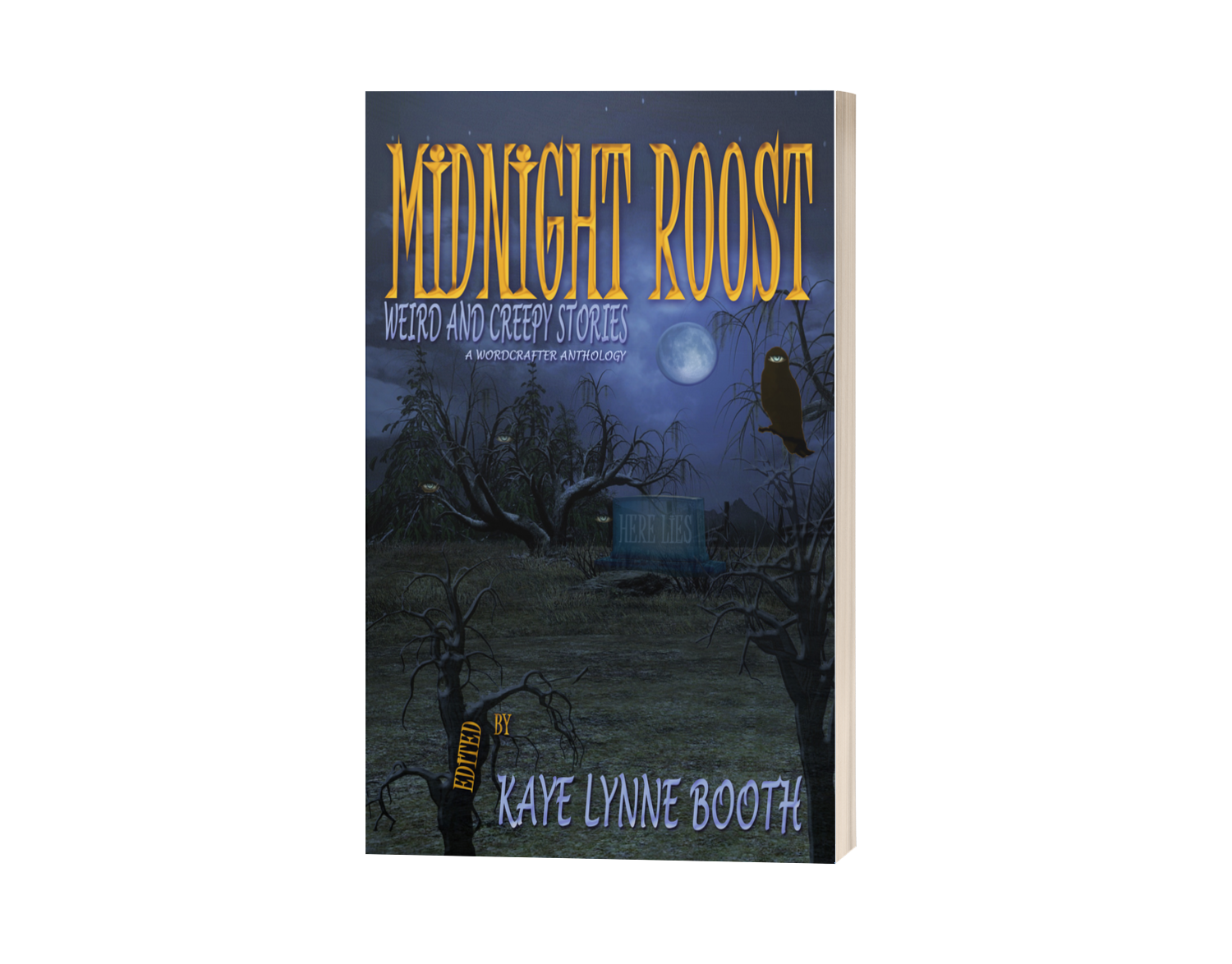
Posted: October 2, 2023 Filed under: Uncategorized 6 CommentsEveryone is gearing up for Halloween, and promotions have begun for the 2023 annual WordCrafter anthology, Midnight Roost, which will release on October 18. (Yep. Just in time for our favorite holiday.)
Contributing author, Julie Jones has started off the promotional efforts with an introduction to the anthology on her blog. Check it out.
MIDNIGHT ROOST is available October 17—just in time for Halloween
Share this:

Join us for Day 4 on “Roberta Writes”
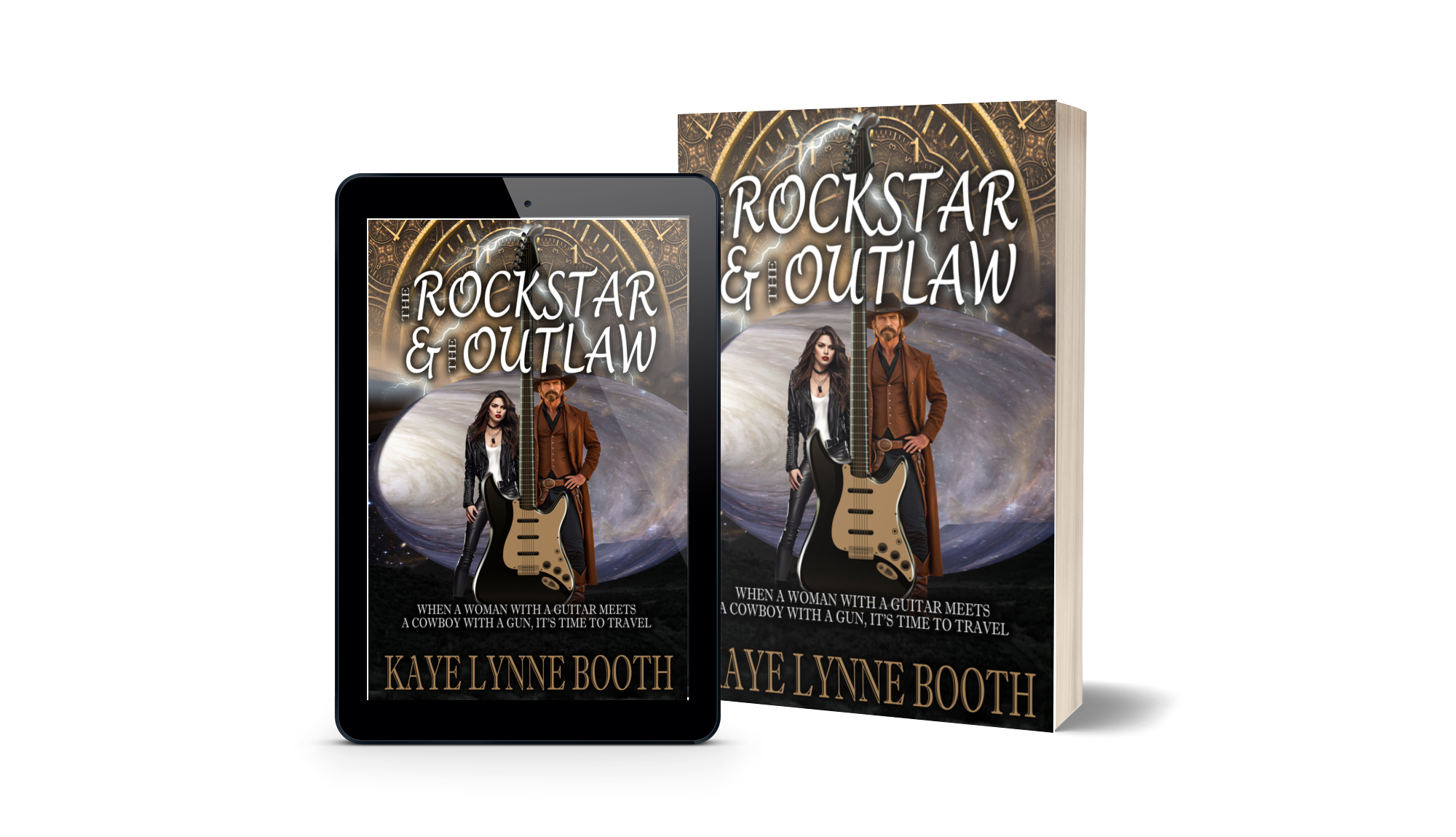
Posted: September 21, 2023 Filed under: Uncategorized Leave a commentCome on over to Roberta Writes for a learn more about the character of Maggie and prostition in the American west. A comment is a chance in the Giveaway, for one of five free digital copies of The Rock Star & The Outlaw at the end of the tour. Won’t you join us?
Share this:

Day 2 of the WordCrafter “The Rock Star & The Outlaw” Book Blog Tour
Posted: September 19, 2023 Filed under: Uncategorized 3 CommentsWe’re over at Carla Loves to Read for day two of the tour with a post about writing with music and the character of LeRoy. A big thank you to Carla Johnson-Hicks for hosting this stop on the tour and for the wonderful review of The Rock Star & The Outlaw. You got just what I had hoped readers would get out of this story. I’m so very pleased. I hope all of you will join us and check it out.