Modern Valentine’s Day is celebrated as the day of lovers. People give each other chocolates and flowers as gifts and often do something special with their partner.
Valentine’s Day did not start off as the cutesy day filled with candy and cuddles we know, it’s origins were dark and bloody.
Lupercalia
The date of 14 February coincides with the ancient Roman festival of Lupercalia which was celebrated annually on the 15th of February. The aim of the festival was to purify Rome and promote health and fertility and certain rites or observances were undertaken to achieve this aim.
These rites took place in the Lupercal cave, the Palantine Hill (the centremost of the seven hills of Rome which has been called “the first nucleus of the Roman Empire”) and the Forum. All of these locations were central to Rome’s foundation myth about the founding of Rome and the earliest history of the city.
At the Lupercal altar, a male goat/s and a dog were sacrificed by one of the members of the priesthood called the Luperci (“brothers of the wolf”), undr the supervision of the high priest of Jupiter (flamen Dialis). An offering was also made of salted mealcakes prepared by the Vestal Virgins, priestesses of Vesta, virgin goddess of Rome’s sacred hearth and its flame. After the sacrifice, two Luperci had their foreheads anointed with blood from the sacrificial knife. The knife was then wiped clean with wool soaked in milk and the two Luperci were expected to laugh. The two colours of Valentine, red and white, come from the blood from the sacrifices and the milk used to clean the knife.
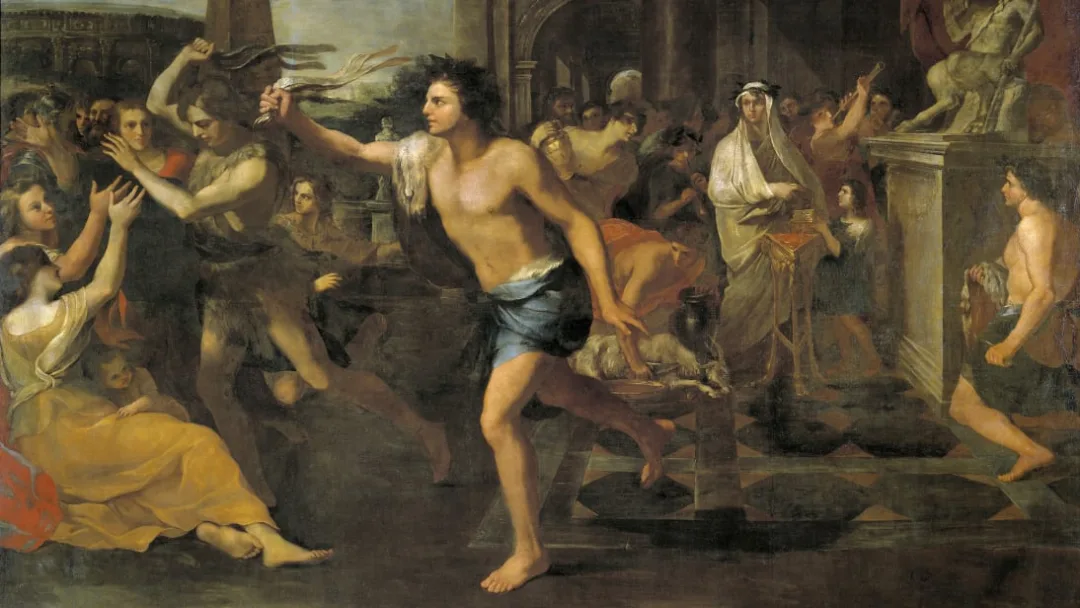
A sacrificial feast then took place, after which the Luperci cut throngs from the hide of the animals and ran naked or near-naked with these through the city, striking people they met with the thongs. Many women of rank presented themselves to the Luperci with their hands held out to be struck, as they believed being struck would help a pregnant woman deliver a healthy baby and a barren woman to become pregnant.
During Lupercalia, the men randomly chose a woman’s name from a jar to be coupled with them for the duration of the festival. Often, the couple stayed together until the following year’s festival. Some elected to remain together and married.
St Valentine’s Day was added as a feast day to the Catholic liturgical calendar around 500 AD. The day was commemorated for martyred saints named Valentine.
There are several legends around who Saint Valentine was. The first was that Saint Valentine refused to convert to paganism and was executed by Roman Emperor Claudius II. Before his execution, Saint Valentine healed the daughter of his jailer who converted to Christianity, along with his family.
The second legend is that Saint Valentine was a bishop called Saint Valentine of Terni who was executed.
The third legend is that Saint Valentine was a Roman priest who performed marriages for Roman soldiers who were forbidden to marry in terms of a Roman emperor’s edict which stated that married men did not make good soldiers and forbade young men to marry.
Chaucer and Valentine
Some time between 1381 and 1382, Geoffrey Chaucer wrote a 699 line poem in the form of a dream vision of a narrator called The Parliament of Foules (Fowls). This poem is the first one to reference the idea that St Valentine’s Day was a special day for lovers.
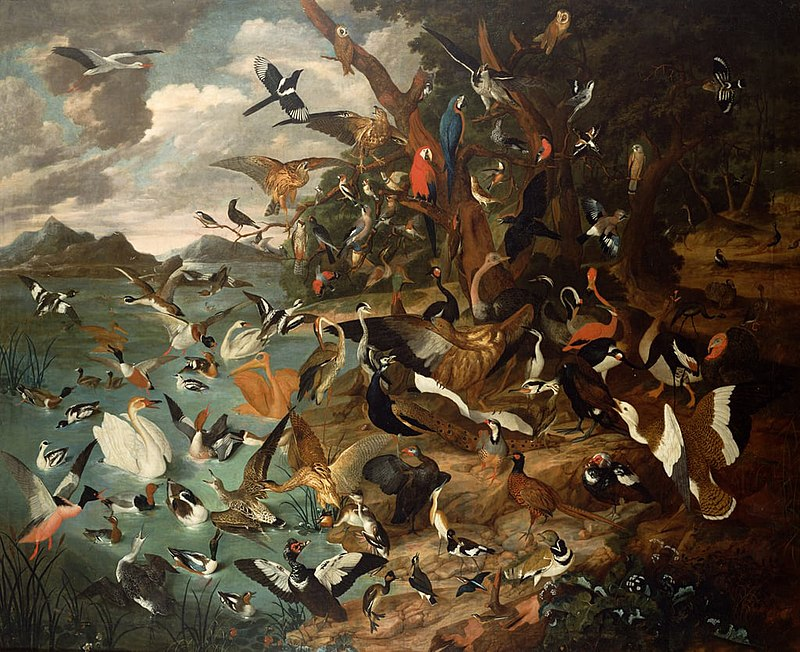
The poem is a bout a narrator who dreams that he passes through a beautiful landscape, through the dark temple of Venus and on to the bright light. Dame Nature oversees a large flock of birds which have gathered to choose their mates. The birds have a parliamentary debate while three male eagles try to seduce a female bird. The debate is full of speeches and insults. In the end, none of the three male eagles wins the female eagle. The dream ends with the welcoming of the coming spring.
Award-winning, bestselling author, Roberta Eaton Cheadle, is a South African writer and poet specialising in historical, paranormal, and horror novels and short stories. She is an avid reader in these genres and her writing has been influenced by famous authors including Bram Stoker, Edgar Allan Poe, Amor Towles, Stephen Crane, Enrich Maria Remarque, George Orwell, Stephen King, and Colleen McCullough.
Roberta has two published novels and has horror, paranormal, and fantasy short stories included in several anthologies. She is also a contributor to the Ask the Authors 2022 (WordCrafter Writing Reference series).
Roberta also has thirteen children’s books and two poetry books published under the name of Robbie Cheadle, and has poems and short stories featured in several anthologies under this name.
Roberta’s blog features discussions about classic books, book reviews, poetry, and photography. https://roberta-writes.com/.
Want to be sure not to miss any of Robbie’s “Dark Origins” segments? Subscribe to Writing to be Read for e-mail notifications whenever new content is posted or follow WtbR on WordPress. If you found it interesting or entertaining, please share.
Today, I’m delighted to welcome author, poet, and blogger, Sally Cronin as my February Treasuring Poetry guest.
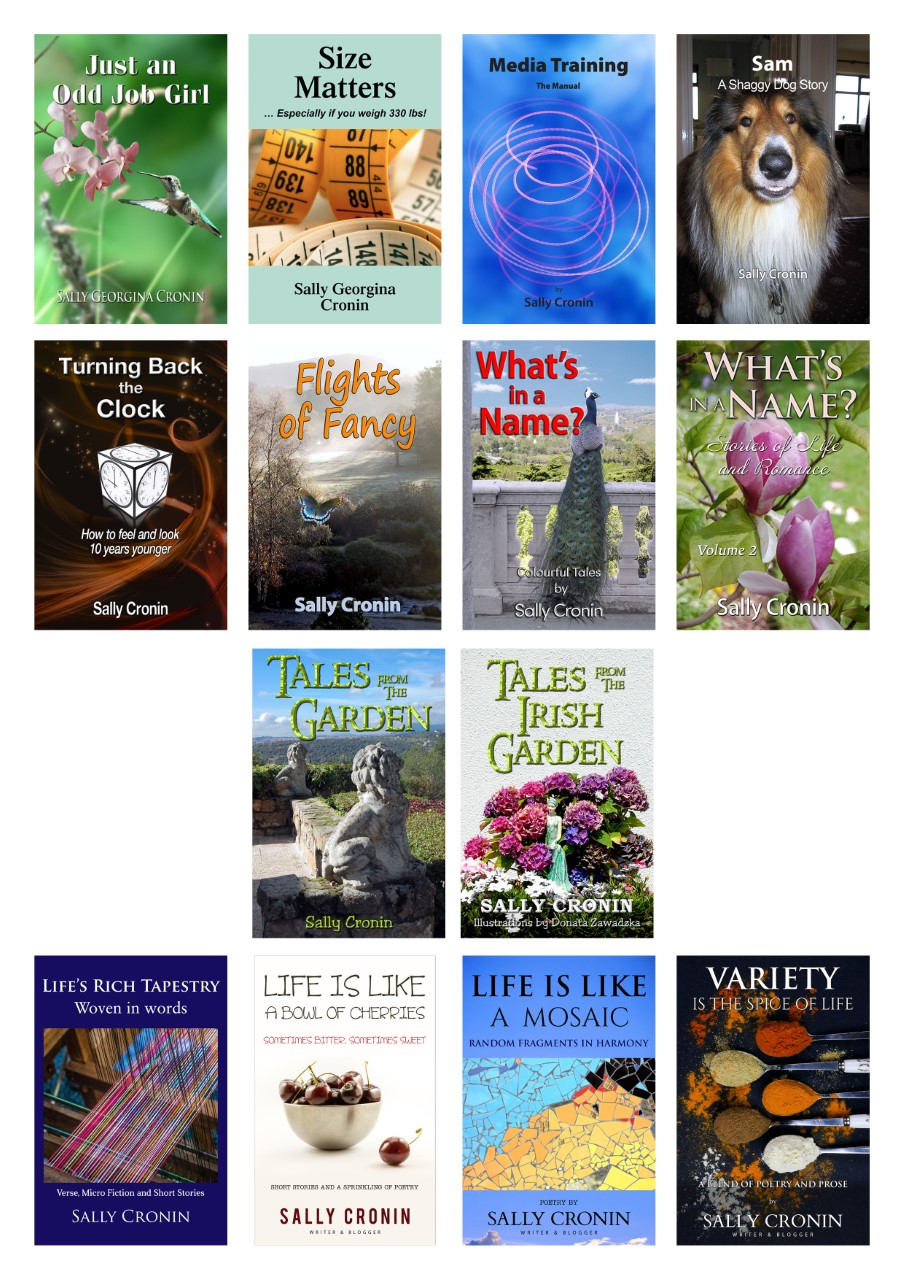
A collage of Sally Cronin’s book covers
Why do you write poetry?
Thank you so much Robbie for inviting me along to talk about poetry it is lovely to be here.
I loved nursery rhymes when I was very young, and for most children it is their first introduction to poetry. I wanted to write my own and would scribble down as stories that probably made no sense to anyone but me. I illustrated them and even put them together in a book I kept under the mattress and they were not shown to anyone. I was seven and my growing love of all kinds of poetry from short and pithy to the long saga adventures has never faded. As a teenager I switched to writing song lyrics and found it a wonderful way to express my thoughts and feelings.
For many, as we become adults, life brings other priorities and responsibilities, and writing for pleasure is put aside. When I gave up corporate life and retrained in nutrition in my 40s I still worked hard, but the schedule was mine to make. It left time for my more creative side and I began to write books, and also began to experiment with poetry in various formats.
I love the challenge of telling a story in a few lines or ever a few syllables. I have often started off with five or six verses and ended up with two. It is the same with 99 word flash fiction and nothing gives me more pleasure when someone says they enjoyed the story.
Do you think poetry is still a relevant form of expressing ideas in our modern world? If yes, why?
I definitely think poetry is still a relevant form of communication in our modern world. In fact the more technology takes over our lives, it should become more relevant. Robots are being programmed to write text in many forms including poetry. But, without the human emotion infused into the words, it might rhyme, be perfectly correct in form, but it will lack that vital ingredient.
Which poem by any other poet that you’ve read, do you relate to the most?
I have always loved poetry and there are many I relate to, particular as I get older. One of the hopes of any writer is that our words will linger on after we have gone, but I also believe we leave a sense of ourselves in the places we have lived and the people we have known. I have lost family and friends and I see those I have loved in quite random things that remind me of them and the time we spent together. This poem by Mary Elizabeth Frye sums that up for me beautifully.
Do not stand at my grave and weep I am not there. I do not sleep. I am a thousand winds that blow. I am the diamond glints on snow. I am the sunlight on ripened grain. I am the gentle autumn rain. When you awaken in the morning’s hush I am the swift uplifting rush Of quiet birds in circled flight. I am the soft stars that shine at night. Do not stand at my grave and cry; I am not there. I did not die.
Which of your own poems in Variety is the Spice of Life is your favourite and why?
I am not sure if it is because I am now heading into my second childhood, but I had a lot of fun writing Lullaby and perhaps it is because of an abiding memory of being sung to as a child in a foreign language when we lived abroad. The words might not have been understood but the emotion and love certainly were.
Lullaby
to sing a lullaby you must first consider preferences of the baby waiting
perhaps a jolly song aimed to make them chortle to wave their hands around with glee happy
maybe slow and gentle soothing a fractious mood or the soreness of teething gums tearful
deep toned to reassure those fearing the shadows now allayed by a father’s voice safety
language a foreign tongue but words that mothers sing to babies all around the world loving.
Is writing poetry easy for you compared to prose or do you do a lot of editing and revision of your poems?
I probably do as much editing and revision of my poetry as I do my prose. I used to struggle with the format but now I am working with syllabic poetry I find it easier. I began writing haikus about ten years ago and once I began participating in challenges online on a regular basis, my options for different formats expanded.
As with my prose, I start with a brain dump and then go back again and again until I am happy with the end result.
Poetry is always best shared orally by the poet. You have started sharing your poetry via podcasts. Are you finding this a good way of sharing your poetry with others?
I mentioned how poetry should convey emotion that resonates with the reader, and I do believe that when a poem is read aloud, it allows for colour to be added to the words to bring the emotion to life. From the feedback, including you own, I am finding it a great way to share my poems and those of others I admire, such as the War Poets. This year I hope to share more of those and of other poets I admire.
My review of Variety is the Spice of Life by Sally Cronin
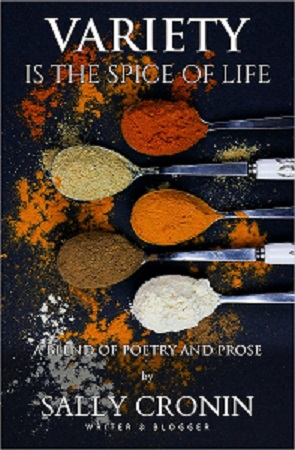
Cover of Variety is the Spice of Life by Sally Cronin
This delightful book is a mixture of poetry and short stories. Much of the poetry relates to nature and nature’s impact on humanity, although a few focus on human relationships. All of the poems are syllabic and beautifully written.
My favourite of the poems, and a few lines from each, are as follows:
Kinship – “sanctuary formed in kinship there may not always be harmony but the ties of love cannot be broken.”
Storm front – “clouds disperse and run for their lives to seek shelter of night softer gaze of the moon.”
Drought – “grass shoots vibrantly green burst thought the ground in days a miracle of abundance at last”
The short stories in the book are all typical of the author’s style of writing. Each story pierces the veil of human relationships and behaviour and exposes the good and the bad for the reader’s enjoyment, surprise, shock, and entertainment.
My four favourites were as follows:
Miss Lloyd’s Robin – a short story that has many facets. It emphasizes that people’s looks generally do not define them and gently reminds the reader not to stereotype people based on appearance. Miss Lloyd thinks that Sharon Dawson will never amount to anything because she has unruly red hair that is hard to tame. This story also highlights the damage an unkind teacher can inflict on a student. At the same time, Miss Lloyd, so hard and sharp in the classroom, has a softer side and feeds the birds in her backyard with relentless determination. This is a beautiful, feel good story that leaves the reader believing in the goodness of people.
The Green Hill – this short story has a light paranormal twist and joyfully highlights the beauty of a long and loving relationship and marriage between two people. It also demonstrates the strength of devotion that develops between people and their dogs.
The Secret – another beautifully written story about the potential damage secrets within a close family circle can do. It also highlights the terrible indifference of many people in positions to influence others, especially youngsters, and their complete irresponsibility and selfishness. This story made me glad that most of the girls I grew up with and who my sons associate with are a bit street wise. Modern women who grow up in more enlightened households are no longer naïve to a point where they can ruin their whole lives over a misguided mistake. It was delightful that this story had a satisfying ending.
The Healer – this tale was set in a dystopian future when people with the ability to heal and help the sick are persecuted as charlatans and imprisoned for life. I enjoyed reading about Serina and her gift and discovering how common sense and love for a child will often overwhelm fear of reprisal from a misguided and often cruel leadership. A lovely story with a fulfilling outcome.
Another well written and thought provoking collection from a talented author.
Sally Cronin is the author of sixteen books including her memoir Size Matters: Especially when you weigh 330lb first published in 2001. This has been followed by another fifteen books both fiction and non-fiction including multi-genre collections of short stories and poetry.
As an author she understands how important it is to have support in marketing books and offers a number of FREE promotional opportunities on her blog and across her social media. The Smorgasbord Bookshelf
Her podcast shares book reviews, poetry and short stories Sally Cronin Soundcloud
After leading a nomadic existence exploring the world, she now lives with her husband on the coast of Southern Ireland enjoying the seasonal fluctuations in the temperature of the rain.
Award-winning, bestselling author, Robbie Cheadle, has published thirteen children’s book and two poetry books. Her work has also appeared in poetry and short story anthologies.
Robbie also has two novels published under the name of Roberta Eaton Cheadle and has horror, paranormal, and fantasy short stories featured in several anthologies under this name.
The ten Sir Chocolate children’s picture books, co-authored by Robbie and Michael Cheadle, are written in sweet, short rhymes which are easy for young children to follow and are illustrated with pictures of delicious cakes and cake decorations. Each book also includes simple recipes or biscuit art directions which children can make under adult supervision.
I am kicking off Dark Origins 2023 with an analysis of the origins and historical accuracy of The Pit and the Pendulum. This short story by Edgar Allan Poe is set at the height of the Spanish Inquisition.
The story begins with the unnamed narrator being condemned to death. As the judges announce his fate, the narrator focuses on seven tall candles. The light of the candles initially appears to him like angels and he feels comforted. He is soon, however, overcome by horror at his fate and the candles disappear when he collapses into semi-consciousness.
When the narrator awakes, he is initially to scared to open his eyes. When he does open them, he finds himself in complete darkness and spends some time imagining the tortures of the Inquisition. After some time has passed, he musters the courage to start moving and tries to make sense of his surroundings by using his sense of touch. Falling asleep at one point during his navigation of the cell walls, he wakes up to find water and bread which he consumes. After completing his tour of the cell walls, he attempts to walk across the chamber and almost falls into a deep, circular pit. He discovers more bread and water and falls asleep again.
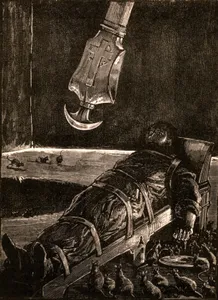
Awaking from his second sleep, he realises that his water is drugged and also that his prison is much smaller than he thought. He also discovers that the walls are made of metal and not stone and that he is now tied on his back to a piece of wood with only his left hand up to his left elbow free. He is very thirsty due to the salty food but the water pitcher has been removed. Looking up at the ceiling, the narrator sees a painting of Father Time holding a large and slow moving pendulum.
The narrator is distracted by rats scurrying about the floor of his prison and when he looks up thirty minutes later, he realised that the pendulum has a razor-sharp blade attached to it and it is moving down towards his body. The author’s intention with this depiction of Father Time holding a deadly weapon is to remind readers that we are all fighting against the clock which ticks steadily towards our inevitable ending.
The narrator devises a clever plan to escape death by being chopped by the pendulum which was designed to cut into his heart.
The pendulum is withdrawn from the room after his escape from his bonds and death by the pendulum, making it obvious that his torturers are watching his every move. The next torture is a mixture of heat and the walls closing around him and forcing him towards the pit. As death gallops towards him, he lets out a piercing scream and there is a blast of trumpets and the walls roll back. The narrator is rescued and the torture of the Inquisition is over.
The Pit and the Pendulum is about the torments endured by a prisoner of the Spanish Inquisition. It is interesting that Poe made no attempt with this story to be historically accurate and there are three areas where his short story differed significantly from historical facts, as follows:
The narrator’s rescuer – the narrator is rescued by General Lasalle who was a French cavalry general during the French Revolutionary Wars and the Napoleonic Wars, in particular, the Peninsular War which took place between 1808 and 1814. The Spanish Inquisition was at its height between 1480 and 1530, centuries before this war. The detailed tortures described in Poe’s story have no historic parallels in the activity of the Spanish Inquisition at any time, and particularly not at the beginning of the 19th century when only four persons were condemned under this regime.
The original source of the pendulum torture method is one paragraph in the preface of The history of the Inquisition of Spain published in 1826 by Spanish priest, historian and activist, Juan Antonio Llorente. The paragraph detailed the second-hand account by Llorente of the release of a single prisoner from the Inquisition’s Madrid dungeon in 1820. Llorente included a description by said prisoner of the pendulum torture method. This description has been dismissed as factually inaccurate by modern historians. It is believed that Llorente misunderstood what he heard and that the prisoner was actually referring to the strappado (garrucha), a common Inquisition torture in terms of which the prisoner’s hands are tied behind his back and he is hoisted of the floor by a rope tied to his hands. This method is also called the “pendulum”.
Poe places a Latin epigraph (phrase, quotation or poem) before the story describing it as “a quatrain composed for the gates of a market to be erected upon the site of the Jacobin Club House (the Jacobin Club was the most influential political club during the French Revolution of 1789) at Paris”. Poe did not invent this epigraph as this inscription was composed with the intention of placing it on the site, but the market was not built as intended and did not have any gates and, thus, no inscription.
Summary
Poe’s intention with this short story appears to be to capture the horrors of confinement and torture and the terrible realization by the victim that he is going to die regardless of the choices he makes i.e. the pit or the pendulum. The Spanish Inquisition setting would thus appear to be merely a convenient setting for the tale. Consequently, Poe was not limited by historical accuracy with his descriptions of the torture chamber and methods or the rescue of his hero.
Quotes from The Pit and the Pendulum
The Pit and the Pendulum is one of the most famous of Poe’s works together with The Tell-Tale Heart, The Cask of Amontillado, The Fall of the House of Usher and the Masque of the Red Death.
Famous quotes from The Pit and the Pendulum are as follows:
“And then there stole into my fancy, like a rich musical note, the thought of what sweet rest there must be in the grave.”
“I call to mind flatness and dampness; and then all is madness – the madness of a memory which busies itself among forbidden things.”
“In death – no! even in the grave all is not lost. Else there is no immortality for man. Arousing from the most profound slumbers, we break the gossamer web of some dream. Yet in a second afterward, (so frail may that web have been) we remember not that we have dreamed.”
About Roberta Eaton Cheadle
Award-winning, bestselling author, Roberta Eaton Cheadle, is a South African writer and poet specialising in historical, paranormal, and horror novels and short stories. She is an avid reader in these genres and her writing has been influenced by famous authors including Bram Stoker, Edgar Allan Poe, Amor Towles, Stephen Crane, Enrich Maria Remarque, George Orwell, Stephen King, and Colleen McCullough.
Roberta has two published novels and has horror, paranormal, and fantasy short stories included in several anthologies. She and is also a contributor to the Ask the Authors 2022 (WordCrafter Writing Reference series).
Roberta also has thirteen children’s books and two poetry books published under the name of Robbie Cheadle, and has poems and short stories featured in several anthologies under this name.
Roberta’s blog features discussions about classic books, book reviews, poetry, and photography. https://roberta-writes.com/.
Want to be sure not to miss any of Robbie’s “Dark Origins” segments? Subscribe to Writing to be Read for e-mail notifications whenever new content is posted or follow WtbR on WordPress. If you found it interesting or entertaining, please share.
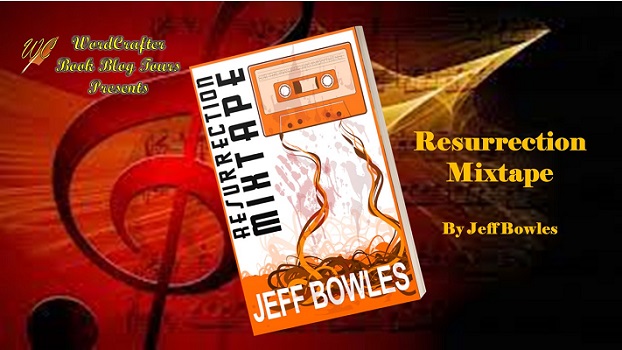
Today we are wrapping up the WordCrafter “Resurrection Mixtape” Book Blog Tour over at “Carla Loves to Read”. Join us for a guest post from author Jeff Bowles, a review by Carla Johnson-Hicks, and one last chance to enter the giveaway by sharing your top three mixtape choices.
Welcome to my stop on the Blog Tour for Resurrection Mixtape by Jeff Bowles. Scroll down for my review, a guest post and a giveaway. Also visit the other stops on the tour for different guest posts and chances to win.
Today we are over at “Roberta Writes” for Day 4 of the Wordcrafter “Resurrection Mixtape” Book Blog Tour, with a guest post from author Jeff Bowles about his music selections for the book. Now we know about the songs on his mixtape for the book. Tell us about yours to enter the giveaway and join in the fun!
Today, I am delighted to host Day 4 of the WordCrafter Book Blog Tour featuring Resurrection Mixtape by Jeff Bowles.
Giveaway
For this tour we’re giving away 3 signed print copies of Resurrection mixtape and a $25 Amazon gift card. To enter, just tell
us the top three songs on your mixtape in the comments. Come on now. We really want to know.
Winners will be chosen in a random drawing.
Unrequited Love: The Music of Resurrection Mixtape
I’ve been a musician since I was ten years old. To my mind, I’ve been a writer just as long, though it wasn’t until I was in my early twenties that I found the dedication to pursue adult storytelling with everything I had. It’s funny that the eagerness to do one superseded the eagerness to do the other, but as a creative writing professor once told me, novel-length work is often not…
Come on over to “Robbie’s Inspiration” for Day 2 of the WordCrafter “Resurrection Mixtape” Book Blog tour, with a guest post by author Jeff Bowles on story origins and inspiration and thoughts about his writing process. Join us and don’t forget to add your thoughts on what songs would be on your mixtape to enter in a fantastic giveaway.
For this tour we’re giving away 3 signed print copies of Resurrection mixtape and a $25 Amazon gift card. To enter, just tell
us the top three songs on your mixtape in the comments. Come on now. We really want to know.
Winners will be chosen in a random drawing.
Experimentation and Killer Tunes: Writing Resurrection Mixtape
Resurrection Mixtape represents nothing more or less than a personal dare. Every author has their own special way of producing books. Sometimes it varies from project to project, but more or less, we all have our preferred methods.
But I was interested in breaking my own personal mold. For years, I’ve been writing short stories without an outline. I wondered if I could do the same with a novel, which…
This is a cool idea for those of us whose creativity comes out in the kitchen, as well as on the page. I’m haven’t baked in years, but I know several of you who do. What a grand way to celebrate the Christmas season.
Ciao, amici! Last year, I got the idea for a holiday cookie recipe swap. But I got it kind of late, so participation was a little low. Six bakers fit it into their schedules, and we got tons of comments (and compliments and downloads) by readers. Many of you said you’d have loved to participate but didn’t have enough notice.
Consider yourself notified.
In early December, I’ll be hosting my second annual cookie exchange. The first was fun. Let’s make the second FABULOUS.
Many cookies freeze beautifully, so maybe you’re beginning your holiday baking now. Or perhaps, like me, you refuse to embrace Christmas until Thanksgiving is over (because autumn) and won’t bake until December rolls around. Either way, community members want your recipes!
Like last year, when I bake this year, I’m going to take photos of the steps as I go, then (of course) I’ll take a picture…
At the time when European settlement began, the Khoikhoi were settled in modern day Namibia, the north-eastern Cape and the south-western Cape. The name Khoikhoi means “real people” or “men of men”. The Khoikhoi are closely related to the San (Bushmen) and are sometimes referred to together as Khoisan. There is a theory that the Khoikho and the San were once the same race. The Khoikhoi broke away to raise cattle, build huts and lead a pastoral life while the San remained true to the wilderness and the elements.
The Khoikhoi were nomadic, moving around in search of grazing land for their animals which consisted mainly of goats, cattle and sheep. They also manufactured animal skins into clothing, bags and blankets and used reeds to make sleeping mats and mats to cover their round and mobile homes. The Khoikhoi also made pottery which could be tied to their oxen or to hut poles when they moved.
All the male children in Khoikhoi families are named after the material side and all the female children after the paternal side. The eldest daughter is highly respected and the milking of the cows is left entirely to her.
God and the afterlife
The Khoikhoi attach special significance to the moon and new and full moons were historically times for rainmaking rites and dancing.
The Khoikhoi deity is called Tsui-Goab and he is believed to be the founding ancestor of the Khoikhoi. He is the creator of the world, of man and of the elements. He provides for man and gives them full bellies and happy hearts. His opposite is Gaunab, who is primarily an evil being who causes sickness or death.
Tsui-Goab lives in a beautiful heaven of light and sunshine while Gaunab lives separately in a dark hiding place. Tsui-Goab, meaning the Read Dawn, bring the light and life to the world. The Khoikhoi always pray in the early morning with their faces turned towards the east where the first light of day appears.
Monsters
According to Khoikhoi legend, a man-eating monster called the Aigamuxa/Aigamuchab dwells among the dunes. The creature is mostly human-looking, except that it has eyes on the instep of its feet. In order to see, it has to go down on its hands and knees and lift its one foot in the air. This is a problem when the monster chases prey, because it can’t see when it runs. Some sources claim the creature resembles an ogre.
Another monster legend is Ga-gorib. This creature sits near a deep hole in the ground and dares passers-by to throw rocks at him. The monster’s intention is for the the rocks to bounce back and kill the passer-by, who will then fall into the hole. According to the myth, when the hero Heitsi-eibib encountered Ga-gorib, he declined the monster’s dare. When Ga-gorib was not looking, Heitsi-eibib threw a stone at the monster and hit it below its ear, causing it to fall into its own pit.
Hai-uri is an agile, jumping creature who is partially-invisible and has only one side to its body (one arm and one leg). It is known to eat humans.
Reading of The Night Walker, a Hottentot myth
I recorded an interesting story about the Hottentot myth, The Night Walker, which you can listen to here:
Here is a picture of a Night Walker with a kerrie taken from the book Myths and Legends of Southern Africa by Penny Millar:
About Roberta Eaton Cheadle
Roberta Eaton Cheadle is a South African writer and poet specialising in historical, paranormal, and horror novels and short stories. She is an avid reader in these genres and her writing has been influenced by famous authors including Bram Stoker, Edgar Allan Poe, Amor Towles, Stephen Crane, Enrich Maria Remarque, George Orwell, Stephen King, and Colleen McCullough.
Roberta has short stories and poems in several anthologies and has 2 published novels, Through the Nethergate, a historical supernatural fantasy, and A Ghost and His Gold, a historical paranormal novel set in South Africa.
Roberta has 11 children’s books published under the name Robbie Cheadle.
Roberta was educated at the University of South Africa where she achieved a Bachelor of Accounting Science in 1996 and a Honours Bachelor of Accounting Science in 1997. She was admitted as a member of The South African Institute of Chartered Accountants in 2000.
Roberta has worked in corporate finance from 2001 until the present date and has written 7 publications relating to investing in Africa. She has won several awards over her 20-year career in the category of Transactional Support Services.
Want to be sure not to miss any of Robbie’s “Dark Origins” segments? Subscribe to Writing to be Read for e-mail notifications whenever new content is posted or follow WtbR on WordPress. If you found it interesting or entertaining, please share.
Trying to choose a favorite poem of my own, is like trying to choose a favorite child! Writing is an incredibly personal thing and our creations become our “babies”. Looking back through poems that I’ve written in the past, I will come across one that really strikes me as being exceptional. I’m often surprised by what I find on these journeys of reminiscing.
But to answer your question, today, right now, I think my favorite poem is called Poetry Of My Heart .
The poetry of my heart
spills onto the page
in blue ink
and fervent sighs
The poetry of my heart
is written on the wings
of dreams
and nights
of longing
The poetry of my heart
negate shadows of terrors
not voiced
The poetry of my heart
stands tall
against this world
What inspired you to write this poem?
I don’t know if any One Thing was the inspiration for this poem. In essence, I’m saying that my poetry will speak for me when I cannot and I find a lot of power and freedom in that.
What are your plans for your poetry going forward?
I am currently going through past poems of mine, published and unpublished in order to compile them to submit for publishing in a book or Chapbook.
What is your favourite poem?
My favorite poem? This is a very difficult question. I have many, many beloved works of poetry. Since joining the WordPress community, that love has expanded 10-fold and continues to grow.
My mother dedicated a poem to me when I was very young, called “Ordinary Miracles”, by Erica Jong. This is probably still a favorite poem of mine.
Spring, rainbows, ordinary miracles about which nothing new can be said.
The stars on a clear night of a New England winter; the soft air of the islands along the old Spanish Main; pirate gold shining in the palm; the odor of roses to the lover’s nose. . .
There is no more poetry to be written of these things. The rainbow’s sudden revelation– behold! The cliché is true! What can one say but that?
So too with you, little heart, little miracle,
but you are no less miracle for being ordinary.
Why do you like this poem?
I like this poem because it always reminds me of my mother and her love for me. To her, I was her “little miracle”. It has always held a special place in my heart because of that.
***
Thank you, Penny, for being a wonderful guest. I really loved both your poetry choices and am delighted at the idea your mother dedicated a poem to you. What a lovely idea. I look forward to reading your book in due course.
About Penny Wilson
Penny Wilson is a freelance writer who writes in several genres. She has written articles for WOW Women on Writing. Her poetry has been published in online journals, such as Ariel Chart, Spill Words Press and the Poppy Road Review. Penny is a member of the Austin Poetry Society. Her poetry has been featured in the publication America’s Emerging Poets 2018 & 2019 by Z Publishing, Poets Quarterly and Dual Coast Magazine published by Prolific Press. You can find more of her writings on her blog at https://pennywilsonwrites.com/ and follow her on Twitter @pennywilson123.
About Robbie Cheadle
Robbie Cheadle is a South African children’s author and poet with eleven children’s books and two poetry books.
The eight Sir Chocolate children’s picture books, co-authored by Robbie and Michael Cheadle, are written in sweet, short rhymes which are easy for young children to follow and are illustrated with pictures of delicious cakes and cake decorations. Each book also includes simple recipes or biscuit art directions which children can make under adult supervision.
Robbie and Michael have also written Haunted Halloween Holiday, a delightful fantasy story for children aged 5 to 9 about Count Sugular and his family who hire a caravan to attend a Halloween party at the Haunted House in Ghost Valley. This story is beautifully illustrated with Robbie’s fondant and cake art creations.
Robbie has published two books for older children which incorporate recipes that are relevant to the storylines.
Robbie has two adult novels in the paranormal historical and supernatural fantasy genres published under the name Roberta Eaton Cheadle. She also has short stories, in the horror and paranormal genre, and poems included in several anthologies.
Robbie Cheadle contributes two monthly posts to https://writingtoberead.com, namely, Growing Bookworms, a series providing advice to caregivers on how to encourage children to read and write, and Treasuring Poetry, a series aimed at introducing poetry lovers to new poets and poetry books.
In addition, Roberta Eaton Cheadle contributes one monthly post to https://writingtoberead.com called Dark Origins: African Myths and Legends which shares information about the cultures, myths and legends of the indigenous people of southern Africa.
Want to be sure not to miss any of Robbie’s “Treasuring Poetry” segments? Subscribe to Writing to be Read for e-mail notifications whenever new content is posted or follow WtbR on WordPress. If you found it interesting or entertaining, please share.
Now James Watt is added to Hubble We can soon spot the first signs of trouble. Should aliens attack We’ll push them right back Using Reagan’s star wars at the double!
Trouble comes every day and night When monsters and vampires fight At dawn and evening Their shifts they are leaving Arguments happen in crepuscular light!
There once was a chick who was trouble She ran from the law on the double If she’d just get right And stop trying to fight Her life wouldn’t be such a puzzle!