In Touch With Nature – The African Spoonbill #Africanbirds #InTouchWithNature #poetry
Posted: November 27, 2024 Filed under: Uncategorized 46 Comments
Today, I am sharing about the African Spoonbill bird, which is found across Africa and Madagascar, including Botswana, Kenya, Mozambique, South Africa and Zimbabwe using the format of a rensaku tanka poem. A rensaku is a series of tanka poems (syllabic poems using the form of 5/7/5/7/7) to tell a story.
I have included some of my photographs and videos to embellish the story.
African Spoonbill
Long tapering legs
Atop a pure white body
African Spoonbill
Red legs match its red eye mask
No crest adorns its sleek head

***
African Spoonbill
Named for its spatulate bill
Long and coloured grey
From side-to-side its bill swings
Open to catch tasty food

***
Living in marshes
With open shallow waters
African Spoonbill
Hunts water loving creatures
Including fish and molluscs
***
African Spoonbill
Builds its nest in colonies
In trees or reedbeds
From sticks and reeds lined with leaves
And breeds during winter months

***
To woo a female
Males develop bright plumage
She then lays five eggs
African Spoonbill males help
With incubation and care
***
Unable to fly
African Spoonbill youngsters
Are dependent for
A twenty-day period
Before leaving their parents
My YouTube video of an African Spoonbill hunting for food with the typical swaying motion:
About Roberta Eaton Cheadle

Roberta Eaton Cheadle, is a South African writer and poet specialising in historical, paranormal, and horror novels and short stories. She is an avid reader in these genres and her writing has been influenced by famous authors including Bram Stoker, Edgar Allan Poe, Amor Towles, Stephen Crane, Enrich Maria Remarque, George Orwell, Stephen King, and Colleen McCullough.
Roberta has two published novels and a collection of short stories and has horror, paranormal, and fantasy short stories included in several anthologies. She is also a contributor to the Ask the Authors 2022 (WordCrafter Writing Reference series).
Roberta is also the author and illustrator of sixteen children’s books, illustrator to a further three children’s books, and the author and illustrator of three poetry books published under the name of Robbie Cheadle, and has poems and short stories featured in several anthologies under this name.
Roberta’s blog features discussions about classic books, book reviews, poetry, and photography. https://roberta-writes.com/.
Find Roberta Eaton Cheadle
Blog: https://wordpress.com/view/robertawrites235681907.wordpress.com
Twitter: https://twitter.com/RobertaEaton17
Facebook: https://www.facebook.com/robertawrites
Amazon: https://www.amazon.com/Roberta-Eaton-Cheadle/e/B08RSNJQZ5
___________________________________________
Like this post? Are you a fan of this blog series? Did you know you can sponsor your favorite blog series or even a single post with an advertisement for your book? Stop by the WtbR Sponsor Page and let me advertise your book, or you can make a donation to Writing to be Read for as little as a cup of coffee, If you’d like to show your support for this author and WordCrafter Press.
__________________________________________
This segment of “In Touch with Nature” is sponsored by the Midnight Anthology Series and WordCrafter Press.

Midnight Roost: Weird and Creepy Stories: 20 authors bring your nightmares to life in 23 stories of ghosts, paranormal phenomenon and the horror from the dark crevasses of their minds. Stories of stalkers, both human and supernatural, possession and occult rituals, alien visitations of the strange kind, and ghostly tales that will give you goosebumps. These are the tales that will make you fear the dark. Read them at the Midnight Roost… if you dare.
Midnight Garden: Where Dark Tales Grow: 17 authors bring you 21 magnificent dark tales. Stories of magic, monsters and mayhem. Tales of murder and madness which will make your skin crawl. These are the tales that explore your darkest fears. Read them in the Midnight Garden… if you dare.
Share this:

In Touch With Nature: Halloween special – Elephant graveyard: fact or fiction #InTouchWithNature #Elephants
Posted: October 23, 2024 Filed under: Uncategorized 60 Comments
What is an elephants’ graveyard?
According to legend, an elephants’ graveyard is a place where old elephants instinctively go when they reach a certain age. In essence, it is a place where old elephants are believed to go to die.
Fact or fiction?
The concept of an elephant’s graveyard is a myth. However, elephant remains are often found in specific areas due to their favourable geographics. Injured or older elephants often settle in areas with easy access to water and food leading to concentrations of carcasses in those areas. In addition, group killings by hunters have also led to the discovery of numerous bones in one spot. In these cases, the tusks of the elephants are missing.
The concept of an elephant graveyard first appeared in The Ivory Child by Sir Rider Haggard (the 12th of the 18 Allan Quatermain adventures). This is a short extract of Haggard’s description of the elephant graveyard:
“Ten minutes or so more brought us to the eastern head of the lake, where the reeds whispered in the breath of the night wind like things alive. As I expected, it proved to be a bare, open space where nothing seemed to grow. Yes, and all about me were the decaying remains of elephants, hundreds of them, some with their bones covered in moss, that may have lain here for generations, and others more newly dead. They were all old beasts as I could tell by the tusks, whether male or female. Indeed about me within a radius of a quarter of a mile lay enough ivory to make a man very rich for life, since although discoloured, much of it seemed to have kept quite sound, like human teeth in a mummy case. The sight gave me a new zest for life. If only I could manage to survive and carry off that ivory! I would. In this way or in that I swore that I would! Who could possibly die with so much ivory to be had for the taking? Not that old hunter, Allan Quatermain.
Then I forgot about the ivory, for there in front of me, just where it should be, just as I had seen it in the dream-picture, was the bull elephant dying, a thin and ancient brute that had lived its long life to the last hour. It searched about as though to find a convenient resting-place, and when this was discovered, stood over it, swaying to and fro for a full minute. Then it lifted its trunk and trumpeted shrilly thrice, singing its swan-song, after which it sank slowly to its knees, its trunk outstretched and the points of its worn tusks resting on the ground. Evidently it was dead.”
You can read The Ivory Child for free on Project Gutenberg here: https://www.gutenberg.org/files/2841/2841-h/2841-h.htm.
The concept of an elephants’ graveyard was then popularized in some films, including Disney’s The Lion King.
Do elephants mourn their dead?
Yes, elephants do mourn their dead. They also mourn any elephant bones they come across during their long marches. They gather around and touch the dead or bones with their sensitive trunks for long periods of time.
Elephant mothers have been known to lift the bodies of their dead calves up with their trunks and put them in a place where the body is then covered with twigs, sticks, and dirt. The other female members of the herd assist in this ritual.
On a happier note, here are a few pictures of elephant calves that I saw during my recent trip to Madikwe Game Reserve:


The above painting is in Michael and my new children’s book called Sesi says goodbye to Granny. The ebook is available for preorder from Amazon here: https://www.amazon.com/goodbye-Granny-Southern-African-Adventures-ebook/dp/B0DKCD2Y7X
I created this ebook in landscape orientation because that better suited the pictures. It was a difficult process and the cover doesn’t show on Amazon. This is the cover:


I am now battling with the Zone over the print book. Watch this space.
Extract from Amahle’s Demon
I love elephants and they fascinate me. So much so, that my short story in Midnight Garden is also about an elephant. I wasn’t able to prepare a post for the recent tour due to my aunt’s lengthily illness (she is much better now), so I’m sharing a short extract here.
“The crunch of steps on the gravel path outside the elephant enclosure caused Amahle to look up. A young man was approaching, his stride long and loose. His broad smile displayed a set of large, straight teeth that shone whitely against the dark skin of his round face. He wore the khaki uniform of an elephant carer.
“Amahle,” the familiar voice greeted her. “I’ve brought you a treat.
Out of the corner of her left eye, Amahle saw an apple moving towards her on the outstretched palm of Themba, her primary carer.
Taking the apple, Amahle crunched it with relish, apple juice squeezing out from between her large, flat molar teeth. The man’s arm reached out again to stroke her soft trunk.
“Hello, Amahle,” Themba said. “I see you’ve been enjoying …”
Through blurry eyes, Amahle saw a snake approaching. Backing away from the potential threat, she flapped her ears in distress. Her left foot rocked up and down, kicking up a cloud of red dust.
The snake disappeared. Not knowing where it had gone, Amahle raised her trunk and trumpeted loudly.”

About Roberta Eaton Cheadle
Roberta Eaton Cheadle, is a South African writer and poet specialising in historical, paranormal, and horror novels and short stories. She is an avid reader in these genres and her writing has been influenced by famous authors including Bram Stoker, Edgar Allan Poe, Amor Towles, Stephen Crane, Enrich Maria Remarque, George Orwell, Stephen King, and Colleen McCullough.
Roberta has two published novels and a collection of short stories and has horror, paranormal, and fantasy short stories included in several anthologies. She is also a contributor to the Ask the Authors 2022 (WordCrafter Writing Reference series).
Roberta is also the author and illustrator of sixteen children’s books, illustrator to a further three children’s books, and the author and illustrator of three poetry books published under the name of Robbie Cheadle, and has poems and short stories featured in several anthologies under this name.
Roberta’s blog features discussions about classic books, book reviews, poetry, and photography. https://roberta-writes.com/.
Find Roberta Eaton Cheadle
Blog: https://wordpress.com/view/robertawrites235681907.wordpress.com
Twitter: https://twitter.com/RobertaEaton17
Facebook: https://www.facebook.com/robertawrites
Amazon: https://www.amazon.com/Roberta-Eaton-Cheadle/e/B08RSNJQZ5
___________________________________________
Like this post? Are you a fan of this blog series? Did you know you can sponsor your favorite blog series or even a single post with an advertisement for your book? Stop by the WtbR Sponsor Page and let me advertise your book, or you can make a donation to Writing to be Read for as little as a cup of coffee, If you’d like to show your support for this author and WordCrafter Press.
__________________________________________
This segment of “In Touch with Nature” is sponsored by the Midnight Anthology Series and WordCrafter Press.
Midnight Roost: Weird and Creepy Stories: 20 authors bring your nightmares to life in 23 stories of ghosts, paranormal phenomenon and the horror from the dark crevasses of their minds. Stories of stalkers, both human and supernatural, possession and occult rituals, alien visitations of the strange kind, and ghostly tales that will give you goosebumps. These are the tales that will make you fear the dark. Read them at the Midnight Roost… if you dare.
https://books2read.com/MidnightRoost
Midnight Garden: Where Dark Tales Grow: 17 authors bring you 21 magnificent dark tales. Stories of magic, monsters and mayhem. Tales of murder and madness which will make your skin crawl. These are the tales that explore your darkest fears. Read them in the Midnight Garden… if you dare.
https://books2read.com/MidnightGardenAnthology
Share this:

In Touch With Nature: The rare and beautiful brown hyena #brownhyena #Intouchwithnature
Posted: September 25, 2024 Filed under: Uncategorized 58 CommentsDuring my recent trip to Madikwe Game Reserve, I was truly privileged to see a brown hyena. Brown hyena are rare, their status is near threatened and their population is decreasing. They are also secretive and solitary scavengers who are nocturnal. Generally, the only sign I see of brown hyena activity is their footprints in the morning dew.
Brown hyenas have pointed ears and striped legs with a dark brown to black shaggy coat. The shoulders and neck are lighter in colour. Brown hyenas are smaller than spotted or laughing hyenas, standing at 0.8 metres at the shoulders and weighing approximately 40 kilograms. They have a long cream-coloured mane which extends from the back of their necks to their shoulder blades. Their legs have brown and grey bars.

The brown hyena is a carnivore but is mainly a scavenger, feeding on the carcasses of large herbivores killed by other animals. It supplements its diet with insects, birds’ eggs, and will fruits and will occasionally kill small animals. Brown hyenas have powerful jaws and young hyenas can crack the leg bones of an small antelope in five minutes. Their teeth and jaws deteriorate with age and dental wear.

Brown hyenas live in small clans ranging from a breeding pair and their young to groups of several mature males and females. The clan defends its territory as a group but they do not forage as a group. Brown hyenas live in thick bushes, deserted Aardvark burrows or caves.
Brown hyenas mark their territory by ‘pasting’, a process whereby the hyena deposits secretions from its large anal gland on vegetation and boulders. The anal gland is located below the base of the tail and produces a black and white paste. I have seen this pasting in various places during safaris in the game reserve.


This is not my video but it is interesting. A brown hyena chases a leopard up a tree.
I wrote a song parady recently about the brown hyena and the fact they do not laugh like the spotted hyena. You can read it here: https://roberta-writes.com/2024/09/06/roberta-writes-thursday-doors-and-dverse-just-for-laughs-madikwe-brownhyenas-songparody/
About Roberta Eaton Cheadle
Roberta Eaton Cheadle, is a South African writer and poet specialising in historical, paranormal, and horror novels and short stories. She is an avid reader in these genres and her writing has been influenced by famous authors including Bram Stoker, Edgar Allan Poe, Amor Towles, Stephen Crane, Enrich Maria Remarque, George Orwell, Stephen King, and Colleen McCullough.
Roberta has two published novels and a collection of short stories and has horror, paranormal, and fantasy short stories included in several anthologies. She is also a contributor to the Ask the Authors 2022 (WordCrafter Writing Reference series).
Roberta is also the author and illustrator of sixteen children’s books, illustrator to a further three children’s books, and the author and illustrator of three poetry books published under the name of Robbie Cheadle, and has poems and short stories featured in several anthologies under this name.
Roberta’s blog features discussions about classic books, book reviews, poetry, and photography. https://roberta-writes.com/.
Find Roberta Eaton Cheadle
Blog: https://wordpress.com/view/robertawrites235681907.wordpress.com
Twitter: https://twitter.com/RobertaEaton17
Facebook: https://www.facebook.com/robertawrites
Amazon: https://www.amazon.com/Roberta-Eaton-Cheadle/e/B08RSNJQZ5
___________________________________________
Want to be sure not to miss any of Robbie’s “In Touch With Nature” segments? Subscribe to Writing to be Read for e-mail notifications whenever new content is posted or follow WtbR on WordPress. If you found it interesting or entertaining, please share.
__________________________________________
This segment of “In Touch with Nature” is sponsored by Midnight Roost: Weird & Creepy Stories and WordCrafter Press.

20 authors bring your nightmares to life in 23 stories of ghosts, paranormal phenomenon and the horror from the dark crevasses of their minds. Stories of stalkers, both human and supernatural, possession and occult rituals, alien visitations of the strange kind, and ghostly tales that will give you goosebumps. These are the tales that will make you fear the dark. Read them at the Midnight Roost… if you dare.
On sale now for only $4.99
June 15 – August 31,2024
Share this:

In Touch With Nature – the difference between African and Asian Elephants #Elephants #wildlife
Posted: August 28, 2024 Filed under: Africa, Animals, In Touch With Nature, Nature, Wildlife | Tags: African Wildlife, Elephants, In Touch With Nature, Roberta Eaton Cheadle, South Africa, Writing to be Read 49 CommentsA couple of years ago, my family visited an elephant sanctuary near the Cradle of Humankind. For those of you who don’t know the Cradle of Humankind, it is an area in South Africa where many fossils, tools, and other traces of early humans have been found.
We also visited the Sterkfontein Caves where the 2.3 million year old fossil of Mrs Ples is on display, but this post is about the elephants.
We participated in a guided tour of the elephant sanctuary and one of the discussions with the guide revolved around the differences between African and Asian elephants. I thought it was quite interesting.

The above photograph is of African elephants. There are two species of African elephants, the larger being the African bush elephant (or African savannah elephant) which is the one I’m most familiar with, and the smaller being the African forest elephant. The above picture is of African savannah elephants.

Can you spot the differences. They are as follows:
Size: African elephants are much bigger than Asian elephants. African savannah elephants weigh approximately 8,000 kg or 9 tons and are between 3 and 4 metres tall (10 and 13 feet) at the shoulder. Asian elephants weigh approximately 5,500 kg or 6 tons and are not taller than 3,5 metres at the shoulder.
Ears: African elephants have much bigger ears and they are shaped like the continent of Africa. Asian elephants have smaller, round ears. African elephants have larger ears because they dissipate heat through their ears and Africa is hotter than Asia.
Head shape: African elephants have rounded heads and Asian elephants have a twin-domed head.
Tusks: Both male and female African elephants can have tusks, but only Asian male elephants have them. Not all elephants grow tusks.
A lot of people have romanticised ideas about elephants and think they are cute like Dumbo. This is not true. African elephants are very territorial and highly protective of their young. They can be exceptionally dangerous. I wrote a poem about this recently which you can read here: https://roberta-writes.com/2024/08/17/roberta-writes-song-parody-for-dverse-open-link-night-dverse-elephants-poetry-art/


Elephants playing in the river at Madikwe (this is at Thakadu Tented Camp)
A very grubby elephant (taken at Makikwe Game Reserve – Madikwe Hills Lodge)
I adore this video of a herd of elephants walking in line:
About Roberta Eaton Cheadle
Roberta Eaton Cheadle, is a South African writer and poet specialising in historical, paranormal, and horror novels and short stories. She is an avid reader in these genres and her writing has been influenced by famous authors including Bram Stoker, Edgar Allan Poe, Amor Towles, Stephen Crane, Enrich Maria Remarque, George Orwell, Stephen King, and Colleen McCullough.
Roberta has two published novels and a collection of short stories and has horror, paranormal, and fantasy short stories included in several anthologies. She is also a contributor to the Ask the Authors 2022 (WordCrafter Writing Reference series).
Roberta is also the author and illustrator of sixteen children’s books, illustrator to a further three children’s books, and the author and illustrator of three poetry books published under the name of Robbie Cheadle, and has poems and short stories featured in several anthologies under this name.
Roberta’s blog features discussions about classic books, book reviews, poetry, and photography. https://roberta-writes.com/.
Find Roberta Eaton Cheadle
Blog: https://wordpress.com/view/robertawrites235681907.wordpress.com
Twitter: https://twitter.com/RobertaEaton17
Facebook: https://www.facebook.com/robertawrites
Amazon: https://www.amazon.com/Roberta-Eaton-Cheadle/e/B08RSNJQZ5
___________________________________________
Want to be sure not to miss any of Robbie’s “In Touch With Nature” segments? Subscribe to Writing to be Read for e-mail notifications whenever new content is posted or follow WtbR on WordPress. If you found it interesting or entertaining, please share.
__________________________________________
This segment of “In Touch with Nature” is sponsored by Midnight Roost: Weird & Creepy Stories and WordCrafter Press.
20 authors bring your nightmares to life in 23 stories of ghosts, paranormal phenomenon and the horror from the dark crevasses of their minds. Stories of stalkers, both human and supernatural, possession and occult rituals, alien visitations of the strange kind, and ghostly tales that will give you goosebumps. These are the tales that will make you fear the dark. Read them at the Midnight Roost… if you dare.
On sale now for only $4.99
June 15 – August 31,2024
https://books2read.com/MidnightRoost
Share this:

In Touch With Nature – The role of the Oxpecker bird in nature #oxpeckers #giraffes #rhinos
Posted: July 24, 2024 Filed under: Animals, Books, Collection, Nature, Poetry, Wildlife | Tags: African Wildlife, Codependency, Cohabitation, Girraffes, In Touch With Nature, Oxpeckers, Rhinos, Writing to be Read 39 CommentsWhen I go on safari into the Southern African bush, I frequently see oxpecker birds. When I spot them, they are nearly always sitting on the heads, necks, or backs of a giraffe, buffalo, or rhino. This is because oxpeckers, either the yellow-billed or the red-billed species, feed almost exclusively on ixodid ticks, dead skin, saliva, blood, sweat and tears that they collect from the skins of large African mammals. The behaviour of oxpecker birds keeps the birds well fed and reduces the parasite load on the animal. Parasites such as ticks can pass on deadly diseases as well as causing anemia in their mammal host making the animal more susceptible to illnesses.
Oxpeckers are not all good news for their animal hosts as they are sanguinivores which means that blood comprises a large part of their diet. They eat ticks for the blood they provide and a wound on an animal is an enticing blood meal. Oxpeckers peck at wounds on their hosts and can reopen them in an effort to access fresh blood.


Oxpeckers also serve as an alarm system for mammals. Their Swahili name, askari wa kifaru, means the rhino’s guard. Rhinos have very poor eye sight which puts them at a severe disadvantage when it comes to poaching. Research has show that rhinos who act as hosts to oxpeckers are less likely to be shot by poachers because the oxpeckers create a commotion when they see danger approaching. They also warn herbivores about the approach of predators like lions or hyenas.


If you look carefully at this video, you’ll see the oxpecker on the giraffe’s head. There is also one near the shoulders.
The following poem may disturb sensitive readers!
The following poem is extracted from my poetry book, Lion Scream.
Rhino Dilemma
Near-sighted eyes observe
Through tall, swaying grass
Yellowish curtain hides heavy-set body
But, camouflage fails him
The poachers close in
***
Small bird cries a warning
Animal reacts
Stands upright, facing the wind, ready for flight
Tranquiliser gun fires
Ground shakes when beast falls
***
Savage men move quickly
Hack out valued horn
Animal left bleeding; awakes to sure death
Tears of pain and anguish
Slide from fading eyes
About Rhino Dilemma
At the start of the 20th century, there were over 500,000 rhinos living in the wild. Today, that number has dropped to less than 30,000 and they are critically endangered. The main threats to rhino today are poaching and loss of habitat.
Rhino Dilemma is about the brutal slaying of rhinos for their horns. I wrote this poem after a visit to a national park in North West Province. The rhinos in the park are all dehorned.
The guide told us a horrific story about a male southern white rhino weeping in pain after poachers hacked off his horn and removed part of the bone in his skull in a South African game reserve.
On my return home, I researched this incident and found this article about a rhino crying tears after being brutally attacked and injured by a poacher. It makes me cry too: https://www.dailymail.co.uk/news/article-10152157/Heartbreaking-mages-Southern-White-rhino-weeping-pain-poachers-hacked-horn.html
I wrote “Rhino Dilemma” to share the plight of the rhinos to readers in my community.

About Roberta Eaton Cheadle
Roberta Eaton Cheadle, is a South African writer and poet specialising in historical, paranormal, and horror novels and short stories. She is an avid reader in these genres and her writing has been influenced by famous authors including Bram Stoker, Edgar Allan Poe, Amor Towles, Stephen Crane, Enrich Maria Remarque, George Orwell, Stephen King, and Colleen McCullough.
Roberta has two published novels and a collection of short stories and has horror, paranormal, and fantasy short stories included in several anthologies. She is also a contributor to the Ask the Authors 2022 (WordCrafter Writing Reference series).
Roberta is also the author and illustrator of sixteen children’s books, illustrator to a further three children’s books, and the author and illustrator of three poetry books published under the name of Robbie Cheadle, and has poems and short stories featured in several anthologies under this name.
Roberta’s blog features discussions about classic books, book reviews, poetry, and photography. https://roberta-writes.com/.
Find Roberta Eaton Cheadle
Blog: https://wordpress.com/view/robertawrites235681907.wordpress.com
Twitter: https://twitter.com/RobertaEaton17
Facebook: https://www.facebook.com/robertawrites
Amazon: https://www.amazon.com/Roberta-Eaton-Cheadle/e/B08RSNJQZ5
___________________________________________
Want to be sure not to miss any of Robbie’s “In Touch With Nature” segments? Subscribe to Writing to be Read for e-mail notifications whenever new content is posted or follow WtbR on WordPress. If you found it interesting or entertaining, please share.
__________________________________________
This segment of “In Touch with Nature” is sponsored by Midnight Roost: Weird & Creepy Stories and WordCrafter Press.
20 authors bring your nightmares to life in 23 stories of ghosts, paranormal phenomenon and the horror from the dark crevasses of their minds. Stories of stalkers, both human and supernatural, possession and occult rituals, alien visitations of the strange kind, and ghostly tales that will give you goosebumps. These are the tales that will make you fear the dark. Read them at the Midnight Roost… if you dare.
On sale now for only $4.99
June 15 – August 31,2024
https://books2read.com/MidnightRoost
Share this:

In Touch With Nature – African killer bees, friend or foe? #intouchwithnature #Africankillerbees
Posted: June 26, 2024 Filed under: Uncategorized 38 Comments
African honeybees, and their relatives Africanised honeybees, have gained the nickname “killer bees” due to their aggressive behaviour. A BBC article entitled Flying threat: Why are killer bees so dangerous? (by Jon Kelly) stated the following:
“They surround you in their multitudes – hundreds, maybe thousands of them, swooping and stinging and injecting venom into your flesh.
They might go for your eyes. Or fill up your mouth, nostrils and ears. You will have to run hundreds of yards to escape, if you can see where you are going.
And the air fills with the pheromone that tells the bees to protect their colony. Apparently, it smells like bananas.”
This article referred to Africanised honeybees which came about as a result of human intervention resulting in the mating of Brazilian honeybees with Southern African honeybees.”
Having witnessed an attack by African honeybees on my family’s dogs, I can vouch for the truth of these comments. This incident occurred when I was a teenager and both dogs had to have blood transfusions. They only survived because they jumped into the swimming pool. It was a traumatic event for me, and I’ve written a few poems, paragraphs and a short story about killer bees.

African honeybees are a lot more hostile than other bees due to their natural environment having far more predators looking to destroy their hives for honey. Some of these predators are ants, anteaters, armadillos, honey badgers, and bee eater birds. African honeybees attack in far greater numbers than Europeans bees which makes them dangerous to humans. When disturbed, they will also chase humans far further than European bees and remain agitated for much longer. However, it should be noted that the venom of African honeybees is no more toxic than European bees.

African honeybees occur in the natural veld of South African and Central Africa and is an important pollinator of flowering plants, including many thorn trees such as acacia trees (the favourite food of giraffes). Without African honeybees, southern Africa would not have many of the fruit and vegetables that grow in this region.
South African cultural stories about African honeybees
In the Xhosa culture (Madiba clan), visitation by a swarm of bees is presumed to be a message from the ancestors who would like the family to do something for them (e.g. the brewing of traditional African beer (umqombothi) and/or the slaughtering of a goat). If the bees produced honey while they were visiting, all honey combs will be removed by a member of the family and placed on small branches before being consumed. But most importantly, words of respect will be said to the bees as they are being persuaded to leave.
In the Pedi culture, a swarm of bees in the yard is always taken as a symbol of the ancestors bringing luck to the family. One needs to then prepare some kind of African beer, but it should not ferment like umqombothi. It is called mashifa, and the sorghum should still be strong and prevalent in the water. You then summon the ancestors accordingly and acknowledge their presence and let them know that you anticipate the good wishes or blessings. The bees are never chased away or killed, and are left in peace to leave of their own accord.
Also in the Pedi culture, the queen bee is used in traditional strengthening. The queen bee is alive when she reaches the traditional healer, but is then respectfully killed and mixed in with a concoction that is applied to the face daily or weekly. This is to subdue your enemies and command respect from those around you – just like the queen bee does in the colony.
This information is from the South African National Biodiversity Institute here: https://www.sanbi.org/animal-of-the-week/african-honeybee/
BBC Earth Youtube video of an African killer bee hive:
Invasion
The colonization of much of the western hemisphere by the African honey bee (Apis mellifera scutellata) in the last 60 years is one of the most rapid and impressive biological invasions in recent history (Schneider et al 2004). Originally, African honey bees were thought to displace European honey bee subspecies through hybridization and to give rise to “Africanized honey bees” in Latin America. However the incredible success of African bees that have invaded European populations, has led to much of the European characteristics to be lost and existing honey bee populations to remain essentially African in their nesting behavior (McNally and Schneider 1992), swarming and absconding behavior (Otis et al 2002; Rubink et al 1996; Schneider 1995; Schneider and McNally 1992 and 1994; Sousa et al 2002), foraging and diet selection (Fewell and Bertran 2002; Schneider and Hall 1997; Schneider and McNally 1993), and maternal DNA characteristics (Clarke et al 2001 and 2002; Hall 1999; Segura 1989).
This information is extracted from this article: https://bee-health.extension.org/africanized-bees-better-understanding-better-prepared/
I’m closing with this extract that should serve as a lesson to humankind about interfering with nature. But it won’t!
Below is a poem duo I wrote about African bees. The poems are extracted from my book, Lion Scream.
Searching for a Home
An overcrowded hive
Results in a split
The old queen and her maids prepare for a move
Some drones are invited
To join their party
***
Scouts take off in a group
Searching high and low
For a safe and secure place to make their own
The swarm waits patiently
In a nearby tree
***
Under a wooden floor
The best place is found
The scouts return and perform their waggle dance
Giving clear directions
To the nesting site
Eviction
Prepped for occupation
The bees move in fast
Much to the chagrin of the resident dogs
Who attempt to drive off
The enemy force
***
The warriors line up
Ready for action
Their gold and black attire carefully designed
To strike fear into hearts
Ensuring respect
***
Unified bombardment
By the deadly cloud
Sends the dogs running, desperate to escape
Useless resistance
Swiftly overcome
About Roberta Eaton Cheadle
Award-winning, bestselling author, Roberta Eaton Cheadle, is a South African writer and poet specialising in historical, paranormal, and horror novels and short stories. She is an avid reader in these genres and her writing has been influenced by famous authors including Bram Stoker, Edgar Allan Poe, Amor Towles, Stephen Crane, Enrich Maria Remarque, George Orwell, Stephen King, and Colleen McCullough.
Roberta has two published novels and has horror, paranormal, and fantasy short stories included in several anthologies. She is also a contributor to the Ask the Authors 2022 (WordCrafter Writing Reference series).
Roberta also has thirteen children’s books and two poetry books published under the name of Robbie Cheadle, and has poems and short stories featured in several anthologies under this name.
Roberta’s blog features discussions about classic books, book reviews, poetry, and photography. https://roberta-writes.com/.
Find Roberta Eaton Cheadle
Blog: https://wordpress.com/view/robertawrites235681907.wordpress.com
Twitter: https://twitter.com/RobertaEaton17
Facebook: https://www.facebook.com/robertawrites
Amazon: https://www.amazon.com/Roberta-Eaton-Cheadle/e/B08RSNJQZ5
_____________________________________________________________________________________________
Want to be sure not to miss any of Robbie’s “In Touch With Nature” segments? Subscribe to Writing to be Read for e-mail notifications whenever new content is posted or follow WtbR on WordPress. If you found it interesting or entertaining, please share.
__________________________________________
This segment of “In Touch with Nature” is sponsored by Midnight Roost: Weird & Creepy Stories and WordCrafter Press.
20 authors bring your nightmares to life in 23 stories of ghosts, paranormal phenomenon and the horror from the dark crevasses of their minds. Stories of stalkers, both human and supernatural, possession and occult rituals, alien visitations of the strange kind, and ghostly tales that will give you goosebumps. These are the tales that will make you fear the dark. Read them at the Midnight Roost… if you dare.
On sale now for only $4.99
June 15 – August 31,2024
Share this:

In Touch With Nature – The difference between hyenas and wild dogs #hyena #wilddogs #Intouchwithnature
Posted: May 22, 2024 Filed under: Africa, Animals, In Touch With Nature, Poetry, Wildlife | Tags: African Wild Dogs, Hyenas, In Touch With Nature, Lion Scream, Painted Dogs, Poetry, Robbie Cheadle, Wildlife, Writing to be Read 56 CommentsMy In Touch With Nature post last month was all about wild dogs. You can read that post here: https://writingtoberead.com/2024/04/24/in-touch-with-nature-highly-endangered-african-painted-wild-dogs-africanwildlife-africanwilddogs/
Several readers questioned the relationship between hyenas and wild dogs. I didn’t realise that there was confusion between these creatures because I’ve grown up knowing the differences (or some of them at least). This month, I am providing some insights into those differences.
First and foremost, wild dogs are canines and hyenas are Hyaenidae. Hyenas are considered to be ‘cat-like’ carnivores and are evolutionarily closer to felines than canines.
Appearance
Wild dogs have large, rounded ears that stand up on their heads as if perpetually listening. The African painted wild dog has a pattern on its coat that resembles paint splashes in white, ochre, and black. Wild dogs are the largest of the African canine and measure between 60 and 75 centimetres tall at their shoulders. They weight between 18 and 36 kilograms and have long, slender legs.

Hyenas have smaller ears that they draw back towards their heads. The spotted hyena has a brown-coloured coat with small dark brown spots scattered all over it and a main of longer hair. Spotted hyenas have short hind legs and longer front legs. They are larger and stronger than wild dogs having a height of up to 92 centimetres at the shoulder and a weight of up to 86 kilograms.
Behaviour
Wild dogs
Wild dogs are always on the move as they are threatened by bigger, stronger predators. They live in packs ranging from approximately 7 to 15 members and roam huge territories in search of food. Male wild dogs stay with their birth packs and females leave and find another one to join.
Packs are usually led by a dominant pair, although every member plays a valuable role. Team players, wild dogs care for other members of their pack and never leave a pack member behind.
Wild dogs are known for their endurance and can run long distances to wear down their prey. Wild dogs can reach a top speed of approximately 60 kilometres per hour (44 miles per hour).
Wild dogs are primarily diurnal like cheetahs, meaning they hunt during the day. Wild dogs are excellent hunters with an 85% hunting success rate, making them one of the most successful predators in the world. Working as a team, they can wear down animals like zebras, wildebeest (gnu) and large antelope like kudu. During a hunt, each member assumes a role as follows: subordinate males separate the target, the pack leader runs down the prey, and the others fan out to cover escape routes. Wild dogs nip and tear at their prey with their teeth as it continues to run away from them.
Hyenas
Hyenas live in groups, or clans, of between 6 and 100 individuals. Their complex social hierarchies are dominated by the larger and more aggressive females. They are much more aggressive than wild dogs and spend a lot of time fighting among each other. Despite this behaviour, the members of the pack work together to raise their young. Juveniles eat first at kills and the older females tend to sick and elderly pack members, even regurgitating food for them.
Opportunistic hunters and scavengers, hyenas have a reputation for stealing food from other predators. Hyenas are nocturnal meaning they hunt at night. Although they look ungainly, spotted hyenas can pursue prey for several kilometres without tiring. They can reach a top speed of approximately 60 kilometres per hour (37 miles per hour) and their heart is, proportionately, twice as big as a lion’s. Spotted hyenas often hunt alone but they can take down larger prey if they hunt as a pack. However, if the opportunity presents itself, they will steal from other predators including cheetahs and wild dogs.


YT video of a young spotted hyena in the wild:
YT video of an adult spotted hyena:
The poem below, from my book Lion Scream, is about the unusual genitalia and birthing process of spotted hyenas. I wrote a guest post about which featured on my lovely blogging friend, Meeks’, blog. If you missed it, you can read it here: https://acflory.wordpress.com/2023/03/19/the-hyena-natures-feminist/
Nature’s Trick
My gender is obscure
One of nature’s tricks
I have the same appendages as my mate
I am also bigger
Much more aggressive
***
Birthing is difficult
My babies – stillborn
After suffocating in my birth canal
Only the strong survive
To continue my line
***
When my pack makes a kill
I get my share first
When all females have fed, and
then our offspring
Then, and only then
Do the males partake
About Roberta Eaton Cheadle
Award-winning, bestselling author, Roberta Eaton Cheadle, is a South African writer and poet specialising in historical, paranormal, and horror novels and short stories. She is an avid reader in these genres and her writing has been influenced by famous authors including Bram Stoker, Edgar Allan Poe, Amor Towles, Stephen Crane, Enrich Maria Remarque, George Orwell, Stephen King, and Colleen McCullough.
Roberta has two published novels and has horror, paranormal, and fantasy short stories included in several anthologies. She is also a contributor to the Ask the Authors 2022 (WordCrafter Writing Reference series).
Roberta also has thirteen children’s books and two poetry books published under the name of Robbie Cheadle, and has poems and short stories featured in several anthologies under this name.
Roberta’s blog features discussions about classic books, book reviews, poetry, and photography. https://roberta-writes.com/.
Find Roberta Eaton Cheadle
Blog: https://wordpress.com/view/robertawrites235681907.wordpress.com
Twitter: https://twitter.com/RobertaEaton17
Facebook: https://www.facebook.com/robertawrites
Amazon: https://www.amazon.com/Roberta-Eaton-Cheadle/e/B08RSNJQZ5
_____________________________________________________________________________________________
Want to be sure not to miss any of Robbie’s “In Touch With Nature” segments? Subscribe to Writing to be Read for e-mail notifications whenever new content is posted or follow WtbR on WordPress. If you found it interesting or entertaining, please share.
Share this:

In Touch with Nature – Highly endangered African painted wild dogs #Africanwildlife #Africanwilddogs
Posted: April 24, 2024 Filed under: Africa, Animals, In Touch With Nature, Nature, Wildlife | Tags: African Wild Dogs, In Touch With Nature, Nature, Robbie Cheadle, Wildlife, Writing to be Read 77 CommentsThe African wild dog, also called the hunting dog or African painted dog, is currently listed as endangered on the IUCN Red List. According to the African Wildlife Foundation, only 6,600 African wild dogs remain in the wild across the entire African continent. The main reason for their endangerment is habitat fragmentation (the most common reason for wildlife endangerment) which causes conflict between these predators and humans. Throughout Africa, wild dogs have been shot and poisoned by farmers for loss of livestock, even though these losses are frequently due to other predators including hyenas and leopards. In addition, African wild dogs also suffer from endemic disease outbreaks.
African wild dogs have a mottled coat comprising of yellow, black and white patches. They have long legs with flat, broad heads, a short black muzzle, and large round ears.
Wild dogs have strong social bonds and live in packs of two to twenty-seven adults and yearling pups.
Wild dogs are excellent hunters. They hunt in packs of six to twenty individuals and catch their prey by chasing them to exhaustion. Wild dogs can run at speeds of up to 66 km/h (41 mph) for between 10 to 60 continuous minutes. They have an 80 percent kill success rate with is higher than bigger predators like lions and leopards.
Observers have noticed that prior to setting out to hunt, the wild dogs’ populations in the Okavango Delta of Botswana rally to determine whether they should depart. Departure is more likely when more individual dogs sneeze, a short sharp exhale through the nostrils. If a dominant dog initiates by sneezing, around three additional sneezes guarantee departure.
Sighting a pack of African wild dogs in the wild has been on my bucket list for a long time. I was lucky enough to see a pack of wild dogs at the Bthongo Rhino & Lion Nature Reserve but they live inside a relatively small enclosure and are fed.

Obviously, seeing wild dogs in captivity is not quite the same as seeing them in a national park or game reserve. I was, therefore, delighted when we saw wild dogs at Madikwe Game Reserve not once, but two days in a row. We were fortunate enough to observe, the hunt (chase), devouring of a kill, and wild dogs relaxing and having fun.


The poem below, Dog Vote, is extracted from my poetry book, Lion Scream.
Dog Vote
They yelp and growl at play
Then sleep in a mass
Of black fur, overlapped with yellow and white
They are invisible
Among the shadows
***
Having strong social bonds
Wild dogs live in packs
Dominated by a single breeding pair
But they all have a say
Conveyed as a vote
***
Before leaving to hunt
The adults rally
Sneezing to express a preference to hunt
The majority rules
All members comply
This is my YT video of African wild dogs playing:
African wild dogs in a gathering:
About Roberta Eaton Cheadle
Award-winning, bestselling author, Roberta Eaton Cheadle, is a South African writer and poet specialising in historical, paranormal, and horror novels and short stories. She is an avid reader in these genres and her writing has been influenced by famous authors including Bram Stoker, Edgar Allan Poe, Amor Towles, Stephen Crane, Enrich Maria Remarque, George Orwell, Stephen King, and Colleen McCullough.
Roberta has two published novels and has horror, paranormal, and fantasy short stories included in several anthologies. She is also a contributor to the Ask the Authors 2022 (WordCrafter Writing Reference series).
Roberta also has thirteen children’s books and two poetry books published under the name of Robbie Cheadle, and has poems and short stories featured in several anthologies under this name.
Roberta’s blog features discussions about classic books, book reviews, poetry, and photography. https://roberta-writes.com/.
Find Roberta Eaton Cheadle
Blog: https://wordpress.com/view/robertawrites235681907.wordpress.com
Twitter: https://twitter.com/RobertaEaton17
Facebook: https://www.facebook.com/robertawrites
Amazon: https://www.amazon.com/Roberta-Eaton-Cheadle/e/B08RSNJQZ5
_____________________________________________________________________________________________
Want to be sure not to miss any of Robbie’s “In Touch With Nature” segments? Subscribe to Writing to be Read for e-mail notifications whenever new content is posted or follow WtbR on WordPress. If you found it interesting or entertaining, please share.
Share this:

In Touch With Nature – Lionesses, the queens of the savannah #lionesses #wildlife
Posted: March 27, 2024 Filed under: Animals, In Touch With Nature, Nature, Writing to be Read | Tags: Animal Kindom, In Touch With Nature, Lions, Robbie Cheadle, Writing to be Read 58 CommentsLast month, I discussed the role of male lions in the pride. If you missed it, you can read it here: https://writingtoberead.com/2024/02/28/in-touch-with-nature-the-vulnerable-life-of-male-lions-wildlife-lions/. This month I’m talking about female lions.
Lionesses are the primary hunters within the pride. They hunt in groups of three to eight females, all of whom are usually related. Lionesses display exceptional teamwork during hunts, deploying strategic hunting techniques, such as coordinated flanking and ambushing, to outmaneuver their prey. Their synchronized approach increases the likelihood of a successful kill. Lionesses, working together, are able to take down a target twice their size. Lion prey includes zebra, wildebeests, buffalo, antelope and other grassland animals.
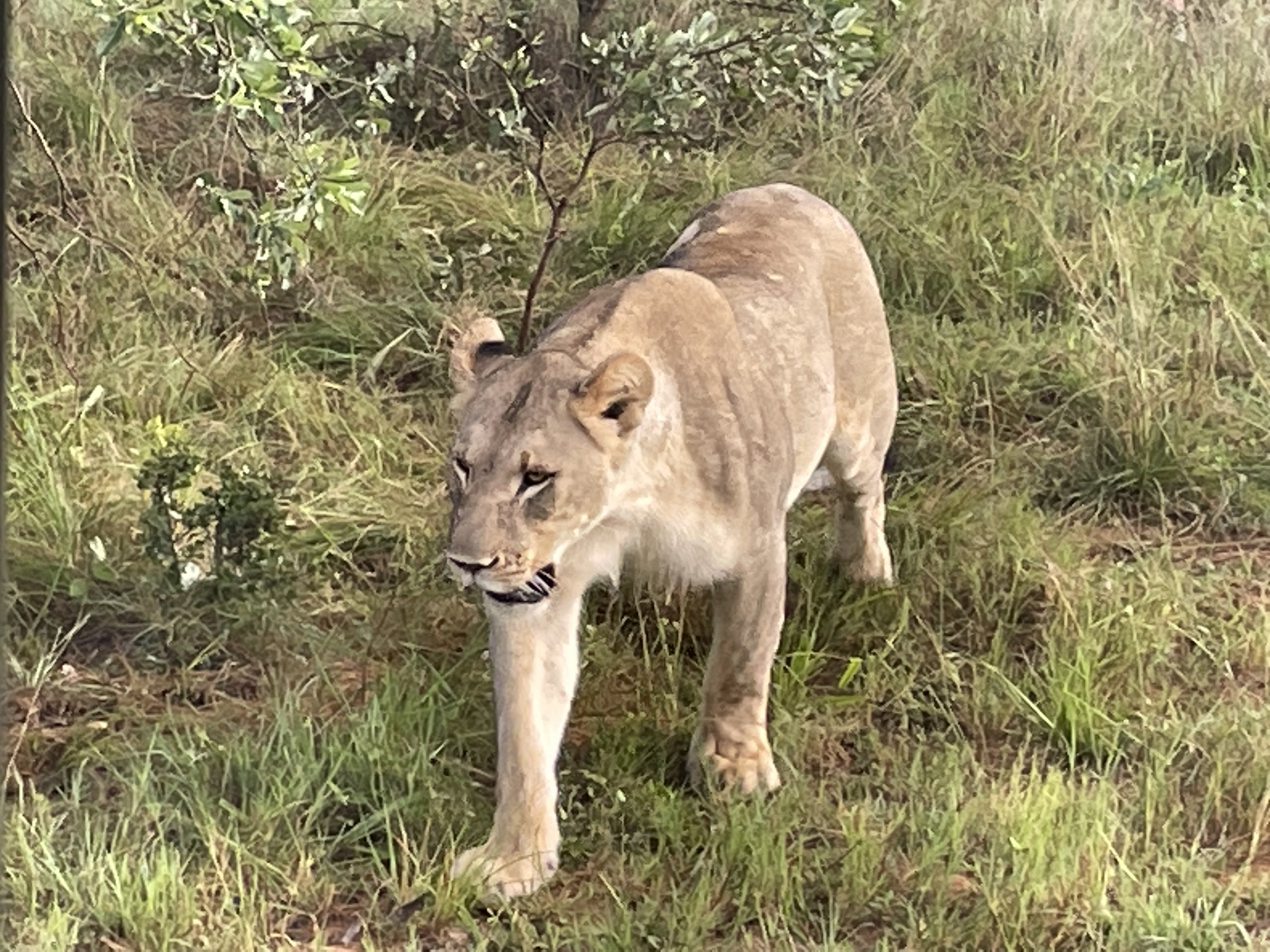
Lions will kill other predators including leopards, cheetahs, hyenas and African wild dogs. They do not eat them as the flesh of other predators is not nutritious. Lion predator kills are purely to remove competitors for food and territory, as well as threats to the lions young. In particular, lions actively kill leopards as leopards kill and eat their cubs.

This is my video of this lioness kill:
Lionesses are known to be excellent mothers and will go to great lengths to ensure the survival of their cubs. Lion mating is polygamous and takes place all year round. The dominant male will copulate with multiple females within his pride. Lionesses are receptive to mating for three or four days within their variable reproductive cycle and during this time they will mate frequently, up to fifty times per day. Female lions have the ultimate say in deciding which lion they will reproduce with. Lionesses observe the males carefully, accessing their physical condition, strength, and overall fitness, before committing to a partnership. Lionesses are also not monogamous and can mate with multiple lions during their estrous cycle, although it has been observed that approximately two-thirds of these mating events occur with the primary male, with the remaining third being distributed among multiple males from the peripheral coalitions of that primary male. This means that a single litter can have cubs from different fathers. Lionesses in the same pride often breed around the same time and the resultant cubs are raised together.
My video of lions mating:
Lionesses are pregnant for 105 to 112 days, during which time her belly will grow larger, and her nipples will enlarge and darken. Just before giving birth, the lioness will begin to look for a safe and secure place to give birth. Once she has found a suitable spot that is hidden from predators and close to water, she will start to build a den using grass and other materials. The actual birth is relatively quick, approximately 1 hour, and between two and four is the usual number for a litter.
The cubs are born blind and helpless and rely on their mothers to protect and care for them. During the first few weeks of their lives, the cubs feed on their mother’s milk and she only leaves them for short periods to hunt.
My video of lion clubs:
Last month I said that male lions commit infanticide and can kill the cubs of other males. Given that lionesses are fiercely protective of their cubs, why do they not defend their cubs from lions? The answer is simply that male lions are much bigger and more aggressive than lionesses. Challenging a male lion is risky for a lioness as it could lead to the serious injury or death of the lioness, as a result, in this situation the lioness will prioritise her own survival and the wellbeing of the rest of the pride over the survival of her cubs.
If you are interested in seeing more of my photographs, videos and artworks relating to Cats, please enjoy this stunning post created by the talented Resa McConaghy. Resa and I share a love for wildlife and a passion for conservation.
Lion Lust by Robbie Cheadle
Sidling up beside her
He strokes her shoulder
In a gesture of affection for his mate
He quickly mounts her
For the eighteenth time
***
She walks quickly away
He meekly follows
Lying down face-to-face in her chosen spot
A short period of rest
Before the next round
***
They will stay together
For twenty-four hours
Mating every twenty to thirty minutes
Despite his high demands
She lovingly purrs
This poem is from my book Lion Scream, Syllabic Poetry About Southern African Wildlife.
About Roberta Eaton Cheadle
Award-winning, bestselling author, Roberta Eaton Cheadle, is a South African writer and poet specialising in historical, paranormal, and horror novels and short stories. She is an avid reader in these genres and her writing has been influenced by famous authors including Bram Stoker, Edgar Allan Poe, Amor Towles, Stephen Crane, Enrich Maria Remarque, George Orwell, Stephen King, and Colleen McCullough.
Roberta has two published novels and has horror, paranormal, and fantasy short stories included in several anthologies. She is also a contributor to the Ask the Authors 2022 (WordCrafter Writing Reference series).
Roberta also has thirteen children’s books and two poetry books published under the name of Robbie Cheadle, and has poems and short stories featured in several anthologies under this name.
Roberta’s blog features discussions about classic books, book reviews, poetry, and photography. https://roberta-writes.com/.
Find Roberta Eaton Cheadle
Blog: https://wordpress.com/view/robertawrites235681907.wordpress.com
Twitter: https://twitter.com/RobertaEaton17
Facebook: https://www.facebook.com/robertawrites
Amazon: https://www.amazon.com/Roberta-Eaton-Cheadle/e/B08RSNJQZ5
_____________________________________________________________________________________________
Want to be sure not to miss any of Robbie’s “In Touch With Nature” segments? Subscribe to Writing to be Read for e-mail notifications whenever new content is posted or follow WtbR on WordPress. If you found it interesting or entertaining, please share.
Share this:

In Touch With Nature – The vulnerable life of male lions #wildlife #lions
Posted: February 28, 2024 Filed under: Animals, In Touch With Nature, Poetry, Wildlife | Tags: Animals, In Touch With Nature, Lions, Robbie Cheadle, South Africa, Wildlife, Writing to be Read 74 CommentsLions live in groups called prides. Each pride is comprised of related lionesses and one or more adult male lions will also be present with the dominant male being the pride leader. Female lionesses are loyal to their pride and not to their family members, and this often means that they don’t keep related males in their pride.
Male lion cubs are frequent victims of snake bits, hunting hyenas, and male lions that aren’t their father or uncle. One in two male lion cubs will die in their first year of life. The greatest single cause of male lion mortality in the first year of life is infanticide by unrelated male lions.

At approximately three years of age, male lions are pushed out of their pride by their fathers. Alternatively, they may be forced to leave the pride when a new coalition of male lions takes over the pride. For a period of two or three years after leaving their prides, young male lions wander on their own, trying to avoid confrontation with older, stronger male lions. Frequently, single males find other males of a similar age and join them to form a coalition. Coalitions typically comprise of two to four male lions and are often made up of brothers or cousins although some include unrelated males. The main purpose for male lions forming coalitions is to compete with other male lions for mates.
When the males in a coalition reach four to five years of age, they will challenge other male coalitions for access to a pride of lionesses. When a new coalition takes over a pride, the new males seek out and kill the cubs of other males or drive them away. The purpose of the killing of cubs is to accelerate the return of the lionesses to a reproductive state thereby allowing the new males to raise their own cubs. The dominant male or pride leader generally gets first mating rights but lionesses do mate with other pride males. The lesser males usually get their opportunity when several females are in heat at the same time and if the dominant male losses interest while the lionesses are still in heat.


The dominant male is usually the largest, strongest male lion. Dominant males usually only retain that position for a few years and then they are challenged by a younger male or an outside coalition. During their time as pride leader, the male is responsible for defending the females and their cubs from predators such as hyenas.
When a battle for leadership takes place within an existing pride, the battle is usually fierce but not deadly. If an outside coalition challenges the leader, the battle will be to the death.
Brothers, a 99-sylable Double Ennead poem by Robbie Cheadle

Dry, yellow grass stretches
To the horizon
Just there, under a scrub tree, lie two brothers
Within slumbers embrace
They soak up the sun
***
The colour of ripe wheat
They blend with the bush
Male lions resting peacefully
Enjoying blissful dreams
Concerning fat buck
***
One starts gently stirring
Rolls over and sighs
His underbelly unintimidating
But then he yawns widely
Showing great long teeth
This poem is included in Lion Scream, Syllabic Poetry About Southern African Wildlife
Lion brothers walking on the road:
About Roberta Eaton Cheadle
Award-winning, bestselling author, Roberta Eaton Cheadle, is a South African writer and poet specialising in historical, paranormal, and horror novels and short stories. She is an avid reader in these genres and her writing has been influenced by famous authors including Bram Stoker, Edgar Allan Poe, Amor Towles, Stephen Crane, Enrich Maria Remarque, George Orwell, Stephen King, and Colleen McCullough.
Roberta has two published novels and has horror, paranormal, and fantasy short stories included in several anthologies. She is also a contributor to the Ask the Authors 2022 (WordCrafter Writing Reference series).
Roberta also has thirteen children’s books and two poetry books published under the name of Robbie Cheadle, and has poems and short stories featured in several anthologies under this name.
Roberta’s blog features discussions about classic books, book reviews, poetry, and photography. https://roberta-writes.com/.
Find Roberta Eaton Cheadle
Blog: https://wordpress.com/view/robertawrites235681907.wordpress.com
Twitter: https://twitter.com/RobertaEaton17
Facebook: https://www.facebook.com/robertawrites
Amazon: https://www.amazon.com/Roberta-Eaton-Cheadle/e/B08RSNJQZ5
_____________________________________________________________________________________________
Want to be sure not to miss any of Robbie’s “In Touch With Nature” segments? Subscribe to Writing to be Read for e-mail notifications whenever new content is posted or follow WtbR on WordPress. If you found it interesting or entertaining, please share.