Chatting with New Blood: David Deane Haskell
Posted: July 20, 2026 Filed under: Book Review, Books, Fiction, Hard Science Fiction, Interview, Nonfiction, Review, Science Fiction, Writing | Tags: Author Interview, Book Review, Chatting with New Blood, David Deane Haskell, Kaye Lynne Booth, The Solarian Deep, Writing to be Read Leave a comment
I’d like to introduce you to the most recent addition to the WordCrafter Press author tribe. David is an independently published author, who has published at four novels, short stories and a memoir. He has recently agreed to be a contributing author for the Ask the Authors 2027 writing reference anthology, which earned him a place on the new WordCrafter Press Author Tribe page, and here, I’ve enjoyed the opportunity to get to know him better.
About Author David Deane Haskell
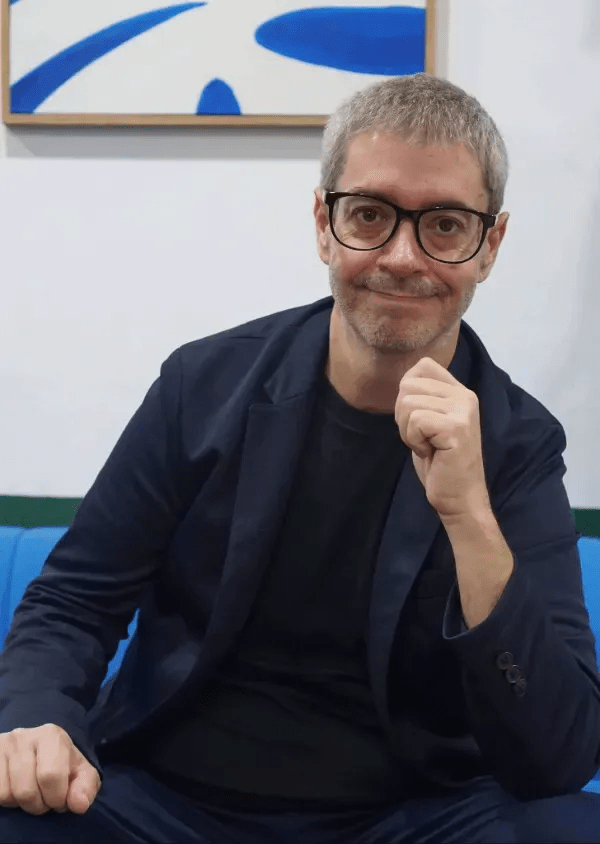
David Deane Haskell writes about what it means to make sense of a world that doesn’t come with instructions—and that none of us make it through unscathed.
His work explores that reckoning—through failure, obsession, and the slow reconstruction of the fractured self. Across speculative fiction, memoir-driven essays, and recovery-centered writing, he returns to outsiders, seekers, and wounded people trying to become whole without abandoning the parts of themselves that helped them survive.
He is drawn to stories of evolution under pressure: societies reshaped by artificial intelligence, people unraveling within systems they don’t understand, and the lonely, wrenching but ultimately beautiful work of learning to listen to the heart.
Blending emotional honesty with speculative reach, his writing moves through technology, spirituality, trauma, and imagination to explore shame, connection, creativity, and the lifelong process of becoming you.
My Interview with David Deane Haskell
Kaye: Let’s start with a bit of backstory. Tell us about your writer’s journey and how you became an author.
David: My writing journey started in a real way in college, when I took a creative writing class. Before that, I always thought that writing was all about the rules, never really imagining that I could write fiction. I figured that was for special, highly trained “novelists.” Instead, I played music, and that was my creative outlet. But I loved books and movies, especially sci-fi. I just never thought that I could tell my own stories.
That creative writing class was very free and open, the teacher a really chill grad student. He was open to whatever creative ideas we might come up with. And I just started writing what I felt like, and sort of aimed to shock the class when it came time to share. I wrote for reaction, which was the first time I did so, and I did get some really interesting feedback. Not everyone in the class liked it, but some did.
And that was the spark.
Then, I didn’t really do much for a while. Publishing seemed beyond daunting. You had to go through all the gatekeepers and face rejection at every turn, all that unappealing nonsense. But the Kindle explosion happened in the early 2010s, and I decided to get in on it, not really thinking that it would become the life passion it has for me.
I published my first full-length novel in 2013, Too Much Information, and three more in short order. Emergence was the last of that early stage, published in 2019.
By then I was going through a lot emotionally and spiritually, contending with trauma and addiction issues which were threatening to ruin my life. That caused a five-year writer’s block from 2019 to 2024. I couldn’t write a thing worth keeping, couldn’t really tell you why, and wondered constantly whether I should just give up.
But I couldn’t.
Finally, right around the new year in 2024, the block ended. Just like when I was blocked, I couldn’t tell you why I wasn’t anymore. I just wasn’t. And I started writing more than ever before. It really was pouring out of me, fiction and nonfiction. Wasn’t how I planned it, but it was a new phase of my career in almost every way.
Since that time I’ve published two books. The Solarian Deep, a first-contact sci-fi about transformation and societal upheaval, set in a post-apocalyptic undersea society known as ‘Technoquatics’. I also published Wounded Angels: A Memoir That Lights the Path to Your Own Inner Child Healing. This is a real-time record of the emotional and spiritual healing work I was in the thick of in the summer of 2024, written as it happened.
Kaye: I read and reviewed The Solarian Deep, which is Book 1 of the Technoquatics series. Tell us about that book and the plan for the series, if you would.
David: The Solarian Deep originally started as a serialized novel. This was early in 2024, when I was just getting back into writing, and wanted to get back in the game quickly. I didn’t want to sit in a room for a few months, write a novel, and publish it like before. I decided to put it out a chapter at a time, for reader feedback and also as a motivational reason to keep writing.
Because I was writing it chapter by chapter, I really didn’t know where it was going to end—and it went all kinds of places that I wasn’t expecting.
It’s a story of transformation and transition, a story of those who underestimate themselves, consider themselves unimportant—but who have more to offer than they ever realized. How a handful of beings can have a profound impact on entire societies.
It also gets into how we get along, dealing with the mysterious other, and how emotions like fear, wonder, confusion, and loyalty play into these actions and reactions.
All of that set in a post-apocalyptic, under-the-sea world with lived-in technology and things that appear magical at first glance, but ultimately turn out to be more natural, more evolutionary, than anyone could have imagined.
The series, I can’t say too much about, because like in first first book The Solarian Deep, I am adjusting as I go. I have started book two and I can tell you that it’s far more expansive. From a small part of the world with two opposing, city-sized societies, book II opens up the world to our characters, and they are now travelers, seeking others who are evolving in mysterious, inexplicable ways. Not just two societies anymore, nor are there just one or two ways the evolution is unfolding. So, I can promise you that the transformations you read about in book I are just the beginning. More will be revealed on that front as the publication date draws closer.
Kaye: I also read Tommytune, which is just a very short story. Are you using that brief tale like a reader magnet? How effective has that been?
David: I didn’t really plan for Tommytune to be a reader magnet. Although on daviddeanehaskell.com you can read it for free, along with one of my novels, Emergence. So you get a whole book, and also the short story, but the reasoning is a bit different.
Because Tommytune is actually the beginning of a brand new series that I’m working on, the Resona series. The Vibrants is Book 1 of that series, and Tommytune is a stand-alone story set in the same place and time, with a couple of the key characters you’ll get to know much better very soon.
Kaye: Why do you choose to write hard techno-science fiction, as opposed to other genres you might write?
David: I never really chose what to write. I was always a sci-fi guy. When I was a kid, I was a Star Wars and Star Trek guy. My reading was Asimov and Arthur C. Clarke and the like. So, I naturally gravitated in that direction.
Michael Crichton is a big influence as well, so the techno-thriller side of things appeals to me. Sometimes I write very near future, or even what could essentially be present day. I don’t really write anything set in the past. The only things I write about the past are my nonfiction works, and that’s just the way it’s turned out.
I’m not saying I would never write some medieval jousting novel or something like that. I just haven’t so far.
When it comes to hard techno-science fiction, I think it has to be plausible for me. I love fantasy. I’m a big Star Wars guy, so I’m into the Force and all of that, but that’s mystical and magical. And I do think I’m starting to lean into spiritual writing in a sense.
But for the most part, if I write science fiction, it needs to be something I can explain in my own head. It needs to feel plausible. So, I don’t write a lot of distant-future stories. I don’t write a lot of faster-than-light travel or alien civilizations.
It’s more about what Earth might look like in 20, 50, or 100 years and what might be going on with us then. Maybe that’s because I’m trying to figure out my own future and what that looks like for all of us. Something along those lines.
Kaye: What is the best writing advice you’ve ever received?
David: I don’t know if I received this as writing advice directly, but I’ve heard it many times, and I’m a big believer in this: There Are No Rules
You can write anything. It’s limitless. Literally limitless.
And yet I do limit myself more than I’d like to. I’ll think, you know, you can’t say that or you can’t do this. And as I said, I don’t really write fantasy too much. But I could. Sure, I could write about a magical world or an absurdly skewed morality structure, maybe. Maybe a universe wher propr spelin gehtzuu da deth pennnalteee.
Or a book where all the various thoughts just sort of wind up…
Only to go off in another direction and then…
It could be abstract. It could be chopped up. It could be scenery-based with very shallow characters, or in-depth character examinations without much of a world around them. Real or unreal, or something in-between. I can change it all in the middle, from real to absurd, or vice-versa. I could edit the beginning and the end and leave the middle in free form (not recommended, perhaps, but I *could* .. heck, that’s a lot of what jazz music winds up looking like when you really come down to it).
I may have coined the phrase “nom-fiction,” nominally fictional, where it’s kind of reality, but not really. It’s my reality, but of course that’s in my head, right? Other people perceive what’s going on differently than I do, so why should that be any different in the writing? What is ‘fiction’ anyway? What is it in a post-truth world? What is it when powerful forces utilize psychological propaganda on the masses?
So yeah. There are no rules. Go from there if you’re feeling creatively stuck, anyway, and it might just break the shackles.
Kaye: Which do you enjoy writing most, heroes or villains? Why?
David: Heroes, actually. Or at least, the protagonist. Although my main characters and their compatriots aren’t so much heroic as defiant. Struggling to make sense of an unfair system or a massive machine they can’t even begin to figure out how to contend with.
The struggle against ‘the powers that be’ is a big theme in my stories. The little guy who’s getting stepped on by the mega-corporation, the odd one out who isn’t allowed to be themselves, as the ‘normal ones’ try to force them to conform, and punish them when they don’t. He sticks it to them in the end. So, it’s not exactly a hero, just one of us, trying to figure out how to get by in this vast, confusing world, with Machiavellian stuff going on that they can’t even wrap their head around. Until something shifts the balance in their favor, and they just might have a chance to make changes after all. But there are powerful forces out there who like things just the way they are, thanks very much, so it’s never as easy as deciding to “stand up for yourself”.
This parallels my own life and past experiences with trauma, being scapegoated, and being an introvert in an extrovert-friendly world, and extends into my attempts at making it as an indie publisher in a rough game which rewards loud, confident voices and bold moves.
I wrote about that directly in my second novel, The Gold Club, which might be a bit of a “David’s Fantasy outcome” story when it comes to how I’d like my work to be received, accepted, and ultimately judged on its own merits, rather than how easily I can manipulate the algorithm on TikTok!
Ted Ward, the main character in that book, does just that. Finds a way to beat the system, or try to at least—and that kind of hero is my kind of hero.
As for the villains, I try to make them real. I don’t really get into the mustache-twirling, “ahaha, I’m a bad guy because I’m a bad guy!” kind of thing. I like to think about their perspectives. Why are they doing what they’re doing?
And that often comes from damage and harm, the same as for the heroes. Hurt people hurt people, as they say.
Again, I write a lot of healing stuff, trauma-related stuff, addiction and recovery, inner-child work, and spiritual healing work on my nonfiction side. So, I think more and more that’s getting integrated into my fiction as well. So, in a sense, especially in my recent books, there isn’t so much a bad guy per se, or if they are, there are reasons. Reasons I hope my readers can really relate to.
There is a lot of that kind of speculation in The Solarian Deep. Even more of it in Tommytune and the full-length novel it comes with, The Vibrants.
Kaye: What kind of research do you do that might be specific to your stories?
David: Well, I’m not sure that I do any specific research per se, but I do like technology a lot. I’m really amazed at the leaps and bounds that technology has taken in my lifetime.
Since I was a kid growing up in the 70s and 80s, through the era of the first personal computers, I’ve been fascinated by it. My dad had a computer, and I was into playing computer games. Later on, I got into software and technology-related interests. It’s always been on the side. I never worked in computers or anything, but I was always interested in robotics and AI.
So, seeing the future unfold in front of us now is a sort of research in itself. I watch those tech YouTube channels all the time, and I’m sure I get ideas from them.
The biggest thing for me now as a sci-fi writer is trying to stay ahead of the wave.
I’ll write something, and then reality catches up. Emergence is a perfect example, the novel that I give away for free on my website. I wrote and published it in 2019, and it’s about robot sentience, or androids if you will. I think I got a lot of things right, and some things wrong. One thing that surprised me was the idea that it might be code, software, or even drones that become more important than physical robotics.
So, my science fiction in 2026 is evolving in that direction.
What fascinates me most is not the technology itself, but how society reacts to it. The rift between people who are concerned about these technologies, people who fully embrace them, and people who fall somewhere in between is endlessly interesting to me.
In that sense, watching companies, governments, and AI organizations interact in real time is research of the highest order. Seeing these dramas play out, the conflicts, the fears, the incentives, the power struggles, that’s absolute gold for my fiction writing.
Kaye: What is the best advice you have for aspiring science fiction authors?
David: The best advice I would give an aspiring sci-fi writer is the same as I mentioned before, the best advice I ever got: there are no rules.
People might argue with that and say you should do it a certain way. You should write to market. You should be careful to edit this way or that. Don’t use slang. Don’t use bad language. Follow this structure. Hit this beat. Avoid this mistake.
But man, if you don’t like periods and commas, then leave them out. See how it goes.
If everybody who reads it says it bothers them, then it’s up to you whether you keep writing that way. But if some people say, “Wow, this is really revolutionary. I love reading stuff without periods and commas,” then you’ve really done something, haven’t you?
I’m not brave enough to go that far in my own writing, at least not yet. But I do hope that I’ll become more outside the box rather than less as I go along.
Kaye: You also have written a memoir, Wounded Angels. Would you like to tell us a little about that?
David: Wounded Angels is very dear to me, and it was difficult to publish because it was an extreme act of vulnerability to put something so personal out into the world.
I do think it’s an important book for people who are struggling with trauma, abuse, addiction, rejection, isolation, and many of the other challenges that can leave us feeling disconnected from ourselves and others. All of that is in the book.
It also circles back to my fiction writing in a very deep way because I believe that, both personally and as a society, we need to learn how to heal. We need to learn how to take better care of ourselves, how to get well, so that we can help each other and show up more fully for the people around us. And when more people begin that process, maybe things start to improve.
But it starts with one person.
I’ve always found inspiration in people who have overcome great difficulty, and hopefully the emotional trauma that I am working hard to overcome can inspire others to start looking at their own struggles and finding their own path forward.
That’s what Wounded Angels is all about.
Kaye: Thank you for being my guest today, David. It’s been a pleasure chatting with you. Before we go, tell us where readers can go to find out more about you and your books.
David: Thank you so very much for allowing me the opportunity to sit for this interview with you. It’s so important to connect in this way, and I am really grateful for your efforts in our community!
You can find me easily on my website, daviddeanehaskell.com – with links to all my online activities, my Amazon author page, and my Substack fiction short stories and nonfiction essays (all free!) right there on my website. I also offer free stories there, including a full-length sci-fi novel you can download and keep forever.
Podcast interviews, essays, and other work are easy to find if you Google “David Deane Haskell,” but make sure you include my middle name. There is another David Haskell out there — David George Haskell — who is a Pulitzer Prize–finalist biologist and nature writer. So if you search only “David Haskell,” you may find him first. For my fiction and inner-child healing work, search my full name: David Deane Haskell.
All of my books are also available on Amazon in paperback, ebook, and other formats. And if you have Kindle Unlimited, several of my books are available there as well, including Too Much Information, The Gold Club, Dark Alignment, and of course, The Solarian Deep.
My Reveiw of The Solarian Deep
I received a free digital copy of the Solarian Deep, by David Deane Haskell from the author in exchange for an honest review. All opinions stated here are my own.
Calistya and Krystal are best friends at the school for orphaned girls, but the administration feels Krystal, who has a history of trouble, will be a bad influence on Calistya, who has a promising future ahead of her; one which would not normally be available to under privileged orphan girls. They might be surprised to know that it’s Calistya taking the lead and leading her friend into the forbidden Deep, where she discovers an aquatic boy who shouldn’t exist, but does. Even after the girls are separated, Calistya is driven to continue her forbidden forays to find the mysterious boy, until she suddenly disappears beneath the ocean floor.
When Krystal goes missing, as well, the whole community falls out in search of the missing girls, which are not the first disappearances of this kind. It seems the answers to what’s happening now, lie in the events of the past, which no one can seem to remember. When the mysterious aquatic boy shows up in the city, wrecking havoc wherever he goes, it brings the two communities to the brink of war.
The technologically advanced, aquatic world, built post-human-civilization-collapse, which Haskell has created is rich with both human and aquatic creatures, once thought to be mythical. Both civilizations are fearful of the other, but through the actions of two girls and a merboy, they discover perhaps they aren’t so different after all.
Haskell has envisioned a wonderful world and brought it to life with vivid clarity. I give Solarian Deep four quills.

About Solarian Deep
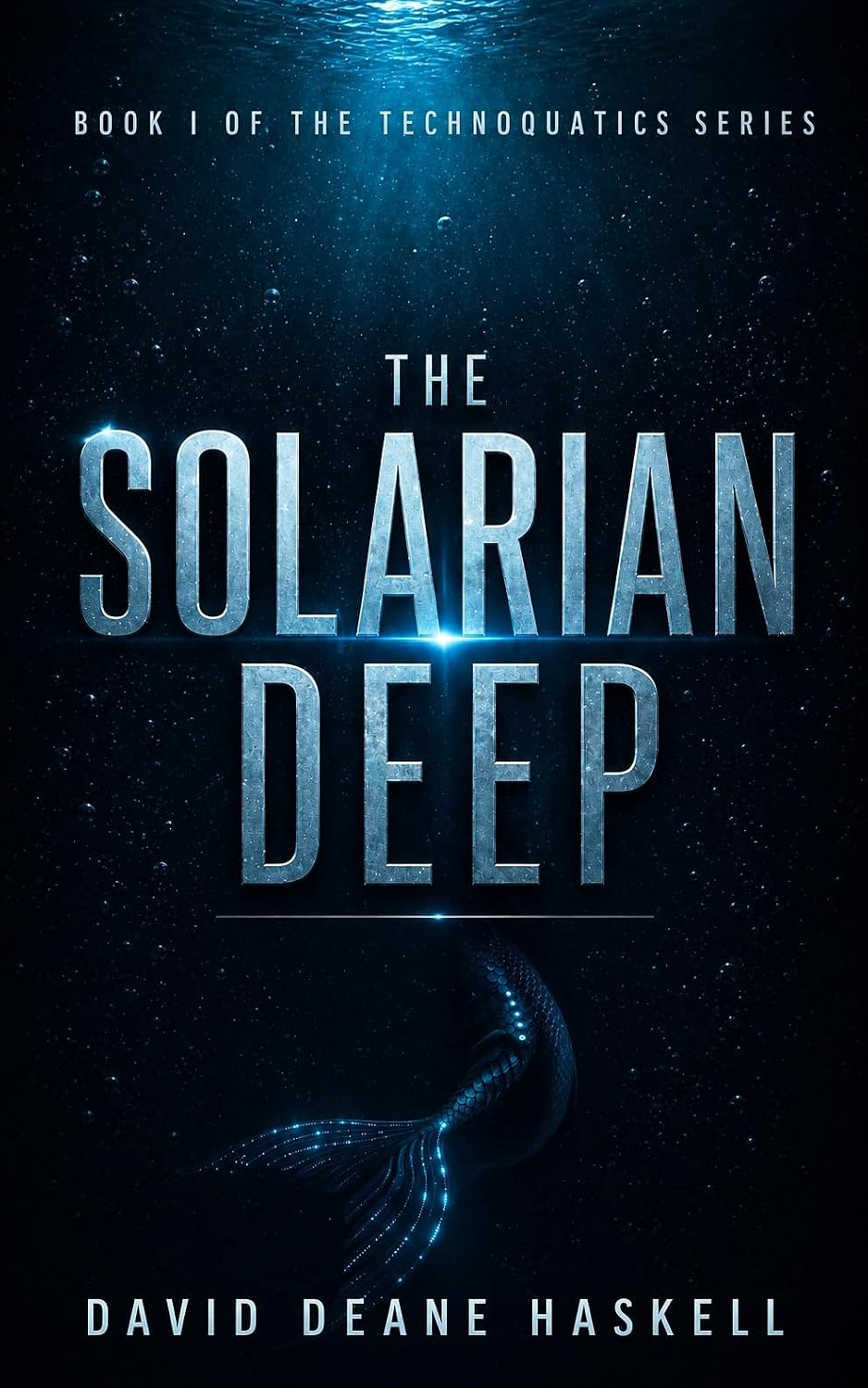
Humanity didn’t flee to the ocean. It was built for it.
Calistya is a groundwalker — half-adapted, half-committed, priced out of the Full-Gill Enhancement that would make her whole. No gear, no limits, no more being told she swims like she doesn’t belong. Just the open ocean, endless and free.
She can’t afford it. She’s an orphan. That’s just life.
Until the day she dives too close to The Deep.
Below the city’s light, at the edge of the abyss where sentinels don’t go, she sees a boy. No oxygen rig. No surgical scars. No implants. Just skin, and something about him that shouldn’t be possible.
He shouldn’t exist.
He looks at her once. Then he’s gone.
When her best friend Khrystal vanishes into the abyss chasing the same impossible truth, Calistya faces a choice: stay safe inside a city that was never quite home — or dive deeper than her gear was ever designed to reach.
Down in the dark, she’ll discover that evolution didn’t wait for surgery.
And whatever came first is still down there. Watching.
Purchase Link: https://www.amazon.com/Solarian-Deep-Book-Technoquatics-ebook/dp/B0GPN8DBJS/
_________________________________________
Did you know you can sponsor your favorite blog series or even a single post with an advertisement for your book? Stop by the WtbR Sponsor Page and let me advertise your book, or you can make a donation to Writing to be Read for as little as a cup of coffee, If you’d like to show your support for this author and WordCrafter Press.
_________________________________________
This segment of “Chatting with New Blood” is sponsored by the My Backyard Friends Kid’s Book Series and WordCrafter Press.
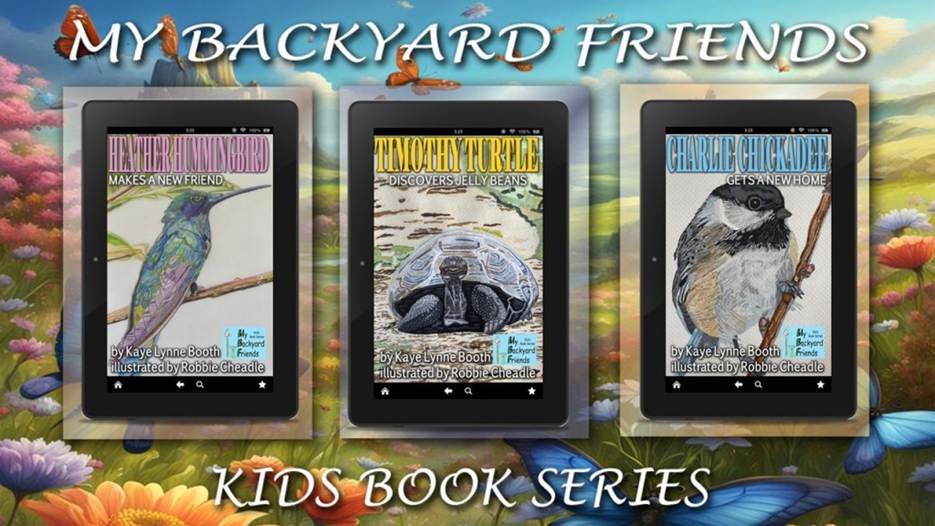
The My Backyard Friends kid’s book series is inspired by the birds and animals that visit the author Kaye Lynne Booth’s mountain home. Beautiful illustrations by children’s author, poet, and illustrator, Robbie Cheadle, bring the unique voices of the animal characters to life.
Get Your Copy Now.
Heather Hummingbird Makes a New Friend (Ages 3-5): https://books2read.com/MBF-HeatherHummingbird
Timothy Turtle Discovers Jellybeans (Ages 3-5): https://books2read.com/MBF-TimothyTurtle
Charlie Chickadee Gets a New Home (Ages 6-8): https://books2read.com/MBF-CharlieChickadee
Discover more from Writing to be Read
Subscribe to get the latest posts sent to your email.



















