Chatting with New Blood: Author Thomas M. Jacobson
Posted: January 19, 2026 Filed under: Book Review, Books, Chatting with New Blood, Interview, Memoir, Nonfiction, Review | Tags: Book Review, Chatting with New Blood, Interview, Kaye Lynne Booth, Memoir, Thomas M. Jacobson, Underdog: Against All Odds, Writing to be Read 12 Comments
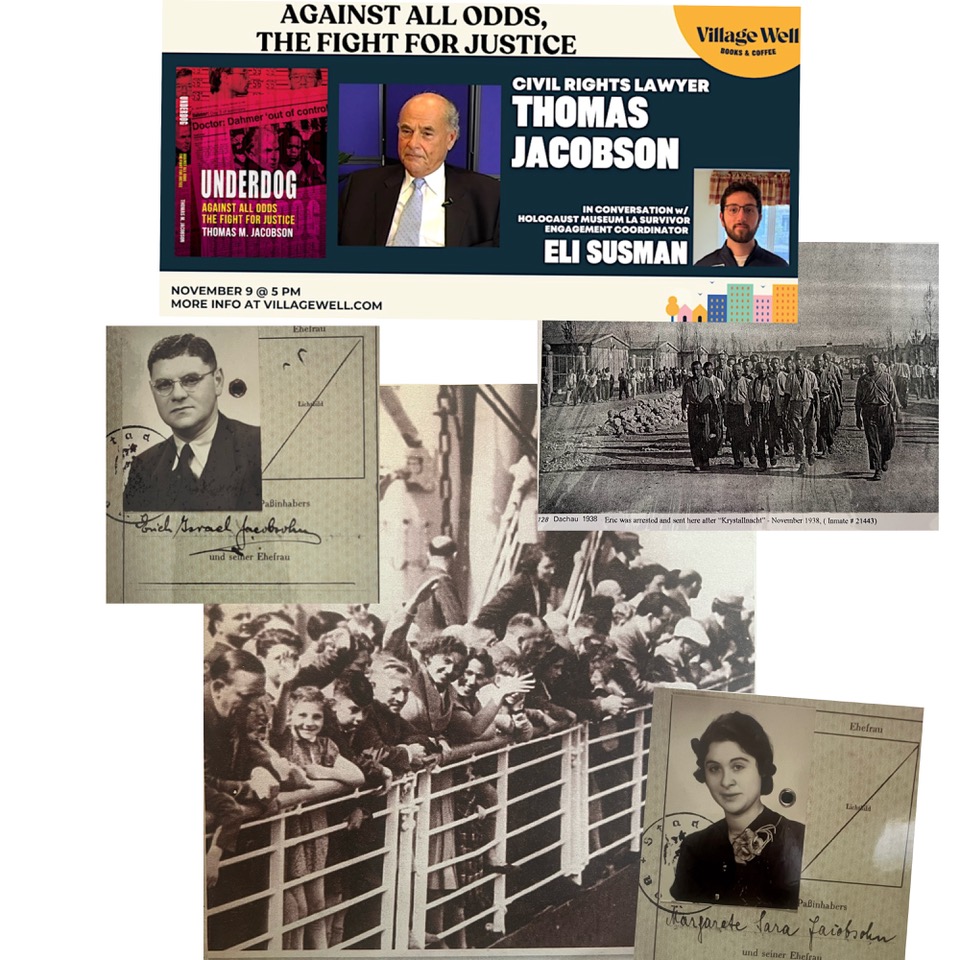
My guest today is a holocaust survivor, the youngest surviving passenger on the MS St. Louis, who grew up to be a successful civil rights attorney, representing civil rights activists in Milwaukee in the 1960s through the end of the twentieth century. and he was the attorney who sued and obtained half a million dollars for the families of the victims of the serial killer, Jeffrey Dahmer. He seems to find ways to think outside the box and make change happen, even in stagnant times. He has written a fascinating book, Underdog: Against All Odds, which relates his story, including a thrilling deposition with Dahmer in the Columbia Correctional Institution.
About Author Thomas M. Jacobson
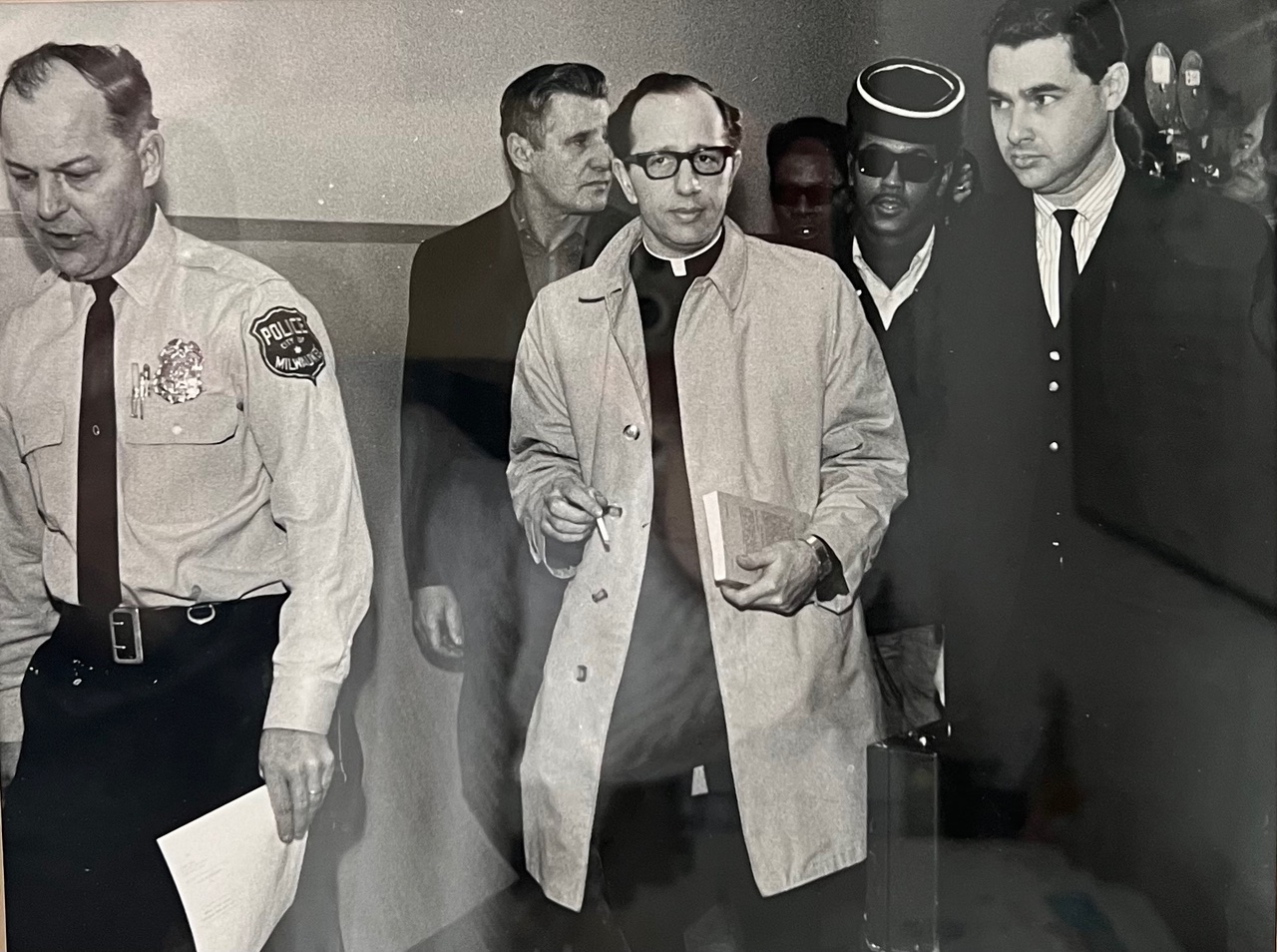
Thomas M. Jacobson, born May 8, 1938, in Bamberg, Germany, escaped Hitler, coming to America on the harrowing MS St. Louis voyage one year later. He graduated from UW Madison Law School in 1962, partnering with Lloyd Barbee to start the first integrated law firm in Milwaukee. Jacobson represented all the Milwaukee civil rights movers and shakers over the next thirty years, including Father James Groppi, the Daniel Bell family, comedian/human rights activist Dick Gregory, and Alderperson/Black Panther Commander Michael McGee. He successfully argued two cases in the U.S. Supreme Court, overturning Wisconsin’s Garnishment before Judgment and Change of Venue laws. In 1970, Jacobson was the Democratic candidate for Wisconsin Attorney General. In the late 1970s, he served as the Chairperson of the Wisconsin Public Defender’s office. Jacobson represented eight families of the victims of the world’s worst serial murderer, Jeffrey Dahmer, suing and successfully obtaining one-half million dollars for eleven victim families.
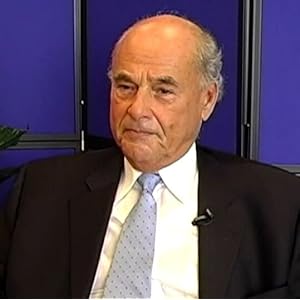
My Interview with Thomas
Kaye: Would you begin by telling us about your author’s journey? What inspired you to write a book about your experience?
Tom: My path to becoming an author wasn’t planned, but grew out of a life shaped by story and consequence. I was a child refugee, one of the youngest surviving passengers on the MS St. Louis, turned away from safety, and that early experience of injustice stayed with me long after I built a career as a civil rights lawyer. For decades, I focused on advocacy rather than authorship. A memoir wasn’t on my agenda. But over time, I realized that the arc of my life, from refugee to advocate, was itself a narrative worth preserving.
I wrote Underdog, Against All Odds, The Fight For Justice, because stories can carry truth in a way arguments alone cannot. As fewer firsthand witnesses remain, personal testimony becomes essential. I hoped to show how lived experience can inform a lifelong commitment to justice, how writing can serve as another form of resistance, remembrance, and standing up for democracy.
Kaye: When approaching the writing of the book, what’s the best piece of writing advice you were given?
Tom: As a lawyer, I was trained to persuade and to control the narrative. Writing a memoir required me to unlearn some of that, to slow down, to sit with uncertainty, and to trust the reader. Once I stopped trying to justify every decision and focused instead on bearing witness, the story found its voice. That advice shaped the entire book. It reminded me that a memoir isn’t about winning an argument, it’s about offering an honest account and letting the truth do the work. The best advice was to write what you know to be true, even when it’s uncomfortable. Honesty, intellectual and moral, is what gives writing its power and authority.
Kaye: Underdog has three different themes, each representing a different time in your life. Can you talk a little bit about each one?
Tom: The opening of Underdog focuses on childhood survival. As a young refugee, life was defined by forces beyond my control: The Nazi government’s atrocities against my family and the indifference of people to this injustice. This theme centers on vulnerability, displacement, the moral consequences and decisions of others, and what it means to begin life with no voice and no leverage or power to resist.
The middle of the book marks the transition from survival to resistance. This period of my life is about education, self-definition, and the decision to fight back using intellect rather than force. Law becomes the weapon that replaces the power that I never had. This theme is learning how institutions work, how they fail, and how an underdog can still challenge them.
The final theme centers on adulthood and professional life, when I finally had standing in the courtroom and a measure of authority. This part of Underdog addresses moral responsibility, representing the powerless, pursuing justice even when it’s unpopular, and recognizing that winning a case is not the same as standing up for justice.
Together, these three themes trace a life that moves from powerlessness to agency to accountability, the journey of an underdog who never forgot what it was like to have nothing.
Kaye: What happened after immigrating to the U.S. that led you to be a civil rights attorney later in life?
Tom: After immigrating to the U.S., I learned that power could be challenged through law. As a child refugee, authority had meant danger or indifference. In America, I saw that, slowly and imperfectly, the law could be used to protect the vulnerable rather than crush them.
I was drawn to civil rights law because the Holocaust taught me to fight and to resist was the only path to justice and survival. I understood what it meant to be excluded, unheard, and disposable. Education gave me a voice, and the law gave me standing to confront injustice. Becoming a civil rights lawyer wasn’t a career choice so much as a continuation of survival, resilience, and insistence that the system live up to all that the U.S. Constitution guaranteed its citizens: life, liberty, and the pursuit of happiness.
Kaye: Do you view Underdog as a way to raise awareness about civil rights?
Tom: While Underdog is not primarily an advocacy book, it inevitably raises awareness about civil rights. The story shows how rights are lost long before they are violated through indifference, silence, and the normalization of exclusion. By tracing my life from refugee to civil rights lawyer, the book invites readers to see civil rights not as abstract ideals, but as lived experiences with real human consequences. If Underdog encourages readers to recognize that injustice can be challenged through resistance, strength, and perseverance, then it has accomplished one of the messages I want to send.
Kaye: What are some of the major events represented in Underdog?
Tom: My family’s escape from Nazi Germany in 1939, Hitler’s ascension to power in 1933, the Nuremberg laws, Krystallnacht, my father’s incarceration in the Dachau concentration camp, the failed voyage of the MS St. Louis, the commencement of the 1960s civil rights struggle in Milwaukee with the murder of Daniel Bell, a young Black man shot in the back of the head by a white police officer, and the planting of a knife to falsely create a self-defense cover-up by the cities entire law enforcement agencies, the struggles for a fair housing bill in Milwaukee by Father James Groppi and Alderperson Vel Phillips, Lloyd Barbee’s lawsuit finding defacto segregation in Milwaukee public schools unconstitutional, my suing successfully the City of Milwaukee on behalf of the Daniel Bell family twenty years after his murder, my lawsuits finding Wisconsin’s Change of Venue and Garnishment before Judgement laws unconstitutional in the U.S. Supreme Court, and my deposition of the world’s worst serial murderer, Jeffrey Dahmer, leading to eleven victim families receiving a half million dollars.
Kaye: What is the most important message or messages which you hope to bring to your readers?
I want readers to understand that what happened to refugees like those on the St. Louis was not inevitable, but the result of a choice, indifference, silence, and lack of courage. The most important message is that justice is never automatic. Survival exists only when you are willing to fight. Your rights exist only when you are willing to defend them, especially for those in the minority, the unpopular, the powerless, and those easy to ignore and exploit. One life, fully lived, can push history. You don’t need power to matter. You need persistence, guts, and moral resolve.
Kaye: What advice would you give to another with a message to get across?
Tom: Know your audience. Lead with the key point. Use simple language and be clear and concise. Use empathy and perspective. Leave the reader with a call to action, telling them what you want them to do, think, or feel.
Kaye: What are some of the challenges that you faced in writing this book?
Tom: Writing Underdog was one of the most intense experiences of my life. Revisiting memories of trauma, injustice, and loss was emotionally exhausting, yet necessary to tell the story honestly. I faced the challenge of balancing truth with readability, ensuring the legal cases, civil rights battles, and personal experiences were accurate, yet engaging. Deciding what to include and what to leave out was difficult because every memory felt significant, and I had to confront my own perspective honestly—translating complex legal and historical events in a way that anyone could understand, while keeping the narrative cohesive required careful editing. Writing about real people and sensitive events also required courage, knowing it might draw scrutiny, but I believed the story was important enough to write.
About Underdog: Against All Odds, the Fight for Justice

UNDERDOG is the memoir of one of the youngest passengers on the MS St. Louis, escaping Nazi Germany to Holland and eventually settling in Milwaukee, Wisconsin. Against All Odds, Fighting for Justice is the story of a human rights lawyer representing all the prominent civil rights leaders in Milwaukee during the 1960s and decades thereafter.
The world’s worst serial murderer, Jeffrey Dahmer, writing from Columbia Correctional Institution on February 4, 1994, had this to say about Thomas Jacobson’s efforts to make him pay for his gruesome slaughter of seventeen victims.
Purchase Link: https://www.amazon.com/Underdog-Against-Odds-Fight-Justice/dp/B0DV45SFC2
My Review of Underdog: Against All Odds, the Fight for Justice
I received a print copy of Underdog: Against All Odds from author Thomas M. Jacobson in exchange for an honest review. All opinions stated here are my own.
As the youngest passenger on the MS St. Louise as a fleeing refugee from the brutal Nazi regime of Adolf Hitler, it came as no surprise that Thomas M. Jacobson, grew up and took a profession where he defended the underdogs of the U.S. Defender of civil rights and protector of those scorned unfairly, he has made some huge strides in bringing equality and fairness in the U.S. from one of the most prejudiced cities in America. He managed to bring some semblance of compensation to the families of the victims of serial killer Jeffrey Dahmer when many refused to see them as victims at all. His accomplishments are huge. His methods may be a bit unorthodox, but they produced successful results.
I have to admit that at times, reading about writs and filings, and court proceedings can be a bit dry, but the methods he used and the ways he managed to get around the obstacles adversaries set in front of him are fascinating, and I couldn’t wait to learn how he triumphed. Often, his triumphs were small and didn’t result in immediately noticeable changes, because change moves slowly, especially when pushed by the heavy wheels of justice. Scorned by many in his own life, as bigoted people opposed him for his stance on civil rights, justice and fairness and his efforts to undo biased laws to ensure the fair treatment of his clients in the extremely biased city of Milwaukee, Wisconsin, Jacobson stopped at nothing in pursuit of a favorable verdict, making him a formidable force to feared by those who opposed him.
Although I don’t agree with all of Jacobson’s opinions, I do admire his determination and tenacity to fight for what he believes in. Underdog is a well written, gripping struggle for justice for the weak and disadvantaged. I give it four quills.

More About Thomas M. Jacobson
Underdog Press Clippings
State Bar of Wisconsin YouTube
Phoenix Holocaust Museum Interview
https://drive.google.com/file/d/1uZd3Knv3rR_rSTU_EIhiWcwyJja8W359/view?usp=sharing
The Daily Cardinal
The Milwaukee Community Journal
The CapTimes
LA Holocaust Museum
https://www.holocaustmuseumla.org/event-details/underdog-against-all-odds-the-fight-for-justice
92.7 WMDX
https://civicmedia.us/shows/whats-going-on/2025/07/01/jeffrey-dahmer-attorney-thomas-jacobsons-role
Village Well Book Talk
https://villagewell.com/events/3642720251109
About Author Kaye Lynne Booth

For Kaye Lynne Booth, writing is a passion. Kaye Lynne is an author with published short fiction and poetry, both online and in print, including her short story collection, Last Call and Other Short Fiction; and her paranormal mystery novella, Hidden Secrets; Books 1 & 2 of her Women in the West adventure series, Delilah and Sarah, and book 1 in her Time-Travel Adventure series, The Rock Star & The Outlaw, as well as her poetry collection, Small Wonders and The D.I.Y. Author writing resource.
Kaye holds a dual M.F.A. degree in Creative Writing with emphasis in genre fiction and screenwriting, and an M.A. in publishing. Kaye Lynne is the founder of WordCrafter Quality Writing & Author Services and WordCrafter Press, where she edits and publishes two short fiction anthologies and one poetry anthology every year amidst her many writing projects. She also maintains an authors’ blog and website, Writing to be Read, where she publishes content of interest in the literary world.
___________________________________________
Did you know you can sponsor your favorite blog series or even a single post with an advertisement for your book? Stop by the WtbR Sponsor Page and let me advertise your book, or you can make a donation to Writing to be Read for as little as a cup of coffee, If you’d like to show your support for this author and WordCrafter Press.
__________________________________
This post sponsored by WordCrafter Quality Writing & Author Services.

Whether it’s editing, publishing, or promotion that you need,WordCrafter Quality Writing & Author Services can help at a price you can afford.
Stop by and see what we have to offer today: https://writingtoberead.com/readings-for-writers/wordcrafter-quality-writing-author-services/
Discover more from Writing to be Read
Subscribe to get the latest posts sent to your email.




















Kayes review of my memoir is right on. Thank you.
LikeLiked by 1 person
I will be available for comment or questions at noon Pacific time today.
LikeLiked by 1 person
Thanks, Thomas, for being my guest today. I’m glad you liked the review. Just pop in and respond to comments whenever it’s convenient for you. Hopefully, there will be some for you to respond to. 🙂
LikeLike
I will be checking in for comments or questions after 3:00 pm Pacific.
LikeLiked by 1 person
I’d appreciate if you would post your review on the Underdog, Amazon and Goodreads, website . Thanks again, Kaye.
LikeLiked by 1 person
All my reviews end up there eventually. No.problem.
Sorry there was not more response, but blogs are more long term responses than immediate. You actually had quite a few views. Its the nature of the medium. This content is evergreen.
LikeLike
Hi Kaye, I enjoyed your interview with Thomas M. Jacobson. His story sounds very interesting. I’ve read many books written by Holocaust survivors. I agree with his statement that “writing can serve as another form of resistance, remembrance, and standing up for democracy.” When the last survivor passes on, we won’t have anymore first-person accounts of the Holocaust. It will be up to their descendents to write what they recall from their relative’s stories. I also like how Thomas organized his book into three themes. That’s an excellent method to tell a story about your life.
I’d like to ask Thomas if the St. Louis was the ship that was turned away and prevented from landing in the U. S.?
LikeLike
Thanks Kay, for your kind comments about the book.
Yes, the MS St. Louis is the ship turned away from Cuba, the U..S. and Canada, with 937 Jewish passengers aboard, escaping Nazi Germany in 1939.
The St.Louis chapter of Underdog includes a letter from my mother to our sponsor, Fanny Ostermann, describing the ordeal in detail.
LikeLike
Thanks, Thomas. I added your book to my reading list.
LikeLiked by 1 person
Thank you Kay for adding my book to your creading list.
LikeLiked by 2 people
Thanks again Kayelynne, for the exposure with your excellent interview questions and my responses posted to your blog.
I appreciate your reading the book and posting your kind review.
LikeLiked by 1 person
Glad to help. The book is captivating at times. I enjoyed sharing your story. Best of luck to you.
And thanks again, for being my guest. 🙂
LikeLike