In Touch With Nature – Meet Pumbaa the Warthog and a treat #southernafricanwildlife #intouchwithnature
Posted: October 22, 2025 Filed under: Africa, Animals, In Touch With Nature, Nature, Nature writing, Poetry, Wildlife | Tags: In Touch With Nature, Photography, Poetry, Robbie Cheadle, South Africa, Warthogs, White Giraffe, Wildlife, Writing to be Read 40 Comments
Disney was as kind to warthog’s as it was unkind to hyenas in its movie, The Lion King. Pumbaa the Warthog is a well-known Southern African cartoon figure among many people, young and old. This is intriguing to me as warthogs, together with poor unloved hyenas, are both part of the Southern African ‘Ugly Five’ group of animals.
I always laugh when I see warthogs running about in the veld. I immediately think of ‘pigs in blankets’ and they are definitely ‘bush snacks’ for many carnivores. So, let’s learn a bit more about these funny looking creatures.
Warthogs are day animals and spend most of their time foraging for food. Socially, they are found in three groups: solitary boars, bachelor groups, and matriarchal groups which consist of adult sows with their young and yearlings. Outside of mating, the boars seldom associate with the sows and play no role in rearing the piglets. Did I mention that warthogs are a member of the pig family? Warthogs are the only pigs that have adapted to living and grazing in savannah like habitats.
A few interesting features of warthogs are that they kneel on their front knees while feeding and foraging and they shelter in (frequently borrowed) burrows at night which they enter tails first. Although they like more dry surroundings, warthogs enjoy wallowing in muddy water every day. This wallowing process is how they stay cool on hot days in the same manner as elephants and buffalo.

Warthogs tend to breed and give birth at the beginning of the rainy season in regions where the seasons are defined. In other environments, warthogs can breed all year around. Warthogs generally have two to three piglets in a litter.

Although I said these creatures are bush snacks for lions, leopards, cheetahs, hyenas and painted dogs, they have longer legs than most pigs and can run very quickly. They are difficult to catch and also difficult to photograph.
Interesting warthog facts
- Warthogs have two pairs of tusks
- Warthogs trot with their tails in the air
- Warthogs can run up to 55 kilometres per hour (35 miles per hour)
- Warthogs fight in a ritualistic way and use their heads and tusks to try to push their opponent over.
- Warthogs have warts on their faces which act as a cushion for blows from their adversaries. Large warts also help protect their eyes during fights.
- A group of female warthogs with young is called a sounder
- Mama warthogs like orderly behaviour and the piglets always run in a fixed order in a line and not in a disorderly group.
- Warthogs are attentive mothers; they leave the sounder when about to give birth and find their own burrow or hole. Mama remains in this hole with her young for the first six to seven weeks after birth, only leaving for short periods to graze.
- Warthogs are hunted for their tusks which are carved for the tourist trade in eastern and southern Africa (don’t buy these!)
- Warthogs communicate using a variety of different noises including loud grunts, growling and squeals. Clacking noises are used by males to entice females.


My Youtube video of a sounder having breakfast:
Poem about warthogs
This poem is extracted from my favourite of my own books, Lion Scream.
Home Thief
I am not beautiful
My head is too big
My face is covered in wartlike protrusions
To protect it during fights
I have four large tusks
***
I prefer to trespass
On ready-built homes
It’s easier if aardvark does the digging
Creating a safe hole
And I just move in
***
My babies enter first
I have up to four
Backing in leaves me prepared to protect them
From many predators
Who view us as snacks
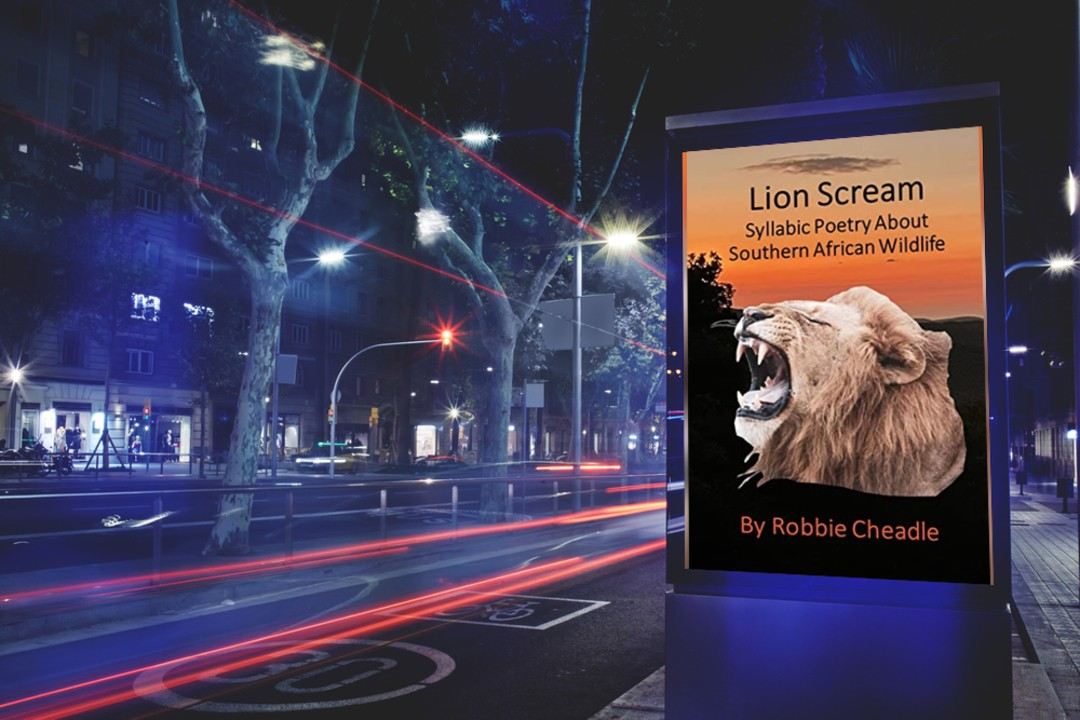
Lion Scream is available from Amazon here: https://www.amazon.com/Lion-Scream-Syllabic-Southern-Wildlife-ebook/dp/B0BXP5N766
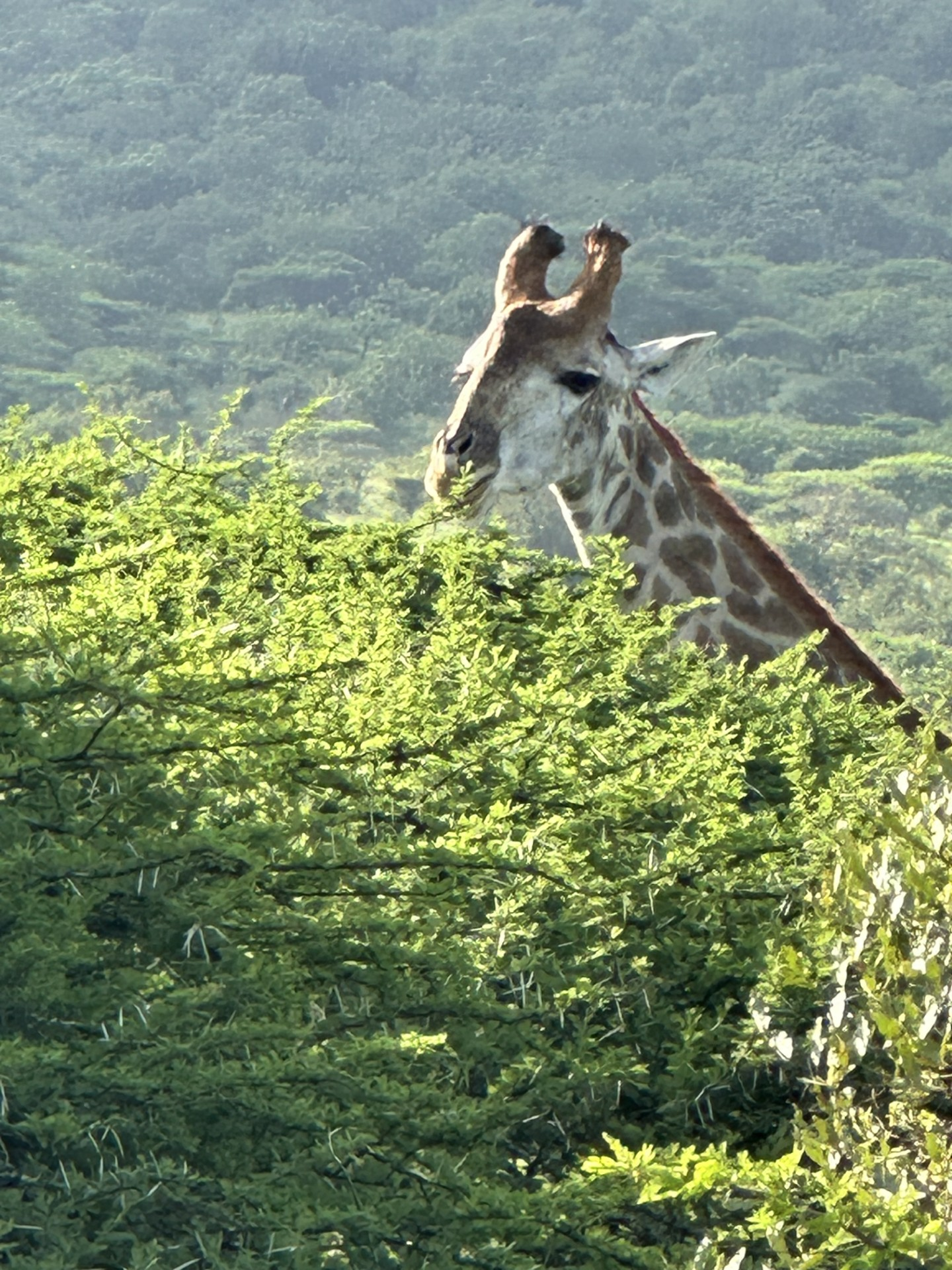
White headed giraffe – a special sighting
During a trip to Babanango Private Game Reserve we had the good fortune to come across this giraffe with large white patches on its face. Very unusual. The guide was very patient and waited for me to get my shots.


About Roberta Eaton Cheadle

Roberta Eaton Cheadle, is a South African writer and poet specialising in historical, paranormal, and horror novels and short stories. She is an avid reader in these genres and her writing has been influenced by famous authors including Bram Stoker, Edgar Allan Poe, Amor Towles, Stephen Crane, Enrich Maria Remarque, George Orwell, Stephen King, and Colleen McCullough.
Roberta has two published novels and a collection of short stories and has horror, paranormal, and fantasy short stories included in several anthologies. She is also a contributor to the Ask the Authors 2022 (WordCrafter Writing Reference series).
Roberta is also the author and illustrator of seventeen children’s books, illustrator to a further three children’s books, and the author and illustrator of four poetry books published under the name of Robbie Cheadle, and has poems and short stories featured in several anthologies under this name.
Roberta’s blog features discussions about classic books, book reviews, poetry, and photography. https://roberta-writes.com/.
Find Roberta Eaton Cheadle
Blog: https://wordpress.com/view/robertawrites235681907.wordpress.com
Bluesky: https://bsky.app/profile/robbiecheadle.bsky.social
Facebook: https://www.facebook.com/robertawrites
Amazon: https://www.amazon.com/Roberta-Eaton-Cheadle/e/B08RSNJQZ5
___________________________________________
Like this post? Are you a fan of this blog series? Did you know you can sponsor your favorite blog series or even a single post with an advertisement for your book? Stop by the WtbR Sponsor Page and let me advertise your book, or you can make a donation to Writing to be Read for as little as a cup of coffee, If you’d like to show your support for this author and WordCrafter Press.
__________________________________________
This segment of “In Touch with Nature” is sponsored by the Midnight Anthology Series and WordCrafter Press.

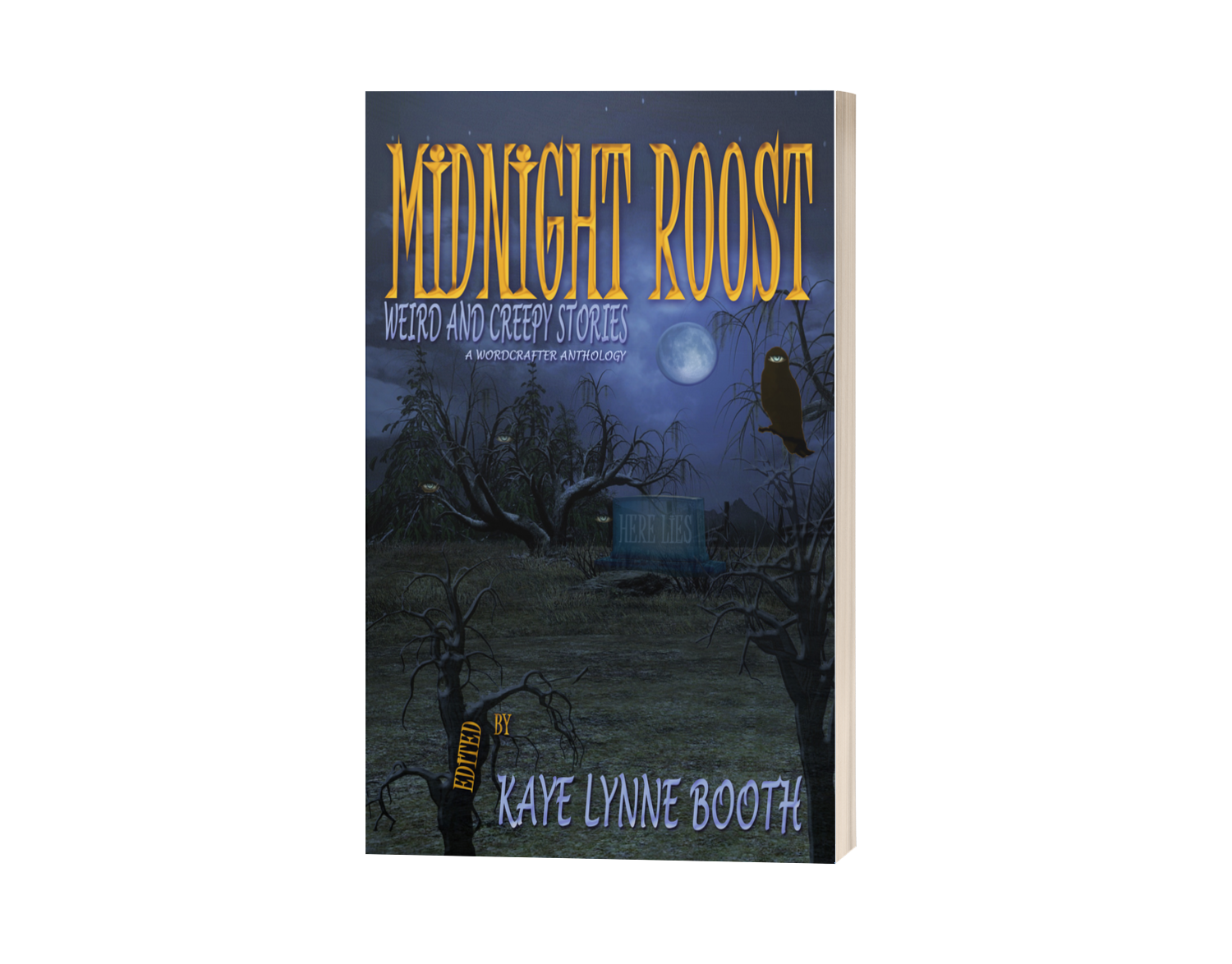
Midnight Roost: Weird and Creepy Stories: 20 authors bring your nightmares to life in 23 stories of ghosts, paranormal phenomenon and the horror from the dark crevasses of their minds. Stories of stalkers, both human and supernatural, possession and occult rituals, alien visitations of the strange kind, and ghostly tales that will give you goosebumps. These are the tales that will make you fear the dark. Read them at the Midnight Roost… if you dare. https://www.amazon.com/Midnight-Roost-Kaye-Lynne-Booth-ebook/dp/B0CL6FPLVJ
Midnight Garden: Where Dark Tales Grow: 17 authors bring you 21 magnificent dark tales. Stories of magic, monsters and mayhem. Tales of murder and madness which will make your skin crawl. These are the tales that explore your darkest fears. Read them in the Midnight Garden… if you dare. https://www.amazon.com/Midnight-Garden-Where-Tales-Anthology-ebook/dp/B0DJNDQJD3
Midnight Oil: Stories to Fuel Your Nightmares: 14 authors bring you 16 dark tales that explore your deepest fears. These are the stories which nightmares are made of. Tales of monsters, mayhem, and madness which will make you shiver in the dark. Read them while you burn the Midnight Oil… if you dare. https://books2read.com/Midnight-Oil