In Touch with Nature – Tailor Ants, Fire Ants, and Army Ants
Posted: June 24, 2026 Filed under: Animals, In Touch With Nature, Nature, Photography, Poetry, Wildlife | Tags: #armyants, #InTouchWithNature, #RobbieCheadle, #tailorants, In Touch With Nature, Robbie Cheadle, South Africa, Wildlife, Writing to be Read 78 Comments
Blogging friend, Barbara Harris Leonhard and editor of MasticadoresUSA, recently published a few of my micro poems that focused on tailor ants.
This is the first poem of three:
angry ants
fiercely protect nest
painful bite
You can read the other two poems here: https://masticadoresusa.wordpress.com/2026/06/08/a-trio-of-haiku-by-robbie-cheadle/
Several of the comments referred to fire ants that are found in the USA and, while tailor ants also inflict a nasty bite and are aggressive, they are not the same creatures. I decided to write this post and set out the differences between tailor ants and fire ants.
I’ve always been interested in army ants so I decided to include them in this post as well.
Primary differences between tailor ants, fire ants, and army ants
Nesting habits
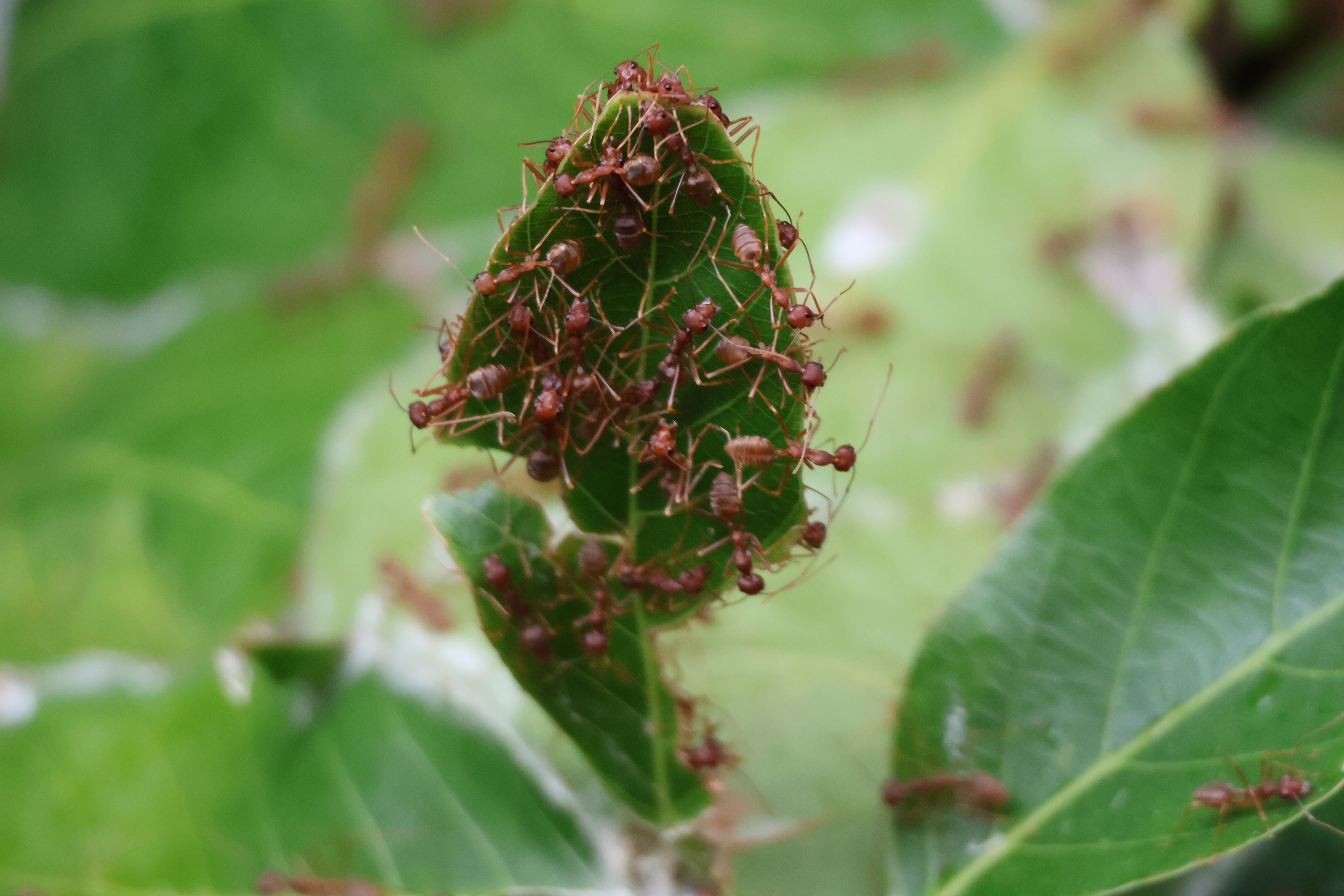
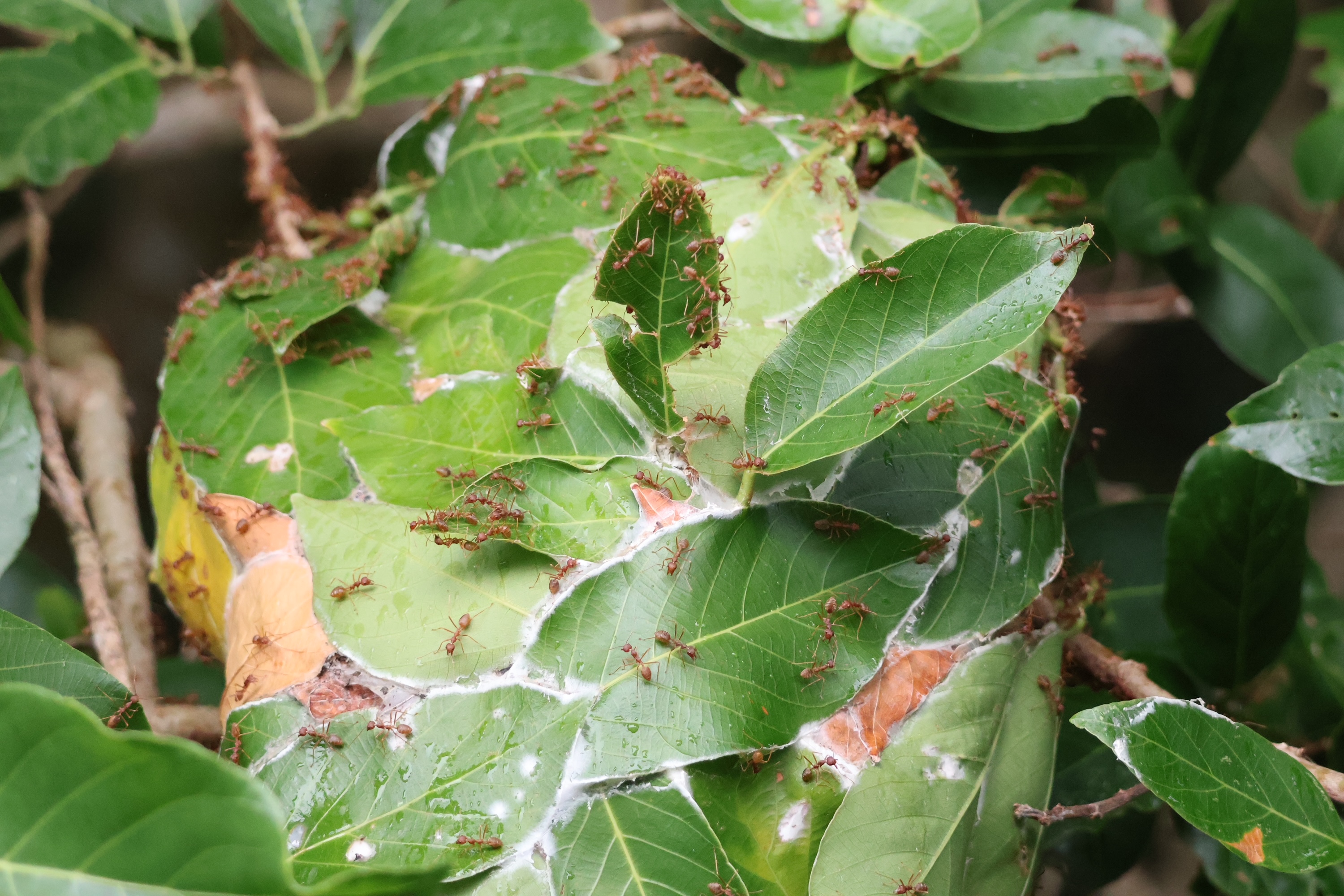
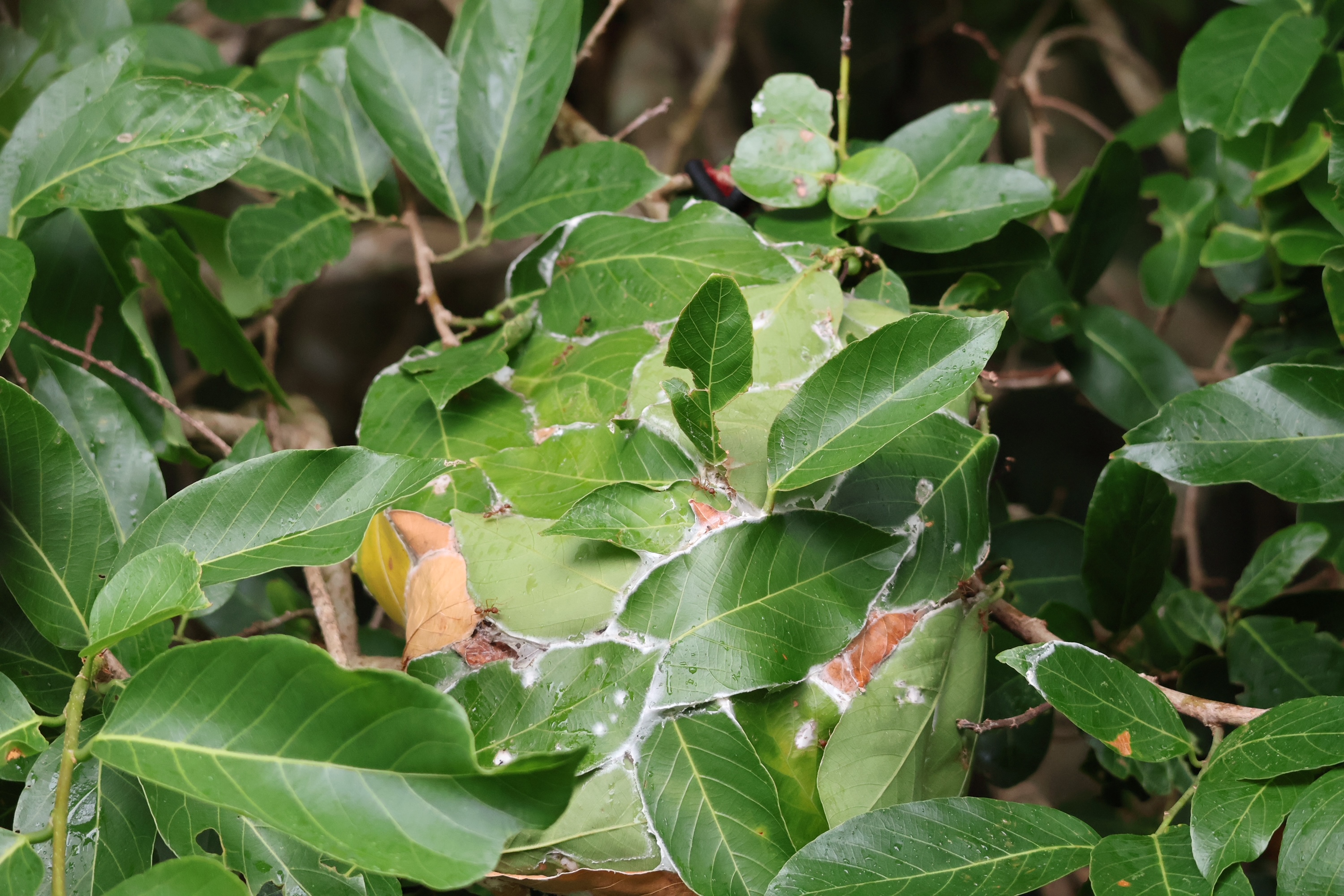
Tailor ants live in trees. They ‘tailor’ or weave living leaves together to create nests. Worker ants form long chains to pull the leaf edges together while others carry ant larvae in their jaws and use the silk the grubs secret as a natural ‘glue’ to bind the leaves together.
Fire ants build nests that appear as irregular mounds of loose soil or flat patches ranging from flat piles to domes up to 45 cm high. The nests have no obvious entry or exit holes. Ants emerge from underground foragers or swarm out of the sides when disturbed. Fire ants nests are usually found in warm, open, and sunny areas such as lawns, garden beds, near water sources, and on newly disturbed ground.
Army ants do not construct permanent nests out of soil, wood, or leaves. Instead, they assemble temporary, living nests called bivouacs. Bivouacs are const-shaped structures that house the queen and larvae and are built from the living bodies of the worker ants by interlocking their legs and mandibles. Bivouacs have internal chambers and tunnels to control temperature and humidity. As army ants colonies are constantly on the move, a new bivouac is assembled nearly every night. The colony stays in a fixed location for several weeks while the queen is laying eggs and the larvae are developing.
Foraging and hunting
Tailor ants are aggressive and defend their canopy territories by biting and spraying formic acid. Tailor ants are omnivores and hunt and eat a wide variety of crop-destroying insects and other small arthropods. They ‘farm’ sap-sucking insects like scale buys and mealybugs, protecting them from predators in exchange for their sweet, carbohydrate-rich liquid excretions. Tailor ants also consume floral and extrafloral nectar, fruit juices and plant wound secretions.
Fire ants are highly aggressive, opportunistic omnivores that hunt and scavenge using complex underground tunnel networks that extend up to 10 metres from the central mound. Individual scouts explore the surface and when a large prey is found, the scout lays a chemical pheromone trail as it returns to the nest. The pheromone acts as a biochemical alarm and recruitment trigger. The resting ants (about two thirds of the nest) awaken and follow the trail forming a dense trail of thousands of ants that overwhelm and subdue the prey. Fire ants consume live and dead insects as well as immobile, sick, or helpless animals including baby birds and reptiles. Like tailor ants, fire ants ‘farm’ sap-sucking insects like aphids to harvest their sugar-rich secretions. Fire ants also collect and eat seeds.
Army ants are ground-dwelling, mass-raiding predators. During their massive daily foraging raids, the colony can overwhelm hundreds of thousands of prey to feed their queen and growing larvae. Army ants eat insects and arachnids including spiders, scorpions, crickets, beetles, caterpillars and termites. Army ants also raid the nests of other ant species and consume their eggs, larvae and pupae. Sometimes, army ants will overwhelm slow-moving or trapped smaller animals such as baby birds, lizards, and frogs. Army ants use their powerful, scissor-like jaws to slice their prey into transportable fragments which they carry back to their bivouacs.
Physical traits and defense
Tailor ants workers are uniformly sized and have excellent eyesight for navigating tree branches. The aggressively defend their canopy with painful bites combined with spraying formic acid directly into the wound.
Fire ants workers range in size from 2 mm to 6 mm. If a fire ants mound is disturbed or vibrated, workers immediately rush out and release alarm pheromones into the air to alert the entire colony to defend the nest. Fire ants immediately swarm vertical surfaces and will rapidly climb up legs, tools or structures in vast numbers. Fire ants sting in a highly synchronized, two-stage maneuver whereby the ant latches onto skin or clothing using its strong mandibles. The ant then tucks its abdomen under its body and inserts its stinger, injecting a toxic venom called solenopsin. The ant pivots its head in a circular pattern repeatedly stinging the victim multiple times from a single anchored bite site.
Many species of army ants are completely blind and they rely heavily on complex pheromone trails. The have highly developed mandibles for tearing prey apart. There is an extreme size difference between the workers and the much larger, scissor-jawed soldier ants used for defense.
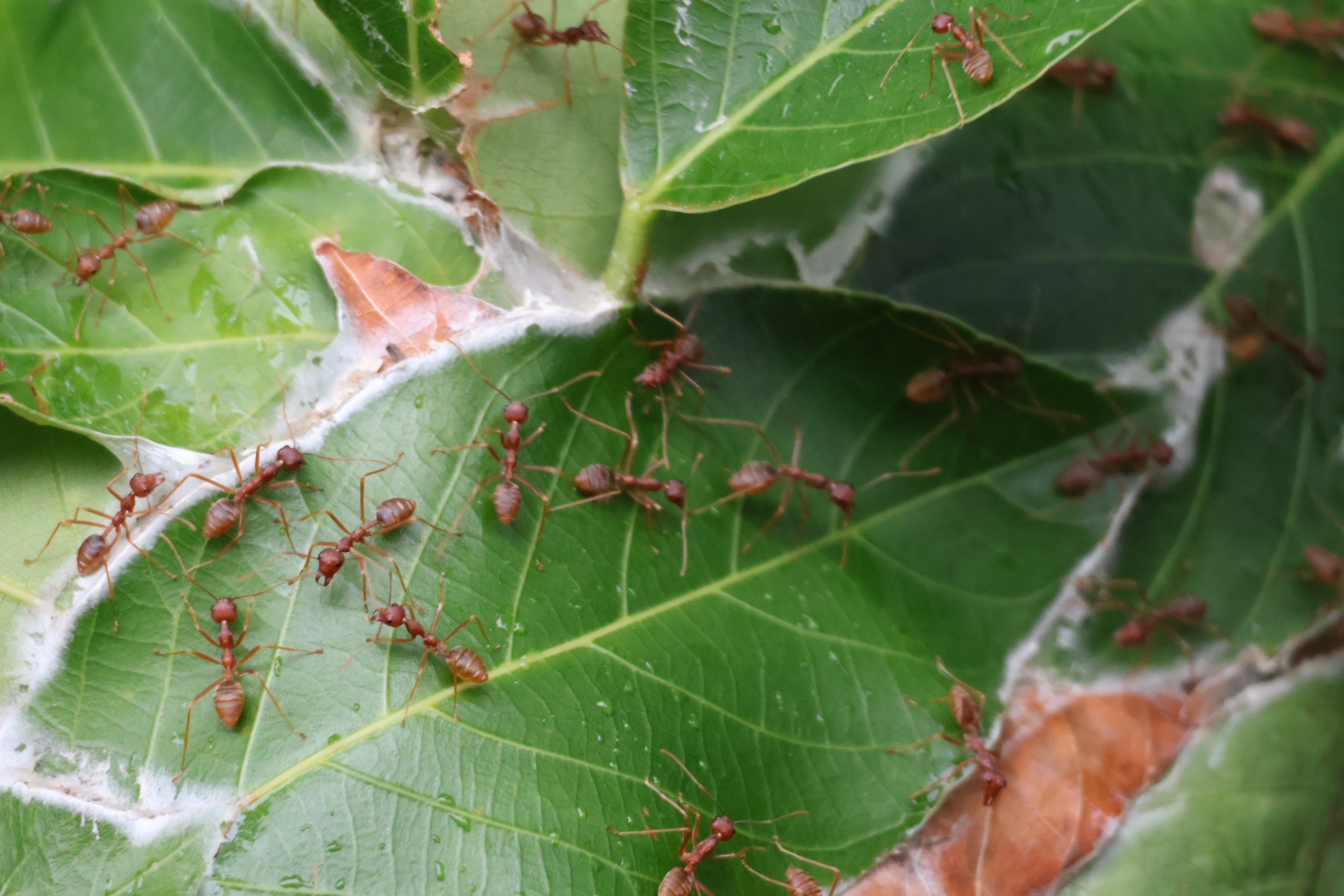
The gallery below features my photographs of tailor ants taken at Cape Vidal in Kwa-Zulu Natal in January this year.
This is my YouTube video fo angry tailor ants. They shake when they are disturbed.
About Robbie Cheadle

Roberta Eaton Cheadle, is a South African writer and poet specialising in historical, paranormal, and horror novels and short stories. She is an avid reader in these genres and her writing has been influenced by famous authors including Bram Stoker, Edgar Allan Poe, Amor Towles, Stephen Crane, Enrich Maria Remarque, George Orwell, Stephen King, and Colleen McCullough.
Roberta has two published novels and a collection of short stories and has horror, paranormal, and fantasy short stories included in several anthologies. She is also a contributor to the Ask the Authors 2022 (WordCrafter Writing Reference series).
Roberta is also the author and illustrator of seventeen children’s books, illustrator to a further three children’s books, and the author and illustrator of four poetry books published under the name of Robbie Cheadle, and has poems and short stories featured in several anthologies under this name.
Roberta’s blog features discussions about classic books, book reviews, poetry, and photography. https://roberta-writes.com/.
Find Roberta Eaton Cheadle
Blog: https://wordpress.com/view/robertawrites235681907.wordpress.com
Bluesky: https://bsky.app/profile/robbiecheadle.bsky.social
Facebook: https://www.facebook.com/robertawrites
Amazon: https://www.amazon.com/Roberta-Eaton-Cheadle/e/B08RSNJQZ5
___________________________________________
Like this post? Are you a fan of this blog series? Did you know you can sponsor your favorite blog series or even a single post with an advertisement for your book? Stop by the WtbR Sponsor Page and let me advertise your book, or you can make a donation to Writing to be Read for as little as a cup of coffee, If you’d like to show your support for this author and WordCrafter Press.
__________________________________________
This segment of “In Touch with Nature” is sponsored by the Midnight Anthology Series and WordCrafter Press.

Midnight Roost: Weird and Creepy Stories: 20 authors bring your nightmares to life in 23 stories of ghosts, paranormal phenomenon and the horror from the dark crevasses of their minds. Stories of stalkers, both human and supernatural, possession and occult rituals, alien visitations of the strange kind, and ghostly tales that will give you goosebumps. These are the tales that will make you fear the dark. Read them at the Midnight Roost… if you dare. https://www.amazon.com/Midnight-Roost-Kaye-Lynne-Booth-ebook/dp/B0CL6FPLVJ
Midnight Garden: Where Dark Tales Grow: 17 authors bring you 21 magnificent dark tales. Stories of magic, monsters and mayhem. Tales of murder and madness which will make your skin crawl. These are the tales that explore your darkest fears. Read them in the Midnight Garden… if you dare. https://www.amazon.com/Midnight-Garden-Where-Tales-Anthology-ebook/dp/B0DJNDQJD3
Midnight Oil: Stories to Fuel Your Nightmares: 14 authors bring you 16 dark tales that explore your deepest fears. These are the stories which nightmares are made of. Tales of monsters, mayhem, and madness which will make you shiver in the dark. Read them while you burn the Midnight Oil… if you dare. https://books2read.com/Midnight-Oil



















