In Touch With Nature – Marbled Reed Frog
Posted: January 28, 2026 Filed under: Animals, In Touch With Nature, Nature, Wildlife | Tags: #InTouchWithNature, #RobbieCheadle, Nature, South Africa, Wildlife 55 Comments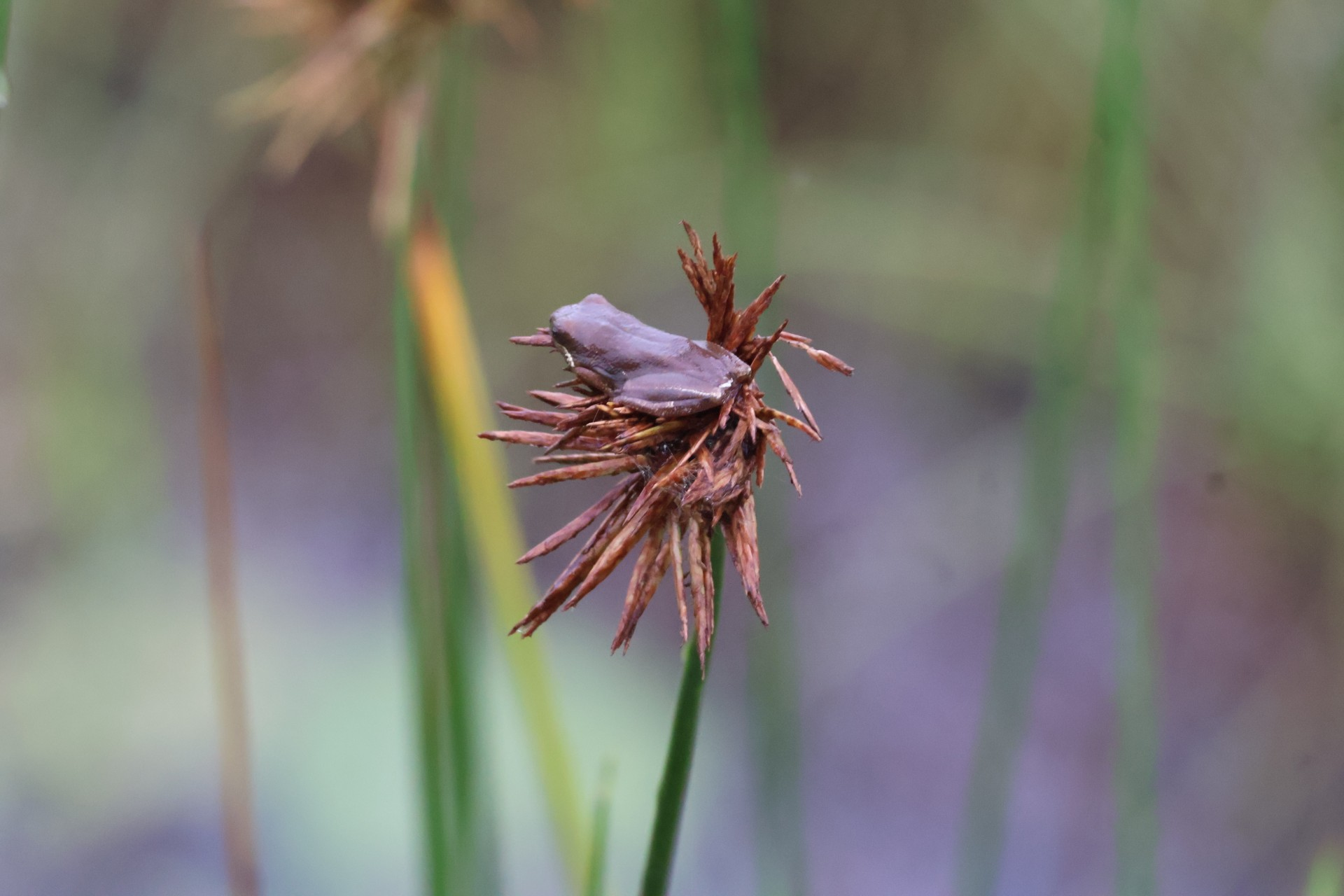
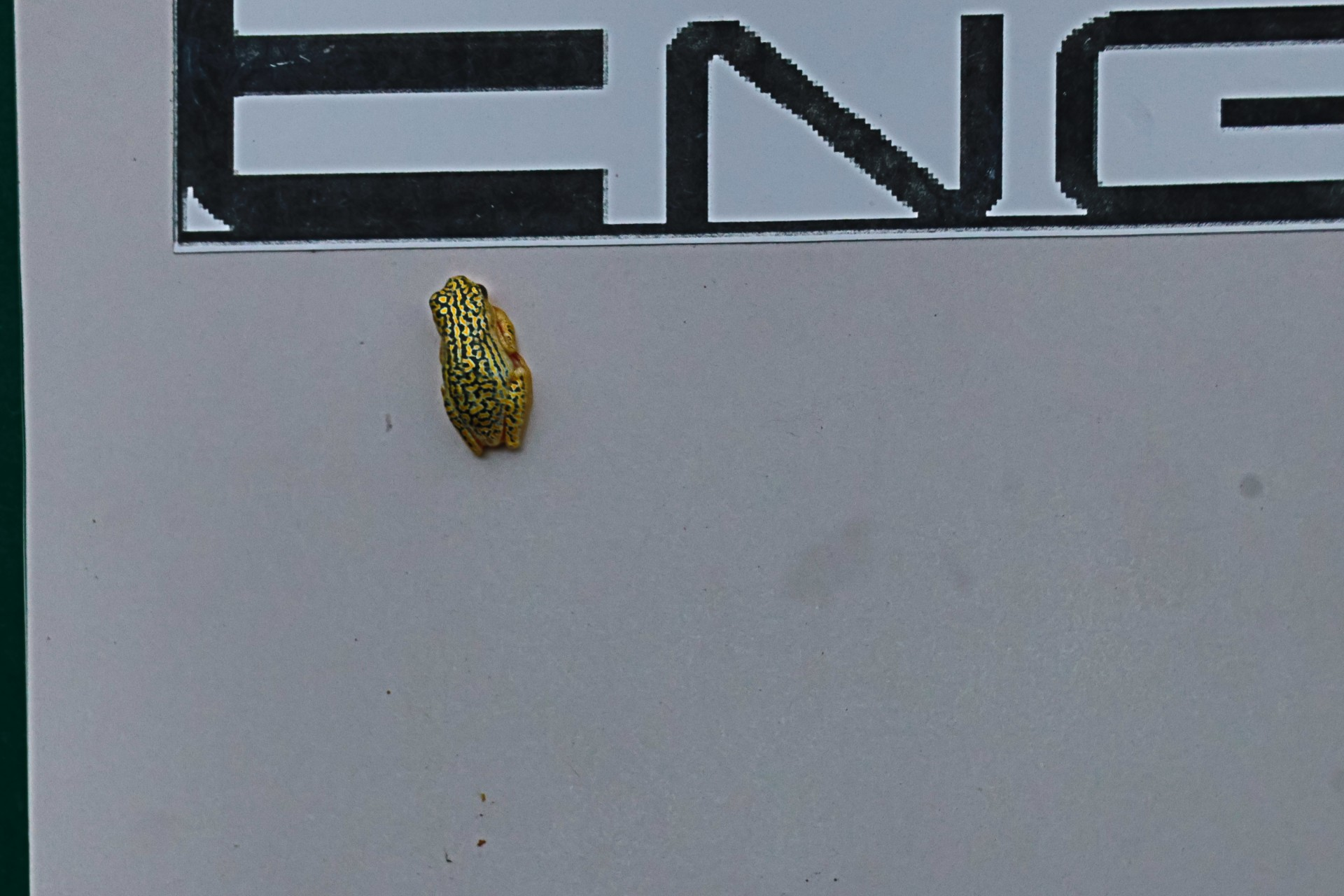
This frog is important!
Tiny little creatures
only 2.5 to 3.5 centimetres long
but so very pretty
their skins marbled
in gorgeous patterns
of green, brown, and white
that change as day
shifts into dark night
slender, with large eyes
on either side of its head
females are bigger than males
but males have a yellow throat patch
used for vocalisation
to advertise their presence
and reproductive readiness
the distinctive evening call
of the marble reed frog
signals approaching rainfall
and seasonal change
they are sensitive
to environmental change
so declines in their numbers
indicate deteriorating habitat conditions
they are also important
in controlling insect population
especially the annoying mosquito
These frogs must be protected
from habitat encroachment
and the global chytrid fungus
a pathogen affecting amphibian populations
This frog is important!
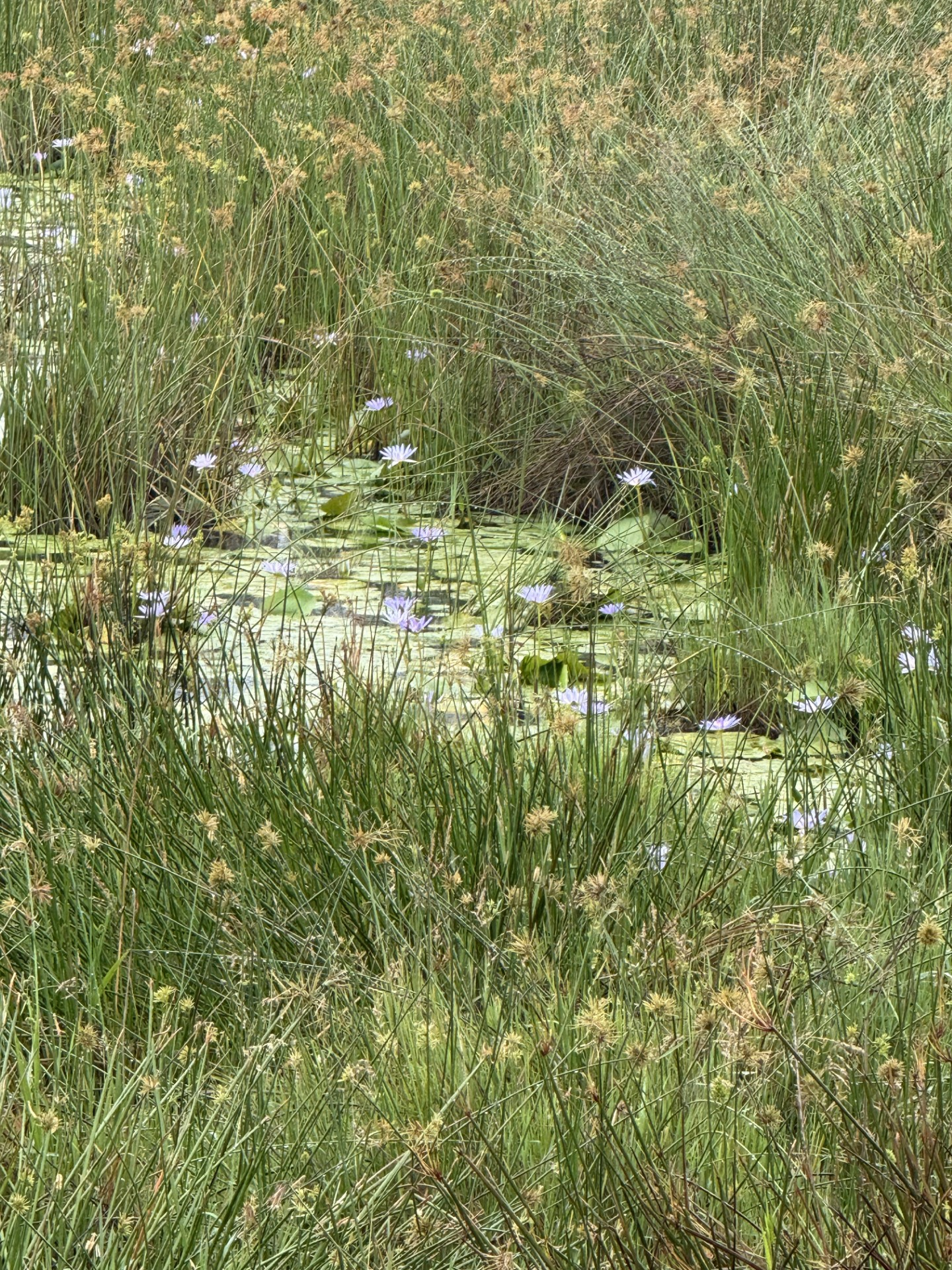
The gallery below shows three different marbled reed frogs we saw in the Isimangaliso Wetlands during our January 2026 trip to St Lucia, South Africa.
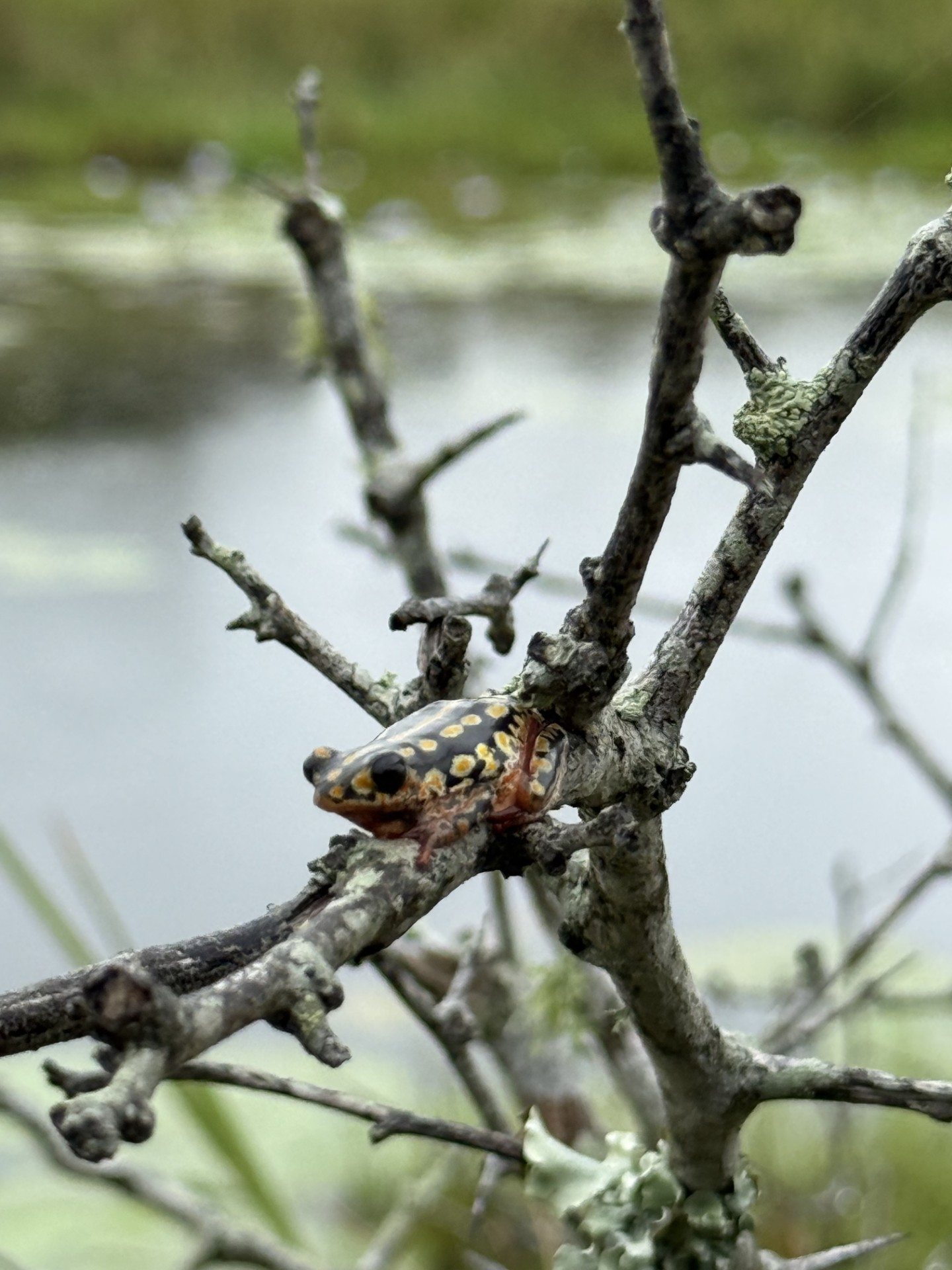
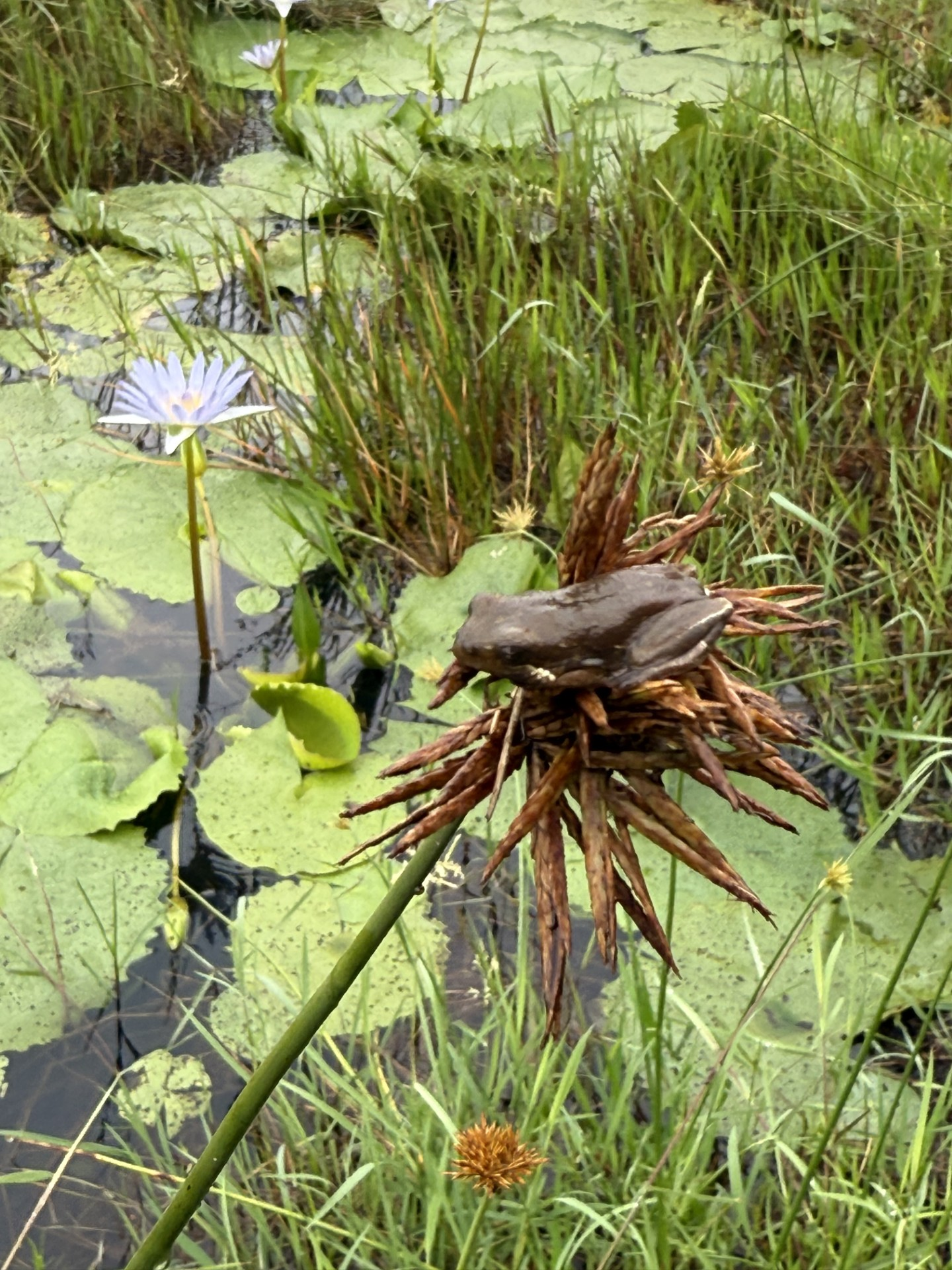
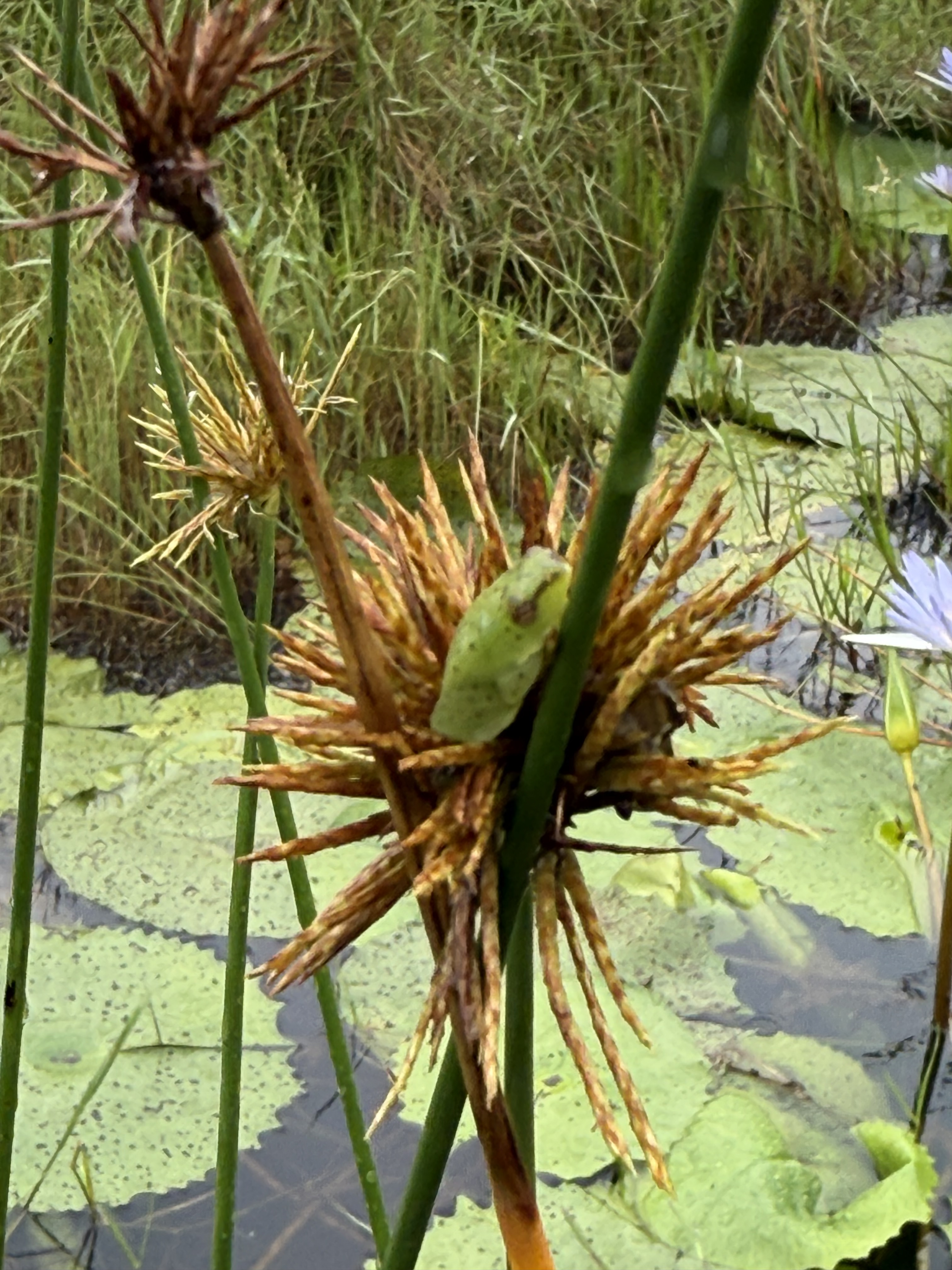
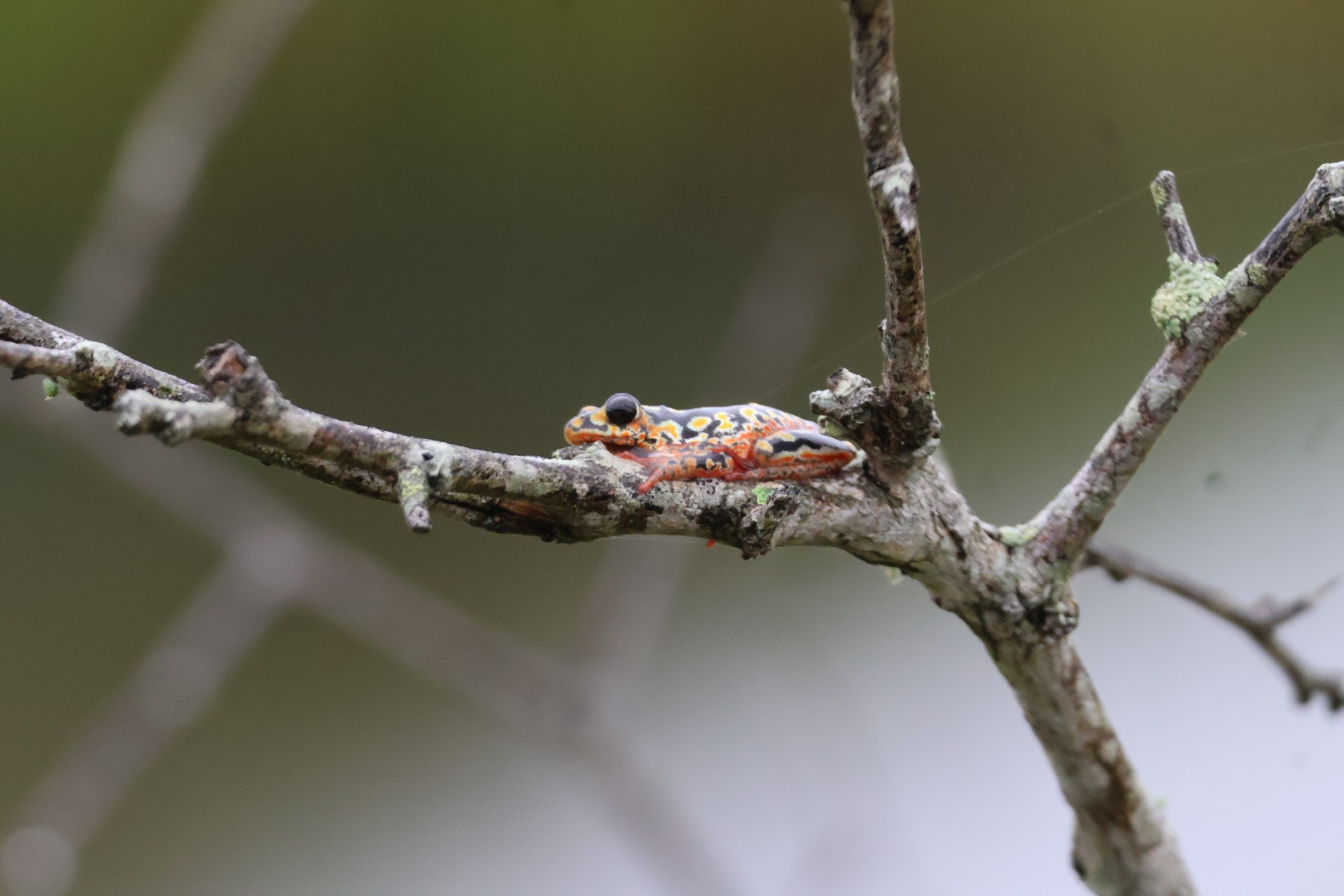
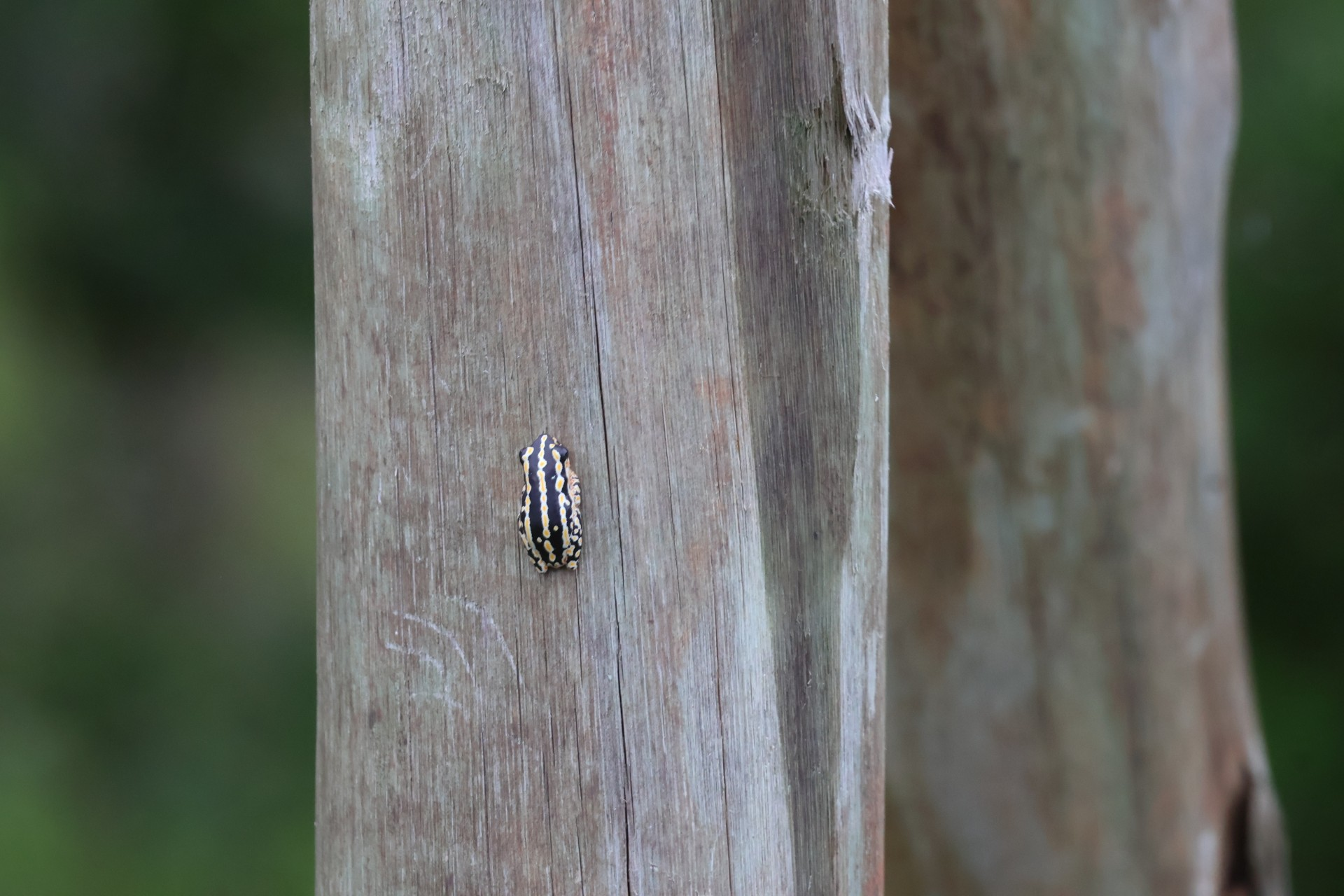
You see these frogs in unusual places:
About Roberta Eaton Cheadle

Roberta Eaton Cheadle, is a South African writer and poet specialising in historical, paranormal, and horror novels and short stories. She is an avid reader in these genres and her writing has been influenced by famous authors including Bram Stoker, Edgar Allan Poe, Amor Towles, Stephen Crane, Enrich Maria Remarque, George Orwell, Stephen King, and Colleen McCullough.
Roberta has two published novels and a collection of short stories and has horror, paranormal, and fantasy short stories included in several anthologies. She is also a contributor to the Ask the Authors 2022 (WordCrafter Writing Reference series).
Roberta is also the author and illustrator of seventeen children’s books, illustrator to a further three children’s books, and the author and illustrator of four poetry books published under the name of Robbie Cheadle, and has poems and short stories featured in several anthologies under this name.
Roberta’s blog features discussions about classic books, book reviews, poetry, and photography. https://roberta-writes.com/.
Find Roberta Eaton Cheadle
Blog: https://wordpress.com/view/robertawrites235681907.wordpress.com
Bluesky: https://bsky.app/profile/robbiecheadle.bsky.social
Facebook: https://www.facebook.com/robertawrites
Amazon: https://www.amazon.com/Roberta-Eaton-Cheadle/e/B08RSNJQZ5
___________________________________________
Like this post? Are you a fan of this blog series? Did you know you can sponsor your favorite blog series or even a single post with an advertisement for your book? Stop by the WtbR Sponsor Page and let me advertise your book, or you can make a donation to Writing to be Read for as little as a cup of coffee, If you’d like to show your support for this author and WordCrafter Press.
__________________________________________
This segment of “In Touch with Nature” is sponsored by the Midnight Anthology Series and WordCrafter Press.

Midnight Roost: Weird and Creepy Stories: 20 authors bring your nightmares to life in 23 stories of ghosts, paranormal phenomenon and the horror from the dark crevasses of their minds. Stories of stalkers, both human and supernatural, possession and occult rituals, alien visitations of the strange kind, and ghostly tales that will give you goosebumps. These are the tales that will make you fear the dark. Read them at the Midnight Roost… if you dare. https://www.amazon.com/Midnight-Roost-Kaye-Lynne-Booth-ebook/dp/B0CL6FPLVJ
Midnight Garden: Where Dark Tales Grow: 17 authors bring you 21 magnificent dark tales. Stories of magic, monsters and mayhem. Tales of murder and madness which will make your skin crawl. These are the tales that explore your darkest fears. Read them in the Midnight Garden… if you dare. https://www.amazon.com/Midnight-Garden-Where-Tales-Anthology-ebook/dp/B0DJNDQJD3
Midnight Oil: Stories to Fuel Your Nightmares: 14 authors bring you 16 dark tales that explore your deepest fears. These are the stories which nightmares are made of. Tales of monsters, mayhem, and madness which will make you shiver in the dark. Read them while you burn the Midnight Oil… if you dare. https://books2read.com/Midnight-Oil
Share this:

In Touch With Nature – 12 Days of Christmas in Southern Africa
Posted: December 24, 2025 Filed under: Holidays, In Touch With Nature, Photography, Poetry, Wildlife | Tags: #InTouchWithNature, #RobbieCheadle, In Touch With Nature, Nature Photography, Robbie Cheadle, South Africa, Wildlife, Writing to be Read 50 CommentsI am ending my “In Touch With Nature” year with a Southern Africanised version of 12 Days of Christmas.
12 Days of Christmas in Southern Africa
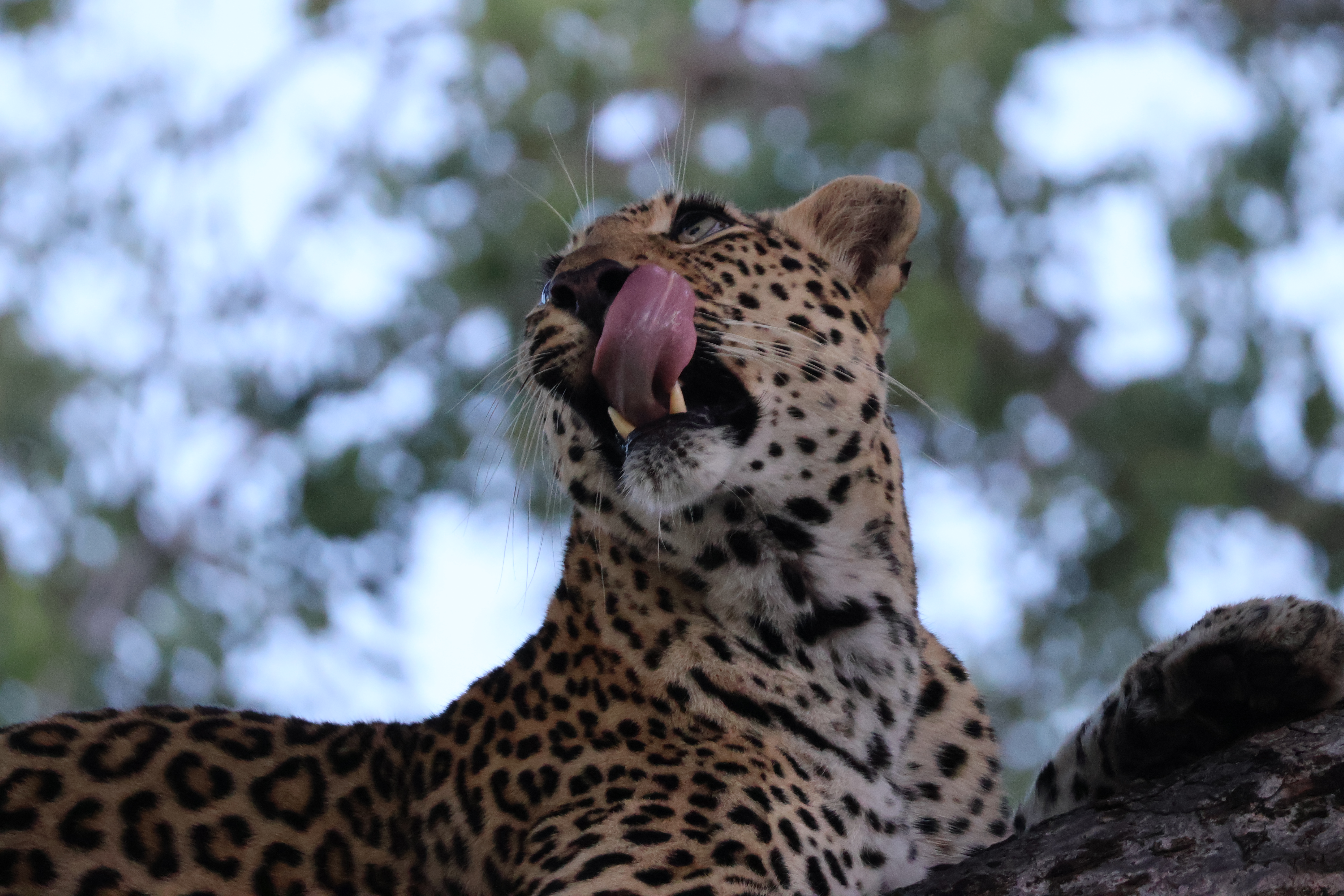
On the first day of Christmas
My true love sent to me:
A leopard in a great tree
On the second day of Christmas
My true love sent to me:
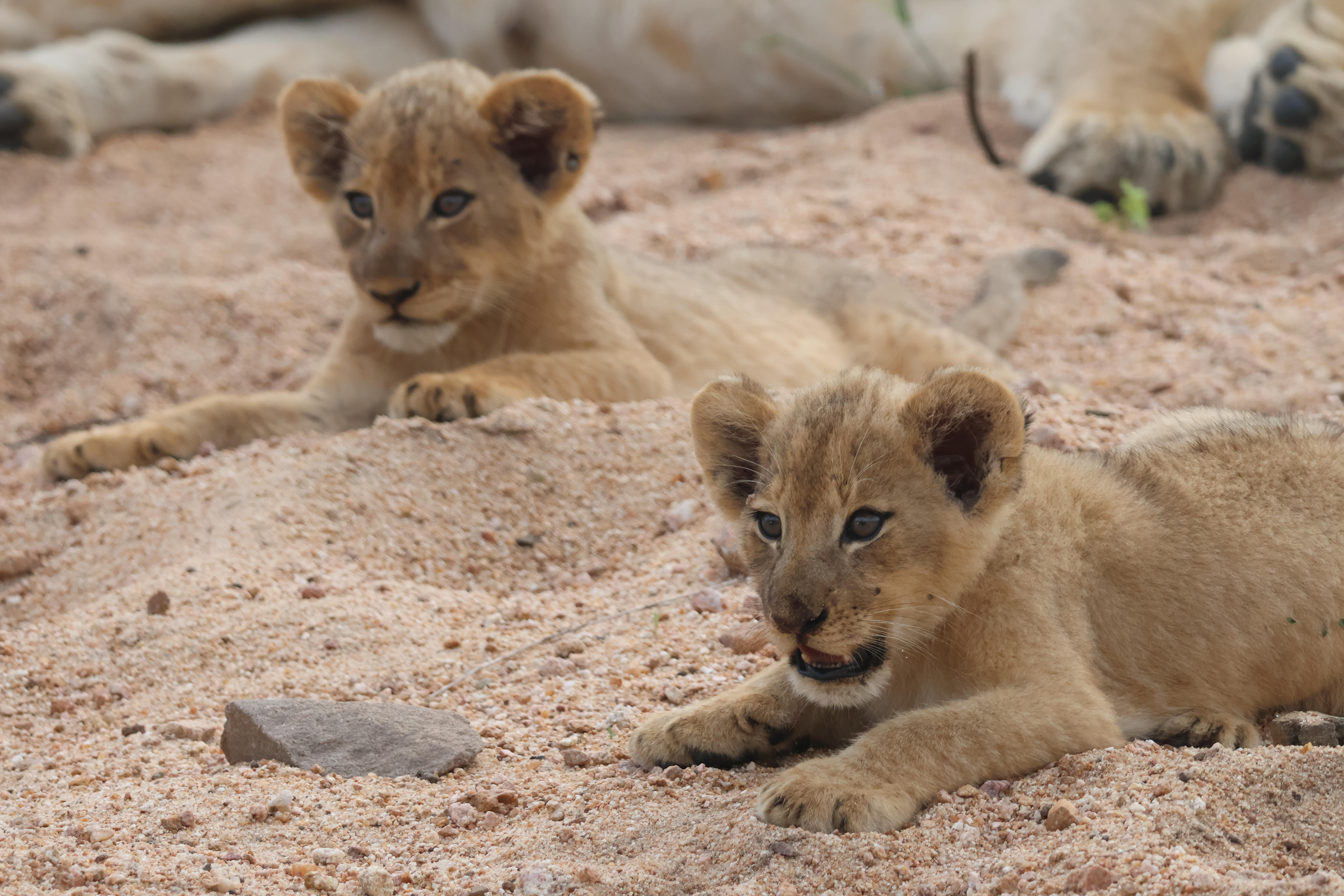
Two lion cubs and
A leopard in a great tree
On the third day of Christmas
My true love sent to me:
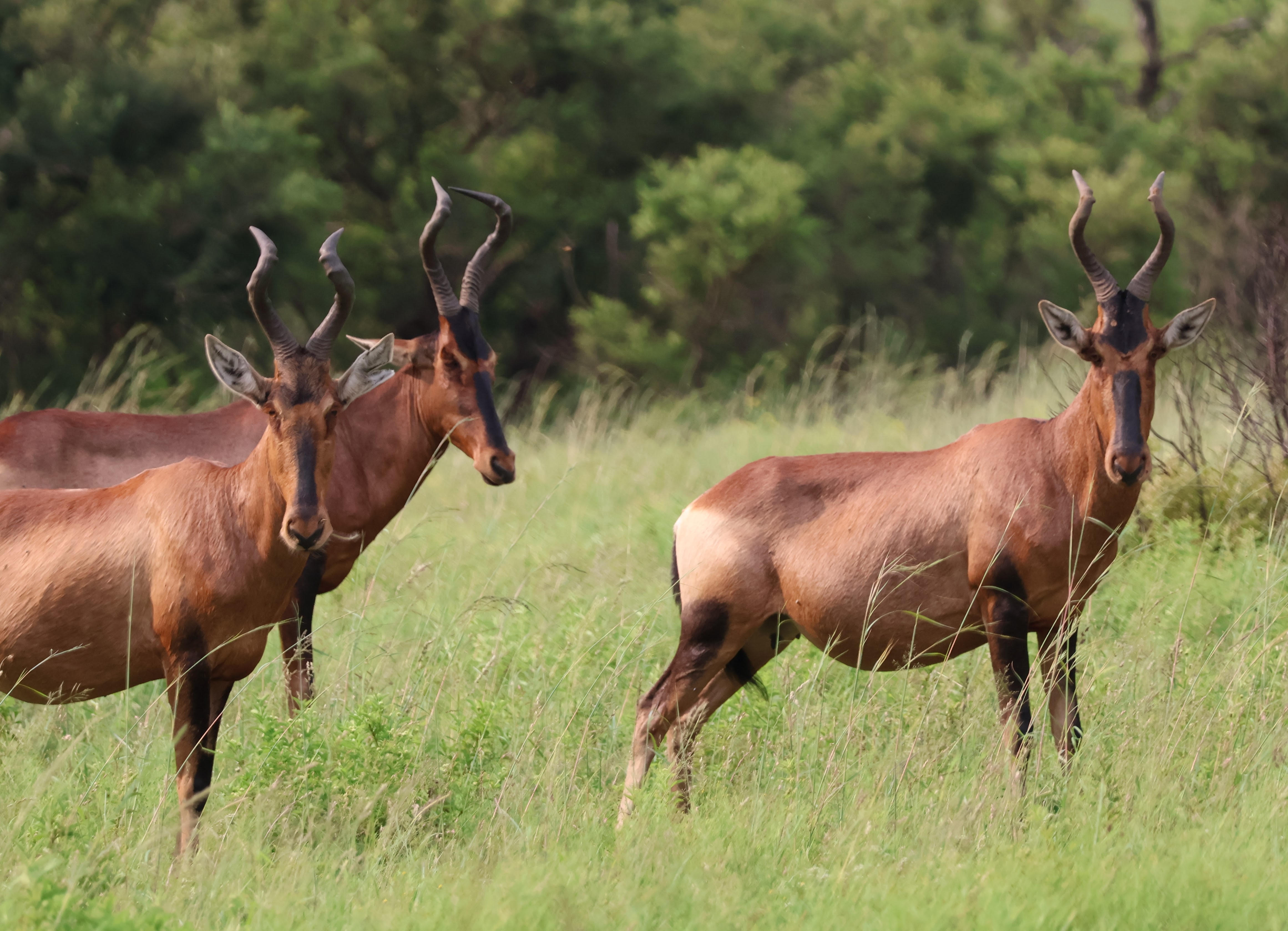
Three hartebeest
Two lion cubs and
A leopard in a great tree
On the fourth day of Christmas
My true love sent to me:
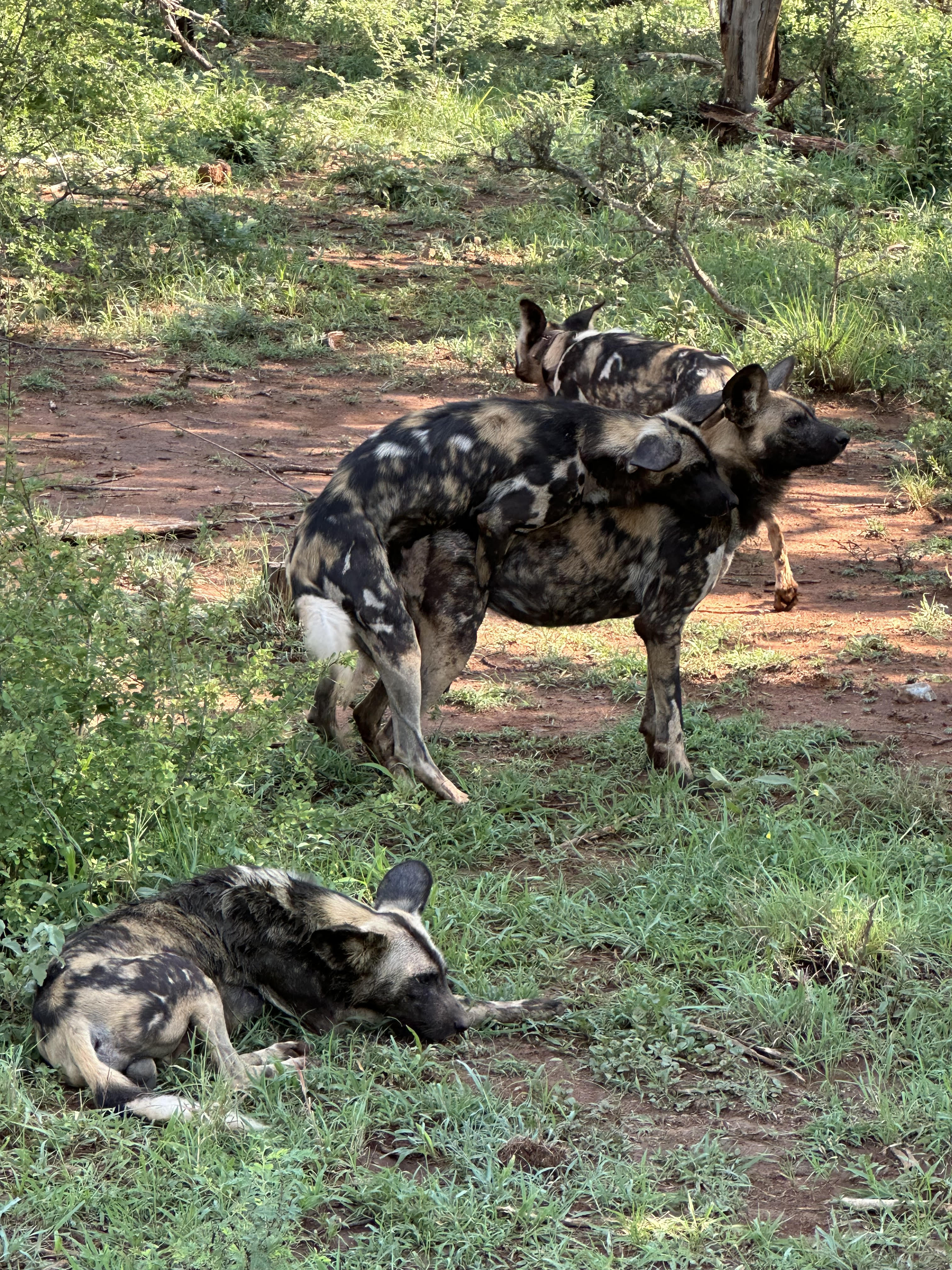
Four playing wild dogs
Three hartebeest
Two lion cubs and
A leopard in a great tree
On the fifth day of Christmas
My true love sent to me:
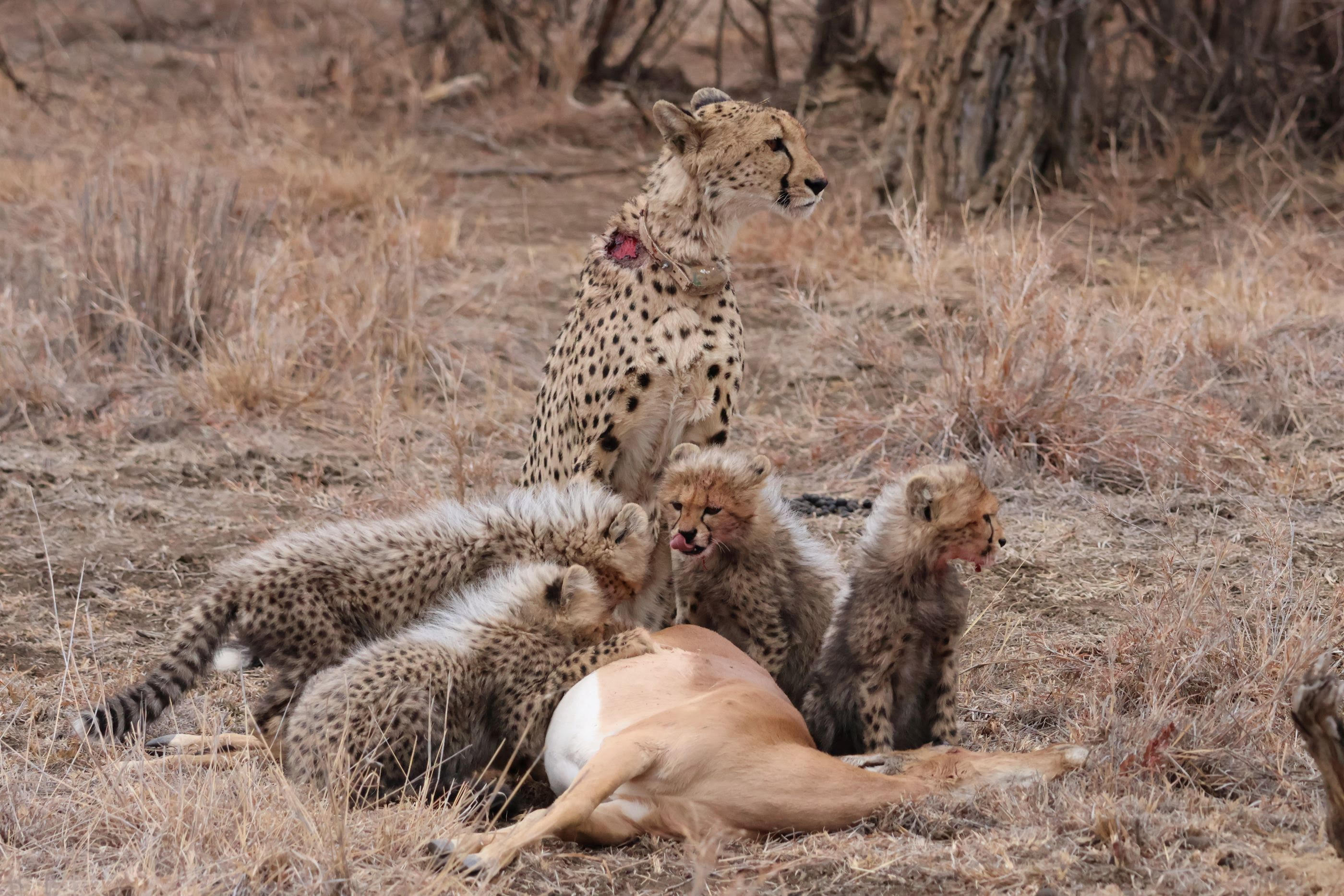
Five feeding cheetahs
Four playing wild dogs
Three hartebeest
Two lion cubs and
A leopard in a great tree
On the sixth day of Christmas
My true love sent to me:
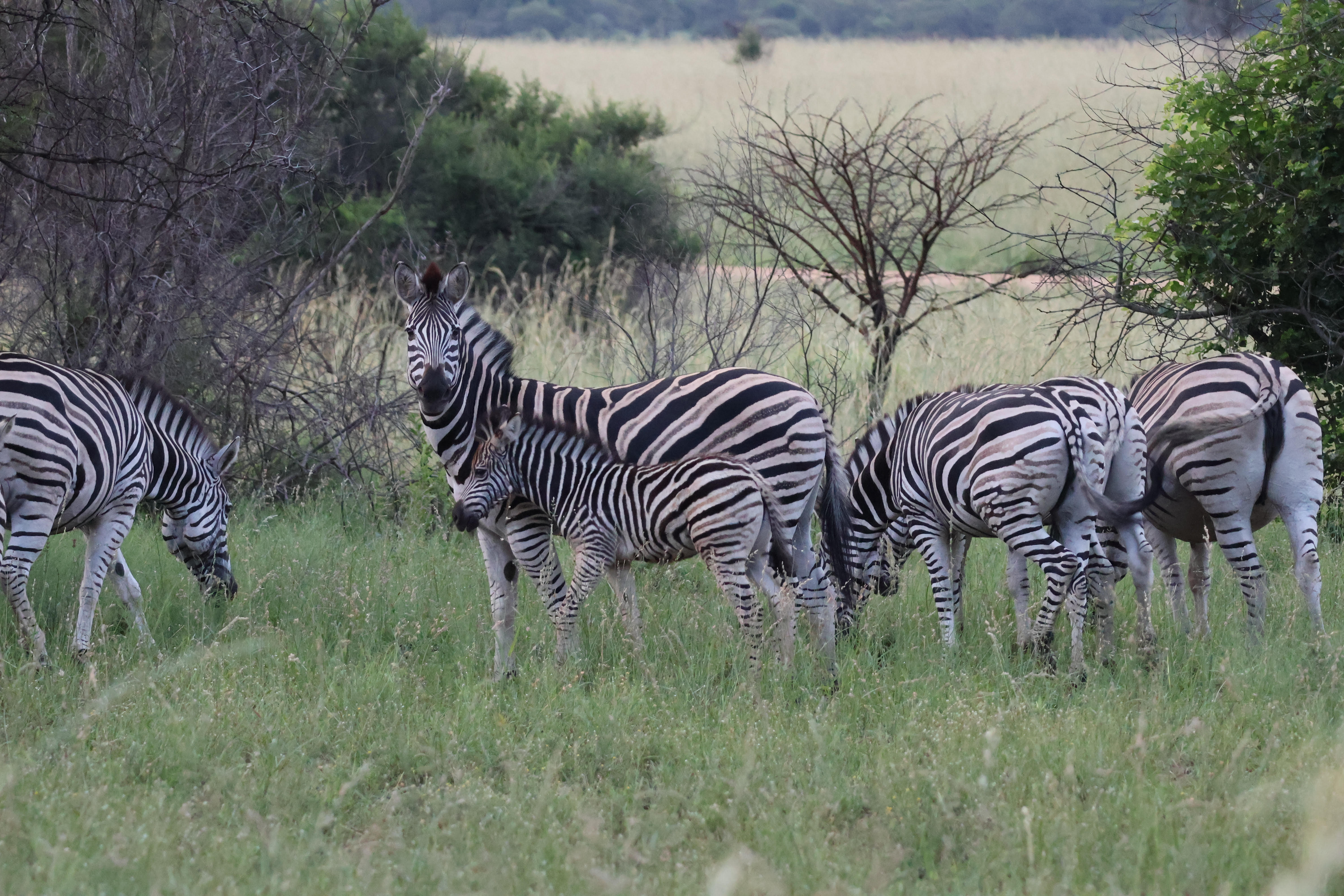
Six grazing zebras
Five feeding cheetahs
Four playing wild dogs
Three hartebeest
Two lion cubs and
A leopard in a great tree
On the seventh day of Christmas
My true love sent to me:
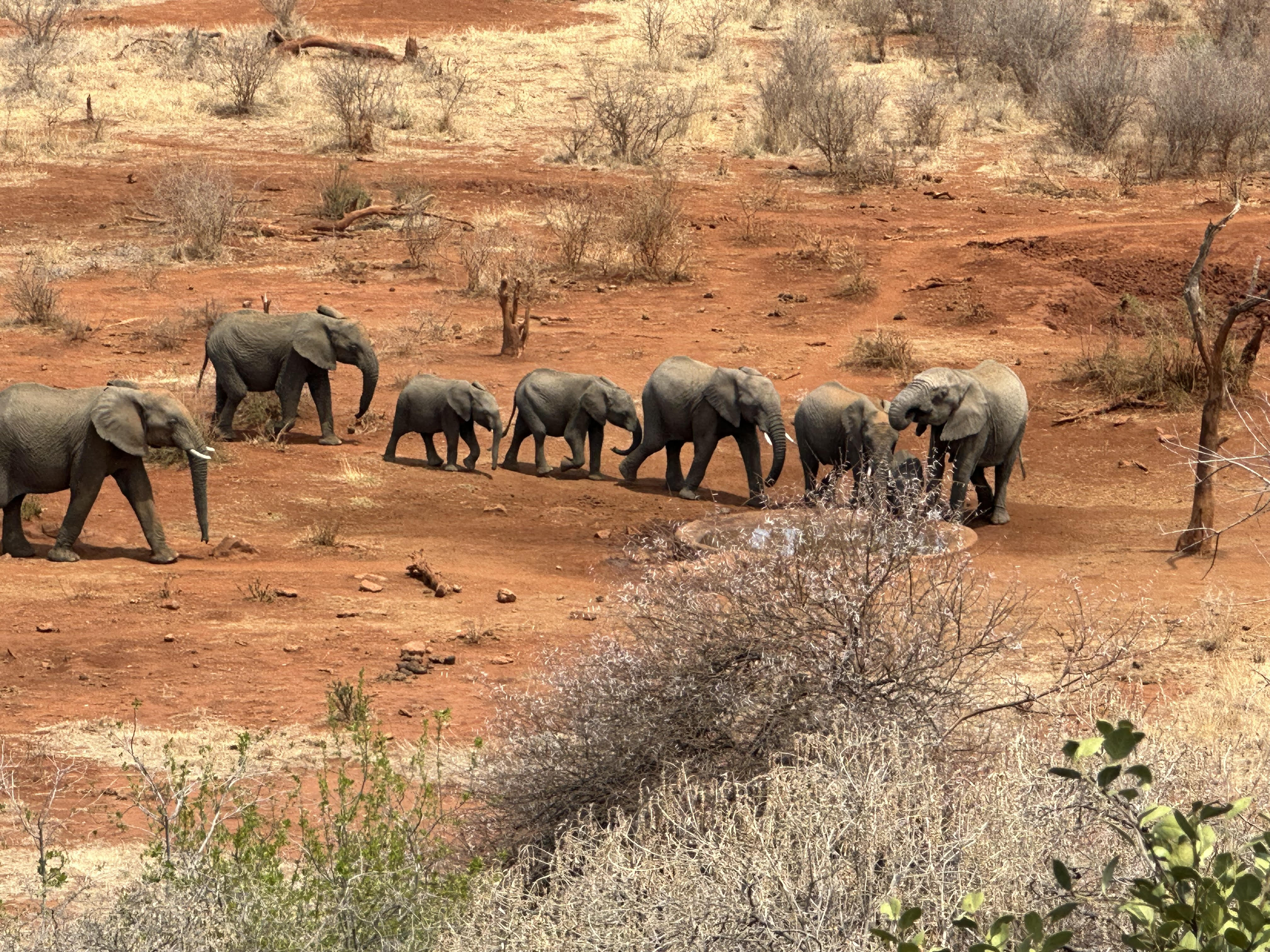
Seven marching elephants
Six grazing zebras
Five feeding cheetahs
Four playing wild dogs
Three hartebeest
Two lion cubs and
A leopard in a great tree
On the eighth day of Christmas
My true love sent to me:
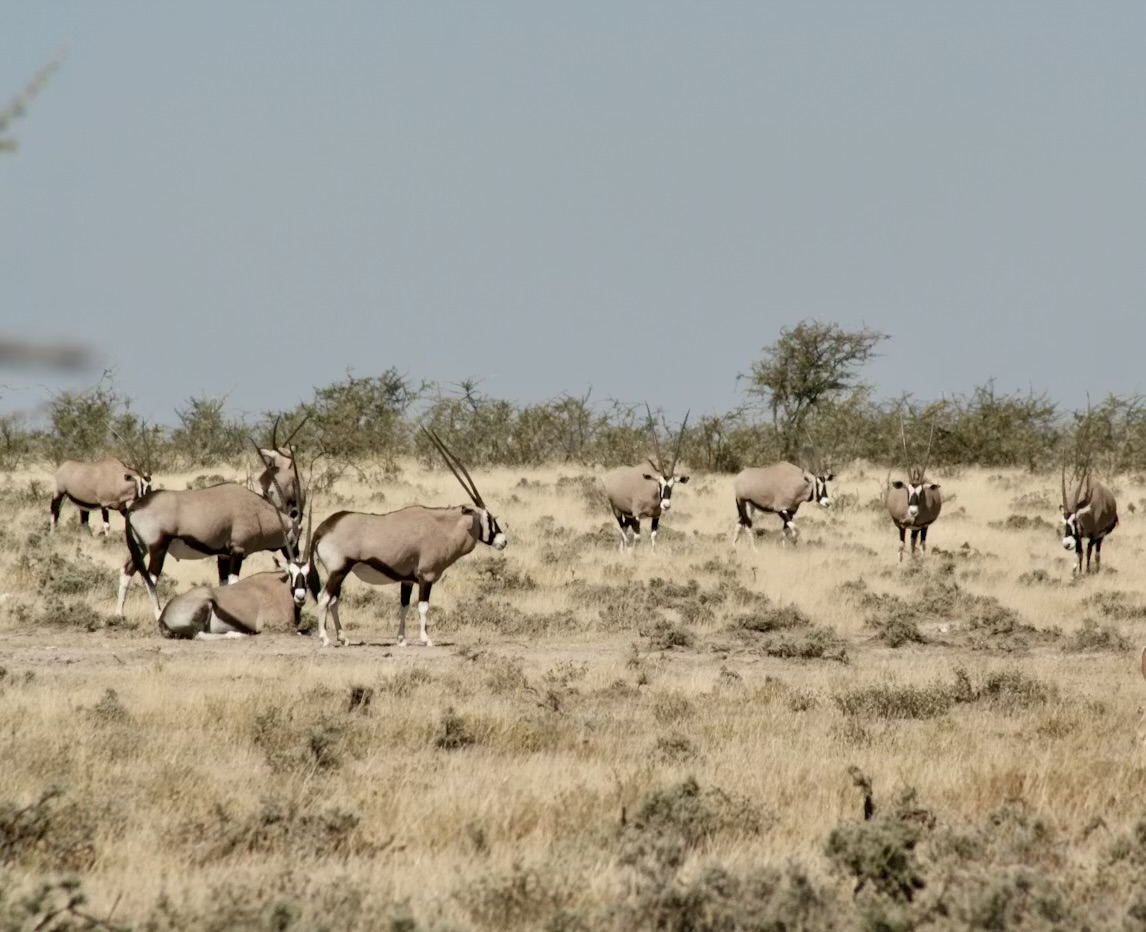
Eight gemsbok a-resting
Seven marching elephants
Six grazing zebras
Five feeding cheetahs
Four playing wild dogs
Three hartebeest
Two lion cubs and
A leopard in a great tree
On the ninth day of Christmas
My true love sent to me:
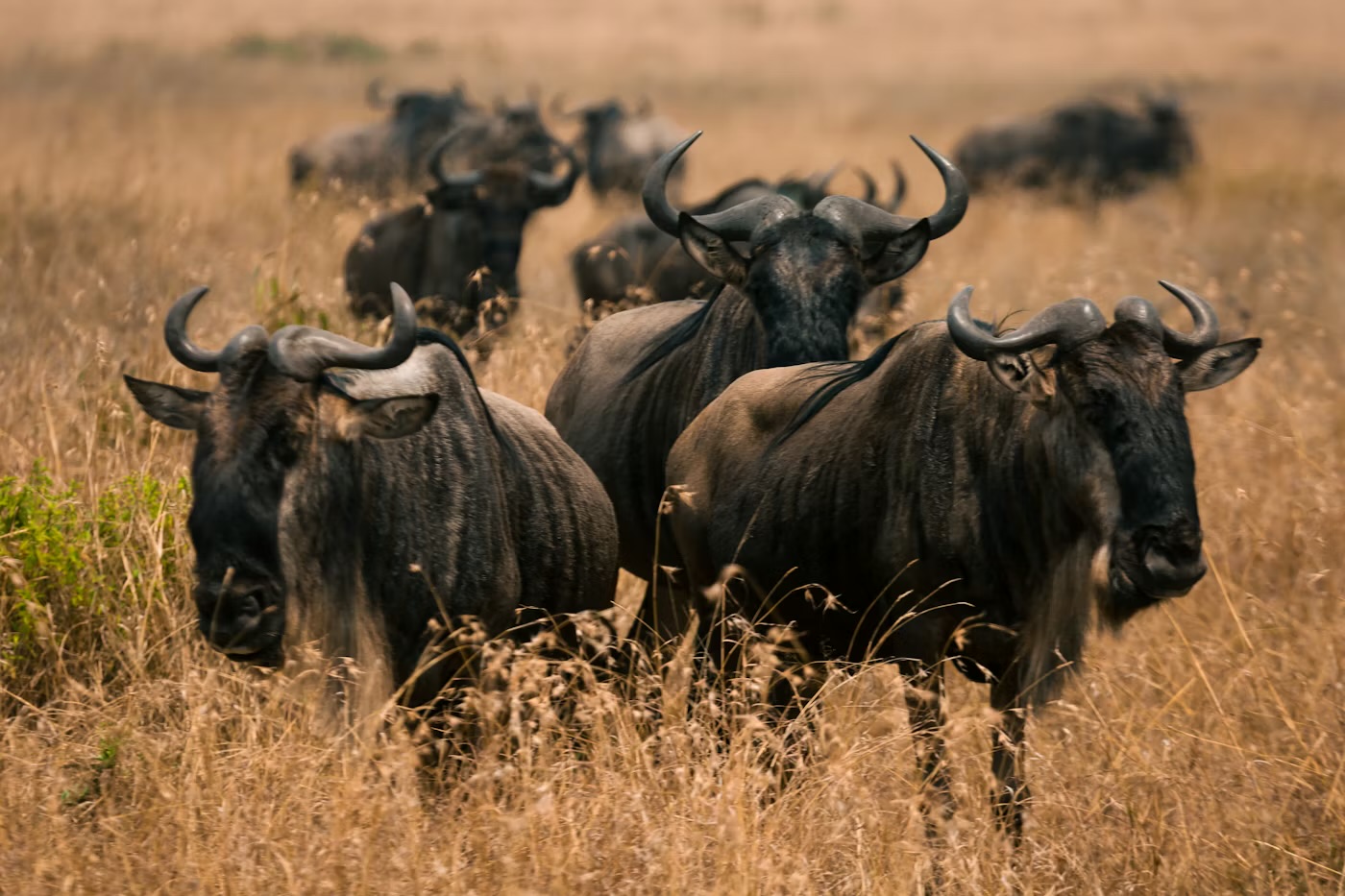
Nine wildebeest prancing
Eight gemsbok a-resting
Seven marching elephants
Six grazing zebras
Five feeding cheetahs
Four playing wild dogs
Three hartebeest
Two lion cubs and
A leopard in a great tree
On the tenth day of Christmas
My true love sent to me:
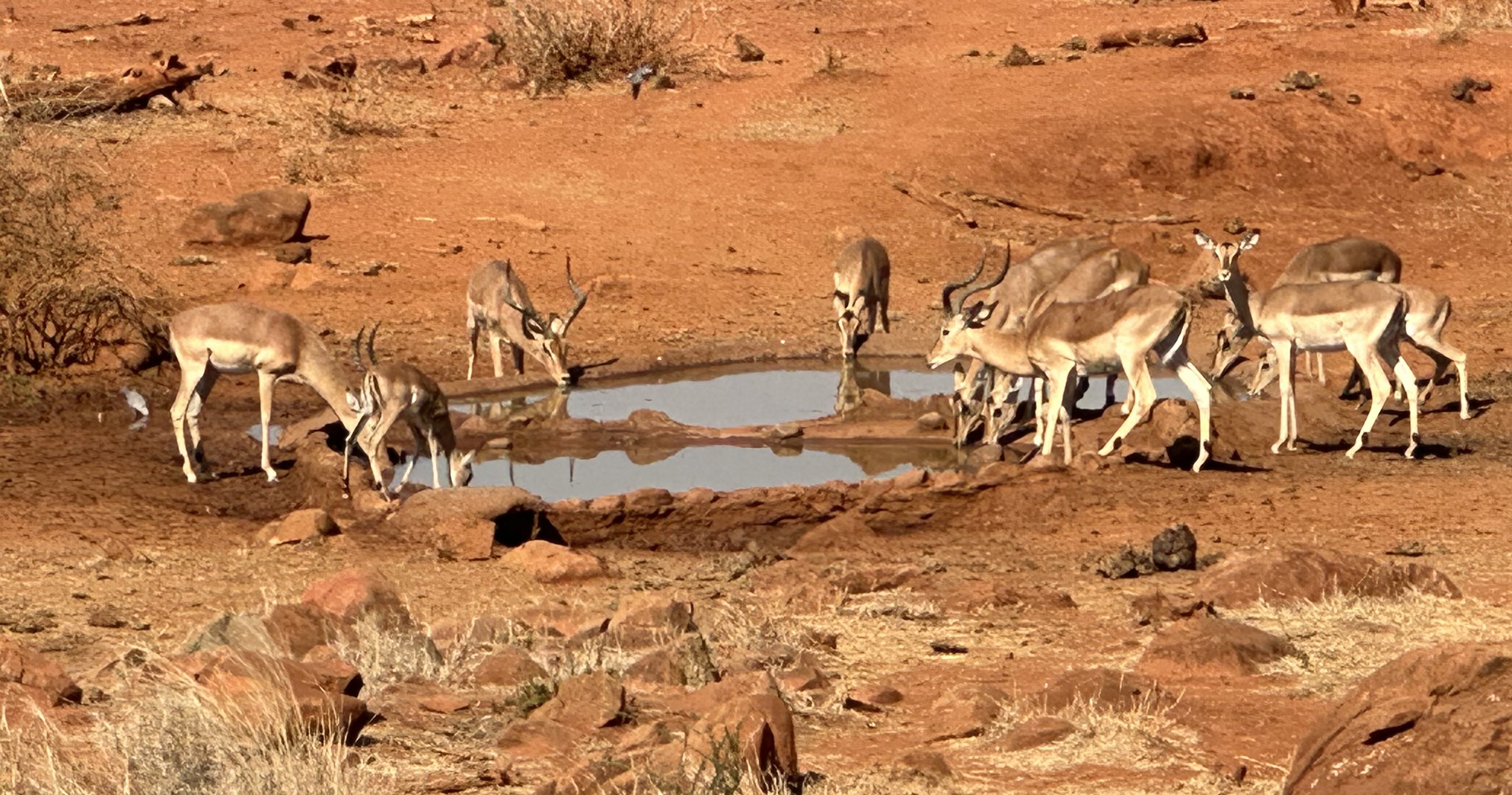
Ten impala a-watering
Nine wildebeest prancing
Eight gemsbok a-resting
Seven marching elephants
Six grazing zebras
Five feeding cheetahs
Four playing wild dogs
Three hartebeest
Two lion cubs and
A leopard in a great tree
On the eleventh day of Christmas
My true love sent to me:
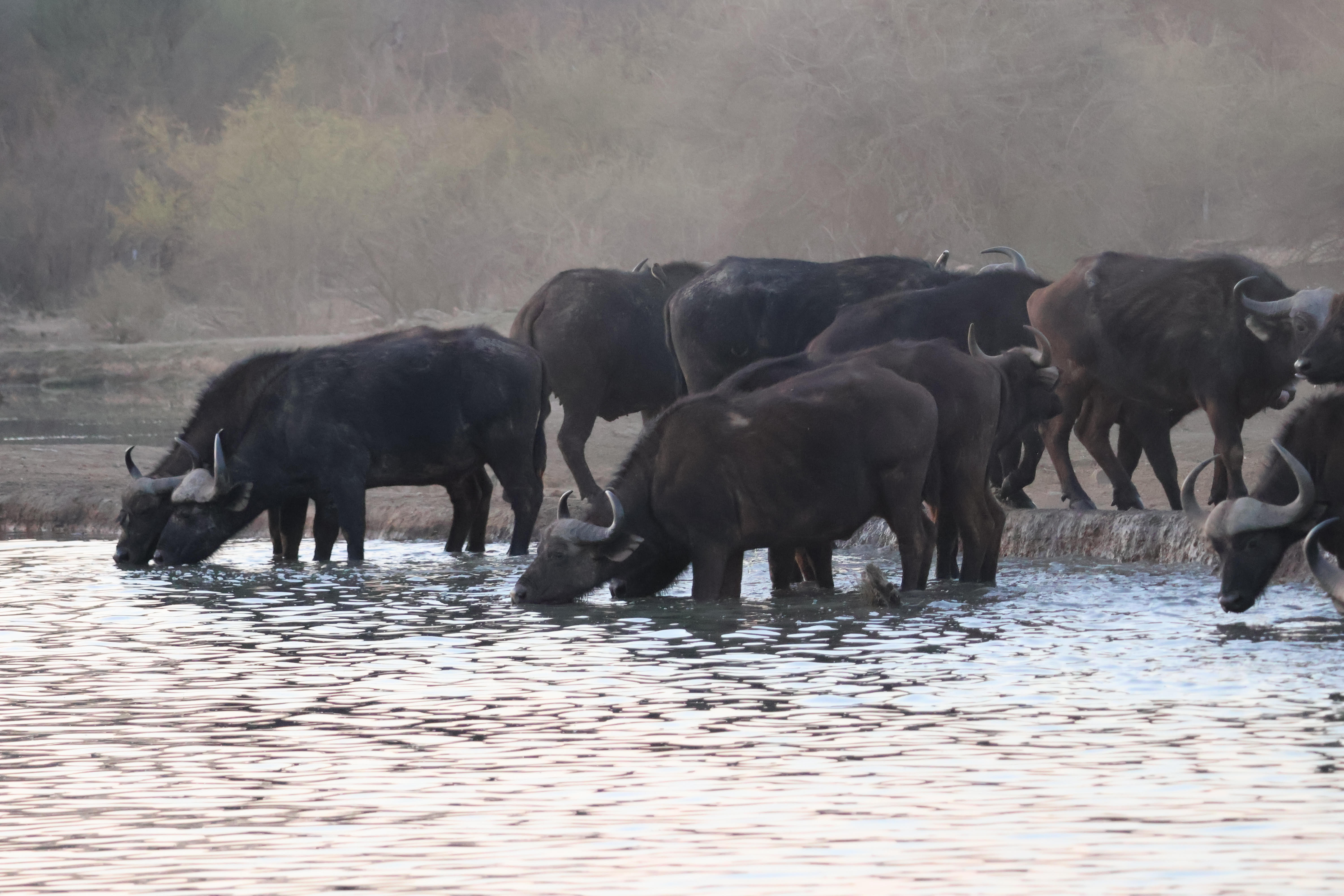
Eleven buffalos drinking
Ten impala a-watering
Nine wildebeest prancing
Eight gemsbok a-resting
Seven marching elephants
Six grazing zebras
Five feeding cheetahs
Four playing wild dogs
Three hartebeest
Two lion cubs and
A leopard in a great tree
On the twelfth day of Christmas
My true love sent to me:
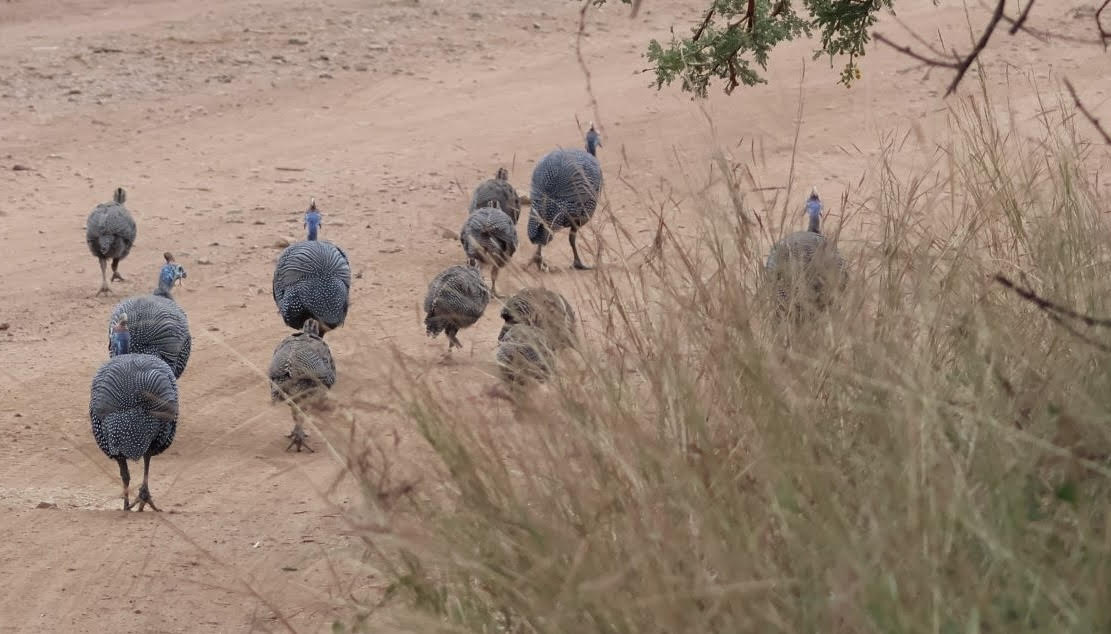
Twelve guinea fowl running
Eleven buffalos drinking
Ten impala a-watering
Nine wildebeest prancing
Eight gemsbok a-resting
Seven marching elephants
Six grazing zebras
Five feeding cheetahs
Four playing wild dogs
Three hartebeest
Two lion cubs and
A leopard in a great tree
Happy Holidays!
Share this:

In Touch With Nature – Wildebeeste, the Clown of the Veld
Posted: November 26, 2025 Filed under: Africa, In Touch With Nature, Nature, Wildlife | Tags: #InTouchWithNature, #poetry, #RobbieCheadle, #Wildebeest, #wildlife, Nature, South Africa, Wildlife 47 CommentsLast month I wrote about warthogs, one of the Ugly Five animals of Southern Africa. This month I have written about another Ugly Five animal, the wildebeest. I have written a poem using the format and rhyming scheme of another very famous poem. Can you guess which poem it is?

Wildebeest, Clown of the Veld
In the game park we’d just arrived, after a long and difficult drive
Despite being fatigued, my eyes were quick and eager to see
The animals I love, anything and everything from lion to dove
I happened to see a mom and calf, running along wild and free
“Look,” I cried, “a baby wildebeest, running along wild and free”
The calf sighting filled me with glee
***
It was early summer, and the temperatures couldn’t be hotter
When we had this chance encounter with the “clown of the veld”
Also known as gnu, these ones were black not East African blue
Such a funny looking creature, not sophisticated and svelte
Even its erratic and playful behaviour was far from svelte
The joker of the veld
***
A joy to watch, they looked like they’d had a go at the scotch
As the vehicle approached, they pranced, leaping up and down
Kicking their heels into the air, an entertaining dancing pair
Running in circles for no reason, the world was their playground
Suddenly stopping, looking back, over their world and playground
Amusing and fun veld clowns
***
Wildebeest, the name, means wild beast, although on grass they feast
Unlike their blue Eastern relatives, black wildebeest don’t migrate
They have a long, horse-like tail, and the darker ones are always male
These creatures must drink water daily or they’ll quickly dehydrate
As a result you’ll find them near waterways so they don’t dehydrate
During droughts, death their fate
***
Driving further down the road, several more gnu became exposed
Many more adults and calves grazing with zebra in a mixed herd
My camera was quickly snapping, so fast my pictures overlapping
On their backs and heavy forequarters feasted the ox-pecker bird
Wildebeest have a symbiotic relationship with the ox-pecker bird
Although this pairing looks absurd
***
Often a gnu’s life depends, on hanging around with its zebra friends
This relationship heightens their awareness of any potential carnivores
In the bush the cats must also eat, the only escape being quick and fleet
This is the way of life in the wild and animals comply with the bush laws
One creature must die to give another life in terms of the bush laws
Part of experiencing the great outdoors


You can see my Youtube videos of wildebeest here:
About Roberta Eaton Cheadle
Roberta Eaton Cheadle, is a South African writer and poet specialising in historical, paranormal, and horror novels and short stories. She is an avid reader in these genres and her writing has been influenced by famous authors including Bram Stoker, Edgar Allan Poe, Amor Towles, Stephen Crane, Enrich Maria Remarque, George Orwell, Stephen King, and Colleen McCullough.
Roberta has two published novels and a collection of short stories and has horror, paranormal, and fantasy short stories included in several anthologies. She is also a contributor to the Ask the Authors 2022 (WordCrafter Writing Reference series).
Roberta is also the author and illustrator of seventeen children’s books, illustrator to a further three children’s books, and the author and illustrator of four poetry books published under the name of Robbie Cheadle, and has poems and short stories featured in several anthologies under this name.
Roberta’s blog features discussions about classic books, book reviews, poetry, and photography. https://roberta-writes.com/.
Find Roberta Eaton Cheadle
Blog: https://wordpress.com/view/robertawrites235681907.wordpress.com
Bluesky: https://bsky.app/profile/robbiecheadle.bsky.social
Facebook: https://www.facebook.com/robertawrites
Amazon: https://www.amazon.com/Roberta-Eaton-Cheadle/e/B08RSNJQZ5
___________________________________________
Like this post? Are you a fan of this blog series? Did you know you can sponsor your favorite blog series or even a single post with an advertisement for your book? Stop by the WtbR Sponsor Page and let me advertise your book, or you can make a donation to Writing to be Read for as little as a cup of coffee, If you’d like to show your support for this author and WordCrafter Press.
__________________________________________
This segment of “In Touch with Nature” is sponsored by the Midnight Anthology Series and WordCrafter Press.
Midnight Roost: Weird and Creepy Stories: 20 authors bring your nightmares to life in 23 stories of ghosts, paranormal phenomenon and the horror from the dark crevasses of their minds. Stories of stalkers, both human and supernatural, possession and occult rituals, alien visitations of the strange kind, and ghostly tales that will give you goosebumps. These are the tales that will make you fear the dark. Read them at the Midnight Roost… if you dare. https://www.amazon.com/Midnight-Roost-Kaye-Lynne-Booth-ebook/dp/B0CL6FPLVJ
Midnight Garden: Where Dark Tales Grow: 17 authors bring you 21 magnificent dark tales. Stories of magic, monsters and mayhem. Tales of murder and madness which will make your skin crawl. These are the tales that explore your darkest fears. Read them in the Midnight Garden… if you dare. https://www.amazon.com/Midnight-Garden-Where-Tales-Anthology-ebook/dp/B0DJNDQJD3
Midnight Oil: Stories to Fuel Your Nightmares: 14 authors bring you 16 dark tales that explore your deepest fears. These are the stories which nightmares are made of. Tales of monsters, mayhem, and madness which will make you shiver in the dark. Read them while you burn the Midnight Oil… if you dare. https://books2read.com/Midnight-Oil
Share this:

In Touch With Nature – Meet Pumbaa the Warthog and a treat #southernafricanwildlife #intouchwithnature
Posted: October 22, 2025 Filed under: Africa, Animals, In Touch With Nature, Nature, Nature writing, Poetry, Wildlife | Tags: In Touch With Nature, Photography, Poetry, Robbie Cheadle, South Africa, Warthogs, White Giraffe, Wildlife, Writing to be Read 40 Comments
Disney was as kind to warthog’s as it was unkind to hyenas in its movie, The Lion King. Pumbaa the Warthog is a well-known Southern African cartoon figure among many people, young and old. This is intriguing to me as warthogs, together with poor unloved hyenas, are both part of the Southern African ‘Ugly Five’ group of animals.
I always laugh when I see warthogs running about in the veld. I immediately think of ‘pigs in blankets’ and they are definitely ‘bush snacks’ for many carnivores. So, let’s learn a bit more about these funny looking creatures.
Warthogs are day animals and spend most of their time foraging for food. Socially, they are found in three groups: solitary boars, bachelor groups, and matriarchal groups which consist of adult sows with their young and yearlings. Outside of mating, the boars seldom associate with the sows and play no role in rearing the piglets. Did I mention that warthogs are a member of the pig family? Warthogs are the only pigs that have adapted to living and grazing in savannah like habitats.
A few interesting features of warthogs are that they kneel on their front knees while feeding and foraging and they shelter in (frequently borrowed) burrows at night which they enter tails first. Although they like more dry surroundings, warthogs enjoy wallowing in muddy water every day. This wallowing process is how they stay cool on hot days in the same manner as elephants and buffalo.

Warthogs tend to breed and give birth at the beginning of the rainy season in regions where the seasons are defined. In other environments, warthogs can breed all year around. Warthogs generally have two to three piglets in a litter.

Although I said these creatures are bush snacks for lions, leopards, cheetahs, hyenas and painted dogs, they have longer legs than most pigs and can run very quickly. They are difficult to catch and also difficult to photograph.
Interesting warthog facts
- Warthogs have two pairs of tusks
- Warthogs trot with their tails in the air
- Warthogs can run up to 55 kilometres per hour (35 miles per hour)
- Warthogs fight in a ritualistic way and use their heads and tusks to try to push their opponent over.
- Warthogs have warts on their faces which act as a cushion for blows from their adversaries. Large warts also help protect their eyes during fights.
- A group of female warthogs with young is called a sounder
- Mama warthogs like orderly behaviour and the piglets always run in a fixed order in a line and not in a disorderly group.
- Warthogs are attentive mothers; they leave the sounder when about to give birth and find their own burrow or hole. Mama remains in this hole with her young for the first six to seven weeks after birth, only leaving for short periods to graze.
- Warthogs are hunted for their tusks which are carved for the tourist trade in eastern and southern Africa (don’t buy these!)
- Warthogs communicate using a variety of different noises including loud grunts, growling and squeals. Clacking noises are used by males to entice females.


My Youtube video of a sounder having breakfast:
Poem about warthogs
This poem is extracted from my favourite of my own books, Lion Scream.
Home Thief
I am not beautiful
My head is too big
My face is covered in wartlike protrusions
To protect it during fights
I have four large tusks
***
I prefer to trespass
On ready-built homes
It’s easier if aardvark does the digging
Creating a safe hole
And I just move in
***
My babies enter first
I have up to four
Backing in leaves me prepared to protect them
From many predators
Who view us as snacks
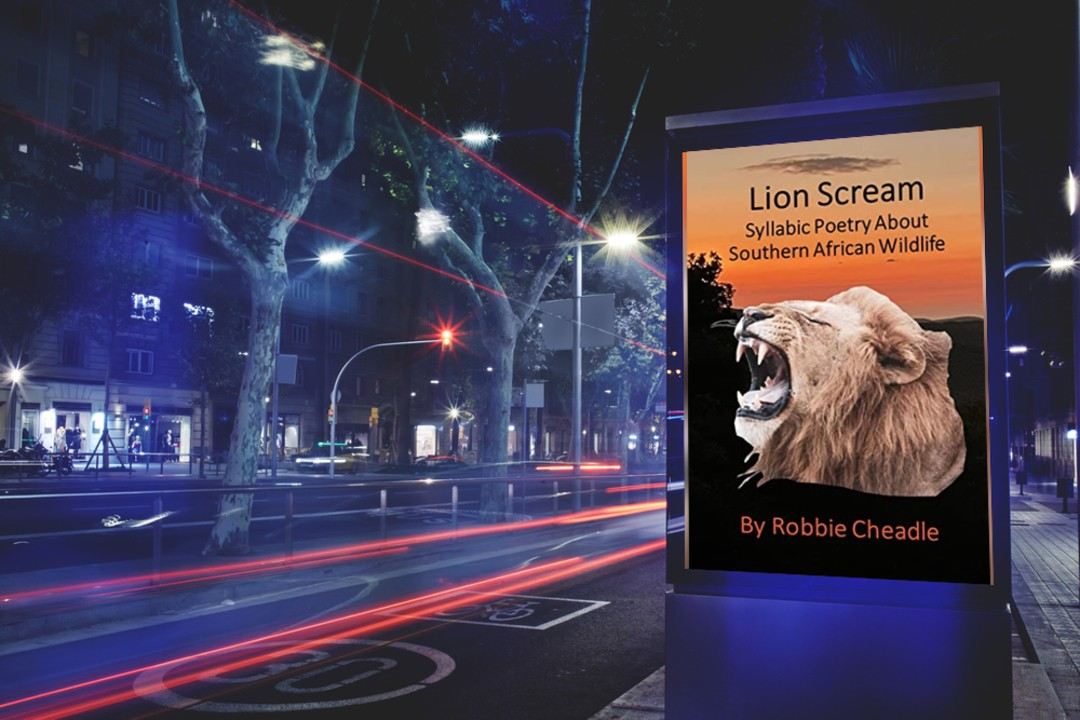
Lion Scream is available from Amazon here: https://www.amazon.com/Lion-Scream-Syllabic-Southern-Wildlife-ebook/dp/B0BXP5N766
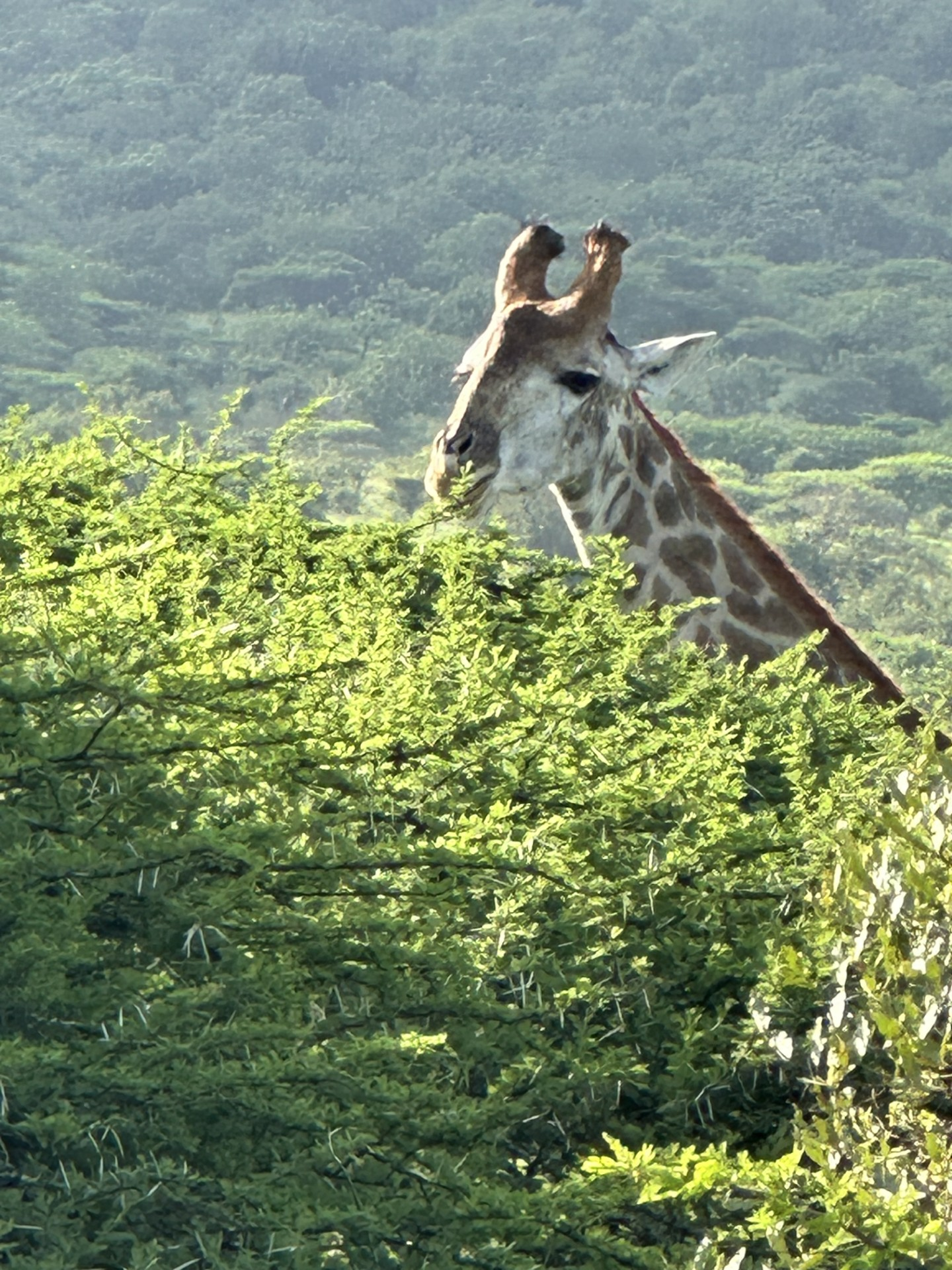
White headed giraffe – a special sighting
During a trip to Babanango Private Game Reserve we had the good fortune to come across this giraffe with large white patches on its face. Very unusual. The guide was very patient and waited for me to get my shots.


About Roberta Eaton Cheadle
Roberta Eaton Cheadle, is a South African writer and poet specialising in historical, paranormal, and horror novels and short stories. She is an avid reader in these genres and her writing has been influenced by famous authors including Bram Stoker, Edgar Allan Poe, Amor Towles, Stephen Crane, Enrich Maria Remarque, George Orwell, Stephen King, and Colleen McCullough.
Roberta has two published novels and a collection of short stories and has horror, paranormal, and fantasy short stories included in several anthologies. She is also a contributor to the Ask the Authors 2022 (WordCrafter Writing Reference series).
Roberta is also the author and illustrator of seventeen children’s books, illustrator to a further three children’s books, and the author and illustrator of four poetry books published under the name of Robbie Cheadle, and has poems and short stories featured in several anthologies under this name.
Roberta’s blog features discussions about classic books, book reviews, poetry, and photography. https://roberta-writes.com/.
Find Roberta Eaton Cheadle
Blog: https://wordpress.com/view/robertawrites235681907.wordpress.com
Bluesky: https://bsky.app/profile/robbiecheadle.bsky.social
Facebook: https://www.facebook.com/robertawrites
Amazon: https://www.amazon.com/Roberta-Eaton-Cheadle/e/B08RSNJQZ5
___________________________________________
Like this post? Are you a fan of this blog series? Did you know you can sponsor your favorite blog series or even a single post with an advertisement for your book? Stop by the WtbR Sponsor Page and let me advertise your book, or you can make a donation to Writing to be Read for as little as a cup of coffee, If you’d like to show your support for this author and WordCrafter Press.
__________________________________________
This segment of “In Touch with Nature” is sponsored by the Midnight Anthology Series and WordCrafter Press.
Midnight Roost: Weird and Creepy Stories: 20 authors bring your nightmares to life in 23 stories of ghosts, paranormal phenomenon and the horror from the dark crevasses of their minds. Stories of stalkers, both human and supernatural, possession and occult rituals, alien visitations of the strange kind, and ghostly tales that will give you goosebumps. These are the tales that will make you fear the dark. Read them at the Midnight Roost… if you dare. https://www.amazon.com/Midnight-Roost-Kaye-Lynne-Booth-ebook/dp/B0CL6FPLVJ
Midnight Garden: Where Dark Tales Grow: 17 authors bring you 21 magnificent dark tales. Stories of magic, monsters and mayhem. Tales of murder and madness which will make your skin crawl. These are the tales that explore your darkest fears. Read them in the Midnight Garden… if you dare. https://www.amazon.com/Midnight-Garden-Where-Tales-Anthology-ebook/dp/B0DJNDQJD3
Midnight Oil: Stories to Fuel Your Nightmares: 14 authors bring you 16 dark tales that explore your deepest fears. These are the stories which nightmares are made of. Tales of monsters, mayhem, and madness which will make you shiver in the dark. Read them while you burn the Midnight Oil… if you dare. https://books2read.com/Midnight-Oil
Share this:

In Touch With Nature – Leopard Tortoise, one of the Small Five #Africanwildlife #leopardtortoise
Posted: September 24, 2025 Filed under: Africa, Animals, In Touch With Nature, Nature, Poetry, Wildlife | Tags: In Touch With Nature, Leopard Tortoise, Robbie Cheadle, South Africa, Wildlife, Writing to be Read 23 Comments
This month, I am featuring the leopard tortoises. One of the small five African animals, along with the elephant shrew, ant lion, rhinoceros beetle, and buffalo weaver.

Leopard Tortoise
One of the ‘small five’
whose names relate to the big five
the leopard tortoise
with its distinctive patterned shell
is a signature animal
of the African savannah.
Lacking a nuchal shield
this tortoise is the only member of its family
that can raise its head
and is thus, the only tortoise
that can swim. It can also stay under water
for up to ten minutes.
It’s sex is determined by
the temperature at which
the egg is incubated. Amazing!
And, this incredible creature
can climb. It uses its strong toenails
to manoeuvre over rocky terrain.
Living up to one hundred years
you can tell its age by counting
the scutes or ridges on its shell
just like counting rings on a tree.
If you find one in South Africa
you may not keep it without a permit
as they are a protected species.
Should you manage to get a permit
do not hibernate it in the refrigerator
as leopard tortoises do not hibernate
but rather enter a state of reduced activity
called brumation which is similar
to deep sleep. They require supplemental
heating during the winter months
as they are not adapted to cold.

my video of a leopard tortoise that came into the lodge grounds.
About Roberta Eaton Cheadle
Roberta Eaton Cheadle, is a South African writer and poet specialising in historical, paranormal, and horror novels and short stories. She is an avid reader in these genres and her writing has been influenced by famous authors including Bram Stoker, Edgar Allan Poe, Amor Towles, Stephen Crane, Enrich Maria Remarque, George Orwell, Stephen King, and Colleen McCullough.
Roberta has two published novels and a collection of short stories and has horror, paranormal, and fantasy short stories included in several anthologies. She is also a contributor to the Ask the Authors 2022 (WordCrafter Writing Reference series).
Roberta is also the author and illustrator of seventeen children’s books, illustrator to a further three children’s books, and the author and illustrator of four poetry books published under the name of Robbie Cheadle, and has poems and short stories featured in several anthologies under this name.
Roberta’s blog features discussions about classic books, book reviews, poetry, and photography. https://roberta-writes.com/.
Find Roberta Eaton Cheadle
Blog: https://wordpress.com/view/robertawrites235681907.wordpress.com
Bluesky: https://bsky.app/profile/robbiecheadle.bsky.social
Facebook: https://www.facebook.com/robertawrites
Amazon: https://www.amazon.com/Roberta-Eaton-Cheadle/e/B08RSNJQZ5
___________________________________________
Like this post? Are you a fan of this blog series? Did you know you can sponsor your favorite blog series or even a single post with an advertisement for your book? Stop by the WtbR Sponsor Page and let me advertise your book, or you can make a donation to Writing to be Read for as little as a cup of coffee, If you’d like to show your support for this author and WordCrafter Press.
__________________________________________
This segment of “In Touch with Nature” is sponsored by the Midnight Anthology Series and WordCrafter Press.

Midnight Roost: Weird and Creepy Stories: 20 authors bring your nightmares to life in 23 stories of ghosts, paranormal phenomenon and the horror from the dark crevasses of their minds. Stories of stalkers, both human and supernatural, possession and occult rituals, alien visitations of the strange kind, and ghostly tales that will give you goosebumps. These are the tales that will make you fear the dark. Read them at the Midnight Roost… if you dare. https://www.amazon.com/Midnight-Roost-Kaye-Lynne-Booth-ebook/dp/B0CL6FPLVJ
Midnight Garden: Where Dark Tales Grow: 17 authors bring you 21 magnificent dark tales. Stories of magic, monsters and mayhem. Tales of murder and madness which will make your skin crawl. These are the tales that explore your darkest fears. Read them in the Midnight Garden… if you dare. https://www.amazon.com/Midnight-Garden-Where-Tales-Anthology-ebook/dp/B0DJNDQJD3
Share this:

In Touch With Nature – Nyala antelope #southernAfricanwildlife
Posted: March 26, 2025 Filed under: Africa, Animals, In Touch With Nature, Nature, Wildlife | Tags: In Touch With Nature, Nyala Antelope, Robbie Cheadle, South Africa, Writing to be Read 88 CommentsThe Nyala is a spiral horned antelope native to southern Africa. It is the antelope with the highest sexual dimorphism (differences between male and female of the species). This is easy to see in the photographs and videos I’ve shared in this post so look out for the rusty or rufous brown coats of the females and juveniles and the dark brown or slate grey coat of adult males. Females and juveniles also have ten or more white vertical stripes on their sides which the stripes are greatly reduced or completely absent in the adult males. The males are significantly larger than the females.


The Nyala is a shy animal and is usually seen in the early morning and the late afternoon when it browses, feeding on foliage, fruits, and grasses. They live in thickets within dense and dry savannah woodlands and are usually found in single-sex or mixed family groups of up to ten animals. These antelope are not fast runners, and their camouflage is their main defense against predators.
The main predators of the Nyala are lions, leopards, African wild dogs, and humans. The males are highly prized as game animals, and they are often victims of poaching. Human settlement is also encroaching on their habitat resulting in a declining population although they are classified as Least Concern by the International Union for Conservation of Nature (IUCN).
Nyalas have a special relationship with the baboons and vervet monkeys with whom they share the woodlands. They eat any fruit dropped by these primates and also react to any alarm calls made by primates from their advantageous viewing points in the trees. The baboons and monkeys also benefit from the relationship as Nyala have exceptional hearing, smell, and sight. When a Nyala spots danger, it gives off a striking alarm call sounding a bit like a barking dog. This warning also serves the primates and other creatures sharing their habitat.
Interestingly, Nyalas are not territorial. They wander about in groups and do not try to protect any areas from other creatures.
Nyala buck have an aggressive way of breeding. Firstly, the males fight for dominance, crashing into each other with their sharp horns acting like swords. The horns often draw blood. The bulls fight until one backs down by walking away as a sign of submission. These battles can be fatal if the wounds become infected or if the bull is concussed. The winning bull then slowly dances within the group of females, using strange, stuttering movements and raising its head to show off its white underfur.
When a female is on heat, the male follows her on foot, pushing his nose between her legs. He gets excited and buts her hindquarters right off the ground. If the female is interested, she stops walking. The male then walks around her and presses her head down before he mounts her. Gestation is 220 days and ewes can conceive from the age of 14 months.


YouTube video of Nyala herd comprising of young males and females:
Male Nyala licking his legs YT video:
YT video of a Nyala male feeding:
The Fire Part 1
Flamboyant performer
Sun takes final bow
Pitch black curtains descend; concealing the stage
Campers assemble fire
Restraining darkness
***
Wood ignites, flames crackle
Illuminating
Nocturnal animals materialise
Skulking in deep shadow
Bright eyes glittering
***
Feeding ravenous blaze
An essential task
Stopping potential diners from helping themselves
To a convenient
Snack of arms or legs
The Fire Part 2
Dawn makes her grand entrance
Painting the sky red
Men prepare to depart, water smothers fire
Murky vapour billows
Dark ashes sodden
***
Everything orderly
The campers move on
Single flickering coal smolders unnoticed
Mutely clinging to life
Nurtured by the breeze
***
Dry leaves fall stealthily
Embracing ember
Sustenance provided; leaves burst into flame
Cunningly building strength
Destruction ensured
These poem duo is from my book, Lion Scream, Syllabic Poetry About Southern African Wildlife, available from Amazon here: https://www.amazon.com/Lion-Scream-Syllabic-Southern-Wildlife-ebook/dp/B0BXP5N766

About Roberta Eaton Cheadle

Roberta Eaton Cheadle, is a South African writer and poet specialising in historical, paranormal, and horror novels and short stories. She is an avid reader in these genres and her writing has been influenced by famous authors including Bram Stoker, Edgar Allan Poe, Amor Towles, Stephen Crane, Enrich Maria Remarque, George Orwell, Stephen King, and Colleen McCullough.
Roberta has two published novels and a collection of short stories and has horror, paranormal, and fantasy short stories included in several anthologies. She is also a contributor to the Ask the Authors 2022 (WordCrafter Writing Reference series).
Roberta is also the author and illustrator of sixteen children’s books, illustrator to a further three children’s books, and the author and illustrator of three poetry books published under the name of Robbie Cheadle, and has poems and short stories featured in several anthologies under this name.
Roberta’s blog features discussions about classic books, book reviews, poetry, and photography. https://roberta-writes.com/.
Find Roberta Eaton Cheadle
Blog: https://wordpress.com/view/robertawrites235681907.wordpress.com
Bluesky: https://bsky.app/profile/robbiecheadle.bsky.social
Facebook: https://www.facebook.com/robertawrites
Amazon: https://www.amazon.com/Roberta-Eaton-Cheadle/e/B08RSNJQZ5
___________________________________________
Like this post? Are you a fan of this blog series? Did you know you can sponsor your favorite blog series or even a single post with an advertisement for your book? Stop by the WtbR Sponsor Page and let me advertise your book, or you can make a donation to Writing to be Read for as little as a cup of coffee, If you’d like to show your support for this author and WordCrafter Press.
__________________________________________
This segment of “In Touch with Nature” is sponsored by the Midnight Anthology Series and WordCrafter Press.
Midnight Roost: Weird and Creepy Stories: 20 authors bring your nightmares to life in 23 stories of ghosts, paranormal phenomenon and the horror from the dark crevasses of their minds. Stories of stalkers, both human and supernatural, possession and occult rituals, alien visitations of the strange kind, and ghostly tales that will give you goosebumps. These are the tales that will make you fear the dark. Read them at the Midnight Roost… if you dare. https://www.amazon.com/Midnight-Roost-Kaye-Lynne-Booth-ebook/dp/B0CL6FPLVJ
Midnight Garden: Where Dark Tales Grow: 17 authors bring you 21 magnificent dark tales. Stories of magic, monsters and mayhem. Tales of murder and madness which will make your skin crawl. These are the tales that explore your darkest fears. Read them in the Midnight Garden… if you dare. https://www.amazon.com/Midnight-Garden-Where-Tales-Anthology-ebook/dp/B0DJNDQJD3
Share this:

In Touch With Nature – the difference between African and Asian Elephants #Elephants #wildlife
Posted: August 28, 2024 Filed under: Africa, Animals, In Touch With Nature, Nature, Wildlife | Tags: African Wildlife, Elephants, In Touch With Nature, Roberta Eaton Cheadle, South Africa, Writing to be Read 49 Comments
A couple of years ago, my family visited an elephant sanctuary near the Cradle of Humankind. For those of you who don’t know the Cradle of Humankind, it is an area in South Africa where many fossils, tools, and other traces of early humans have been found.
We also visited the Sterkfontein Caves where the 2.3 million year old fossil of Mrs Ples is on display, but this post is about the elephants.
We participated in a guided tour of the elephant sanctuary and one of the discussions with the guide revolved around the differences between African and Asian elephants. I thought it was quite interesting.

The above photograph is of African elephants. There are two species of African elephants, the larger being the African bush elephant (or African savannah elephant) which is the one I’m most familiar with, and the smaller being the African forest elephant. The above picture is of African savannah elephants.

Can you spot the differences. They are as follows:
Size: African elephants are much bigger than Asian elephants. African savannah elephants weigh approximately 8,000 kg or 9 tons and are between 3 and 4 metres tall (10 and 13 feet) at the shoulder. Asian elephants weigh approximately 5,500 kg or 6 tons and are not taller than 3,5 metres at the shoulder.
Ears: African elephants have much bigger ears and they are shaped like the continent of Africa. Asian elephants have smaller, round ears. African elephants have larger ears because they dissipate heat through their ears and Africa is hotter than Asia.
Head shape: African elephants have rounded heads and Asian elephants have a twin-domed head.
Tusks: Both male and female African elephants can have tusks, but only Asian male elephants have them. Not all elephants grow tusks.
A lot of people have romanticised ideas about elephants and think they are cute like Dumbo. This is not true. African elephants are very territorial and highly protective of their young. They can be exceptionally dangerous. I wrote a poem about this recently which you can read here: https://roberta-writes.com/2024/08/17/roberta-writes-song-parody-for-dverse-open-link-night-dverse-elephants-poetry-art/


Elephants playing in the river at Madikwe (this is at Thakadu Tented Camp)
A very grubby elephant (taken at Makikwe Game Reserve – Madikwe Hills Lodge)
I adore this video of a herd of elephants walking in line:
About Roberta Eaton Cheadle
Roberta Eaton Cheadle, is a South African writer and poet specialising in historical, paranormal, and horror novels and short stories. She is an avid reader in these genres and her writing has been influenced by famous authors including Bram Stoker, Edgar Allan Poe, Amor Towles, Stephen Crane, Enrich Maria Remarque, George Orwell, Stephen King, and Colleen McCullough.
Roberta has two published novels and a collection of short stories and has horror, paranormal, and fantasy short stories included in several anthologies. She is also a contributor to the Ask the Authors 2022 (WordCrafter Writing Reference series).
Roberta is also the author and illustrator of sixteen children’s books, illustrator to a further three children’s books, and the author and illustrator of three poetry books published under the name of Robbie Cheadle, and has poems and short stories featured in several anthologies under this name.
Roberta’s blog features discussions about classic books, book reviews, poetry, and photography. https://roberta-writes.com/.
Find Roberta Eaton Cheadle
Blog: https://wordpress.com/view/robertawrites235681907.wordpress.com
Twitter: https://twitter.com/RobertaEaton17
Facebook: https://www.facebook.com/robertawrites
Amazon: https://www.amazon.com/Roberta-Eaton-Cheadle/e/B08RSNJQZ5
___________________________________________
Want to be sure not to miss any of Robbie’s “In Touch With Nature” segments? Subscribe to Writing to be Read for e-mail notifications whenever new content is posted or follow WtbR on WordPress. If you found it interesting or entertaining, please share.
__________________________________________
This segment of “In Touch with Nature” is sponsored by Midnight Roost: Weird & Creepy Stories and WordCrafter Press.

20 authors bring your nightmares to life in 23 stories of ghosts, paranormal phenomenon and the horror from the dark crevasses of their minds. Stories of stalkers, both human and supernatural, possession and occult rituals, alien visitations of the strange kind, and ghostly tales that will give you goosebumps. These are the tales that will make you fear the dark. Read them at the Midnight Roost… if you dare.
On sale now for only $4.99
June 15 – August 31,2024
https://books2read.com/MidnightRoost
Share this:

In Touch With Nature – The vulnerable life of male lions #wildlife #lions
Posted: February 28, 2024 Filed under: Animals, In Touch With Nature, Poetry, Wildlife | Tags: Animals, In Touch With Nature, Lions, Robbie Cheadle, South Africa, Wildlife, Writing to be Read 74 Comments
Lions live in groups called prides. Each pride is comprised of related lionesses and one or more adult male lions will also be present with the dominant male being the pride leader. Female lionesses are loyal to their pride and not to their family members, and this often means that they don’t keep related males in their pride.
Male lion cubs are frequent victims of snake bits, hunting hyenas, and male lions that aren’t their father or uncle. One in two male lion cubs will die in their first year of life. The greatest single cause of male lion mortality in the first year of life is infanticide by unrelated male lions.

At approximately three years of age, male lions are pushed out of their pride by their fathers. Alternatively, they may be forced to leave the pride when a new coalition of male lions takes over the pride. For a period of two or three years after leaving their prides, young male lions wander on their own, trying to avoid confrontation with older, stronger male lions. Frequently, single males find other males of a similar age and join them to form a coalition. Coalitions typically comprise of two to four male lions and are often made up of brothers or cousins although some include unrelated males. The main purpose for male lions forming coalitions is to compete with other male lions for mates.
When the males in a coalition reach four to five years of age, they will challenge other male coalitions for access to a pride of lionesses. When a new coalition takes over a pride, the new males seek out and kill the cubs of other males or drive them away. The purpose of the killing of cubs is to accelerate the return of the lionesses to a reproductive state thereby allowing the new males to raise their own cubs. The dominant male or pride leader generally gets first mating rights but lionesses do mate with other pride males. The lesser males usually get their opportunity when several females are in heat at the same time and if the dominant male losses interest while the lionesses are still in heat.


The dominant male is usually the largest, strongest male lion. Dominant males usually only retain that position for a few years and then they are challenged by a younger male or an outside coalition. During their time as pride leader, the male is responsible for defending the females and their cubs from predators such as hyenas.
When a battle for leadership takes place within an existing pride, the battle is usually fierce but not deadly. If an outside coalition challenges the leader, the battle will be to the death.
Brothers, a 99-sylable Double Ennead poem by Robbie Cheadle

Dry, yellow grass stretches
To the horizon
Just there, under a scrub tree, lie two brothers
Within slumbers embrace
They soak up the sun
***
The colour of ripe wheat
They blend with the bush
Male lions resting peacefully
Enjoying blissful dreams
Concerning fat buck
***
One starts gently stirring
Rolls over and sighs
His underbelly unintimidating
But then he yawns widely
Showing great long teeth
This poem is included in Lion Scream, Syllabic Poetry About Southern African Wildlife

Lion brothers walking on the road:
About Roberta Eaton Cheadle
Award-winning, bestselling author, Roberta Eaton Cheadle, is a South African writer and poet specialising in historical, paranormal, and horror novels and short stories. She is an avid reader in these genres and her writing has been influenced by famous authors including Bram Stoker, Edgar Allan Poe, Amor Towles, Stephen Crane, Enrich Maria Remarque, George Orwell, Stephen King, and Colleen McCullough.
Roberta has two published novels and has horror, paranormal, and fantasy short stories included in several anthologies. She is also a contributor to the Ask the Authors 2022 (WordCrafter Writing Reference series).
Roberta also has thirteen children’s books and two poetry books published under the name of Robbie Cheadle, and has poems and short stories featured in several anthologies under this name.
Roberta’s blog features discussions about classic books, book reviews, poetry, and photography. https://roberta-writes.com/.
Find Roberta Eaton Cheadle
Blog: https://wordpress.com/view/robertawrites235681907.wordpress.com
Twitter: https://twitter.com/RobertaEaton17
Facebook: https://www.facebook.com/robertawrites
Amazon: https://www.amazon.com/Roberta-Eaton-Cheadle/e/B08RSNJQZ5
_____________________________________________________________________________________________
Want to be sure not to miss any of Robbie’s “In Touch With Nature” segments? Subscribe to Writing to be Read for e-mail notifications whenever new content is posted or follow WtbR on WordPress. If you found it interesting or entertaining, please share.