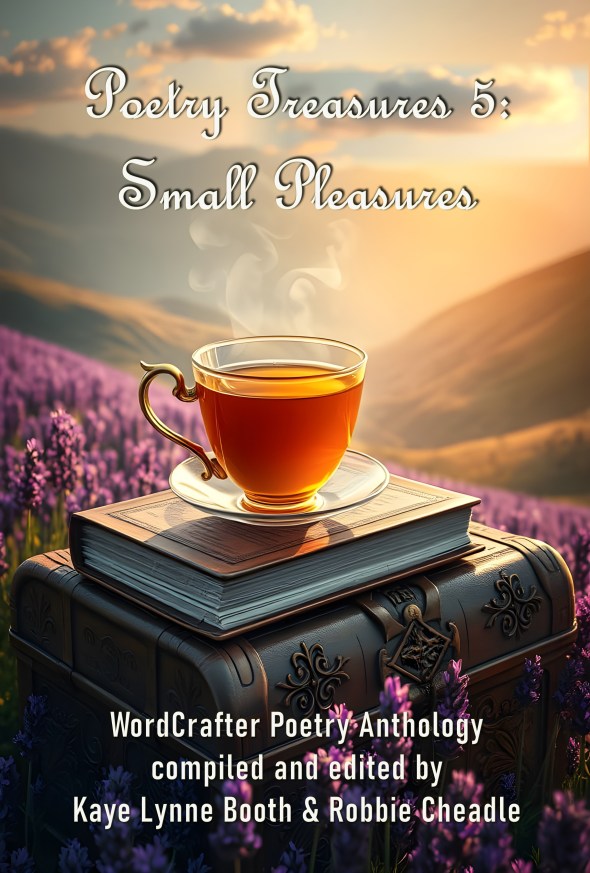
Picture Caption: WordCrafter Poetry Treasures 5: Small Pleasures Tour Banner
Welcome to the WordCrafter Poetry Treasures 5: Small Pleasures Book Blog Tour. We have a great tour planned, and I hope you all will stick with us and visit each stop, because comments at each stop enters you for another chance to win one of three digital copies of Poetry Treasures 5 in our giveaway. We’ve got guest posts from from contributors Michelle Ayon Navajas and Dawn Pisturino, readings from Barbara Harris Leonhard, Ivor Steven, and DL Mullen, and a special interview with Dawn Pisturino. Plus you may find a couple of early reviews from our wonderful tour hosts. So please join us and follow along on the schedule below to learn more about this outstanding poetry anthology and enjoy a few Small Pleasures.
Tour Schedule
April 21-28 – Poetry Treasures 5: Small Pleasures, by Kaye Lynne Booth, et.al.
Mon. 4/21 – Opening Day- Writing to be Read – (Intro. post & Book Trailer)
Join poets DL Mullan, Barbara Harris Leonhard, Jude Itakali, Ivor Steven, Robbie Cheadle, Michelle Ayon Navajas, Gwen M. Plano, Elizabeth Gauffreau, David Bogomolny, Dawn Pasturino, Maggie Watson, and Colleen Chesebro share their own small pleasures in poetic verse.
This tour we’re giving away digital copies of Poetry Treasures 5: Small Pleasures to three lucky winners. Follow the tour and comment at each stop, so we’ll know you were there. You’ll be entered for another chance in the giveaway at each stop. Winners are chosen through a random drawing by WordCrafter Press. We’ll be watching for your name.
Book Trailer
A special thanks goes out to Teagan Genevieve for our lovely book trailer. Thank you so much Teagan.
About the Editors
You will meet some of the contributors along the way on this tour, but in this opening day post, I’d like ton tell you a little about the editors who put this project together and made it happen. I also thought it might be interesting to share a brief glimpse of what goes on behind the scenes when putting together a poetry anthology, which I hope you’ll find of interest.
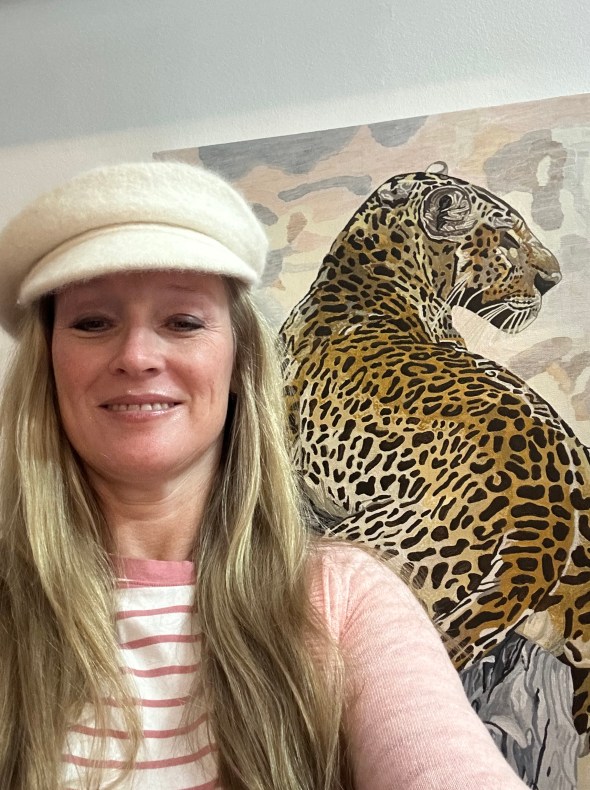
Kaye Lynne Booth
For Kaye Lynne Booth, writing is a passion. Kaye Lynne is an author with published short fiction and poetry, both online and in print, including her short story collection, Last Call and Other Short Fiction; and her paranormal mystery novella, Hidden Secrets; Books 1 & 2 of her Women in the West adventure series, Delilah and Sarah, and her Time-Travel Adventure novel, The Rock Star & The Outlaw,as well as her poetry collection, Small Wonders and The D.I.Y. Author writing resource. Kaye holds a dual M.F.A. degree in Creative Writing with emphasis in genre fiction and screenwriting, and an M.A. in publishing. Kaye Lynne is the founder of WordCrafter Quality Writing & Author Services and WordCrafter Press. She also maintains an authors’ blog and website, Writing to be Read, where she publishes content of interest in the literary world.
My job is to edit the final manuscript, format and publish it. I find poetry to be a personal endeavor, so I do very little editing of the actual poems for fear of changing the poet’s meaning, since poetry often does not follow the rules of grammar and punctuation which apply to the English language. In addition, we have poets from all over the globe included in the anthology, which makes for variation in style and differences in spellings, so I pretty much leave the poetry as is unless it is something I know is a typo or mistaken word.
But the person who truly makes this anthology possible is my co-editor, Robbie Cheadle, who finds and schedules poets to be interviewed on the “Treasuring Poetry” blog series on Writing to be Read. It is Robbie who selects and interviews each poet, and she usually reviews their latest release, as well. Then, at the end of the year, Robbie sends out invitations to the anthology and collects and compiles all the materials into a manuscript before turning it over to me. Without Robbie to do all of the preliminary work, there would not be any Poetry Treasures Anthologies. I couldn’t do it without her.
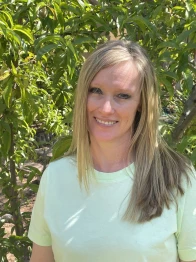
Robbie Cheadle
South African author and illustrator, Robbie Cheadle, has written and illustrated sixteen children’s books, illustrated a further three children’s books, and written and illustrated three poetry books. Her work has also appeared in poetry and short story anthologies.
Robbie also has two novels and a collection of short stories published under the name of Roberta Eaton Cheadle and has horror, paranormal, and fantasy short stories featured in several anthologies under this name.
You can find Robbie Cheadle’s artwork, fondant and cake artwork, and all her books on her website here: https://www.robbiecheadle.co.za/
That’s it for today’s stop. I hope I gave you enough of a taste of this delectable poetry anthology to make you want to sample more. There are several more tasty morsels from then contributing authors along the way. Join us tomorrow, on Colleen Writes & Publishes, where author/poet Dawn Pisturino will share a guest post and poetry from Poetry Treasures 5: Small Pleasures.
Today, I am delighted to welcome David from The Skeptic’s Kaddish blog and mastermind of the W3 poetry prompts as my September Treasuring Poetry guest.
What is your favourite style of poetry to read?
This is a tough question because I enjoy reading a wide range of poetry. However, I find myself most often moved by elegantly crafted free verse. When free verse is written in a way that feels truly poetic and draws me in, I’m deeply impressed. This isn’t always the case with free verse; anyone can break a series of words into lines, but not everyone can do so in a way that captivates.
What is your favourite poem in your favourite style to read?
These are fantastic questions, Robbie! Do most people actually have an answer for this one? It’s difficult to choose!
If I may, I’d like to share a poem I deeply enjoy, although I wouldn’t call it my absolute favorite. Honestly, I’m not sure I have a single favorite poem.
‘The Performers’
by Robert Hayden
Easily, almost matter-of-factly they step,
two minor Wallendas, with pail and squeegee along
the wintery ledge, hook their harness to the wall
and leaning back into a seven-story angle of space
begin washing the office windows. I
am up there too until straps break
and iron paper apple of iron I fall
through plate glass wind onto stalagmites below.
***
But I am safely at my desk again by the time
the hairline walkers, high-edge
balancers end their center-ring routine
and crawl inside. A rough day, I remark,
for such a risky business. Many thanks.
Thank you, sir, one of the men replies.
***
What I love most about this poem is how Hayden imagines himself as one of the window washers and then returns from his reverie in the second stanza. I find it incredibly relatable—both the relationship between the office worker and the cleaners, and the act of daydreaming. I also admire how Hayden captures the interaction between himself and the workers, imbuing them with both respect and dignity.
What is your favourite style of poetry to write? Why?
I’ve experimented with many different forms of poetry, but over the past few years, I’ve gravitated towards the sijo. Two reasons stand out:
First, I prefer writing shorter verses. I’m wary of longer poems because each additional word risks derailing my intent. Second, while the Korean sijo is technically a syllabic form, it also offers flexibility since the syllable count is ranged, not fixed.
What is your favourite of your own poems?
Oy vey!
My nine-year-old daughter often asks me what my favorite food or book is, and she gets frustrated when I tell her I like different things in different ways. That’s exactly how I feel about my own poems!
Given today’s political climate, I’ll share one that resonates with how I’ve been feeling recently. It’s a garland shadorma, a form created by Sylvia Cognac on WordPress. It consists of seven shadorma stanzas, with each of the first six stanzas borrowing one line from the final verse. Here it is:
Ancient homeland, or: Each hoary stone
it’s the flag, I know. that’s okay. I prefer to remain true to my identity despite the haters.
I know them. they’d prefer that I surrender my people’s claim to our ancient homeland to assuage their guilt.
our roots here predate all others… reject it if you will, but the truth speaks for itself through each hoary stone.
some fancy us colonizers, wish we’d leave… ‘see?’ they’d gloat, ‘their connection to this land was not authentic.’
our prayers for home never ceased. so, no. no- I won’t be another Jew who forsakes his forebears’ story.
our foes have convinced themselves that we can be scared away, but we’ve had just One Land in Jewish history.
it’s the flag- they’d prefer that I reject it; ‘see?’ they’d gloat, ‘another Jew who forsakes Jewish history.’
Tell us a bit about the posts you wrote after your father’s death. What inspired you to write them? What do they mean to you?
Looking back, as much as I dislike clichés, I realize I had no choice but to write those posts.
From the outset, I knew I would recite the Kaddish daily for my father after his unexpected death. No one else in my family was able or willing to take on that responsibility. Yet, after a few weeks, I began to feel that I was simply going through the motions. It felt empty, especially considering that I was performing a ritual in honor of a man who had no respect for rote religious practice.
It’s been over five years since I wrote the final post in that series, where I grappled with this very question. Everything I wrote back then remains true, but now I see that the act of writing those posts was also the beginning of my coming to terms with the truth about my faith. It marked the start of my acceptance that I don’t believe in a traditional concept of God, nor in the inherently enduring relevance of religious doctrine and ritual.
Although I finished the Kaddish series that year, I’ve never stopped contemplating its philosophical implications. They continue to challenge me daily. I once thought that returning to synagogue to recite the Kaddish would bring me closer to my religious community. Instead, it distanced me further because I didn’t simply perform the ritual—I transformed it into a journey of deep self-reflection.
This process ultimately led me to start writing poetry. Revisiting my love of creative writing—something I hadn’t engaged in since high school—reconnected me to my own critically thinking inner voice, a voice I hadn’t fully acknowledged before… And that’s the voice that now flows through my poetry.
My Kaddish Year
David has written a fascinating memoir in the form of 51 blog posts about his year of mourning following the passing of his father. This year is called Kaddish or The Mourner’s Kaddish in Judaism and involves saying a hymn of praises about God for your deceased parent. I know a bit about the Jewish faith because one of my good friends is Jewish. I have attended hair cutting ceremonies and bar mitsvahs as well as some other celebrations. I have not experienced anything to do with the passing of a family member so the Kaddish was new to me.
I am still busy reading David’s thought provoking posts about this period of his life but what I have read to date is very interesting. It has opened my eyes and understanding to a lot of Jewish traditions and religious rituals that I had no idea about and which I think are very worthwhile. The concept of worshipping for a whole year after the passing of a parent in the company of other community members who are experiencing exactly the same grief and anguish seems like a very helpful and supportive idea to me. My experience of death has been a lot of support for the griever up until the funeral and then very little. The griever is left along to manage as best he/she can at the worst time which is after the funeral is over and the permanency of the new circumstances sink in.
David’s post are not limited to the Kaddish, they expand into a lot of thought about life, death, religion, individuality in worship and believes and many other topics. It is worth reading and considering. Follow the link below to read the 51 post comprising David’s My Kaddish Year.
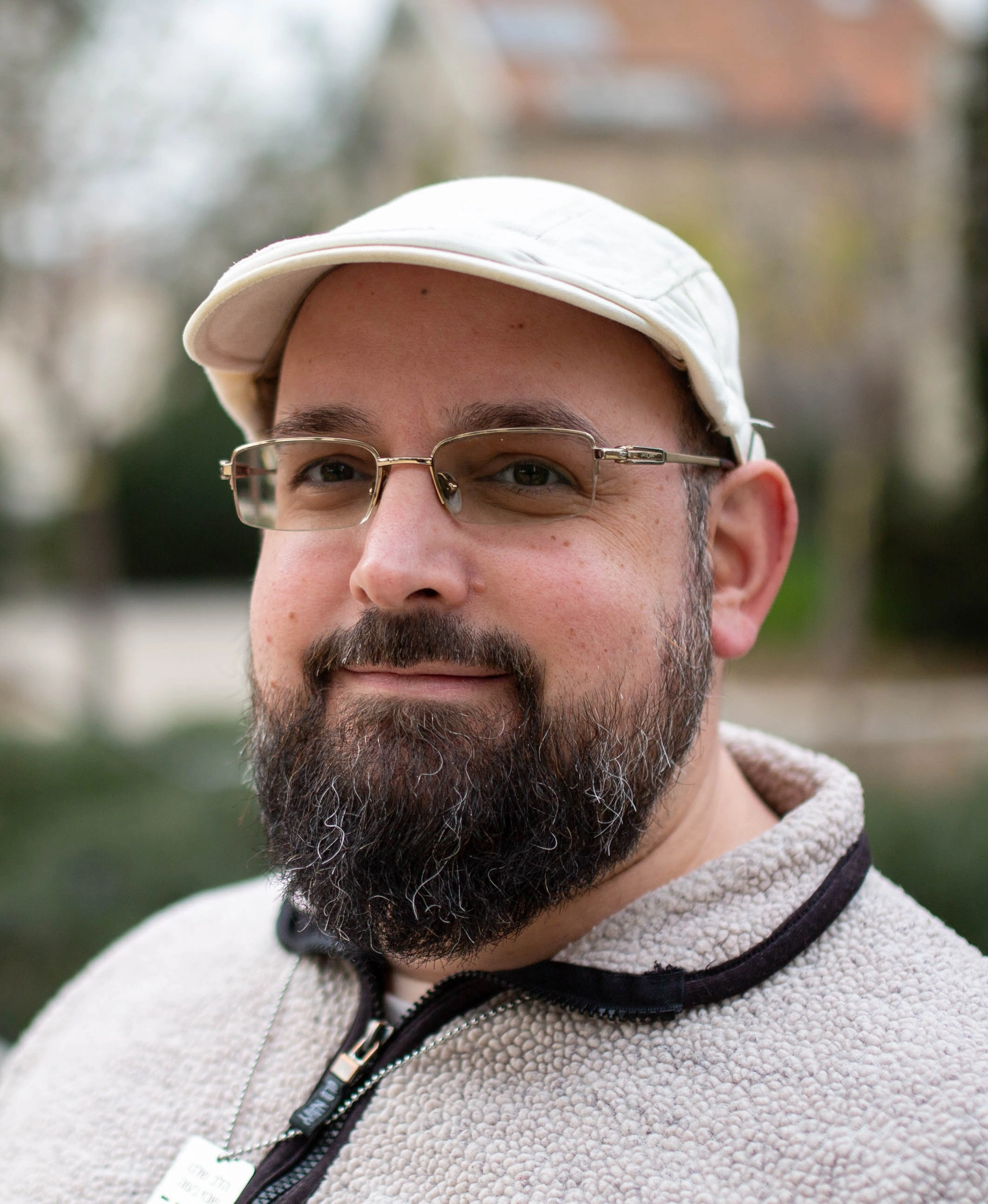
Picture caption: Author photograph of David Bogomolny
David Bogomolny was born in Jerusalem to parents who made Aliyah from the USSR in the mid-70’s. He grew up in America and returned to Israel as an adult. He works as a grant writer for the Jewish Agency for Israel. He and his wife and daughter live in Jerusalem.
He began writing the ‘Skeptic’s Kaddish for the Atheist’ in Jerusalem, Israel, 30 days after burying his father in South Brunswick, New Jersey, USA. His series was originally published on the Times of Israel blogs.
South African author and illustrator, Robbie Cheadle, has written and illustrated sixteen children’s books, illustrated a further three children’s books, and written and illustrated three poetry books. Her work has also appeared in poetry and short story anthologies.
Robbie also has two novels and a collection of short stories published under the name of Roberta Eaton Cheadle and has horror, paranormal, and fantasy short stories featured in several anthologies under this name.
You can find Robbie Cheadle’s artwork, fondant and cake artwork, and all her books on her website here: https://www.robbiecheadle.co.za/
________________________________________
Want to be sure not to miss any of Robbie’s “Treasuring Poetry” segments? Subscribe to Writing to be Read for e-mail notifications whenever new content is posted or follow WtbR on WordPress. If you found it interesting or entertaining, please share.
______________________________________
This segment of “Treasuring Poetry” is sponsored by WordCrafter Press and the Poetry Treasures series.