Dark Origins – “Who Killed Cock Robin” an English nursery rhyme #darkorigins #nurseryrhymes
Posted: August 23, 2023 Filed under: Uncategorized 34 Comments

“Who Killed Cock Robin” is an English nursery rhyme which is believed to be ancient although the earliest record of the rhyme is in Tommy Thumb’s Pretty Song Book published in 1744. This version only contained the first four verses. The longer version was first printed in approximately 1770.
You can listen to a lovely rendition of “Who Killed Cock Robin” here:
Alternatively, these are the lyrics:
Who killed Cock Robin?
I, said the Sparrow,
with my bow and arrow,
I killed Cock Robin.
Who saw him die?
I, said the Fly,
with my little teeny eye,
I saw him die
Who caught his blood?
I, said the Duck,
It was just my luck,
I caught his blood.
Who’ll make the shroud?
I, said the Beetle,
With my thread and needle,
I’ll make the shroud.
Who’ll dig his grave?
I, said the Owl,
With my pick and trowel,
I’ll dig his grave.
Who’ll be the parson?
I, said the Rook,
With my little book,
I’ll be the parson.
Who’ll be the clerk?
I, said the Lark,
if it’s not in the dark,
I’ll be the clerk.
Who’ll carry the link?
I, said the Linnet,
I’ll fetch it in a minute,
I’ll carry the link.
Who’ll be chief mourner?
I, said the Dove,
I mourn for my love,
I’ll be chief mourner.
Who’ll carry the coffin?
I, said the Kite,
If it’s not through the night,
I’ll carry the coffin.
Who’ll bear the pall?
I, said the Crow,
With the cock and the bow,
I’ll bear the pall.
Who’ll sing a psalm?
I, said the Thrush,
As she sat on a bush,
I’ll sing a psalm.
Who’ll toll the bell?
I, said the Bull,
Because I can pull,
I’ll toll the bell.
All the birds of the air
fell a-sighing and a-sobbing,
when they heard the bell toll
for poor Cock Robin.
There is an alternative ending in which the sparrow who killed Cock Robin is hanged for his crime.
Dark Origins
Despite the earliest known record of this nursery rhyme being in 1744, there is some evidence that it may be much older.
A 15th century stained glass window in Buckland Rectory, Gloucestershire depicts the death of a robin by an arrow.
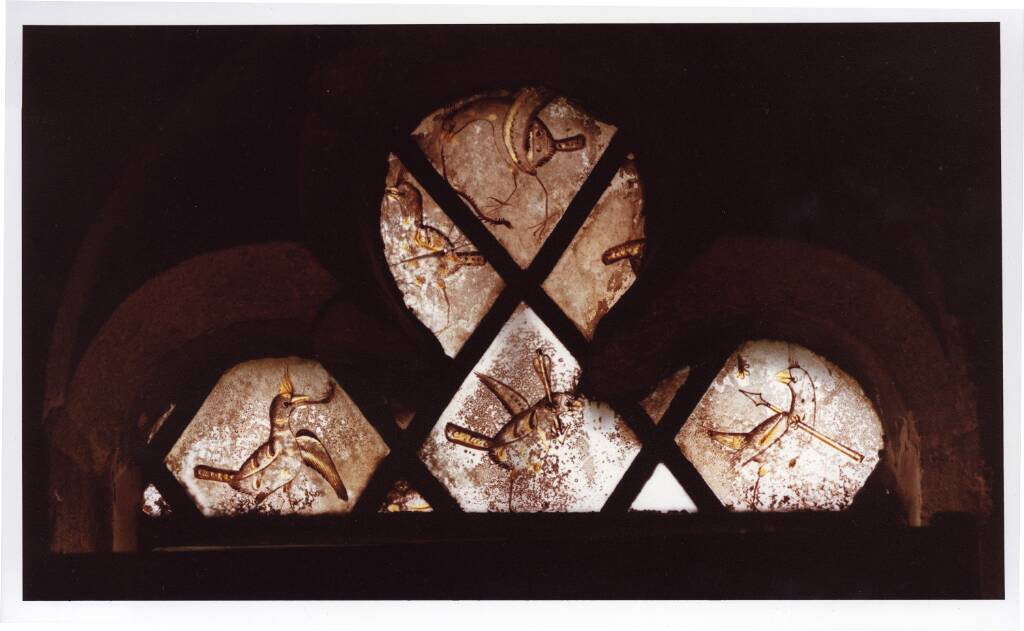
There are similarities between this nursery rhyme and a poem, Phyllyp Sparowe, written by John Skelton in 1508 which is about the death of the narrator’s pet bird.
There are a number of different theories about the meaning of the nursery rhyme. Some believe it is a parody of the death of King William II who was killed by an arrow which hunting in the New Forest (Hampshire) in 1100. King William was known as William Rufus which means “red”.
Another possibility is that the rhyme relates to the fall of Robert Walpole’s government in 1742. Robin is a short form of Robert. Robert Walpole, 1st Earl of Orford and known as Sir Robert Walpole between 1725 and 1742, was a British statesman and Whig politician and is generally regarded as the first Prime Minister of Great Britain. You can read more about Robert Walpole here: https://en.wikipedia.org/wiki/Robert_Walpole
Another alternative is that the nursery rhyme was inspired by ancient myths and legends:
The rhyme could record a mythological event such as the death of the god, Balder, from Norse mythology or the ritual sacrifice of a king as proposed in “The Cutty Wren” theory of a ‘pagan survival’. “The Cutty Wren” is a traditional English folk song which is believed to represent the human sacrifice of the year king or the slaughter of a wren, king of the birds, at the end of the year as a symbolic subsitute.
According to Celtic traditions, Lugh, the sun god who dies as the nights get longer after the summer solstice is depicted with a bow-and-arrow shape. Lugh represented the red sun and was known in Welsh as “Coch Rhi Ben” or Cock Robin. The sparrow who kills him may represent Bran the Blessed, the god of winter in the form of a raven.
About Roberta Eaton Cheadle

Award-winning, bestselling author, Roberta Eaton Cheadle, is a South African writer and poet specialising in historical, paranormal, and horror novels and short stories. She is an avid reader in these genres and her writing has been influenced by famous authors including Bram Stoker, Edgar Allan Poe, Amor Towles, Stephen Crane, Enrich Maria Remarque, George Orwell, Stephen King, and Colleen McCullough.
Roberta has two published novels and has horror, paranormal, and fantasy short stories included in several anthologies. She is also a contributor to the Ask the Authors 2022 (WordCrafter Writing Reference series).
Roberta also has thirteen children’s books and two poetry books published under the name of Robbie Cheadle, and has poems and short stories featured in several anthologies under this name.
Roberta’s blog features discussions about classic books, book reviews, poetry, and photography. https://roberta-writes.com/.
Find Roberta Eaton Cheadle
Blog: https://wordpress.com/view/robertawrites235681907.wordpress.com
Twitter: https://twitter.com/RobertaEaton17
Facebook: https://www.facebook.com/robertawrites
Amazon: https://www.amazon.com/Roberta-Eaton-Cheadle/e/B08RSNJQZ5
_____________________________________________________________________________________________
Want to be sure not to miss any of Robbie’s “Dark Origins” segments? Subscribe to Writing to be Read for e-mail notifications whenever new content is posted or follow WtbR on WordPress. If you found it interesting or entertaining, please share.
Share this:

Tales From the Bird Sanctuary: Summer fun
Posted: August 21, 2023 Filed under: Bird Watching, Birds, Tales from the Bird Sanctuary, Uncategorized | Tags: Bird Watching, Birds, Kaye Lynne Booth, Tales from the Bird Sanctuary, Writing to be Read 9 Comments
It was a busy summer in the bird sanctuary, with many, many visitors, some the old reliables I’ve I’ve seen before, but also some new faces and today, i’d like to share some of them with you.
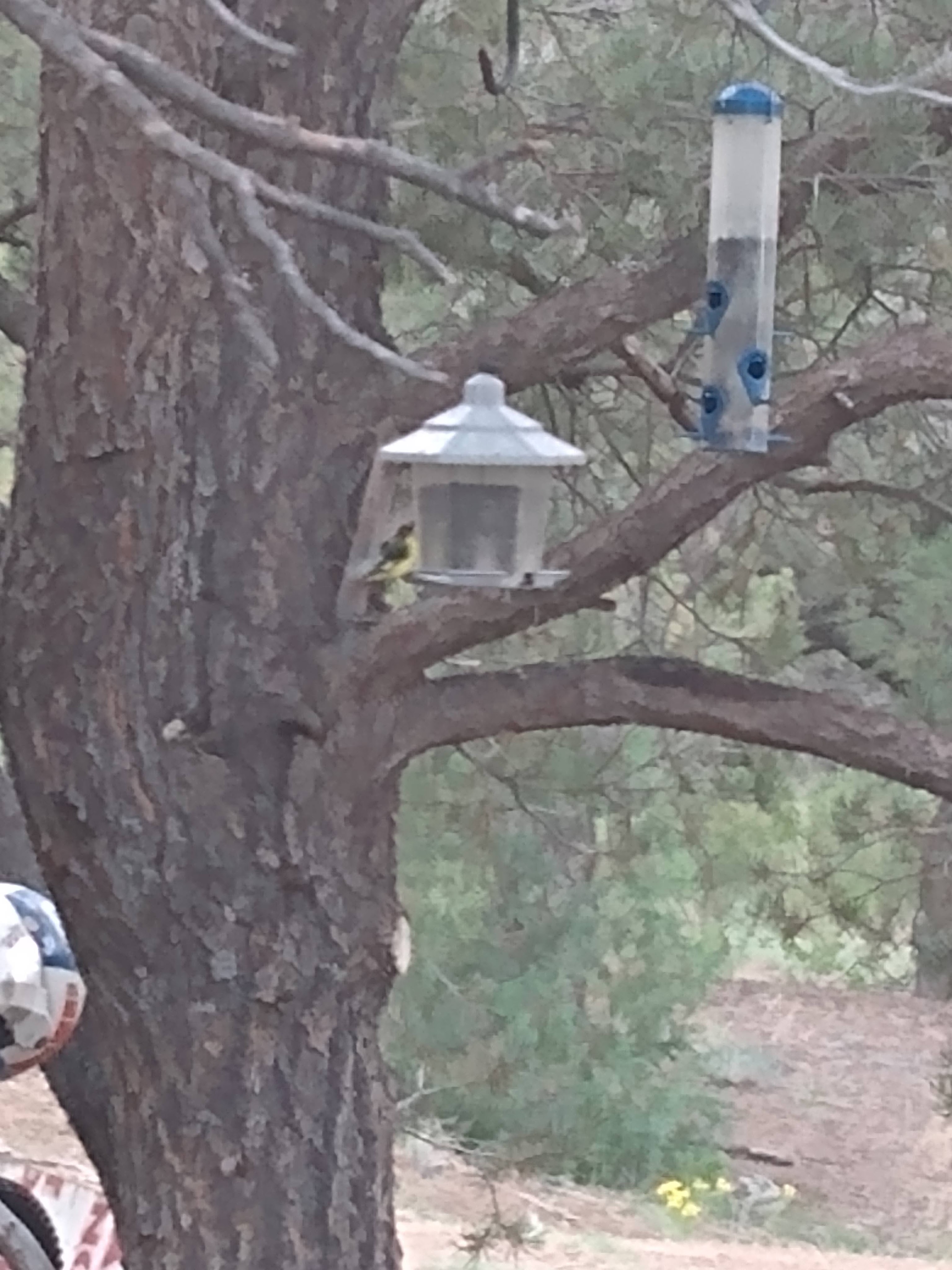



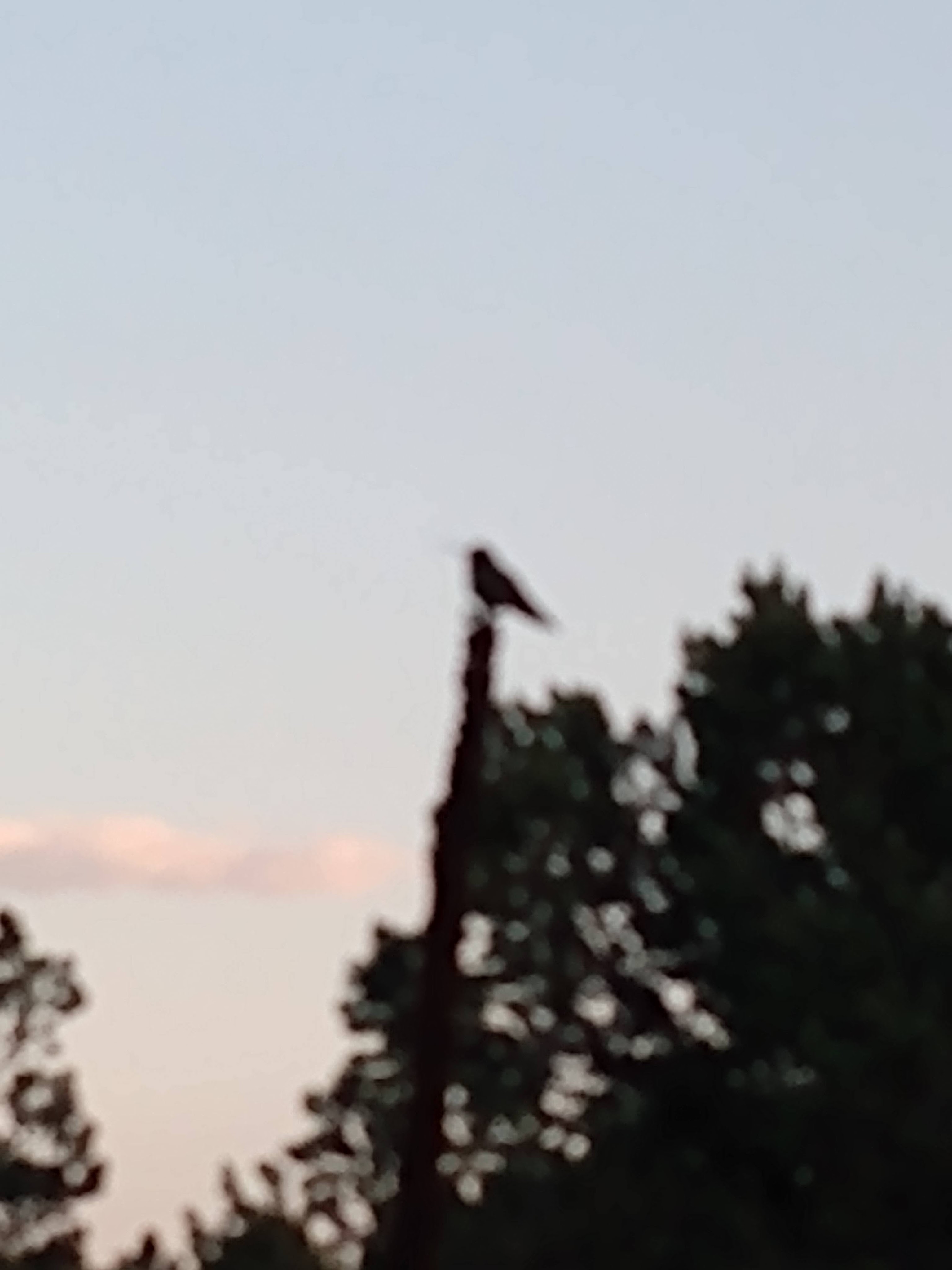
- I’ve had the little yellow-bellied warblers in the first photo this year for the first time. I think they are warblers, but have been unable to identify the type as yet.
- White Nuthatches are year round residents. The one in the photo is a juvenille. I always talk about seeing babies, but in truth, I never see the babies. If they are old enough to be where I can see them, they are juvenilles, but they are still awfully cute and I enjoy watching them.
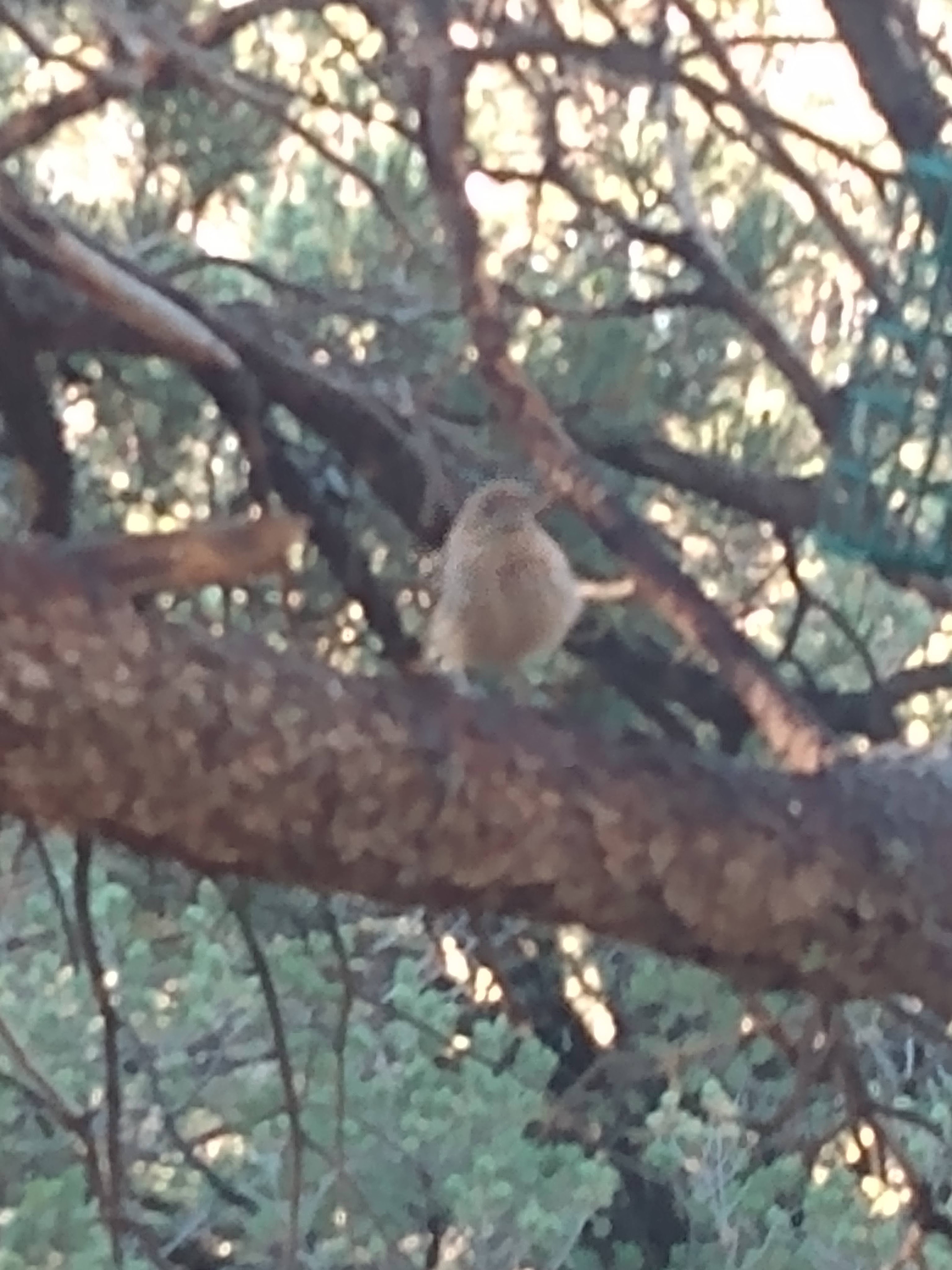
- The third photo is an unidentified baby or juvenille. I would guess it to be some type of wren. You can tell it is a young one because of the ruffled appearance caused by the fine baby feathers which haven’t all been shed.
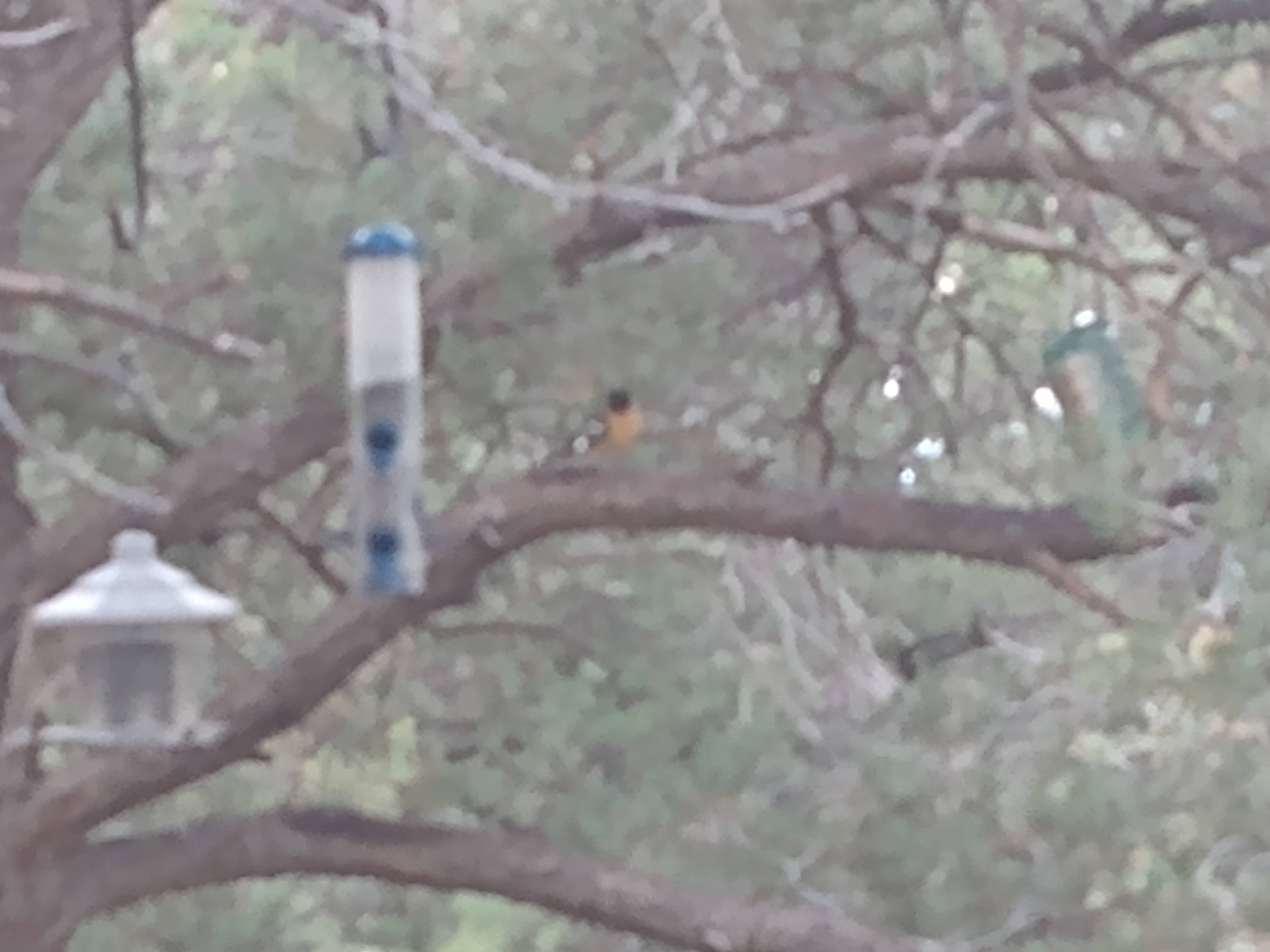
- Black-Headed Grossbeaks are summer residents and I’ve seen several youngsters raised each summer. They are gluttons who like to clean out my feeders. The one in the photo sat there eating for a long time, hogging up the whole feeder.
- I watch for the American Robins to return as a sure sign that spring has arrived. They have babies twice a year, so I’ve watched several Robin families grow up, and although I can’t be sure, I think the babies return as adults to raise their own families the next year.
- The Western Tanager is one of the most colorful birds I’ve ever seen in the wild. Although I have seen them in years past occassionally, this year, I had them in droves. I believe I mentioned this in my last post from the sanctuary, when talking of my colorful trees.
- Woodpeckers are frequent visitors, and some years they nest in the sanctuary. The one in the seventh photo is either a Strickland’s or a Nutall’s Woodpecker. I’m not sure which.
- Hummingbird’s and welcome visitors every year. The green-backed Rufus Hummingbirds arrive in the spring, even earlier than the Robins. In July, I get the Allen’s Humminbirds, which are orange and more aggressive. When they arrive the skies become a flyzone as the Hummingbird wars begin. The one in the eighth photo is a Rufus Humminbird who stopped to perch atop a Mullien plant and say good morning.
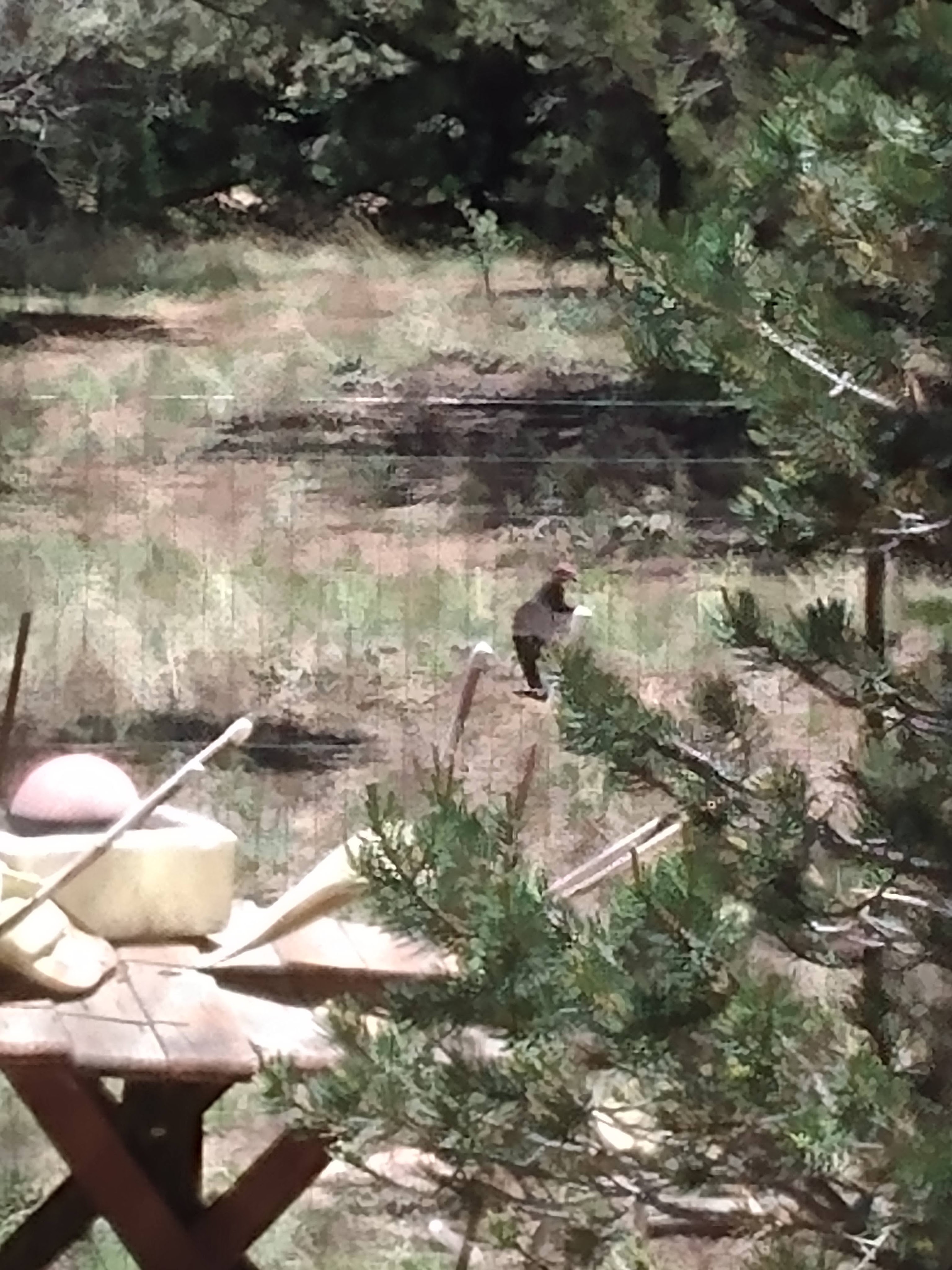
- The Turkey Vulture was a surprise visitor which I had only seen one other time. They are birds, but not the kind I put out food for, so they usually don’t pay the santuary much mind. But this guy dropped in unexpectedly and hung out a few minutes, long enough for me to snap some photos. When he flew away, his wingspan was huge. They are ugly, but majestic birds, bigger than hawks, but perhaps about the size of eagles.
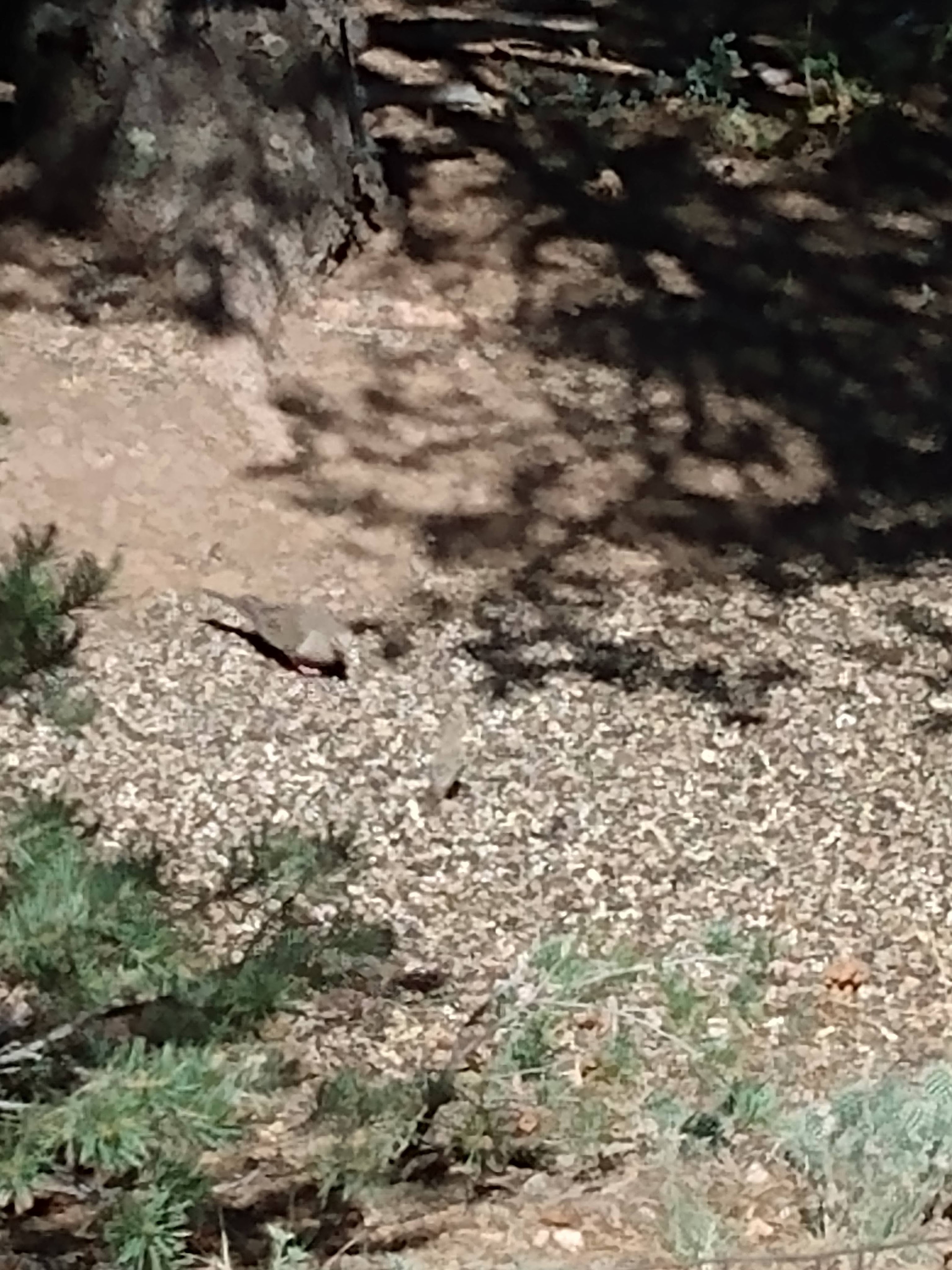
- In the first picture below you see both a woodpecker and a Cassin’s Finch. Woodpeckers often hang on the bottom of the feeder as their size makes perching difficult. They also hang from the hummingbird feeders, not for the nectar, but for the ants that it attracts. The Cassin’s Finch always look to me like someone splashed red paint over their heads, a glimpse of bright red or pink in a sea of green pine boughs.
- On the ground in the second picture below is a juvenille mourning dove from the second batch of babies I’ve seen this year.

___________________________________________

For Kaye Lynne Booth, writing is a passion. Kaye Lynne is an author with published short fiction and poetry, both online and in print, including her short story collection, Last Call and Other Short Fiction; and her paranormal mystery novella, Hidden Secrets; and book 1 of her Women in the West adventure series, Delilah. Kaye holds a dual M.F.A. degree in Creative Writing with emphasis in genre fiction and screenwriting, and an M.A. in publishing. Kaye Lynne is the founder of WordCrafter Quality Writing & Author Services and WordCrafter Press. She also maintains an authors’ blog and website, Writing to be Read, where she publishes content of interest in the literary world.
_____________________________________
Want exclusive content? Join Kaye Lynne Booth & WordCrafter Press Readers’ Group for WordCrafter Press book & event news, including the awesome releases of author Kaye Lynne Booth. She won’t flood your inbox, she NEVER sells her list, and you might get a freebie occasionally. Get a free digital copy of her short story collection, Last Call and Other Short Fiction, just for joining.
Share this:

Treasuring Poetry – Meet poet and author, Kaye Lynne Booth, and a review #TreasuringPoetry #poetry #bookreview
Posted: August 16, 2023 Filed under: Uncategorized 78 Comments
I am very excited to be featuring Kaye Lynne Booth for my August Treasuring Poetry post. I have been working with Kaye Lynne for a number of years now and I have short stories in all of her anthologies. Kayne Lynne and I also co-edit the annual Poetry Treasures anthologies.
Small Wonders is Kaye’s first book of poetry and I am pleased to include my review of this delightful collection here today.
I know that your poetry collection, Small Wonders, includes poetry from throughout your writing career. Do you think your poetry writing has changed much over this period?
My poetry has been a series of experiments. I like to play with words and styles. I have written syllabic poetry, limericks, acrostic poems, shape poems that form visual images on the page, and more.
Do you do a lot of editing of your poetry or does the poem manifest itself fully formed?
It depends on the poem. Intimacy & the Harlequin Dance was written when I was on a fifteen minutes break at work, but they usually don’t come quite that easy. Aspen Tree is minimalist poem and I worked several days on it to get the words just right.
You have been sharing some of your poetry as YouTube videos? Do you find this a effective way of sharing poetry with poetry lovers?
I have done several readings of poems from Small Wonders. We started doing readings of both poetry and fiction because they work well for the blog tours. Many contributing authors have been quite enthusiastic about it. But the ones for my poetry collection are the first I’ve done for a solo project.
Do you think poetry is still a relevant form of expressing ideas in our modern world? If yes, why?
I do. I think poetry is a wonderful form of expression, and I think it helps to process emotions to try and put them into just the right words.
Which of your own poems is your favorite?
Mist chills morning air
Frosty dew coats stem and blade
Sun’s warmth awakens
This is a reading by Kaye Lynne Booth of Aspen Tree which features in Small Wonders:
Which poem by any other poet that you’ve read, do you relate to the most and why?
I’ve always felt a connection with Emily Dickinson, because she wrote about everyday things and made them seem interesting. It wasn’t that she saw the world through different eyes, but that she paid such close attention to the details of what she did see that she could describe it in a manner that others could relate to. That’s what poetry is about. Attention to detail.
“I Could Not Stop For Death“, by Emily Dickenson is one of my favorites because it speaks of the inevitability of death and being too busy with life to stop for it. Dickenson spent most of her life as a recluse and her poetry takes note of the most ordinary things, calling attention to them in extraordinary ways.
Because I could not stop for Death –
He kindly stopped for me –
The Carriage held but just Ourselves –
And Immortality.
We slowly drove – He knew no haste
And I had put away
My labor and my leisure too,
For His Civility –
We passed the School, where Children strove
At Recess – in the Ring –
We passed the Fields of Gazing Grain –
We passed the Setting Sun –
Or rather – He passed Us –
The Dews drew quivering and Chill –
For only Gossamer, my Gown –
My Tippet – only Tulle –
We paused before a House that seemed
A Swelling of the Ground –
The Roof was scarcely visible –
The Cornice – in the Ground –
Since then – ’tis Centuries – and yet
Feels shorter than the Day
I first surmised the Horses’ Heads
Were toward Eternity –
My review of Small Wonders by Kaye Lynne Booth
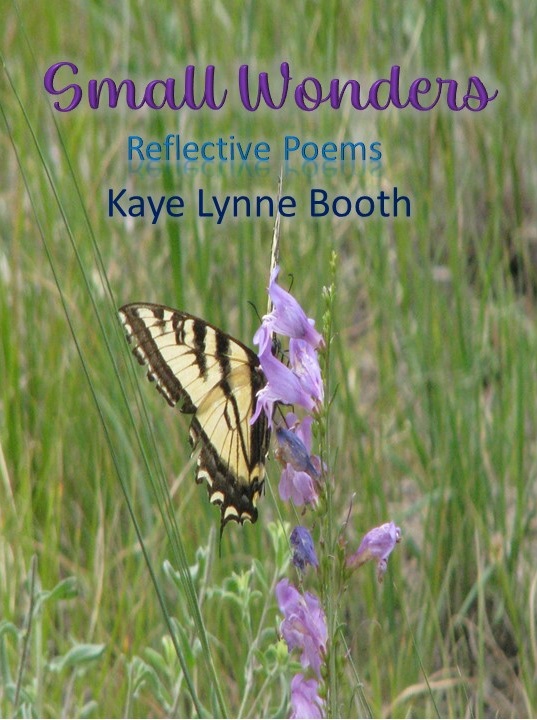
The poems featured in this collection have been written over Kaye Lynne’s life and share a wide spectrum of memories, some full of fun, for example My ‘Vette, some are achingly beautiful, Sun and Shade immediately sprang to mind, and some, like A Single Heartbeat are poignantly sad. All are worthwhile and inform the reader about the human condition whether delight in nature, agonising over trauma and grief, or throwing care to the wind and ‘riding the wave of life.’
Kaye Lynne’s poetry style is straight forward and simple, my favourite type of poetry, and is very relatable to all of us who have walked life’s path, experiencing its ups and downs. A few of the poems are printed on lovely background artworks which embellish their meaning and purpose.
Purchase Small Wonders: https://www.amazon.com/Small-Wonders-Kaye-Lynne-Booth-ebook/dp/B0C8MQD599
About Kaye Lynne Booth

For Kaye Lynne Booth, writing is her passion. It is a very strange time indeed when Kaye Lynne does not have at least three WIPs, in addition to her other writings, teaching and other life activities. Kaye Lynne lives, works and plays in the beautiful mountains of Colorado.
Visit her author’s blog and website, “Writing to be Read” to learn more about Kaye Lynne Booth and her writing. https://kayelynnebooth.wordpress.com/
About Robbie Cheadle
Award-winning, bestselling author, Robbie Cheadle, has published thirteen children’s book and three poetry books. Her work has also appeared in poetry and short story anthologies.
Robbie also has two novels published under the name of Roberta Eaton Cheadle and has horror, paranormal, and fantasy short stories featured in several anthologies under this name.
The ten Sir Chocolate children’s picture books, co-authored by Robbie and Michael Cheadle, are written in sweet, short rhymes which are easy for young children to follow and are illustrated with pictures of delicious cakes and cake decorations. Each book also includes simple recipes or biscuit art directions which children can make under adult supervision.
Robbie’s blog includes recipes, fondant and cake artwork, poetry, and book reviews. https://robbiesinspiration.wordpress.com/
Share this:

Kickstarter: The newest method of direct selling for authors
Posted: August 15, 2023 Filed under: Uncategorized Leave a comment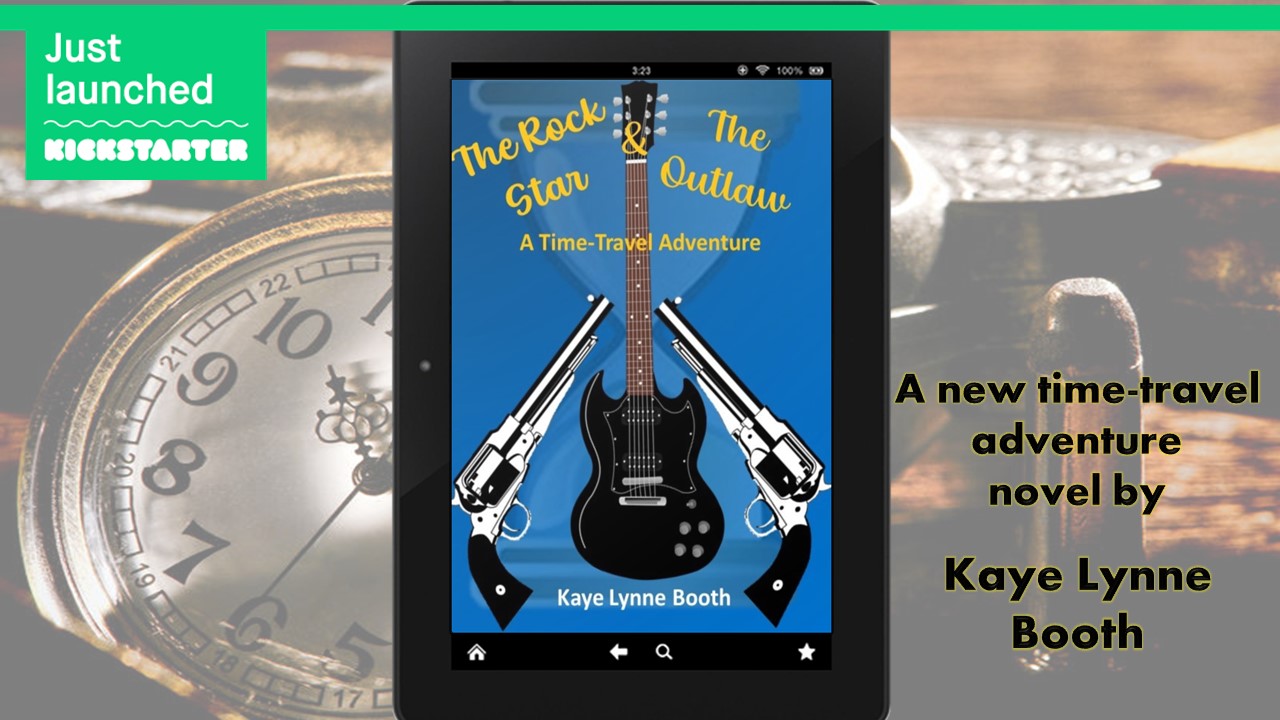
The Rock Star & The Outlaw Kickstarter: https://www.kickstarter.com/projects/kayelynnebooth-wcp/the-rock-star-and-the-outlaw?ref=user_menu
You may be aware that I’m currently running a Kickstarter campaign for The Rock Star & The Outlaw, my time-travel adventure novel,which was inspired by the music of The Pretty Reckless. It’s a rocking story that you won’t want to miss, and you can learn more about it and support the campaign through the link above. But it’s come to my attention that many of you, who might happily buy this book through a distributor, which is the route we are most used to using to buy books, may be hesitant to purchase through this less familiar method of book buying. I thought I might offer some insight into how a Kickstarter works and the reasons why you might buy books via Kickstarter.
How does a Kickstarter Work?
Kickstarters are a method of direct selling that operates on the large spike business model, meaning the author gets a large spike in sales, rather than having them trickling in through distributors. Big name authors like Brandon Sanderson, Kevin J. Anderson, Dean Wesley Smith, and Joanna Penn are launching campaigns that are funding within minutes of launch, and making major money buying adding stretch goals to keep momentum going throughout the campaign.
As an unknown author, my first campaign, for Delilah, didn’t fund until the very last day, but it did fund. So it is possible for the little guy or gal to make a buck from our books this way. I set my goal lower, at $500, which I felt I could more likely reach, while the big authors shoot for thousands. I’d love to reachy goal early and be able to add some of those stretch goals like to the big guys though.
Kickstarters are crowd funding, so they are an all of nothing deal. If the campaign pledges meet the campaign goal set, the author receives all the money raised, minus Kickstarter’s 5%, (which is a lot better than the 30% which most distributors take). But if you don’t meet the funding goal, then none of the pledges are collected and you aren’t responsible to deliver any of the rewards.
As an author, you decide what your reward levels will be and what rewards will be offered. As a reader, you can support a Kickstarter for any amount, even $1, with no reward, (and yes, people do do this just to support an author they like or a project they feel is worthwhile), or choose a reward level offered by the author. Once you back the campaign at some level, you will be able to see the add ons which are available at that level for an additional cost, making even more deals available to you.
Because Kickstarter also promoted your campaign, you are able to reach a whole new audience of potential backers in the Kickstarter community. They have a whole community of people who back the projects which they feel are worthwhile, so it’s a great way to expand your audience.
The video below offers a brief overview. (Note: there is no audio for this video).
Why Buy Through Kickstarter?
- Authors make more money through direct sales.
- Support authors you already love or new authors you’d like to give a try.
- Get books for less before they are available through distributors and exclusive items which you can’t find anywhere else, like signed print copies and other merchandise.
Check out my Kickstarter campaign for The Rock Star & The Outlaw to see what it’s all about. If you like the project, show your support at the reward level.of your choice while your there. All support is appreciated.
Share this:

Growing Bookworms – Meet prolific children’s book author and poet, Victoria Zigler, and two reviews #bookreviews #GrowingBookworms #childrensfiction
Posted: August 9, 2023 Filed under: Uncategorized 61 Comments
I am delighted to introduce prolific children’s book author and poet, Victoria Zigler, as my August Growing Bookworms featured children’s book author.
You write picture books for younger children and books for older children too. How do you ensure that your language and writing style are suitable for the target age group?
I suppose, in a way, I don’t.
The thing is, I’m a pantser to the extreme. I write the stories, and only then assess – based on the way they turn out, the language style I ended up using, etc – which age group they’d be most suitable for. So, to be honest, I often don’t know who my intended audience is until I’m done writing the story.
The only exception would be if I’m writing another book for a series, in which case I’ll obviously want to make sure the whole series is suitable for the same general age group. In that case, I would make sure I stick to the same kind of writing style and language as was used in the earlier book, or books.
Many of your children’s books involve animals. Do you have a specific motivation for writing about animals for a child audience?
For one thing, I’m a big fan of animals. I love animals of almost any kind, grew up in an area surrounded by fields full of cows and mountains covered in sheep, and have owned a variety of pets: birds, cats, chinchillas, degus, dogs, fish, gerbils, guinea pigs, hamsters, rabbits, rats, and a tortoise. It’s no secret that I prefer the animals’ company to that of humans as a general rule, so I’ve had plenty of opportunity to observe their behaviour.
For another thing, many of the stories I enjoyed in childhood featured animals, from the mischievous Peter Rabbit and all the other creatures in Beatrix Potters tales, to the troublesome toad and faithful mole in Kenneth Graham’s Wind In The Willows, and we can’t forget Aslan the lion from C S Lewis’ Chronicles Of Narnia, or all those classic fairy tales like Aesope’s Fables and The Three Little Pigs, just to name a few. So, given how many happy hours I spent in those animal-filled worlds, I want to pass that joy on to a new generation.
Do you include characteristics of real people and pets/animals in your stories?
Yes, I do. Sometimes intentionally, and sometimes I’m sure I do it unconsciously too.
I do it with pets especially, since several of my books – most notably my Kero’s World and Degu Days Duo books – feature my own pets, since each is a semi-fictionalized story of a time in our lives (sometimes combining more than one experience in one story to make it more eventful) as told from the point of view of the pet in question.
But I have done it from the point of view of people too. For example, in my Toby’s Tales series, which are a series of books based on some of the challenges I faced myself when adjusting to losing the last of my sight. Toby himself is based on a combination of my brother, Carl, who is also blind, and myself. Toby’s older brother, Jake, is based on our older brother, Wayne. And their little sister, Emma, is based on a combination of myself and my honorary niece of the same name who happened to be around the same age I wanted to make the fictional Emma at the time of writing the series.
How do you get your ideas for your stories?
The short answer is: which ones?
The thing is, it varies. Some are based on real life experiences, like how my book How To Trust Your Human is based on my attempts at regaining the trust of one of our degus, Joshua (refered to as Buddy in the story) when he became nervous and suspicious of us after we lost all three of his brothers, and Snowlilie’s Brother is based on observing our Westie, Lilie, as she adjusted to having a new little brother in the form of our Cavapoo, Logan.
What do you like best about writing for children?
Mostly it’s just fun: I love being able to play with my own imagination and creativity while potentially encouraging theirs. Plus, I do like the fact my books may potentially help to encourage a new generation of readers.
Books for children are harder to market than books for adults. How do you go about marketing your books and what works best for you?
I’m the wrong person to ask about marketing.
I tried seeking marketing opportunities at first, but I ultimately felt like it just took time away from the parts I enjoyed, so now I take interview opportunities when they come up, whether on blogs or podcasts, I’ll accept invitations to do guest posts, and if the opportunity to drop hints about me writing and publishing books happens to come up I’ll usually give it a mention. But that’s all I do; I don’t really put the effort I probably should in to marketing, because I don’t like doing it, and – though I’d obviously love my books to reach as many people as possible – have no desire to be rich and famous.
I write because I have poems and stories inside of me that need to get out. I publish them because I feel art in all its forms should be shared. And as long as anyone who does actually stumble across my books enjoys them, that’s good enough for me.
My review of Jelena by Victoria Zigler
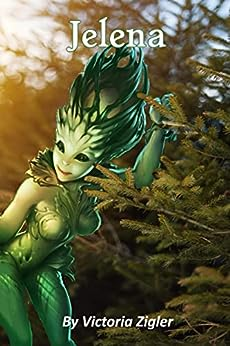
Jelena is a delightful and poignant story about a tree dryad whose bond to her Frazer Fir tree is broken when a family of humans select it for their Christmas tree. The author’s beautiful writing shows Jelena’s pain and loss when she is left without her tree which she knows is dying as it’s been cut.
Interesting parallels are drawn between the pleasure of the human family who are delighted with their choice of tree and Jelena’s loss as the fir’s tree dryad. The humans are not bad, they are just ignorant of the implications of their actions.
The story is engaging and has a happy ending. Reading it to or with children will provide plenty of opportunities to discuss the impact of human activities on the natural world and ways of minimizing negative repercussions.
urchase Jelena by Victoria Zigler: https://www.amazon.com/Audible-Jelena/dp/B0BVDR7GL5
My review of Thistle The Fairy Trickster by Victoria Zigler
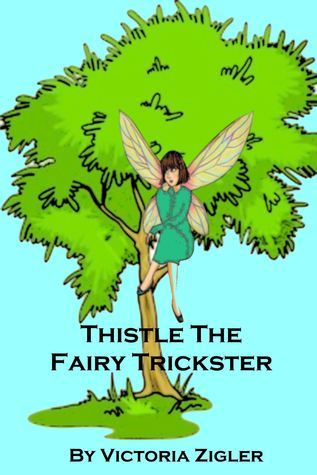
Thistle The Fairy Trickster is a delightful retelling of the story of The Boy Who Cried Wolf, Thistle is a fairy tasked with watching an area of the river where local children come to swim and play. Thistle’s job is to ensure that any children playing in her area are safe and to intervene and provide assistance if something goes wrong. Most of the time, Thistle’s job is boring and she has no-one to talk to or play with. Thistle decides to play some tricks on her fairy friends and that gets her into trouble.
This story is fun way of teaching small children about inappropriate and misleading tricks.
Purchase Thistle The Fairy Trickster here: https://www.amazon.com/Thistle-Fairy-Trickster-Victoria-Zigler-ebook/dp/B07L3FP5Q8
About Victoria Zigler
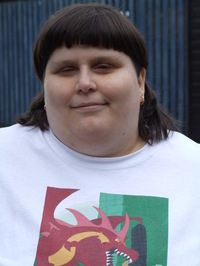
Victoria Zigler is a blind vegan poet and children’s author. Born and raised in the shadow of the Black Mountains of Wales, UK, she moved away from Wales three times: once to spend six months living in Alberta, Canada, the other times to spend a few years living near Hastings on the South-East coast of England, UK, each time returning to Wales. Now she lives in Wales again, along with a West Highland White Terrier named Lilie, a Cavapoo named Logan, a Hermann’s Tortoise named Artemis, and her Canadian husband, Kelly.
Despite spending far too much time in hospital, and eventually losing her sight to Congenital Glaucoma, Victoria – or Tori, if you prefer – has been writing since she knew how, with no plans to stop any time soon. She has a long list of publications to her name, including several poetry collections, a whole load of children’s stories, a story in the sci-fi and fantasy anthology Wyrd Worlds II, three poems in the Poetry Treasures anthology, and a poem in the Stand Together charity anthology. Plus, Tori’s Hermann’s Tortoise, Artemis, was featured in both the Magnificent Pets Coloring Book For Children and the Magnificent Pets Mandala Coloring Book For Adults.
Vegan due to both a love for animals and dairy allergy, as well as an Eclectic Pagan, Tori describes herself as a combination of Hermione Granger and Luna Lovegood from the Harry Potter books: Hermione’s thirst for knowledge and love of books, combined with Luna’s wandering mind and alternative way of looking at the world. She has a wide variety of interests, designed to exercise both the creative and logical sides of her brain, which she dabbles in at random depending on what she feels like doing at any given time, and is most likely to be found playing with her petkids, involved in calls with the ACB Community, curled up somewhere with a cup of tea and a book, working on some kind of craft project, or trying to keep one step ahead of those pesky typo fairies while writing her own books.
Links
Website: http://www.zigler.co.uk
Blog: https://ziglernews.blogspot.co.uk
Goodreads: https://www.goodreads.com/toriz
Facebook author page: https://www.facebook.com/pages/Victoria-Zigler/424999294215717
Twitter: https://www.twitter.com/victoriazigler
YouTube: https://www.youtube.com/channel/UCakYxH7BNyc2Lxr1g1nbP9w
Find Tori’s books on…
Smashwords: https://www.smashwords.com/profile/view/toriz
Amazon: https://www.amazon.co.uk/Victoria-Zigler/e/B00BHS9DQ6/
…Along with a variety of other retailers, such as Audible, iTunes, Kobo, and Barnes & Noble.
About Robbie Cheadle
Award-winning, bestselling author, Robbie Cheadle, has published thirteen children’s book and three poetry books. Her work has also appeared in poetry and short story anthologies.
Robbie also has two novels published under the name of Roberta Eaton Cheadle and has horror, paranormal, and fantasy short stories featured in several anthologies under this name.
The ten Sir Chocolate children’s picture books, co-authored by Robbie and Michael Cheadle, are written in sweet, short rhymes which are easy for young children to follow and are illustrated with pictures of delicious cakes and cake decorations. Each book also includes simple recipes or biscuit art directions which children can make under adult supervision.
Robbie’s blog includes recipes, fondant and cake artwork, poetry, and book reviews. https://robbiesinspiration.wordpress.com/
Share this:

Dark Origins – Hotel on the Corner of Bitter and Sweet by Jamie Ford and the forced interment of the Japanese Americans during WW2 #DarkOrigins #WW2 #civiliansduringwar
Posted: July 26, 2023 Filed under: Uncategorized 33 Comments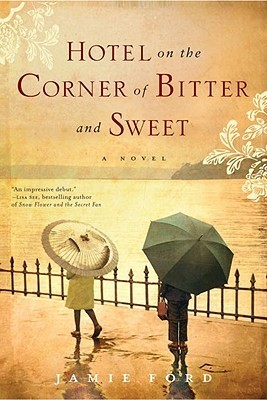
An overview of the book
Hotel on the Corner of Bitter and Sweet is a historical novel written by Jamie Ford. The plot makes use of a dual timeline: one featuring Henry as a 12-year-old Chinese boy growing up during World War II and the other depicting Henry 44 years later as a widow with an adult son.
The storyline revolves around the friendship between Henry, the only son of immigrant Chinese parents living in Seattle, Washington, and Keiko, the daughter of a second-generation Japanese family. Henry and Keiko become friends as the only two Asian children at their elementary school. They are both bullied by their white peers, and they are both expected/forced to work as free labour in the school cafeteria dishing up meals and cleaning up in terms of their scholarships.
When Japan bombs Pearl Harbour and the USA enters the war, the anti-Japanese sentiment in America increases. Henry’s father, who only speaks Cantonese and who despises the Japanese because of the Japanese invasion of the Chinese province of Manchuria in 1931 and the impact it had on Henry’s father’s life, is concerned about his son’s safety. He forces Henry to wear an “I am Chinese” badge so that he isn’t mistaken for Japanese. Henry’s father is ardently anti-Japanese and Henry hides his friendship with Keiko and her family from him.
As the war progresses, the anti-Japanese sentiment in America increases and all people of Japanese ancestry are viewed as potential spies and war criminals. This culminates in the US government ordering all the people in Japan Town where Kaiko lives (adjacent to China Town where Henry lives) to relocate to internment camps.
Keiko’s family is transferred temporarily to Camp Harmony, a temporary internment facility on the Western Washington Fairgrounds in Puyallup, Washington. Henry is able to visit her through a collaboration with the lady who runs the cafeteria at his elementary school. He assists her in serving meals to the internees on a Saturday.
Eventually, Keiko’s family is transferred to the Minidoka internment camp in Idaho. Henry visits her there once with an older musician friend and they become betrothed. They agree to wait for each other and to write to each other.
Sadly, due to Henry’s father’s fanatical anti-Japanese attitude, this never turns out as planned and Henry loses touch with Keiko.
The second timeline features Henry as an older man with a grown son, Marty, who is studying at the local college. Henry wife, Ethel, has passed away from cancer and he is living alone. One day, Henry learns that the possessions of several Japanese American families who were forced to leave Japan Town have been discovered in the basement of the Panama Hotel. Henry goes to the hotel to investigate as he believes that some of Keiko’s families stored possessions might still be there. Henry has never forgotten Keiko even as he cared for his critically ill wife, but he kept his thoughts to himself. He eventually finds the courage to confide in Marty and his fiance about Keiko.
In summary, this book is about how warfare effects the lives of everyday people and civilians living away from the front lines. Keiko and Henry’s lives are both turned upside down due to the culture of fear, anger, and animosity that dominates during times of war.
Although the temporary and permanent internment camps where Keiko and her family live are both featured in this book, the camps are not a main character as is the case in some books about similar topics.
Dark origins
Hotel on the Corner of Bitter and Sweet revolves around the forced internment of Japanese American citizens during WW2.
During WW2, the US government forcibly relocated and incarcerated approximately 125,000 people of Japanese descent in 75 different internment facilities. Of those interned, approximately 67% were American citizens. The internments were undertaken as a result of Executive Order 9066 signed into effect by President Franklin D. Roosevelt. This order allowed regional military commanders to designate ‘military areas’ from which ‘any or all persons may be excluded’. People of Japanese ancestry were forced to leave Alaska, California and parts of Oregon, Washington and Arizona on the strength of this order.
Japanese Americans were initially prevented from participating in the military, but in 1943 this was changed and 20,000 Japanese Americans fought in the war on behalf of America. According to Hotel on the Corner of Bitter and Sweet, the internees volunteered for military services to prove their loyalty to their new country.
I was interested to learn that by 1992, the US government disbursed $1.6 billion in reparations to 82,219 Japanese Americans who had been incarcerated.
These are a few pictures that correlate with the content of this book taken from https://www.history.com/topics/world-war-ii/japanese-american-relocation
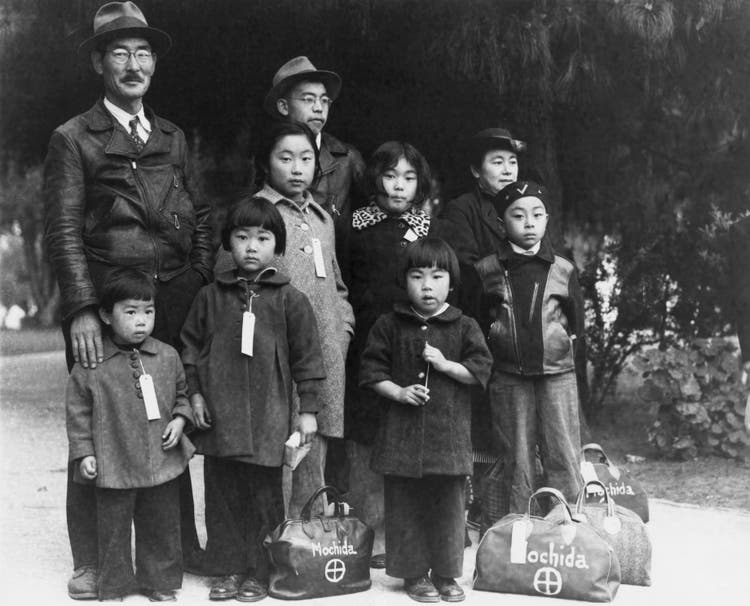
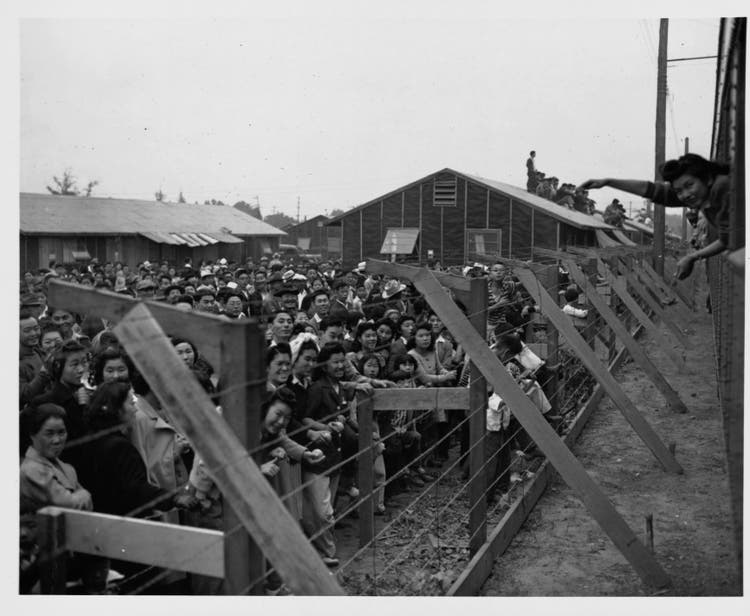
Japanese Americans incarcerated in crowded conditions in Santa Anita. https://www.history.com/topics/world-war-ii/japanese-american-relocation
A few powerful quotes from Hotel on the Corner of Bitter and Sweet
“The hardest choices in life aren’t between what’s right and what’s wrong but between what’s right and what’s best.”
“Henry, this isn’t about us. I mean it is, but they don’t define you by the button you wear. They define you by what you do, by what your actions say about you. And coming here, despite your parents, says a lot to them- and me. And they’re Americans first. They don’t see you as the enemy. They see you as a person.”
“The more Henry though about the shabby old knickknacks, the forgotten treasures, the more he wondered if his own broken heart might be found in there, hidden among the unclaimed possessions of another time. Boarded up in the basement of a condemned hotel. Lost, but never forgotten.”
“Henry looked up and down the empty avenue—no cars or trucks anywhere. No bicycles. No paperboys. No fruit sellers or fish buyers. No flower carts or noodle stands. The streets were vacant, empty—the way he felt inside. There was no one left.”
About Roberta Eaton Cheadle
Award-winning, bestselling author, Roberta Eaton Cheadle, is a South African writer and poet specialising in historical, paranormal, and horror novels and short stories. She is an avid reader in these genres and her writing has been influenced by famous authors including Bram Stoker, Edgar Allan Poe, Amor Towles, Stephen Crane, Enrich Maria Remarque, George Orwell, Stephen King, and Colleen McCullough.
Roberta has two published novels and has horror, paranormal, and fantasy short stories included in several anthologies. She is also a contributor to the Ask the Authors 2022 (WordCrafter Writing Reference series).
Roberta also has thirteen children’s books and two poetry books published under the name of Robbie Cheadle, and has poems and short stories featured in several anthologies under this name.
Roberta’s blog features discussions about classic books, book reviews, poetry, and photography. https://roberta-writes.com/.
Find Roberta Eaton Cheadle
Blog: https://wordpress.com/view/robertawrites235681907.wordpress.com
Twitter: https://twitter.com/RobertaEaton17
Facebook: https://www.facebook.com/robertawrites
Amazon: https://www.amazon.com/Roberta-Eaton-Cheadle/e/B08RSNJQZ5
_____________________________________________________________________________________________
Want to be sure not to miss any of Robbie’s “Dark Origins” segments? Subscribe to Writing to be Read for e-mail notifications whenever new content is posted or follow WtbR on WordPress. If you found it interesting or entertaining, please share.
Share this:

A Review of Through The Nethergate by Roberta Eaton Cheadle
Posted: July 24, 2023 Filed under: Uncategorized 7 CommentsAn excellent review for an excellent book – “Through the Nethergate” by Roberta Eaton Cheadle – Wahoo! Way to go Robbie. 🙂

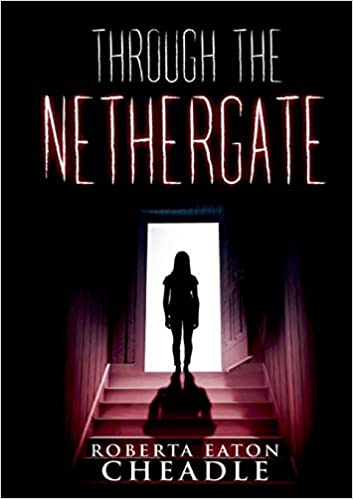
I am very happy to write this review of an excellent novel!
Through The Nethergate by Roberta Eaton Cheadle is a wonderful YA novel that will be appreciated by readers of all ages! Cheadle does an excellent job of weaving true historical characters into her tale that pits a teenaged girl, along with her Grandfather, and a few other helpers, against the very forces of Hell itself.
I deeply appreciated the way Cheadle was able to tell the historical tales and intertwine them into the main plot. Cheadle makes this book about history and its connection to our times.
Her development of characters is very strong, and the reader will care what happens to Margaret, the young protagonist of this novel. Margaret is a very special young lady who along, with a supernatural ability, shows empathy and courage as she faces terrible horrors. She witnesses the terrible actions of people…
View original post 88 more words
Share this:

Excellent Western Reads
Posted: June 23, 2023 Filed under: Uncategorized 6 CommentsDelilah gets a delightful reveiw from Jacqui Murray on WordDreams. Check it out.

For those of you who love Westerns, here are a few more great reads:
- Fancy–the only thing fancy about her is her name, but Fancy has a dream she can’t let go
- Delilah–Delilah is that girl who can’t help but get in trouble–prison, kidnapped, left for dead–but none of that matters when she must rescue a friend
- Born to Hang–Jeremiah proves why no one should set their sights on bringing him down
- Gunmetal Mountain–sometimes, for Cleve, the only solution to problems is with a gun
–a note about my reviews: I only review books I enjoyed. I need to be inspired. That’s why so many of my reviews are 4/5 or 5/5
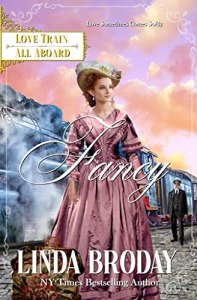 Fancy
Fancyby Linda Broday
Book 10 in Linda Broday’s series, Love Train, a sweet historical western romance, Fancy, is wonderful. Fancy Dalton is dirt poor, working in a café for a nasty man…
View original post 809 more words
Share this:

Small Wonders by Kaye Lynne Booth #Poetry #BookReview #Blog Tour
Posted: June 22, 2023 Filed under: Uncategorized 4 CommentsToday we’re over at Carla Loves to Read for Day 4 of the WordCrafter “Small Wonders” Book Blog Tour with a guest post, a poetry reading and a delightful review. Come join us and leave a comment for a chance to win a free digital copy of my debut poetry collection, “Small Wonders”. I hope to see you there.

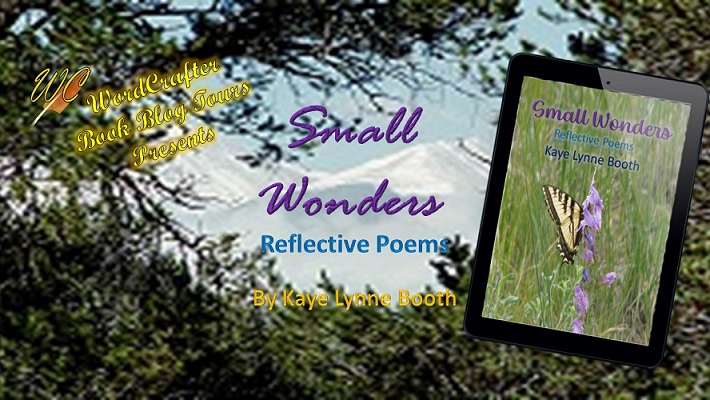
Welcome to my stop on the Blog Tour for Kaye Lynne Booth’s Poetry book: Small Wonders, Reflective Poems. Scroll down for a guest post, a reading of one of her poems, a giveaway and my review.
View original post 1,214 more words
Share this:

Tour Correction – Small Wonders
Posted: June 20, 2023 Filed under: Uncategorized 5 Comments
We all make mistakes, and this one was mine. I sent the wrong reading to go with the post at today’s stop on Robbie’s Inspiration. The video you saw today is the same one you’ll see tomorrow and makes no sense under the Tanka poem portion. The reading that went with today’s post is below. My apologies.




















