Read and Cook – Wind in the Willows by Kenneth Grahame and Sally Lunn Teacakes
Posted: January 14, 2026 Filed under: Book Review, Fiction, Recipes, Review, Robbie Reads and Cooks | Tags: #ReadandCook, #RobbieCheadle, Baking, BookReview, Kenneth Grahame, Sally Lunn Teacake, Wind in the Willows 16 CommentsWind in the Willows by Kenneth Grahame
Introduction
The Wind in the Willows is a charming tale that centres around four animals living in an idyllic English setting. The descriptions of the English countryside are delightful, and the book embodies the best of English country life.
The story commences with the mole experiencing a sudden desire to have an adventure and experience life outside of his underground home. He is busy doing his spring cleaning, but he follows the urge to throw down his paint brush and dig upwards and outwards. He comes out in a beautiful spring meadow. Seeing the river for the first time, he goes down to see it and meets the Water Rat. The two animals strike up a conversation and the Water Rat offers to take Mole on a picnic along the riverbank. During the picnic, Rat tells Mole about all the characters who live around the riverbank including Mr Toad, an impetuous creature who inherited wealth from his father and indulges himself in a variety of obsessive behaviours, the hermit-like Badger who lives in the Wild Wood, and Otter. On the way back to Rat’s den after the picnic, Mole seizes the oars from Rat and tries to row. He overturns the boat and nearly drowns. He is pulled out by the Rat who proceeds to rescue all his belongings and his boat from the water. The Mole is overcome by remorse at his rash action that caused the Rat so much trouble. Mole ends up spending the night at the Rat’s den and the pair become friends.
A few days later, Rat takes Mole to visit Mr Toad, a landed gentleman who lives in the best house in the area, Toad Hall. This visit results in the friends going off in a caravan with Toad who has a desire for adventure and to see the larger country. This adventure ends with Toad learning about motor cars and declaring that he shall have one. Mole and Rat return to Rat’s den and Mole ends up staying, time passes, and winter comes.
Rat has told Mole all about Mr Badger, a kindly creature who lives in the Wild Wood, a scary place where the river animals do not often go. Mole is curious about Badger who is a recluse and rarely undertakes social activities. One winter’s day while Rat is sleeping in his armchair in front of the fire, Mole sets off on his own to find Badger. This unfortunate decision nearly ends badly for Mole and the brave Rat, who comes to find his friend when he discovers he is missing. Good fortune, however, has the pair stumbling across the home of Badger and they are saved. Mole also gets his wish of meeting Badger. During their time at Badger’s home, the subject of Toad comes up and the reader learns that Toad’s obsession with motor vehicles has resulted in him wrecking eight vehicles, ending up in hospital a few times, and getting into trouble with the law because of his reckless behaviour on the roads. Badger decides that the Toad’s three friends, himself, Mole, and Rat, must take Toad in hand in the spring.
This first part of the novel introduces the two main themes of home as a source of strength and the power of nature. The development of the Mole’s character from a timid, nervous, and excitable animal into a brave, dependable, and thoughtful friend. It is only by leaving his home that Mole can learn about the vastness of nature and the joys of companionship and friendship.
The homes of Rat and Badger are integral to their characters and roles in the story. Water Rat and the river are joined together almost as one. Both are calm and poetic but also in constant motion as they follow the tides. Rat is a gregarious creature and accepts the changes to his life brought by the seasons and the river’s reactions to the seasons, with good grace. Rat is as accepting of flooding of his home as he is of newcomers into his life.
The Badger has a vast underground home that suits his slow, lumbering movements and winter hibernation. Badger’s home is his place of sanctuary from society where he can be alone and restore his equilibrium after social interactions.
When the spring comes, Badger makes good on his promise and the trio go to Toad’s house and confront him about his irresponsible behaviour. Toad refuses to listen and promise to amend his behaviour, and so Badger decides to imprison him in his bedroom until he sees reason. Naturally, the deceitful Toad manages to escape. Toad steals a car and gets arrested and thrown in jail for twenty years. The charges are theft, reckless driving, and being disrespectful to the police.
This sets the stage for the second part of the story which revolves around forcing Toad to behave with proper etiquette suited to his station in life. This second section of the book expands on the themes of home as a source of strength and the importance of animal etiquette. Mole learns these lessons quickly while Toad must learn them slowly and because of numerous unfortunate and difficult life lessons.
My thoughts
I loved the beautiful and scenic writing in this book. Nature is a force in this book that the animal characters must pay constant attention to or risk their lives. I liked how nature was so true to life, neither benevolent nor malevolent but rather a condition for existence that must be acknowledged and accommodated.
The scene where Mole and Rat are so in tune with nature, they can hear the music of the Piper while searching for the missing baby otter. The music guides them, and they find Portly and get a glimpse of nature personified as a demi-god. This scene is spiritual and powerful.
This book really spoke to me as it encapsulates everything I value in life: home, nature, and social harmony including consideration and respect for others.
Quotes from this book
“Spring was moving in the air above and in the earth below and around him, penetrating even his dark and lowly little house with its spirit of divine discontent and longing.”
“All this he saw, for one moment breathless and intense, vivid on the morning sky; and still, as he looked, he lived; and still, as he lived, he wondered.”
“But Mole stood still a moment, held in thought. As one wakened suddenly from a beautiful dream, who struggles to recall it, but can recapture nothing but a dim sense of the beauty in it, the beauty! Till that, too, fades away in its turn, and the dreamer bitterly accepts the hard, cold waking and all its penalties.”
“He saw clearly how plain and simple – how narrow, even – it all was; but clearly, too, how much it all meant to him, and the special value of some such anchorage in one’s existence. He did not at all want to abandon the new life and its splendid spaces, to turn his back on sun and air and all they offered him and creep home and stay there; the upper world was all too strong, it called to him still, even down there, and he knew he must return to the larger stage. But it was good to think he had this to come back to, this place which was all his own, these things which were so glad to see him again and could always be counted upon for the same simple welcome.”
Sally Lunn Teacake recipe
Ingredients ( 1 large teacake or 2 medium teacakes)
360 ml plain or cake flour
1 egg, beaten
1/2 teaspoon salt
7 grams powdered yeast
1 teaspoon sugar
165 ml milk and water (2/3 milk and 1/3 water)
30 ml (1 Tablespoon) butter
Egg or milk to glaze (I used milk)
Glace icing (I used this recipe for glace icing: https://www.snowflake.co.za/recipes/glace-icing)
Method
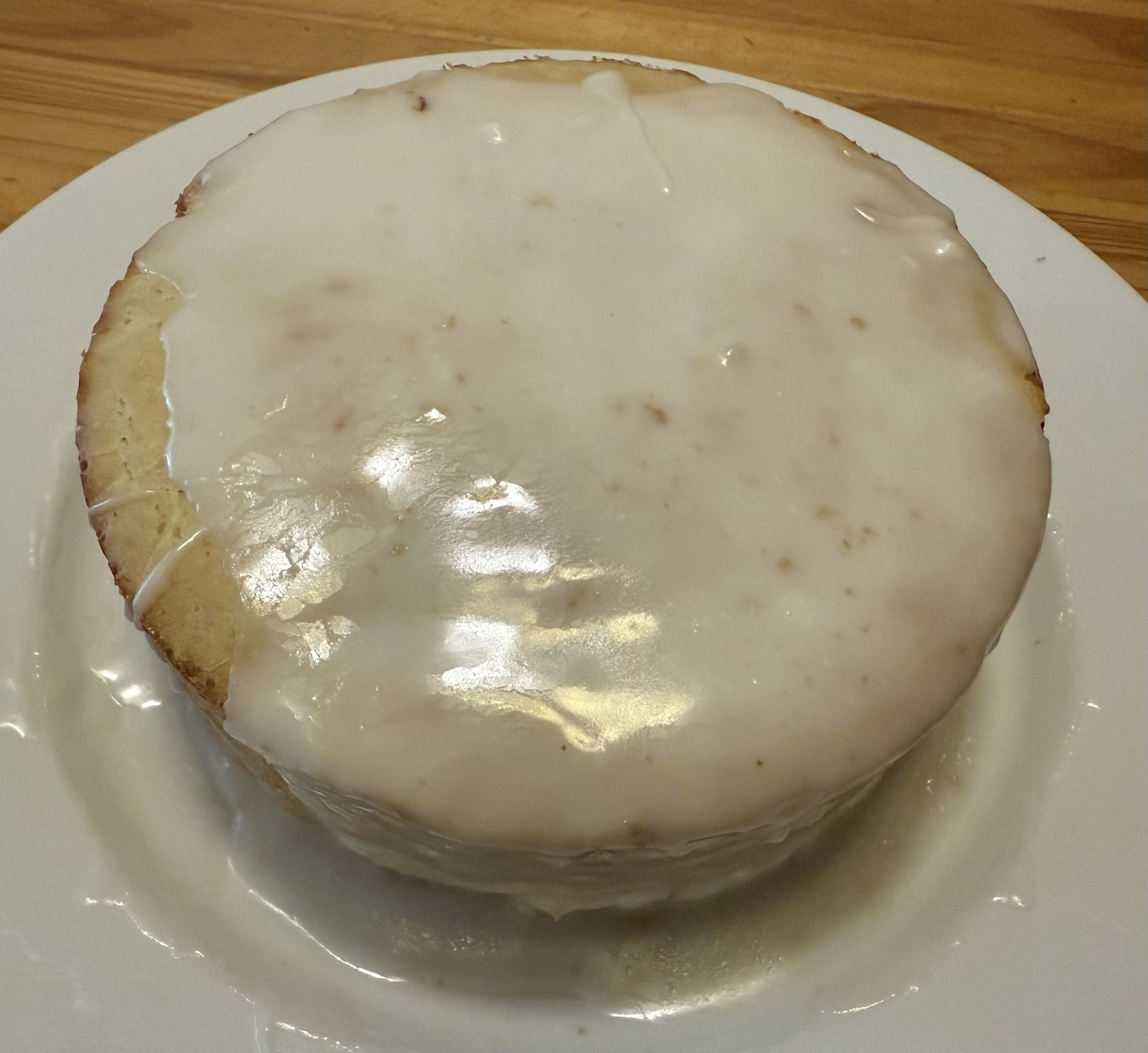
Sift the salt and flour into a mixing bowl. Mix the yeast power with the milk and water heated until its tepid (lukewarm – NOT HOT) and the sugar, pour into the flour and combine. Add the melted butter (NOT HOT) and beaten egg and mix to a light, sticky dough. Knead for few minutes. If you are doing the kneading by hand, cover hands with a coating of flour before starting to help prevent sticking. Grease a small cake tin or two smaller cake tins and transfer the dough to the tins. Set in a warm place to rise until the dough has more than doubled in size (I put in in a cool oven – 100 C) for 30 minutes.
Paint the top of the risen dough with warm milk and place in an oven pre-heated to 230 C (450 F) and bake to approximately 20 minutes or until a cake tester comes out clean. When cold, cover the teacake with glace icing.
About Robbie Cheadle

Robbie also has two novels and a collection of short stories published under the name of Roberta Eaton Cheadle and has horror, paranormal, and fantasy short stories featured in several anthologies under this name.
You can find Robbie Cheadle’s artwork, fondant and cake artwork, and all her books on her website here: https://www.robbiecheadle.co.za/
Find Robbie Cheadle
Blog https://wordpress.com/home/robbiesinspiration.wordpress.com
Bluesky https://bsky.app/profile/robbiecheadle.bsky.social
YouTube https://www.youtube.com/channel/UCVyFo_OJLPqFa9ZhHnCfHUA
Goodreads https://www.goodreads.com/author/show/15584446.Robbie_Cheadle
_________________________________
Did you know you can sponsor your favorite blog series or even a single post with an advertisement for your book? Stop by the WtbR Sponsor Page and let me advertise your book, or you can make a donation to Writing to be Read for as little as a cup of coffee, If you’d like to show your support for this author and WordCrafter Press.
___________________________________
This segment of “Read and Cook with Robbie Cheadle” is sponsored by WordCrafter Press and their themed anthologies.

Tales From the Hanging Tree: Imprints of Tragedy: There exists a tree that is timeless, spanning across all dimensions, which absorbs every life as those who are hanged as they die… and it remembers every one. The stories within are a select few of the Tales From the Hanging Tree.
Curses: Chronicles of Darkness:
There are all types of curses.
Cursed places, cursed items, cursed people, cursed families.
Curses that last throughout time. Curses which can’t be broken. Curses which are brought upon ourselves. Curses that will kill you and those that will only make you wish you were dead.
Legends: Monsters That Go Bump in the Night: Coming in 2026
Discover more from Writing to be Read
Subscribe to get the latest posts sent to your email.




















A great review of an awesome book. I read it for the first time last year and loved it too. The lessons are subtle and the descriptions wonderful. Some very funny parts too.
LikeLiked by 2 people
Hi Darlene, it is a most beautiful story. I don’t know why I waited so long to read it.
LikeLiked by 2 people
I felt the same way!
LikeLiked by 2 people
Oh thanks for sharing this book Robbie and to hear Darlene loved it to is also great to know. Your review was wonderful! ❤️🙌🏽
LikeLiked by 2 people
Hi Cindy, this book is beautifully descriptive and the insight into humans and how they think and operate is marvelous.
LikeLiked by 2 people
How wonderful. I sure wish I could understand what so understand what they are thinking now. I don’t think they are-:( ♥️♥️♥️
LikeLiked by 2 people
No, leaders are always greedy, corrupt and power hungry. Many people just follow without thinking about the mantra or its implications.
LikeLiked by 2 people
A sad scenario actively playing out!
😢
LikeLiked by 1 person
odd that I’ve never read it, but it’s time that I do!
LikeLiked by 3 people
My mother always said it was my biological father’s (who I never knew) favourite book. For some reason, I avoided reading it but it is wonderful. Thanks, Beth
LikeLiked by 2 people
The Wind in the Willows, one of the books that was read out loud to me a child within school… And then our teachers took us to the Wind in the Willows Play held in a theatre in our town which was a Christmas treat when we were in Junior school.. The story of Toad, Ratty and all the cast dressed up in their costumes brought the story to life.. It was the first ever Play I had attended and even to this day I can say I can see Mr Toad sat there, and Mr Badger…. Thank you for reigniting that memory… 🙂 A truly magical tale that holds the imagination xx
LikeLiked by 1 person
A lovely review of a classic story. We ‘did’ it in high school in Australia, but I thought at the time you need to be a child or an adult to fully appreciate it. My sister and I saw a wonderful theatre production of Wind in The Willows many years ago one night before Christmas and when we came out it had been snowing and The Thames looked magic. I must read the book again.
LikeLiked by 1 person
Hi Janet, your theatre experienced of this book sounds wonderful. Many books become clearer to a reader upon a second reading at an older age.
LikeLiked by 1 person
Thank you for your wonderful words about this classic book, Robbie.
LikeLiked by 2 people
My pleasure, Jennie. It is a wonderful book.
LikeLiked by 2 people
Yes!
LikeLiked by 1 person