Dark Origins – “Who Killed Cock Robin” an English nursery rhyme #darkorigins #nurseryrhymes
Posted: August 23, 2023 Filed under: Uncategorized 34 Comments

“Who Killed Cock Robin” is an English nursery rhyme which is believed to be ancient although the earliest record of the rhyme is in Tommy Thumb’s Pretty Song Book published in 1744. This version only contained the first four verses. The longer version was first printed in approximately 1770.
You can listen to a lovely rendition of “Who Killed Cock Robin” here:
Alternatively, these are the lyrics:
Who killed Cock Robin?
I, said the Sparrow,
with my bow and arrow,
I killed Cock Robin.
Who saw him die?
I, said the Fly,
with my little teeny eye,
I saw him die
Who caught his blood?
I, said the Duck,
It was just my luck,
I caught his blood.
Who’ll make the shroud?
I, said the Beetle,
With my thread and needle,
I’ll make the shroud.
Who’ll dig his grave?
I, said the Owl,
With my pick and trowel,
I’ll dig his grave.
Who’ll be the parson?
I, said the Rook,
With my little book,
I’ll be the parson.
Who’ll be the clerk?
I, said the Lark,
if it’s not in the dark,
I’ll be the clerk.
Who’ll carry the link?
I, said the Linnet,
I’ll fetch it in a minute,
I’ll carry the link.
Who’ll be chief mourner?
I, said the Dove,
I mourn for my love,
I’ll be chief mourner.
Who’ll carry the coffin?
I, said the Kite,
If it’s not through the night,
I’ll carry the coffin.
Who’ll bear the pall?
I, said the Crow,
With the cock and the bow,
I’ll bear the pall.
Who’ll sing a psalm?
I, said the Thrush,
As she sat on a bush,
I’ll sing a psalm.
Who’ll toll the bell?
I, said the Bull,
Because I can pull,
I’ll toll the bell.
All the birds of the air
fell a-sighing and a-sobbing,
when they heard the bell toll
for poor Cock Robin.
There is an alternative ending in which the sparrow who killed Cock Robin is hanged for his crime.
Dark Origins
Despite the earliest known record of this nursery rhyme being in 1744, there is some evidence that it may be much older.
A 15th century stained glass window in Buckland Rectory, Gloucestershire depicts the death of a robin by an arrow.
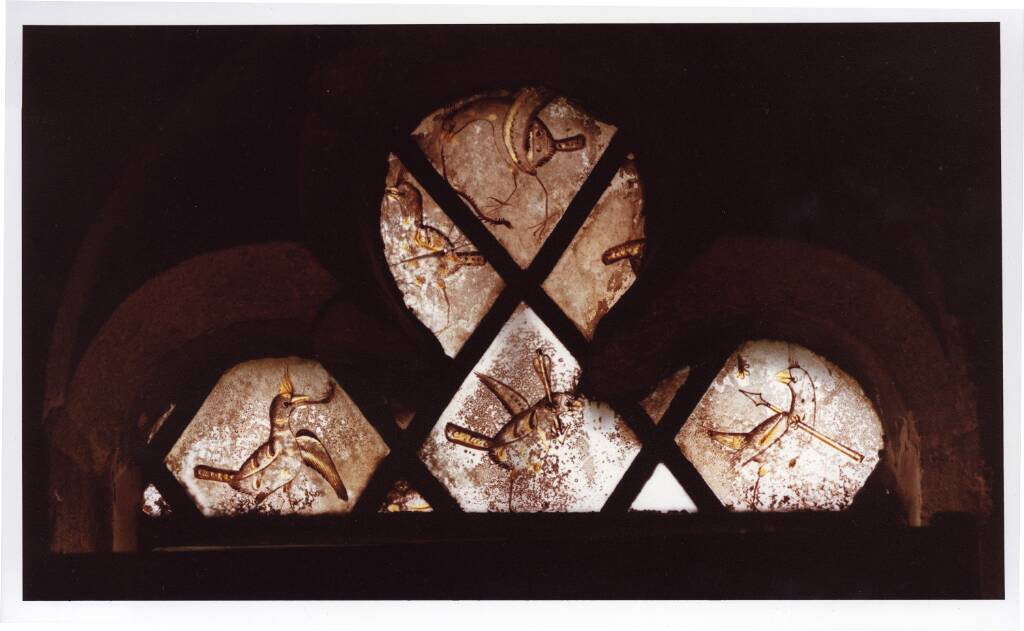
There are similarities between this nursery rhyme and a poem, Phyllyp Sparowe, written by John Skelton in 1508 which is about the death of the narrator’s pet bird.
There are a number of different theories about the meaning of the nursery rhyme. Some believe it is a parody of the death of King William II who was killed by an arrow which hunting in the New Forest (Hampshire) in 1100. King William was known as William Rufus which means “red”.
Another possibility is that the rhyme relates to the fall of Robert Walpole’s government in 1742. Robin is a short form of Robert. Robert Walpole, 1st Earl of Orford and known as Sir Robert Walpole between 1725 and 1742, was a British statesman and Whig politician and is generally regarded as the first Prime Minister of Great Britain. You can read more about Robert Walpole here: https://en.wikipedia.org/wiki/Robert_Walpole
Another alternative is that the nursery rhyme was inspired by ancient myths and legends:
The rhyme could record a mythological event such as the death of the god, Balder, from Norse mythology or the ritual sacrifice of a king as proposed in “The Cutty Wren” theory of a ‘pagan survival’. “The Cutty Wren” is a traditional English folk song which is believed to represent the human sacrifice of the year king or the slaughter of a wren, king of the birds, at the end of the year as a symbolic subsitute.
According to Celtic traditions, Lugh, the sun god who dies as the nights get longer after the summer solstice is depicted with a bow-and-arrow shape. Lugh represented the red sun and was known in Welsh as “Coch Rhi Ben” or Cock Robin. The sparrow who kills him may represent Bran the Blessed, the god of winter in the form of a raven.
About Roberta Eaton Cheadle

Award-winning, bestselling author, Roberta Eaton Cheadle, is a South African writer and poet specialising in historical, paranormal, and horror novels and short stories. She is an avid reader in these genres and her writing has been influenced by famous authors including Bram Stoker, Edgar Allan Poe, Amor Towles, Stephen Crane, Enrich Maria Remarque, George Orwell, Stephen King, and Colleen McCullough.
Roberta has two published novels and has horror, paranormal, and fantasy short stories included in several anthologies. She is also a contributor to the Ask the Authors 2022 (WordCrafter Writing Reference series).
Roberta also has thirteen children’s books and two poetry books published under the name of Robbie Cheadle, and has poems and short stories featured in several anthologies under this name.
Roberta’s blog features discussions about classic books, book reviews, poetry, and photography. https://roberta-writes.com/.
Find Roberta Eaton Cheadle
Blog: https://wordpress.com/view/robertawrites235681907.wordpress.com
Twitter: https://twitter.com/RobertaEaton17
Facebook: https://www.facebook.com/robertawrites
Amazon: https://www.amazon.com/Roberta-Eaton-Cheadle/e/B08RSNJQZ5
_____________________________________________________________________________________________
Want to be sure not to miss any of Robbie’s “Dark Origins” segments? Subscribe to Writing to be Read for e-mail notifications whenever new content is posted or follow WtbR on WordPress. If you found it interesting or entertaining, please share.
Discover more from Writing to be Read
Subscribe to get the latest posts sent to your email.




















Your dark origins posts always fascinate me! This one is no exception.
LikeLiked by 1 person
Thank you, Annette. I am delighted to hear that. Looking at the stats for the post, the ones about nursery rhymes and classic books for children seem to do the best which is interesting.
LikeLiked by 2 people
It is interesting that we had such violent, dark stories for children ‘back in the day’. Not sure it hurt them!
LikeLiked by 1 person
HI Jacqui, I don’t think it is bad for children to know about the darker things in life (within reason). It helps them be vigilant and street wise. Thanks for visiting.
LikeLiked by 2 people
I enjoy the dark origins posts very much. 🤍🌺
LikeLiked by 2 people
Thank you, Kymber. I am really glad to know that.
LikeLiked by 2 people
[…] Continue reading here: https://writingtoberead.com/2023/08/23/dark-origins-who-killed-cock-robin-an-english-nursery-rhyme-d… […]
LikeLiked by 1 person
An enlightening post on dark origins! Love this stuff.
LikeLiked by 2 people
I’m pleased to know that. These posts get a lot of views so there is interest.
LikeLiked by 2 people
Interesting post, Robbie. Since there could be different origins for the nursery rhyme, then maybe the oldest origin is the original source.
LikeLiked by 2 people
Hi Vera, I don’t think we’ll ever know as the origination date of this rhyme is I know. It’s fun to read all the theories. PS I finished Vampire of the Midnight Sun yesterday. Fantastic!
LikeLiked by 2 people
Thank you, Robbie, that makes me smile!
LikeLiked by 2 people
Excellent post, Robbie. This is one nursery rhyme that always seemed especially dark to me. I read a book last year wherein the author used snatches from the rhyme to create ominous affect in the story. It gave me goosebumps!
LikeLiked by 3 people
Hi Mae, I’ve know this rhyme all my life and it never bothered me. I don’t think we see beyond our level of experience when we are children. It is creepy. I used Hans Christian Andersen’s The Storks as a basis for a short story.
LikeLiked by 2 people
Truly fascinating, Robbie. I read about Wren Day several years ago when boys would kill a wren on the 26th December and ask people for money to bury it. It seems guesome now but was considered great sport at the time… The church window is remarkable!
LikeLiked by 3 people
Hi Trish, I was delighted to come across that window during my research for this post. People were much crueler in the past. Survival was harder and hardship makes people hard
LikeLiked by 2 people
I agree, Robbie. When you’re struggling to actually survive, your priorities are very different.
LikeLiked by 2 people
Most interesting, Robbie. Where some of these nursery rhymes originated may remain a mystery, but I loved all the possible scenarios for this one. Thanks for sharing.
LikeLiked by 2 people
Hi Jan, I enjoy this reasearch and learn more about history as I delve 🌸
LikeLiked by 2 people
I don’t think I read this morbid bit of rhyming verse until I was an adult. I could see it being representational of governmental power plays.
LikeLiked by 2 people
Hi Liz, when I learned this poem as a girl, I gave no thought to any deeper meaning. I accepted it at face value.
LikeLiked by 2 people
I had the same experience as a child.
LikeLiked by 2 people
I’ve just been reading about how robins are an important part of English folklore. The poem’s structure reminds me of “The Little Red Hen”. Except everyone keeps answering “Not I”. I wonder if that story was originally a parody of the poem. (K)
LikeLiked by 2 people
Hmmm, I don’t know, but that might be an interesting follow up.
LikeLiked by 1 person
Here’s something else I found in that book about robins:
https://en.wikipedia.org/wiki/Who_Killed_Cock_Robin%3F_(1935_film)
LikeLiked by 2 people
Thank you for the links, Kerfe. Much appreciated.
LikeLiked by 2 people
You’re welcome.
LikeLiked by 1 person
I love reading these dark origins posts and this one did not disappoint…:) x
LikeLiked by 2 people
I’m delighted to know that, Carol 😊
LikeLiked by 2 people
Fascinating, Robbie! People in the ancient days didn’t think the way we do about what’s good and what’s bad for children. I don’t think they ever thought this rhyme was appropriate for children.
LikeLiked by 2 people
I don’t think it’s a bad thing for children to be made aware of what goes on in the world through stories and nursery rhymes. Not graphic violence in movies and video games, I don’t like that at all. Modern middle class are to sheltered and have no street smarts which is a risk.
LikeLiked by 1 person
What a great bit of historical pondering. Thanks.
LikeLiked by 2 people
My pleasure, Craig. I enjoy churning the ground and hunting for interesting titbits about these nursery rhymes and short stories.
LikeLiked by 2 people
What a fantastic post, so rich with history, and interpretations of the poem based on that history.
Never a dull moment when Roberta’s around. Again, I love this. Thank you!
LikeLiked by 1 person