Women in America
Posted: July 17, 2023 Filed under: history, Nonfiction, Women in History, Writing | Tags: Women in History, Women's Suffrage, Writing to be Read 3 CommentsHow and why did women’s roles and movements change during the Progressive Era?
Prior to the turn of the century, the struggle for women’s suffrage had smoldered since Abigail Adams wrote her husband, John, asking that he “remember the ladies” as the Constitution of the United States was being drafted. John did not pay heed to her request and the battle for women’s suffrage had begun. In the following years, women lost the right of suffrage in New York in 1777, in Massachusetts in 1780, and in New Hampshire in 1784. Then in 1787, the Constitutional Convention placed the right to vote with the states and woman lost the right to vote in all states, except New Jersey. In 1807, it was lost there, as well. (2) It seemed that men were determined to keep women in the home and out of the political arena.

Women were just as determined to gain equal footing. The first women’s rights convention was held in Seneca Falls, New York on July 17, 1848, and Equal Suffrage was adopted in a general declaration of rights. (2 & 3) Women’s rights conventions were later held in Salem, Ohio and Worchester, Massachusetts in 1850, and from then until 1861, annual women’s rights conventions were held. Through the efforts of women like Elizabeth Cady Stanton, Lucretia Mott, Lucy Stone, Abbey Kelly Foster, Angelina and Sarah Grimke and Susan B. Anthony (3), the cry for women’s suffrage was heard in the political arena, but the men who held the power continued to ignore their pleas, as were the ballots of the 172 women that attempted to vote in New Jersey, in 1868, and the 44 ballots cast by women in Massachusetts, in 1870. In 1886, the Suffrage Amendment made it to the Senate, but was voted down 2 to 1. (2)
Women’s roles had been mainly restricted to the home and family, but industrialization and the Gilded Age saw more women in the factories and work places, working long hours for little pay, just like their male counter parts. The Progressive Movement offered a platform that women could use to gain support for the cause of suffrage. In 1890, the formation of the National American Women’s Suffrage Association came about when the two existing women’s groups, the American Women’s Suffrage Association, whose efforts had been directed at the state legislatures, and the National Women’s Suffrage Association, whose efforts had been directed toward an amendment to the U.S. Constitution, joined forces and combined their resources and voices. (1 & 3) The group concentrated on a state-by-state approach to gaining the right to vote, and first earned the right to vote in Wyoming, with Utah, Colorado and Idaho close behind. (1) The state of Washington granted women’s suffrage in 1910, and in 1911, California also passed suffrage. In 1912, three more states granted women suffrage: Oregon, Arizona, and Kansas. (2)

In the early 1900’s, the Congressional Union was formed and they campaigned for suffrage at the national level. (1) In 1911, 3,000 women ascended upon New York City in the name of women’s suffrage. During the election of 1912, Theodore Roosevelt Progressive Party included women’s suffrage in their platform. (2) While Woodrow Wilson played on progressive ideals on many issues as he strove for the presidency, women’s suffrage was not an issue that he supported. (1) On March 3, 1913, a women’s suffrage parade took place on Pennsylvania Avenue taking the cause right up to the White House, one day prior to Wilson’s inauguration. Members of the anti-suffrage movement damaged floats and attempted to block the parades passage, while thousands of spectators cheered and urged the women on. The demonstration continued only when troops were called in to restore order (1) after almost two hundred women had been injured in this mob action, yet no arrests were made. (2)
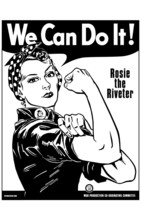
World War I saw even more women entering into factory labor and making labor contributions in support of the war effort. Women declared that their war contributions deserved recognition of their political equality. (4) In 1916, a breakaway group from the NAWSA, lead by Alice Paul formed the National Women’s Party. They began more radical tactics to push for a federal suffrage amendment. In January of 1917, they began posting “Sentinels of Liberty” at the White House. Beginning in June, almost 500 women were arrested and 168 did time in jail for the demonstration tactics. Those that did jail time were not released until 1918, when the Appellate court ruled that the arrests were illegal. President Wilson changed his position on women’s suffrage, and in a speech given on September 19, 1819, he openly supported the cause. In January of 1919, the NWP lit a “Watchfire for Freedom” and posted a guard until the Suffrage Amendment passed the Senate on June 4th. It was ratified by the required 36 states, with Tennessee being the final vote, and it became law on August 26th. (2) Charlotte Woodward, who had attended the original women’s rights convention in Seneca Falls at the age of 19, was the only member still alive to see the fruition of their efforts. (4)
1. U.S. History Lesson 52 – The Progressive Impulse: Women and Blacks in America. Themes in History: Diplomacy and Foreign Policy. 4 October 2009. https://cccs.blackboard.com/webct/RelativeResourceManager/Template/multimedia/lesson52/lessonp_nroc_nonap.html
2. No Author. Suffrage Activism Enters the 20th Century. Women’s Resources. 4 October 2009. http://dpsinfo.com/women/history/timeline.html
3. No Author. In the United States.
4. Lewis, Jane Johnson. August 26, 1920: The Day the Suffrage Battle Was Won. About.com. 4 October 2009. http://womenshistory.about.com/od/suffrage1900/a/august_26_wed.htm
________________________________________________________________

For Kaye Lynne Booth, writing is a passion. Kaye Lynne is an author with published short fiction and poetry, both online and in print, including her short story collection, Last Call and Other Short Fiction; and her paranormal mystery novella, Hidden Secrets; and book 1 of her Women in the West adventure series, Delilah. Kaye holds a dual M.F.A. degree in Creative Writing with emphasis in genre fiction and screenwriting, and an M.A. in publishing. Kaye Lynne is the founder of WordCrafter Quality Writing & Author Services and WordCrafter Press. She also maintains an authors’ blog and website, Writing to be Read, where she publishes content of interest in the literary world.
_____________________________________________________________
Want exclusive content? Join Kaye Lynne Booth & WordCrafter Press Readers’ Group for WordCrafter Press book & event news, including the awesome releases of author Kaye Lynne Booth. She won’t flood your inbox, she NEVER sells her list, and you might get a freebie occasionally. Get a free digital copy of her short story collection, Last Call and Other Short Fiction, just for joining.
Discover more from Writing to be Read
Subscribe to get the latest posts sent to your email.
















Hi Kaye, a very interesting post about women’s sufferage in the USA. It is good to remind women about how hard it was to gain the right to vote, especially now when women’s rights are being eroded.
LikeLiked by 1 person
Glad you found it interesting, Robbie. There is lots to draw on in history. We can look to these women when creating strong female protagonists. 😉
LikeLiked by 1 person
Yes, I also like history as a source of ideas
LikeLiked by 1 person