Wrapping Up the WordCrafter “The French Winemaker’s Daughter” Book Blog Tour
Posted: December 20, 2024 Filed under: Blog Tour, Book Review, Books, Fiction, Historical Fiction, history, Review, WordCrafter Book Blog Tours | Tags: Historical Fiction, Loretta Ellsworth, Strong Female Protagonists, The French Winemaker's Daughter, WordCrafter Book Blog Tours, World War II, WWII 6 Comments
This is the final day of the WordCrafter The French Winemaker’s Daughter Book Blog Tour. Today, we have my review of The French Winemaker’s Daughter to wrap things up.
If you’d like to learn more about this moving historical fiction novel and you missed a stop on the tour, you can still visit each stop through the links in the schedule below.
Tour Schedule
Monday: Writing to be Read – Interview with author Loretta Ellsworth
Tuesday: Carla Reads – Guest post from author Loretta Ellsworth
Wednesday: Kyrosmagica – Guest post from author Loretta Ellsworth
Thursday: Book Places – Guest post from author Loretta Ellsworth
Friday: Writing to be Read – Review of The French Winemaker’s Daughter
About The French Winemaker’s Daughter
Set during World War II, an unforgettable historical novel about love, war, family, and loyalty told in in the voices of two women, generations apart, who find themselves connected by a mysterious and valuable bottle of wine stolen by the Nazis.
1942. Seven-year-old Martine hides in an armoire when the Nazis come to take her father away. Pinned to her dress is a note with her aunt’s address in Paris, and in her arms, a bottle of wine she has been instructed to look after if something happened to her papa. When they are finally gone, the terrified young girl drops the bottle and runs to a neighbor, who puts her on a train to Paris.
But when Martine arrives in the city, her aunt is nowhere to be found. Without a place to go, the girl wanders the streets and eventually falls asleep on the doorstep of Hotel Drouot, where Sister Ada finds her and takes her to the abbey, and watches over her.
1990. Charlotte, a commercial airline pilot, attends an auction with her boyfriend Henri at Hotel Drouot, now the oldest auction house in Paris. Successfully bidding on a box of wine saved from the German occupation during the Second World War, Henri gives Charlotte a seemingly inferior bottle he finds inside the box. Cleaning the label, Charlotte makes a shocking discovery that sends her on a quest to find the origins of this unusual—and very valuable—bottle of wine, a quest that will take her back fifty years into the past. . . .

A powerful tale of love, war, and family, The French Winemaker’s Daughter is an emotionally resonant tale of two women whose fates are intertwined across time. Loretta Ellsworth’s evocative and poignant page-turner will linger in the heart, and make you think about luck, connection, and the meaning of loyalty.
Purchase Link: https://www.amazon.com/French-Winemakers-Daughter-Novel-ebook/dp/B0D3CJYP5Y
My Review of The French Winemaker’s Daughter
I received a PDF copy of The French Winemaker’s Daughter from author Loretta Ellsworth to review for this tour. All opinions stated here are my own.
Any book with two strong female protagonists is my kind of book. I’m a fan of historical fiction, and this story peaked my interest, with it’s compelling synopsis in the back matter. It was definitely worth the read.
In this story, we follow little Martine, a Jewish child, as she survives the war with the help of the kind people she meets along the way, after the German’s take her Papa and her friend away. We follow the story through the eyes of a child, displaced from her family and the vineyard that’s been her only home, filled with guilt for losing a bottle of wine that her father entrusted her with, and the hope of once again being reuinted with her Papa.
In the present day, we follow Charlotte, and airline pilot, who acquires a bottle of wine that was confiscated by the Germans, which turns out to be quite valuable and carries a mystery in a note written on the back of a false label. We follow her as she searches the vineyards around Paris, trying to locate the vineyard the wine came from and learn the identity of its rightful owner. She ends the search after learning that in all probability, father and child did not survive the war, but fate steps in and takes a hand in sealing the connection between these two women.
A lovely duel story line which is well written to bring both stories together and give readers a very satisfying ending. I cheered for both women as they triumphed over the adversities that life threw their way. And I give The French Winemaker’s Daughter five quills.


________________________________
Book your WordCrafter Book Blog Tour today!
Share this:

Women in America
Posted: July 17, 2023 Filed under: history, Nonfiction, Women in History, Writing | Tags: Women in History, Women's Suffrage, Writing to be Read 3 CommentsHow and why did women’s roles and movements change during the Progressive Era?
Prior to the turn of the century, the struggle for women’s suffrage had smoldered since Abigail Adams wrote her husband, John, asking that he “remember the ladies” as the Constitution of the United States was being drafted. John did not pay heed to her request and the battle for women’s suffrage had begun. In the following years, women lost the right of suffrage in New York in 1777, in Massachusetts in 1780, and in New Hampshire in 1784. Then in 1787, the Constitutional Convention placed the right to vote with the states and woman lost the right to vote in all states, except New Jersey. In 1807, it was lost there, as well. (2) It seemed that men were determined to keep women in the home and out of the political arena.

Women were just as determined to gain equal footing. The first women’s rights convention was held in Seneca Falls, New York on July 17, 1848, and Equal Suffrage was adopted in a general declaration of rights. (2 & 3) Women’s rights conventions were later held in Salem, Ohio and Worchester, Massachusetts in 1850, and from then until 1861, annual women’s rights conventions were held. Through the efforts of women like Elizabeth Cady Stanton, Lucretia Mott, Lucy Stone, Abbey Kelly Foster, Angelina and Sarah Grimke and Susan B. Anthony (3), the cry for women’s suffrage was heard in the political arena, but the men who held the power continued to ignore their pleas, as were the ballots of the 172 women that attempted to vote in New Jersey, in 1868, and the 44 ballots cast by women in Massachusetts, in 1870. In 1886, the Suffrage Amendment made it to the Senate, but was voted down 2 to 1. (2)
Women’s roles had been mainly restricted to the home and family, but industrialization and the Gilded Age saw more women in the factories and work places, working long hours for little pay, just like their male counter parts. The Progressive Movement offered a platform that women could use to gain support for the cause of suffrage. In 1890, the formation of the National American Women’s Suffrage Association came about when the two existing women’s groups, the American Women’s Suffrage Association, whose efforts had been directed at the state legislatures, and the National Women’s Suffrage Association, whose efforts had been directed toward an amendment to the U.S. Constitution, joined forces and combined their resources and voices. (1 & 3) The group concentrated on a state-by-state approach to gaining the right to vote, and first earned the right to vote in Wyoming, with Utah, Colorado and Idaho close behind. (1) The state of Washington granted women’s suffrage in 1910, and in 1911, California also passed suffrage. In 1912, three more states granted women suffrage: Oregon, Arizona, and Kansas. (2)

In the early 1900’s, the Congressional Union was formed and they campaigned for suffrage at the national level. (1) In 1911, 3,000 women ascended upon New York City in the name of women’s suffrage. During the election of 1912, Theodore Roosevelt Progressive Party included women’s suffrage in their platform. (2) While Woodrow Wilson played on progressive ideals on many issues as he strove for the presidency, women’s suffrage was not an issue that he supported. (1) On March 3, 1913, a women’s suffrage parade took place on Pennsylvania Avenue taking the cause right up to the White House, one day prior to Wilson’s inauguration. Members of the anti-suffrage movement damaged floats and attempted to block the parades passage, while thousands of spectators cheered and urged the women on. The demonstration continued only when troops were called in to restore order (1) after almost two hundred women had been injured in this mob action, yet no arrests were made. (2)
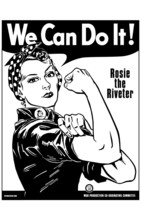
World War I saw even more women entering into factory labor and making labor contributions in support of the war effort. Women declared that their war contributions deserved recognition of their political equality. (4) In 1916, a breakaway group from the NAWSA, lead by Alice Paul formed the National Women’s Party. They began more radical tactics to push for a federal suffrage amendment. In January of 1917, they began posting “Sentinels of Liberty” at the White House. Beginning in June, almost 500 women were arrested and 168 did time in jail for the demonstration tactics. Those that did jail time were not released until 1918, when the Appellate court ruled that the arrests were illegal. President Wilson changed his position on women’s suffrage, and in a speech given on September 19, 1819, he openly supported the cause. In January of 1919, the NWP lit a “Watchfire for Freedom” and posted a guard until the Suffrage Amendment passed the Senate on June 4th. It was ratified by the required 36 states, with Tennessee being the final vote, and it became law on August 26th. (2) Charlotte Woodward, who had attended the original women’s rights convention in Seneca Falls at the age of 19, was the only member still alive to see the fruition of their efforts. (4)
1. U.S. History Lesson 52 – The Progressive Impulse: Women and Blacks in America. Themes in History: Diplomacy and Foreign Policy. 4 October 2009. https://cccs.blackboard.com/webct/RelativeResourceManager/Template/multimedia/lesson52/lessonp_nroc_nonap.html
2. No Author. Suffrage Activism Enters the 20th Century. Women’s Resources. 4 October 2009. http://dpsinfo.com/women/history/timeline.html
3. No Author. In the United States.
4. Lewis, Jane Johnson. August 26, 1920: The Day the Suffrage Battle Was Won. About.com. 4 October 2009. http://womenshistory.about.com/od/suffrage1900/a/august_26_wed.htm
________________________________________________________________

For Kaye Lynne Booth, writing is a passion. Kaye Lynne is an author with published short fiction and poetry, both online and in print, including her short story collection, Last Call and Other Short Fiction; and her paranormal mystery novella, Hidden Secrets; and book 1 of her Women in the West adventure series, Delilah. Kaye holds a dual M.F.A. degree in Creative Writing with emphasis in genre fiction and screenwriting, and an M.A. in publishing. Kaye Lynne is the founder of WordCrafter Quality Writing & Author Services and WordCrafter Press. She also maintains an authors’ blog and website, Writing to be Read, where she publishes content of interest in the literary world.
_____________________________________________________________
Want exclusive content? Join Kaye Lynne Booth & WordCrafter Press Readers’ Group for WordCrafter Press book & event news, including the awesome releases of author Kaye Lynne Booth. She won’t flood your inbox, she NEVER sells her list, and you might get a freebie occasionally. Get a free digital copy of her short story collection, Last Call and Other Short Fiction, just for joining.
Share this:

Dark Origins – The Second Mrs Astor, New York high society and the sinking of the Titanic
Posted: June 28, 2023 Filed under: Books, Dark Origins, Fiction, Historical Fiction, Historical Inspiration, history | Tags: Dark Origins, Historical Fiction, Robbie Cheadle, Shana Abe, The Second Mrs. Astor, Writing to be Read 44 Comments
The Titanic has been in the press again recently and has claimed five more lives. If you are out of the loop about this disaster, you can read about it here: https://www.reuters.com/world/search-intensifies-titanic-sub-with-only-hours-oxygen-left-2023-06-22/.
This disaster prompted me to write about a book I recently read, The Second Mrs Astor, and its dark origins.
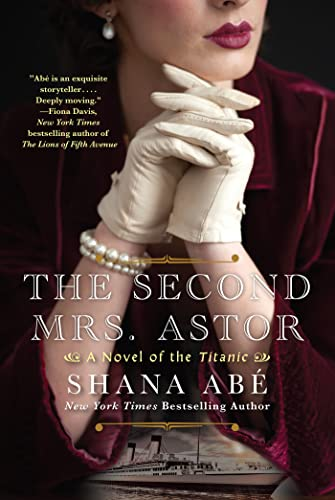
The Second Mrs Astor is a work of historical fiction by Shana Abe. It depicts the romance between the hugely wealthy John Jacob Astor IV and his second and very young wife, Madeleine Force Astor.
There are two aspects to this extraordinarily fine piece of fictionalised history that caught my attention: the snotty and superior attitudes of New York society created by John Astor IV’s mother, Caroline Schermerhorn Astor, and the sinking of the Titanic which claimed the lives of John Astor IV, his valet, and his dog, Kitty. Madeleine Force Astor, who was pregnant at the time, survived the disaster.
A History of New York’s high society in the late 19th century
New York high society started with The Four Hundred, a list of New York’s biggest names which achieved highly-coveted invitations to one of Mrs Caroline Astor’s most lavish parties in her Fifth Avenue mansion. At this time, called the Gilded Age, the Astor family were considered to be Manhattan’s old money – being one of the first Dutch settlers on the island, and they held the prestigious title of a true ‘Knickerbocker’ or a native New Yorker.
Caroline Astor was the ultimate authority of New York society at the time and many high-profile names from America’s 1 percent competed for a seat at her table. Once of these people was Ava Belmont, previously Ava Vanderbilt from the Vanderbilt railroad fortune, who tried to overthrow Caroline Astor thereby creating the most notorious high society rivalry in the late 19th century.
New York high society owned lavish summer homes in Newport, Rhode Island and enormous mansions in the heart of Midtown Manhattan and were known for their extreme extravagance.
Early romance between John Astor IV and Madeleine Force
Madeleine Force was 17 years old when she met John Astor IV. She came from a wealthy family who were part of Brooklyn high-society but was several rungs down the social ladder from the Astor’s.
At the time, John Astor IV was 47 years old and a divorcee with two children. At that time, divorce was considered to be scandalous by the clergy and high society.
Madeleine Force accepted John Astor IV’s marriage proposal despite the open disapproval of his societal circle and the malignant scrutiny of the press.
The early part of the couples marriage made for sad and difficult reading as Madeleine struggles to cope with social ostracism. This all happens against a background of outrageous privilege and extravagance. Both aspects made me angry as a reader.
The pair then went on an extended honeymoon to Egypt and elect to return to New York on the Titanic.
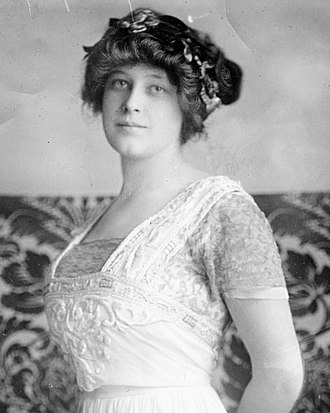

The sinking of the Titanic

Madeleine Astor was five months pregnant when she boarded the Titanic with her husband at Cherbourg, France. They were first class passengers. On the night of the 14th of April 1912, John Astor woke his wife and informed her that the Titanic had hit an iceberg. He reassured her that the damage did not seem serious, but he made her put on a life jacket. Madeleine Astor, her nurse and maid managed to board lifeboat 4 by crawling through the first-class promenade window. John Astor asked if he could accompany his wife as she was pregnant but his request was refused.
John Astor and his valet died in the sinking and his body was recovered on the 22nd of April.
The author’s descriptions of life aboard the Titanic before it struck the iceberg, and of the three hours during which the great ship sank are very compelling. I felt as if I was on that ship experiencing the cold, fear, and loss.
Of the estimated 2,200 people aboard the Titanic more than 1,500 died.
A quote from The Second Mrs Astor:
“The best memory I have about Titanic was that she was so large. So epic. I never felt any swaying or bobbing or turbulence to interfere with my meals, my sensitive appetite, or my slumber. I never felt any sort of vulnerability aboard that ocean liner, right up until the very end. I imagine that’s a blessing, don’t you? Whoever wants to know how it’s all going to end before it actually does? Only poets and madmen, I would think.”
Conclusion
Most people know something about the sinking of the Titanic so I haven’t gone into a lot of detail in this post. I was so captivated by this book, I did my own research to determine how much of the Astor love story was fictionalised and how much was based on truth. It does seem that the Astor’s really were in love and it was a great romance. Madeleine Astor never really recovered from the shock and horror of that fateful night and while her death at the age of 46 is recorded as heart failure, it is believed she died of a drug overdose.
One interesting survival story I came across during my research related to the chief baker on board the Titanic called Charles Joughin.

Ahead of the actual sinking of the Titanic, Charles Joughin imbibed significant amounts of alcohol. When the ship started sinking, the baker stepped off the stern of the vessel. As 1,500 screaming and panicked people froze to death around him, he continued to paddle in the water until dawn when he was picked up by a lifeboat. Within a few days, he was back at work.
Rather a remarkable story.
About Roberta Eaton Cheadle

Award-winning, bestselling author, Roberta Eaton Cheadle, is a South African writer and poet specialising in historical, paranormal, and horror novels and short stories. She is an avid reader in these genres and her writing has been influenced by famous authors including Bram Stoker, Edgar Allan Poe, Amor Towles, Stephen Crane, Enrich Maria Remarque, George Orwell, Stephen King, and Colleen McCullough.
Roberta has two published novels and has horror, paranormal, and fantasy short stories included in several anthologies. She is also a contributor to the Ask the Authors 2022 (WordCrafter Writing Reference series).
Roberta also has thirteen children’s books and two poetry books published under the name of Robbie Cheadle, and has poems and short stories featured in several anthologies under this name.
Roberta’s blog features discussions about classic books, book reviews, poetry, and photography. https://roberta-writes.com/.
Find Roberta Eaton Cheadle
Blog: https://wordpress.com/view/robertawrites235681907.wordpress.com
Twitter: https://twitter.com/RobertaEaton17
Facebook: https://www.facebook.com/robertawrites
Amazon: https://www.amazon.com/Roberta-Eaton-Cheadle/e/B08RSNJQZ5
_____________________________________________________________________________________________
Want to be sure not to miss any of Robbie’s “Dark Origins” segments? Subscribe to Writing to be Read for e-mail notifications whenever new content is posted or follow WtbR on WordPress. If you found it interesting or entertaining, please share.
Share this:

Bonanza!
Posted: June 12, 2023 Filed under: history, Inspirational, Nature, Photography | Tags: Bonanza, Colorado History, Exchequer, Kaye Lynne Booth, Mining towns, Nature, Writing to be Read 8 Comments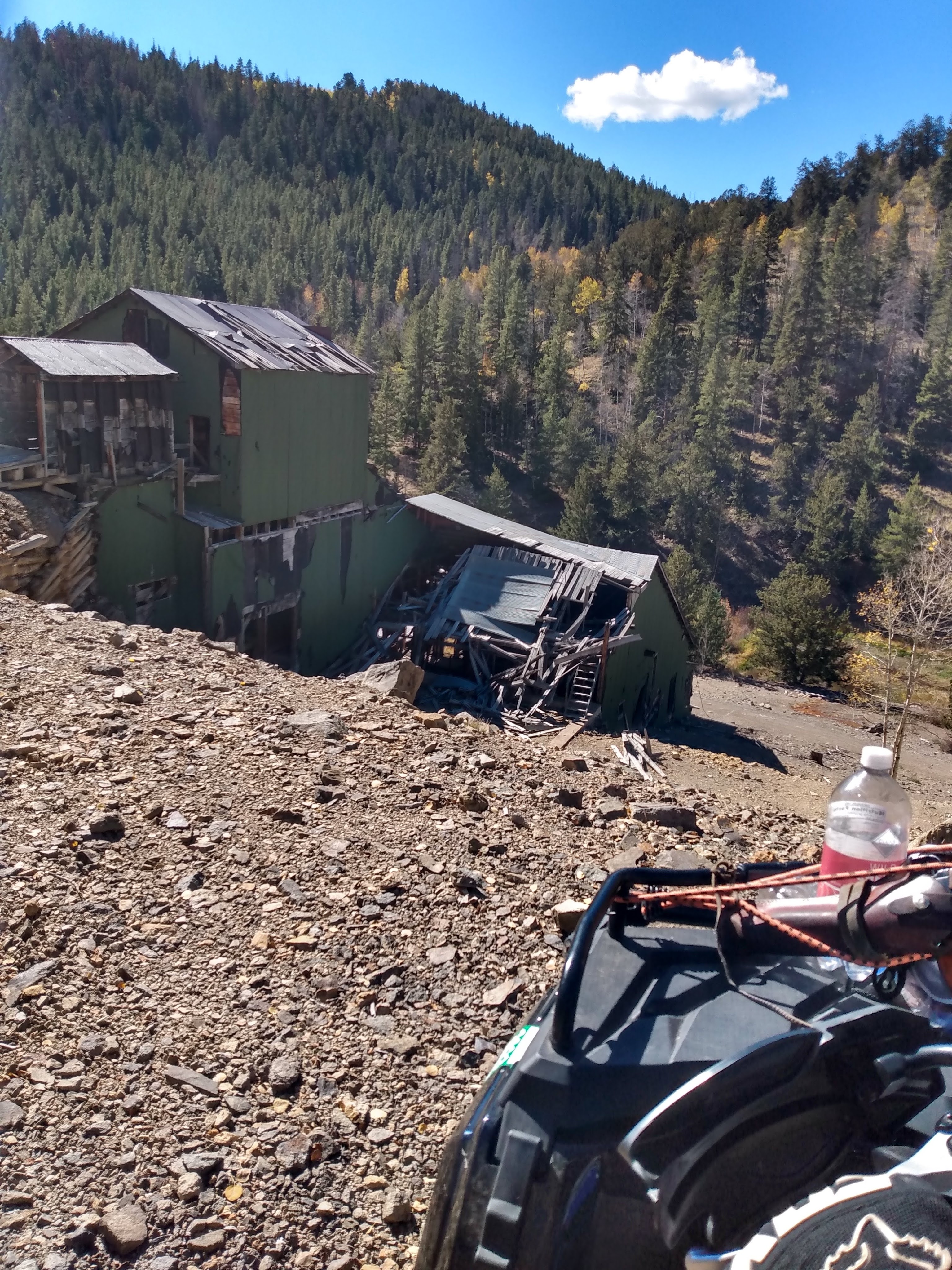
History
Bonanza, Colorado is an old silver mining town, settled in 1880, which I have visited for many years. Originally, purported to have over 100 buildings, including 36 saloons and 7 dancehalls. It also boasted a post office, a drugstore, a hardware store, a town hall, a schoolhouse, a furniture store and two hotels. As the silver mines were played out the population dropped, but the town got a second wind when the Rawley mine was discovered in the 1920’s and they carried the ore out to the mill in Shirley by cabletram. The town was virtually abandoned after ore production fell off in the 1930s.
Bonanza Today
Now, just a small number of year round residents, (17 in 2020 according to wikipedia), some of the old mining buildings are still standing beyond the township. Although the town is kind of cool, these mining structures, which can be found beyond the town up a four-wheel-drive road, are what has always interested me more than the town itself.

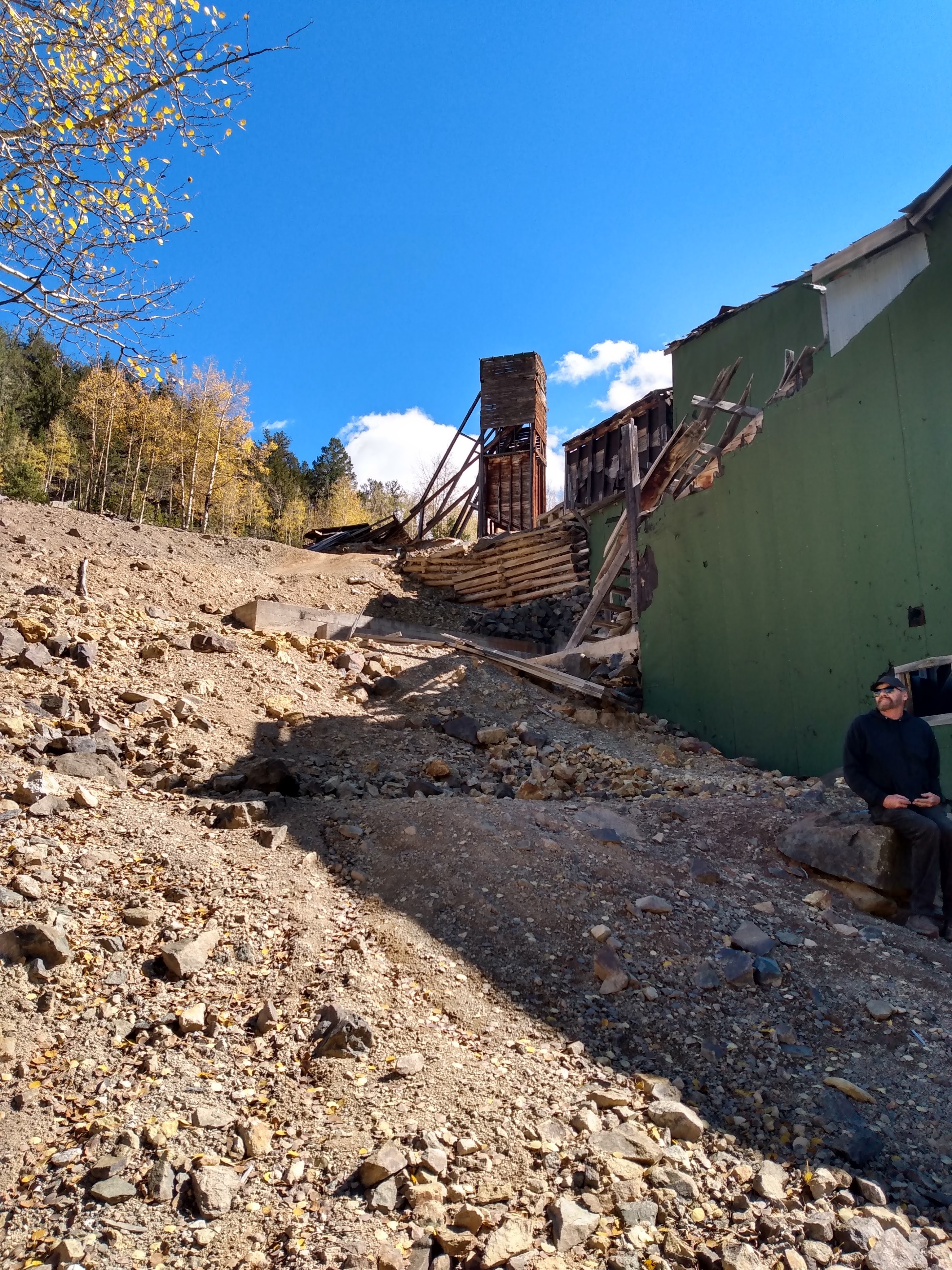
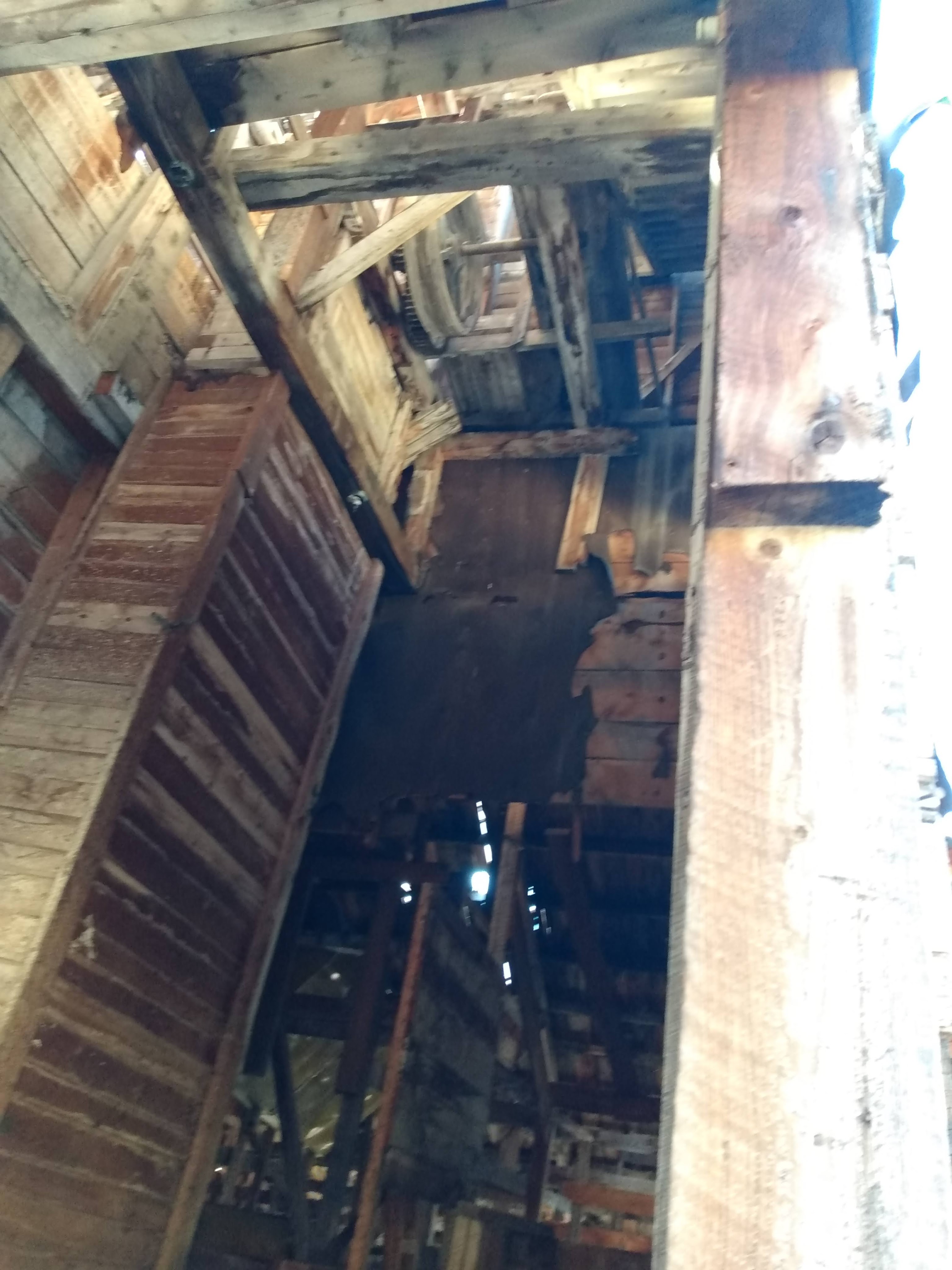


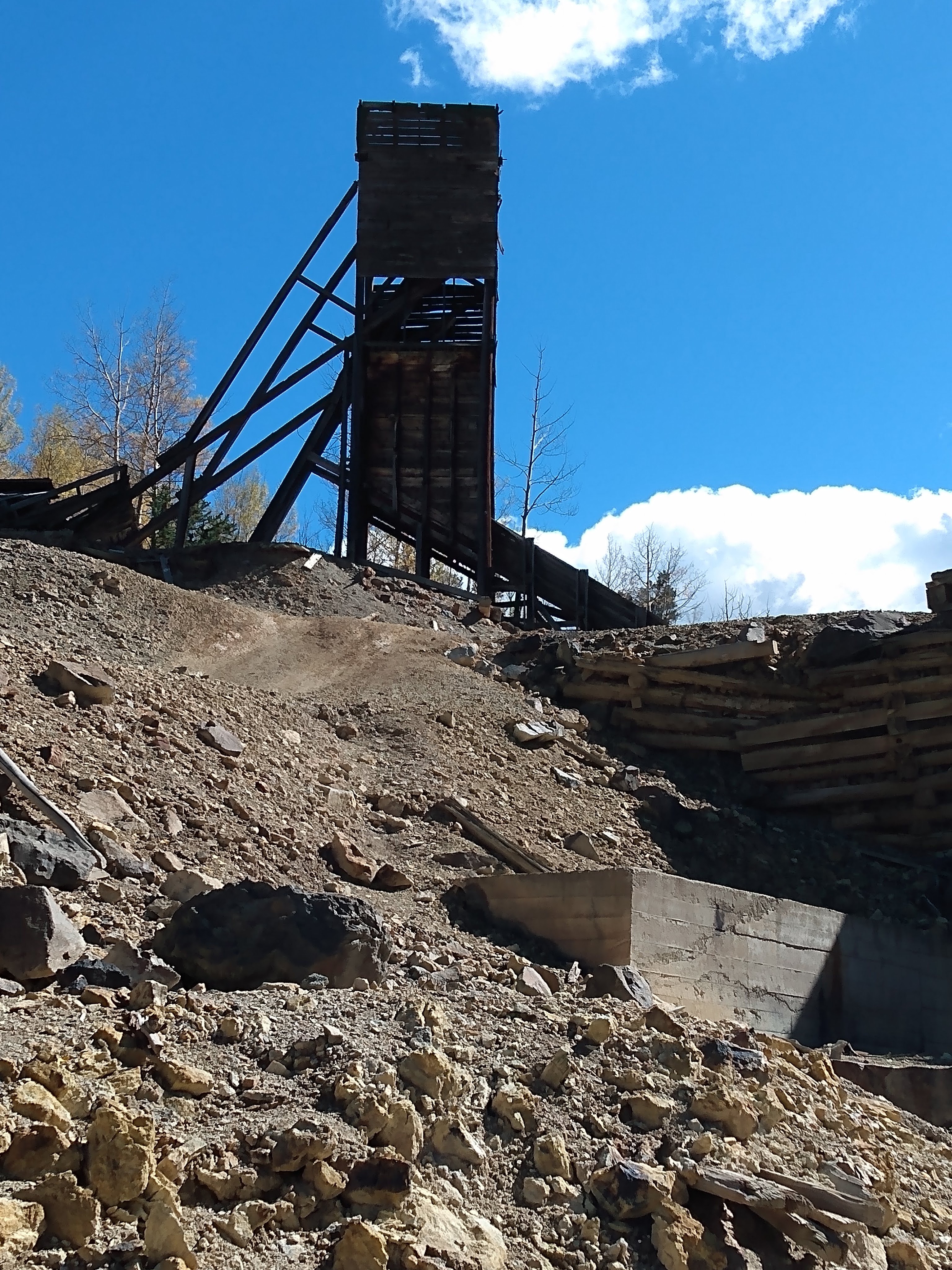

The old ore stamping mill, seen in the photos above, is now crumbling down in disrepair, but in years past I explored the interior with my children. Most of the staircases were intact when I first explored the remains of Bonanza, and at one time, I climbed all the way to the top of the mill, but today only two short stairways are even passable. The equipment that was to large and too heavy to be carried off by scavengers and vandalls, such as the large stamps used to crush the rock so they could seperate the ore, and the engine which ran the pulley system that brought the ore up from the mine remained thirty years ago, but today even these items have been hauled out by those determined enough to collect the scrap metal fee from them.
Exchequerville
Above Bonanza there exists an old cabin, which is the only remians of the townsite of Exchequer, or Exchechequerville. On the hill above is an old cemetary, which caught my interest, so I’ve visited there two or three times. I’ve always wondered what the story was about this little mining town. Whenever I’ve visited, I’ve felt like there was a story there, and it has made me curious. I found very little information about this strange place with one building and a cemetary to attest that it ever existed at all.
All I did find was a tidbit to make an interesting aside, probably of more interest to female authors. According to a site called Haunted at Timberline, Exchequer fame is attributed to three female authors wrote books using Bonanza and Exchequer as their setting. Anne Ellis wrote a sereis of letters chronicaling the pioneer life of she and her family, much of which took place around Exchequer, and the collection is housed in the University of colorado Boulder Libraries. Her book, titiled “The Life of an Ordinary Woman”, is a part of a triad of famous books written by female authors during the gold and silver rushes in the mid-to-late 1800s, including Father Struck it Rich, by Evalyn Walsh McLean and Tomboy Bride, by Harriette Fish Backus. Ellis, her mother and her two brothers are all buried in the cemetary above the old townsite.
Site Seeing
At an elevation of 9, 470 feet, Bonanza is a favortite spot to visit for fall colors, as well. With several four-wheel-drive trails which venture into the hills above, including the Ottis Mears Toll Road, there is plenty of trees and open space for picnicking, hiking, riding, camping, or however else you choose to enjoy the great Colorado outdoors.

References
“Bonanza, CO Ghosttown – By Villa Grove”. Uncover Colorado. Retrieved from https://www.uncovercolorado.com/ghost-towns/bonanza/
“Bonanza, Colorado”. Western Mining History. Retrieved from https://westernmininghistory.com/towns/colorado/bonanza/
“Rawley Mine, Bonanza, Colorado”. onX maps. Retrieved from https://www.onxmaps.com/offroad/trails/us/colorado/rawley-mine-bonanza
Bradford Harrison. “About Exchequer Cemetary”. Haunted at Timberline. Retrieved from http://hauntedattimberline.com/about/exchequercemetery.htm
“Anne Ellis Papers Collection”. University of Colorado Boulder Libraries. Retrieved from https://archives.colorado.edu/repositories/2/resources/96