Read and Cook – This Is How We Work: Stories, Memoirs and Poems about Social Dimensions of Work and Stained Glass Biscotti for the Annual Cookie Exchange
Posted: December 10, 2025 Filed under: Recipes, Review, Robbie Reads and Cooks | Tags: #baking, #Bookreview, #non-fiction, #ReadandCook, #RobbieCheadle 90 CommentsToday, I am delighted to share my review of a unique anthology centering around work experiences in the broadest sense of the word work. This Is How We Work: Stories, Memoirs and Poems about Social Dimensions of Work was compiled by contributing editor Yvette Prior.
This Is How We Work: Stories, Memoirs and Poems about Social Dimensions of Work
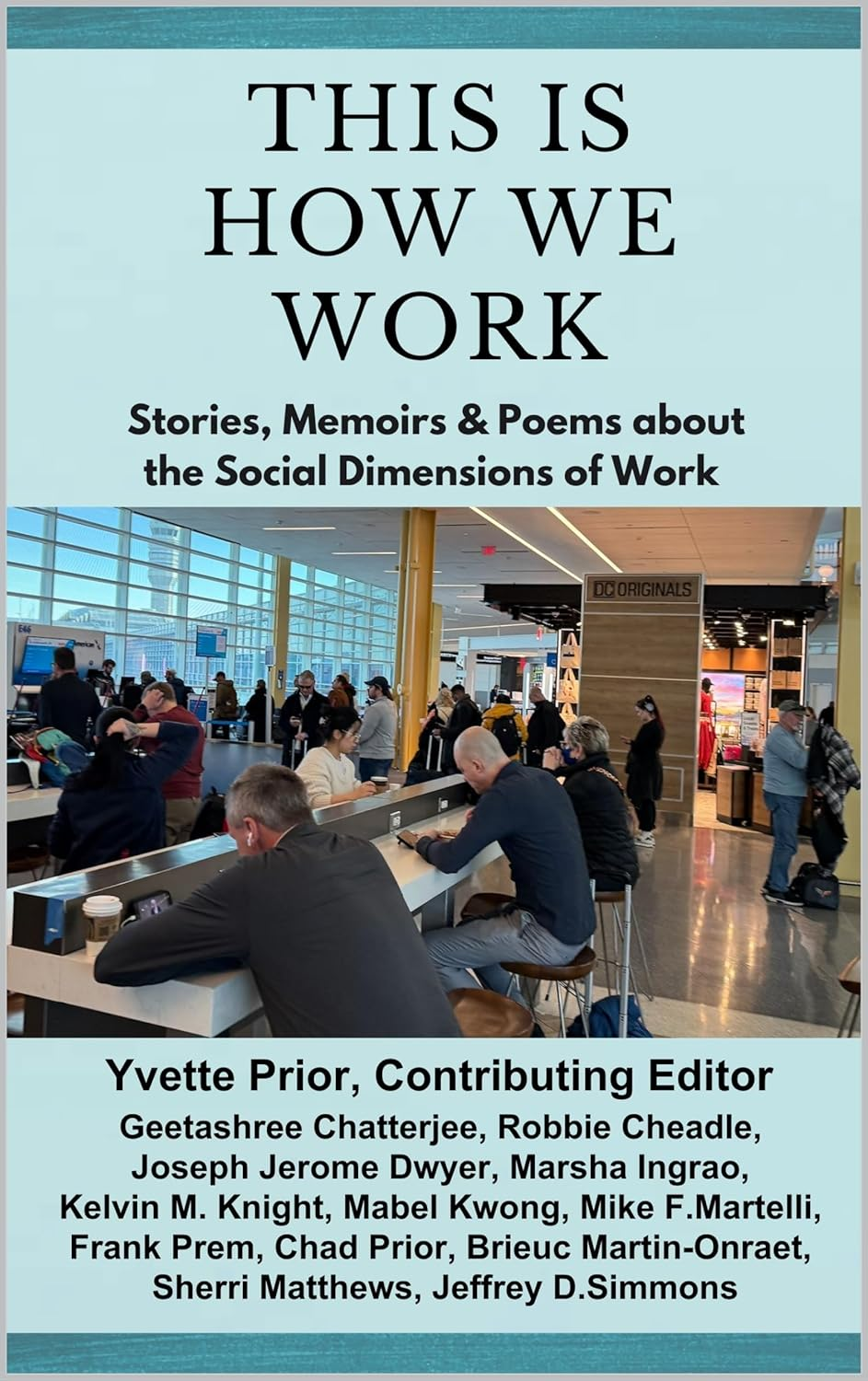
This Is How We Work is a unique collection of stories, memoirs and poems which all centre around the theme of the workplace. It is a most insightful and interesting collection as the various contributors from around the world all engage/engaged in different forms of work, many quite different from my own experiences in the corporate world.
Chapter 1 by Yvette Prior, the editor and a co-contributor, provides insight into why she selected this theme for the anthology and sets out the aims of the anthology for readers. It ends with a wonderful quote: “We work to live, but stories help us understand why we live, and sometimes, why we work.”
All of the contributions are compelling and give great insight into the evolution of the contributors careers and how their ideas on work changed over time. I have experienced this happening from my own perspective in my job so it is very relatable for me. I am going to share a bit more about the contributions that resonated the most with me.
Chapter 3, The Quiet Work of Love by Sherri Matthews was particularly useful and, in many ways heart rending, for me. Sherri depicts her journey as a caregiver to her mother as she aged and became less capable. I have followed this journey to a lessor extent with my aging aunt and am also following it with my own aging parents. The emotional angst of watching those we love giving up everything they enjoy and care about over time and becoming frail is hard – very hard. Sherri’s story was relatable and a mixture of encouraging and horrifying as I read it.
Chapter 4, The Creative Dream Job That Wasn’t So Dreamy, by Mabel Kwong also interested me greatly. I am a chartered accountant with a highly creative bend and spend a lot of my spare time writing and painting. Up until recently, I cherished the idea of turning these ‘hobbies’ into income producing activities. Prior to reading Mabel’s story, I had already arrived at the conclusion that turning creative outlets into work changed them in a negative way. When you paint commissions, you lose control over the creative output on many levels. Painting on demand is very different from someone seeing something you have created and asking to buy it as it is. Commissions means dancing to the purchasers tune which curtails your own creative ideas. It is the same with writing. If you write for the traditional publishing market, you write to the rules of the traditional publishers. That doesn’t work for me and I have never attempted to find a traditional publisher for my work. Mabel’s story of disillusionment with paid writing confirmed my own views, despite the fact that Mabel did gain a great deal from the experience and she grew as a writer. Anyone contemplating writing for a living should read this memoir.
Chapter 6, The Paper Knife Incident by Brian Martin-Onraet, was a delightfully entertaining story about working in Gabon, Africa. It highlights differences in work ethics and circumstances of workers and also focuses on management choices and behaviours. Brian is an excellent writer and I hope he publishes more of his fascinating stories.
Chapter 7, Serving The Patient, Resisting The System: Work Across by Career by Mike F. Martelli, is riveting reading. Mike’s journey in the field of mental health was insightful into how the health system has changed over time and is now focused on patient turnaround rather than patient service. It was sad for me as a reader and I’m sure its incredibly disillusioning for medical practitioners who enter the system full of the eagerness to make a difference of youth. Although this piece focuses on the health industry, its content applies to many other fields like teaching and even corporate work.
Chapters 11, Eighty-five Degrees For Me by Marsha Ingrao, and 13, Asylum Ghosts (And No Escape Room) by Frank Prem (Poetry), both give incredible insight into the worlds of teaching and psychiatric nursing, respectively. I learned a great deal about these professions, which are in my mind callings, and my respect for the people who enter these professions increased tenfold.
Chapter 16, Chapter Summaries by Yvette Prior, is a lovely summary of each of the contributions including her personal thoughts on how these pieces and poems can benefit readers. Yvette also contributed some beautiful and thought provoking poems to the collection.
I highly recommend this meaningful collection.
This Is How We Work: Stories, Memoirs and Poems about Social Dimensions of Work is available form Amazon US here: https://www.amazon.com/This-How-We-Work-Dimensions-ebook/dp/B0FWC6BMFP/
Recipe: Stained Glass Biscotti

My recipe for December is Stained Glass Biscotti. It is also my contribution to Staci Troilo’s annual Cookie Exchange. You can read more about it here: https://stacitroilo.wordpress.com/2025/12/01/thanks-deals-treats. You can find all the cookie recipes from the last four years of the Cookie Exchange here: https://stacitroilo.wordpress.com/recipes/
This recipe comes from The Australian Women’s Weekly Christmas miniatures finger food and tiny treats. I have this book as a paperback and have used it to make Christmas treats for years.
This is a gallery of the book cover and two of the recipe pages:


Ingredients
165 grams caster sugar
2 medium eggs
200 grams plain/all purpose/cake flour
50 grams self raising flour
300 grams multi glace cherries (a mix of colours is preferable)
80 grams sliced/diced almonds
Method
Preheat the oven to 180 C or 350 F. Prepare your cookie baking tray using grease or oil spray.
Mix sugar and eggs in a mixing bowl until well combined and then stir in flour, cherries and nuts. Knead the doub on a floured surface until smooth. Divide the dough into two parts and roll each part into a long sausage/log. Place logs on the prepared baking trays and bake for 30 minutes. Remove from oven and cool for 10 minutes.
Reduce the oven temperature to 150 C or 300 F. Using a serrated edged knife, cut the logs into slices. Place the slices in a single layer on prepared baking trays and bake for a further 30 minutes until dry and crisp. I turn the biscuits half way through the second baking session.
Wishing you all a Merry Christmas and/or Happy Holidays
About Robbie Cheadle

Robbie also has two novels and a collection of short stories published under the name of Roberta Eaton Cheadle and has horror, paranormal, and fantasy short stories featured in several anthologies under this name.
You can find Robbie Cheadle’s artwork, fondant and cake artwork, and all her books on her website here: https://www.robbiecheadle.co.za/
Find Robbie Cheadle
Blog https://wordpress.com/home/robbiesinspiration.wordpress.com
Bluesky https://bsky.app/profile/robbiecheadle.bsky.social
YouTube https://www.youtube.com/channel/UCVyFo_OJLPqFa9ZhHnCfHUA
Goodreads https://www.goodreads.com/author/show/15584446.Robbie_Cheadle
_________________________________
Did you know you can sponsor your favorite blog series or even a single post with an advertisement for your book? Stop by the WtbR Sponsor Page and let me advertise your book, or you can make a donation to Writing to be Read for as little as a cup of coffee, If you’d like to show your support for this author and WordCrafter Press.
___________________________________
This segment of “Read and Cook with Robbie Cheadle” is sponsored by WordCrafter Press and their themed anthologies.

Tales From the Hanging Tree: Imprints of Tragedy: There exists a tree that is timeless, spanning across all dimensions, which absorbs every life as those who are hanged as they die… and it remembers every one. The stories within are a select few of the Tales From the Hanging Tree.
Curses: Chronicles of Darkness:
There are all types of curses.
Cursed places, cursed items, cursed people, cursed families.
Curses that last throughout time. Curses which can’t be broken. Curses which are brought upon ourselves. Curses that will kill you and those that will only make you wish you were dead.
Legends: Monsters That Go Bump in the Night: Coming in 2026
Discover more from Writing to be Read
Subscribe to get the latest posts sent to your email.












This is How We Work is a great book to look into the authors’ working lives. Your Stained Glass Biscotti looks delicious, Robbie!
LikeLiked by 2 people
Thank you, Miriam. This biscotti recipe is popular 🍰
LikeLiked by 2 people
Hi Miriam, I also think those stained glass biscotti look so good
LikeLiked by 3 people
I may try this recipe for the holidays this year, Yvette.
LikeLiked by 3 people
oh please post about it if you do!
LikeLiked by 3 people
Hi Robbie. Thank you for sharing your review of THIS IS HOW WE WORK and the biscotti recipe. I enjoy reading your posts: both features (including recipes) and reviews.
LikeLiked by 3 people
Lindsey, thanks for checking out Robbie’s book review and cookie recipe post on Writing to be Read https://writingtoberead.com/2025/12/10/read-and-cook-this-is-how-we-work-stories-memoirs-and-poems-about-social-dimensions-of-work-and-stained-glass-biscotti-for-the-annual-cookie-exchange/
LikeLiked by 2 people
Thank you, Lindsey. I’m delighted you enjoyed this post
LikeLiked by 1 person
Further, the THIS IS HOW WE WORK especially interested me because when I was young and worked as an Associate Editor for then the international trade magazine, MODERN JEWELER, I discovered my “dream” job became more of a nightmare. Nevertheless, that experience helped me decide to return to graduate school, pursue a creative writing MA/MFA and focus on writing novels, I figured that way, I could tell lies (as fiction) to reveal the truth as opposed to “bending” the truth by using statistics to support (or create) basically a lie. Then, I became a Graduate Teaching Assistant when professors urged me to do so–and the position would not only pay me but grant me free tuition for all my classes. I fell in love with teaching–and continued my creative writing (both fiction and poetry) for 35+ years. Perhaps this “blended” career doesn’t pay as well in dollars–but I’ve profited more from its gifts to my soul/spirit.
LikeLiked by 3 people
Hell author Lindsey, I really enjoyed this comment about your working! Wow – and the ending really spoke to me – about how your “blended” work might not “pay as well in dollars–but I’ve profited more from its gifts to my soul/spirit.”
That sounds like a lot of wisdom and contentment, and I tip my hat to you! We also have something in common – I taught in Higher ed, and the first time I did was in the 1990s as a TA and it was because I was encouraged to do so. I Then did it later on and had a great run with it. Oh and to also hear how your job, as Associate Editor for then the MODERN JEWELER trade magazine, sounds like you have had some wonderful and tasty life seasoning. If you every write your memoir, will you please drop by my blog to let me know – because I will buy a copy right away! ~Yvette
LikeLiked by 2 people
🥰
LikeLiked by 2 people
Hi Lindsey, this is fascinating. I had a dream of turning my creative pursuits into a career about 10 years ago. I quickly realized that turning either writing or art into paid articles or commissions would destroy my love of these arts. I decided to keep them as hobbies and I dance to my own tune not someone else’s.
LikeLiked by 1 person
A terrific review of what sounds like a terrific book, Robbie! All the chapters sound interesting, including your thoughts on how paid work can take a toll on creativity.
LikeLiked by 3 people
Dave – thanks so much for the comment on Robbie’s post with her review of This is How We Work over here at Writing to be Read! There is also a little bit in the book about “unpaid” work – but the chapters vary and I hope you get to check it out at some point. xxx ~Yvette
LikeLiked by 3 people
Thank you, Dave. No traditional publishers or art commissions for me. I’ve settled for a small market who care about the pieces of my soul woven into poetry and art.
LikeLiked by 2 people
Great review, Robbie. Thanks for sharing it.
The biscotti sounds delicious. Reminds me a little of my aunt’s fruit cake (minus the brandy), but in biscotti form, which I might like even better. I love biscotti with coffee. So glad you shared this one.
LikeLiked by 3 people
My pleasure, Staci. I will link up to your post tomorrow 😃
LikeLiked by 2 people
Much appreciated.
I’m glad we worked out the kinks. (I’m still frustrated by gmail.) I added this post to my master list.
LikeLiked by 2 people
Thank you Staci
LikeLiked by 2 people
this sounds like such an interesting ‘inside’ look at the working world, how not everything is always as it seems at first. and those stained glass biscotti, wow –
LikeLiked by 3 people
Hi Beth, this was a most interesting reading experience for me. I gained a lot of perspective on different work environments. This biscotti recipe is very nice.
LikeLiked by 2 people
Beth, thanks for your comment and “how not everything is always as it seems at first” – that is such a good point to make. And I think another theme that unfolded – which nows sounds obvious that it would be a factor – but it was also about we humans change and what fits us at first – or what we think we want – might not be what we need or want – something like that – anyhow, hope you are all having a nice start to the week.
💜
💜
💜
LikeLiked by 3 people
yes, you are so right! yes, a nice easy start to the week for me –
LikeLiked by 3 people
so glad – smooth here = but also cold… brrrr
LikeLiked by 3 people
Yes!!!
LikeLiked by 2 people
I loved your dive into each of the authors and getting a back ground into each author and their contributions that were so meaningful. Another great book by Yvette! I wish you were closer so I could buy your treats! So yummy, Robbie!! ❤️
LikeLiked by 3 people
Thank you, Cindy. This series of anthologies collated by Yvette shares some very insightful information. I’ve gained a lot from reading them. These biscuits are pretty for Christmas.
LikeLiked by 3 people
💕❤️💕❤️
LikeLiked by 2 people
Cindy, hear hear, I wish I could order some of Robbie’s biscotti locally too – xxx
LikeLiked by 2 people
😋
LikeLiked by 2 people
[…] Robbie Cheadle: Stained Glass Biscotti […]
LikeLiked by 3 people
The cookies sound delicious, Robbie 🙂 x
LikeLiked by 3 people
Thank you, Carol. I saw you also participated. I’ll swing by shortly.
LikeLiked by 3 people
❤️❤️
LikeLiked by 2 people
Great review, Robbie, sounds like a good read. I’m a fan of biscotti and this made me want some! Your cookbook looks so inviting for holiday cooking. Merry Christmas!
LikeLiked by 3 people
Hi Denise, I did enjoy this read which presented perspectives from around the world. Biscotti are a real treat.
LikeLiked by 2 people
Hi DL = had to chime in because I am a lso a huge fan of biscotti yet I have never seen such colorful ones and these stained glass are so nice for a holiday!
LikeLiked by 3 people
I haven’t seen those colors either, it is perfect for the holidays!
LikeLiked by 3 people
🎄🌞🎄
LikeLiked by 3 people
🎄
LikeLiked by 2 people
🎄🌞🎄
LikeLiked by 2 people
[…] Continue reading here: https://writingtoberead.com/2025/12/10/read-and-cook-this-is-how-we-work-stories-memoirs-and-poems-a… […]
LikeLiked by 1 person
I have a recipe for a stained glass cookie but it’s not biscotti. I may have blogged about it.
Yes, that’s what we do, blend stories with food. Thanks, Robbie!
LikeLiked by 3 people
Absolutely. All socializing is done around food.
LikeLiked by 2 people
The biscotti looks delicious. Thanks for the recipe.
LikeLiked by 3 people
My pleasure, Darlene 💛
LikeLiked by 2 people
I love biscotti, and I love making it, too. I will be trying this variation. Thanks for sharing, Robbie!
LikeLiked by 2 people
My pleasure, Amy. I enjoy biscotti too. In South Africa we have rusks instead of biscotti. They aren’t as sweet but the concept is similar.
LikeLiked by 1 person
Nice review, Robbie. I’ve never tried making biscotti, but my son has several times. I think he’d like your recipe.
LikeLiked by 3 people
Thank you, Teri. It’s a fun Christmas recipe
LikeLiked by 2 people
I’m curious as to whether any of the contributors to the work anthology ended up disillusioned in their careers.
I like biscotti. Adding bits of cherry sounds really good.
LikeLiked by 3 people
Yes, most of them. That is the way of getting older and realizing you can’t make any changes or any difference.
LikeLiked by 2 people
I’m sorry to hear that. Disillusionment is not a happy place to be.
LikeLiked by 2 people
Liz, thanks for the thoughtful question about disillusionment. This may be a bit of a rant, but here’s how I think about disillusionment as it shows up in the book.
First, Joe experienced it early in his career—leaving a high-paid job in search of meaning. For him, disillusionment faded once he changed roles and stopped “doing 82 in a 65,” so to speak.
Sherri describes her disillusionment unfolding in stages over time, especially as she navigated healthcare systems while supporting an aging mom. Mabel touches on it when an editor pushed her toward certain content in her writing projects. Geeta reflects on a period when she was a transformational leader, choosing to invest in an employee labeled a non-performer—and in doing so, pushed back against a disillusioning narrative.
We also include a real-life story involving a paper-knife incident—a burned-out worker who was likely deeply disillusioned, fed up, and made a costly mistake.
Disillusionment is felt strongly in Chapter 7, where Mike reflects on a long healthcare career and the growing ethical and effectiveness gaps he witnessed in patient care. Chapters 8 and 9 explore it through fiction with a cycling theme (by Kelvin Knight): one story follows an entry-level worker who fakes being a cyclist to impress a boss, while the other features a seasoned cyclist questioning how much of his life has been consumed by the sport.
In Chapter 10, Chad introduces disillusionment through a short sci-fi story—an AI that has forgotten ethics and humanity. Chapter 11 brings it into the classroom, where Marsha’s teacher, Sonia, wrestles with disillusionment while problem-solving around safety.
The poetry section also carries these themes. Robbie’s poems lightly touch on disillusionment—through presentations, shape-shifting, and becoming a chameleon. Asylum Ghosts layers it heavily, returning us to a ward where people with disabilities were treated very differently across eras, as were the staff who cared for them.
In Jeff’s chapter, we see a movement out of disillusionment as he now helps other veterans with wellness and has learned the value of savoring. In my own poems—especially Work to Do—disillusionment appears in leaving a job with a six-month exit that felt more like a firing line, and perhaps in the weariness of people who insist on presenting themselves only through a résumé lens (sigh).
So yes—disillusionment shows up in many forms throughout the book: sometimes as something people move through, sometimes as something they’re stuck in, and sometimes as the very thing that sparks change.
LikeLiked by 3 people
Thank you for your thorough response, Yvette. I’m still dealing with the disillusionment with higher education that prompted me to retire five year earlier than I’d planned. At least I’m over the rage (mostly).
LikeLiked by 3 people
Oh Liz, I would LOVE to sit and have coffee with you to chat about this topic- perhaps some day!
And I am glad you over the anger part – even tho healing can be so up and down, eh? And the book is pretty encouraging – and I will email you a copy because I would really like for you to read it, my friend.
Also, I have your recent book, the weight of snow and regret, waiting for me to finish reading over the holidays. I look forward to it!
LikeLiked by 3 people
I’ve just finished reading Liz’s book. A very good book 💓
LikeLiked by 3 people
Thanks, Robbie.
🌞
and wishing everyone here at Writing to be Read -avery lovely holiday 🎄🎄
LikeLiked by 2 people
Thank you, Yvette. 🎄Merry Christmas to you.❄️🎅🦌🎄☃️
LikeLiked by 1 person
Merry Christmas to you Kaye Lynne Booth and it was nice to connect this month! 🎄🎄
LikeLiked by 2 people
🎅🏻😃
LikeLiked by 2 people
Merry Christmas to you, Yvette. 🎄☃️❄️🎅🦌🎄
LikeLiked by 2 people
🎄🌞🎄
LikeLiked by 2 people
Wonderful, thank you, Yvette!
LikeLiked by 3 people
yes, and thank you for sharing your comment here –
LikeLiked by 3 people
You’re welcome, Yvette.
LikeLiked by 2 people
🙂
LikeLiked by 3 people
🤗❤️🩹
LikeLiked by 2 people
A wonderful overview of this book, Yvette. It’s a very good read. I learned a lot and that I’m not alone in my disillusionment which is comforting. I think people who are driven by money don’t get as disillusioned or it’s a slower process.
LikeLiked by 2 people
Hi Robbie, well it is amazing to see how Liz’s comment here had me think of another theme that “does” show up in the content. And you know how I summarized some key themes at the end, the term “disillusionment” never came up (although ti was still covered under the umbrella of other similar terms) – and I think Liz’s story would have added something rich to this book if she had been a contributing author.
Either way, Liz’s brief feedback helped me to see how “lack of attaching” at a job (or detaching) is related to a “disillusionment state” and can lead to feelings of sacrificed personal life for a workplace that “feels hollow or misaligned with one’s core values”
Hmmm
💚🍃🙂
LikeLiked by 2 people
Yes, Liz’s experiences are similar to my own although when I said I was leaving in June this year, my senior colleagues did rally to make some changes to make it somewhat better. Disillusionment was what struck me with many of these stories.
LikeLiked by 2 people
Glad the colleagues helped – and whew, work truly can be layered with these social dimensions!
🙂
LikeLiked by 2 people
Yes, it can make you very unhappy
LikeLiked by 2 people
Hi Liz. Good question.
My answer is no: no disillusion about my career.
I did switch from finance/accounting to Market research and consulting. Even managed to set up my own company, and do exactly what I loved: research on consumers and communication.
Of course, there were ups and downs, but I wouldn’t do it any other way. I’m happy with what I managed to do, and how I could give insight to my clients…
Thanks for the question.
Be good.
LikeLiked by 3 people
🙏💚
LikeLiked by 2 people
You’re welcome, Brian.
LikeLiked by 3 people
I’m not sure if the book is for me, but the biscotti sure is. I’m definitely going to give it a try. Thanks for sharing it.
LikeLiked by 2 people
My pleasure, Carla. A different book with unique stories and messages.
LikeLiked by 2 people
The biscotti sound delicious. Thanks for sharing.
LikeLiked by 2 people
My pleasure. John
LikeLiked by 2 people
I just started reading this book last night—looking forward to all the different pieces.
LikeLiked by 2 people
I found it very informative and interesting.
LikeLiked by 2 people
[…] you check out Robbie Cheadle’s, you will also find her Recipe for Stained Glass Biscotti, Robbie noted: “My recipe for […]
LikeLiked by 1 person
Thank you, Robbie. This is wonderful.
LikeLiked by 2 people
It is a very interesting book, Jennie
LikeLiked by 2 people
Excellent review Robbie, and yes, we gravitated to similar prose. Your miniatures look delectable! 💜
LikeLiked by 2 people
💞
LikeLiked by 2 people
Dankie Robbie. That was a very good and thorough review. (Including Liz’s question…)
Totsiens
LikeLiked by 2 people
I’m glad you liked the review. I enjoyed your story very much 🦋🩵
LikeLiked by 2 people
Thank you Robbie. 🌹
LikeLiked by 1 person