In Touch With Nature – African killer bees, friend or foe? #intouchwithnature #Africankillerbees
Posted: June 26, 2024 Filed under: Uncategorized 38 Comments
African honeybees, and their relatives Africanised honeybees, have gained the nickname “killer bees” due to their aggressive behaviour. A BBC article entitled Flying threat: Why are killer bees so dangerous? (by Jon Kelly) stated the following:
“They surround you in their multitudes – hundreds, maybe thousands of them, swooping and stinging and injecting venom into your flesh.
They might go for your eyes. Or fill up your mouth, nostrils and ears. You will have to run hundreds of yards to escape, if you can see where you are going.
And the air fills with the pheromone that tells the bees to protect their colony. Apparently, it smells like bananas.”
This article referred to Africanised honeybees which came about as a result of human intervention resulting in the mating of Brazilian honeybees with Southern African honeybees.”
Having witnessed an attack by African honeybees on my family’s dogs, I can vouch for the truth of these comments. This incident occurred when I was a teenager and both dogs had to have blood transfusions. They only survived because they jumped into the swimming pool. It was a traumatic event for me, and I’ve written a few poems, paragraphs and a short story about killer bees.

African honeybees are a lot more hostile than other bees due to their natural environment having far more predators looking to destroy their hives for honey. Some of these predators are ants, anteaters, armadillos, honey badgers, and bee eater birds. African honeybees attack in far greater numbers than Europeans bees which makes them dangerous to humans. When disturbed, they will also chase humans far further than European bees and remain agitated for much longer. However, it should be noted that the venom of African honeybees is no more toxic than European bees.

African honeybees occur in the natural veld of South African and Central Africa and is an important pollinator of flowering plants, including many thorn trees such as acacia trees (the favourite food of giraffes). Without African honeybees, southern Africa would not have many of the fruit and vegetables that grow in this region.
South African cultural stories about African honeybees
In the Xhosa culture (Madiba clan), visitation by a swarm of bees is presumed to be a message from the ancestors who would like the family to do something for them (e.g. the brewing of traditional African beer (umqombothi) and/or the slaughtering of a goat). If the bees produced honey while they were visiting, all honey combs will be removed by a member of the family and placed on small branches before being consumed. But most importantly, words of respect will be said to the bees as they are being persuaded to leave.
In the Pedi culture, a swarm of bees in the yard is always taken as a symbol of the ancestors bringing luck to the family. One needs to then prepare some kind of African beer, but it should not ferment like umqombothi. It is called mashifa, and the sorghum should still be strong and prevalent in the water. You then summon the ancestors accordingly and acknowledge their presence and let them know that you anticipate the good wishes or blessings. The bees are never chased away or killed, and are left in peace to leave of their own accord.
Also in the Pedi culture, the queen bee is used in traditional strengthening. The queen bee is alive when she reaches the traditional healer, but is then respectfully killed and mixed in with a concoction that is applied to the face daily or weekly. This is to subdue your enemies and command respect from those around you – just like the queen bee does in the colony.
This information is from the South African National Biodiversity Institute here: https://www.sanbi.org/animal-of-the-week/african-honeybee/
BBC Earth Youtube video of an African killer bee hive:
Invasion
The colonization of much of the western hemisphere by the African honey bee (Apis mellifera scutellata) in the last 60 years is one of the most rapid and impressive biological invasions in recent history (Schneider et al 2004). Originally, African honey bees were thought to displace European honey bee subspecies through hybridization and to give rise to “Africanized honey bees” in Latin America. However the incredible success of African bees that have invaded European populations, has led to much of the European characteristics to be lost and existing honey bee populations to remain essentially African in their nesting behavior (McNally and Schneider 1992), swarming and absconding behavior (Otis et al 2002; Rubink et al 1996; Schneider 1995; Schneider and McNally 1992 and 1994; Sousa et al 2002), foraging and diet selection (Fewell and Bertran 2002; Schneider and Hall 1997; Schneider and McNally 1993), and maternal DNA characteristics (Clarke et al 2001 and 2002; Hall 1999; Segura 1989).
This information is extracted from this article: https://bee-health.extension.org/africanized-bees-better-understanding-better-prepared/
I’m closing with this extract that should serve as a lesson to humankind about interfering with nature. But it won’t!
Below is a poem duo I wrote about African bees. The poems are extracted from my book, Lion Scream.
Searching for a Home
An overcrowded hive
Results in a split
The old queen and her maids prepare for a move
Some drones are invited
To join their party
***
Scouts take off in a group
Searching high and low
For a safe and secure place to make their own
The swarm waits patiently
In a nearby tree
***
Under a wooden floor
The best place is found
The scouts return and perform their waggle dance
Giving clear directions
To the nesting site
Eviction
Prepped for occupation
The bees move in fast
Much to the chagrin of the resident dogs
Who attempt to drive off
The enemy force
***
The warriors line up
Ready for action
Their gold and black attire carefully designed
To strike fear into hearts
Ensuring respect
***
Unified bombardment
By the deadly cloud
Sends the dogs running, desperate to escape
Useless resistance
Swiftly overcome

About Roberta Eaton Cheadle

Award-winning, bestselling author, Roberta Eaton Cheadle, is a South African writer and poet specialising in historical, paranormal, and horror novels and short stories. She is an avid reader in these genres and her writing has been influenced by famous authors including Bram Stoker, Edgar Allan Poe, Amor Towles, Stephen Crane, Enrich Maria Remarque, George Orwell, Stephen King, and Colleen McCullough.
Roberta has two published novels and has horror, paranormal, and fantasy short stories included in several anthologies. She is also a contributor to the Ask the Authors 2022 (WordCrafter Writing Reference series).
Roberta also has thirteen children’s books and two poetry books published under the name of Robbie Cheadle, and has poems and short stories featured in several anthologies under this name.
Roberta’s blog features discussions about classic books, book reviews, poetry, and photography. https://roberta-writes.com/.
Find Roberta Eaton Cheadle
Blog: https://wordpress.com/view/robertawrites235681907.wordpress.com
Twitter: https://twitter.com/RobertaEaton17
Facebook: https://www.facebook.com/robertawrites
Amazon: https://www.amazon.com/Roberta-Eaton-Cheadle/e/B08RSNJQZ5
_____________________________________________________________________________________________
Want to be sure not to miss any of Robbie’s “In Touch With Nature” segments? Subscribe to Writing to be Read for e-mail notifications whenever new content is posted or follow WtbR on WordPress. If you found it interesting or entertaining, please share.
__________________________________________
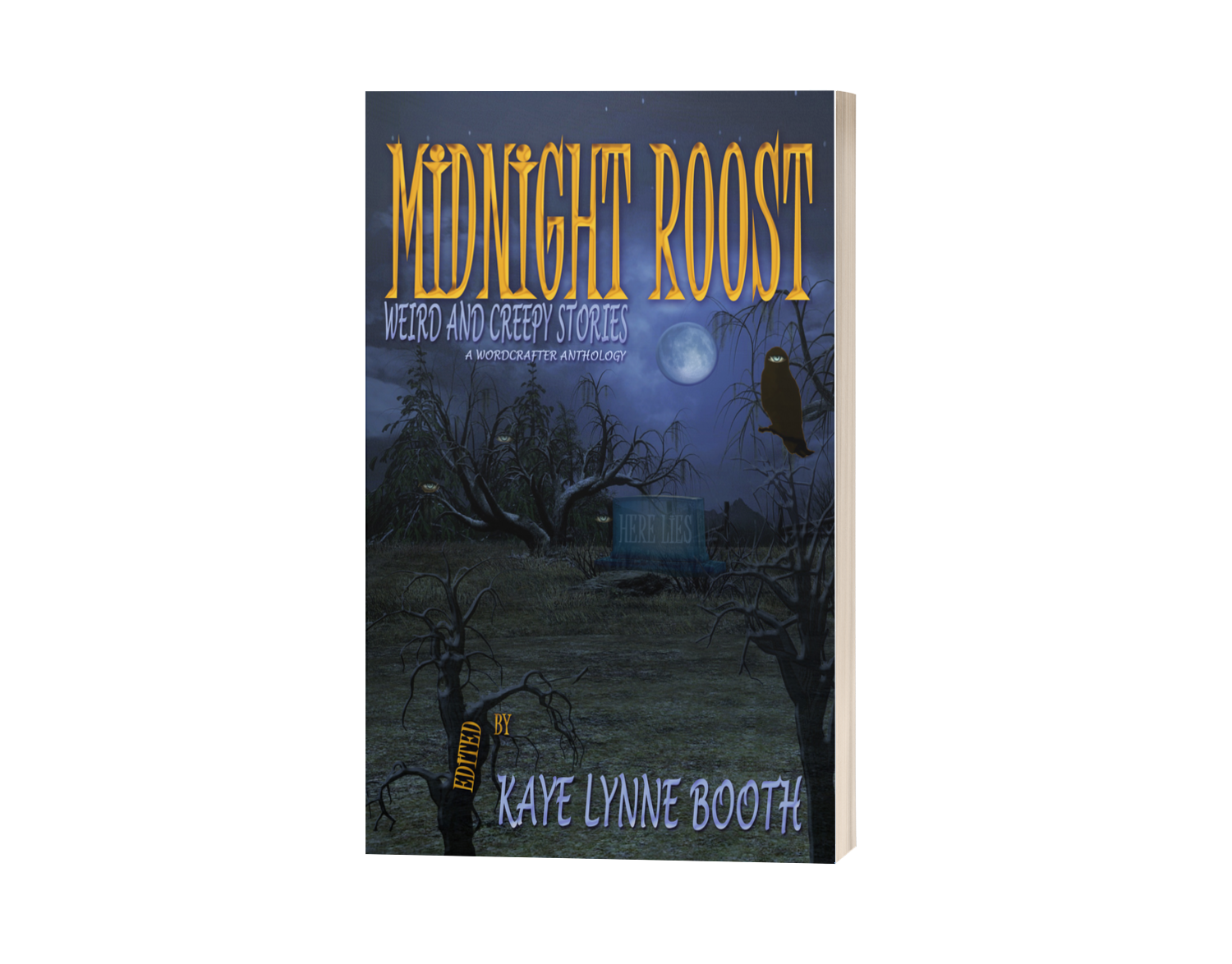
This segment of “In Touch with Nature” is sponsored by Midnight Roost: Weird & Creepy Stories and WordCrafter Press.

20 authors bring your nightmares to life in 23 stories of ghosts, paranormal phenomenon and the horror from the dark crevasses of their minds. Stories of stalkers, both human and supernatural, possession and occult rituals, alien visitations of the strange kind, and ghostly tales that will give you goosebumps. These are the tales that will make you fear the dark. Read them at the Midnight Roost… if you dare.
On sale now for only $4.99
June 15 – August 31,2024
Discover more from Writing to be Read
Subscribe to get the latest posts sent to your email.















While I respect ALL bees and the work they do, I am allergic to their stings… so I keep a respectful distance
LikeLiked by 1 person
Hi Annette, I also get blood poisoning if I’m stung by a bee or a wasp. I don’t invite them in for tea. Hugs.
LikeLiked by 2 people
Your vivid post, Robbie, spotlights how scary those bees are. Also scary is what humans are doing to the Earth.
LikeLiked by 1 person
Hi Dave, African bees are scary. I watched our dogs being attacked by a swarm and it was awful. The bees were a black cloud and angry buzzing and stinging. Humanity has a lot to account for.
LikeLiked by 2 people
Those poor dogs. 😦
LikeLiked by 2 people
I know now why the Lion screamed!
Glad your dogs survived Robbie. Poor things must have been very traumatized!
LikeLiked by 1 person
Hi Wayne, sorry I’m late with comments. My aunt came out of ICU and is back on the ward. I’ve been up and down to the hospital all week. Indeed, the Lion screamed because of mankind’s endless interference. Our dogs were in a dreadful state. I’ve never forgotten it. They both needed blood transfusions but they did both survive.
LikeLiked by 2 people
once again proving you are a true matriarch Robbie!
LikeLiked by 1 person
That was interesting and scary information. Allegedly we have the Africanized bees here in Texas but I can’t tell the difference. It was scary what happened to your dogs. The example poems from your book are delightful. The whole Lion Scream book is filled with wonderful nature poems and as you know I loved Lion Scream.
LikeLiked by 1 person
Hi Thomas, apologies for my lateness. Its been a mad week up and down to the hospital. African bees don’t look very different at all. They are actually a little smaller. It is the way they behave that is markedly different. Thank you for your lovely comment about Lion Scream.
LikeLiked by 1 person
And the bottom line for humans is ‘don’t mess with Mother Nature’. What a terrifying thing to witness as a teenager, Robbie.
LikeLiked by 2 people
Hi Jennie, that is right but scientists can’t seem to ever leave well enough alone. Thanks for visiting.
LikeLiked by 2 people
Exactly!
LikeLiked by 1 person
I agree with Jennie in that the bottom line is “don’t mess with mother nature.” 🌺
LikeLiked by 1 person
That is 100%, Kymber. Mother Nature does things a certain way for a reason. Sorry I’m late responding, its been a crazy week with my aunt in hospital.
LikeLiked by 2 people
This was one of the most alarming posts I’ve ever read. Add that to all the other stuff going on and all I can say is YIKES. I can’t even think about this. The bees around here are quite docile. If you don’t bother them, they don’t bother you. It’s the hornets and wasps that give us trouble.
LikeLiked by 1 person
Hi Marilyn, apologies for the late response, my aunt has been in ICU in hospital and I’ve been visiting her and doing what needs to be done to help her. The hybridisation of the bees in the Americas is rather shocking. I’ve heard they found a few in Europe now.
LikeLiked by 1 person
Thank you for all the information. They sound truly scary, and I’m sure you and your dogs were quite traumatized. The bees I see around here seem focused only on the flowers, and they’re not aggressive.
LikeLiked by 1 person
Hi Merril, that is good to know. Africanised bees have become a real problem in some parts of the USA. They mate with the local bees and the aggression gene dominates.
LikeLiked by 1 person
Yes, I know they’re around, but I’m glad I haven’t encountered them. We still have lovely bees intent on the flowers.
LikeLiked by 1 person
Long may it last.
LikeLiked by 2 people
Really interesting stuff. Thanks, Robbie.
LikeLiked by 1 person
My pleasure, Craig. It is the stuff of horror books and movies.
LikeLiked by 2 people
Those bees sound very aggressive and your poor dogs, Robbie…I don’t think I would like to meet up with any of the bees that you have mentioned in this post…Quite scary….Last week I visited a Food display which had come to our town from another area in the North of Thailand and they had a few bee keepers there selling honey…The honey I purchased comes from Stingless Bees the beekeeper had a small portable hive with them in so we could see them they are tiny little things and they get their nectar from the mango tree it is a lovely honey not as sweet as the other honey from other flowers that some of them seek out plus the honey has the healing properties similar to Manuka honey it was interesting talking to the bee keeper and of course googling it when I got home:)…
LikeLiked by 1 person
Hi Carol, are the bees naturally stingless? That is very interesting. I love nature and all its creatures. Of course, Africa has aggressive bees. This is a wild and untamed continent with lots of ferocious animals and other creatures.
LikeLiked by 2 people
They are Robbie they are tiny about 4mm long and tropical bees…I get that given how beautifully wild and untamed South Africa is that you get many ferocious animals including those killer bees….I too love nature in all its glory …I hope you have an enjoyable weekend , Robbie xx
LikeLiked by 1 person
Hi Carol, that is exactly right. African bees are adapted to Africa’s predators and climate, thus they are more ferocious. Man shouldn’t tread where angels fear to go. You too enjoy your weekend. May aunt is still in hospital but seems to have turned the corner. Today can only be better than last Saturday’s marathon Emergency Room session. Hugs
LikeLiked by 1 person
Hi Robbie so pleased to hear your aunt has turned the corner it seems that you like me can feel it never rains but it pours… Hugs
LikeLiked by 1 person
Hi Carol, I agree. I am hardly ever free of hospitals …
LikeLiked by 2 people
Hi, Robbie – Once again, I read your post with fascination. I always learn so much from them. And once again, your poetry is spot on and very beautiful!
LikeLiked by 1 person
HI Donna, its great to see you. I’m delighted you enjoyed. I saw you had posted an update and I’ll get there later today.
LikeLiked by 1 person
I used to step on bees when I was walking around barefoot in the summer all the time–luckily I wasn’t allergic! I know there is swarming behavior even in the city, but I’ve never witnessed it myself.
Humans will never learn not to interfere…(K)
LikeLiked by 1 person
Hi Kerfe, sadly, you are right about humans. They are driven, as a collective, by greed and money. If I step on a bee, I have to have an antibiotic and steroids. I develop blood poisoning within hours and get a red line towards my heart.
LikeLiked by 2 people
It’s frightening–I know someone who is also allergic.
LikeLiked by 1 person
Yes, anaphylactic shock is worse because it happens so fast.
LikeLiked by 2 people
If only humans left mother nature alone, maybe things would have been different. I had heard of African Killer Bees, so thanks for this information explaining more about them. I have been stung by various bees, thankful that although painful, I didn’t react in a dangerous way.
LikeLiked by 1 person
I did not know about these bees, scary the things that happen when humans interfere, as they have been doing for a very long time. I don’t know much about bees except there are far more varieties than people imagine. The bees in my garden co exist peacefully with me, but I have one sad problem, they insist on flying into my little sun lounge and try frantically to fly away through the glass roof. Trying to catch them with a child’s fishing net is very difficult!
.
LikeLiked by 1 person
Hi Janet, English bees are very different to African bees. They are lovely and fat and buzzy. They are definitely worth saving. Ours, on the other hand, play a big role in nature but I wouldn’t invite them for tea, or into the sun lounge – smile!
LikeLiked by 1 person